Landlocked Salmon Fishing in Maine
Few experiences in the fishing world can rival the thrill of hooking into a powerful landlocked salmon in the pristine waters of Maine. However, many anglers, especially those new to the state or this particular species, often find themselves frustrated by the salmon's elusive nature and specific habitat requirements. This comprehensive guide is designed to cut through the confusion and provide you with detailed insights into understanding, finding, and effectively catching landlocked salmon, transforming your next trip into a truly rewarding adventure.
Understanding Maine's Landlocked Salmon
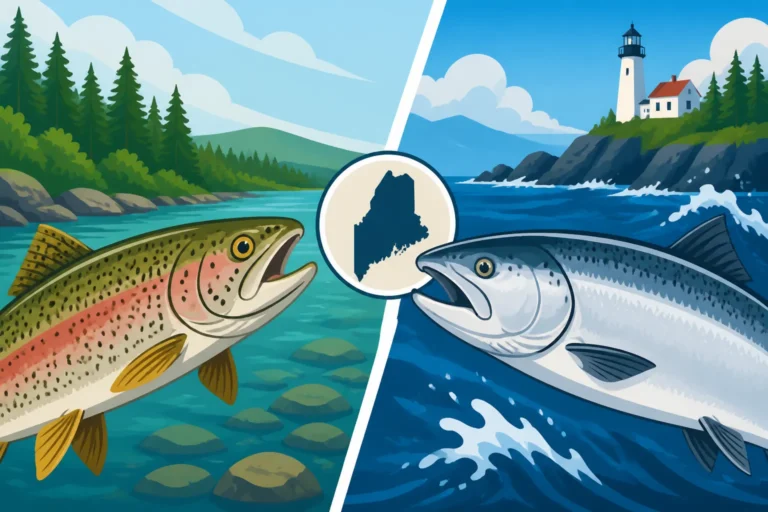
Maine's landlocked salmon ( Salmo salar ) are a truly special fish, a genetic legacy of the last ice age, when their ancestors became trapped in freshwater lakes as glaciers receded. Unlike their anadromous Atlantic salmon cousins who migrate to the ocean, these magnificent fish spend their entire lives in freshwater, adapting to deep, cold, oxygen-rich lakes and the rivers that feed them. Their beauty, power, and challenging nature make them one of Maine's most prized game fish.
What Makes Landlocked Salmon Unique?
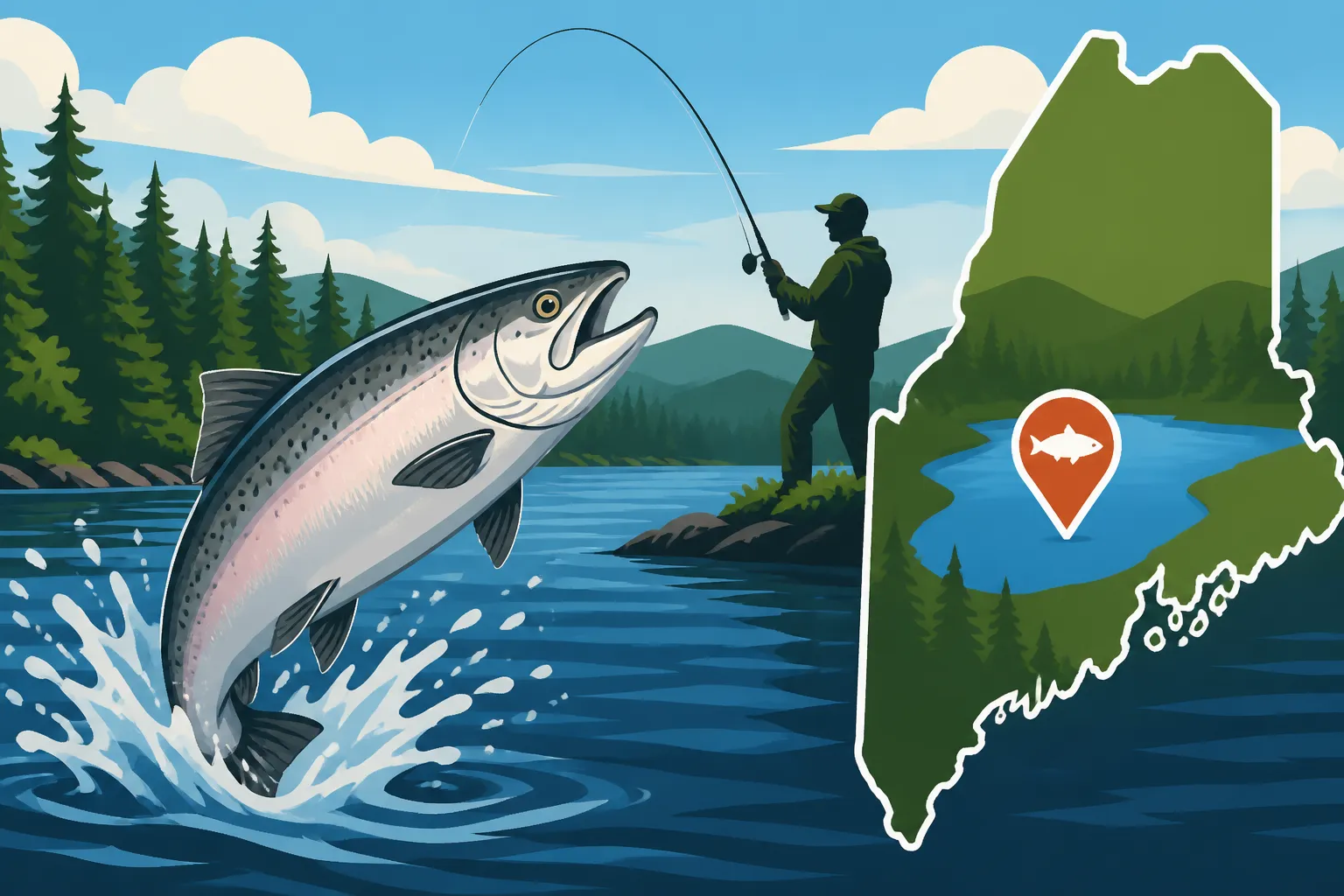
Landlocked salmon are often described as "the king of freshwater fish" in Maine, and for good reason. They are sleek, torpedo-shaped predators with a silver body, often marked with small, X-shaped spots, that shimmer with iridescent hues when fresh from the water. What truly sets them apart is their incredible fight. Once hooked, they are renowned for their acrobatic jumps, blistering runs, and relentless headshakes, testing an angler's skill and tackle to the limit. They demand respect, and earning a catch feels like a true accomplishment. They thrive in specific conditions, preferring water temperatures below 60 degrees Fahrenheit, which is why they are often found in the deeper, colder sections of Maine's larger lakes. Their diet primarily consists of baitfish, especially smelts, which are abundant in many of their native waters, shaping their behavior and making the "match the hatch" principle critical for successful angling.
The Life Cycle and Habitat of Maine Salmon
The life cycle of a landlocked salmon is fascinating and deeply tied to the health of Maine's freshwater ecosystems. They typically spawn in the fall, from late October through November, ascending gravelly river and stream beds that flow into their host lakes. The female digs a redd (a nest) where she deposits her eggs, which are then fertilized by the male. These eggs remain in the gravel over winter, hatching into sac fry in early spring. The fry absorb their yolk sac and then emerge to feed on aquatic insects. After spending one to three years in the river, growing into parr (juvenile salmon identifiable by their vertical bars), they smolt, undergoing a physiological change that prepares them for life in the lake. Once in the lake, they grow rapidly, becoming voracious predators.
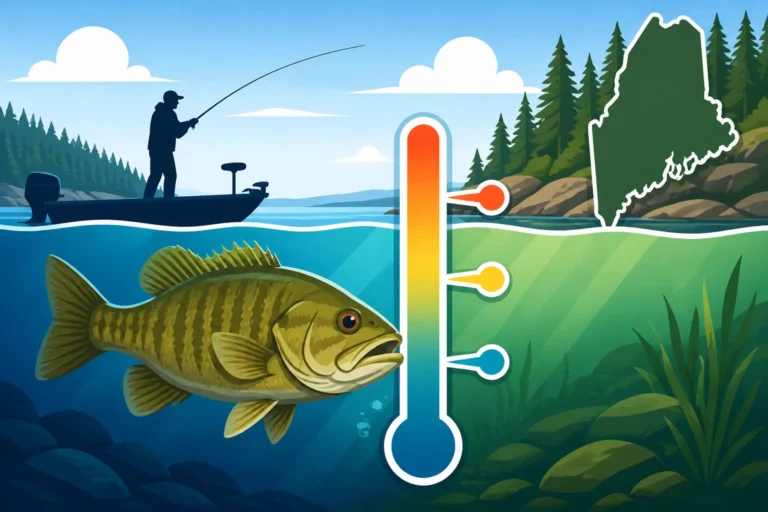
Their preferred habitat in lakes is driven by temperature and the availability of their primary food source, the smelt. During the warmer months, salmon will seek out the thermocline – the layer in a lake where water temperature changes rapidly – as this is often where cooler, oxygenated water and baitfish congregate. This makes understanding lake structure, depth, and water temperature absolutely crucial for locating them. Rivers and streams, beyond serving as spawning grounds, also provide important cold-water refugia and feeding areas, particularly in spring and fall. Healthy tributary streams with clean, cold water and suitable gravel are vital for the sustained success of Maine's landlocked salmon populations.
Distinguishing Landlocked Salmon from Other Species
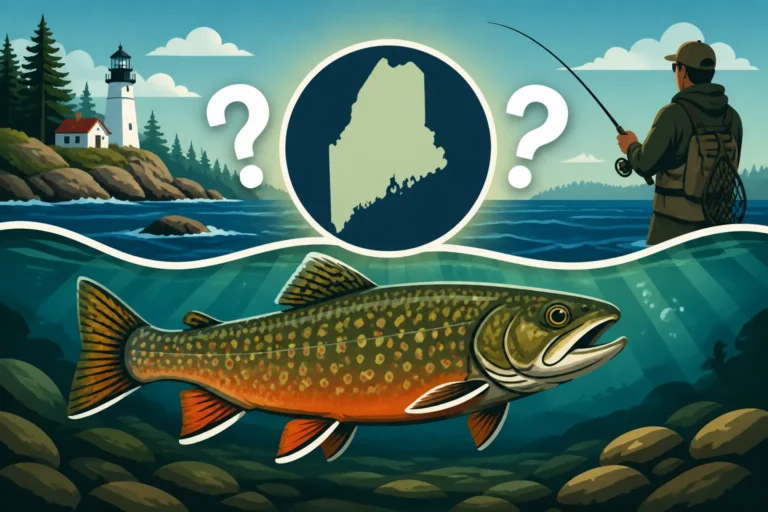
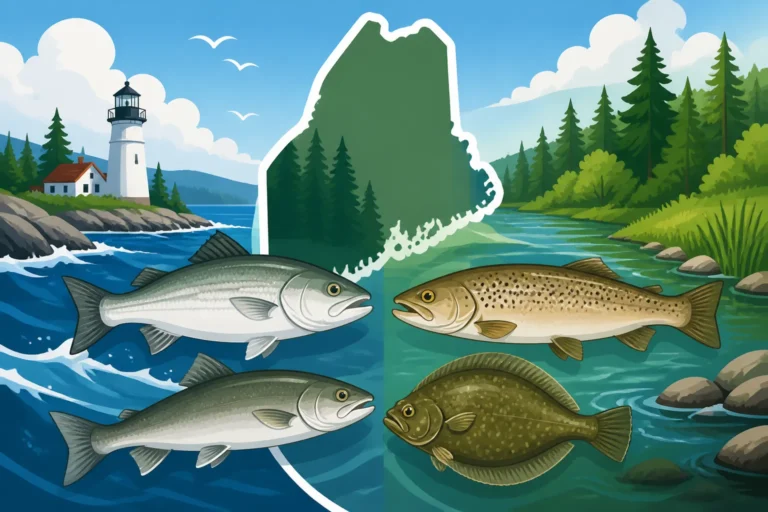
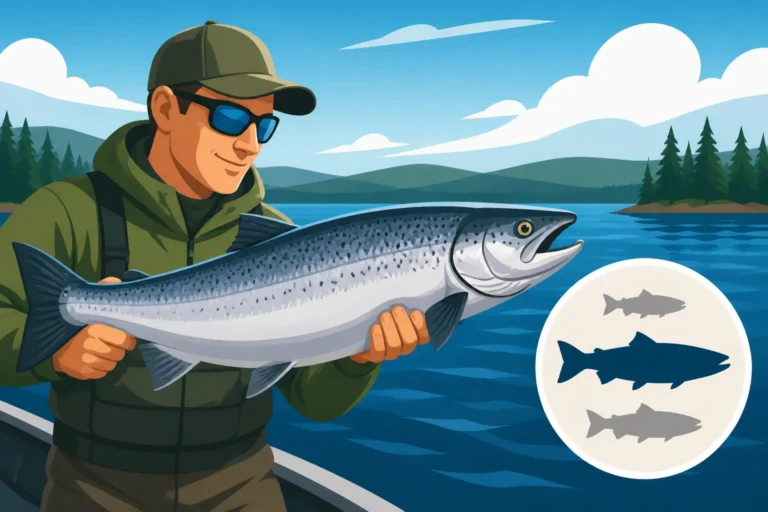
While some anglers might confuse landlocked salmon with other salmonids like brook trout or brown trout, there are distinct features that help with identification. Landlocked salmon typically have a more streamlined, silvery body compared to the more speckled or colored patterns of brook and brown trout. Their tail is distinctly forked, a key characteristic. Brook trout, Maine's state fish, have a square or slightly emarginate (notched) tail and distinct worm-like markings (vermiform patterns) on their backs and dorsal fins, along with vibrant red spots often surrounded by blue halos on their sides. Brown trout usually have larger, dark spots, sometimes with red halos, scattered along their sides and often have a more brownish or yellowish tint. How to Identify a Landlocked Salmon is a valuable resource for anglers to sharpen their identification skills. Another helpful identifier for salmon is that their jaw typically extends to the back of the eye, but not significantly beyond it, whereas a brown trout's jaw often extends beyond the back of the eye. Proper identification is important not just for knowing what you've caught, but also for adhering to specific fishing regulations which often vary by species.
Where to Find Landlocked Salmon in Maine
Maine is blessed with an abundance of clear, cold lakes and rivers that provide prime habitat for landlocked salmon. While they are present in many waters, some stand out as premier destinations, offering consistent action and the chance at trophy-sized fish. Knowing these prime locations and understanding the habitat within them is key to success.
Top Lakes and Ponds for Salmon Fishing
Maine boasts several iconic lakes renowned for their landlocked salmon fisheries. These large, deep, oligotrophic (nutrient-poor, oxygen-rich) waters mimic the marine environment enough to support healthy salmon populations.
- Sebago Lake: Located just outside of Portland, Sebago is perhaps the most famous landlocked salmon fishery in the state. Its immense size and depth provide ample cold-water habitat, and its strong smelt population supports truly impressive salmon. Anglers often target Sebago for its reputation for producing large, hard-fighting fish. You can find out more by checking out our Sebago Lake Fishing Guide.
- Moosehead Lake: As Maine's largest lake, Moosehead offers a vast and wild experience for salmon anglers. The lake's deep, cold waters are ideal for salmon, particularly the northern end and deeper basins. While a bit more remote, the rewards can be substantial, with many anglers reporting excellent catches. A detailed Moosehead Lake Fishing Guide can help you navigate its expansive waters.
- Rangeley Lakes: This interconnected chain of lakes in Western Maine, including Rangeley Lake, Mooselookmeguntic, and Aziscohos, is legendary for its salmon and brook trout fishing. The pristine environment and abundant baitfish make it a fly fisherman's paradise and a top trolling destination. Our Rangeley Lakes Fishing Guide offers more specific tips for this region.
- West Grand Lake: Part of the Grand Lake Stream fishery, West Grand is known for its strong populations of both salmon and togue (lake trout). Its wild character and significant size offer a remote angling experience that appeals to those seeking solitude and exceptional fishing.
- East Grand Lake: Bordering New Brunswick, East Grand Lake is another fantastic destination, sharing many characteristics with West Grand. It's a large, cold-water lake with excellent salmon populations, often fished by both Maine and Canadian anglers.
These lakes are considered the crown jewels, but many other waters, like Messalonskee Lake, Big Wood Pond, and Schoodic Lake, also offer fantastic landlocked salmon opportunities. Always consult the Maine Department of Inland Fisheries and Wildlife (MDIFW) regulations for specific waters, as special rules often apply. Best Fishing Lakes in Maine provides an even broader overview of the state's top fishing destinations.
Identifying Key Salmon Habitat in Lakes
Within these larger lakes, salmon aren't just randomly distributed. They are creatures of habit and temperature. Understanding their preferred structure and conditions is paramount.
- Deep Water Basins and Drop-offs: During warmer months, salmon retreat to deeper, cooler sections of the lake. Look for the deepest holes and basins, especially those with structure like underwater humps, reefs, or sudden drop-offs. These areas provide both the desired temperature and ambush points for schooling baitfish.
- Thermocline: This is often the magic zone. The thermocline is the layer where warm surface water meets colder deep water. Baitfish often congregate here, attracting salmon. A good fish finder with temperature sensing capabilities can be invaluable in locating this productive band.
- Inflows and Outflows: River mouths and stream inlets/outlets are critical, especially during spring and fall. These areas provide cooler, oxygenated water and are staging points for salmon entering or leaving spawning grounds. The current can also concentrate baitfish.
- Rocky Points and Submerged Islands: These structures can provide cover and ambush points for salmon, particularly if they extend into deeper water. They also create current breaks that baitfish may utilize.
- Baitfish Schools: Ultimately, salmon will be where their food is. If you can locate schools of smelts or other baitfish on your fish finder, you're likely in a prime salmon-holding area. Pay attention to how these schools are behaving; if they're tightly packed, there's often a predator nearby. Amazon offers a wide range of portable and boat-mounted fish finders that can help you locate these crucial underwater structures and baitfish schools.
Understanding Seasonal Movements in Maine Waters
Landlocked salmon are highly migratory within their lake systems, their movements dictated primarily by water temperature and spawning instincts.
- Spring (Ice-Out to Early June): This is often considered the best time for salmon fishing. As the ice recedes, the entire water column is cold and oxygenated, allowing salmon to range widely, often moving into shallower water to feed on smelts migrating up to spawn. They can be found near shorelines, shallow points, and around river mouths. This is a time of aggressive feeding as they recover from winter.
- Summer (June to September): As surface waters warm, salmon descend into the deeper, cooler parts of the lake. They'll primarily be found in the thermocline layer, often suspended over deep water or near submerged structures that provide cool relief. Targeting them requires precise trolling depths and good electronics.
- Fall (September to November): As water temperatures drop, salmon become more active and begin their pre-spawn migrations. They move back into shallower areas and congregate near river and stream mouths, preparing to spawn. This can be another excellent time for fishing, with aggressive fish. Best Time of Year to Catch Landlocked Salmon in Maine offers more detailed insights into these seasonal patterns.
- Winter (Ice Fishing Season): Once lakes freeze over, landlocked salmon can be targeted through the ice. They will still seek out cold, oxygenated water and follow baitfish, often found near deep water ledges, humps, and sometimes even shallower flats early in the season. Maine Ice Fishing Rules Guide contains vital information on specific regulations during this cold period.
Understanding these seasonal movements allows you to adapt your techniques and target locations, increasing your chances of success throughout the year.
Best Times and Seasons for Landlocked Salmon
While Maine offers year-round opportunities for landlocked salmon, certain seasons provide distinct advantages and require specific approaches. Timing your trip and understanding the salmon's behavior during each period can dramatically improve your catch rate.
Spring: Post-Ice Out Opportunities
Spring, especially from late April through May after the ice has left the lakes, is prime time for many landlocked salmon anglers in Maine. This period marks a resurgence of activity for these cold-water predators.
- The Post-Winter Feast: After a long winter under the ice, salmon are hungry and actively feeding. The entire water column is cold and oxygenated, meaning salmon aren't restricted to deep, cool pockets. This allows them to roam more freely, often moving into shallower waters where baitfish, like smelts, are also active and may be spawning.
- Where to Find Them: Look for salmon near shorelines, especially rocky points, shallow ledges, and around the mouths of tributary rivers and streams. These areas are magnets for smelt migrations. Bays and coves that warm up slightly faster can also hold baitfish, attracting hungry salmon.
- Effective Tactics: Trolling becomes highly effective during this period. Flat-lining or using very shallow diving planer boards to present lures just below the surface or down a few feet can be incredibly productive. Spoons, stickbaits, and streamer flies are excellent choices. Casting from shore or a boat with these same lures can also yield results, particularly in the early morning or late evening. Fly anglers can often find success targeting river mouths or shallow lake sections with smelt-imitating streamers. Maine Spring Salmon Fishing Techniques delves deeper into specific strategies for this exciting time of year.
Summer: Deep Water Challenges
As Maine transitions into the warmth of summer, landlocked salmon adapt by retreating to the cooler, deeper sections of their lake homes. This shift presents a different, often more technical, challenge for anglers.
- Seeking Thermal Refuge: Once surface water temperatures climb into the mid-60s Fahrenheit, salmon will seek out the thermocline – the layer of water where temperatures rapidly drop – or the deepest, coldest pockets of the lake. They need water in the mid-50s to low 60s to thrive. This means they'll often be suspended over vast depths, or hugging structure well below the surface.
- Precision is Key: Locating salmon in summer demands good electronics. A quality fish finder can pinpoint the thermocline, identify baitfish schools, and even mark individual salmon arches. Once located, presenting lures at the exact depth is critical. Downriggers, lead core line, and even diving planers are essential tools for getting your offerings down to the strike zone.
- Tactics for Success: Trolling remains the primary method, but it's all about depth control. Small, fluttering spoons, bucktail jigs, and slender stickbaits that imitate smelts are popular choices. The Trolling Techniques for Maine Lakes article offers detailed advice on how to master this approach. Early mornings and late evenings can sometimes bring salmon shallower, especially after a cool night, but generally, expect to fish deeper during the summer months. Focus on areas where deep water is adjacent to structure, or over vast open water basins where baitfish congregate.
Fall: Spawning Runs and Aggressive Feeding
As the days shorten and water temperatures begin their gradual descent in the fall, landlocked salmon undergo another significant shift in behavior, often leading to some of the most exciting fishing of the year.
- Pre-Spawn Aggression: With the cooling waters, salmon become more active and aggressive as they prepare for their autumn spawning ritual. They will move out of their deep summer haunts and begin staging near the mouths of tributary rivers and streams where they intend to spawn. This pre-spawn period is characterized by intense feeding as they build energy reserves.
- Targeting the Runs: Anglers often focus on these river mouths and the lower stretches of rivers themselves. The fish can be incredibly aggressive, striking at a variety of lures and flies. Trolling or casting spoons and stickbaits in the lake near river entries, or fly fishing with large streamer patterns in the rivers, can be very productive.
- Spawning Period: While salmon will still strike during the actual spawning period (late October-November), anglers should be particularly mindful of conservation during this time. Many regulations are designed to protect spawning salmon and their redds. It's often best to focus efforts on the pre-spawn staging areas rather than directly on the spawning beds. The Maine Fishing Season Dates Guide will provide exact dates and specific regulations that come into play during the fall.
Winter: Ice Fishing for Landlocked Salmon
When Maine's lakes freeze over, a dedicated group of anglers bundles up for the unique challenge of ice fishing for landlocked salmon. This season offers a different kind of tranquility and the chance to pull a powerful fish through a small hole in the ice.
- Under the Ice: Salmon continue their cold-water preference even under the ice, often suspending over deep water basins or cruising along underwater ledges and humps where baitfish congregate. They remain active feeders throughout the winter.
- Tip-Up and Jigging Strategies: The most common approach involves setting up several tip-ups (portable fishing devices that signal a bite) baited with live or dead smelts. These are deployed over deep water, allowing the bait to swim naturally. Meanwhile, anglers often jig nearby with small spoons, jigs, or even streamer flies to actively entice strikes. Maine Ice Fishing Techniques Guide is an invaluable resource for mastering these methods.
- Electronics are Crucial: Just like in open water, a portable fish finder or an ice fishing flasher is incredibly helpful for locating salmon, identifying bait schools, and observing how fish react to your presentation. This allows for precise depth adjustments and strategic bait placement. Pay attention to early ice conditions; safety is paramount. Check out Early Ice Safety Tips for Maine Anglers before heading out. While often overlooked, winter can be an incredibly rewarding time to pursue these magnificent fish, offering a peaceful solitude rarely found during other seasons.
Essential Gear for Landlocked Salmon Fishing
Success in landlocked salmon fishing often boils down to having the right tools for the job. These fish are powerful and often require specialized gear to effectively locate, hook, and land them. Investing in quality equipment appropriate for the techniques you plan to use will pay dividends.
Rods, Reels, and Line Selection
Choosing the right rod, reel, and line setup is foundational for landlocked salmon fishing, whether you're trolling, casting, or fly fishing.
- Trolling Setups: For trolling on open water, a medium-light to medium action rod, typically 7 to 8.5 feet long, with a fast to moderate-fast tip, is ideal. This length provides good leverage for fighting fish and handling trolling spreads. Pair this with a reliable baitcasting reel or a level-wind reel that has a smooth drag system and a line counter. Line counters are invaluable for knowing exactly how much line you have out, which is critical for repeating successful depths. Your line choice will vary depending on the technique. For lead core trolling, you'll need specialized multi-colored lead core line, often with a monofilament or fluorocarbon leader. For downriggers, a good quality braided line (15-20 lb test) as your main line, spliced to a monofilament or fluorocarbon leader (6-10 lb test), provides sensitivity and strength. Monofilament (6-10 lb test) is often preferred for flat-lining due to its stretch, which acts as a shock absorber.
- Spinning Setups: For casting lures from shore or boat, or for lighter trolling applications, a medium-light to medium action spinning rod, around 6.5 to 7 feet, paired with a reliable spinning reel (size 2500-3000) with a smooth drag, is a versatile choice. Spool this with 6-8 lb test monofilament or a thin braided line of similar breaking strength, again with a fluorocarbon leader for stealth. This setup offers good casting distance and sensitivity.
- Fly Fishing Gear: Fly fishing for landlocked salmon, particularly in rivers or during lake shallow-water periods, requires a 6 to 8-weight fly rod, typically 9 feet long. A matching large-arbor fly reel with a smooth disc drag is essential, as salmon will often make long, powerful runs. Floating lines are useful for topwater or shallow presentations, while sinking tip or full sinking lines are crucial for getting streamers down to deeper-holding fish. A leader of 6-8 lb test fluorocarbon or monofilament, tapered for fly casting, completes the setup.
When buying gear, consider durable options available on Amazon. Brands like Shimano, Penn, Daiwa, Fenwick, and St. Croix are well-regarded for their quality rods and reels that can withstand the demands of salmon fishing.
Lures and Bait That Attract Salmon
Landlocked salmon are primarily piscivores (fish-eaters), and their diet heavily influences the types of lures and bait that are most effective.
- Smelt Imitations: Because smelts are their primary forage in many Maine lakes, lures that mimic these slender, silvery baitfish are incredibly effective.
- Spoons: Classic trolling spoons like Mooselook Wobblers, DB Smelts, and Sutton Spoons are perennial favorites. Sizes vary, but generally, 2-3.5 inch spoons are a good starting point. Colors like silver, blue/silver, green/silver, and gold are often productive.
- Stickbaits/Minnow Plugs: Long, slender jerkbaits or stickbaits like Rapala Original Floaters or Husky Jerks, or similar lures from other brands, are excellent for casting or flat-lining.
- Streamer Flies: For fly anglers, smelt patterns like the Grey Ghost, Black Ghost, Supervisor, and Warden's Worry are legendary. These are often tied on long-shank hooks to imitate the slender profile of a smelt.
- Jigs: Bucktail jigs or soft plastic swimbaits on jig heads can be very effective, especially for jigging through the ice or when salmon are holding deeper in open water. Tip them with a piece of bait for added attraction.
- Live Bait: Live smelts are arguably the most effective bait for landlocked salmon, particularly when fished on tip-ups for ice fishing or slowly trolled. When live smelts aren't available, shiners can be a good substitute. Always check regulations regarding the use of live bait and baitfish acquisition. Dead smelts can also be effective, particularly for still fishing or slow trolling.
- Flies for Specific Seasons/Hatches: While smelts are key, in rivers or at certain times, salmon will also feed on aquatic insects. Dry flies, nymphs, and wet flies can be effective when salmon are rising to feed on mayflies, caddisflies, or stoneflies, particularly in stream or river settings.
Boats and Electronics for Successful Angling
For open-water landlocked salmon fishing, having the right boat and electronics setup can make a world of difference.
- Boat Choice: While kayaks and canoes can certainly catch salmon in smaller waters or near shore, a larger, stable boat is generally preferred for targeting salmon in Maine's big lakes. An 18-22 foot deep-V hull boat or an aluminum fishing boat (like those from Lund or Alumacraft) provides stability in choppy conditions, ample space for gear, and the ability to cover large expanses of water. A reliable outboard motor is essential for reaching distant fishing grounds and safely navigating.
- Electronics:
- Fish Finder/Chartplotter: This is arguably the most crucial piece of electronic gear. A quality unit with CHIRP sonar, down imaging, and side imaging capabilities will help you mark baitfish schools, identify salmon arches, and locate underwater structure like humps, ledges, and channels. A GPS chartplotter function is invaluable for navigating large lakes, marking productive waypoints, and tracking trolling passes. Humminbird and Lowrance are popular brands with excellent options.
- Temperature Gauge: Many fish finders include water temperature sensors, but a separate, accurate surface temperature gauge can also be helpful. Knowing the surface temperature is a good starting point for predicting where the thermocline might be.
- Electric Trolling Motor (with GPS): While not strictly essential, an electric trolling motor with GPS capabilities (like those from Minn Kota with Spot-Lock) can be a game-changer for precise boat control, particularly when slow-trolling or holding over a specific piece of structure.
- Downriggers: For consistently getting lures down to the thermocline or specific deep depths, downriggers are indispensable for summer salmon fishing. Manual or electric models can be effective, but electric models offer more convenience and precision.
- Planer Boards: Used for spreading out your trolling lines, planer boards allow you to cover a wider swath of water, getting lures away from the boat and sometimes into less pressured zones. In-line planer boards or larger mast-style boards are used depending on preference and conditions.
A well-equipped boat with good electronics transforms salmon fishing from a guessing game into a more strategic and often more successful endeavor. Remember to always prioritize safety by carrying all required safety gear, including life jackets, and being mindful of changing weather conditions on Maine's large lakes.
Effective Techniques for Catching Landlocked Salmon
Catching landlocked salmon consistently requires more than just knowing where they are; it demands mastering specific techniques tailored to their behavior and habitat. Whether you prefer the methodical approach of trolling or the finesse of fly fishing, there are proven methods that yield results.
Trolling Strategies for Open Water
Trolling is, without a doubt, the most popular and often most effective method for targeting landlocked salmon in Maine's large lakes, particularly during the spring and summer months. It allows anglers to cover vast amounts of water and present lures at precise depths.
- Speed and Depth Control: These are the two most critical factors in successful trolling for salmon. Salmon typically prefer speeds between 1.8 and 2.5 miles per hour, but this can vary daily. Experiment with slight speed changes. For depth, you'll need to use various methods:
- Lead Core Line: This multi-colored line sinks at a predictable rate (roughly 5 feet per color, or 10 yards, at typical trolling speeds). By letting out a certain number of colors, you can achieve specific depths. It's often used with spoons or small stickbaits.
- Downriggers: These devices use a heavy cannonball to take your line, connected via a release clip, down to a precise depth. When a fish strikes, the line releases from the clip, allowing you to fight the fish directly. Downriggers are essential for deep-water summer salmon.
- Diving Planers/Disc Divers: These are small, adjustable diving devices that clip onto your line and pull your lure down to a predetermined depth. They are a good alternative if you don't have downriggers.
- Flat Lining: In spring or during low-light conditions, salmon will come to the surface. Flat-lining involves simply letting out line with a shallow-running lure behind the boat.
- Lure Presentation: Always use a fluorocarbon leader (6-10 lb test) between your main line and lure. This virtually invisible leader helps fool wary salmon. Ensure your lures are running true; a spoon that spins or a stickbait that tracks incorrectly won't catch fish. Small, slender spoons (e.g., Mooselook Wobblers, DB Smelts) and minnow plugs (e.g., Rapalas, Yo-Zuris) are standard. Maine Open Water Line Limits should always be checked to ensure you're compliant with the number of lines you can legally fish.
- Patterns and Structure: Don't just troll aimlessly. Use your fish finder and chartplotter to target underwater humps, ledges, deep points, and especially areas where you mark baitfish. Troll in S-curves or figure-eights to vary the speed and depth of your lures, often triggering strikes. Mark every strike on your GPS to identify productive areas and depths. Trolling Depths for Landlocked Salmon is a specific topic that helps refine this technique.
Fly Fishing for Salmon in Rivers and Lakes
Fly fishing offers a more intimate and challenging way to pursue landlocked salmon, particularly rewarding for those who enjoy the finesse and artistry of the sport.
- River Fishing: Maine's salmon rivers and larger stream tributaries are ideal for fly fishing, especially during the spring and fall runs.
- Streamer Fishing: This is the most common and effective method. Use smelt patterns (e.g., Grey Ghost, Black Ghost, Supervisor, Barnes' Special) fished on sinking or sinking-tip lines. Cast across and downstream, letting the current swing the fly, imitating a struggling baitfish. Vary your retrieve with strips and pauses.
- Nymphing and Dry Fly Fishing: While less common for salmon, during certain insect hatches, salmon will feed on emerging insects. Nymphs (e.g., Hare's Ear, Pheasant Tail) can be effective in deeper runs, and occasionally, during a strong mayfly or caddisfly hatch, salmon will rise to dry flies (e.g., Caddis, Adams).
- Lake Shoreline and Mouths: In early spring and late fall, when salmon are shallow, fly fishing from a boat or even wading shorelines and river mouths can be very productive. Cast large streamer patterns and retrieve them with a strip-pause motion. Fly Fishing Techniques for Maine Rivers offers a detailed guide to these methods.
- Equipment: A 6-8 weight fly rod, a matching large arbor reel with a strong drag, and appropriate floating, sinking-tip, or full-sinking lines are essential. Leaders should be 6-8 lb test fluorocarbon, especially for streamers.
Jigging and Still Fishing Methods
While trolling often gets the most attention, jigging and still fishing can be highly effective, especially when salmon are concentrated in specific areas or during the ice fishing season.
- Jigging: This active technique involves vertically presenting a lure (usually a jig) and imparting action with your rod.
- Open Water: When salmon are suspended over deep water, or congregated around structure, vertical jigging with bucktail jigs, blade baits, or heavy spoons can be very effective. Use your fish finder to mark fish and present your jig just above them. Experiment with different retrieve speeds and jigging motions (short snaps, long lifts).
- Ice Fishing: Jigging through the ice is a staple for winter salmon. Small spoons (Swedish Pimples, Crippled Herring) or bucktail jigs tipped with a piece of smelt or a grub are popular. Use a sensitive ice fishing rod and a portable flasher to see your jig and detect bites. How to Jig for Lake Trout in Winter shares similar principles that can be adapted for salmon.
- Still Fishing/Live Bait:
- Open Water: Anchoring over a known salmon holding area (e.g., deep hump, point) and presenting a live smelt under a float or on a weighted bottom rig can be deadly. Ensure your bait is at the right depth and can swim freely.
- Ice Fishing (Tip-Ups): This is the quintessential ice fishing method for salmon. Set up several tip-ups, each with a live smelt hooked through the back or lips. Position them at varying depths over deep water or along contour lines. When the flag goes up, a salmon has taken the bait! Setting Up Tip-Ups for Ice Fishing provides a step-by-step guide. Always check Maine Ice Fishing Line Limits to ensure you comply with how many tip-ups or lines you can use.
These varied techniques offer different levels of activity and challenge, ensuring there's a rewarding way for every angler to target Maine's magnificent landlocked salmon.
Regulations and Conservation for Landlocked Salmon
Fishing for landlocked salmon in Maine is a privilege that comes with the responsibility of understanding and adhering to the state's regulations. These rules are not arbitrary; they are carefully crafted by the Maine Department of Inland Fisheries and Wildlife (MDIFW) to protect and sustain the health of our precious fisheries for generations to come. Ignoring them can lead to significant penalties and, more importantly, can harm the very resource we cherish.
Understanding Maine's Salmon Regulations
Navigating fishing regulations can sometimes feel like a puzzle, but it's an essential part of responsible angling. Maine's rules for landlocked salmon are comprehensive and often vary by water body.
- Licensing: First and foremost, you must possess a valid Maine fishing license. This applies to most individuals aged 16 and older. Residents and non-residents have different license types and costs. Make sure to understand how to get one by reading our How to Get a Maine Fishing License guide.
- Season Dates: Landlocked salmon seasons generally run year-round in many lakes, but there can be specific opening and closing dates for certain rivers and streams, especially those vital for spawning. Ice fishing seasons also have specific start and end dates. Always consult the most current MDIFW fishing law book or their website for precise dates for the specific waters you plan to fish. Our Maine Fishing Season Dates Guide provides a good overview.
- Bag Limits: This refers to the maximum number of fish of a particular species you can keep in a single day. For landlocked salmon, this limit is often 1 or 2 fish per day, depending on the water. These limits are in place to prevent overfishing and maintain healthy populations. Landlocked Salmon Size and Bag Limits in Maine is a crucial resource to consult before your trip.
- Size Limits: Many salmon fisheries have minimum or maximum length limits (or slot limits) for the fish you can keep. A minimum length limit allows younger fish to grow and spawn, while a slot limit (e.g., "no salmon between 16 and 20 inches may be kept") protects prime breeding-age fish. Always measure your catch carefully. If a fish doesn't meet the legal size, it must be immediately released unharmed.
- Terminal Tackle Restrictions: Some waters may have restrictions on the type of bait (e.g., no live bait), hooks (e.g., single-pointed hooks only), or even the material used for jigs (e.g., the Maine Lead Jig Ban Starting September 2026). These rules are often put in place for specific conservation efforts or to reduce harm to released fish.
- Special Regulations: Maine has many "Special Regulation" waters, meaning that the general statewide rules do not apply, and specific, often more restrictive, rules are in place for that particular lake, pond, or river. Always check the individual water you plan to fish in the MDIFW regulations. Don't assume.
Familiarizing yourself with the Maine Fishing Regulations Explained is not just good practice; it's a legal requirement. Ignorance of the law is not an excuse, and game wardens are diligent in enforcing these rules to protect Maine's natural heritage.
Importance of Catch and Release Practices
While regulations permit keeping a certain number of salmon, practicing catch and release, especially for larger breeding-size fish, is a cornerstone of responsible landlocked salmon management and conservation.
- Ensuring Future Generations: Larger salmon, particularly females, are crucial for successful spawning and the perpetuation of the species. Releasing these fish allows them to contribute to the next generation, bolstering the overall health and population of the fishery.
- Minimizing Stress: Even if you intend to release a fish, handling it properly is paramount to its survival.
- Minimize Fight Time: Use appropriate tackle to bring the fish in as quickly as possible, reducing exhaustion.
- Wet Hands Only: Always wet your hands before touching a fish. Dry hands can remove the protective slime coat, making the fish vulnerable to disease.
- Keep in Water: Try to keep the fish in the water as much as possible, especially during warm weather. Use pliers or a dehooking tool to remove the hook while the fish is still submerged.
- Support Body Weight: If you must lift the fish for a quick photo, support its body horizontally. Never hold a salmon vertically by the jaw or gills, as this can cause internal damage.
- Revive Gently: If the fish seems lethargic, hold it gently in the water, facing into a mild current, and allow water to flow over its gills until it regains strength and swims away on its own.
- Ethical Angling: Practicing catch and release, especially when you've already met your creel limit or simply want to release a magnificent specimen, reflects a deep respect for the resource. It's about the experience and the challenge, not just the harvest. For more detailed guidance, consult Catch and Release Best Practices in Maine.
Protecting Maine's Landlocked Salmon Population
Beyond individual angling practices, broader conservation efforts are vital to the long-term health of Maine's landlocked salmon populations.
- Habitat Preservation: Salmon rely on cold, clean water and healthy spawning tributaries. Efforts to protect riparian zones, prevent pollution, control erosion, and remove barriers to fish passage are critical. Supporting organizations that work on watershed protection and stream restoration directly benefits salmon.
- Fisheries Management: The MDIFW actively monitors salmon populations, conducts stocking programs (where necessary to supplement natural reproduction), and adjusts regulations based on scientific data. They conduct creel surveys, netting studies, and collaborate with researchers to understand population dynamics. This adaptive management approach is key to maintaining sustainable fisheries.
- Invasive Species Prevention: Invasive aquatic species, whether plants or fish, pose a significant threat to native salmon ecosystems. They can outcompete native baitfish, degrade habitat, or introduce diseases. Always "clean, drain, and dry" your boats and gear between water bodies to prevent the spread of invasives.
- Public Awareness: Educating fellow anglers, outdoor enthusiasts, and the general public about the importance of salmon conservation helps foster a broader stewardship ethic. Sharing knowledge and leading by example are powerful tools.
By understanding and respecting these regulations and actively participating in conservation efforts, we can ensure that future generations will continue to enjoy the thrill of landlocked salmon fishing in the beautiful state of Maine.
Beyond the Catch: Enjoying Your Maine Landlocked Salmon Experience
Landing a beautiful landlocked salmon is undoubtedly a highlight of any fishing trip to Maine, but the experience extends far beyond the moment the fish hits the net. From preparing your catch to considering a guided adventure, there are many ways to enhance your time in the Maine woods.
Filleting and Cooking Your Catch
If you've decided to keep your legal limit of landlocked salmon, preparing it properly for the table is the next step to enjoying the fruits of your labor. Salmon are renowned for their delicious, rich-flavored meat.
- Proper Care After Catch: The key to great-tasting fish starts immediately after the catch. If you plan to keep your salmon, dispatch it humanely and place it on ice as quickly as possible. This preserves the quality of the meat. A cooler with plenty of ice is essential.
- Filleting Basics: Filleting a salmon is a skill that improves with practice. You'll need a sharp, flexible filleting knife.
- Start by making a cut behind the gill plate, down to the backbone.
- Turn the knife and cut along the backbone towards the tail, keeping the knife flat against the bones.
- Once the first fillet is removed, flip it over and remove the rib bones, either by cutting around them or by running your knife just over them.
- You can then skin the fillet by placing it skin-side down, holding the tail end, and running your knife between the skin and the meat at a slight downward angle.
- Repeat on the other side.
- For a visual guide, searching online for "how to fillet a salmon" will provide numerous videos and diagrams.
- Simple Cooking Methods: Landlocked salmon is versatile in the kitchen. Here are a couple of popular, easy methods:
- Baked Salmon: Season fillets with salt, pepper, a squeeze of lemon juice, and a pat of butter or a drizzle of olive oil. Bake at 375°F (190°C) for 12-18 minutes, or until the fish flakes easily with a fork.
- Pan-Seared Salmon: Heat a little oil in a non-stick pan over medium-high heat. Season the salmon. Place skin-side down (if skin is on) and cook for 4-6 minutes until crispy, then flip and cook for another 3-5 minutes, depending on thickness.
There's immense satisfaction in enjoying a meal that you've caught and prepared yourself, a true taste of the Maine wilderness.
Hiring a Guide for a Better Chance
For many anglers, especially those visiting Maine or new to landlocked salmon fishing, hiring a Registered Maine Guide can dramatically improve your success and overall experience.
- Expert Knowledge: Maine Guides are intimately familiar with the local waters, salmon behavior, and the most effective techniques for the current conditions. They know where the fish are holding, what they're biting on, and how to present the lures correctly. Their local knowledge can save you days of trial and error.
- Safety and Navigation: Maine's large lakes can be challenging, with rapidly changing weather and complex navigation. A guide ensures your safety, handles the boat, and knows how to navigate unfamiliar waters, allowing you to focus purely on fishing.
- Instruction and Skill Development: A good guide acts as a teacher, offering instruction on casting, trolling setups, knot tying, and fish fighting techniques. This is invaluable for beginners looking to learn the ropes or experienced anglers wanting to refine specific skills.
- Equipment Provided: Guides typically provide all the necessary fishing gear, including rods, reels, lures, and sometimes even specialized equipment like downriggers. This means you don't have to invest in expensive gear or worry about packing it.
- Enhanced Experience: Beyond just catching fish, a guide can enrich your trip with stories, local lore, and a deeper understanding of Maine's natural environment. They often provide lunch, snacks, and drinks, making for a truly relaxing and enjoyable day on the water.
- Booking a Guide: It's wise to book a guide well in advance, especially during peak seasons. Research guides specializing in landlocked salmon or the specific body of water you plan to fish. You can find more comprehensive information in our Hiring a Maine Fishing Guide article. When researching, check for reviews and ensure they are a Registered Maine Guide.
Whether it's for a half-day or a multi-day wilderness adventure, a guide can transform a good fishing trip into an unforgettable Maine experience.
Planning Your Maine Salmon Fishing Adventure
A successful landlocked salmon trip in Maine often begins long before you even cast a line. Careful planning ensures you're prepared for the elements and the fish.
- Research Your Destination: Decide which lake or river you want to fish based on the time of year, your preferred fishing style (trolling, fly fishing, ice fishing), and the type of experience you seek (remote wilderness vs. more accessible locations). Consult MDIFW regulations specific to that water body. Our Maine Fishing License Guide is your starting point for legal compliance.
- Seasonal Timing: As discussed earlier, salmon behavior changes drastically with the seasons. Align your trip with the best time for your chosen technique and species. Maine Fishing Season Calendar provides a great overview.
- Accommodation and Logistics: Book your lodging, whether it's a lakeside cabin, a sporting camp, or a motel, well in advance, especially during peak summer and fall foliage seasons. Consider boat rentals if you don't own a suitable vessel.
- Pack Smart: Maine weather can be unpredictable. Pack layers of clothing suitable for both warm and cold conditions, including rain gear. Bring sunscreen, insect repellent, a first-aid kit, and plenty of water and snacks.
- Essential Gear Check: Double-check all your fishing gear before you leave. Sharpen hooks, spool fresh line, and ensure all reels are functioning smoothly. Bring a variety of lures and flies. Don't forget a camera to capture those memorable moments! Amazon can be a great place to pick up any last-minute gear or fishing essentials you might need.
- Share Your Plan: If you're heading into more remote areas, always let someone know your itinerary, including where you're going, when you expect to return, and who to contact if you don't check in.
By taking the time to plan thoroughly, you set yourself up for a safer, more enjoyable, and ultimately more successful landlocked salmon fishing adventure in the beautiful state of Maine. The anticipation is half the fun, and with the right preparation, the other half will be reeling in that magnificent fish.
Disclaimer
This article is for general informational purposes only and does not constitute professional advice. Laws, prices and regulations vary by location and change over time. Consult a qualified professional for guidance on your specific situation.