Landlocked Salmon Size and Bag Limits in Maine
Navigating the world of Maine fishing regulations can feel like trying to untangle a particularly stubborn knot in your fishing line, especially when it comes to prized species like landlocked salmon. Many anglers, both seasoned and new, find themselves scratching their heads over what seems like a patchwork of rules for different waters. You might be wondering, "How many can I actually keep?" or "What's the legal length for a salmon in this lake?" This guide is here to cut through the confusion, offering a clear, comprehensive breakdown of the size and bag limits for landlocked salmon across the Pine Tree State, so you can focus on the thrill of the catch.
Understanding Landlocked Salmon in Maine
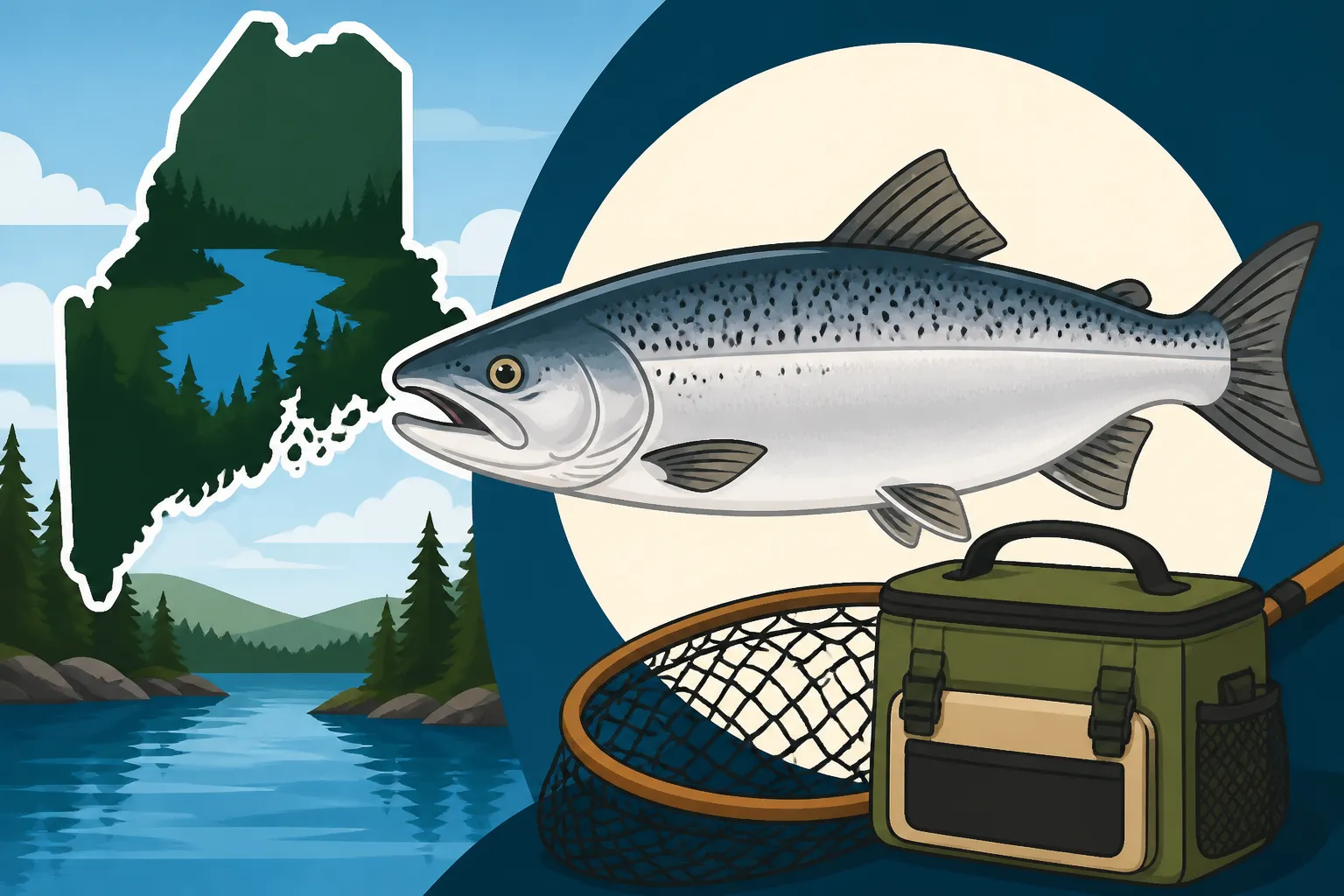
Landlocked salmon (Salmo salar) are one of Maine's most iconic and sought-after freshwater game fish. These magnificent creatures are, as their name suggests, salmon that complete their entire life cycle in freshwater, never making it to the ocean. They are direct descendants of Atlantic salmon, and they represent a truly unique and thrilling angling challenge. Found primarily in cold, deep, and oligotrophic (nutrient-poor) lakes, landlocked salmon are known for their powerful fights and delectable taste.
Maine's landscape, dotted with thousands of lakes and ponds, offers prime habitat for these fish, especially in the larger, deeper systems. From the sprawling waters of Moosehead Lake to the crystal-clear depths of Sebago, these lakes provide the perfect environment for salmon to thrive. However, maintaining these populations requires careful management, which is where the regulations come into play. Understanding the biology and habitat preferences of landlocked salmon helps shed light on why these rules exist, ensuring sustainable fishing for generations to come. Landlocked Salmon Fishing in Maine is a pursuit many Mainers cherish.
Identifying Landlocked Salmon
Distinguishing landlocked salmon from other salmonids can sometimes be tricky, especially for beginners. They typically have a sleek, silvery body, often with dark spots on their back and sides that may or may not extend below the lateral line. Their tail fin is usually forked, and they possess a small, fleshy adipose fin characteristic of salmon and trout species. During spawning season, males can develop a pronounced hooked jaw, known as a kype, and their coloration can become darker and more bronze.
It's crucial to be able to accurately identify your catch, not just for the sake of following regulations, but also to appreciate the diversity of Maine's fish species. While they share similarities with brook trout or brown trout, a keen eye for detail, focusing on fin shape, spot patterns, and overall body profile, will help you tell them apart. When in doubt, it's always best to assume it's a regulated species and err on the side of caution. If you're new to this, carrying a small, waterproof fish identification guide can be incredibly helpful on the water.
Preferred Habitat and Behavior
Landlocked salmon are cold-water fish, preferring water temperatures generally below 65°F. This means that during the warmer summer months, they tend to move into the deeper, cooler sections of lakes, often suspending themselves in the water column or hugging cool spring-fed areas. In spring and fall, as surface waters cool, they become more active in shallower areas, making them more accessible to shore anglers and those fishing closer to the surface.
Their diet primarily consists of baitfish, with smelt being a favorite in many Maine lakes. The abundance and health of the smelt population often directly impact the growth and size of the salmon. Understanding these habitat preferences and feeding behaviors is key to successful landlocked salmon fishing. It also helps explain why regulations might change depending on the time of year or specific water body, as biologists work to protect spawning grounds and ensure adequate forage for growing salmon.
Navigating Bag Limits for Landlocked Salmon
One of the first questions any angler asks is, "How many can I keep?" For landlocked salmon in Maine, the answer isn't always a simple number. While there's a general law that applies to most waters, many lakes and ponds have specific regulations that supersede the general law. This is where fishing in Maine can get a little complex, but don't let it discourage you! It's all designed to manage these precious fisheries effectively.
The general law is your starting point, but always, always, always check the specific rules for the body of water you plan to fish. You can find these details in the Maine Department of Inland Fisheries and Wildlife (MDIFW) open water or ice fishing regulations book, which is updated annually. Ignorance of the law is no excuse, and wardens are out there making sure everyone is doing their part to conserve Maine's natural resources. Maine Fishing Regulations Explained covers this in more detail.
General Law Bag Limits
Under Maine's general law, the daily bag limit for landlocked salmon is typically two fish per day. This means that from the moment you start fishing until midnight, you can keep no more than two landlocked salmon. This limit is designed to allow anglers to enjoy their catch while preventing overfishing of the population. It's a balance between recreational opportunity and conservation.
This "two fish per day" rule is common across many of Maine's large lakes that support healthy, self-sustaining or regularly stocked salmon populations. However, it’s not a hard and fast rule for every single waterbody. Some waters might have an even stricter limit, or a combined limit with other trout species, so checking the individual listing in the regulations is paramount. Think of the general law as the baseline, and then be prepared for potential adjustments based on location.
Special Regulation Bag Limits
Many of Maine's premier landlocked salmon fisheries operate under special regulations, which can significantly alter the general bag limit. These special rules are often implemented for various biological reasons: to protect specific age classes of fish, to enhance growth rates, or to manage populations in waters with unique ecological conditions. For example, a particular lake might have a bag limit of one salmon per day, or even a catch-and-release-only mandate for certain times of the year or specific areas.
These special regulations are often a result of extensive research and monitoring by MDIFW biologists. They might notice that a particular lake's salmon population isn't growing as fast as it should, or that there's pressure on a certain size class. By adjusting the bag limit, they can help the fishery recover or thrive. Always consult the official regulations guide for the specific waterbody you intend to fish. It’s freely available online or at most license agents, and it's truly your best friend in staying legal and responsible. Maine Fish Bag Limits Guide provides an overview of various species.
Decoding Size Limits for Landlocked Salmon
Beyond how many fish you can keep, there's also the question of "how big?" Maine has specific size limits for landlocked salmon, which are just as important as bag limits. These regulations are primarily in place to protect immature fish, allowing them to grow to maturity and reproduce, thus ensuring a healthy future population. They also help maintain a good size structure within the fishery, offering anglers a chance at catching larger, more desirable fish.
Size limits often come in the form of minimum lengths, meaning a fish must be at least a certain length to be legally kept. However, Maine also employs "slot limits" in some waters, which are a bit more nuanced. These limits can feel like a puzzle at first, but with a little understanding, they make perfect sense in their conservation goals. Having a reliable measuring board on your boat or in your tackle box is essential, and you can easily find a good, foldable one on Amazon that takes up minimal space.
General Law Minimum Lengths
Under Maine's general law, the minimum length for keeping a landlocked salmon is typically 14 inches. This means any landlocked salmon you catch that measures less than 14 inches from the tip of its nose to the tip of its tail (with the tail compressed) must be immediately and carefully released. This minimum length ensures that younger, smaller salmon have the opportunity to grow, mature, and contribute to the spawning population before being harvested.
This 14-inch minimum is a good standard to remember, as it applies to a significant number of Maine's salmon waters. However, just like with bag limits, this is a starting point. Always be prepared for exceptions and specific regulations for the particular lake or pond you are fishing. A common mistake new anglers make is assuming the general law applies everywhere, leading to potential violations.
Special Regulation Slot and Minimum Limits
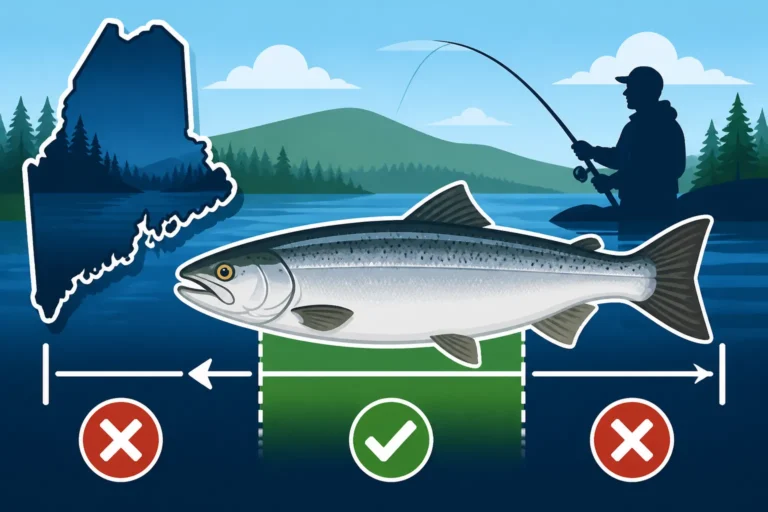
Many of Maine's prime salmon waters utilize special regulations that go beyond a simple minimum length. These often include slot limits. A slot limit means you can keep fish within a certain size range (the "slot"), but fish below the minimum and above the maximum of that slot must be released. For example, a special regulation might state: "Daily bag limit one landlocked salmon, 16 to 20 inches." This means you can only keep one salmon that falls within that specific size window. Fish smaller than 16 inches or larger than 20 inches would need to be released.
The logic behind slot limits is often two-fold:
- Protecting trophy-sized fish: By releasing larger fish, these regulations aim to increase the chances of truly enormous salmon developing, adding to the allure of the fishery and potentially contributing more genetically robust eggs during spawning.
- Reducing pressure on smaller, growing fish: The lower end of the slot limit ensures that young salmon have time to mature.
- Encouraging harvest of "intermediate" sizes: Sometimes, fisheries can become overcrowded with mid-sized fish. A slot limit can encourage anglers to harvest these fish, reducing competition for food and allowing the remaining salmon to grow larger.
These nuanced regulations are crucial for maintaining the health and trophy potential of specific salmon fisheries. For instance, Landlocked Salmon Size Slot in Maine Explained dives deeper into how these work. Always measure your fish carefully and have your regulations book handy to confirm the specific rules for your location.
Regional Variations and Special Water Regulations
Maine is a vast state with incredible diversity in its fishing opportunities, and its landlocked salmon regulations reflect this. What's legal in a remote pond in Aroostook County might be completely different from the rules on a heavily fished lake in southern Maine. This regional variation is a fundamental aspect of managing Maine's fisheries, and it's something every angler needs to be aware of.
These differences are not arbitrary; they are based on careful scientific assessment of individual water bodies. Factors like water depth, presence of invasive species, natural reproductive success, stocking programs, and angling pressure all play a role in determining the appropriate regulations for a specific lake or pond.
North Zone vs. South Zone Differences
Maine is broadly divided into two fishing zones: the North Zone and the South Zone. While these zones primarily dictate fishing season dates for certain species, they can sometimes influence landlocked salmon regulations as well, particularly regarding the general open water season or ice fishing season dates. For landlocked salmon specifically, the North Zone often has a later ice-out and a shorter overall open water season compared to the South Zone.
However, when it comes to size and bag limits for landlocked salmon, most regulations are specific to individual water bodies rather than broad zone distinctions. It's less about whether you're in the North or South Zone and more about what the specific rules for Moosehead Lake are versus those for Sebago Lake. Always refer to the specific lake or pond listing in the MDIFW regulation book, which will supersede any general zone rules for landlocked salmon limits. Maine North Zone vs South Zone Fishing Rules outlines the broader differences.
Specific Lake and Pond Regulations
This is where the rubber meets the road: the individual listings for hundreds of lakes and ponds in Maine. The MDIFW compiles an incredibly detailed annual rulebook, which is essential reading for any serious angler. In this book, you'll find entries for specific water bodies, detailing any exceptions to the general law for landlocked salmon (and other species). These might include:
- Different Minimum Lengths: Some waters might have a 16-inch minimum, while others might be 12 inches.
- Unique Slot Limits: As discussed, specific "slots" can vary wildly from lake to lake.
- Reduced Bag Limits: Some waters might restrict you to one salmon per day, or even catch-and-release only.
- Terminal Tackle Restrictions: Some waters might prohibit the use of live bait, or restrict the number of hooks.
- Season Dates: While landlocked salmon are typically open year-round for fishing, specific lakes might have different opening or closing dates, or certain periods of catch-and-release only.
For instance, a trophy lake like West Grand Lake might have very restrictive limits to foster large fish, whereas a lake that relies heavily on stocking might have more liberal limits to encourage harvest. Always carry a physical or digital copy of the current regulations. You can download the PDF from the MDIFW website, or pick up a printed copy wherever you buy your Maine Fishing License Guide.
Why Landlocked Salmon Regulations Matter
It's easy to view fishing regulations as a hassle, another set of rules to memorize. But for species like landlocked salmon, these regulations are the backbone of sustainable management. Without them, it would be all too easy to deplete these precious fisheries, ruining the angling experience for everyone and potentially causing irreversible ecological damage. Each rule, whether it's a size limit, a bag limit, or a seasonal closure, serves a specific purpose in the grand scheme of conservation.
Maine's tradition of fishing runs deep, and protecting these resources is a shared responsibility among all anglers. The MDIFW works tirelessly to monitor fish populations, conduct research, and adapt regulations based on the latest scientific data. This adaptive management approach ensures that as conditions change, so too do the rules, always with the goal of maintaining healthy, vibrant fisheries.
Conservation and Population Health
The primary reason for landlocked salmon regulations is to ensure the long-term health and sustainability of their populations. Minimum size limits, for example, allow young salmon to survive to reproductive age, contributing to the next generation of fish. This is crucial for species that might not mature until they are several years old. If too many young fish are harvested, it can severely impact the future breeding stock.
Bag limits prevent overharvest. Even in healthy fisheries, if every angler kept every fish they caught, populations could quickly dwindle. The limit ensures that enough fish remain in the system to continue reproducing and providing sport for others. It’s about sharing the resource responsibly, so that future generations can experience the same thrill of landing a beautiful Maine landlocked salmon.
Promoting Trophy Fisheries
Beyond mere sustainability, many regulations, particularly slot limits, are designed to create and maintain trophy fisheries. By protecting the largest, most genetically desirable fish from harvest, these rules allow them to grow to truly impressive sizes. This not only enhances the angling experience by offering the chance at a fish of a lifetime but also contributes to the genetic robustness of the population.
Imagine the excitement of knowing a lake holds salmon weighing in the double digits! That's often a direct result of carefully crafted regulations that prioritize the protection of these larger fish. It takes patience and sometimes a willingness to release a perfectly good eating-sized fish, but the long-term payoff is a more exciting and vibrant fishery for everyone. This is part of what makes Maine Trophy Fish Regulations so important.
Practical Tips for Adhering to Regulations
Understanding the regulations is one thing; putting them into practice on the water is another. There are a few practical habits and tools that every angler targeting landlocked salmon in Maine should adopt to ensure they're always fishing legally and responsibly. These tips not only keep you out of trouble but also promote the health and welfare of the fish you encounter.
Being prepared before you even cast a line is key. This means having the right equipment for measuring and, if necessary, safely releasing fish. It also means doing your homework on the specific waterbody you're fishing. A little bit of planning goes a long way in making your fishing trip enjoyable and stress-free.
Carrying a Measuring Device
This might seem obvious, but you'd be surprised how many anglers get caught without a reliable way to measure their catch. A rigid, easily readable measuring board is ideal, allowing you to quickly and accurately determine a fish's length. Avoid using flexible tape measures, which can be less accurate, especially with a squirming fish. Remember, Maine regulations typically require measuring from the tip of the nose to the tip of the tail, with the tail compressed.
Many tackle shops and online retailers like Amazon offer various types of measuring boards, from simple plastic rulers to more elaborate foldable or stick-on versions for your boat. Choose one that's durable and easy to clean. If you're on a boat, having one securely mounted or readily accessible near your landing net is a smart move. An accurate measurement can be the difference between a legal catch and a violation.
Safe Catch and Release Practices
For any fish that doesn't meet the size or bag limits, or if you're fishing in a catch-and-release only area, knowing how to safely release a salmon is paramount. Landlocked salmon are magnificent but delicate creatures. Here are some key practices:
- Minimize handling: Keep the fish in the water as much as possible. If you must handle it, do so gently with wet hands to protect its slime coat, which is vital for its immune system.
- Use appropriate gear: Barbless hooks can make release much easier and less damaging.
- Quick removal: Have your pliers or de-hooking tool ready to remove the hook as quickly as possible.
- Support the fish: If taking a quick photo, support the fish horizontally with both hands, never vertically by the jaw or gills. Get the picture quickly and return it to the water.
- Revive if necessary: If the fish seems sluggish, gently hold it upright in the water, facing into a current, and move it back and forth slightly until it can swim away under its own power.
Responsible catch and release ensures that those fish will survive to fight another day, grow larger, and contribute to the health of the fishery. Catch and Release Best Practices in Maine offers more detailed advice.
Always Check the Latest Regulations
This cannot be stressed enough: always consult the current year's Maine Open Water and Ice Fishing Laws summary booklet. Regulations can and do change annually. What was legal last year might not be this year. Relying on old information or hearsay is a recipe for trouble.
You can typically find the most up-to-date regulations:
- Online: The MDIFW website is the authoritative source.
- At License Agents: Any location where you can purchase a Maine Fishing License Guide will usually have printed copies.
- Sporting Goods Stores: Major retailers often stock the latest rulebooks.
Make it a habit to review the regulations for your target water body before each fishing trip, especially if you haven't fished it in a while. A few minutes of reading can save you from an embarrassing encounter with a game warden and, more importantly, ensures you're doing your part to protect Maine's incredible landlocked salmon resource.
Here's a simplified look at how landlocked salmon limits might appear, though always verify with the official MDIFW regulations for your specific body of water:
| Regulation Type | General Law (Example) | Special Regulation Water A (Example) | Special Regulation Water B (Example) |
|---|---|---|---|
| Daily Bag Limit | 2 fish per day | 1 fish per day | 2 fish per day |
| Minimum Length | 14 inches | 16 inches | 12 inches |
| Slot Limit | None | 16 to 20 inches (release all others) | None |
| Catch & Release | N/A | Nov 1 – Ice-out (specific area) | N/A |
| Terminal Tackle | No specific rule | Artificial Lures Only | Live Bait Allowed |
Note: These are purely hypothetical examples to illustrate how regulations vary. Always consult the official Maine Department of Inland Fisheries and Wildlife (MDIFW) regulations for the specific waterbody you plan to fish.
Disclaimer
This article is for general informational purposes only and does not constitute professional advice. Laws, prices and regulations vary by location and change over time. Consult a qualified professional for guidance on your specific situation.