Maine North Zone vs South Zone Fishing Rules
It's easy to feel overwhelmed when you're planning a fishing trip in Maine, especially when you start digging into the regulations and quickly encounter talk of "North Zone" and "South Zone." It can feel like a secret handshake you're not privy to, leaving you scratching your head and wondering if you're about to accidentally break a rule. But don't fret! This comprehensive guide will unravel the mysteries of Maine's distinct fishing zones, helping you understand their boundaries, their unique rules, and why they even exist in the first place, so you can fish with confidence and enjoy your time on the water.
What Are Maine's North and South Fishing Zones?
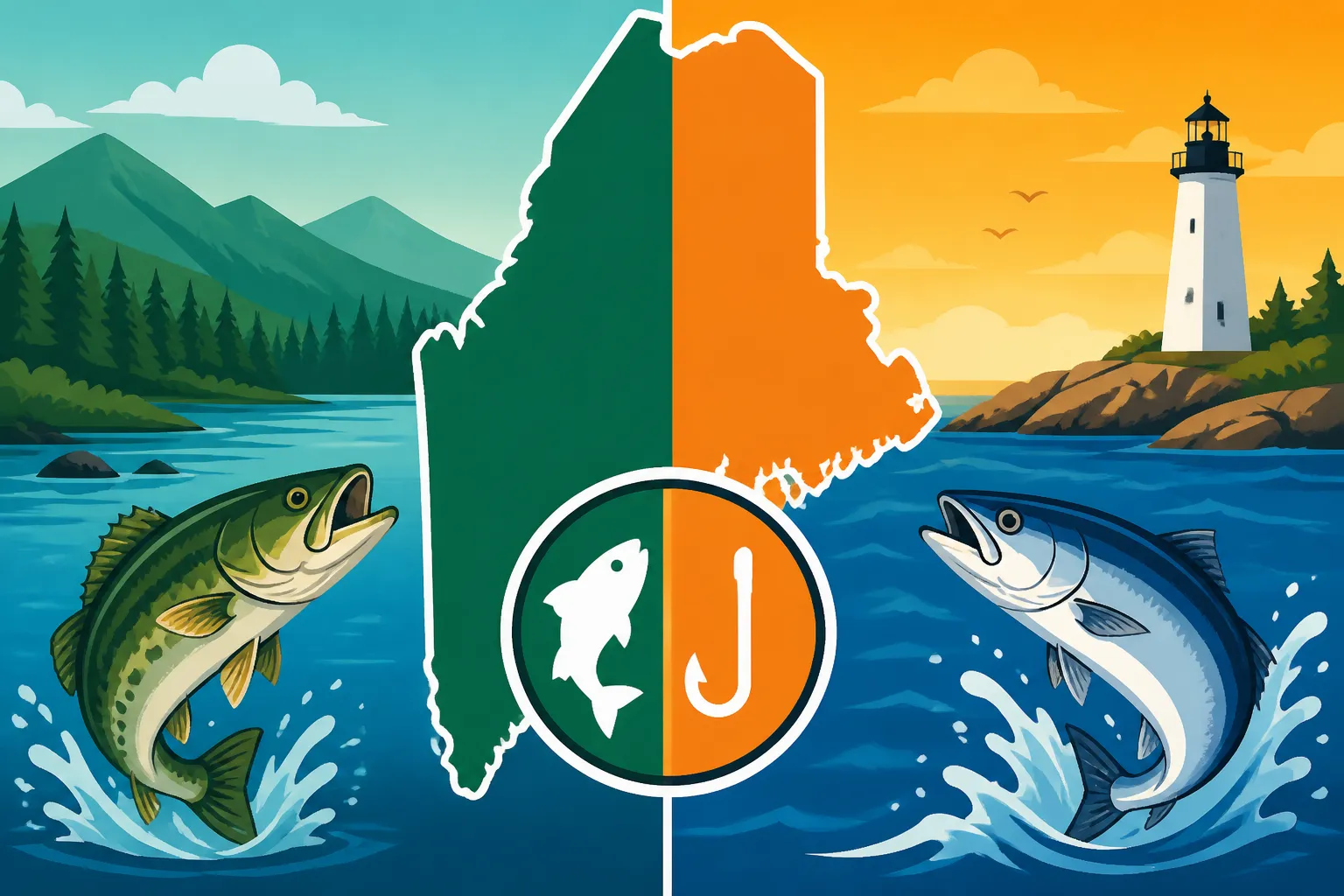
Maine is a vast state with diverse geography, climate, and ecosystems, and these differences directly impact its fish populations and angling opportunities. To effectively manage its precious fisheries, the Maine Department of Inland Fisheries and Wildlife (MDIFW) has divided the state into two primary zones for freshwater fishing regulations: the North Zone and the South Zone. This division isn't arbitrary; it's a strategic way to apply rules that are best suited for the specific conditions and fish species prevalent in each region.
Defining the Geographic Divide
The imaginary line that separates Maine's North and South Zones is critical to understand. It's not always a straightforward latitude or a major river; instead, it often follows a series of highways, which can be a bit confusing if you're not familiar with the local roads. Generally speaking, the dividing line runs across the state, roughly from east to west.
The official boundary begins in Calais, traveling west along U.S. Route 1 to Brewer. From Brewer, it follows State Route 9 west to Bangor, then continues on Interstate 95 North to Newport. From Newport, the line veers onto State Route 7 south to Dexter, then State Route 23 to Guilford. Continuing west, it uses State Route 150 to Skowhegan, then U.S. Route 201 to the Quebec border. Any waters north of this line fall into the North Zone, while waters south of it are in the South Zone.
Imagine you're driving along Route 9 between Bangor and Calais. If you pull off the highway to fish a pond north of the road, you're in the North Zone. If you head south, you're in the South Zone. It's vital to have a clear understanding of this line, especially if you plan to fish in areas that straddle the boundary. Many anglers will keep a detailed map, or even the official Maine fishing regulations booklet, handy to ensure they know exactly which zone they're in at any given moment. This attention to detail prevents any unintentional violations and ensures you're following the correct Maine Fishing Regulations Explained.
The Rationale Behind the Zones
So, why go through all this trouble? The reason for creating these two distinct zones boils down to significant differences in climate and fish biology across the state. Northern Maine experiences a longer, harsher winter with more prolonged ice cover. This means lakes and ponds freeze earlier and stay frozen longer, naturally shortening the open water season and extending the ice fishing opportunities. Fish in the North Zone, especially coldwater species like brook trout, landlocked salmon, and togue (lake trout), behave differently in these conditions compared to their southern counterparts.
The South Zone, on the other hand, generally has milder winters and earlier ice-out dates. This allows for a longer open water fishing season and a shorter, or sometimes less reliable, ice fishing season. The fish populations in the South Zone also tend to be more diverse, with warm water species like smallmouth and largemouth bass thriving alongside cold water species in certain waters. These climatic variations mean that a one-size-fits-all approach to fishing regulations just wouldn't work for the entire state. The zones allow MDIFW to implement tailored rules that protect fish populations while maximizing fair and sustainable angling opportunities for everyone.
Key Differences in General Law Fishing Seasons
One of the most immediate and impactful differences between Maine's North and South Zones is how the general law fishing seasons are structured. This isn't just about a few days here or there; these differences can fundamentally alter when and how you plan your fishing trips, whether you prefer open water angling or bundling up for ice fishing. Ignoring these distinctions can lead to frustration, or worse, an unwitting violation of the law.
Open Water Season Variations
When it comes to open water fishing, the North Zone typically has a later start and an earlier end to its general law season compared to the South Zone. This is a direct response to the more extreme winter conditions up north. For instance, the general law open water season for many lakes and ponds in the North Zone might begin on April 1st and run through September 30th. This allows ample time for ice to fully recede and for fish to complete their crucial spring spawning activities without undue pressure.
In contrast, the South Zone often boasts a longer general law open water season, frequently starting earlier, perhaps even in March, and extending into October or beyond for certain species. This extended season reflects the warmer climate and earlier ice-out dates, providing more opportunities for anglers to target species before winter truly sets in. This longer period is particularly appreciated by those targeting warmwater species like bass, which remain active later in the year in southern waters. When planning your trip, it's absolutely essential to consult the official Maine Fishing Season Dates Guide to confirm the exact start and end dates for your specific target water and zone, as there can be subtle variations even within a zone based on specific water bodies.
Ice Fishing Season Nuances
Ice fishing truly highlights the differences between the zones. Given its colder, longer winters, the North Zone is a prime destination for extended ice fishing opportunities. The general law ice fishing season often starts in late December or early January and can run well into March or even April, depending on ice conditions and specific water body regulations. This extended period allows for ample time to set up tip-ups for togue or jig for brook trout under thick ice. Anglers flock to northern lakes like Moosehead Lake during winter, knowing they'll likely find solid ice and a long season.
The South Zone, with its milder climate, generally experiences a shorter and less predictable ice fishing season. While many southern lakes and ponds do freeze over, the ice may not be as thick or last as long as in the north. The general law ice fishing season in the South Zone often has a later start and an earlier close, sometimes only running for a couple of months. Anglers in the South Zone must be particularly vigilant about ice safety, as fluctuating temperatures can quickly compromise ice integrity. For specific dates and important safety information, always refer to the official Maine Ice Fishing Rules Guide each season. It’s also worth noting that while some bodies of water in both zones might open earlier or close later under special regulations, these general law dates provide a foundational understanding of the zonal differences.
Specific Species Regulations: Bag Limits and Size Restrictions
Beyond the general season dates, Maine's North and South Zones also often feature different bag limits and minimum length requirements for key fish species. These differences are designed to manage fish populations sustainably, taking into account the unique biological needs and population health of fish in each region. It's not uncommon for an angler to move from one zone to another and find that a legal catch in one place would be a violation in the other, making awareness of these rules paramount.
Brook Trout and Landlocked Salmon
When it comes to highly sought-after coldwater species like brook trout and landlocked salmon, the zonal differences can be quite pronounced. In the North Zone, where wild brook trout populations are often more robust and less impacted by warmwater competition, you might find slightly more liberal general law bag limits or different size restrictions for brook trout. For instance, the Brook Trout Daily Limit in Maine North Zone might allow for a higher retention or a different minimum length compared to the south, reflecting the health and abundance of these native fish. This isn't always the case, and many specific waters, especially remote ponds, will have their own unique rules to protect trophy fisheries.
For landlocked salmon, which thrive in the deep, cold waters found throughout both zones, the general law statewide regulations often dictate much of the management. However, within each zone, there can be specific lakes and ponds that have unique limits, particularly regarding minimum length and daily bag. For example, some large, productive North Zone lakes might have specific guidelines to protect their salmon populations from overfishing, whereas a South Zone lake might have different slot limits or bag counts. It's crucial to consult the Landlocked Salmon Size Limit in Maine in the current rulebook, paying close attention to any water-specific exceptions, as a "general law" for salmon can still vary greatly from one body of water to the next.
Bass and Togue (Lake Trout)
The regulations for bass and togue (lake trout) also vary by zone, primarily reflecting their distribution and ecological role. Smallmouth and largemouth bass are typically more abundant and thrive in the warmer waters of the South Zone. As such, the Maine Bass Limit in the South Zone might offer different daily bag limits or size restrictions to manage these populations, especially during key spawning periods. It's not uncommon to see specific regulations designed to promote larger bass or protect spawning fish in various South Zone lakes and rivers. In the North Zone, where bass might be less common or even considered an introduced species in some prime trout waters, the regulations could be more restrictive to favor native coldwater species. For instance, the Maine Bass Limit in the North Zone might have lower daily limits or different size requirements to manage their impact on brook trout and salmon fisheries.
Togue, or lake trout, are primarily found in the deep, cold waters scattered throughout both zones, but they are particularly prevalent and often reach impressive sizes in many large North Zone lakes like Moosehead Lake. The Maine Togue and Lake Trout Limits can vary by water body, but there are often general guidelines that reflect the slower growth rates and longer lifespans of these fish. You might find minimum length limits that require togue to be a certain size before they can be kept, or even slot limits that protect prime breeding-age fish. The goal is always to ensure these long-lived fish populations remain healthy and continue to provide thrilling angling experiences for years to come. Always remember to check the specific regulations for any lake or pond you plan to fish, as these general guidelines are often superseded by water-specific rules.
Other Species Considerations
While brook trout, landlocked salmon, togue, and bass are often the primary focus, the general law regulations in both zones also cover a host of other common species. For fish like white perch, yellow perch, chain pickerel, and brown trout, the default statewide general law often applies unless a specific water body has its own unique rule. However, even these general rules can sometimes have subtle zonal interpretations or variations based on local ecological conditions.
For instance, while a universal bag limit might apply to white perch, the sheer abundance and popularity of targeting them might lead to specific regulations in certain areas to manage pressure. Brown trout, which are primarily a stocked species in Maine, will often have similar regulations across both zones, but their prevalence and the specific waters they are stocked into can differ. It's a reminder that while the North and South Zone structure provides a broad framework, the devil is often in the details when it comes to specific water bodies. Always consult the official Maine fishing law book, which contains the complete Maine Fish Bag Limits Guide for all species, to ensure you're compliant no matter where you cast your line.
| Species | North Zone (General Law Example) | South Zone (General Law Example) | Notes |
|---|---|---|---|
| Open Water Season | April 1 – Sept 30 (Lakes/Ponds) | March 1 – Sept 30 (Lakes/Ponds) | Dates vary widely by water body, always check regulations. |
| Ice Fishing Season | Dec 31 – March 31 (Lakes/Ponds) | Jan 1 – March 15 (Lakes/Ponds) | Ice-out dependent, shorter in South. Specific dates vary greatly. |
| Brook Trout | 5 fish daily, no minimum length | 2 fish daily, 6-inch minimum | Highly variable by water. Catch-and-release is common for wild populations. |
| Landlocked Salmon | 1 fish daily, 14-inch minimum | 1 fish daily, 14-inch minimum | Some waters have 16-18 inch slot limits. |
| Togue (Lake Trout) | 2 fish daily, 18-inch minimum | 1 fish daily, 23-inch minimum | Size limits often higher in South Zone to protect larger, fewer fish. |
| Smallmouth Bass | 2 fish daily, 10-14 inch slot limit | 2 fish daily, 12-inch minimum | North Zone often more restrictive to protect against impact on trout/salmon. |
| Largemouth Bass | 2 fish daily, 10-14 inch slot limit | 2 fish daily, 12-inch minimum | Similar to Smallmouth Bass, but can have specific exceptions. |
| Brown Trout | 5 fish daily, 6-inch minimum | 5 fish daily, 6-inch minimum | Often stocked. Water-specific rules common for trophy waters. |
| White Perch | 100 fish daily, no minimum length | 100 fish daily, no minimum length | Very common, liberal limits reflecting abundance. |
| Chain Pickerel | No daily limit, no minimum length | No daily limit, no minimum length | Often considered invasive in some trout waters, aggressive management encouraged. |
Note: This table provides general examples and is not a substitute for checking the official, current Maine fishing regulations for the specific waters you intend to fish. Regulations are subject to change annually.
Understanding Special Regulation Waters within Zones
While the North Zone and South Zone general law regulations provide a foundational framework for fishing in Maine, it’s critical to understand that these are merely baseline rules. Maine's fisheries management is highly localized, meaning that almost every significant lake, pond, or river can and often does have its own set of "special regulations" that override the general law for that particular body of water. This is where many anglers, especially those new to Maine, can get tripped up.
Local Exceptions to General Law
Imagine you've meticulously studied the general law for the North Zone, only to arrive at a beautiful remote pond and discover a sign detailing entirely different rules for that specific spot. This is a common scenario in Maine. These special regulations are put in place for a variety of reasons: to protect unique wild brook trout populations, to manage specific trophy fisheries, to allow for specific gear restrictions (like fly-fishing-only waters), or to address environmental factors unique to that water body.
For example, a lake known for its exceptional landlocked salmon might have a strict slot limit or a different daily bag limit than the general law allows, regardless of whether it's in the North or South Zone. Similarly, certain remote ponds might be designated as "trophy brook trout" waters with strict catch-and-release rules or highly restrictive bag limits. Even a small stream running through a popular fishing area could have a section that's fly-fishing-only or subject to different season dates. These local exceptions are paramount to the nuanced management of Maine's fisheries, ensuring that each water body's specific needs are met. Therefore, simply knowing which zone you're in is only half the battle; the other half is knowing the specific rules for the exact water you're fishing.
How to Research Specific Waters
Given the prevalence of special regulations, diligently researching your chosen fishing spot is not just advisable, it's essential. The single most important resource for any angler in Maine is the official Maine Department of Inland Fisheries and Wildlife (MDIFW) fishing law book. This comprehensive guide, updated annually, lists all general laws for both zones, followed by a detailed, alphabetical listing of every lake, pond, and river with special regulations. Each entry will clearly state what rules apply to that specific water, overriding the general zone law.
You can access the digital version of this law book on the MDIFW website, which is incredibly helpful for on-the-go reference. You can also pick up a physical copy at most licensed fishing license vendors, like sporting goods stores, bait shops, and even some convenience stores throughout Maine. If you prefer a physical copy for easy reference, you can often find the Maine Fishing Law Book Where to Get One for purchase online, sometimes even on Amazon, ensuring you have it handy before your trip. Always double-check the year of the law book to ensure you have the most current regulations, as rules can change from season to season based on ongoing fisheries surveys and management objectives. Never rely solely on outdated information or hearsay from other anglers, as regulations are dynamic and subject to change.
Why These Zones Exist: Conservation and Management
Understanding the regulatory differences between Maine's North and South Zones is one thing, but truly appreciating why these zones exist adds another layer to your angling experience. It's not just about arbitrary lines on a map; it's a deeply considered approach to conservation and the sustainable management of invaluable natural resources. The MDIFW uses this zonal system as a cornerstone of its strategy to protect and enhance Maine's diverse aquatic ecosystems for generations of anglers to come.
Ecological Factors and Fish Behavior
The primary driver behind the North and South Zones is the stark difference in ecological factors, especially climate, and how these factors influence fish behavior. Northern Maine, as mentioned, experiences a more severe and prolonged winter. This means:
- Ice Cover Duration: Lakes and ponds in the North Zone typically freeze earlier and stay frozen longer. This impacts everything from food availability for fish to the timing of their spawning runs. For example, certain coldwater species might have a shorter "growing season" in open water in the north, making them more vulnerable to intense fishing pressure during the brief periods they are actively feeding.
- Water Temperature: Northern waters, on average, remain colder throughout the year. This is ideal for coldwater species like brook trout, landlocked salmon, and togue, allowing them to thrive. Warmwater species like bass, while present, generally don't dominate these colder ecosystems as they do further south.
- Spawning Cycles: The timing of ice-out and water warming directly influences when various fish species spawn. Regulations are tailored to protect these critical reproductive periods. For instance, an early open water season in the South Zone might be acceptable because certain species have already completed spawning, while the same timing in the North Zone could interrupt crucial reproductive activities due to later ice-out and slower warming trends.
Conversely, the South Zone's milder climate, earlier ice-out, and generally warmer water temperatures favor a broader mix of species, including robust populations of smallmouth and largemouth bass. The regulations there must account for these warmer water conditions, preventing overfishing during peak warm-weather activity and protecting species that might spawn earlier in the year.
Balancing Angler Opportunity and Resource Protection
The zonal system is a sophisticated tool for MDIFW to strike a delicate balance between providing ample angling opportunities and ensuring the long-term health and sustainability of Maine's fisheries. This balancing act involves several key considerations:
- Minimizing Overfishing: By adjusting season lengths, bag limits, and size restrictions, the zones help to manage the amount of fish harvested. In areas where fish populations might be more sensitive or slow-growing (common in colder northern waters), more conservative limits can be applied. In more robust or faster-reproducing populations, slightly more liberal rules might be in place. This tailored approach prevents localized depletion of fish stocks.
- Protecting Spawning Fish: Regulations, particularly season dates, are often designed to minimize disturbance to fish during their spawning periods, when they are most vulnerable. The differing spawn times between north and south (due to water temperature) necessitate distinct season openings and closings.
- Habitat Considerations: The zones also implicitly acknowledge different habitat types. The vast, remote, and often wilder landscapes of the North Zone support different ecosystems than the more developed and often warmer southern regions. Regulations are designed to protect the integrity of these varying habitats and the fish they support.
- Responding to Biological Data: MDIFW biologists are constantly collecting data on fish populations, growth rates, and reproductive success across the state. The zonal system provides the flexibility to implement regulations that are directly responsive to this scientific information, ensuring that management strategies are effective and adaptive. This is why you'll often see specific rules for Maine North Zone vs South Zone Fishing Rules updated year to year.
By understanding these fundamental ecological and management principles, anglers can better appreciate the logic behind the rules and become more effective stewards of Maine's precious aquatic resources.
Navigating the Rules: Essential Resources for Anglers
Let's be honest, trying to keep track of all the rules, especially with the North and South Zone variations and countless special regulations, can feel like you need a law degree just to go fishing. But it doesn't have to be that complicated! With the right resources and a little planning, you can navigate Maine's fishing regulations like a seasoned pro. The key is knowing where to look and making it a habit before every trip.
Official Maine IFW Resources
When it comes to definitive information on Maine's fishing regulations, there's one source that stands above all others: the Maine Department of Inland Fisheries and Wildlife (MDIFW). This is your ultimate authority, and their resources are meticulously updated each year to reflect any changes.
- The Maine Open Water & Ice Fishing Regulations Book: This is the bible for Maine anglers. Available both in print and as a downloadable PDF on the MDIFW website, this book details all general laws for both the North and South Zones, followed by an alphabetical listing of every single body of water with special regulations. It specifies everything from season dates for each zone, to bag limits, size restrictions, and gear restrictions. Seriously, if you're going to fish in Maine, you need this book. You can get a physical copy at most places where you buy a fishing license, or simply download the latest version to your phone or tablet. It's truly an indispensable tool, especially when you're trying to figure out if you're in the Maine North Zone vs South Zone Fishing Rules territory.
- MDIFW Website: The official MDIFW website ([maine.gov/ifw]) is a treasure trove of information. Not only can you find the latest regulations book there, but you'll also find updates on fishing conditions, stocking reports, fishing license information (like How to Get a Maine Fishing License), and frequently asked questions. It’s also where you can easily purchase your Maine Resident Fishing License Cost or a Maine Nonresident Fishing License Cost online. Before heading out, a quick check of their site can often provide valuable, up-to-the-minute details.
Practical Tips for Staying Compliant
Beyond just knowing where to find the rules, adopting a few practical habits can make all the difference in ensuring a stress-free and compliant fishing experience.
- Always Check the Current Regulations: This cannot be stressed enough. Regulations can, and do, change annually. What was legal last year might not be this year. Make it a routine to check the MDIFW regulations book or website before every fishing season, and ideally, before every trip to a new or unfamiliar body of water. Don't assume.
- Know Your Location: Understand the exact boundary between the North and South Zones, especially if you plan to fish near that line. Use GPS, detailed maps, or even local knowledge from bait shop owners to confirm which zone you're in. This applies not just to the zone, but to specific water bodies within zones that might have unique rules. Many anglers find it helpful to have a waterproof state map or a fishing app on their phone, like the "Fishbrain" app, that can sometimes overlay these zonal boundaries and special regulations.
- Carry a Copy of the Rules: Whether it's the physical book or the PDF on your phone, always have access to the current regulations while you're fishing. If a warden approaches or if you have a question, you'll have the definitive answer right there. Don't leave it in the truck; have it readily available.
- When in Doubt, Ask: If you're genuinely unsure about a specific regulation, don't guess. You can often ask local bait shop owners, sporting goods store staff, or even call the MDIFW regional office. Game Wardens are also a great resource; they are there to help educate anglers, not just enforce rules. It's always better to ask a question than to inadvertently break a law.
- Invest in Good Gear: Having the right gear, whether it's a reliable fish ruler you can find on Amazon to ensure your catch meets length requirements, or a GPS device to mark your location, can help you stay compliant and enjoy your trip. A good fishing app that integrates maps and regulations can also be a game-changer.
By embracing these resources and adopting these habits, you'll not only stay on the right side of the law but also gain a deeper appreciation for the thought and effort that goes into managing Maine's incredible fishing opportunities.
Disclaimer
Please remember that fishing regulations are subject to change. This guide provides general information and examples based on common regulations. It is always the angler's responsibility to consult the most current official Maine Department of Inland Fisheries and Wildlife (MDIFW) regulations book or website before fishing to ensure compliance with all applicable laws and rules for the specific waters being fished.