Best Fish to Catch in Maine
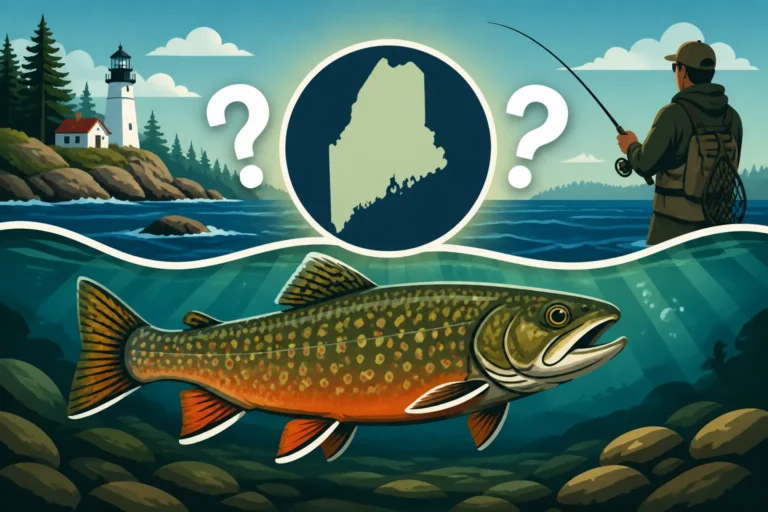
Maine's waters, both fresh and salt, hold an incredible diversity of fish, and for a newcomer, or even a seasoned angler visiting for the first time, it can feel overwhelming trying to figure out where to even start. You might be dreaming of a trophy salmon or just looking for some easy panfish for the kids, but how do you know which species offers what experience? This comprehensive guide is here to cut through the confusion and introduce you to the best fish to catch in Maine, detailing what makes each one special, where to find them, and how to successfully hook into them.
The Allure of Maine's Freshwater Gems
There’s something truly magical about fishing Maine’s lakes and rivers. The scenery is often breathtaking, and the fish themselves are renowned for their beauty and fighting spirit. If you're looking for that classic Maine angling experience, you'll definitely want to get acquainted with these freshwater treasures.
Landlocked Salmon: The Leaping Silver Kings
Ah, the landlocked salmon! For many, this is the fish of Maine's inland waters. They're sleek, powerful, and known for their acrobatic jumps once hooked. Imagine being out on a glassy lake at dawn, a mist rising from the water, and suddenly your line screams as one of these silver beauties takes your offering. It's an experience that stays with you.
These fish thrive in cold, deep, well-oxygenated lakes and rivers. Think big, iconic bodies of water like Sebago Lake, Moosehead Lake, and the Rangeley Lakes region. They're truly a cold-water species, so as summer progresses and surface waters warm, they'll often retreat to deeper, cooler sections of the lake. Early spring, just after ice-out, is a fantastic time to target them near the surface as they chase baitfish like smelts. Fall, when they move into river systems for spawning, also offers exciting opportunities. Trolling with spoons, stickbaits, or even live smelts is a popular and effective method. Fly anglers often have great success during the spring and fall runs when salmon are concentrated in river mouths or spawning tributaries. Their fierce fight and stunning appearance make them a bucket-list fish for any angler visiting Maine. Just be sure to check the specific regulations for the water body you're fishing, as size and bag limits can vary significantly. You can find more details in our Landlocked Salmon Fishing in Maine guide.
Brook Trout: Maine's Native Beauty
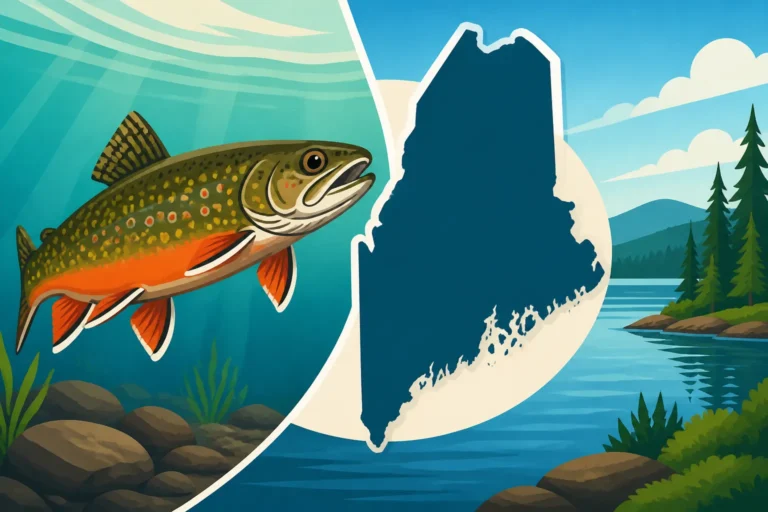
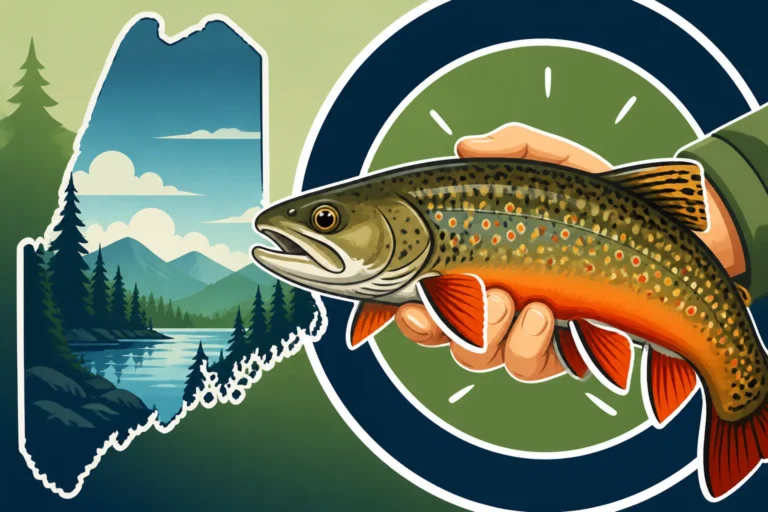
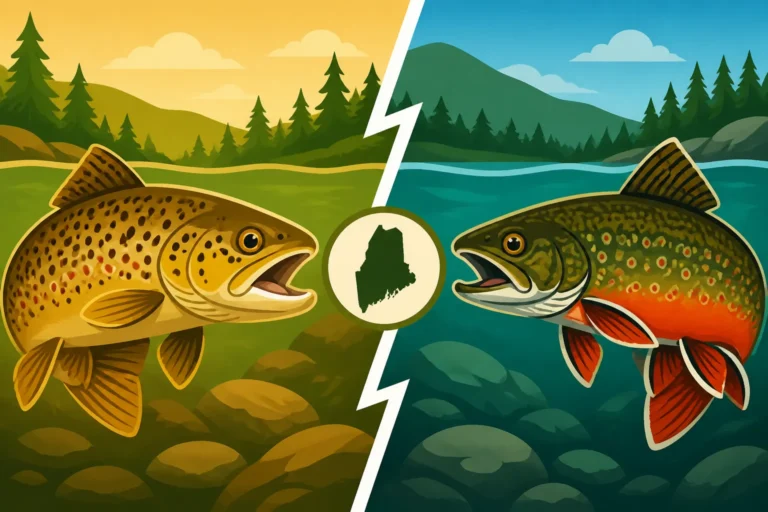
If there’s one fish that truly embodies the spirit of Maine's wilderness, it’s the brook trout. These aren't just fish; they're living jewels, with their worm-like markings (vermiculations) on their backs, red spots with blue halos on their sides, and white-edged fins. Catching a wild brook trout in a remote pond or a sparkling clear stream is an almost spiritual experience. It feels like you're stepping back in time, connecting with nature in its purest form.
Maine is home to some of the last remaining strongholds of wild, native brook trout in the eastern United States, particularly in the vast expanses of the North Woods. While you can find them in many smaller streams and ponds throughout the state, the true wild ones often inhabit the most pristine, unspoiled waters. They prefer cold, clear, well-oxygenated water, often found in beaver flowages, small ponds, and the upper reaches of river systems. You'll often find them hiding under undercut banks, behind rocks, or near fallen logs, waiting to ambush insects or small baitfish. Fly fishing with dry flies, nymphs, or small streamers is incredibly effective and immensely satisfying, especially during hatch seasons. Spin fishermen can do well with small spinners, spoons, or worms. Catching a vibrantly colored brook trout is a testament to the health of the ecosystem and a moment to truly cherish. For more on where these beauties thrive, check out our Brook Trout Fishing in Maine article.
Togue (Lake Trout): Deepwater Giants
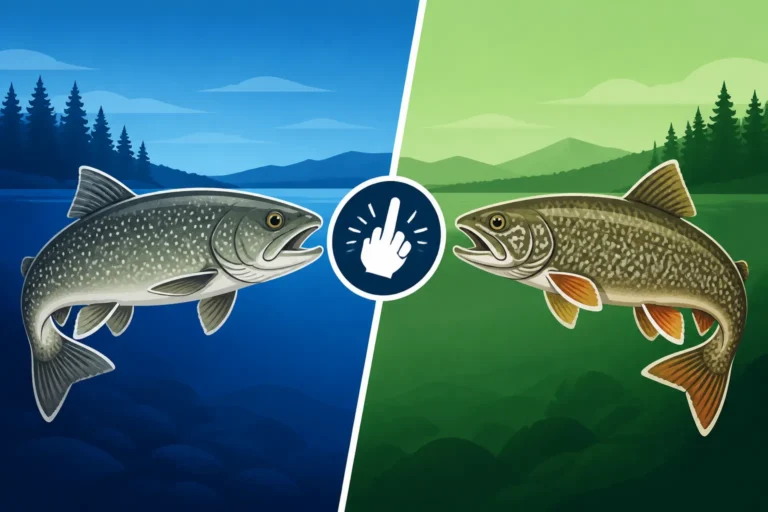
When we talk about the big, deep, cold lakes of Maine, we're talking about the realm of the togue, which is what we Mainers affectionately call lake trout. These are powerful, long-lived fish that inhabit the chilly depths, often requiring specialized techniques to reach them. While perhaps not as flashy jumpers as salmon, their sheer size and brute strength on the end of a line can be absolutely exhilarating.
Togue are found in many of Maine's larger, deeper lakes where cold, oxygen-rich water persists throughout the summer. Moosehead Lake, Sebago Lake, and many of the bigger waters in the Rangeley region are prime togue territory. During the colder months, especially after ice-out in spring and well into the fall, they can be found shallower, sometimes even within casting distance of shore or relatively close to the surface. However, once summer truly sets in, they descend to the thermocline, often 40-80 feet or even deeper, chasing cusk and other baitfish. This is where downriggers, lead core line, or heavy jigging techniques come into play. Large spoons, tube jigs, and live bait like smelts or shiners are often effective. Ice fishing for togue is also incredibly popular, with anglers setting up tip-ups or jigging aggressively in deep water. Hooking into a hefty togue through the ice is a true test of strength and patience. Learn more about these formidable fish in our Lake Trout and Togue Fishing in Maine guide.
Battling Bass in Maine's Lakes and Ponds
While trout and salmon might get a lot of the spotlight, Maine also boasts some fantastic bass fishing. For anglers who love a hard-fighting, aggressive fish that can be found in a wider variety of waters and often in warmer conditions, bass are an absolute blast. They offer a different kind of challenge and excitement, often involving power fishing and strategic presentations.
Smallmouth Bass: Feisty Fighters of the Rocky Shores
If you're looking for a fish that hits like a freight train and fights like a prizefighter, the smallmouth bass is your huckleberry. These bronze beauties are known for their incredibly aggressive strikes and their dogged, strong fights, often making powerful runs and even jumping clear of the water. They are arguably one of the most fun fish to catch, especially on light tackle.
Smallmouth bass thrive in clear, rocky lakes, rivers, and ponds, preferring areas with gravel bottoms, boulders, and submerged ledges. You'll find them in abundance across many of Maine's central and southern lakes, as well as several large river systems like the Penobscot, Kennebec, and Androscoggin. They love to ambush prey from cover, so targeting rocky points, drop-offs, and areas with submerged timber is key. Spinnerbaits, crankbaits, jigs, and soft plastics rigged in various ways are all highly effective. Topwater action for smallmouth, especially during low light conditions or cloudy days, can be absolutely explosive and addictive. Casting poppers or walking baits near rocky shorelines at dawn is an experience every angler should try. They are also prolific spawners, and while their spawning season is protected in some areas, the fishing before and after can be phenomenal. Our Smallmouth Bass Fishing in Maine article has more on techniques and locations.
Largemouth Bass: Ambush Predators of the Weeds
The largemouth bass is another popular species, particularly in the warmer, weedier waters of central and southern Maine. Unlike their smallmouth cousins who prefer rocky domains, largemouths are true masters of camouflage and ambush, lurking in dense cover and exploding out to engulf their prey. Catching a big largemouth can be a heart-stopping event, especially when they smash a topwater frog out of lily pads.
These green giants are found in lakes, ponds, and slow-moving rivers with abundant aquatic vegetation, submerged logs, docks, and other heavy cover. They love shallow, warmer water and are often found hiding in lily pads, cattails, and thick grass beds. Popular spots include the Belgrade Lakes, Cobbosseecontee Lake, and many other smaller ponds. Techniques for largemouth often involve pitching and flipping jigs or soft plastics into heavy cover, or working weedless frogs and buzzbaits over the top of vegetation. Crankbaits and spinnerbaits can also be effective when fished along weed lines or points. The thrill of a largemouth exploding on a topwater lure, especially at dusk, is truly unparalleled. While they might not jump as much as smallmouths, their initial strike and powerful surge into cover make for a formidable fight.
Coastal Thrills: Saltwater Species to Target
Stepping away from the serene lakes and rivers, Maine’s rugged coastline offers a whole different kind of fishing adventure. The salty air, the roar of the ocean, and the promise of powerful, ocean-dwelling fish draw countless anglers to our shores each year. Just remember that saltwater fishing often requires different gear and a separate registration, which you can learn about in our Maine Saltwater Fishing Registry Guide.
Striped Bass: The Ultimate Coastal Gamefish
If you're looking for an iconic saltwater challenge along Maine's coast, the striped bass is undoubtedly the answer. These powerful, migratory fish spend their summers feasting along our rocky shores, estuaries, and river mouths, offering incredible action for both boat and shore anglers. The fight of a big striper is legendary, with strong runs and head shakes that will test your tackle and your resolve.
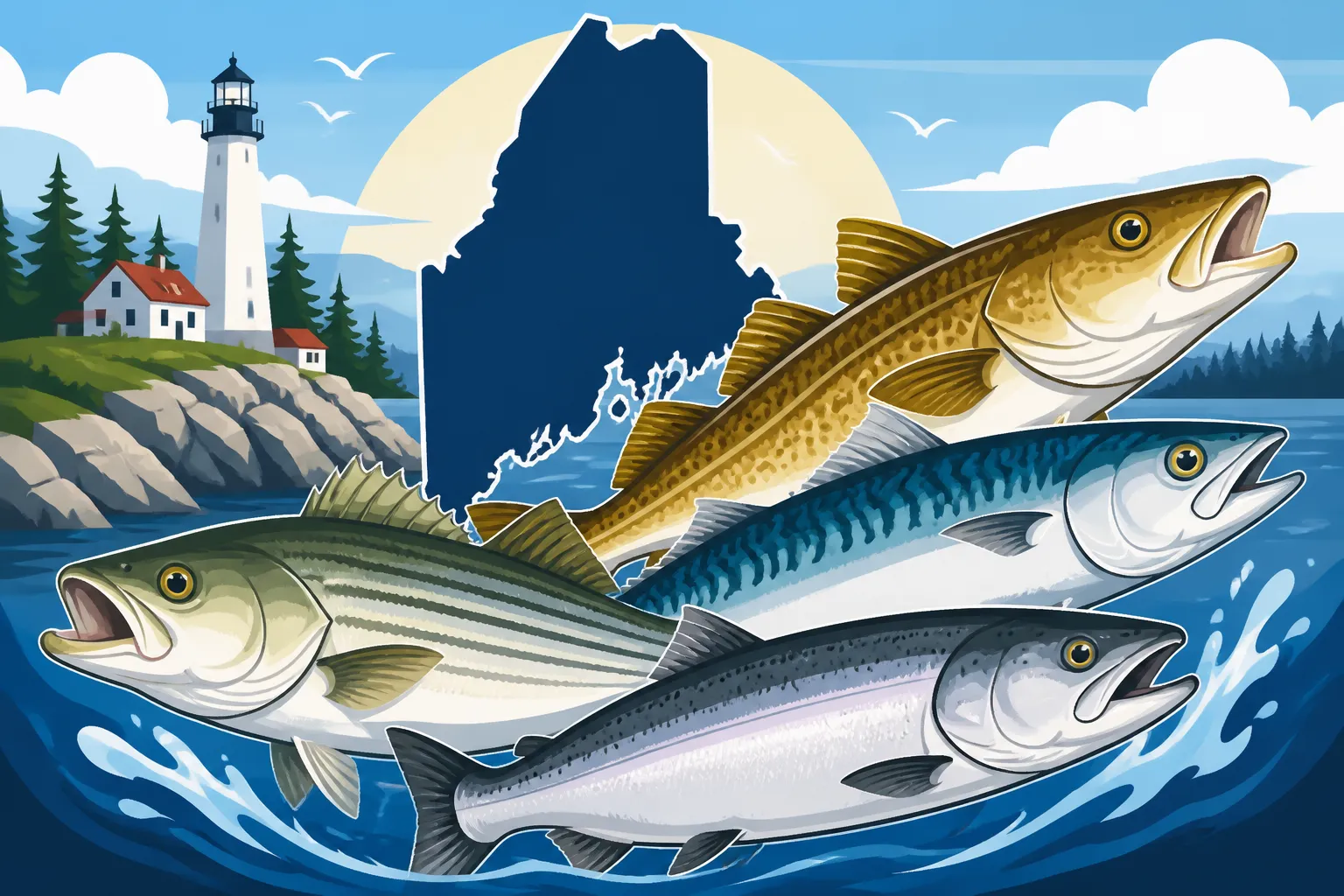
Striped bass arrive in Maine waters in late spring and stay through the fall, following baitfish like mackerel, herring, and sand eels. You can find them anywhere from the southern beaches of Ogunquit up to the rocky coves and estuaries of the midcoast, and even into rivers like the Kennebec and Penobscot. Popular areas include Casco Bay, the waters around the mouth of the Kennebec River, and various surf fishing spots. Surfcasters can have great success with artificial lures like plugs, soft plastics, and jigs, or by soaking bait like mackerel chunks or worms. Boat anglers often troll tube and worm rigs, cast live bait, or throw various artificials into rips and around structure. Their willingness to chase a wide variety of offerings makes them an exciting target, but their fighting prowess is what keeps anglers coming back year after year. Always be mindful of the slot limits and seasons for striped bass, as conservation efforts are very important for this species. Our Striped Bass Fishing in Maine article is a great resource.
Mackerel and Bluefish: Fast-Paced Action
For those looking for consistent, fast-paced action and a good meal, mackerel are a fantastic option along the Maine coast. And if you're lucky, and the water temperatures are right, you might even encounter their toothy cousins, the bluefish, which bring an even more aggressive fight and a knack for shredding tackle.
Mackerel arrive in large schools during late spring and early summer, often staying through the fall. They are incredibly abundant and can be caught from docks, piers, rocky outcroppings, and boats throughout the entire Maine coast. Popular spots include Portland Harbor, Boothbay Harbor, and pretty much any public access point where the water is deep enough. The beauty of mackerel fishing is its simplicity: a sabiki rig (a string of small, shiny flies) dropped into a school will often result in multiple fish on every retrieve. They're not huge, but they're feisty, excellent eating, and provide non-stop fun, especially for kids or beginners. Bluefish are less common in Maine, preferring slightly warmer waters, but they do make appearances, particularly in the southern coastal areas. They are incredibly aggressive predators with razor-sharp teeth, so be prepared for explosive strikes and bitten-off lines. Heavy-duty plugs, metal lures, and chunk bait are effective for bluefish. If you're looking for a tackle upgrade, checking out options on Amazon before your trip is a good idea to ensure you have sturdy leaders.
Underrated Catches and Panfish Delights
While the glamour species often steal the headlines, there are plenty of other fish in Maine's waters that offer fantastic fishing, whether you're looking for a unique challenge or just some easy-to-catch fun for the whole family. Don't overlook these often-underappreciated species!
Chain Pickerel: Tooth-Grinned Freshwater Predators
The chain pickerel gets a bit of a bad rap sometimes, often being overshadowed by bass or trout. However, these toothy freshwater predators are incredibly fun to catch, readily strike a variety of lures, and can be found in many of the same waters as largemouth bass. They're aggressive, tenacious fighters, and catching a big one can be quite a thrill, especially on light tackle.
Pickerel are widespread in Maine's warmer, weedier lakes, ponds, and slow-moving rivers. They love to lurk in dense aquatic vegetation, under lily pads, and around fallen timber, waiting to ambush anything that swims by. You'll often find them in similar habitats to largemouth bass, and they're not shy about hitting a lure. Spinnerbaits, spoons, jerkbaits, and even topwater frogs can all trigger violent strikes. They have a mouthful of sharp, needle-like teeth, so using a wire leader is highly recommended to prevent bite-offs. If you're fishing with kids, pickerel can provide consistent action and teach valuable lessons about handling toothy fish (carefully!). While some anglers shy away from eating them due to their many Y-bones, they can be quite delicious if filleted properly or prepared as fish cakes.
White and Yellow Perch: Family-Friendly Fun
For pure, unadulterated fun, especially for younger anglers or those just looking to bend a rod, white and yellow perch are hard to beat. These panfish are abundant, willing biters, and they make for excellent table fare. They're the kind of fish that can turn a slow day into a memorable one, providing consistent action and boosting confidence.
You can find both white and yellow perch in almost any lake or pond in Maine, from the smallest farm ponds to the largest glacial lakes. White perch tend to prefer slightly deeper, cooler water, often schooling up over rocky bottoms or around submerged structure. Yellow perch are more ubiquitous, found in a wide variety of habitats from shallow weedy areas to deeper drops. Both species are incredibly easy to catch. Simple bait like worms, small pieces of cut fish, or even corn on a small hook under a bobber will often do the trick. Small spinners, jigs, and even tiny flies can also be very effective. Perch are schooling fish, so once you find one, you've often found a whole pile of them! This makes for non-stop action, which is perfect for keeping kids engaged. They're also delicious, with firm, flaky white meat that fries up beautifully. A day of perch fishing is less about the trophy and more about the enjoyment of being out on the water and bringing home a tasty meal.
Seasonal Strategies for Maine's Top Fish
Understanding the rhythms of Maine's fishing seasons is absolutely crucial to success. Fish behavior changes dramatically with water temperature, daylight, and spawning cycles. What works in spring won't necessarily work in summer, and vice-versa. Being prepared for these shifts will greatly increase your chances of finding the best fish to catch in Maine. For a complete overview, be sure to consult the Maine Fishing Season Calendar.
Spring's Awakening: Trout and Salmon Runs
Spring in Maine is a time of incredible energy, and fish are no exception. After a long winter under the ice, the waters begin to warm, and many species become highly active, often moving into shallower areas. This is arguably one of the most exciting times to be on the water.
Immediately after ice-out, which can vary greatly from late March in southern Maine to late April or early May in the northern regions, trout and landlocked salmon are often found near the surface and in the mouths of tributary rivers. The water is still cold and well-oxygenated everywhere, so these cold-water species don't need to go deep yet. They're hungry and actively chasing baitfish. Trolling with spoons or stickbaits close to shore, casting from river mouths, or fly fishing with streamers can be incredibly productive. Brook trout will often be found in the smaller streams and rivers, eager to take a well-presented nymph or dry fly. As spring progresses and water temperatures climb, these fish will start to spread out, eventually moving deeper as the summer heat sets in. Keep an eye on local reports for ice-out dates and specific runs. It’s a short window of opportunity for some truly epic fishing. Before heading out, make sure you understand all the Maine Fishing Regulations Explained.
Summer's Bounty: Bass, Striper, and Deepwater Species
Summer fishing in Maine offers a diverse array of opportunities, though it often requires adjusting techniques to account for warmer water temperatures and the behavior of different species. While trout and salmon might head for the depths, bass and striped bass truly hit their stride.
During the warmer months, smallmouth and largemouth bass are in their prime. They'll be active in the shallows during low-light hours (dawn and dusk) or on cloudy days, but during the bright sun of midday, they'll often retreat to deeper cover, submerged structure, or thick vegetation. Early mornings and evenings offer fantastic topwater action for bass. Striped bass are abundant along the coast, patrolling beaches, rocky points, and river mouths. Trolling live mackerel, casting plugs, or soaking bait can all be highly effective. For the cold-water species like togue and landlocked salmon, summer means going deep. You'll need techniques like downrigging, lead core, or deep jigging to reach them in the thermocline. Many anglers also enjoy deep-sea fishing charters during the summer for groundfish, tuna, or sharks offshore. Always carry plenty of water and sun protection when fishing during the Maine summer, and consider a wide-brimmed hat, easily found on Amazon.
Fall's Frenzy: Pre-Spawn Action and Cooler Waters
Fall is a truly magical time to fish in Maine. The air is crisp, the foliage is stunning, and many fish species enter a pre-spawn feeding frenzy, fattening up for the coming winter and their own reproductive cycles. Water temperatures begin to cool, re-oxygenating shallower areas and bringing many species back within reach.
Landlocked salmon and brook trout, which have spent the summer in deeper, cooler water, begin to migrate into their spawning tributaries and river systems. This is an incredible time for fly anglers, especially, as salmon and large brook trout can be found in relatively shallow, moving water. The fish are aggressive and often strike flies, streamers, or small spoons. Bass fishing can also be excellent in the fall, as both smallmouth and largemouth feed heavily before winter. They’ll often be found transitioning from summer patterns, staging on deeper edges, points, and structure. Striped bass, sensing the change in seasons, will also be actively feeding and migrating south, offering some of the last excellent coastal action of the year. Fall fishing offers some of the most comfortable weather and picturesque backdrops for anglers in Maine.
Winter Wonderland: Ice Fishing for the Brave
When the lakes and ponds of Maine freeze over, a whole new world of fishing opens up: ice fishing. It's a truly unique and quintessentially Maine experience, offering a chance to catch many of the same species found in open water, but with entirely different techniques and a good dose of hearty winter spirit.
Almost all of Maine’s freshwater species can be caught through the ice. Togue and landlocked salmon are popular targets in the deep lakes, often caught on tip-ups baited with live smelts or shiners, or by jigging with large spoons or tube jigs. Brook trout can be found in shallower ponds and flowages, also taking worms or small jigs. Perch and pickerel provide abundant action in many waters, often biting readily on small baits or jigs. Bass are also caught through the ice, though they tend to be less active. Ice fishing is as much a social event as it is a fishing trip, with friends and family gathering in ice shacks, enjoying warm drinks, and sharing stories. Safety is paramount when venturing onto the ice, so always check ice thickness and conditions before heading out. Our Maine Ice Fishing Techniques Guide is a must-read for anyone considering this winter pastime.
Essential Gear and Tips for Maine Anglers
Having the right gear and knowing some basic tips can make all the difference between a frustrating day and a fantastic one. Maine’s diverse fisheries require a versatile approach, and a little preparation goes a long way.
Freshwater Essentials: Rods, Reels, and Lures
For most freshwater fishing in Maine, a medium-light to medium action spinning rod and reel combo is a versatile choice. This setup will handle anything from panfish to decent-sized bass, trout, and salmon. A 6 to 7-foot rod with 6-10 pound test monofilament or fluorocarbon line is a great starting point.
When it comes to lures, a few staples should always be in your tackle box. For trout and salmon, classic spoons like Mooselooks, Grey Ghosts, or DB Smelts, along with stickbaits that imitate baitfish, are highly effective. Small spinners (Mepps, Panther Martin) are deadly for brook trout and can also tempt perch and pickerel. For bass, you'll want a selection of soft plastics (worms, creature baits), spinnerbaits, crankbaits, and perhaps a topwater plug. Don't forget live bait! Worms, shiners, and smelts (where legal) are often irresistible to many species. A good tackle box, a pair of pliers, and a sharp knife are also indispensable. You can find a vast selection of these items on Amazon if you're looking to stock up before your trip. Always remember to check bait regulations for specific waters.
Saltwater Setups: Be Prepared for the Coast
Saltwater fishing often demands more robust gear due to the larger, stronger fish and the corrosive environment. For striped bass from shore or a small boat, a medium-heavy spinning rod (7-9 feet) paired with a sturdy reel spooled with 20-30 pound braided line is ideal. This combination offers the casting distance and power needed to battle stripers.
When fishing for mackerel, a lighter spinning rod will do, and you'll definitely want a few sabiki rigs. For bait fishing for stripers, a conventional surf rod with a baitcasting reel can be advantageous for long casts and heavy sinkers. Lure selection for stripers includes a variety of plugs (e.g., topwater poppers, swimming plugs), soft plastics (paddle tails, eels), and metal jigs. Don't forget appropriate leaders – fluorocarbon is great for its invisibility, and wire leaders are essential if bluefish are around. Always have a pair of sturdy pliers for hook removal, a fish gripper, and a net or Boga Grip. Rinse all your saltwater gear thoroughly with fresh water after each outing to prevent corrosion.
Navigating Regulations and Conservation
One of the most important "tips" for fishing in Maine is to understand and respect our fishing regulations. Maine has a diverse and complex set of rules designed to protect our precious fisheries, and these can vary significantly from one body of water to another, and even between zones (like the North Zone vs. South Zone for some species).
Before you even cast a line, ensure you have the proper Maine Fishing License Guide. Remember, residents and non-residents have different requirements, and there are various license types (seasonal, multi-day). If you're fishing in saltwater, you'll also need to register with the state, even if there's no fee for residents. Always carry a copy of the current fishing law book (available online or at license agents) or use the state's handy online resources to look up specific rules for the lake, pond, or river you plan to fish. Pay close attention to bag limits, length limits, open seasons, and any special regulations for specific waters (e.g., fly-fishing-only sections, catch-and-release-only waters). Practicing Catch and Release Best Practices in Maine is crucial for sustaining healthy fish populations, especially for sensitive species like wild brook trout. Being a responsible angler ensures that Maine's incredible fishing opportunities will be here for generations to come.
Remember, fishing in Maine is not just about the catch; it's about the entire experience—the beauty of the surroundings, the tranquility of the water, and the challenge of the chase. No matter what species you choose to pursue, the Pine Tree State offers an unforgettable angling adventure.
Maine's Top Fish Species at a Glance
To help you quickly decide what you might want to target on your next Maine fishing adventure, here's a quick overview of some of the most popular species:
| Species | Typical Habitat | Best Season | Common Tackle Types | Fight Characteristics |
|---|---|---|---|---|
| Landlocked Salmon | Cold, deep, clear lakes & rivers | Spring, Fall | Trolled spoons/stickbaits, flies, live smelt | Acrobatic jumps, strong runs, sleek and fast |
| Brook Trout | Cold, clear streams, ponds, beaver flows | Spring, Fall | Flies (dry/nymph/streamer), small spinners, worms | Spirited fight, beautiful colors, often found in remote areas |
| Togue (Lake Trout) | Cold, very deep lakes | Spring, Fall, Winter | Deep-jigged spoons/tubes, trolled heavy rigs, live bait | Powerful, deep-diving runs, brute strength |
| Smallmouth Bass | Clear, rocky lakes & rivers | Summer, Fall | Spinnerbaits, crankbaits, jigs, topwater, soft plastics | Aggressive strikes, strong runs, frequent jumps |
| Largemouth Bass | Warmer, weedy lakes, ponds, slow rivers | Summer, Fall | Jigs, soft plastics, topwater frogs, spinnerbaits | Explosive strikes, powerful surges into cover |
| Striped Bass | Coastal estuaries, beaches, rocky shores | Summer, Fall | Plugs, soft plastics, metal lures, live/cut bait | Strong, sustained runs, heavy head shakes |
| Chain Pickerel | Weedy lakes, ponds, slow rivers | Spring, Summer, Fall | Spinnerbaits, spoons, jerkbaits, frogs, live bait | Aggressive strikes, decent fight, very toothy |
| White/Yellow Perch | Almost all lakes & ponds | Year-round | Worms, small jigs, tiny spinners, sabiki rigs | Consistent action, good for beginners, tasty |
This table is just a quick snapshot, of course. Each species offers endless nuances and challenges, which is what makes fishing in Maine such a rewarding pursuit!
Disclaimer
This article is for general informational purposes only and does not constitute professional advice. Laws, prices and regulations vary by location and change over time. Consult a qualified professional for guidance on your specific situation.