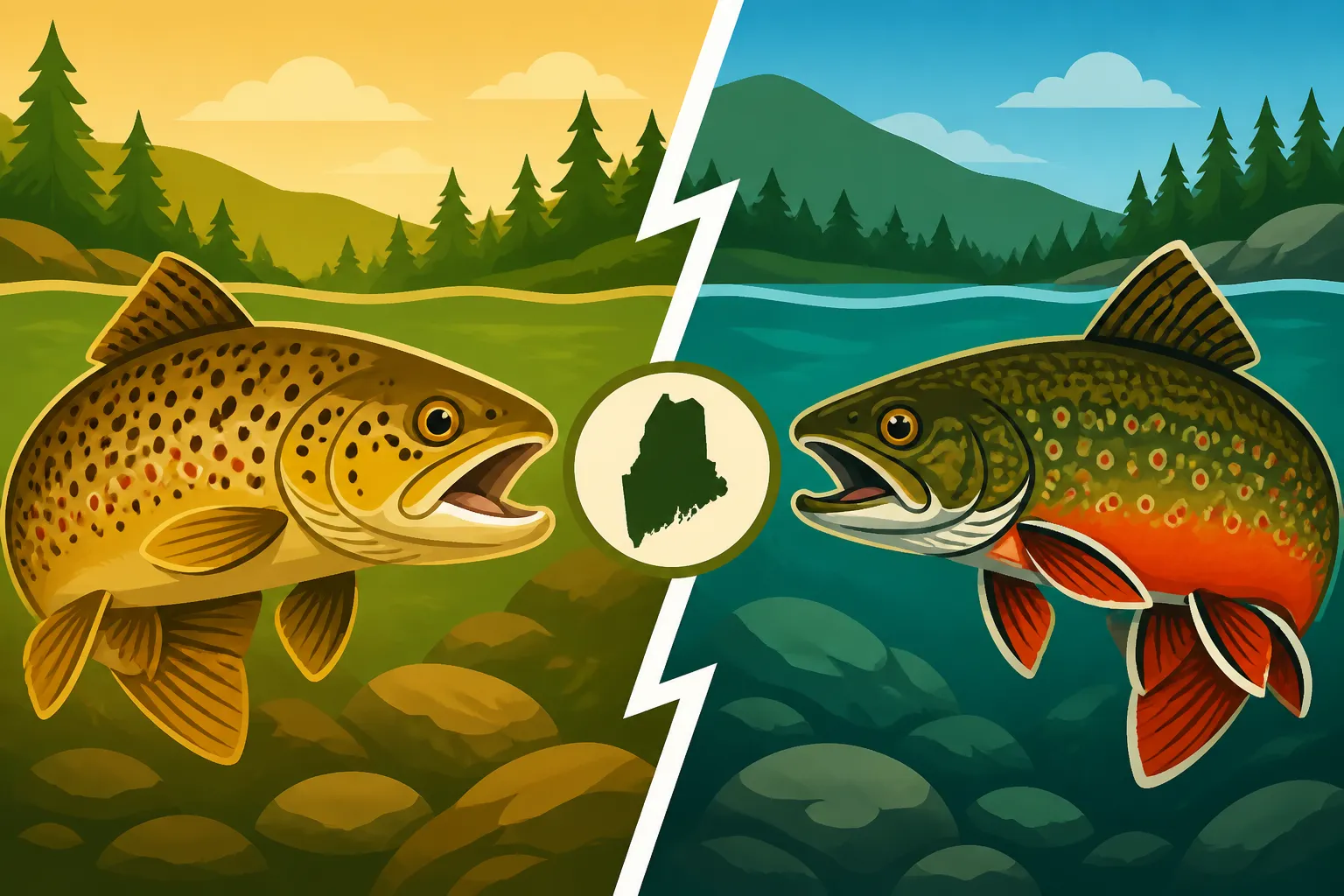
Brown Trout vs Brook Trout Differences
Oh, the age-old question that has stumped many an angler standing knee-deep in a Maine stream or casting into a tranquil lake: "Is that a brook trout or a brown trout?" It's a common confusion, and honestly, it's easy to mix them up when you're caught up in the thrill of the catch. But knowing the distinct differences isn't just about identifying your trophy; it’s about understanding their unique preferences, where they thrive, and how best to entice them. This guide is here to untangle that mystery for you, diving deep into the characteristics, habitats, and fishing strategies for both of these incredible Maine fish.
The Tale of Two Trout: Native vs. Introduced in Maine Waters
When we talk about trout in Maine, we're often talking about a mix of native species and those that have been introduced over time. Understanding this distinction is key to appreciating their roles in our ecosystems and how they behave on the end of your line. It's a bit like comparing an old, weathered Maine farmhouse that's been in the family for generations to a beautifully restored Victorian that's been brought in from elsewhere and lovingly adapted to the landscape. Both are charming, but their histories and characteristics are entirely different.
The Brook Trout: Maine's Indigenous Gem
The brook trout, Salvelinus fontinalis, is truly Maine’s heritage fish. It's not just a trout; it's the native trout of our cold, clear waters, cherished by generations of Mainers and a true symbol of our wild spirit. These beautiful fish are members of the char family, not true trout, but colloquially, they're always "brook trout" to us. Their presence often indicates a healthy, pristine aquatic environment, making them an ecological barometer for the quality of our streams and ponds.
When you're lucky enough to hook into a wild brook trout, you're not just catching a fish; you're connecting with a piece of Maine's natural history. They thrive in oxygen-rich, cold waters, particularly in the headwaters of streams, small spring-fed ponds, and the shallow, rocky edges of larger lakes. Think of those tiny, overgrown brooks winding through the woods – that's prime brook trout territory. They're often smaller than their brown trout cousins in many waters, but what they lack in size, they more than make up for in dazzling colors and a feisty fight. Their vibrant hues, especially during spawning season, are truly a sight to behold, making them one of the most visually stunning fish you can encounter.
The Brown Trout: A Resilient European Transplant
On the other hand, the brown trout, Salmo trutta, is a celebrated immigrant. Originally from Europe and Western Asia, these hardy fish were introduced to North American waters, including Maine, in the late 19th century. They were brought in largely because of their remarkable adaptability and their ability to tolerate warmer water temperatures and a wider range of habitat conditions than our more delicate native brook trout. This resilience has allowed them to establish strong populations in many of Maine's lakes, rivers, and even some coastal areas.
Brown trout are often sought after for their potential to grow to impressive sizes, offering anglers a significant challenge. While they might not possess the iridescent brilliance of a brook trout, their golden-brown flanks, speckled with dark spots and often a scattering of red or orange spots with pale halos, have a beauty all their own. They're survivors, capable of thriving in waters that might be too warm or slightly less oxygenated for brook trout, making them a fantastic sport fish in many of our larger river systems and lakes. Don't underestimate their cunning; brown trout are notoriously wily, often requiring a more sophisticated approach to catch, which only adds to their allure for many dedicated anglers.
Identifying Characteristics: Spotting the Differences
Alright, let's get down to brass tacks: how do you actually tell these two apart when you've got one in hand? It can be tricky, especially if you're new to fishing in Maine or if the fish is displaying muted colors. But there are several key visual cues that, once you learn them, become almost second nature. It’s like learning to tell the difference between different types of Maine evergreens – they might look similar at first glance, but close inspection reveals distinct patterns.
Visual Cues: Colors, Markings, and Fins
The most striking differences often lie in their coloration and the patterns of their spots. The brook trout is a kaleidoscope of color, especially when healthy and in spawning dress. Their flanks typically range from olive green to dark brown, with distinctive worm-like markings (vermiculations) along their back and dorsal fin. What really makes a brook trout stand out are the bright, often vibrant, red or orange spots, sometimes with blue halos, scattered along its sides. Crucially, look at their lower fins – the pectoral, pelvic, and anal fins usually have a distinct white leading edge, often followed by a black stripe, and then the main color of the fin. This white-black-color fin pattern is a dead giveaway for a brook trout.
Brown trout, conversely, tend to have a more subdued, earthy palette. Their bodies are typically golden-brown to olive, sometimes with a silvery sheen, especially in larger lake-dwelling fish. They are characterized by numerous dark spots, often ringed with a lighter halo, scattered over their backs and sides, extending down to their lateral line. Some of these spots, particularly on the flanks, might be reddish-orange, but they almost never have the blue halos seen on brook trout. The brown trout's fins, while generally lacking the dramatic white leading edge of the brook trout, are often yellowish or brownish, sometimes with dark spots. No matter how many times you've seen them, these differences are always fascinating to observe.
Body Shape and Mouth Structure
Beyond color, there are subtle but noticeable differences in their overall body shape and head structure. Brook trout tend to have a slightly more stout, deeper body compared to a brown trout, which often appears a bit more streamlined or torpedo-shaped, especially the larger specimens found in rivers and lakes. This can be variable, of course, depending on the age, sex, and specific habitat of the fish.
When it comes to the mouth, both are predatory fish, but there are slight differences. Brown trout typically have a mouth that extends well past the eye, particularly in larger adults, giving them a more aggressive, almost toothy appearance. Their jaws are robust, designed for tackling larger prey. Brook trout also have a respectable mouth, but it often does not extend quite as far back past the eye as the brown trout's. Both possess sharp teeth, so handle them with care! Knowing these details can help you correctly identify your catch and adhere to any specific regulations for that species. For more help identifying different species, check out our Maine Fish Species Identification Guide.
Size and Growth Potential
One of the most significant differences, particularly for anglers, is their potential size. While both can grow to impressive dimensions under ideal conditions, brown trout generally have the genetic predisposition and environmental tolerance to reach larger sizes in many Maine waters than brook trout. It's not uncommon to hear tales of brown trout in the 5-10 pound range, and even larger specimens are caught each year in lakes like Sebago.
Brook trout, especially wild stream-dwelling populations, often max out at a pound or two, though larger "salters" (sea-run brook trout) or those from fertile ponds can certainly exceed that. In some of Maine's remote ponds, where conditions are perfect and food is abundant, brook trout can grow to impressive sizes, sometimes pushing 3-5 pounds, becoming true trophies. However, across the board, if you're catching a consistently larger trout in a given body of water, it's more likely to be a brown trout. This difference in growth potential heavily influences why some anglers target one over the other.
| Feature | Brook Trout (Salvelinus fontinalis) | Brown Trout (Salmo trutta) |
|---|---|---|
| Native Status | Native to Maine | Introduced from Europe |
| Coloration | Olive green to dark brown, often vibrant | Golden-brown to olive, sometimes silvery |
| Spots | Red/orange spots (often with blue halos), worm-like markings on back/dorsal | Dark spots (often with light halos), some red/orange spots, no blue halos |
| Fin Edges | White leading edge on lower fins, often with a black stripe | Generally lack white leading edges on fins |
| Body Shape | Relatively stout, deeper body | More streamlined, torpedo-shaped |
| Mouth Extension | Usually doesn't extend far past eye | Often extends well past the eye (especially larger fish) |
| Habitat Pref. | Cold, clear, highly oxygenated waters, streams, spring-fed ponds | More tolerant of warmer waters, larger rivers, lakes, estuaries |
| Typical Size | Often 6-12 inches, up to 1-3 lbs (larger in specific waters) | Often 12-20+ inches, 2-10+ lbs (can be much larger) |
Habitat and Behavior: Where and How They Live
Knowing what a fish looks like is one thing, but truly understanding where it lives and how it behaves is what turns a casual angler into a successful one. Both brook and brown trout are cold-water fish, but their preferred niches within that general category can be quite distinct. Imagine two neighbors: both love Maine winters, but one prefers to cross-country ski through quiet, untouched woods, while the other loves ice skating on a busy pond. Their cold-weather preferences lead them to different spots and different activities.
Preferred Waters and Environments
Brook trout are creatures of pristine beauty, demanding the very best our Maine waters have to offer. They thrive in truly cold, crystal-clear, highly oxygenated waters, often preferring smaller streams, spring-fed ponds, and the shallow, cool margins of larger lakes. They are highly sensitive to water temperature, becoming stressed as temperatures rise above the mid-60s Fahrenheit. You’ll find them hunkering down in cool pockets, around underwater springs, or beneath undercut banks and fallen logs. These are the fish that signal a truly healthy, undisturbed watershed. Protecting these environments is crucial for their survival and for our ability to enjoy Brook Trout Fishing in Maine.
Brown trout, while still preferring cool water, are far more adaptable. They can tolerate slightly warmer temperatures and a wider range of water quality conditions, making them successful in larger rivers and lakes where brook trout might struggle. They're often found in waters with more varied structure – rocky areas, deep pools, current breaks, and areas with submerged vegetation. Their hardiness means they can often thrive in waters that have seen some human impact or where temperatures fluctuate more widely throughout the year. They're opportunistic, and their ability to adapt is a big reason why they've become so widespread and popular with anglers across the state.
Dietary Habits and Foraging Behavior
Both species are predatory, but their diets can vary with their habitat and size. Brook trout, especially smaller stream-dwelling individuals, have a varied diet consisting largely of aquatic insects (mayflies, caddisflies, stoneflies), terrestrial insects that fall into the water (grasshoppers, ants), small crustaceans, and even smaller baitfish when available. They are often opportunistic feeders, willing to rise to a well-presented dry fly or dart out from cover for a passing nymph. Larger brook trout, particularly those in ponds and lakes, will actively hunt baitfish.
Brown trout, especially as they grow larger, become increasingly piscivorous, meaning they eat other fish. While they will certainly consume insects and crustaceans, larger brown trout are formidable predators of baitfish like smelt, shiners, and sculpins. This inclination towards larger prey is one reason they can grow to such impressive sizes. They are also known for being quite nocturnal, especially the big ones, often feeding actively under the cover of darkness. This makes them a challenging and exciting target for anglers willing to fish into the evening or early morning hours.
Spawning Differences and Life Cycles
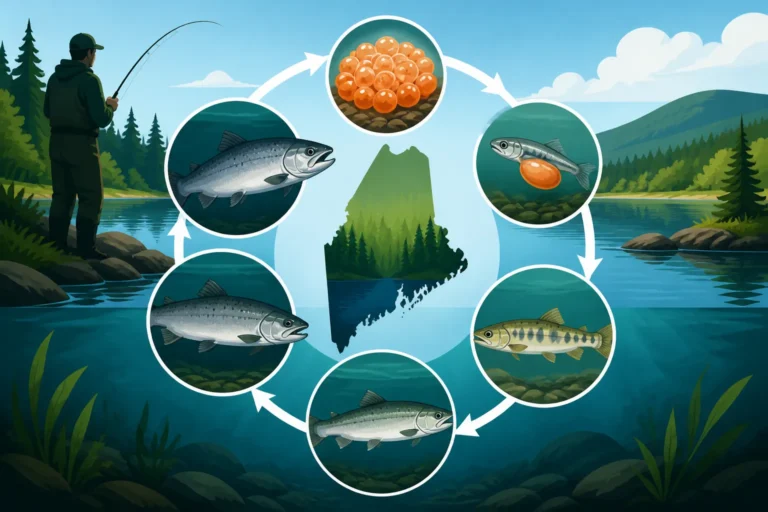
The reproductive habits of these two trout species also differ significantly, reflecting their native ranges and ecological strategies. Brook trout are fall spawners. In late autumn, as water temperatures begin to drop, they migrate to shallow, gravelly areas in streams or lake tributaries, often in areas with groundwater upwelling. The females create redds (nests) by fanning out gravel with their tails, depositing their eggs, which are then fertilized by the males. These eggs remain in the gravel over winter, hatching in early spring. Stocked vs Wild Brook Trout in Maine helps explain how these different populations sustain themselves.
Brown trout are also fall spawners, typically a bit later in the season than brook trout, sometimes extending into early winter. Like brook trout, they seek out gravelly areas in streams and rivers, but they tend to prefer slightly larger substrates and may spawn in waters with more flow or depth than brook trout. Their fry emerge in the spring, similar to brook trout. The fact that both species spawn in the fall means that stream fishing can be closed or restricted in some areas during this sensitive period, a crucial part of Maine Fishing Regulations Explained. Understanding these life cycles helps us appreciate the importance of conservation efforts and respectful angling practices.
Fishing Strategies: Tailoring Your Approach
Now, for the fun part: how do you catch 'em? Because brook trout and brown trout have different preferences in habitat, diet, and behavior, what works for one might not be the most effective strategy for the other. Tailoring your approach will significantly increase your chances of success. It's about being a detective, reading the water, and understanding what makes each species tick.
Best Baits and Lures for Each Species
When it comes to brook trout, especially in smaller streams and ponds, natural baits often reign supreme. Worms (like nightcrawlers or garden worms), small minnows, and even corn or cheese can be incredibly effective, especially for stocked fish or those in less pressured waters. For artificial lures, small spinners (like Mepps Aglias or Panther Martins) in silver, gold, or brass, and small spoons (like Dardevles or Kastmasters) are great choices. Fly anglers will find success with a wide array of patterns: dry flies mimicking mayflies, caddis, or terrestrial insects; nymphs like Hare's Ears or Prince Nymphs; and small streamers like Woolly Buggers or Grey Ghosts. Finding a good selection of these can be done easily online, and places like Amazon offer a huge variety to choose from. For a deeper dive into what they bite on, check out Best Bait for Brook Trout.
Brown trout, particularly the larger ones, demand a bit more. While smaller browns will hit similar lures to brook trout, the true trophies often prefer larger offerings that imitate their primary food source: baitfish. Spoons, especially those designed for trolling or casting over long distances, are excellent. Stickbaits and crankbaits that mimic smelt, shiners, or alewives in natural colors (silver, blue/silver, gold) are incredibly effective, especially in lakes and larger rivers. Soft plastics rigged to imitate injured baitfish also work wonders. Fly fishing for brown trout often involves larger streamers (e.g., Clouser Minnows, articulated patterns) that imitate baitfish, or large nymphs. Don't forget, these fish are often nocturnal, so glow-in-the-dark lures or those with rattles can be effective after dark.
Effective Techniques and Presentations
For brook trout in streams, stealth and delicate presentations are often key. Short, accurate casts with lightweight tackle are usually best. For fly fishing, a natural drift with your dry fly or nymph is critical, minimizing drag. In ponds, still-fishing with bait under a bobber or slowly retrieving a small spinner can be very effective. If trolling in a lake, try small spoons or traditional bucktail flies near the surface in cooler months, or deeper during summer. Remember, brook trout are often in tight quarters, so presentation matters more than power.
Brown trout, given their more widespread habitats, allow for a broader range of techniques. In rivers, casting spinners or stickbaits into current seams, behind rocks, or into deep pools can yield results. For larger lake-dwelling brown trout, trolling is a hugely popular and effective method. This can involve flat-lining (running lures directly behind the boat) or using downriggers or lead core line to reach specific depths where brown trout are holding. Trolling Techniques for Maine Lakes covers this in detail. Fly anglers targeting brown trout often employ aggressive stripping retrieves with streamers or precise casts to rising fish in the evening. Don't be afraid to experiment with different retrieve speeds and depths; brown trout can be finicky. For river fishing, a medium-action spinning rod with 6-8 lb test line or a 5-6 weight fly rod is a good all-around choice. You can find excellent options for rods and reels on Amazon to suit your preferred technique.
Prime Seasons and Times to Target
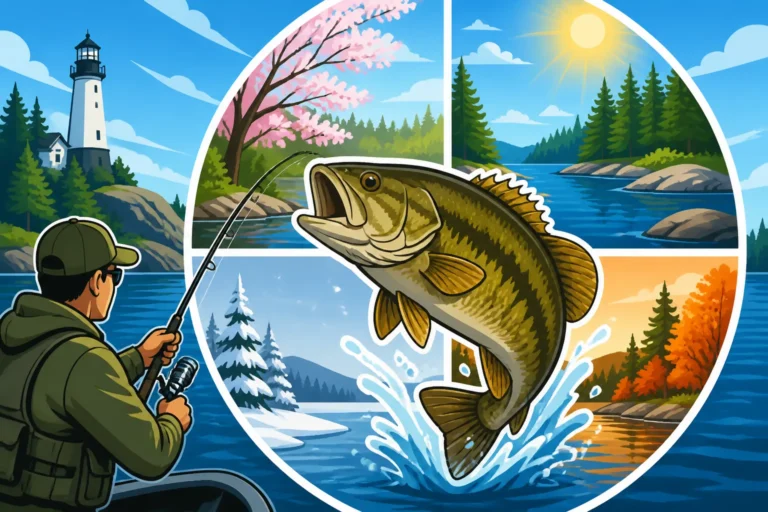
The best time to target either species in Maine often revolves around water temperature and their spawning cycles. For brook trout, spring immediately after ice-out, and the fall before spawning, are generally considered prime times. In spring, they are active and feeding heavily, often found in shallower waters. As summer progresses, they retreat to cooler, deeper areas or into spring-fed tributaries. Fall sees them become more aggressive again as they prepare to spawn. Often, dawn and dusk are the most productive times of day, especially in warmer weather. Always check the Maine Fishing Season Calendar for specific opening and closing dates for various waters.
Brown trout also have excellent spring and fall fisheries. In early spring, they can be found cruising shorelines and river mouths, actively feeding. As summer heats up, they, like brook trout, will seek cooler, deeper water, often holding near thermoclines in lakes or in deep pools in rivers. This is when night fishing for large browns can be particularly effective, as they move into shallower water to feed under the cover of darkness. Fall is another fantastic time, as they feed aggressively before their spawn and are often found in tributaries. During summer, the low light hours of early morning and late evening, or even night, are often your best bet for these wily fish. You might find some useful headlamps or other night fishing gear on Amazon to help with those late-night excursions. For general guidance on timing your trip, consult our Best Time of Year to Fish in Maine.
Conservation and Management in Maine
Understanding the differences between brook and brown trout isn't just for bragging rights; it's also crucial for conservation. Maine's fisheries are managed with specific goals in mind for each species, taking into account their native status, reproductive success, and population health. As responsible anglers, we play a vital role in upholding these regulations and ensuring healthy fish populations for future generations.
Bag Limits and Regulations
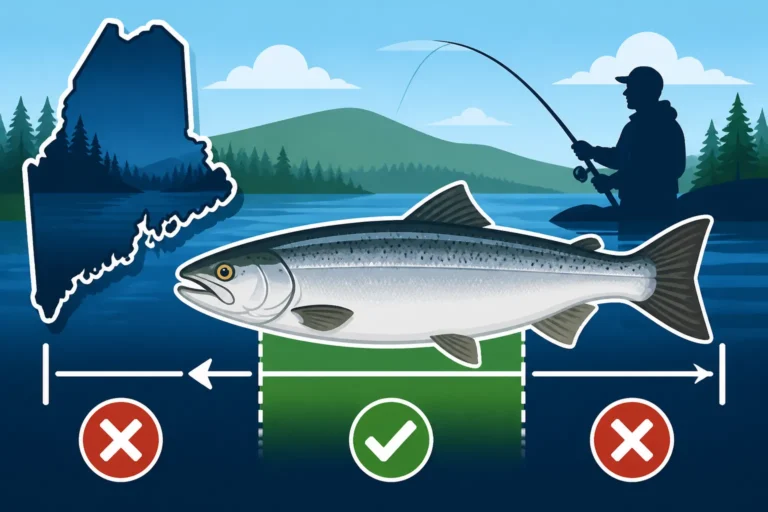
Maine's Department of Inland Fisheries and Wildlife (MDIFW) has specific regulations in place for both brook trout and brown trout, which can vary by water body and even by different zones within the state. These regulations often pertain to daily bag limits (how many fish you can keep), minimum and maximum length limits (slot limits), and even specific fishing methods allowed. For example, some waters might have a reduced bag limit or a "no kill" regulation for wild brook trout to protect their sensitive populations. Conversely, brown trout, being an introduced species, might have different limits, though still managed to maintain a healthy fishery.
It's absolutely critical to consult the most current Maine Fishing Regulations Explained booklet or the MDIFW website before you head out. Don't just assume the rules are the same everywhere. A brook trout limit in a remote pond in the North Zone could be entirely different from a brook trout limit in a southern Maine stream, or a brown trout limit in a popular lake. Knowing the distinction between these two species is the first step in complying with these rules. For instance, you'll find differing rules for Brook Trout Daily Limit in Maine South Zone compared to other areas.
Stocking Programs and Wild Populations
Maine takes great pride in its wild brook trout populations, which are among the most robust in the eastern United States. Many of our smaller streams and remote ponds are managed specifically for wild brook trout, with regulations designed to protect these irreplaceable genetic strains. You'll find many efforts geared towards preserving Brook Trout Native Range in Maine. In these waters, stocking of other species is often avoided to prevent competition or hybridization.
However, brown trout are a key component of Maine's stocking program. Because of their hardiness and ability to thrive in a wider range of conditions, they are regularly stocked into many lakes and rivers across the state to provide excellent fishing opportunities. This is particularly true in waters where wild brook trout might not naturally occur or where angling pressure is high. Stocking ensures that anglers have a consistent chance to catch quality fish. You can often find information about which waters are stocked with brown trout through MDIFW resources. Understanding these stocking practices helps explain why you might find one species more prevalent or larger in certain areas than another.
Why Understanding the Difference Matters
So, why go through all this trouble to differentiate between a brown trout and a brook trout? It might seem like a small detail to a casual observer, but for a passionate angler or someone who truly appreciates Maine's natural resources, these distinctions hold significant weight. It's not just academic; it directly impacts your success, your experience, and your contribution to conservation.
Enhancing Your Fishing Success
Imagine spending a day fishing a particular stream, convinced you're targeting brook trout, only to realize the water is a bit too warm and slow-moving for them to thrive. If you knew the subtle signs pointing to brown trout, you might have switched to a different lure, a larger bait, or even a nocturnal fishing strategy, turning a frustrating day into a successful one. Knowing the specific preferences of each species – their preferred habitat, diet, and behavior – allows you to tailor your gear, techniques, and timing for maximum effectiveness. You're not just fishing; you're targeting.
For example, if you encounter a very aggressive, large fish in a deeper lake, a quick identification of it as a brown trout might prompt you to use a bigger stickbait or a heavy streamer, rather than a tiny dry fly more suited for a smaller brook trout in a mountain stream. This knowledge transforms your approach, moving from a general fishing effort to a highly specific and often more rewarding pursuit. The thrill of outsmarting a cunning brown trout or finding that hidden pocket of vibrant brook trout is truly what makes fishing in Maine so special. You'll even find guides who specialize in one over the other, such as those that offer Brown Trout vs Brook Trout Differences on their trips, aiming to provide you with the best experience.
Contributing to Conservation Efforts
Beyond personal success, recognizing the differences between these two species is an act of responsible stewardship. Maine's native brook trout populations are a precious resource that requires careful management and protection. Accidentally misidentifying a brook trout as a brown trout could lead to inadvertently violating regulations designed to protect sensitive wild populations, even with the best intentions.
By accurately identifying your catch, you ensure that you are adhering to the specific bag and length limits for that particular species and waterbody. This commitment to proper identification helps support MDIFW's conservation efforts, ensuring that native populations thrive and that introduced species are managed sustainably. Every angler who takes the time to learn these differences becomes a more informed and responsible participant in maintaining the health and beauty of Maine's incredible fisheries. It's about respecting the fish, respecting the rules, and ensuring that future generations can enjoy the same incredible fishing experiences we do today.
Disclaimer
This article is for general informational purposes only and does not constitute professional advice. Laws, prices and regulations vary by location and change over time. Consult a qualified professional for guidance on your specific situation.