Striped Bass Fishing in Maine
Oh, the striped bass! If you've ever spent a summer day on the Maine coast, casting into a ripping tide or navigating a river mouth, you know the absolute thrill of a striper hitting your line. But let's be real, these powerful fish can be elusive, and understanding their patterns, the right gear, and Maine's specific regulations can feel like trying to solve a puzzle. This guide is here to untangle that mystery, giving you the insider scoop on everything you need to know to successfully chase striped bass in our beautiful state, from their migration habits to the best spots and techniques to reel them in.
The Allure of Striped Bass Fishing in Maine: Why We Love 'Em
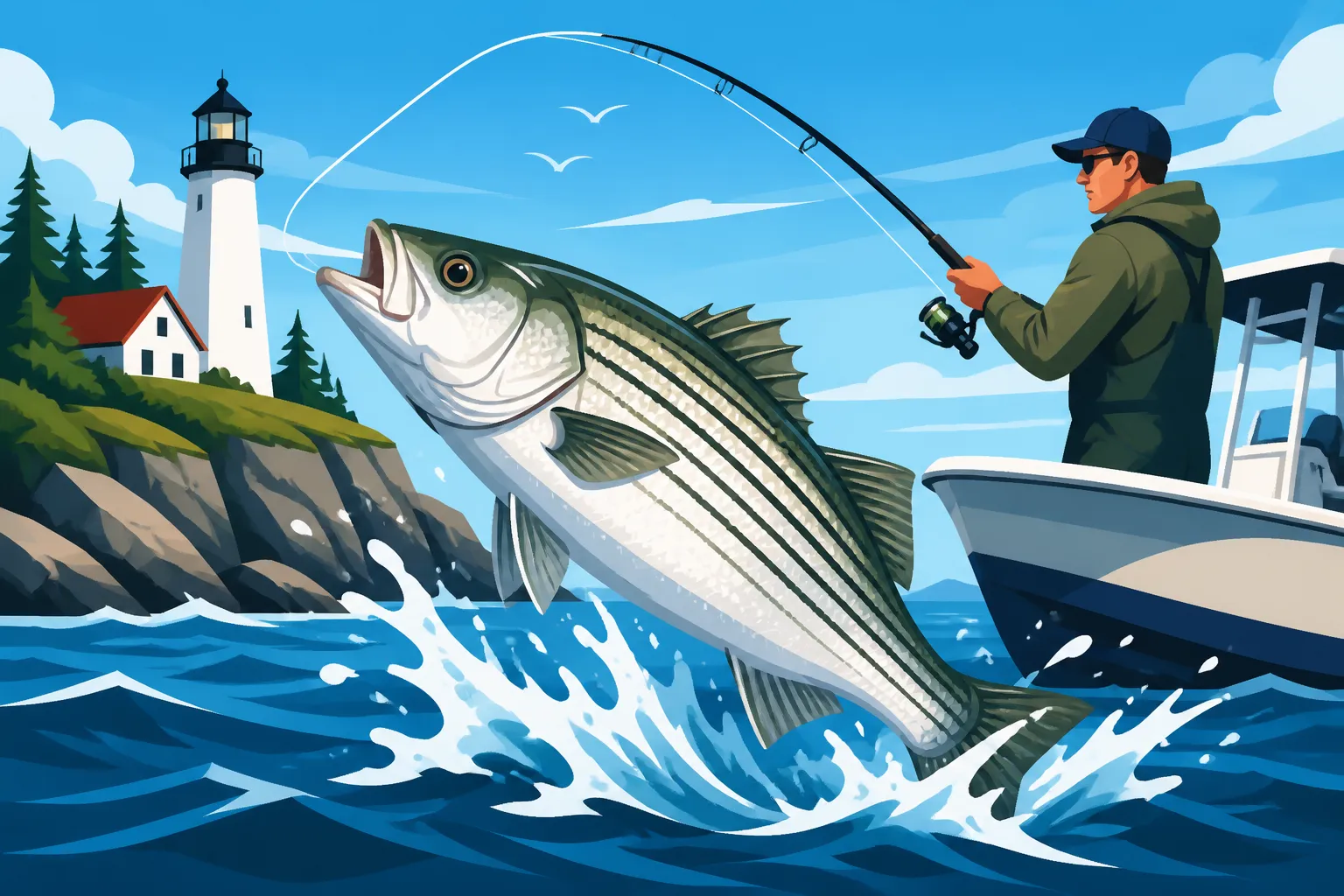
There's something truly special about striped bass that captures the hearts of anglers up and down the East Coast, and Maine is no exception. For many of us, the arrival of the first stripers in our coastal waters signals the true beginning of summer, a time of long days, salty air, and the anticipation of that distinctive thud on the end of the line. These aren't just any fish; they're magnificent, powerful predators that offer a dynamic fishing experience whether you're casting from shore, wading a flat, or trolling from a boat.
The Migratory Powerhouse of the Northeast
Striped bass, often affectionately called "stripers" by us locals, are truly migratory marvels. Each spring, driven by instinct and warming waters, huge schools of these fish embark on an epic journey north from their overwintering grounds further south. Their arrival in Maine waters, typically around May or early June, marks the start of an eagerly anticipated fishing season. These fish are here to feed, packing on weight after their arduous journey and before their eventual return south in the fall.
It's this predictable, yet always exciting, migration that draws so many of us to the water. We know they're coming, and we spend the off-season dreaming of those first big pushes of fish. When the water temperatures align and the baitfish show up, you can bet the stripers aren't far behind, creating incredible opportunities for anglers. They follow the food, often pushing into estuaries and rivers in pursuit of mackerel, herring, sand eels, and other forage.
A Challenging and Rewarding Pursuit
Catching striped bass in Maine is rarely easy, but that's precisely what makes it so rewarding. These fish are cunning, adapting quickly to fishing pressure and environmental changes. You might spend hours casting without a single bite, only to have a hot bite erupt unexpectedly, providing a flurry of action that makes all the waiting worthwhile. It demands patience, keen observation, and a willingness to adapt your strategy.
The challenge isn't just in finding them; it's in hooking them and, more importantly, landing them. A large striper can pull like a freight train, testing your tackle and your resolve. The sheer power of a 20 or 30-pound fish in a strong current is an unforgettable experience. When you finally guide that magnificent, silver-sided fish to hand, whether for a quick photo and release or for the dinner table within legal limits, there's an immense sense of accomplishment that few other fish can provide. It's a true angler's game, demanding skill, persistence, and a bit of luck.
The Economic and Recreational Impact
Beyond the personal thrill, striped bass fishing plays a significant role in Maine's coastal communities. It fuels local tackle shops, supports guide services and charter captains, and brings visitors to our beautiful shores. From Portland to Acadia, communities thrive on the influx of anglers eager to try their hand at landing a striper. Restaurants see more patrons, hotels fill up, and the general buzz of summer fishing permeates the air.
For countless Mainers and visitors, chasing stripers is more than just a hobby; it's a cherished summer tradition. It's about spending time outdoors with family and friends, teaching kids to cast, and creating lasting memories against the backdrop of Maine's rugged coastline. This vibrant recreational fishery connects us to our natural environment and to each other, fostering a shared passion for the sport and a deep appreciation for these incredible fish.
Understanding Striped Bass Migration and Habitat in Maine
To truly excel at striped bass fishing in Maine, you need to think like a striper. This means understanding their annual migration patterns, knowing what brings them to our waters, and recognizing the types of habitats they prefer once they arrive. These fish aren't just randomly distributed; they follow specific routes and congregate in certain areas where food is abundant and conditions are favorable.
The Annual Journey North
The vast majority of the striped bass found in Maine's coastal waters are part of the massive Atlantic coast migratory stock. These fish primarily spawn in the Chesapeake Bay and the Hudson River in the spring. Once spawning is complete, they begin their extensive northern migration, pushing up the coast in waves, often following the 50 to 60-degree Fahrenheit water temperature isotherms. Maine represents the northernmost extent of their primary summer feeding grounds.
Their arrival timing in Maine can vary slightly year to year, depending on water temperatures and baitfish movements. Generally, you can expect to see the first vanguard of smaller "schoolie" stripers showing up in southern Maine estuaries and rivers by late May or early June. These are typically followed by larger fish, the trophy-sized cows that every angler dreams of, as the summer progresses and more bait moves into the bays and along the open coast. This mass movement is a biological imperative, a testament to the stripers' resilience and adaptability.
Preferred Coastal Environments
Once they arrive, stripers aren't just swimming anywhere; they seek out specific types of coastal environments that offer both food and shelter. Rocky shorelines, with their abundant structure, are classic striper haunts. The turbulent water around ledges, reefs, and rocky points disorients baitfish, making them easy targets. These areas also provide ambush points for predatory stripers, allowing them to conserve energy while waiting for a meal to drift by. Look for areas with crashing waves and white water, as these often hold feeding fish.
Beyond the rocks, sandy beaches and flats also hold significant numbers of stripers, especially during dawn and dusk. On incoming tides, stripers will cruise these shallows, looking for sand eels, crabs, and other forage. The edges of channels and cuts, where currents concentrate bait, are also prime locations. Don't overlook stretches of beach with deep drop-offs or areas where freshwater outflows create nutrient-rich plumes, drawing in baitfish and, consequently, stripers. Maine Coastal Fishing Spots for Striped Bass are diverse, offering many different types of environments for these adaptable fish.
Estuaries and River Systems as Nurseries
Maine's many estuaries and river systems are incredibly important for striped bass. Rivers like the Kennebec, Saco, and Penobscot provide critical feeding grounds, especially for juvenile fish and for larger stripers pushing far upstream in pursuit of migrating anadromous species like alewives and shad. The mix of fresh and saltwater in these areas creates a rich ecosystem, teeming with life and offering a buffet for hungry stripers.
These brackish waters also offer thermal refuge and shelter from strong ocean currents, making them ideal places for stripers to spend their summer months. You'll often find them congregating around river mouths, bridge pilings, jetties, and marsh edges. For instance, the Kennebec River Fishing Access Points in Maine can be excellent for finding stripers throughout the season. Understanding how these systems funnel baitfish and provide protection is key to consistently finding stripers throughout their Maine residency.
Prime Seasons and Tides for Hooking Maine Stripers
Timing is everything when it comes to striped bass fishing in Maine. Knowing when to be on the water – not just the time of year, but also the time of day and the stage of the tide – can make all the difference between a frustrating skunk and a banner day. Stripers are highly influenced by environmental factors, and understanding these rhythms will put you in the best position for success.
The Spring Run: Early Opportunities
The spring run typically kicks off in late May or early June, when water temperatures start to consistently climb above 50 degrees Fahrenheit. The first fish to arrive are often smaller "schoolies," ranging from 18 to 28 inches, eager to feed after their long migration. These early arrivals often push into estuaries and river mouths, where warmer, shallower waters hold baitfish. This is a fantastic time for light tackle fishing, as these aggressive fish are usually not too picky.
During this initial phase, focus your efforts on river mouths, protected bays, and shallow flats that warm up quickly under the spring sun. Mackerel, herring, and sand eels are common forage, and lures that imitate these baitfish, such as soft plastics, small plugs, and flies, can be incredibly effective. The spring run is a time of high anticipation and often high reward, setting the tone for the rest of the season. It’s when many anglers dust off their gear and get back into the swing of things, feeling the tug of that first striper.
Summer's Abundance: Peak Season Action
As summer truly sets in through July and August, the bulk of the striped bass population has arrived in Maine. This is peak season, offering the widest range of fishing opportunities, from large schools of stripers feeding in open water to trophy fish hunkering down in rocky structure. While the fish may become a bit more wary due to increased fishing pressure, their sheer numbers make this a prime time to be on the water.
During the summer, stripers can be found almost anywhere along the coast, from the outer islands to deep into the tidal rivers. Larger fish tend to be more active during low light conditions – dawn, dusk, and even into the night – as they avoid the bright sun and boat traffic of midday. Deeper water, cool water pockets, and strong current rips become increasingly important as the mercury rises. You might even find them chasing bait in open bays, creating exciting topwater blow-ups. Maine Fishing Season Dates Guide will confirm the broader window for targeting these fish.
Fall Migration: The Last Hurrah
As September rolls around and the days shorten, stripers begin to sense the impending colder weather and the urge to migrate south intensifies. This is often referred to as the "fall run," and it can provide some of the most spectacular fishing of the year. Stripers become incredibly aggressive, gorge feeding to build up fat reserves for their journey, often pushing huge schools of baitfish into frenzies against the shore.
During the fall run, baitfish like peanut bunker and juvenile herring are prevalent, and stripers will chase them with reckless abandon. This is a great time for throwing larger plugs, poppers, and swimbaits, as the fish are less selective and more focused on consuming as much as possible. Focus on areas where baitfish are abundant, especially tidal estuaries, river mouths, and along the open coast where currents funnel bait. The fishing can remain strong well into October, sometimes even November, until water temperatures drop significantly, signaling the end of the Maine Striped Bass Season and Limits.
The Critical Role of Tides and Currents
Perhaps even more important than the season is the tide. Striped bass are master opportunists, and they use tidal currents to their advantage, both for feeding and for conserving energy. Understanding the ebb and flow of the tides is absolutely critical for consistent success. In Maine, strong tidal currents are a hallmark of our coast, and stripers are often found wherever these currents create ambush points or concentrate bait.
Generally, the incoming and outgoing tides, especially the periods around the middle of the tide swing, tend to be the most productive. As the current picks up, it disorients baitfish and washes food out of structure or in from the ocean. This is when stripers are most likely to be actively feeding. Slack tide, while sometimes offering a brief window, often sees a slowdown in activity. The key is to pay attention to where the current is strongest and where it creates eddies, rips, or foam lines. Best Tide for Striped Bass Fishing in Maine knowledge is truly invaluable. A strong current around a rocky point or a deep channel can be a magnet for feeding stripers, making a usually quiet spot erupt with action.
Setting Up for Success: Essential Gear for Maine Striped Bass
Having the right tackle is fundamental to enjoying your striped bass fishing experience and, more importantly, to actually landing these powerful fish. While you don't need to break the bank, investing in quality gear suited for the task will significantly improve your success rate and overall enjoyment. Stripers are strong, so your equipment needs to be up to the challenge of their powerful runs and head shakes.
Rods and Reels: Power and Performance
For shore-based or wade fishing, a medium-heavy to heavy spinning rod, typically between 7 to 9 feet in length, is ideal. This length provides the casting distance needed to reach distant rips and structure, while the medium-heavy action offers enough backbone to fight larger fish and throw heavier lures. Look for rods rated for 1/2 to 3 ounces. If you plan to fish from a boat or kayak in closer quarters, a slightly shorter rod, perhaps 6.5 to 7.5 feet, might be more manageable.
Pair your rod with a reliable spinning reel in the 4000 to 6000 size range. This size offers ample line capacity for those long striper runs and features a strong, smooth drag system that is absolutely crucial when battling a powerful fish. Ensure the reel is sealed or rated for saltwater use to withstand the corrosive marine environment. Brands like Penn, Shimano, and Daiwa offer excellent options that can stand up to the rigors of Maine striper fishing. A good reel will also have a high retrieve rate, allowing you to quickly pick up slack line or keep up with a fast-moving fish.
Line Choices: Braided vs. Monofilament
When it comes to fishing line for stripers, braided line is the overwhelming favorite among experienced anglers, and for good reason. Its thin diameter relative to its breaking strength means you can cast further, and its near-zero stretch provides incredible sensitivity, allowing you to feel even the most subtle bites and differentiate between a bite and bottom structure. A 20 to 40-pound test braided line is a common choice, depending on the size of fish you expect to encounter and the amount of current.
While braided line is fantastic for casting and sensitivity, it's not ideal for direct tie-ins to lures, as it can be visible to fish and is more prone to abrasion on rocks. This is where a fluorocarbon leader comes in. Tie a 2 to 4-foot section of 20 to 40-pound test fluorocarbon leader to your braided mainline using a strong knot like an FG knot or an Albright knot. Fluorocarbon is nearly invisible underwater and is more abrasion-resistant, offering a critical buffer against rocky bottoms and sharp teeth. For those who prefer a more traditional approach, heavy monofilament line in 15-25 lb test can also be used, though it sacrifices some casting distance and sensitivity.
Lures, Baits, and Terminal Tackle Essentials
The variety of lures and baits for striped bass is vast, but a few staples should always be in your tackle box. For artificials, soft plastic paddle tails and jerk shads rigged on jig heads are incredibly versatile and effective. Bucktail jigs, especially in white or chartreuse, are classic striper killers, particularly when tipped with a pork rind or soft plastic trailer. Topwater plugs like pencil poppers and walk-the-dogs create exciting surface action, while diving minnow plugs and lipless crankbaits can reach deeper fish. Don't forget metal spoons or swimbaits for imitating herring or mackerel. Amazon offers a huge selection of these lures, making it easy to stock up before your trip.
If you prefer natural bait, live mackerel, herring, or eels are absolute dynamite for larger stripers. If live bait isn't an option, chunked bunker (menhaden), mackerel, or even clam bellies can be deadly, especially when fished on the bottom. Your terminal tackle should include strong swivels, snap-swivels, and a selection of appropriate hooks (circle hooks are often required by regulation for bait fishing to promote conservation, so always check the latest rules!). Carrying various sized sinkers, from egg sinkers to pyramid weights, will ensure you can adapt to different currents and depths.
Kayaks and Wading Gear: Personal Access
For the adventurous angler, kayaks offer unparalleled access to prime striper grounds that might be inaccessible by boat or difficult to reach from shore. A stable fishing kayak, equipped with a comfortable seat, rod holders, and ample storage, can open up a whole new world of opportunities. Just remember to prioritize safety with a PFD and basic safety gear.
Wading is another fantastic way to target stripers, especially in estuaries, shallow flats, and along rocky beaches. A good pair of breathable chest waders and sturdy wading boots with felt or rubber soles (for grip on slippery rocks) are essential. Dress in layers, even in summer, as Maine mornings can be chilly. Wading allows for stealthy approaches and the ability to cover ground effectively, presenting your lure or fly right where the fish are holding. Always be mindful of the tides when wading, as strong currents and incoming water can quickly make a safe area dangerous.
| Gear Category | Recommended Item | Key Considerations |
|---|---|---|
| Rod | 7-9 ft Medium-Heavy Spinning Rod | Graphite construction for sensitivity, strong backbone for fighting fish, good casting distance. |
| Reel | 4000-6000 Size Spinning Reel | Smooth, powerful drag, good line capacity, saltwater sealed/rated. |
| Main Line | 20-40 lb Braided Line | High strength-to-diameter ratio, zero stretch for sensitivity, long casting. |
| Leader | 20-40 lb Fluorocarbon | Nearly invisible, abrasion-resistant, crucial for presentation. |
| Lures | Soft Plastics (Jerk Shads, Paddle Tails), Bucktail Jigs, Topwater Plugs, Diving Plugs | Imitate local baitfish (mackerel, sand eels, herring), create different actions. |
| Natural Bait | Live Mackerel/Herring, Chunked Bunker, Eels | Excellent for larger, less active fish; check regulations for circle hook use. |
| Terminal Tackle | Strong Swivels, Snap-Swivels, Circle Hooks (various sizes), Bank/Pyramid Sinkers | Ensure strength, promote ethical release, adapt to current. |
| Waders/Kayak | Breathable Chest Waders & Boots or Fishing Kayak | Access to prime spots, comfort, safety (PFD for kayak). |
Mastering the Techniques: How to Catch Striped Bass in Maine
Catching striped bass consistently in Maine involves more than just showing up with a rod and reel. It's about employing the right techniques for the conditions, understanding how stripers feed, and adapting your approach. Whether you're a seasoned angler or just starting out, there are several proven methods that can put stripers in your sights.
Casting with Artificial Lures
Casting lures from shore, a jetty, or a boat is perhaps the most popular and versatile way to target stripers. This method allows you to cover a lot of water and actively search for feeding fish. The key is to select a lure that mimics the baitfish currently present in the area and to work it effectively.
- Soft Plastics: These are incredibly effective. Rig a paddle tail or jerk shad on a jig head (1/2 to 1.5 oz is a good range for Maine's currents). Cast it out, let it sink, and retrieve with a slow, steady retrieve punctuated by occasional twitches or pauses. Vary your retrieve speed until you find what the fish want. Colors like white, chartreuse, pink, and dark patterns (like black or olive) are good to have.
- Bucktail Jigs: A classic for a reason. Cast a bucktail jig into current rips or around rocky structure. Let it sink, then retrieve it with a jigging motion, bouncing it along the bottom or swimming it through the water column. Tipping it with a soft plastic or pork rind trailer can enhance its appeal.
- Topwater Plugs: There's nothing quite like a striper exploding on a topwater plug! Use pencil poppers or walk-the-dog style lures during low light conditions (dawn, dusk) or when fish are actively busting on the surface. The erratic, splashing action of these lures drives stripers wild.
- Minnow Plugs and Swimbaits: For fish holding a bit deeper or in calmer water, suspending or sinking minnow plugs and realistic swimbaits can be deadly. Retrieve them with a slow, deliberate wobble, imitating an injured baitfish.
Regardless of the lure, pay attention to the retrieve. Sometimes a fast, erratic retrieve triggers a strike, while other times a slow, methodical presentation is more effective. The goal is to make your lure look like an easy meal. How to Fish for Striped Bass From Shore often involves mastering these casting techniques.
Live Bait and Chunking Strategies
While artificials are thrilling, sometimes nothing beats natural bait, especially for larger, more wary stripers.
- Live Bait: Live mackerel or herring, if available, are irresistible to big stripers. You can fish them drifted with the current under a float, free-lined, or even slow-trolled. Hook them through the nose or back, being careful not to impede their swimming action. The struggle of a live baitfish is a powerful attractant.
- Eels: Live eels are a legendary big-striper bait, especially at night. Fish them free-lined or with minimal weight in current-swept areas. They are notoriously slimy, so come prepared with a rag!
- Chunking: If live bait isn't an option, chunking (using cut pieces of oily baitfish like menhaden or mackerel) can be highly effective. This method releases a strong scent trail that can draw in stripers from a distance. Fish chunks on a single circle hook with a sinker heavy enough to hold bottom. This is a great technique when fishing from a boat at anchor in a channel or from a jetty with deep water access. Remember to use circle hooks when bait fishing to protect the fish!
Trolling for Deeper Water Success
Trolling is a productive method, particularly from a boat, for covering large areas and finding schools of stripers that might be holding deeper or spread out. It's also effective when fish are chasing bait in open water.
- Tube and Worm: This classic Maine technique involves trolling a surgical tube worm (often bright red or orange) tipped with a seaworm or bloodworm behind a weight or small drail. The undulating action of the tube combined with the scent of the worm is incredibly enticing. Troll at a very slow speed, just enough to give the tube action.
- Plugs and Parachutes: Diving plugs, large swimming plugs, and weighted parachute jigs can also be trolled effectively. Use a downrigger or inline weights to get your lures to the desired depth. This is especially good for targeting stripers when they are feeding on mackerel or herring in deeper channels or along ledges. Adjust your trolling speed to achieve the best action from your lure.
Fly Fishing for Stripers: A Specialized Thrill
For the fly fishing enthusiast, targeting striped bass on the fly offers an incredibly engaging and visual experience. It's a challenging but deeply rewarding pursuit that requires a specific setup.
- Rod and Reel: An 8- to 10-weight fly rod, paired with a saltwater-specific fly reel with a smooth, sealed drag and plenty of backing, is standard.
- Line: A weight-forward floating line is versatile for topwater and shallow-water work, but an intermediate or sinking line is often necessary to get flies down to actively feeding fish in current or deeper water.
- Flies: Clouser Minnows, Deceivers, and Half-and-Halfs in sizes 2/0 to 4/0 are staple striper flies. Colors should mimic local baitfish (white, olive, chartreuse, blue/white) or be dark for low light (black).
- Technique: Look for signs of feeding fish – busting bait, diving birds, or nervous water. Cast your fly upstream or across the current and strip it back with varying speeds and pauses. The take can be subtle or a violent tug! Fly fishing demands precision and a good understanding of current dynamics, but landing a striper on a fly rod is a truly exhilarating experience. Fly Fishing for Beginners in Maine can provide a good foundation before venturing into saltwater fly fishing for stripers.
Top Fishing Grounds: Where to Find Striped Bass in Maine
Maine's coastline, with its countless coves, estuaries, rivers, and rocky shorelines, offers an incredible array of opportunities for striped bass anglers. While stripers can theoretically show up anywhere there's bait and suitable habitat, certain areas consistently produce better results due to their geography and baitfish concentrations. Knowing these hotspots can save you a lot of time and increase your chances of success.
Southern Maine's Productive Coastline
The southern stretch of Maine's coast, from Kittery to Portland, is often the first to see the arrival of stripers in the spring and remains highly productive throughout the season. The numerous sandy beaches, rocky points, and tidal estuaries here create ideal conditions.
- York, Ogunquit, Wells, and Kennebunkport: These towns boast miles of beautiful beaches and rocky shorelines. Places like Ogunquit Beach, Wells Beach, and Kennebunk Beach are popular spots for surfcasting, especially during early morning or late evening high tides. Look for cuts, troughs, and areas where currents create rips. The mouths of the Ogunquit River, Wells Harbor, and the Kennebunk River are also fantastic, as stripers ambush baitfish moving in and out with the tide. Estuaries provide excellent early-season action for schoolie stripers.
- Saco River: The mouth of the Saco River in Biddeford and Saco is a renowned striper magnet, particularly during the spring and fall runs. Stripers congregate here to feed on herring and other baitfish. Both boat and shore anglers can find success around the jetties, the river channel, and the adjacent beaches. Saco River Fishing Access points offer convenient entry.
Casco Bay and the Greater Portland Area
Moving slightly north, the vast expanse of Casco Bay, with its myriad islands, ledges, and deep channels, provides a rich environment for striped bass. The greater Portland area is a hub for both recreational anglers and Casco Bay Striped Bass Fishing in Maine charters.
- Portland Harbor and Fore River: The deep channels and abundant structure within Portland Harbor and the Fore River hold stripers, especially around bridge pilings, docks, and rocky shorelines. Night fishing here can be particularly productive for larger fish that move in under the cover of darkness.
- Scarborough Marsh and Eastern Casco Bay: The vast salt marshes of Scarborough are a prime nursery ground for baitfish, which in turn attracts stripers. Wading the marsh edges on an incoming tide can lead to some incredible light tackle action. Further out in the bay, numerous rocky ledges and islands create current rips and ambush points where stripers feed aggressively. Look for birds diving, indicating schools of bait being pushed to the surface.
The Kennebec and Penobscot River Systems
Maine's large tidal rivers are critical arteries for stripers, especially when anadromous baitfish like alewives and herring are making their runs upstream.
- Kennebec River: The Kennebec River, particularly from Bath upstream towards Augusta, is a legendary striper fishery. The strong currents, deep channels, and abundant structure make it a prime location. Stripers follow the herring and shad runs deep into the river, offering fantastic opportunities for boat anglers and those fishing from shore access points. Look for current seams, eddies behind points, and around bridge structures. The area around Popham Beach and the river mouth is also a consistent producer. You'll often hear about the Kennebec River Fishing Access Points in Maine as key places to launch a boat or fish from shore.
- Penobscot River: The Penobscot River system, extending from Penobscot Bay deep inland, also attracts significant numbers of stripers. While perhaps less famous than the Kennebec for stripers, the lower reaches and the bay itself can hold excellent fish, especially around the Penobscot River Striped Bass Run in Maine when baitfish are concentrated. The mix of estuarine and rocky coastal habitat provides diverse fishing opportunities.
Downeast Waters: Opportunities Further North
While the heaviest concentrations of stripers are typically found in southern and central Maine, don't discount the Downeast region. While the season might be shorter and the numbers perhaps not as dense as further south, stripers do push into areas like Muscongus Bay, Penobscot Bay, and even around Mount Desert Island.
- Muscongus Bay and Midcoast: The intricate network of islands, coves, and tidal rivers in areas like Muscongus Bay, Friendship, and Port Clyde can hold good numbers of stripers throughout the summer. These areas offer stunning scenery alongside excellent fishing. Look for rocky points, mussel beds, and tidal creeks.
- Mount Desert Island and Beyond: Even around Acadia National Park, anglers can find stripers in the larger bays and estuaries, although they may require more searching. Targeting areas with strong tidal flow and abundant baitfish, even in these more northern waters, can yield rewarding catches. The fishing here often feels more wild and less pressured, offering a unique experience for those willing to explore.
Navigating the Rules: Maine's Striped Bass Regulations and Conservation Efforts
Fishing for striped bass in Maine isn't just about finding the fish and reeling them in; it's also about being a responsible angler and understanding the regulations designed to protect this vital species. Striped bass populations fluctuate, and state and federal agencies work together to manage the fishery sustainably. Ignorance of the law is no excuse, and violating regulations can lead to fines and penalties.
Understanding the Slot Limit and Bag Limits
Maine, in coordination with other Atlantic coastal states, typically employs a "slot limit" for striped bass. This means you can only keep fish that fall within a very specific size range – not too small, and not too big. For example, a common slot limit might be 28 inches to less than 31 inches. This regulation is designed to protect both the younger, immature fish (allowing them to grow and reproduce) and the larger, older breeding stock (the "cows" that produce the most eggs).
The "less than" part is crucial; a fish that measures exactly 31 inches (if that were the upper limit) would be considered over the slot and must be released. Always carry a reliable measuring tape. In addition to the slot limit, there is usually a daily bag limit, often one fish per person per day. It’s absolutely essential to check the most current regulations for Maine Striped Bass Season and Limits before every fishing trip, as these can change annually based on stock assessments and management goals. You can usually find the latest information on the Maine Department of Marine Resources website.
Season Dates and Federal Waters Considerations
Striped bass fishing in Maine has a defined season, typically running from late spring through late fall. Fishing for them outside of these dates, even on a catch-and-release basis, is usually prohibited. The specific start and end dates can vary slightly each year, so again, always consult the official state regulations.
It's also important to understand the distinction between state waters and federal waters. Maine's state waters extend out to three nautical miles from shore. Beyond that, you're in federal waters, and while striped bass are primarily an inshore species, federal regulations can sometimes apply if you're fishing further offshore. However, for most recreational striped bass fishing in Maine, you'll be operating within state waters, making Maine's specific regulations your primary concern. Always stay informed about any federal guidelines that might indirectly impact your fishing.
Best Practices for Catch and Release
Given the conservation-minded nature of striped bass management, many anglers practice catch and release, either by choice or because their fish fall outside the slot limit. Practicing proper catch-and-release techniques is vital for the survival of released fish.
- Minimize Handling: Try to keep the fish in the water as much as possible. If you must handle it, do so gently, supporting its body horizontally with both hands, especially if it's a larger fish. Avoid holding it vertically by the jaw or tail, which can damage its internal organs and spine.
- Wet Hands: Always wet your hands before touching a fish. Dry hands can remove the fish's protective slime coat, making it vulnerable to disease.
- Dehook Quickly: Use pliers or a dehooking tool to remove the hook as quickly and gently as possible. If the fish is deeply hooked and removing the hook would cause significant trauma, it's often best to cut the line as close to the hook as possible. Using circle hooks when bait fishing greatly reduces the incidence of deep hooking.
- Revive the Fish: If the fish seems stressed or lethargic, hold it upright in the water, facing into the current, until it regains its strength and can swim away on its own. Never just toss a tired fish back into the water.
Why Conservation Matters for Stripers
The history of striped bass populations is one of dramatic booms and busts, often driven by overfishing and habitat degradation. The slot limits and bag limits we have today are a direct result of past conservation efforts that helped bring the species back from critically low numbers. By adhering to these regulations and practicing responsible angling, we all contribute to the long-term health and abundance of the striped bass fishery. Maine Fishing Regulations Explained further details why these rules are in place.
Conservation ensures that future generations of anglers can experience the same thrill of hooking a powerful striper. It's about respecting the resource, understanding our impact, and being part of the solution rather than the problem. Every angler has a role to play in protecting these magnificent fish and their vital habitats in Maine's coastal waters. Even buying gear from companies like Amazon that contribute to sustainable product lines can be a small part of a larger, conscious effort.
Beyond the Catch: Handling, Cleaning, and Enjoying Your Maine Striper
So, you've successfully navigated the regulations, battled a powerful striped bass, and decided to keep a legal fish for the table. Now comes the important part: properly handling, cleaning, and preparing your catch to ensure the best possible culinary experience. A fresh striper, cared for properly, is a true delicacy.
Proper Fish Handling for Quality Retention
The quality of your fish on the plate begins the moment you land it. Improper handling can quickly degrade the taste and texture.
- Bleed the Fish: This is perhaps the most important step for improving flavor and shelf life. As soon as you land a legal fish you intend to keep, cut one or two of its gill arches with a sharp knife or pair of shears. This allows the blood to drain out of the flesh. A fish that is not bled will have a stronger, often "fishier" taste due to residual blood in the meat. Place the fish in a cooler with ice immediately after bleeding.
- Ice It Down Quickly: Striped bass, like most fish, spoil quickly if not kept cold. A cooler filled with ice (not just a few cubes) is essential. Lay the bled fish directly on the ice, ensuring it's completely surrounded. This rapidly cools the fish, preserving its freshness and firm texture. Avoid leaving fish exposed to the sun or warm air for any extended period. The colder you keep it, the better it will taste.
- Limit Bruising: Be gentle with your catch. Avoid throwing it into a cooler or letting it bounce around in a bucket. Excessive bruising can damage the meat and affect its texture. Treat it with respect from the moment it comes aboard or ashore.
Filleting and Preparing Your Catch
Filleting a striped bass is a straightforward process, though it gets easier with practice. You'll need a sharp, flexible filleting knife and a sturdy surface.
- Lay the fish on its side: Start by making a cut behind the pectoral fin, down to the backbone.
- Cut along the backbone: Turn the knife flat and carefully slide it along the backbone towards the tail, separating the fillet from the bones.
- Remove the rib cage: Once the main fillet is off, you'll see the rib cage. Cut around and under the ribs to remove them, leaving you with a clean, boneless fillet.
- Skin the fillet: Lay the fillet skin-side down. Starting from the tail end, make a small cut to separate a corner of the skin from the meat. Grip the skin firmly and slide your knife at a shallow angle between the skin and the flesh, pushing the knife forward while pulling the skin back.
- Remove the "blood line" or "dark meat": Striped bass often have a reddish-brown strip of meat just under the skin along the lateral line. This can have a stronger, oilier flavor. Many prefer to trim this out, leaving only the white, flaky flesh. This step is optional but highly recommended for a milder flavor.
You'll end up with two beautiful, boneless, skinless fillets ready for cooking. Ensure you dispose of fish carcasses responsibly, far from swimming areas or residential zones, or by returning them to the ocean if permissible.
Culinary Delights: Recipes and Cooking Tips
Striped bass is a versatile and delicious fish, known for its firm, white, flaky meat and mild flavor. It takes well to a variety of cooking methods.
- Grilling: This is a fantastic way to prepare striper. Brush fillets with olive oil, season with salt, pepper, and your favorite herbs (dill, parsley, lemon zest work wonderfully). Grill skin-side down first (if you leave the skin on for grilling, it helps keep the fillet together), then flip and cook until the meat is opaque and flakes easily. Don't overcook!
- Baking or Roasting: Place fillets in a baking dish, add a splash of white wine or lemon juice, a pat of butter, and seasonings. Bake at 375-400°F (190-200°C) until cooked through. You can also add vegetables like asparagus or cherry tomatoes to the dish for a one-pan meal.
- Pan-Searing: For a crispy exterior, pan-sear fillets in a hot skillet with a little oil or butter. Cook until golden brown on each side and the center is opaque. A quick pan-sear is perfect for a weeknight meal.
- Fish Tacos: Flaky striped bass is ideal for fish tacos. Simply flake grilled or baked fish into pieces, serve in warm tortillas with shredded cabbage, salsa, and a creamy sauce.
- Ceviche: For a no-cook option, use super fresh, high-quality striper for ceviche. Dice the fish into small cubes and marinate in lime juice with red onion, cilantro, and chili. The acid in the lime "cooks" the fish, creating a refreshing dish.
Experiment with different flavors, but remember that the natural taste of fresh Maine striped bass is excellent on its own, so simple preparations often let its quality shine through. Enjoy the fruits of your labor – there's nothing quite like a meal you've caught and prepared yourself.
Disclaimer
This article is for general informational purposes only and does not constitute professional advice. Laws, prices and regulations vary by location and change over time. Consult a qualified professional for guidance on your specific situation.