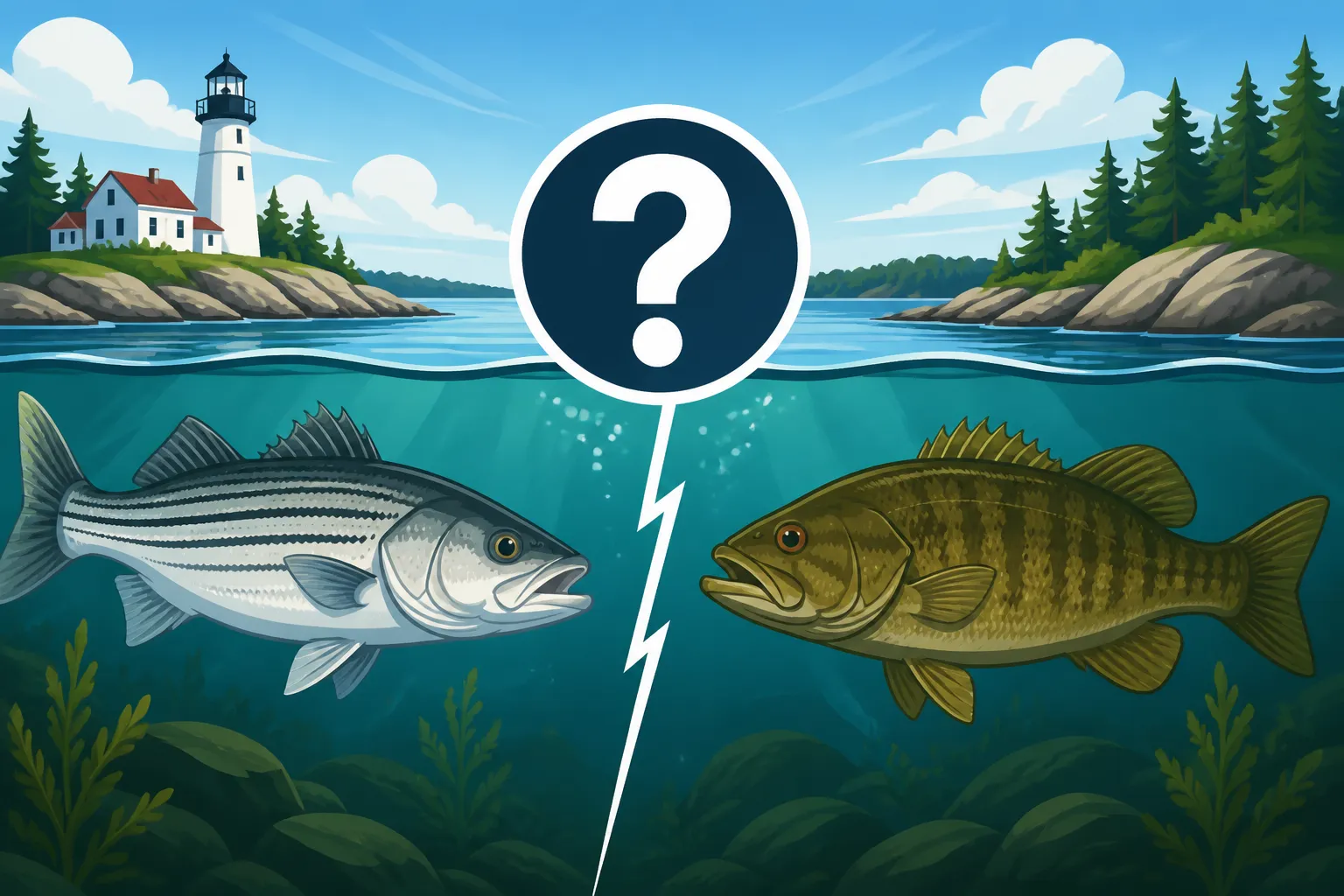
Do Striped Bass and Smallmouth Bass Ever Share Water?
It's a fascinating question that many anglers ponder when they're looking at a map of Maine, wondering if those iconic freshwater fighters, the smallmouth bass, ever bump fins with the powerful, migratory striped bass. The truth is, while they primarily occupy different worlds, there are indeed unique areas and specific conditions in our beautiful state where these two distinct species can, and sometimes do, share the same watery space, creating a rare but exciting opportunity for an adventurous angler. This guide will dive deep into the habitats and behaviors of both species, revealing where and why these overlaps might occur, and what it means for you on your next fishing adventure.
Understanding Each Species' Preferred Habitat
To truly grasp whether smallmouth bass and striped bass ever share water, we first need to understand their fundamental preferences. These aren't just arbitrary choices; they're driven by physiology, diet, and reproductive needs. Thinking of them as separate aquatic neighborhoods helps explain why full-time cohabitation isn't the norm.
Smallmouth Bass: The Freshwater Fighter
Smallmouth bass are quintessential freshwater fish, thriving in clear, cool to warm waters. They're often found in lakes, ponds, and rivers that have rocky bottoms, gravel, and submerged cover like logs or weed beds. In Maine, you'll find them in abundance in many of our pristine lakes and rivers, particularly in the southern and central regions. They are perfectly adapted to their freshwater environment, from their ability to tolerate warmer water temperatures than some trout and salmon to their diet of crayfish, insects, and smaller baitfish found exclusively in freshwater.
Consider a classic Maine smallmouth spot like a rocky point on Sebago Lake or a stretch of the Androscoggin River with good current and structure. These are prime smallmouth territories, where the water is fresh, and the bottom provides plenty of ambush points. They spend their entire lives in this type of habitat, spawning in spring or early summer when water temperatures rise sufficiently, typically in gravelly shallows. Their biology isn't set up for the fluctuating salinity of saltwater; it would quickly dehydrate them and impact their internal systems, making sustained life in the ocean impossible. For more on these incredible freshwater fish, check out our Smallmouth Bass Fishing in Maine guide.
Striped Bass: The Salty Predator
On the other side of the spectrum, we have the striped bass, often affectionately called "stripers." These are anadromous fish, meaning they spend most of their lives in saltwater but migrate to freshwater rivers to spawn. However, their primary habitat is the ocean and its estuaries, including bays, harbors, and the lower reaches of tidal rivers. They are powerful, migratory predators that follow baitfish schools along the coast, consuming a diet of mackerel, herring, sand eels, and other marine life.
In Maine, you'll find stripers patrolling our coastline, from the sandy beaches of southern Maine to the rocky shores further north. The Kennebec River and the Penobscot River are prime examples of places where stripers push far upstream during their seasonal migrations. While they do enter freshwater for spawning, this is a specific, temporary migration for reproduction, not a permanent change of residence. They need the salinity of the ocean for their long-term survival and growth. You'll never find a striped bass living its entire life cycle in a landlocked lake. Our Striped Bass Fishing in Maine article goes into much more detail about their habits and where to find them.
The Overlap Zone: Where Fresh Meets Salt
Given their distinct preferences, the question then becomes: where do these two worlds potentially collide? The answer lies in the dynamic and often overlooked environment of brackish water—the transitional zone where freshwater rivers meet the incoming tides of the ocean.
Estuaries and Tidal Rivers: The Meeting Ground
Maine's coastal landscape is rich with estuaries and tidal rivers, places where the freshwater flow from inland rivers mixes with the saltwater surge from the Atlantic. Rivers like the Kennebec, Penobscot, and Saco are prime examples. In these unique environments, the salinity of the water varies significantly depending on the tide, the amount of freshwater runoff, and the specific location upstream.
During high tide, saltwater pushes further inland, bringing striped bass with it, as they actively hunt for food. As the tide recedes, freshwater dominates. It's in the middle, or brackish, zones of these rivers that the possibility of an overlap becomes real. Here, the water isn't entirely fresh, nor is it fully salty, creating a fluctuating environment that some fish can tolerate for short periods. Smallmouth bass, being quite adaptable, can sometimes venture into these slightly brackish waters from their pure freshwater homes, especially if there's an abundant food source. It's not their preferred permanent residence, but they might make a foraging trip.
The Transient Coexistence
It’s important to emphasize that this "sharing" is typically transient. You won't find a stable, thriving population of both smallmouth and striped bass coexisting in the same exact spot for extended periods. Instead, what you might encounter is a temporary overlap, usually driven by foraging opportunities. A striped bass might push far up a tidal river on a strong tide, chasing a school of baitfish, only to find itself in waters that are increasingly fresh. At the same time, smallmouth bass from upstream might venture a bit downstream into those slightly brackish conditions, perhaps seeking different forage or structure.
Imagine casting a line in a spot along the lower Kennebec River, perhaps near Bath or even further upstream around Merrymeeting Bay, during a specific tidal window. You might be targeting smallmouth in a river section that's predominantly fresh, but with enough tidal influence that a striper could push through, especially during a heavy run. It's a testament to the adaptability of fish and the dynamic nature of our waterways. For more on the different zones in Maine, check out Maine North Zone vs South Zone Fishing Rules.
Factors Influencing Coexistence
The likelihood of catching both a striped bass and a smallmouth bass in the same general area comes down to a few critical environmental factors. These elements dictate how far each species is willing or able to venture into the other's typical domain.
Salinity Levels: The Biggest Hurdle
The most significant factor preventing regular cohabitation is salinity. Fish have evolved specific physiological mechanisms to regulate their internal salt and water balance. Freshwater fish like smallmouth bass are constantly trying to keep water from rushing into their bodies and losing internal salts. Saltwater fish like striped bass do the opposite—they prevent water from leaving their bodies and gaining too much salt.
Brackish water, with its fluctuating salinity, is a challenge for both. Smallmouth bass can tolerate low levels of salinity for short periods, but sustained exposure would stress their systems. Striped bass, while capable of spending time in freshwater for spawning, need to return to saltier waters to maintain their health. This physiological barrier means that true, long-term coexistence in the exact same habitat is rare. However, the mixing zones offer a temporary compromise where both can briefly venture. Understanding these basic Maine Freshwater vs Saltwater License Differences can help you determine what permits you need for these areas.
Water Temperature: A Shared Preference, with Limits
Both smallmouth bass and striped bass prefer a similar range of moderate water temperatures for optimal activity, generally from the 50s to low 70s Fahrenheit. This shared preference can contribute to their transient overlap in certain seasons, particularly late spring and early fall, when river temperatures are comfortable for both.
However, each species also has its tolerance limits. Smallmouth bass can handle warmer freshwater temperatures in summer better than some cold-water species, while striped bass will retreat to cooler offshore waters when inshore temperatures get too high. When water temperatures in estuaries are within an acceptable range for both, it increases the chances of an encounter. If the water gets too warm or too cold for one species, they'll move on, effectively ending any potential overlap. Reading water temperature, as discussed in Reading Water Temperature for Maine Trout, is a crucial skill for any angler.
Food Availability and Foraging Opportunities
Fish go where the food is, plain and simple. If a particular tidal river or estuary has an abundance of baitfish or invertebrates that both smallmouth and striped bass find appealing, it creates a powerful incentive for them to enter these transitional waters. Stripers might push far upstream chasing a smelt run or schools of herring, encountering smallmouth bass that are also feeding on these same forage species, or other freshwater baitfish like shiners.
The availability of food can temporarily override some of their habitat preferences. A smallmouth bass might risk slightly brackish conditions for an easy meal, just as a striper might tolerate slightly fresher water if it means a full belly. These instances, driven by the hunt for sustenance, are often when anglers report catching both species in surprisingly close proximity.
Practical Implications for Anglers
For you, the angler, understanding these dynamics means you can strategically target these unique overlap zones, or at least be prepared for a surprise catch. It opens up interesting possibilities for diverse fishing experiences, even if such occurrences are relatively infrequent.
Targeting Overlap Zones: A Strategic Approach
If you're keen to potentially catch both a smallmouth and a striped bass in the same outing, your best bet is to focus on the lower reaches of major tidal rivers that have strong freshwater influence. Think about areas like the lower Kennebec River, especially around its various coves and tributaries that feed into the main flow, or the Penobscot River further upstream from the immediate saltwater.
The key is timing. You'll want to fish these areas when the tide is moving, either incoming or outgoing, as this is when the water is most dynamic and fish are often most active. Pay close attention to current seams, structure (like bridges, docks, or rocky outcroppings), and areas where smaller feeder streams enter the main river. These are natural congregation points for baitfish, which in turn attract predators. Being prepared with a variety of lures and baits that appeal to both species can also increase your odds.
Gear and Lure Selection: Covering Your Bases
Since you might encounter either a powerful striper or a hard-fighting smallmouth, versatility in your gear is key. You probably won't be using your ultralight trout rod, but you also don't necessarily need heavy offshore tackle.
Consider a medium-heavy spinning rod or baitcasting setup with a good quality reel spooled with 15-20 lb braided line and a fluorocarbon leader of similar strength. This setup offers enough backbone to handle a decent-sized striper but is still sensitive enough for the nuances of smallmouth bites.
When it comes to lures, a diverse selection is your friend. Topwater plugs can be explosive for both species during low-light conditions. Soft plastic jerkbaits or swimbaits, particularly those imitating baitfish like smelt or alewives, are excellent choices. Jigs with soft plastic trailers, weighted to reach different depths, can also be effective. And don't forget traditional spinnerbaits or crankbaits that work well for bass. You can find a fantastic selection of these lures on Amazon, ready to be shipped to your door for your next adventure. For more specific recommendations, look at Best Bait for Smallmouth Bass in Maine and Best Lures for Striped Bass in Maine.
Understanding Regulations: A Crucial Step
Any time you're fishing in Maine, whether for freshwater or saltwater species, knowing the current regulations is paramount. This becomes especially important in overlap zones, as you might unexpectedly hook a species you weren't primarily targeting.
You'll need a valid Maine freshwater fishing license to target smallmouth bass. For striped bass, while an actual "saltwater fishing license" isn't required in Maine for recreational anglers, you do need to register with the Maine Saltwater Recreational Fishing Registry. This is a separate process from your freshwater license. It's crucial to understand the bag limits, slot limits, and season dates for both species, which can vary by zone and time of year. For instance, Maine Bass Fishing Limits by Zone and Maine Striped Bass Season and Limits are critical resources. Always check the latest regulations from the Maine Department of Inland Fisheries and Wildlife (MDIFW) before heading out.
Comparing Striped Bass and Smallmouth Bass
To help clarify the distinctions and potential overlaps, here's a quick comparison of key traits for both species.
| Feature | Smallmouth Bass | Striped Bass |
|---|---|---|
| Primary Habitat | Freshwater lakes, rivers, ponds (rocky, clear) | Saltwater (ocean, estuaries, bays) |
| Salinity Tolerance | Very low tolerance for salt; purely freshwater | High tolerance for salt; anadromous (spawns in fresh) |
| Appearance | Bronze/brown with vertical bands, smaller mouth | Silver with distinct horizontal dark stripes, larger mouth |
| Average Size | 1-5 lbs (up to 8 lbs for trophies) | 5-30 lbs (can exceed 50 lbs for trophies) |
| Diet | Crayfish, insects, baitfish (freshwater species) | Mackerel, herring, sand eels, crabs (marine species) |
| Spawning Habitat | Freshwater shallows (spring/early summer) | Freshwater rivers (spring) |
| Typical Range in Maine | Inland lakes and rivers | Coastal waters and lower tidal rivers |
| Overlap Potential | Occasional venture into slightly brackish tidal rivers | Migratory pushes into freshwater portions of tidal rivers |
The Excitement of the Unexpected Catch
There’s a certain thrill that comes with the unexpected, isn't there? While it might not be a common occurrence to hook both a smallmouth and a striped bass from the exact same casting spot in Maine, the possibility exists in those unique transition zones where the freshwater rivers meet the mighty Atlantic. It speaks to the incredible diversity of Maine's fisheries and the adaptability of its aquatic inhabitants.
Being prepared for such an encounter means understanding where these conditions exist—typically in the dynamic brackish sections of our major tidal rivers like the Kennebec or Penobscot. It means having versatile gear and a selection of lures that appeal to both freshwater and anadromous predators. And most importantly, it means being knowledgeable about the specific regulations for both species in those areas. The next time you're casting a line where the river current battles the incoming tide, keep an open mind and a ready net. You might just be surprised by what takes your offering!
Disclaimer
This article is for general informational purposes only and does not constitute professional advice. Laws, prices and regulations vary by location and change over time. Consult a qualified professional for guidance on your specific situation.