Best Lures for Striped Bass in Maine
Oh, the elusive Maine striped bass! If you've spent any time casting along our gorgeous coastline or wading into a tidal river, you know the thrill of a striper strike is unmatched. But you also know the frustration when they're just not hitting what you're throwing. It feels like they have a secret language, and your lures aren't speaking it. Choosing the right lure can feel like cracking a complex code, especially with the ever-changing conditions here in Vacationland. This guide is all about simplifying that code, helping you understand which lures work best for striped bass in Maine, and when and where to use them to maximize your chances of success.
Understanding Striped Bass Behavior and Forage in Maine
Before we even talk about specific lures, it's absolutely critical to understand the mind of a striped bass – or at least, their stomach. Stripers are opportunistic predators, but they're not mindless eaters. Their behavior, their location, and what they're willing to strike are all heavily influenced by what they typically eat and the environment they're in. Maine's diverse coastline and numerous tidal rivers offer a smorgasbord of food sources, and knowing what's on the menu can drastically improve your lure selection.
These fish are migratory, moving up and down the coast with the seasons, but when they're here in Maine, they're focused on fattening up. Their diet largely consists of whatever baitfish are most abundant at the time, but they're also not shy about munching on crabs, worms, and even smaller lobsters if the opportunity arises. This means your lure needs to look, act, or at least suggest something they'd naturally encounter. Ignoring this fundamental principle is like trying to convince a Mainer to eat a hotdog without a bun – it just doesn't feel right!
Mimicking Maine's Local Baitfish
The golden rule for striped bass fishing, especially in Maine, is "match the hatch." What are the stripers primarily feeding on in the area you're fishing, and at that specific time of year? Early season, they might be keying in on river herring or small sand eels pushing into estuaries. Later in summer, a massive school of mackerel might be their primary target offshore or along the open coast.
This means you need to consider not just the type of baitfish, but also its size and color. If the water is full of 6-inch juvenile mackerel, throwing a 12-inch plug might be largely ignored. Conversely, if there are huge schools of adult herring around, a tiny lure will look like an insignificant snack. Pay attention to any bird activity, baitfish "nervous water" on the surface, or even what your fellow anglers are reporting. Common baitfish in Maine include mackerel (often silvery-green), herring (silvery-blue), sand eels (long, slender, silver), and even smaller pollock (darker back, silver belly). Your lures should reflect these profiles and colors. For instance, a lure with a dark green back and silver sides often mimics a mackerel beautifully, while a long, slender, silver-bodied soft plastic can be deadly when sand eels are present. It's truly about giving the fish what they're already looking for.
The Influence of Tide and Structure
Maine's coastal waters are defined by strong tides and abundant structure. From rocky points and mussel beds to submerged ledges and deep river channels, stripers love to ambush their prey from cover or use current breaks to conserve energy. The tide, particularly, dictates where and when stripers will feed. Reading Tides for Striped Bass Fishing is a skill every striper angler needs to master.
During an incoming tide, stripers often move into shallower areas, estuaries, and river mouths, following the baitfish that are pushed in with the rising water. An outgoing tide can concentrate baitfish in deeper channels or funnel them past prominent points, making those areas prime ambush spots. Understanding this ebb and flow helps you predict where the fish will be and, consequently, which lure is best presented in that specific current. For example, a heavy jig might be necessary to get down to fish holding in a strong outgoing current, while a lighter soft plastic or topwater might be perfect for targeting stripers cruising shallow flats on the incoming. Structure provides cover and current breaks, making it a natural holding area for stripers. Whether it's a rocky jetty, a bridge piling, or a submerged wreck, stripers will often lurk there, waiting for an easy meal. Your lure choice must allow you to work these areas effectively without constantly getting hung up.
Top Lure Categories for Maine Striped Bass
Now that we've talked about their preferences, let's dive into the workhorses of any Maine striper angler's tackle box. These lure categories have proven their worth time and time again, putting countless striped bass on the line across our diverse waters. Each type excels in different situations, and a well-rounded angler knows when to tie on which.
Soft Plastics and Swimbaits
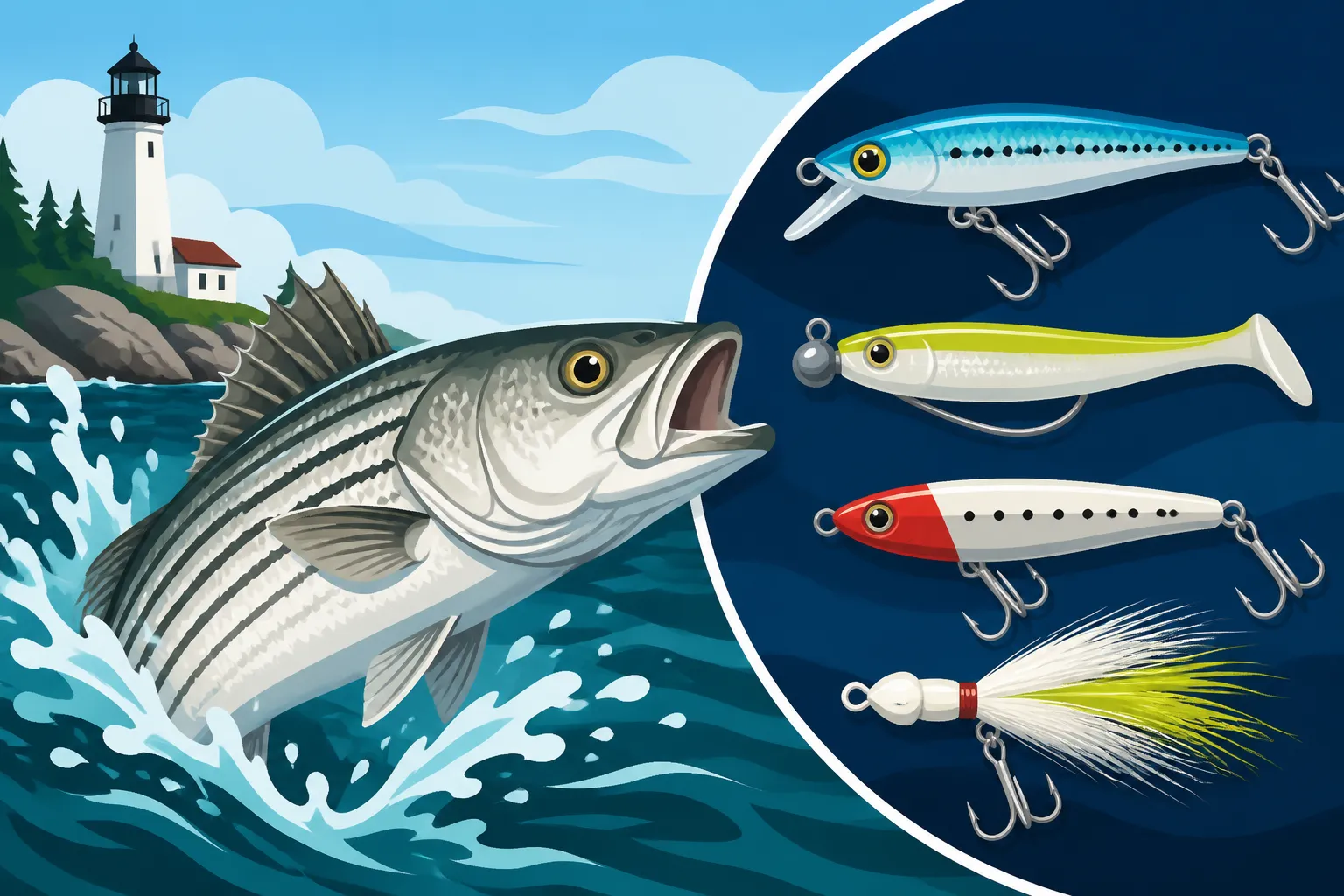
Soft plastics and swimbaits are incredibly versatile and have become a cornerstone for many striper anglers. Their realistic action, combined with a seemingly endless array of sizes, shapes, and colors, makes them indispensable. From paddle tails that thump enticingly to slender jerk shads that dart and glide, these lures can imitate almost any baitfish or even a distressed crab. They are often fished on a jig head, allowing you to control the depth and retrieve speed.
One of the greatest advantages of soft plastics is their ability to be fished effectively at nearly any depth. You can use a lightweight jig head to swim them just under the surface, or a heavier one to bounce along the bottom in deep channels. They're particularly effective in situations where stripers are feeding on smaller, more subtle baitfish, or when the water is a bit murky and a strong silhouette is needed. Colors like white, chartreuse, olive, and pearl are perennial favorites. You can find a huge variety of shapes, sizes, and colors on platforms like Amazon, making it easy to experiment and find what the fish are keying into. A simple retrieve, with occasional twitches, is often all it takes to trigger a strike.
Topwater Plugs
There's nothing quite like the explosive strike of a striped bass on a topwater plug. It's visually thrilling and can be one of the most exciting ways to catch them. Topwater plugs are designed to work entirely on the surface, creating commotion that mimics a struggling baitfish or a school of actively feeding fish. The main types you'll encounter are "walk-the-dog" style baits (like a Zara Spook or a Heddon Super Spook) that glide side to side, and poppers that create a splash and gurgle.
Topwater lures truly shine during low-light conditions – dawn and dusk – or on calm, overcast days. They're fantastic for fishing over shallow flats, rocky structure, or along marsh edges where stripers are pushing bait to the surface. The key to fishing them effectively is mastering the retrieve. For walk-the-dog lures, a rhythmic twitch of the rod tip while reeling creates the enticing side-to-side action. Poppers benefit from a sharp jerk of the rod to make them splash, followed by a pause. While it's not always the most productive method, the sheer excitement of a topwater strike makes it a favorite for many anglers when conditions allow. Best Time to Fish for Striped Bass at Dawn is often prime time for these surface lures.
Plugs and Hard Baits
Hard plastic plugs, often resembling minnows, are a classic choice for striped bass and come in a dizzying array of shapes, sizes, and diving depths. These lures are designed to be cast and retrieved, or even trolled, and their hard bodies create a distinct vibration and action in the water. You'll find shallow-diving minnow plugs, deep-diving swimmers, and lipless crankbaits, each with its own niche.
Shallow-diving plugs are excellent for imitating baitfish in the upper water column or over shallow structure. They're great for covering water and often have a tight wobble that stripers find irresistible. Deep-diving plugs can get down to fish holding in deeper channels or along drop-offs, especially when trolling from a boat or kayak. Lipless crankbaits, which sink quickly and have a tight vibration, can be worked at various depths and are particularly effective when retrieved quickly to mimic fleeing bait. Colors often mirror natural baitfish, but bright colors can also be effective in stained water. Some anglers also use darters, which have an erratic, wounded baitfish action. These plugs are often equipped with stout treble hooks, so ensure your Best Fishing Knot for Tying On Lures is up to the task.
Bucktail Jigs
The humble bucktail jig is perhaps one of the most underrated yet consistently effective lures for striped bass. It's a simple lead head dressed with natural deer hair (bucktail), sometimes with a flash of Mylar. What makes it so good is its incredible versatility and the realistic breathing action of the bucktail in the water. They can be fished fast or slow, deep or shallow, and mimic everything from a baitfish to a squid or even a crab.
Bucktails come in various weights, from light ones for shallow water to heavy ones that can cut through strong currents and reach fish holding on the bottom. They are often tipped with a pork rind trailer, a soft plastic grub, or a strip of Gulp! for added scent and bulk, enhancing their appeal. You can cast them into the surf and retrieve with a jigging motion, bounce them off the bottom around structure, or even vertically jig them in deeper water from a boat. White, chartreuse, olive, and black are classic colors. The key is to impart action through rod tip movements, making the jig "swim" and dart. For surf fishing, a heavier bucktail can be a lifesaver for getting the necessary casting distance. Platforms like Amazon offer a fantastic selection of bucktail jigs in various weights and colors, allowing you to stock up for different conditions.
Lure Selection by Fishing Scenario
Now that we've covered the main types of lures, let's get practical. Where are you actually going to be fishing? Maine offers a wide variety of fishing environments for striped bass, and what works wonders in the surf might be useless in a quiet river estuary. Tailoring your lure choice to your specific scenario is key to consistent success.
Surf and Shore Fishing
Fishing for striped bass from the beach or rocky shore in Maine presents its own unique set of challenges and opportunities. You're dealing with waves, currents, and often need significant casting distance to reach productive water. The lures you choose here need to be robust and designed for these conditions.
Heavy metal lures, often called casting jigs or tins, are fantastic for punching through the wind and waves to reach distant rips or bait schools. They sink quickly and can be retrieved at various speeds, mimicking fleeing baitfish. Large, weighted soft plastics on heavy jig heads are also excellent, offering a more subtle presentation that can still be cast a mile. Of course, the classic heavy bucktail jig (often 2-4 ounces or more) is a perennial favorite, especially when tipped with a trailer. Its density allows for long casts and helps it stay in the strike zone in strong currents. Larger, long-casting plugs, both surface and subsurface, also have their place, particularly around dawn and dusk. Remember, the goal is often to cover as much water as possible and get your lure to where the fish are feeding through the wash. How to Fish for Striped Bass From Shore delves deeper into these techniques.
River and Estuary Fishing
Maine's tidal rivers and estuaries offer different challenges. While you might still encounter strong currents, the water is often shallower, and there's usually more varied structure like marsh grass, oyster beds, and fallen trees. Here, subtlety and precision can often outweigh raw casting distance.
Smaller soft plastics on lighter jig heads (often 1/4 to 1 ounce) are incredibly effective in these environments. They allow for a more natural drift with the current and can be worked around specific structures. Floating or shallow-diving minnow plugs are also excellent, especially in calmer sections or when stripers are busting bait on the surface near marsh edges. Topwater lures, particularly walk-the-dog styles, can be deadly in these quieter waters, providing exciting surface strikes when conditions are right. Natural colors like olive, pearl, and black tend to be very productive, especially if the water is clear. Pay close attention to tidal flow and look for ambush points created by structure or current breaks.
Boat and Kayak Fishing
Having a boat or kayak opens up a whole new world of possibilities for striped bass fishing in Maine. You can cover vast amounts of water, reach offshore ledges, and precisely target structure that's inaccessible from shore. This flexibility allows for an even wider array of lure choices and techniques. How to Fish for Striped Bass From a Boat can provide more detailed insights into these methods.
Trolling is a very popular and effective technique from a boat. Deep-diving plugs or specialized trolling rigs like the Trolling Tube and Worm Rigs for Striped Bass can be incredibly productive, allowing you to present a lure at a consistent depth where fish are holding. Weighted soft plastics and bucktail jigs can be vertically jigged over deeper structure, especially if you're marking fish on your sonar. Live lining baitfish is also highly effective from a boat, but if you're sticking to lures, consider larger swimbaits and plugs that imitate the offshore forage like mackerel or herring. Kayak anglers often favor a mix of soft plastics, small plugs, and topwaters, allowing them to quietly navigate shallow coves and rocky shorelines, precisely placing their casts. Being able to move and explore makes a huge difference, so having a good selection of lures for various depths and presentations is key. Don't forget, you can often find great deals on boat and kayak fishing accessories on Amazon to round out your gear.
Essential Considerations for Your Lure Arsenal
Beyond just the type of lure, there are some overarching principles that will dramatically influence your success when chasing striped bass in Maine. It's not just about having the right lure, but also knowing how to present it and understanding the nuances that can turn a slow day into an epic one.
Color and Size Selection
We've touched on this, but it bears repeating: color and size matter, a lot. Striped bass are visual predators, and their ability to see your lure, combined with its resemblance to their natural forage, is paramount. In clear water, more natural and translucent colors like olive, pearl, light blues, and silvers tend to be most effective. These mimic real baitfish more closely. When the water is murky or stained, brighter colors like chartreuse, hot pink, or solid white can provide a stronger silhouette and visibility. Sometimes, a dark silhouette (black or dark purple) can be incredibly effective during low light or at night, as it stands out against the lighter sky or water surface.
Size is equally important. If the stripers are feeding on tiny sand eels, a 2-inch soft plastic might be perfect. If they're crushing 10-inch mackerel, you'll need a larger plug or swimbait to get their attention. Pay attention to local reports, look for bait in the water, and don't be afraid to change sizes if you're not getting bites. Having a range of sizes and colors for your favorite lure types will ensure you're prepared for whatever the day brings.
Terminal Tackle and Presentation
The best lure in the world won't do you any good if your terminal tackle isn't up to par. Striped bass are strong fish, and they fight hard. You need strong split rings, sharp hooks (often you'll want to upgrade the factory hooks on many lures), and reliable swivels to prevent line twist, especially with plugs. A good leader material, often fluorocarbon, is crucial for abrasion resistance against rocks and sharp teeth, and for its low visibility in the water.
Your Maine Fishing License Guide is important for knowing the law, but your knots are just as vital for keeping that fish on the line! Mastering knots like the Palomar knot or improved Clinch knot for tying your lures directly to your leader is non-negotiable. Beyond the tackle itself, your presentation is everything. How you retrieve the lure – fast, slow, with pauses, with twitches – needs to mimic the natural movement of baitfish or a struggling prey. Experiment with retrieve speeds and actions. Sometimes a slow, steady retrieve is best, while other times a fast, erratic retrieve can trigger a reaction strike. The way you work your lure through the water directly communicates its appeal to a striper.
The Importance of Experimentation
If there's one piece of advice I can give any angler targeting striped bass in Maine, it's this: never stop experimenting. There is no single "magic" lure that works every time. What was hot yesterday might be cold today. Fish behavior changes with the tides, the weather, the presence of bait, and even angler pressure.
Be willing to change your lure, your color, your size, and your retrieve speed. If one approach isn't working, try something completely different. If you're using a topwater and nothing's hitting, switch to a soft plastic on a jig head to probe deeper. If you're using a natural color, try a brighter one. Keep an eye on what other anglers are using (without being a pest, of course!), but more importantly, pay attention to the subtle cues from the water and the fish themselves. Don't get stuck in a rut; the most successful anglers are often the most adaptable. Understanding Maine Striped Bass Fishing Techniques holistically will help you embrace this experimental mindset, learning to read the water and adapt on the fly.
Lure Selection Chart for Maine Striped Bass
Here’s a quick overview of some top lure choices and when they shine:
| Lure Type | Best Conditions | Ideal Target Situation | Key Characteristics |
|---|---|---|---|
| Soft Plastics | Clear to slightly murky water, varying depths | Mimicking injured baitfish, subtle presentation | Versatile, realistic action, can be weighted as needed |
| Topwater Plugs | Low light (dawn/dusk), calm water, shallow flats | Surface feeding, exciting strikes | Creates commotion, visual, erratic retrieve |
| Minnow Plugs | Varying depths, current breaks, open water trolling | Covering water, mimicking fleeing bait | Tight wobble, varied diving depths, strong vibration |
| Bucktail Jigs | Strong currents, deeper water, rocky structure | Bouncing bottom, vertical jigging, surf casting | Versatile, classic, natural "breathing" action |
| Metal Lures | Long casts needed, open water, strong currents | Reaching distant bait schools, fast retrieve | Heavy, dense, sinks quickly, great for surf |
Ultimately, finding the "best" lures for striped bass in Maine is a journey, not a destination. It's about building an arsenal, understanding the fish and their environment, and always being ready to adapt. So next time you hit our beautiful coast, go armed with knowledge and a willingness to experiment – those stripers are waiting!
Disclaimer
This article is for general informational purposes only and does not constitute professional advice. Laws, prices and regulations vary by location and change over time. Consult a qualified professional for guidance on your specific situation.