Best Lures for Largemouth Bass in Maine
If you've ever spent a beautiful Maine day on the water, only to have largemouth bass seemingly ignore everything you throw at them, you know the frustration. Picking the right lure for these sometimes finicky fish can feel like a guessing game. This comprehensive guide is here to cut through the confusion, helping you understand what makes a largemouth bite and equipping you with the knowledge to select the best lures for success in Maine's diverse waters.
Understanding Maine Largemouth Bass Behavior and Habitat
To truly unlock the secret to catching more largemouth bass, you first need to think like a bass. What are they looking for? Where do they feel safe? How do their habits change with the seasons? Answering these questions will naturally lead you to the right lure choice. Maine's lakes, ponds, and rivers offer a fantastic variety of largemouth habitat, from the southern reaches up into central Maine.
Where Largemouth Hide in Maine Waters
Largemouth bass are ambush predators, meaning they love to lurk in cover, waiting for an unsuspecting meal to swim by. In Maine, this means you'll find them holding tight to a variety of structures. Think about those shallow, warmer areas where the sun penetrates, warming the water and promoting aquatic growth.
You'll often find them tucked into dense lily pad fields, their dark backs camouflaged against the shadows. A big, old fallen timber log or a brush pile near a drop-off is another prime location, offering both cover and a deeper escape route. Boat docks and submerged culverts also create artificial cover that bass absolutely adore. Even subtle changes in depth, like a small hump or a depression along a weed line, can concentrate fish. Understanding these prime hiding spots, which we delve into deeper in Largemouth Bass Habitat in Maine Lakes, is crucial for presenting your lure effectively and getting a strike. If you're not putting your lure where the fish are, even the "best" lure in the world won't do you any good.
Seasonal Changes and Their Impact on Lure Choice
Maine's distinct four seasons dramatically influence largemouth bass behavior and, consequently, your lure selection. What works in the heat of summer might be completely ignored in the chill of spring or fall.
-
Spring: The Awakening and Spawning Rituals
As ice-out occurs and water temperatures slowly creep up, largemouth bass begin to move out of their deeper wintering holes. This pre-spawn period sees them feeding aggressively to build energy for spawning. They'll often be found in shallower, sun-warmed coves and flats. During the actual spawn, when water temps hit the mid-60s, bass become very protective of their nests. Slower, more intrusive presentations that annoy them off their beds tend to work best here. After spawning, the post-spawn funk can make them lethargic, requiring subtle, less aggressive lures. -
Summer: Deep Weeds and Topwater Thrills
Summer is when Maine's largemouth are most active, but they'll often retreat to deeper, cooler water during the brightest parts of the day. Early mornings and late evenings are prime times for topwater action, especially around heavy cover like lily pads or over submerged grass beds. During the day, look for them tucked into the deep edges of weed lines, under docks, or around submerged timber. Reaction baits, like crankbaits or spinnerbaits, can trigger strikes from active fish, while soft plastics fished slowly can coax bites from lethargic ones. This is when you'll be actively Reading Lake Structure for Maine Bass. -
Fall: The Feeding Frenzy Before Winter
As the days shorten and water temperatures begin to drop, largemouth bass enter a major feeding period. They know winter is coming and they need to pack on the calories. This can be one of the best times to catch big bass in Maine. They'll actively chase baitfish, so lures that mimic shiners, yellow perch, or sunfish are incredibly effective. Bass will move between shallow feeding flats and deeper staging areas, often suspending over structure. This is a time for covering water with crankbaits, spinnerbaits, and jerkbaits, as they become more aggressive in their pursuit of food.
Top Lure Categories for Maine Largemouth Bass
Now that we've got a handle on where and when largemouth bass operate, let's dive into the arsenal of lures that consistently produce bites in Maine. Each category has its strengths and specific situations where it truly shines.
Soft Plastics: Versatility and Natural Presentation
Soft plastics are, without a doubt, one of the most versatile and effective lure categories for largemouth bass. Their natural feel and subtle action can fool even the wariest fish. There's an endless array of shapes, sizes, and colors, allowing you to imitate anything from worms and crawfish to baitfish and frogs.
-
Senkos (Wacky or Texas Rig): The Subtle Assassin
The Yamamoto Senko, or similar stickbaits, are legendary for a reason. When rigged "wacky" (hooked through the middle), they have an incredible shimmy on the fall that bass simply can't resist. It’s a subtle presentation, perfect for post-front conditions or when bass are pressured. For fishing in weeds and heavy cover, a Texas rig (hook point buried in the plastic for a weedless presentation) is your go-to. Cast it into thick cover, let it sink, and twitch it gently. Many anglers consider these a must-have, and you can find a huge variety of these soft plastics, often in multi-packs, on platforms like Amazon. -
Creature Baits and Jigs: Bottom Bouncing Temptation
Creature baits, with their flapping appendages and bulky profiles, are fantastic for imitating crawfish or other aquatic critters. When paired with a jig head, they become an incredibly effective bottom-fishing presentation. The key here is a slow, deliberate retrieve, dragging or hopping the jig along the bottom. This is a fantastic choice when bass are holding tight to structure like rocks, docks, or wood. Mastering How to Fish a Jig for Bass is a game-changer for these presentations. -
Swim Baits: Mimicking Baitfish
Paddle-tail swimbaits, either rigged on a weighted hook or a jig head, are excellent for imitating baitfish like shiners or perch. They offer a more active presentation than a Senko but are still incredibly natural. Swim them through open water, along weed lines, or over submerged humps. Their realistic profile and tail-kicking action are hard for hungry bass to ignore, especially during the fall feeding frenzy.
Topwater Lures: The Thrill of the Strike
There's nothing quite like a largemouth exploding on a topwater lure. It's exhilarating and often indicates aggressive, actively feeding fish. Topwater lures are generally best in low-light conditions (early morning, late evening), overcast days, or when bass are holding in thick surface cover. Explore more about these exciting options in Topwater Lures for Maine Bass Fishing.
-
Frogs: Through the Slop
Hollow-bodied frog lures are designed to be fished directly over lily pads, matted grass, and other heavy vegetation where other lures would get hopelessly snagged. Work them with short twitches and pauses, making them "walk" or "jump" across the cover. When a bass blows up, resist the urge to set the hook immediately; wait until you feel the weight of the fish. -
Poppers and Walkers: Surface Commotion
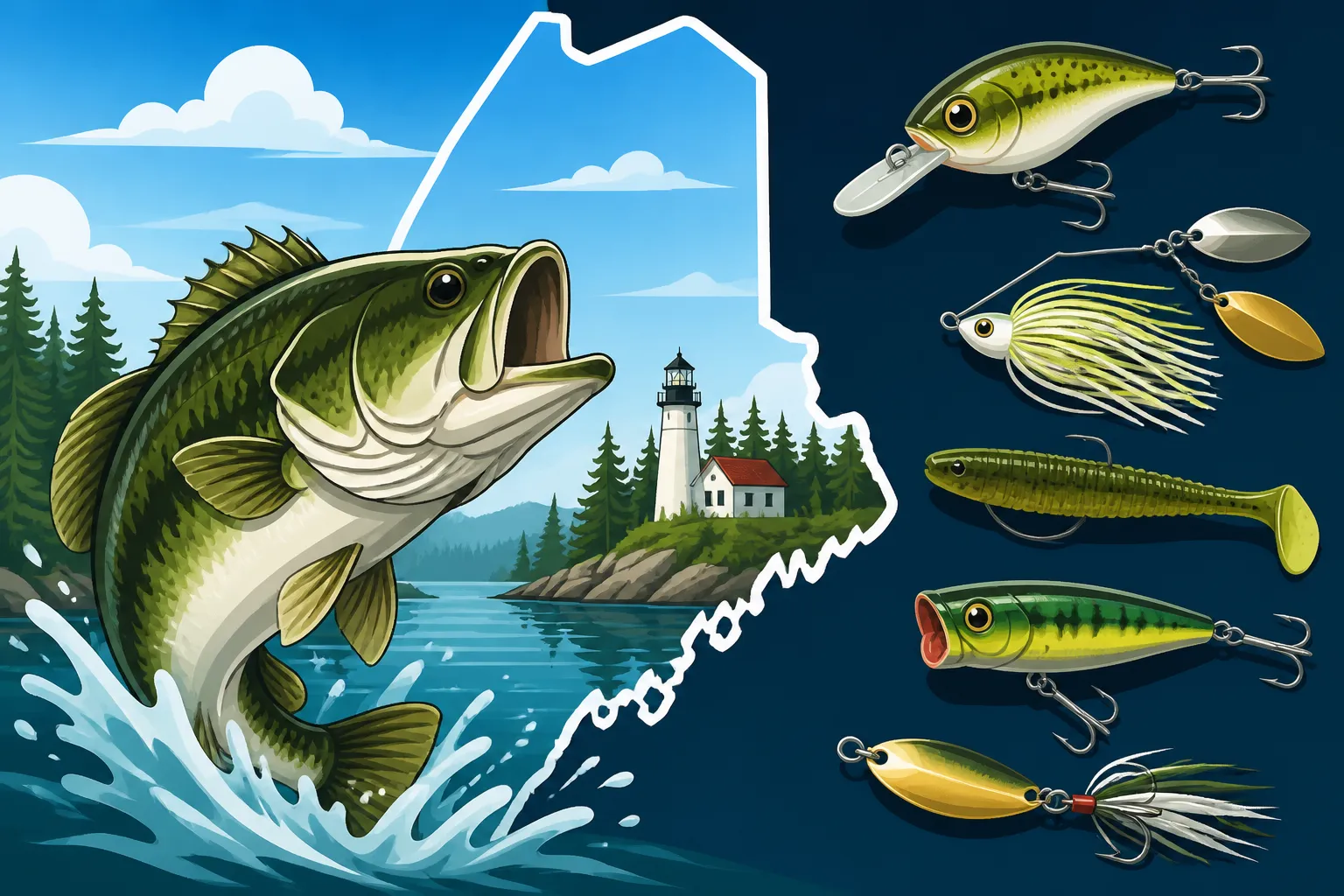
Poppers create a distinct "bloop" or "pop" sound as you twitch them, attracting bass from a distance. Walking baits, like a Heddon Super Spook, have a side-to-side "walk the dog" action that's incredibly enticing. These are best used in more open water or along the edges of cover, where bass have room to track and strike. For those looking to expand their topwater arsenal, a quick search on Amazon will reveal an incredible array of frog lures, poppers, and walking baits to choose from.
Crankbaits and Jerkbaits: Covering Water and Triggering Bites
When you need to cover a lot of water or entice strikes from fish holding at specific depths, crankbaits and jerkbaits are your best friends. They are designed to dive, wiggle, and flash, mimicking fleeing or wounded baitfish.
-
Squarebill Crankbaits: Bouncing Off Cover
Squarebill crankbaits are perfect for shallow water (0-5 feet) and fishing around wood, rocks, and sparse cover. Their square lip allows them to deflect off obstructions without snagging, often triggering a reaction strike from curious bass. Vary your retrieve speed and include pauses to maximize their effectiveness. -
Lipless Crankbaits: Vibration and Flash
These compact, rattling lures are fantastic for covering large areas, especially over submerged grass beds or open flats. They sink quickly and can be fished at various depths by simply varying your retrieve speed. The loud rattles and tight wiggle are excellent for attracting bass in stained water or on windy days. -
Deep Diving Crankbaits: Reaching the Depths
When bass move to deeper structure in summer or fall, deep-diving crankbaits are essential. They can reach depths of 10-20+ feet, allowing you to target fish holding on offshore humps, ledges, or deep weed lines. Long casts and a steady retrieve are key to getting these lures down to their maximum depth. -
Suspending Jerkbaits: Subsurface Dance
Jerkbaits are designed to be retrieved with a series of jerks and pauses, creating an erratic, dying baitfish action. Suspending models, which stay at a given depth during the pause, are particularly effective. Bass often strike on the pause, so experiment with different retrieve rhythms until you find what they prefer. If you're gearing up for a full season, check out the wide selection of crankbaits and jerkbaits on Amazon to make sure you have options for all depths and conditions.
Spinnerbaits and Chatterbaits: Vibration and Flash
These lures are fantastic "search baits," allowing you to cover water quickly while creating a lot of flash and vibration. They're excellent for active bass and can be very effective in stained or murky water where visual cues are limited.
-
Spinnerbaits: Classic and Consistent
Spinnerbaits feature one or more blades that rotate, creating flash and vibration, along with a skirted hook. They are incredibly weedless, making them ideal for fishing through grass, brush, and around fallen timber. Experiment with different blade combinations (Colorado for vibration, Willowleaf for flash and speed) and skirt colors to match the conditions. You can fish them with a steady retrieve, slow-roll them along the bottom, or even "yo-yo" them. -
Chatterbaits (Bladed Jigs): Modern Vibrations
Chatterbaits combine the vibration of a spinnerbait with the profile of a jig, creating a unique, aggressive wiggle that largemouth bass absolutely crush. They excel when fished around grass, docks, and rocky points. Try adding a soft plastic trailer (like a swimbait or craw) to enhance the profile and action. They are particularly effective when bass are actively feeding or when you need to trigger a reaction strike. Don't forget to stock up on different weights and colors of spinnerbaits and chatterbaits; Amazon offers many bundled deals that can save you a few bucks and ensure you're ready for any situation.
Essential Considerations for Choosing Largemouth Lures in Maine
Beyond the specific lure type, there are several crucial factors that can dramatically impact your success. Paying attention to these details can turn a slow day into a memorable one.
Color Selection: Matching the Hatch and Water Conditions
Choosing the right lure color isn't just about what looks good to you; it's about what looks natural or enticing to the bass under specific conditions.
- Natural Colors for Clear Water: In clear Maine lakes and ponds, bass have excellent visibility. Opt for natural colors that mimic local forage, such as green pumpkin, watermelon, brown, or shades of natural baitfish (silver, white, pearl). These colors blend in and don't spook cautious fish.
- Bright Colors for Murky Water/Low Light: When the water is stained, murky, or on overcast days, bass rely more on vibration and scent, but color still plays a role. Chartreuse, white, firetiger, or bright oranges can create a stronger silhouette or be more visible in low light, grabbing a bass's attention.
- Dark Colors for Silhouetting: On bright, sunny days, especially when fishing topwater, a dark-colored lure (like black or dark blue) can create a distinct silhouette against the sky, making it easier for bass to spot from below.
Always consider the predominant forage in the lake you're fishing. If there are a lot of yellow perch, a perch-pattern crankbait might be deadly. If crawfish are abundant, a brown or red creature bait is a smart choice.
Size and Profile: Imitating Forage
Just like color, the size and profile of your lure should ideally match the size of the baitfish or prey that largemouth are feeding on.
- Matching Baitfish: If the bass are feeding on small shiners, a 3-inch swimbait or jerkbait might be more effective than a 6-inch one. Conversely, if you're targeting trophy bass that are keying in on larger forage like sunfish or perch, a bulkier creature bait or larger crankbait could be the ticket.
- Adapting to Pressure: Sometimes, especially in highly pressured waters, downsizing your lure to a smaller, more subtle presentation can trigger bites from finicky fish that have seen every other bait. Conversely, sometimes going with an unusually large bait can entice a trophy strike from a bass looking for a substantial meal.
Presentation and Retrieval Techniques
Even the perfect lure won't catch fish if you're not presenting it correctly. How you retrieve your lure is often as important as the lure itself.
- Slow and Subtle: Often, less is more. For soft plastics, a slow drag or gentle twitch can be incredibly effective, especially in cold water or when bass are lethargic. Allow adequate pause time to let the lure settle and create a natural fall.
- Fast and Aggressive: For reaction baits like crankbaits and spinnerbaits, a faster, erratic retrieve can trigger aggressive strikes. Vary your speed, incorporate sudden jerks, or bounce your lure off cover to create unpredictable movements that mimic fleeing prey.
- Pauses are Key: Regardless of the retrieve speed, pauses are often the most crucial part of the presentation. Many strikes occur when a lure stops, hovers, or begins to fall. Bass will often track a lure and then ambush it when it appears to be vulnerable. Experiment with different pause lengths until you find what the fish prefer on a given day. This kind of nuanced technique is a hallmark of Maine Open Water Fishing Techniques Guide.
Table of Popular Lure Types and Their Best Uses for Maine Largemouth
Here's a quick reference table to help you choose the right lure for the job in Maine's waters:
| Lure Type | Best Habitat/Situation | Ideal Season | Key Retrieval Tips | Common Colors for Maine |
|---|---|---|---|---|
| Senkos/Stickbaits | Weeds, docks, sparse cover, clear water | All | Slow fall, gentle twitches, long pauses. Wacky or Texas Rig. | Green Pumpkin, Watermelon, Black |
| Creature Baits | Bottom structure (wood, rock), jigs | All | Hop, drag, or swim along bottom. Slow and deliberate. | Green Pumpkin, Black & Blue, Brown |
| Swim Baits | Open water, weed lines, imitating bait | Summer, Fall | Steady retrieve, varying speed. Can be jigged. | Pearl, Shad, Perch patterns |
| Hollow-Bodied Frogs | Heavy matted vegetation, lily pads | Summer | Walk, twitch, pause over cover. Wait for the heavy strike. | Green, Black, White |
| Poppers/Walking Baits | Open water, shallow edges, low light | Summer | Erratic jerks and pauses for poppers; "walk the dog" for walkers. | Shad, Bone, Chrome/Blue |
| Squarebill Crankbaits | Shallow cover (wood, rock), deflecting | Spring, Summer | Varying retrieve, bump off cover. | Crawfish patterns, Shad, Chartreuse |
| Lipless Crankbaits | Open flats, submerged grass, covering water | Spring, Fall | Fast, steady retrieve. Rip off grass. | Chrome, Gold, Shad, Firetiger |
| Deep Diving Crankbaits | Deep humps, ledges, offshore structure | Summer, Fall | Long casts, steady retrieve to reach depth. | Shad, Bluegill, Perch patterns |
| Suspending Jerkbaits | Clearer water, open pockets, targeting suspended fish | Spring, Fall | Jerk-jerk-pause, vary cadence. Strikes often on the pause. | Silver, Shad, Clown |
| Spinnerbaits | Weeds, brush, stained water, windy days | All | Steady retrieve, slow-roll, yo-yo. | White, Chartreuse, Black, Shad |
| Chatterbaits | Grass, docks, active fish, reaction bites | All | Steady retrieve, aggressive wobble. Add a trailer. | Green Pumpkin, Black & Blue, White |
Get Out There and Experiment!
Ultimately, the "best" lure for largemouth bass in Maine often comes down to experimentation on a given day. Bass can be incredibly unpredictable, and what worked yesterday might not work today. Don't be afraid to try different lures, colors, and retrieval techniques until you crack the code. Pay attention to what the fish are telling you – their location, their aggressiveness, and their preferred forage.
Whether you're fishing one of the many great bass lakes in Southern Maine like Sebago, or exploring central Maine waters, understanding these lures and how to present them will significantly increase your chances of success. So, grab your gear, head to your favorite Maine fishing spot, and cast away! Just remember to always check Maine Bass Fishing Limits by Zone and Maine Fishing Season Dates Guide before you go.
Disclaimer
This article is for general informational purposes only and does not constitute professional advice. Laws, prices and regulations vary by location and change over time. Consult a qualified professional for guidance on your specific situation.