Do Landlocked Salmon Ever Go to the Ocean?
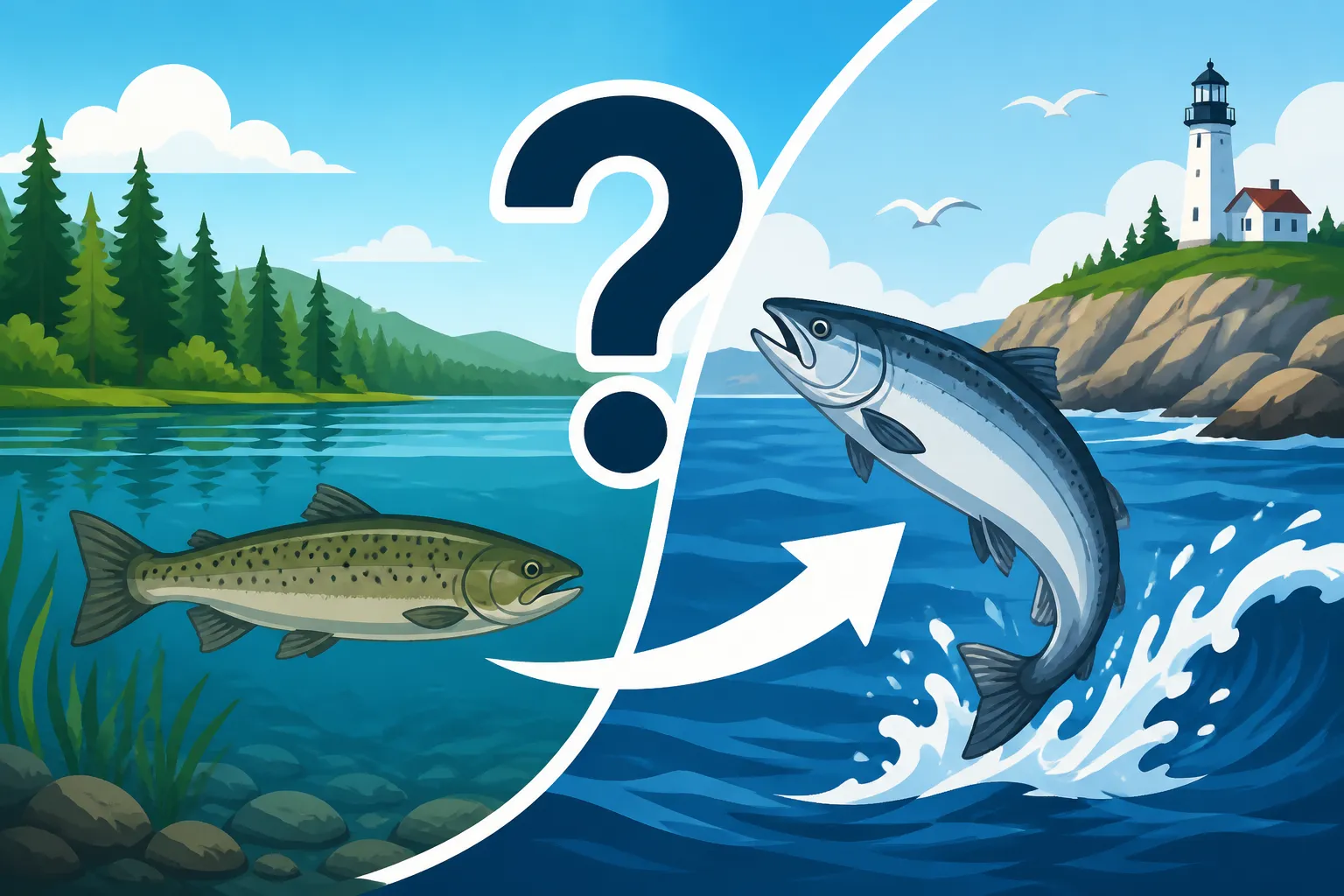
It's a common and totally understandable point of confusion for so many anglers visiting or living in Maine: we hear about "salmon," and our minds often jump to those incredible anadromous fish that make epic journeys to the ocean and back. But then you hear about "landlocked salmon" in our beautiful freshwater lakes, and you can't help but wonder if they ever get that itch to head out to sea. This guide is here to clear up that very question, explaining why our beloved landlocked salmon stick to their freshwater homes.
The Freshwater Dweller: Understanding Maine's Landlocked Salmon
Let's start by defining our star: the landlocked salmon. Scientifically, they are the exact same species as Atlantic salmon, Salmo salar. The key difference, as their name suggests, is that they have become "landlocked" – meaning they complete their entire life cycle within freshwater environments, never migrating to the ocean. This genetic isolation, often due to natural barriers like waterfalls or changes in water levels over millennia, has led to distinct populations that are perfectly adapted to life in our lakes and rivers. In Maine, these fish are truly a treasure, offering a challenging and rewarding angling experience.
Imagine a population of Atlantic salmon living in a river system that, at some point in geological history, had its connection to the sea blocked off. Perhaps a massive landslide created an impassable waterfall, or glaciers receded and left behind a new, isolated lake system. Over countless generations, these fish adapted. They no longer needed to build up the physiological mechanisms to tolerate saltwater, and their instincts for ocean migration faded. What remained was a hardy, beautiful game fish that thrives in the cold, deep waters of certain freshwater lakes. This is essentially the story of the landlocked salmon, a testament to nature's incredible adaptability.
For anglers, understanding this fundamental difference is crucial. When you're fishing for landlocked salmon, you're not targeting a fish that has just returned from gorging itself on ocean fare. Instead, you're pursuing a fish that has spent its entire life navigating the currents and depths of a freshwater lake, feeding on what's available there. This influences everything from their size and coloration to their diet and where you'll find them at different times of the year. If you’re planning a trip, be sure to check out our Landlocked Salmon Fishing in Maine guide.
Never to the Sea: Why Landlocked Salmon Stay Inland
The simple answer to whether landlocked salmon ever go to the ocean is a resounding "no." By definition, a true landlocked salmon completes its entire life cycle in freshwater. This isn't just a matter of choice; it's a matter of biological imperative. These populations have evolved over thousands of years to thrive in specific freshwater habitats, losing the critical ability to osmoregulate effectively in saltwater. Osmoregulation is the process by which fish control the balance of water and salts in their bodies. For anadromous fish like Atlantic salmon, they have special glands and kidney functions that allow them to switch between fresh and saltwater environments. Landlocked salmon lack these adaptations to handle the extreme salinity of the ocean.
Think of it like this: if you're a human and you jump into the ocean, you can handle it for a while, but you can't live there without specialized equipment or adaptations. Similarly, if a landlocked salmon were somehow introduced to the ocean, its body simply wouldn't be able to cope with the drastic osmotic pressure. It would quickly become dehydrated as its body tried to expel excess salt, and it would ultimately perish. Their internal systems are finely tuned for freshwater, where the osmotic challenges are entirely different. This is why you'll never find a landlocked salmon making a solo journey down a river and out into the vast Atlantic, no matter how strong the current or how enticing the smell of the sea might seem to another salmon species.
This distinct life cycle is what makes fishing for them so unique. You won't be looking for them near river mouths during a salmon run, but rather focusing on the deeper, cooler sections of lakes and rivers where they find their food and suitable spawning grounds. This is a fish that truly belongs to our inland waters, and its presence is a sign of a healthy freshwater ecosystem. Knowing this helps you understand their behavior, where they might be holding, and what kind of forage they're chasing, whether it's smelt, minnows, or even aquatic insects. You can learn more about their diet in our article What Do Landlocked Salmon Eat?.
The Atlantic Salmon Connection: A Tale of Two Species
While landlocked salmon and Atlantic salmon are the same species (Salmo salar), their life histories couldn't be more different. The classic Atlantic salmon, the true "king of fish," is anadromous. This means it hatches in freshwater rivers, spends its juvenile years there, then migrates to the ocean to feed and grow, often for several years, before returning to its natal river to spawn. This incredible journey is a hallmark of the species, allowing them to tap into the rich food resources of the marine environment, leading to often much larger sizes than their landlocked cousins.
In contrast, our landlocked salmon never undertakes this ocean migration. Their entire existence revolves around freshwater lakes and the rivers that feed them. They hatch in tributary streams, grow into parr and smolts, and then migrate into the larger lake system to mature, feed, and eventually return to those same streams to spawn. The largest landlocked salmon in Maine often come from lakes with abundant forage, particularly a healthy population of alewives or rainbow smelt. Without the vast feeding grounds of the ocean, their growth potential is naturally constrained, though they can still reach impressive sizes, especially in nutrient-rich waters.
Here's a quick comparison to help visualize the key differences between these two life histories:
| Feature | Landlocked Salmon (Salmo salar sebago) | Atlantic Salmon (Salmo salar) |
|---|---|---|
| Primary Habitat | Freshwater lakes and connecting rivers | Anadromous (hatches freshwater, lives ocean, spawns freshwater) |
| Ocean Migration | Never | Yes, migrates to the ocean for feeding |
| Saltwater Tolerance | Limited to none | High tolerance, ability to osmoregulate |
| Typical Size | Smaller than ocean-run Atlantics, but substantial | Can grow much larger due to ocean feeding |
| Diet (Adult) | Primarily freshwater baitfish (smelt, alewives) | Marine organisms in the ocean; freshwater baitfish in rivers |
| Spawning Site | Freshwater rivers/streams connected to lakes | Natal freshwater rivers/streams |
Understanding this distinction is not just academic; it deeply informs how and where we pursue them. If you're looking for the fish that fights like a torpedo in our inland waters, it's the landlocked salmon you're after. For those interested in the intricacies of their freshwater existence, our Landlocked Salmon Life Cycle article delves deeper into their fascinating journey.
The "Salter" Phenomenon: Are There Any Exceptions?
Now, you might hear whispers or read about something called "salter" brook trout or even historical accounts of "salter" salmon in certain coastal areas. This is where things get a little nuanced and can add to the confusion. While true landlocked salmon, by definition, do not go to the ocean, there are some rare and interesting cases that speak to the broader salmonid family's adaptability.
Historically, in some coastal river systems, there might have been populations of Atlantic salmon that would spend part of their lives in brackish (partially salty) water near river mouths or estuaries. These fish might have developed some tolerance to salinity without undertaking a full ocean migration, perhaps due to unique local conditions or genetic variations. However, these are distinct from the well-established populations of truly landlocked salmon found in inland lakes like Sebago, Moosehead, or the Rangeley Lakes. These "salters" or sea-run trout/salmon typically retain some ability to handle saline water, a trait that the fully landlocked strains have lost.
It's important to differentiate these historical or very localized "salter" phenomena from the typical landlocked salmon found across Maine's vast inland waters. For practical angling purposes in Maine's famous landlocked salmon lakes, you can confidently assume that the fish you're targeting have lived their entire lives in freshwater. Any stories of a landlocked salmon hitting the open ocean are likely misunderstandings or refer to a different, truly anadromous Atlantic salmon, perhaps one that got turned around in a river system. Always refer to the specific regulations for the water you plan to fish, as they often differentiate between Atlantic salmon (which are highly protected) and landlocked salmon. You can find comprehensive information in our Maine Fishing Regulations Explained guide.
Life Cycle of a Landlocked Salmon in Maine's Freshwaters
The life cycle of a landlocked salmon, while contained to freshwater, is no less epic or fascinating than its ocean-going relatives. It's a journey of survival, growth, and instinct that plays out within the boundaries of our lakes and their feeder streams. Understanding this cycle is key to becoming a more successful and respectful angler.
It all begins in the fall, typically in October or November, when mature landlocked salmon, driven by ancient instincts, leave the cool, deep waters of the lake and migrate upstream into clear, gravel-bottomed tributary rivers and streams. Here, the females construct "redds" – nests in the gravel – where they deposit their eggs, and males fertilize them. After spawning, the adult fish may return to the lake, though some may succumb to the rigors of the spawning process. This is a critical period for the species, and it's why many areas have specific regulations or closures during the spawn.
The eggs remain dormant in the gravel through the winter, protected from predators and freezing temperatures. In the spring, usually around April or May, the eggs hatch into tiny "alevins," which still carry a yolk sac for nourishment. Once the yolk sac is absorbed, they become "fry," emerging from the gravel to seek out food. Over the next year or two, they grow into "parr," characterized by their distinctive vertical bar markings (parr marks) and red spots, which provide excellent camouflage in the stream environment. During this stage, they feed on insects and small aquatic invertebrates. You can find many useful insect identification guides on Amazon if you want to delve into what these young fish are eating.
After one to three years, depending on the stream's productivity and water temperatures, these parr undergo a transformation known as "smoltification." They become "smolts," changing in coloration to a more silvery hue, and their bodies begin to prepare for life in the larger lake environment. At this point, they migrate downstream from the tributary rivers into the main lake, where they will spend the rest of their lives. In the lake, their diet shifts significantly, with smelt and other baitfish becoming their primary food source, allowing them to grow larger and develop into the powerful game fish we love to catch. This continuous freshwater cycle is a beautiful example of adaptation and resilience.
Fishing for Landlocked Salmon: What Their Inland Life Means for Anglers
For those of us who love to cast a line in Maine's pristine waters, understanding that landlocked salmon are purely freshwater creatures has huge implications for how, when, and where we fish for them. You won't be looking for them in tidal estuaries or at the mouths of rivers emptying into the ocean. Instead, your focus will be entirely on the lakes and their feeder streams.
First, their diet is dictated by what's available in freshwater. This means they are often heavily reliant on forage fish like rainbow smelt or alewives, as well as various aquatic insects throughout their lives. Knowing this helps you choose the right lures and flies. For example, streamers mimicking smelt are incredibly popular and effective for these fish. You can find a vast array of salmon fishing lures, including those designed to imitate smelt, available on Amazon to stock your tackle box. This direct food chain knowledge is your biggest clue to finding and enticing them. Our guide on Best Bait for Landlocked Salmon has more specific recommendations.
Second, their habitat preferences are tied to water temperature and oxygen levels within the lake. Landlocked salmon are cold-water fish, meaning they prefer water temperatures typically below 65°F. In the spring and fall, when lake waters are cooler and oxygen is well-distributed, they can be found throughout the water column and closer to shore, sometimes even near river inlets where they might be staging for a run. During the heat of summer, however, they'll retreat to the deeper, colder, and more oxygenated parts of the lake. This often means trolling at specific depths using downriggers or lead core lines to reach them. Our article on Trolling Techniques for Maine Lakes can help you dial in your approach.
Finally, their spawning migrations are predictable, occurring in the fall in specific tributary streams. While fishing during the spawn can be tempting, it's often restricted or heavily regulated to protect these vulnerable populations. Respecting these seasonal movements and regulations ensures that future generations of anglers can continue to enjoy the thrill of catching these magnificent fish. Always check the Maine Fishing Season Dates Guide and Landlocked Salmon Size and Bag Limits in Maine for specific waters before heading out.
Essential Gear for Landlocked Salmon Fishing in Maine
Having the right gear makes all the difference when you're targeting landlocked salmon. Because they are powerful, fast-swimming fish, and often found in clear, deep water, your equipment needs to be up to the task. Whether you're trolling, casting, or even fly fishing, a few key items will significantly increase your chances of success.
For open water fishing, a medium-light to medium action spinning rod paired with a reliable spinning reel spooled with 6-10 lb test monofilament or fluorocarbon line is a popular choice for casting spoons, stickbaits, or even drifting bait. If you're planning on trolling, which is arguably the most common and effective method for these fish, you'll want a medium action trolling rod, often paired with a levelwind reel, and specialized lines like lead core, copper, or braided line with fluorocarbon leaders. These allow you to get your lures down to the precise depths where the salmon are holding. You can find a wide selection of specialized rods and reels for salmon and trout fishing on Amazon, often with detailed reviews from other anglers that can help you make an informed choice.
Beyond the rod and reel, don't forget the essentials. A quality tackle box or bag to keep your lures organized is a must. A good pair of polarized sunglasses will help you spot structure and fish in clearer water, reducing glare. A long-handled net with a rubberized mesh is invaluable for safely landing and releasing fish, minimizing harm to their protective slime coat. If you plan to keep your catch, a cooler with ice is essential to preserve freshness. And of course, always have your Maine Fishing License Guide in hand or easily accessible. Preparing your gear properly will enhance your entire fishing experience, allowing you to focus on the thrill of the catch.
Preserving the Future: Conservation and Responsible Angling
Because landlocked salmon are such a prized species, responsible angling practices and conservation efforts are vital to ensuring their populations remain healthy for generations to come. This means more than just following the rules; it's about adopting an ethos of stewardship for Maine's precious freshwater resources.
One of the most important aspects is understanding and adhering to bag and size limits, which are carefully set by the Maine Department of Inland Fisheries and Wildlife (MDIFW) to manage fish stocks. These limits vary by water body, so always consult the latest regulations handbook or the MDIFW website for the specific lake or river you're fishing. Taking only what you need and being mindful of the limits directly contributes to sustainable fishing. This goes hand-in-hand with catch and release practices, especially for larger, older fish that are important for the gene pool. When practicing catch and release, handle fish gently, minimize their time out of water, and use proper techniques to ensure their survival. You can find more information in our Maine Fish Bag Limits Guide.
Beyond individual actions, supporting conservation organizations and understanding the broader ecosystem challenges are also important. Invasive species, habitat degradation, and climate change all pose threats to landlocked salmon populations. By being aware, educating ourselves, and participating in clean-up efforts or advocacy when possible, we can help protect the cold, clear waters that these magnificent freshwater fish call home. The future of Landlocked Salmon Fishing in Maine depends on all of us doing our part.
Disclaimer
This article is for general informational purposes only and does not constitute professional advice. Laws, prices and regulations vary by location and change over time. Consult a qualified professional for guidance on your specific situation.