Is a Landlocked Salmon a Real Salmon?
Ah, the age-old question that gets kicked around campfires and bait shops all across Maine: "Is a landlocked salmon a real salmon?" It’s a completely fair question, especially if you’re new to the angling scene here, or even if you've been wetting a line for years but haven't really dug into the biology. This confusion often stems from images of massive, ocean-going Atlantic salmon, making the freshwater variety seem, well, less authentic. But let me tell you, that perception couldn't be further from the truth. This guide is here to clear up any lingering doubts, dive deep into what makes our Maine landlocked salmon so special, and show you why they are, without a doubt, a true salmon.
Unpacking the "Real Salmon" Question: A Biological Perspective
The debate about whether a landlocked salmon is "real" really boils down to understanding its lineage and how it came to inhabit our freshwater lakes and rivers. Genetically, there's no question – they are salmon through and through. The journey from ocean-going giants to freshwater dwellers is a fascinating tale of adaptation and survival.
The Atlantic Salmon Connection
To understand the landlocked salmon, we first need to look at its close cousin: the Atlantic salmon, scientifically known as Salmo salar. This species is traditionally anadromous, meaning it's born in freshwater rivers, migrates to the ocean to grow and mature, and then returns to freshwater to spawn. Think of those epic runs you see documentaries about – that's the Atlantic salmon's typical life cycle.
Our Maine landlocked salmon are, in essence, descendants of these very same Atlantic salmon. They share the exact same scientific name, Salmo salar, which is the definitive biological answer to whether they are "real" salmon. They aren't a different species; they are a population of Atlantic salmon that has, over time, lost the urge or ability to migrate to the sea. This is a crucial distinction and the foundation of why they are considered genuine members of the salmon family. It's like comparing a poodle to a wolf; both are dogs, but one has adapted to a very different environment and lifestyle.
How Landlocked Salmon Became Landlocked
So, if they're Atlantic salmon, how did they end up stuck in freshwater? There are a couple of primary reasons for this incredible evolutionary twist, and they’re both pretty compelling.
First, natural geological and climatic changes played a huge role. Picture the end of the last Ice Age. As glaciers retreated across North America, they scoured out vast lake basins and river systems. Atlantic salmon, which had historically migrated up rivers to spawn, found themselves in newly formed freshwater environments. As sea levels changed, or landmasses rebounded, some of these rivers became blocked by waterfalls, dams of rock and debris, or simply became too disconnected from the ocean. Populations of salmon in these newly isolated lakes and river systems found they could no longer make their journey to the sea. Rather than perish, they adapted. Over thousands of years, these isolated populations learned to complete their entire life cycle within freshwater, thus becoming "landlocked." This natural process is how many of Maine's native landlocked salmon populations, especially in our northern waters, came to be.
Second, human intervention has also contributed. For centuries, people have introduced Atlantic salmon to landlocked lakes and rivers where they might not have naturally occurred or where original populations had vanished. This stocking, often from wild strains, further solidified the presence of landlocked populations. Today, many of Maine's most productive landlocked salmon fisheries are sustained by a combination of natural reproduction and ongoing stocking efforts, meticulously managed by the Maine Department of Inland Fisheries and Wildlife. This ensures healthy populations for future generations of anglers to enjoy. You can learn more about how these incredible fish are managed and protected by checking out the Maine Fishing Regulations Explained.
Key Differences: Anadromous vs. Landlocked Life Cycles
While genetically identical, the divergent life cycles of anadromous Atlantic salmon and landlocked salmon lead to some noticeable differences. Understanding these helps us appreciate the unique adaptations of our freshwater fighters.
- Migration: The most obvious difference is the migration pattern. Anadromous salmon undertake epic journeys from rivers to the ocean and back, covering vast distances. Landlocked salmon complete their entire life cycle within a single lake system or river, though they may still undertake shorter, seasonal migrations within their freshwater habitat, often moving into tributaries to spawn.
- Diet: Out in the vast ocean, Atlantic salmon have access to a rich buffet of marine prey, like herring and mackerel, which are incredibly high in protein and fat. This allows them to grow to significant sizes, often reaching weights well into the double digits. Landlocked salmon, on the other hand, rely on freshwater forage fish. In Maine, their primary food source is often rainbow smelt, a small, silvery fish that forms the backbone of many cold-water lake ecosystems. The availability and size of smelt can directly impact the growth rate and overall health of a landlocked salmon population. This different diet typically means landlocked salmon don't grow as large as their anadromous cousins, though they can still reach impressive sizes in lakes with abundant forage.
- Growth Rates: Because of the richer marine diet, Atlantic salmon generally grow much faster and larger in the ocean. A landlocked salmon's growth rate is dictated by the productivity of its freshwater environment. A lake with a robust smelt population will often produce larger, healthier landlocked salmon than a less fertile one.
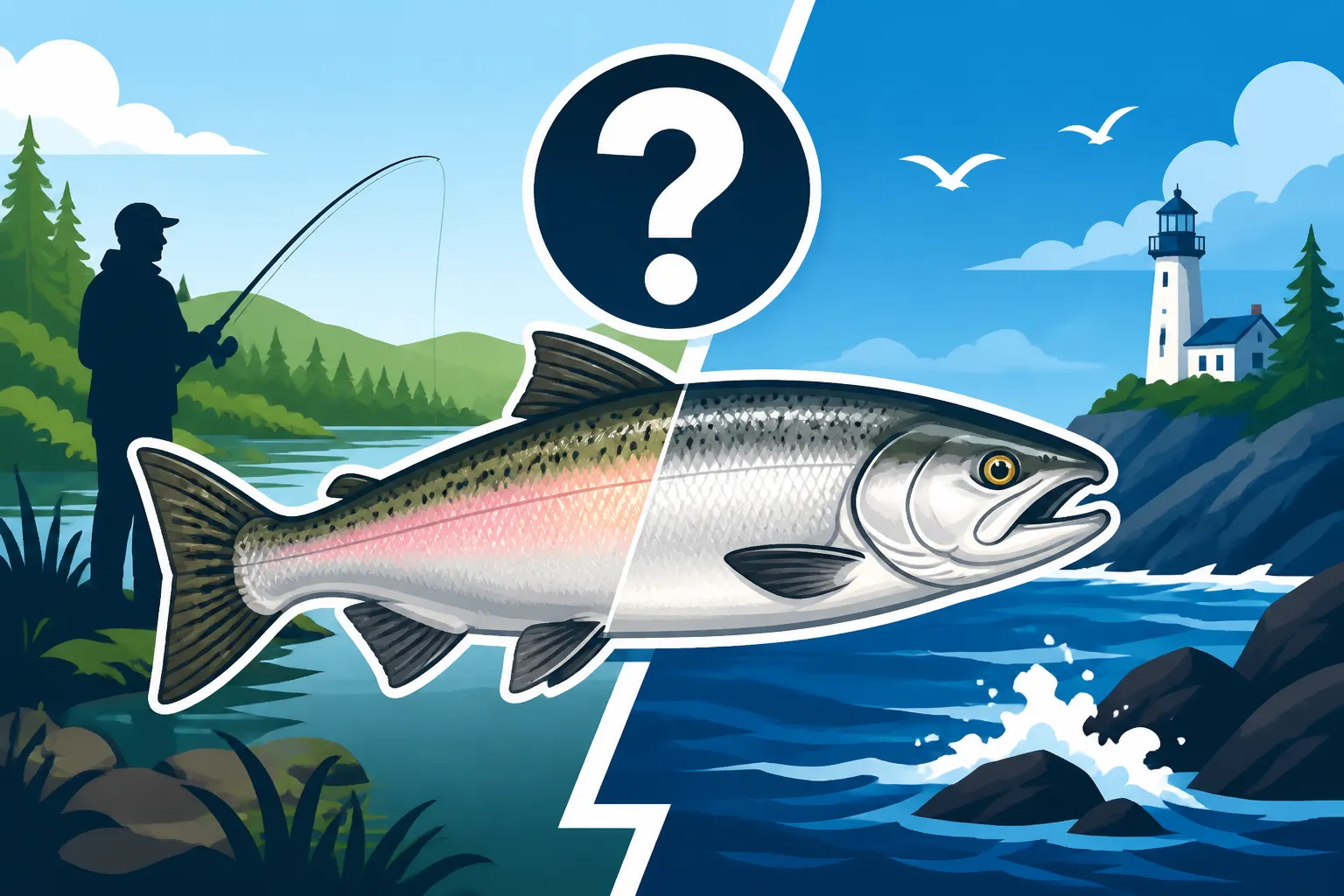
- Coloration: While both are beautiful fish, there can be subtle differences in coloration. Ocean-run Atlantic salmon often have a more silvery, metallic sheen, a camouflage perfectly suited for the open sea. Landlocked salmon, especially older males during spawning, can exhibit richer, darker hues, often with more pronounced spotting and a darker back, a pattern more appropriate for freshwater environments. Both, however, retain that sleek, torpedo-like body shape that screams "speed and power."
This table offers a quick comparison of some key characteristics:
| Feature | Anadromous Atlantic Salmon (Salmo salar) | Landlocked Salmon (Salmo salar) |
|---|---|---|
| Habitat | Freshwater (spawn), Saltwater (grow) | Exclusively Freshwater |
| Migration | Long-distance ocean and river migrations | Shorter, localized freshwater migrations |
| Primary Diet | Marine fish (herring, mackerel, capelin) | Freshwater forage fish (smelt, shiners) |
| Typical Adult Size | Larger (often 10+ lbs, some much larger) | Smaller (typically 2-6 lbs, up to 15+ lbs in trophy waters) |
| Coloration | Very silvery, fewer distinct spots | Often darker back, more distinct spots, can be very colorful during spawn |
| Scientific Name | Salmo salar | Salmo salar |
As you can see, the core identity is the same; it's the lifestyle that truly sets them apart.
What Makes a Landlocked Salmon So Special in Maine?
Here in Maine, the landlocked salmon isn't just a fish; it's an icon, a symbol of our wild, cold-water lakes and the thrill of the chase. Many anglers consider it the ultimate freshwater sportfish, and for very good reason.
Their Role in Maine's Ecosystem
Landlocked salmon are crucial to the ecological balance of many of Maine's deep, cold-water lakes. They often sit at the top of the food chain as apex predators. Their well-being is intrinsically linked to the health of their prey species, primarily rainbow smelt. A strong smelt population means healthy, growing salmon. This relationship is a delicate dance, and biologists spend countless hours studying these interactions to ensure the long-term sustainability of both species.
Beyond just their predatory role, their presence indicates a healthy, cold, oxygen-rich environment – the kind of pristine waters that define much of inland Maine. They're like a natural barometer for the ecological health of our most cherished lake systems. If you're seeing robust landlocked salmon populations, it's a good sign that the overall ecosystem is thriving.
The Angler's Perspective: A Challenging and Rewarding Catch
For anglers, there's little that compares to the scream of a reel as a landlocked salmon makes its first blistering run. These fish are renowned for their incredible fight, combining speed, acrobatic jumps, and dogged determination. They're sleek, powerful, and truly beautiful creatures, with varying shades from shimmering silver to rich, spotted hues. Catching a mature landlocked salmon, especially a "trophy" fish, is a badge of honor for any Maine angler.
We're lucky to have world-class landlocked salmon fisheries in Maine. Lakes like Sebago, Moosehead Lake, and the Rangeley Lakes region are legendary for producing these spectacular fish. Whether you're trolling deep with specialized gear or delicately presenting a fly, the anticipation of a salmon strike is electric. For newcomers, or even seasoned veterans looking to upgrade their tackle, reliable gear is key. You can often find a wide array of specialized trolling spoons, flies, and robust spinning or baitcasting setups suitable for salmon fishing by browsing online retailers like Amazon. Having the right equipment can make all the difference when you hook into one of these freshwater rockets. If you're wondering where these beauties hide, our guide on Where Landlocked Salmon Live in Maine Lakes is a must-read.
Conservation and Management Efforts
Given the importance of landlocked salmon, both ecologically and recreationally, the Maine Department of Inland Fisheries and Wildlife (MDIFW) dedicates substantial resources to their conservation and management. This includes robust stocking programs that supplement natural reproduction in many lakes, careful monitoring of wild populations, and habitat protection.
Regulations are designed to ensure sustainable fishing. This might include specific bag limits, length limits, and even seasonal closures for certain waters, all tailored to promote healthy fish populations. For example, knowing the specific Maine Fish Bag Limits Guide for landlocked salmon is crucial before you head out. These rules are not just arbitrary; they are the result of scientific study and are put in place to protect the resource so that future generations can enjoy the same incredible fishing experiences we do today. Participating in fishing license sales helps fund these vital conservation programs, which is why understanding your Maine Fishing License Guide is so important.
Practical Implications for Anglers: Fishing for Landlocked Salmon
Now that we've established that landlocked salmon are indeed "real" and incredibly special, let's talk about what that means for you, the angler, out on the water. Successfully targeting these fish requires a blend of knowledge, patience, and the right techniques.
Identifying a Landlocked Salmon
While they are salmon, sometimes anglers, especially beginners, can confuse them with other species like brook trout or brown trout. Knowing the key identification features will help you stay within regulations and appreciate your catch.
- Body Shape: Landlocked salmon have a very streamlined, torpedo-shaped body, built for speed.
- Tail Fin: Their tail fin is typically deeply forked, much more so than a brook trout's square or slightly forked tail, and often more deeply forked than a brown trout's.
- Spots: They generally have small, dark spots on a lighter body, often concentrated on their upper flank and back. Crucially, these spots are typically above the lateral line and rarely extend onto the tail fin. Unlike brown trout, they lack the "halo" around their spots, and unlike brook trout, they don't have worm-like markings on their back (vermiculation) or bright red spots with blue halos.
- Mouth: Their mouth extends to or slightly beyond the rear of the eye, similar to a brown trout, but generally smaller than a lake trout's.
Always consult the official Maine fishing regulations for detailed identification guides and images, and if you’re ever in doubt, practice catch-and-release to be safe. Our comprehensive guide on How to Identify a Landlocked Salmon can give you even more detailed insights.
Gear and Techniques for Success
Fishing for landlocked salmon often involves specific gear and methods tailored to their habits and preferred habitats.
- Trolling: This is arguably the most popular and effective method for open-water landlocked salmon fishing. It involves dragging lures or bait behind a boat, typically at slow speeds. Since salmon often suspend in deeper, cooler water during warmer months, specialized equipment like downriggers, lead core line, or planer boards are frequently used to get lures down to the desired depth. Common lures include spoons (like Mooselook Wobblers, Suttons, or DB Smelt), small stickbaits, and even fly-and-sinker combinations. The key is to imitate their primary food source, the smelt. You'll find many specialty trolling lures, some of which you can conveniently purchase from sites like Amazon, ready to go for your next trip. To really dial in your approach, dive into our Trolling Techniques for Maine Lakes article.
- Fly Fishing: While trolling is effective on larger lakes, fly fishing for landlocked salmon can be incredibly rewarding, especially during spring and fall when they move into shallower waters or river systems to feed or spawn. Streamer patterns that mimic smelt, like the Grey Ghost, Black Ghost, or Mickey Finn, are perennial favorites. A 6-8 weight fly rod with a sinking line is often preferred for getting those streamers down to where the salmon are cruising. You can explore some of the best Fly Fishing Techniques for Maine Rivers to hone your skills.
- Ice Fishing: When Maine's lakes freeze over, landlocked salmon still offer exciting opportunities. Jigging with small spoons or live bait (like shiners) through the ice, often paired with tip-ups set with dead or live smelt, can be very productive. They remain active under the ice, and their powerful runs through a hole are unforgettable.
Regardless of the technique, having well-maintained gear is essential. A reliable reel with a smooth drag, sharp hooks, and fresh line are non-negotiable. You want to be prepared when that trophy salmon decides to strike!
Best Times and Places to Find Them
Understanding when and where landlocked salmon are most active can dramatically improve your success.
- Spring: As the ice recedes, landlocked salmon are often found closer to the surface and near shorelines, feeding aggressively after a long winter. This is a prime time for both trolling and casting in shallower water. Streamer fishing near river mouths or current areas can also be fantastic.
- Summer: As surface waters warm, salmon retreat to the cooler, oxygen-rich depths. They'll suspend over deeper water, often near thermoclines, chasing schools of smelt. This is when deep trolling with downriggers or lead core line becomes essential. Early mornings and late evenings can still produce fish closer to the surface.
- Fall: As water temperatures cool again, salmon become more active and often move into tributaries or shallow rocky areas to stage for spawning. This can be another excellent time for both trolling and fly fishing, especially for larger, more colorful fish.
- Winter: During ice fishing season, salmon can be found throughout the water column, but often relate to structure like humps, drop-offs, and points, still on the hunt for smelt.
Some of Maine's most iconic lakes for landlocked salmon include:
- Sebago Lake: Famous for its large, powerful salmon.
- Moosehead Lake: The largest lake in Maine, offering vast areas to explore for salmon.
- Rangeley Lakes: A historic salmon fishery, especially for fly anglers in the connecting rivers.
- West Grand Lake: Known for its wild salmon populations.
Each lake has its unique characteristics and best fishing practices, so always check local reports and regulations. For a detailed seasonal breakdown, be sure to read our guide on the Best Time of Year to Catch Landlocked Salmon in Maine.
Common Misconceptions and Clarifications
Even with all this information, sometimes old myths persist. Let’s tackle a couple of common misunderstandings head-on.
Landlocked Salmon vs. Brown Trout
One of the most frequent mix-ups happens between landlocked salmon and brown trout. Both are sleek, spotted, and aggressive predators found in similar cold-water habitats, but they are distinctly different species.
Brown trout (Salmo trutta) have a more robust, often brownish coloration with larger, prominent dark spots that often have a light "halo" around them. They also typically have some red or orange spots, particularly along their flanks, which landlocked salmon lack. Importantly, brown trout often have spots that extend onto their tail fin, a feature rarely seen on landlocked salmon. While both put up a tremendous fight, their behaviors and preferred habitats, though sometimes overlapping, have subtle differences that experienced anglers learn to recognize. If you're ever uncertain, take a moment to look closely at the spots, tail, and overall coloration.
Not a "Degenerate" Form: A Unique Adaptation
The term "landlocked" can sometimes carry a connotation of being inferior or "lesser" than their ocean-going counterparts. This couldn't be further from the truth. Maine's landlocked salmon are not a "degenerate" form of Atlantic salmon; they are a testament to nature's incredible adaptability. They have successfully adapted to complete their entire life cycle in a freshwater environment, thriving in conditions that would likely be too challenging for a purely anadromous strain.
Their survival and continued success in Maine's lakes highlight their resilience and biological prowess. Anglers who pursue them know they are dealing with a truly wild and powerful fish, a worthy adversary that embodies the spirit of freshwater sportfishing. The challenge and reward of catching a hard-fighting landlocked salmon is a unique experience that ranks high on many anglers' lists, proving that their "realness" is never in doubt. For everything you need to know about pursuing these magnificent fish, take a look at our complete guide to Landlocked Salmon Fishing in Maine.
So, next time someone asks you if a landlocked salmon is a "real" salmon, you can confidently tell them, "Absolutely!" They are Salmo salar, Atlantic salmon that have found a way to thrive and complete their entire life cycle within the beautiful freshwater lakes and rivers of Maine. They are a biological marvel, a challenging sportfish, and a vital part of our state's natural heritage. Getting out on the water and experiencing their power firsthand is the best way to truly appreciate these incredible creatures.
Disclaimer
This article is for general informational purposes only and does not constitute professional advice. Laws, prices and regulations vary by location and change over time. Consult a qualified professional for guidance on your specific situation.