How to Identify a Landlocked Salmon
There's nothing quite like the thrill of feeling that solid tug on your line in a pristine Maine lake. But for many anglers, especially those new to our beautiful waters, the excitement can quickly turn to a bit of a puzzle: "What did I just catch?" Maine is home to a wonderful array of coldwater fish, and differentiating between them, particularly the celebrated landlocked salmon, can be trickier than you'd think. This guide is here to walk you through exactly how to confidently identify a landlocked salmon, making sure you know what you've got on the end of your line and can adhere to all the local fishing regulations.
Why Correct Identification Matters
Proper fish identification isn't just about impressing your buddies or feeling like a seasoned pro; it’s a critical part of responsible angling in Maine. Misidentifying your catch can lead to a whole host of issues, from inadvertently breaking regulations to hindering conservation efforts.
Regulatory Compliance
Imagine the scenario: you're out on Sebago Lake, the sun is high, and you reel in a beautiful, silver-sided fish. Your heart pounds, thinking it's a trophy landlocked salmon. But what if it's actually a young brown trout, or perhaps even a rainbow trout that’s been stocked? Each species in Maine has specific regulations regarding Maine Fish Bag Limits Guide and size, and sometimes even specific waters have unique rules. The daily bag limit for landlocked salmon might be different from that of brook trout or togue, and there could be minimum length requirements that vary wildly. Taking home a fish that you've misidentified, and thus kept outside of its legal limits, can result in hefty fines and even the loss of your fishing privileges. It's a risk no angler wants to take, and a good reason to be confident in your identification skills before the fish even hits the cooler. Knowing your fish means staying on the right side of the law.
Conservation Efforts
Beyond individual compliance, accurate identification plays a vital role in the broader conservation landscape of Maine's fisheries. Our state biologists and wardens work tirelessly to manage fish populations, monitor their health, and protect native species. When anglers misreport catches or don't properly identify fish before releasing them, it can skew data that's crucial for understanding population trends. For instance, knowing the difference between a wild, native brook trout and a stocked one, or accurately distinguishing a landlocked salmon from other trout species, provides valuable information to Maine Inland Fisheries and Wildlife. This data helps them make informed decisions about stocking programs, habitat restoration projects, and special regulations for certain waters. Every fish caught and identified correctly contributes to the larger picture of ensuring sustainable fishing for generations to come. Your careful identification is a quiet act of stewardship.
Enhanced Fishing Experience
Let's be honest, part of the joy of fishing is the challenge and the connection to nature. Knowing what you're catching, and where those fish thrive, just makes the experience richer. If you can confidently identify a landlocked salmon, you can then delve deeper into understanding their specific behaviors, preferred habitats, and feeding patterns. This knowledge empowers you to become a more effective and successful angler. You'll learn to tailor your techniques, bait choices, and even the time of day you fish to specifically target Landlocked Salmon Fishing in Maine. Instead of just casting blindly, you'll be actively engaging with the ecosystem, reading the water, and making educated guesses about where your target species might be hiding. This deeper understanding transforms fishing from a simple pastime into a more fulfilling, engaging, and often more productive pursuit.
Key Physical Characteristics of a Landlocked Salmon
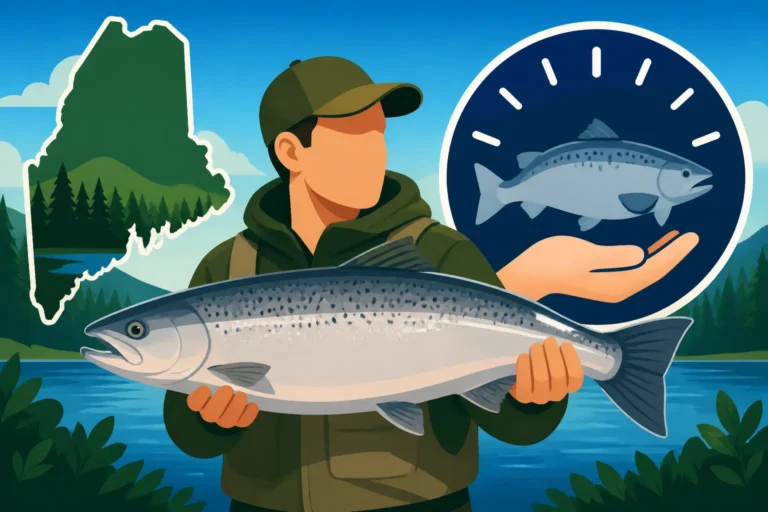
Landlocked salmon, or Salmo salar as they're known scientifically, are stunning fish, renowned for their power and beauty. While they share many characteristics with their anadromous (sea-run) Atlantic salmon cousins, their freshwater life cycle gives them some distinct traits. Getting up close and personal with their physical features is the best way to tell them apart from other species.
Body Shape and Fin Structure
When you hold a landlocked salmon, you'll immediately notice its sleek, torpedo-like body. These fish are built for speed and power in open water, which is why they are such a thrill to catch. Their body is generally longer and more slender compared to the typically chunkier, deeper-bodied brook trout. Look for a pronounced fork in their tail fin, often quite deep and V-shaped, which is a hallmark of strong, fast swimmers. In contrast, many trout species have a squarer or only slightly forked tail.
Their dorsal fin (the one on their back) is typically quite prominent, and they possess a small, fleshy adipose fin between the dorsal and tail fins – a characteristic shared with all salmon and trout species. Pay close attention to the pectoral fins (on the sides, just behind the gills) and pelvic fins (on the underside, near the belly). These fins will generally be well-formed and proportional to their streamlined body, without any unusual frills or ragged edges unless the fish has been injured. A quick comparison with a Maine Fish Species Identification Guide can often highlight these subtle differences right away.
Coloration and Markings
This is where things can get a little tricky, as coloration can vary based on water conditions, diet, and spawning readiness, but there are some general rules. Landlocked salmon typically display a beautiful, silvery body when freshly caught, particularly those that have been feeding well in open water. Their back will often be a darker olive-green or bluish-black, fading to silvery sides and a white belly.
A key identifying feature is the presence of small, distinct black spots. These spots are usually X-shaped or irregular in shape and primarily concentrated above the lateral line (the visible line running along the side of the fish). Crucially, these spots typically do not have a light halo around them, which is a common characteristic of brown trout. While some landlocked salmon may have a few spots below the lateral line, they are generally less numerous and less prominent than those above. During spawning season, which usually occurs in the fall, male landlocked salmon can take on more dramatic colors, becoming bronze or even reddish, and their lower jaw may develop a pronounced hook (kype).
Mouth and Jaw Details
The mouth of a landlocked salmon offers some of the most reliable identification clues. Open its mouth and examine the teeth and jaw structure. Landlocked salmon have a relatively long upper jaw that typically extends back to, or slightly beyond, the posterior edge of the eye. This is a crucial distinction from some trout, like the brook trout, whose mouths are often smaller and don't extend as far back.
Another significant feature is the teeth. Landlocked salmon possess small, sharp teeth on both the roof of their mouth (vomerine teeth) and along their jaws. These teeth are usually quite distinct and are used for grasping their prey, which often includes smaller baitfish like smelt. Unlike many other trout species, the vomerine teeth on a landlocked salmon are typically arranged in a single, straight row on the roof of the mouth. Some other trout might have a zig-zag or double row of teeth there. Running a finger carefully along the roof of the mouth can help you feel this arrangement, but always be cautious of those sharp teeth!
Distinguishing Landlocked Salmon from Other Maine Fish
Maine’s cold, clear waters are home to several fish species that can easily be confused with landlocked salmon, especially to the untrained eye. Knowing the subtle differences is paramount, not just for identification but for understanding the ecology of these beautiful fish.
Salmon vs. Brook Trout
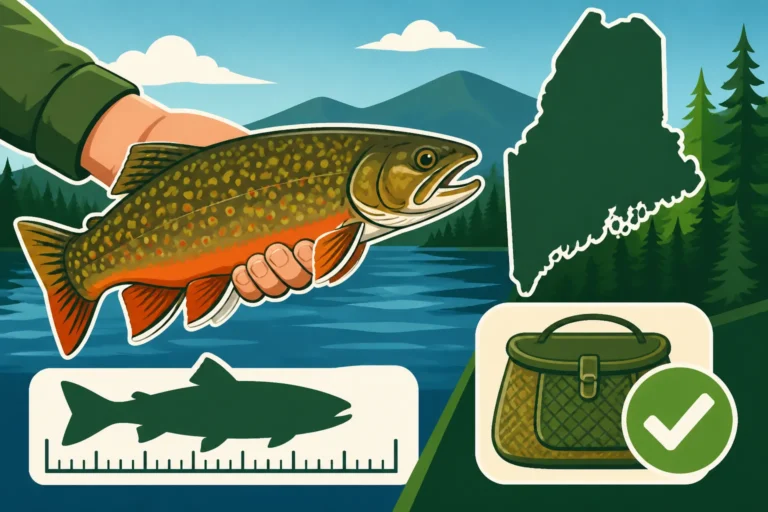
Ah, the beloved brook trout! Maine's state fish, and a true gem. While both are coldwater species, a few key distinctions set them apart. The brook trout generally has a more robust, chunkier body compared to the landlocked salmon's sleek profile. The most striking difference, however, lies in their coloration and markings. Brook trout are famous for their worm-like (vermiculation) patterns on their backs, often a beautiful olive or dark green. They also boast distinctive red or orange spots along their sides, often encircled by a bluish halo, and white leading edges on their lower fins (pectoral, pelvic, and anal) which are bordered by a thin black line. These "white-tipped fins" are a dead giveaway for a brook trout.
Landlocked salmon, as we discussed, are typically more silvery with irregular black or X-shaped spots, lacking the vivid red spots or the vermiculation of the brook trout. Their tail fin is deeply forked, whereas a brook trout’s tail is usually square or only slightly notched. The mouth of a brook trout is also generally smaller and doesn't extend as far back as that of a salmon. If you're struggling, remember: white-tipped fins and worm patterns usually mean brook trout. Learning more about Brook Trout Fishing in Maine will further solidify these differences.
Salmon vs. Brown Trout
Brown trout are another common species in many Maine lakes and rivers, and they can be particularly tricky to distinguish from landlocked salmon due to their similar overall shape and coloration. Both can be quite silvery, especially when taken from clear, open water. The key to telling them apart often comes down to their spots. Brown trout typically have prominent dark spots on their sides, but these spots are often ringed by a light, yellowish or reddish halo. They may also have reddish-orange spots, particularly along their lateral line, which salmon generally lack.
Crucially, brown trout usually have spots that extend below the lateral line in greater numbers than landlocked salmon. Another subtle cue can be the tail fin: while both have somewhat forked tails, the brown trout's fork is often shallower than the deep, V-shaped fork of a landlocked salmon. The jaw of a brown trout also typically extends well past the eye, sometimes even further than a salmon's, and they can develop a pronounced kype (hooked jaw) during spawning. When in doubt, examine the spots carefully for those tell-tale halos and their distribution above and below the lateral line. Understanding the Brown Trout Fishing in Maine will help you see why these distinctions matter.
Salmon vs. Lake Trout (Togue)
Lake trout, or "togue" as we affectionately call them here in Maine, are another deepwater resident that anglers often encounter. While they share a preference for cold, deep water with landlocked salmon, their appearance is quite different upon closer inspection. Togue are generally much heavier-bodied and robust than the streamlined landlocked salmon. Their coloration is typically darker, often a mottled gray, olive, or brownish hue, with lighter, irregularly shaped spots that are more diffuse and less distinct than the crisp, black spots of a salmon. These spots tend to be more numerous and cover their entire body, including their head and fins, whereas salmon spots are mostly on their upper sides.
The tail of a togue is also deeply forked, sometimes even more so than a salmon's, but it often has a more pointed or "scissored" appearance. Their mouth is usually quite large, with strong teeth. If you catch a fish that is dark, heavily spotted all over, and feels incredibly solid and heavy for its length, it's very likely a togue. They are truly magnificent creatures, and learning about Lake Trout and Togue Fishing in Maine is a rewarding endeavor for any serious angler.
Salmon vs. Rainbow Trout
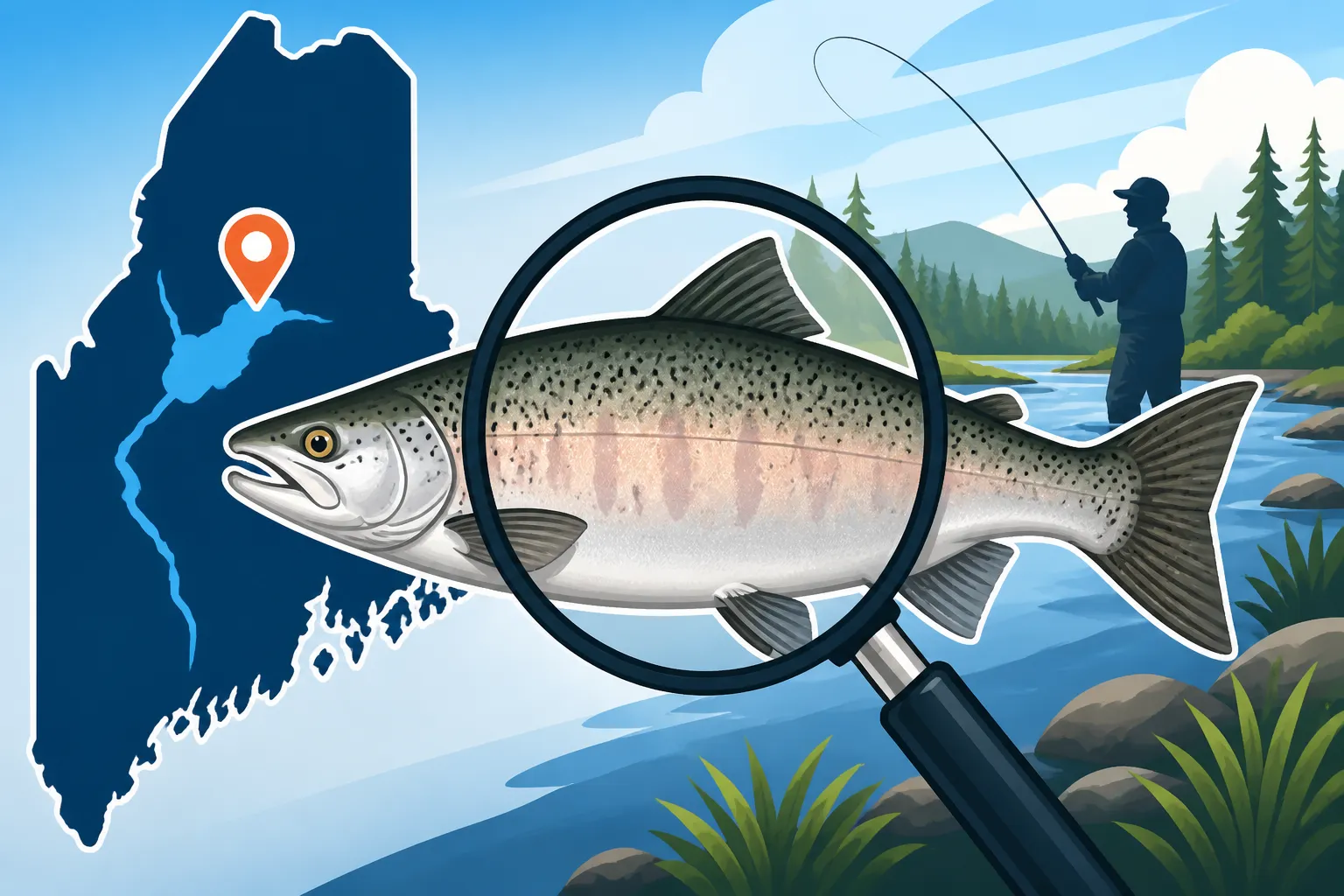
Rainbow trout are less common in Maine's wilder waters compared to brook or brown trout, but they are stocked in many ponds and lakes. They can sometimes be confused with salmon due to their silvery appearance. The most obvious distinguishing feature of a rainbow trout is the prominent pink or reddish band that runs horizontally along its side, from the gill plate to the tail. This band can be very vibrant, especially during spawning. They also typically have numerous small black spots covering their entire body, including their dorsal fin and tail, often more evenly distributed than a landlocked salmon's spots.
Rainbow trout generally have a squarer tail, or only a very slight fork, unlike the deeply forked tail of a landlocked salmon. Their mouth size is also typically smaller than a salmon's. If you see that distinctive pink stripe, you've got yourself a rainbow.
Here’s a quick comparison table to help visualize the key differences:
| Feature | Landlocked Salmon | Brook Trout | Brown Trout | Lake Trout (Togue) | Rainbow Trout |
|---|---|---|---|---|---|
| Body Shape | Sleek, streamlined, torpedo-like | Robust, chunkier, deeper-bodied | Moderately stout, can be silvery-bronze | Heavy-bodied, long, often mottled | Streamlined, often football-shaped |
| Tail Fin | Deeply forked, V-shaped | Square or slightly notched | Moderately forked | Deeply forked, often pointed/scissored | Square or slightly forked |
| Coloration | Silvery sides, darker back, white belly | Dark back (vermiculation), reddish spots | Silvery to brownish, often yellowish belly | Dark gray/olive/brown, mottled, lighter spots | Silvery, distinct pink/red horizontal stripe |
| Spots | Small, irregular black (X-shaped), mostly above lat. line, no halos | Red spots with blue halos, dark worm-like patterns on back | Dark spots with light halos, some reddish spots, often below lat. line | Irregular, light spots all over body & fins | Numerous small black spots, all over body & fins |
| Lower Fins | Plain, no distinct markings | White leading edge, thin black border | Plain, no distinct markings | Plain, no distinct markings | Plain, no distinct markings |
| Mouth/Jaw | Upper jaw to or slightly past eye, straight vomerine teeth | Smaller mouth, upper jaw rarely past eye | Upper jaw well past eye, can have kype | Large mouth, strong teeth | Smaller mouth, upper jaw to middle of eye |
Habitat and Behavior Clues for Identification
Beyond physical appearance, understanding where and how a fish behaves can give you strong clues about its identity before you even get a close look. Landlocked salmon have very specific preferences that distinguish them from many other species in Maine.
Preferred Waters and Depths
Landlocked salmon are coldwater fish through and through. They thrive in large, deep, oligotrophic lakes – meaning lakes that are clear, cold, and low in nutrients, which are perfect for their primary forage, the smelt. In Maine, this means you're most likely to find them in iconic bodies of water like Sebago Lake, Moosehead Lake, and the Rangeley Lakes region. They prefer waters with a consistent temperature, generally staying in the cooler layers.
During the warmer summer months, you'll often find landlocked salmon holding in the thermocline, that sweet spot where cold, oxygenated water is available, typically at depths of 30 to 60 feet or even more. In the spring and fall, when surface waters are cooler, they might be found closer to the surface or near tributary mouths. Knowing Where Landlocked Salmon Live in Maine Lakes is a huge part of identifying them before the catch. If you’re fishing a warm, shallow, weed-choked pond, it's highly unlikely you're targeting landlocked salmon; you're more likely to encounter bass or pickerel there.
Feeding Habits and Prey
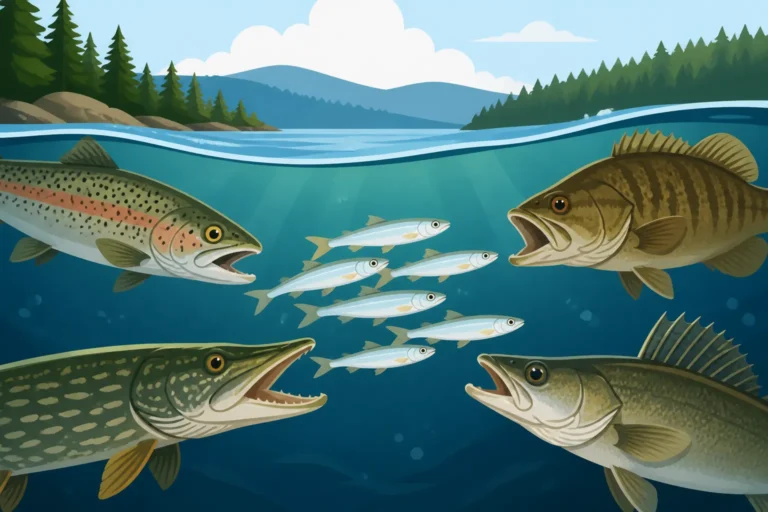
What a fish eats significantly influences its size, health, and where it spends its time. For landlocked salmon, smelt are the cornerstone of their diet. These small, silvery baitfish are abundant in many of Maine's larger lakes, and salmon will actively pursue them. This predatory behavior leads to an aggressive strike that many anglers recognize. When you're trolling with lures designed to imitate smelt, or casting flies that mimic them, and you get a powerful hit, there's a good chance it's a landlocked salmon.
Other prey items might include minnows, various insects (especially during hatches), and sometimes even smaller fish. However, the strong reliance on smelt is a defining characteristic. If you see a fish spitting up small baitfish when you land it, or if you notice your fish finder marking large schools of bait in deep water, it's a good indication that landlocked salmon are nearby and actively feeding. Understanding What Do Landlocked Salmon Eat? can really narrow down your identification possibilities.
Spawning Season Appearance
The life cycle of any fish dramatically impacts its appearance, and landlocked salmon are no exception. During the fall spawning season, typically from October to November, landlocked salmon undergo significant physical changes. Males, in particular, develop a pronounced kype – a hooked lower jaw – which is used in competition with other males for spawning rights. Their coloration also deepens, becoming darker and more bronze or reddish, especially along their sides and belly. The silvery sheen of their non-spawning phase gives way to these more muted, earthy tones.
Females also show some color changes, though usually less dramatic than the males. They may become darker and duller, losing some of their bright silver. During this time, they migrate from the main lake into tributary streams or shallow, gravelly shoals to lay their eggs. Observing these distinct color changes and morphological shifts can be a clear indicator that you're dealing with a landlocked salmon in its reproductive phase. Learning about the Landlocked Salmon Life Cycle provides invaluable context for these seasonal transformations.
Practical Tips for On-the-Water Identification
Even with all the knowledge in the world, identifying a fish quickly and accurately when it's flopping in your net can be challenging. Here are some practical tips to help you make a positive ID while out on the water.
Catch and Release Best Practices for ID
First and foremost, if you're uncertain about a fish's identity, especially if it's a protected species or you're close to your bag limit, practice careful catch and release. This gives you time to make a confident identification without harming the fish. Keep the fish in the water as much as possible while you examine it. A simple rubber-coated net can hold the fish securely while you take a quick look. Avoid squeezing the fish or handling it by the gills.
If you must remove it from the water for a closer look, do so quickly and gently, supporting its body horizontally. Use wet hands to minimize the removal of its protective slime coat. Look for the key features we've discussed: tail shape, fin coloration, spot patterns, and jaw structure. If you're still unsure, take a quick, clear photo (more on that next) and release the fish unharmed. It's always better to err on the side of caution and release than to keep an illegally caught fish. For more details, consult Catch and Release Best Practices in Maine.
Using Field Guides and Apps
Modern technology and good old-fashioned books are your best friends for on-the-spot identification. Many excellent waterproof field guides specifically for freshwater fish in the Northeast are available. These guides often feature detailed illustrations or photographs highlighting the key identification marks, and their compact size makes them perfect for stashing in your tackle box or boat. You can find a wide selection of these handy guides on platforms like Amazon, making it easy to prepare for your next trip.
Beyond physical books, there are numerous fishing apps for smartphones that can help. Some allow you to upload a photo of your catch and use image recognition technology to suggest species. Others are essentially digital field guides, offering quick access to information and photos. While not foolproof, these tools can provide a valuable second opinion when you're uncertain. Just make sure your phone is waterproof and charged! Having a reliable guide, whether physical or digital, is like having a biologist in your pocket.
Taking Clear Photos for Later Identification
If you're still stumped after a quick examination and consulting your field guide, a clear photograph can be invaluable for later identification. Get a good, well-lit shot of the fish's entire body, focusing on its side to clearly show coloration, spots, and fin shapes. Try to get a shot of its head and mouth if possible, as these are critical for distinguishing between species. If you can, place a ruler or something with a known measurement next to the fish to give a sense of scale, although remember to keep the fish wet and release it promptly if you intend to return it to the water.
Once you're back home, you can refer to your photos and compare them against detailed online resources, fishing forums, or even share them with experienced anglers or local wardens for expert confirmation. This practice not only helps you learn but also provides documentation if you've caught something truly unique or need to confirm a trophy-sized catch. Having a waterproof camera or a good smartphone with a protective case, easily purchased from retailers like Amazon, can make all the difference.
Confidently identifying a landlocked salmon, or any fish in Maine's bountiful waters, is a skill that comes with practice and keen observation. By paying close attention to body shape, fin structure, coloration, spot patterns, and mouth characteristics, you'll soon be able to distinguish these magnificent fish from their trout cousins. Remember that understanding their habitat and seasonal behaviors provides additional clues, enhancing your entire angling experience. Always prioritize careful handling, utilize your field guides, and take good photos to deepen your knowledge. Happy fishing, and may your lines be tight with easily identifiable salmon!
Disclaimer
This article is for general informational purposes only and does not constitute professional advice. Laws, prices and regulations vary by location and change over time. Consult a qualified professional for guidance on your specific situation.