What Fish Prey on Smelt in Maine Lakes
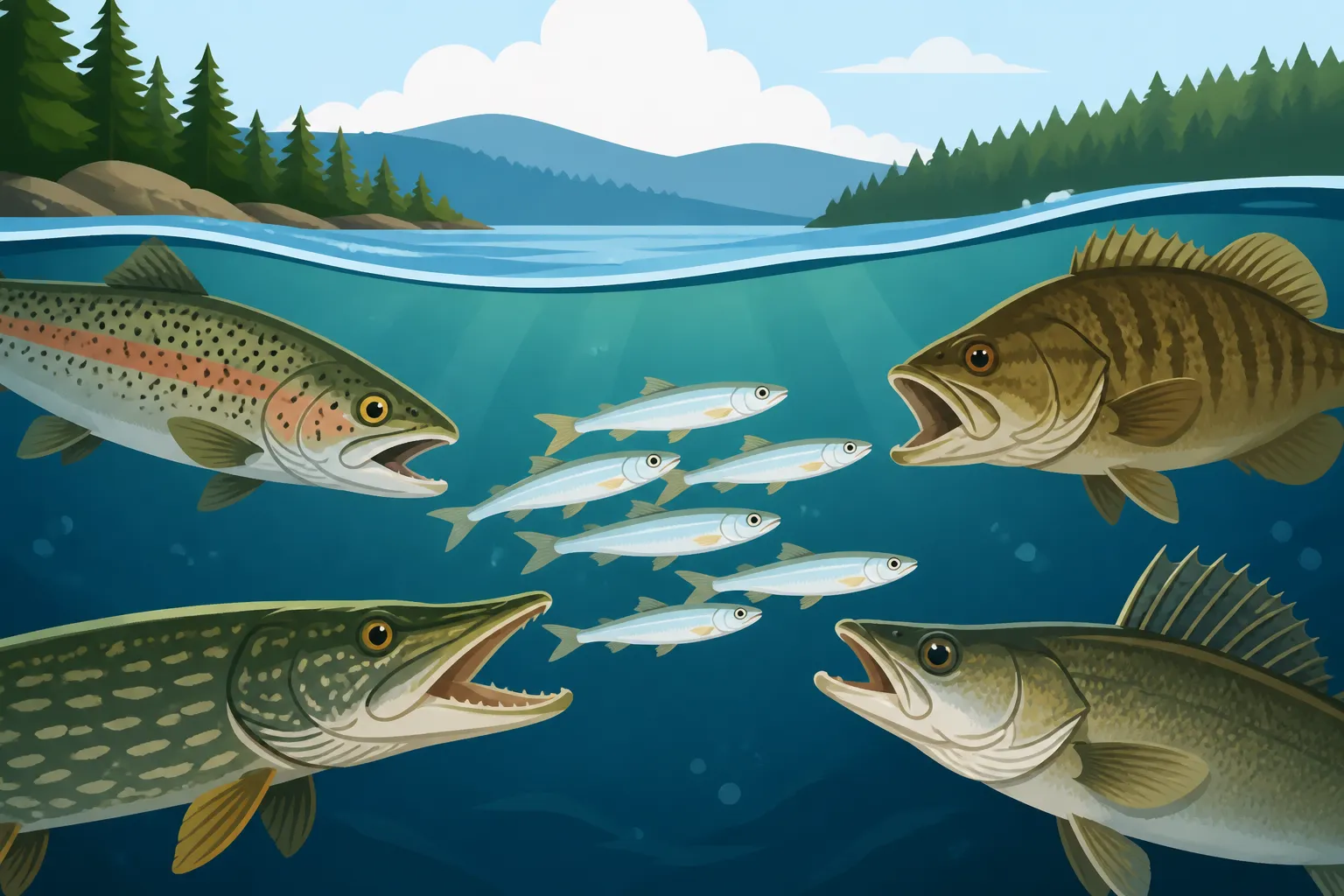
It’s a common scenario: you’re out on a beautiful Maine lake, maybe you’ve caught a few small fish, and you start wondering what the bigger ones are truly after. Often, the answer lies in one small, silvery fish: the smelt. These tiny, oily baitfish are the unsung heroes of Maine’s freshwater ecosystems, forming the backbone of the food chain for many of our most prized game fish. This guide will dive deep into the world of smelt, revealing exactly which fish species in Maine's lakes rely heavily on them for survival, and how their predatory habits shape the entire fishing landscape.
The Vital Role of Smelt in Maine's Aquatic Food Web
In the vast, clear waters of Maine's lakes, smelt (specifically rainbow smelt, Osmerus mordax) are much more than just another fish. They are a keystone species, meaning their presence and abundance have a disproportionately large impact on the entire ecosystem. If smelt populations thrive, so do the larger predators that depend on them. If smelt numbers dwindle, the ripple effect can be devastating for an entire fishery.
Anglers often focus on the glamorous game fish, but understanding the forage base – what those game fish eat – is absolutely critical to successful fishing. Smelt are incredibly energy-rich, packed with the fats and proteins that allow predators to grow large and robust. Imagine a landlocked salmon or a massive togue; without a steady diet of smelt, they simply wouldn't reach those impressive sizes we all dream about catching.
Why Smelt Are Such a Prized Food Source
Smelt possess several characteristics that make them an ideal meal for larger fish. Firstly, their schooling behavior makes them efficient targets. Instead of individual fish having to chase down solitary prey, a predator can attack a dense school of smelt and consume many at once, expending less energy for a greater caloric reward. This is why you often see game fish "blitzing" schools of baitfish near the surface, especially during certain times of the year.
Secondly, their high fat content is invaluable, particularly for fish that need to bulk up for spawning or to survive the lean winter months. Think of it like a power bar for fish; a smelt is a concentrated source of energy. This is especially true for species like landlocked salmon and lake trout, which grow to significant sizes and require a lot of sustenance. The rich, oily flesh of smelt provides exactly what they need to sustain rapid growth and develop healthy roe or milt.
Finally, smelt are widely distributed throughout many of Maine’s cold, deep lakes, making them accessible to a broad range of predators. They are also relatively small, meaning that even juvenile game fish can begin to incorporate them into their diet, gradually moving from insect larvae to larger and larger smelt as they grow. This consistent availability across different life stages of the predators makes them an indispensable link in the aquatic food chain. Understanding Why Smelt Matter to Maine Salmon and Trout is key to appreciating their role.
The Dynamics of Smelt Spawning and Predator Behavior
The life cycle of smelt heavily influences the feeding patterns of their predators. Smelt are known for their spectacular spawning runs, often occurring in early spring just after ice-out. They migrate from the deeper parts of lakes into tributary streams or shallow, oxygenated lake shorelines to deposit their eggs. These migrations can involve thousands upon thousands of fish, creating a veritable buffet for anything with fins and a hunger.
During these runs, predators will follow the smelt into shallower waters, presenting unique opportunities for anglers. Early spring fishing for landlocked salmon, for instance, often revolves around intercepting these fish as they gorge on spawning smelt. The sheer abundance of smelt during these periods means that predators are highly concentrated and actively feeding, driven by instinct to capitalize on the easy pickings.
Even outside of spawning season, smelt exhibit daily and seasonal movements within a lake. They often hold in deeper, cooler water during the heat of summer, moving up into the water column or closer to shore at dawn, dusk, or during cloudy weather. Predators, in turn, will mirror these movements, constantly tracking the schools. This means that if you can locate the smelt, you're usually not far from the fish that want to eat them.
Primary Predators of Smelt in Maine Lakes
When we talk about the big players that feast on smelt in Maine, a few species immediately come to mind. These are the fish that have evolved to depend on smelt as a cornerstone of their diet, and their populations often directly correlate with the health of the smelt fishery.
Landlocked Salmon
Perhaps no fish in Maine is more synonymous with eating smelt than the landlocked salmon (Salmo salar). These magnificent game fish are built for speed and pursuit, and their sleek, torpedo-like bodies are perfectly adapted for chasing down schools of these silvery baitfish. In lakes across Maine, from the vast expanse of Moosehead Lake to the productive waters of Sebago Lake, salmon spend much of their lives hunting smelt.
Anglers who target salmon know that "matching the hatch" often means imitating a smelt. Early in the spring, after ice-out, salmon will often be found near the surface or along shorelines, actively preying on smelt that are either spawning or returning to deeper water. As the water warms, salmon will follow the smelt into cooler, deeper parts of the lake, often suspending in the water column at specific depths. Trolling techniques, particularly with lures that mimic smelt, are incredibly effective because they replicate a cruising salmon chasing its favorite meal. Lures like the classic Mooselook Wobbler, Grey Ghost streamer, or various stickbaits can be highly productive when retrieved at speeds and depths that imitate struggling smelt. You can find a vast selection of these types of lures on platforms like Amazon, making it easy to gear up for your next salmon adventure.
During the summer months, salmon will often school up and actively hunt smelt, driving them to the surface in spectacular feeding frenzies. Observing these "salmon schools" breaking water can be one of the most exciting experiences for an angler. Knowing Best Time of Year to Catch Landlocked Salmon in Maine often aligns with when smelt are most vulnerable or accessible to these predators.
Lake Trout (Togue)
Another major player in the smelt predation game is the lake trout, affectionately known as "togue" in Maine. While salmon are often found higher in the water column or near the surface, togue are typically deeper dwellers, especially as lakes warm. Their robust bodies and large mouths are perfectly suited for engulfing entire smelt, and they are incredibly efficient ambush predators in the depths.
Togue rely on smelt heavily for their growth. They don't have the same high-speed chase tactics as salmon, preferring instead to patrol drop-offs, underwater ledges, and deep holes where smelt schools might pass or congregate. When smelt are abundant, togue can grow to impressive sizes, becoming true trophy fish. Ice fishing for togue, in particular, often involves jigging with baits or lures that mimic smelt, or setting tip-ups with dead smelt as bait, recognizing their preference for an easy, high-calorie meal in the cold water. Jigging Techniques for Togue are often designed around imitating a wounded or fleeing smelt.
In the summer, finding togue means finding the thermocline – the layer of water where temperatures rapidly change – and locating smelt schools that are holding in those cooler depths. Trolling with downriggers or lead core line is essential to get lures down to where these big togue are feeding on their preferred smelt. Large spoons, deep-diving crankbaits, or even rigged dead smelt are all popular choices.
Brook Trout
While brook trout (Salvelinus fontinalis) are often associated with smaller streams and insect diets, in larger Maine lakes and ponds, especially those with good smelt populations, they can become voracious smelt predators. These "lake-run" or "pond-dwelling" brook trout grow much larger than their stream counterparts, directly due to the abundant forage base provided by smelt.
When brook trout have access to smelt, their diet shifts significantly from insects and crustaceans to these energy-rich baitfish. You'll find these larger brook trout inhabiting the same cold, oxygenated waters as salmon and togue, and they will compete for smelt. They might not exhibit the same open-water schooling behavior as salmon, nor the deep-water preference of togue, but they will certainly take advantage of smelt when available.
In early spring, large brook trout often move into shallow areas to feed on newly hatched smelt or those that have completed their spawning run. Later in the season, they will follow smelt into deeper, cooler zones. Fly fishing with streamer patterns that imitate smelt, or trolling small spoons and stickbaits, can be effective for targeting these larger, smelt-fed brook trout. Knowing Best Month for Brook Trout Fishing in Maine often coincides with periods of smelt vulnerability.
Seasonal Smelt Predation Patterns and Angling Strategies
The dance between smelt and their predators is a dynamic one, constantly shifting with the seasons. Understanding these patterns is absolutely essential for any angler hoping to connect with Maine's prized game fish. It's not just about what they eat, but when and where they eat it.
Spring: The Smelt Run Bonanza
Spring is arguably the most exciting time for smelt predation in Maine. As the ice recedes and water temperatures begin to rise, smelt undertake their annual spawning migrations. They leave the deep waters of the lakes and move into tributary streams or shallow, gravelly lake edges. This concentration of smelt creates a feeding frenzy for predators.
Landlocked salmon, still lean from winter, will aggressively pursue smelt in these shallower areas. They often congregate at the mouths of rivers and streams, or cruise along shorelines where smelt are staging. This is prime time for casting or flat-line trolling close to shore with smelt-imitating lures. For example, a bright silver or blue-and-silver spoon retrieved near a river mouth can be deadly.
Togue will also move shallower than their typical summer haunts, though perhaps not as close to the surface as salmon. They'll often lurk on nearby drop-offs, waiting for an easy meal of post-spawn smelt returning to deeper water. Anglers can target them by jigging or slowly trolling along these contours. Even larger brook trout will capitalize on this easy protein source, moving into areas where they typically wouldn't be found later in the year. The Maine Spring Salmon Fishing Techniques often revolve around this smelt activity.
Summer: The Deep Water Chase
As Maine’s lakes warm up during the summer, smelt retreat to the cooler, oxygen-rich depths. Their predators follow suit, making summer fishing a game of depth and precision. This is when understanding lake topography, thermoclines, and using advanced techniques like downriggers or lead core line become crucial.
Landlocked salmon will suspend over deep water, often just above or within the thermocline, actively hunting schools of smelt. They can be found anywhere from 20 to 60 feet deep, sometimes even deeper on very clear, large lakes like Sebago. Trolling at specific depths with spoons, stickbaits, or flies (like the Gray Ghost or Supervisor streamer) is the most effective method. Using a fish finder to locate smelt schools is a massive advantage.
Togue will be found even deeper, often hugging the bottom structure in 60 to 100+ feet of water. They will make forays into the water column to ambush smelt, but generally prefer the colder, darker environment. Jigging heavy spoons or specialized togue jigs, often tipped with a piece of bait, is a popular method. Trolling with heavier gear that gets baits deep, such as large lake troll rigs followed by a smelt-imitating lure or bait, is also highly effective.
Brook trout in larger lakes will also seek out cooler water, often near springs, deep pockets, or stream inlets. While they might not be as actively chasing smelt in open water as salmon, they will certainly feed on them if the opportunity arises. Targeting them in deeper areas with small spoons or streamer flies can yield surprising results.
Fall: The Pre-Winter Feast
Fall is another fantastic season for chasing smelt-eating predators in Maine. As surface waters cool, smelt become more active throughout the water column, often moving into shallower areas again, much like spring. Predators respond by becoming more aggressive, gorging themselves in preparation for winter.
Landlocked salmon are particularly active and visual in the fall. They'll chase smelt near the surface and along shorelines, especially in the early mornings and late evenings. This is a great time for casting stickbaits or large streamers from shore or a boat. The salmon are putting on weight for their own spawning rituals later in the season and are looking for every high-calorie meal they can find. Maine Fall Salmon Fishing Techniques often highlight this intense feeding period.
Togue also become more accessible in the fall. As the entire water column cools, they are no longer confined to the deepest parts of the lake. They'll patrol a wider range of depths, making them more susceptible to various trolling and jigging methods. They're still keenly focused on smelt, so sticking with smelt-imitating lures is key.
Brook trout, especially large ones, can also offer incredible fall fishing. They will be actively feeding in anticipation of their own spawning period and are often found in relatively shallow water. Targeting them with streamers or small spoons where smelt are present can lead to some trophy catches.
Winter: Ice Fishing and the Smelt Connection
Even under a thick blanket of ice, smelt remain a vital food source. Ice fishing in Maine is heavily influenced by the presence and movements of smelt. The deep, cold waters provide a consistent habitat for smelt, and predators like togue and salmon continue to feed on them throughout the winter.
For togue, dead smelt rigged on tip-ups or jigging spoons that mimic smelt are classic ice fishing tactics. Anglers will often set up over known deep water structures or humps where smelt are likely to hold. The slower metabolism of the fish in cold water means they might not chase as aggressively, but a well-presented smelt imitation or actual dead smelt is often irresistible.
Landlocked salmon can also be caught through the ice, often closer to the surface than togue. They might cruise under the ice, looking for schools of smelt that are slightly more active. Using smaller, flashier jigs or even live smelt (where legal) can be very effective. Setting tip-ups with live bait is a favored tactic. Understanding Maine Ice Fishing Techniques Guide will often involve a deep dive into how to leverage smelt for success.
It’s worth noting that many anglers will even catch their own smelt to use as bait, acknowledging the direct link between the forage and the predator. You can sometimes find specialized smelt nets or even tiny ice jigs for catching smelt, often available from outdoor retailers or online stores like Amazon.
Other Fish That Occasionally Target Smelt
While landlocked salmon, togue, and larger brook trout are the primary smelt predators, Maine's diverse aquatic ecosystems mean that other species will also opportunistically feed on smelt when they are available, especially during smelt runs or when populations are particularly abundant.
Brown Trout
Brown trout (Salmo trutta), while not native to Maine, have been successfully introduced into many lakes and rivers. Like their salmonid cousins, larger brown trout become highly piscivorous (fish-eating) as they grow. Where brown trout and smelt coexist, browns will absolutely include smelt in their diet. They are known for being cunning and often solitary predators, and a large brown trout will not pass up an easy meal of a schooling smelt.
Brown trout often prefer rocky structures, submerged timber, and undercut banks, especially during the day. They will emerge from these ambush points to feed on smelt, particularly during low-light conditions. Trolling or casting stickbaits and spoons that imitate smelt can be effective for these often elusive fish. Their diet, much like salmon, shifts heavily to baitfish as they mature, and smelt are a prime candidate for that shift.
Smallmouth Bass
Smallmouth bass (Micropterus dolomieu) are primarily insect and crayfish eaters when young, but as they grow, they become aggressive predators of baitfish. While they might prefer perch or alewives in some systems, if a lake has a healthy smelt population, particularly during a smelt run, smallmouth bass will absolutely gorge on them.
You’ll often find smallmouth bass patrolling rocky points, shoals, and islands. If smelt schools are pushed into these areas, especially in shallower water, smallmouth bass will be there to capitalize. They are powerful fighters and aggressive feeders, and seeing a school of large smallmouth bass busting bait on the surface can be an incredible sight. Using topwater lures, crankbaits, or jerkbaits that imitate a fleeing smelt can be highly effective during these times. Knowing Maine Bass Fishing Limits by Zone is important for any angler targeting them.
Chain Pickerel and Northern Pike
These two toothy predators are known for their voracious appetites and opportunistic feeding habits. Chain pickerel (Esox niger) are common in many of Maine's warmer, weedier lakes, and they will readily consume any fish that fits in their mouth. If smelt are present and accessible, especially in vegetated areas or along edges where smelt might pass, pickerel will certainly eat them.
Northern pike (Esox lucius), while not native to Maine, have been introduced into certain waters and pose a significant threat to native fish populations. They are apex predators in the waters they inhabit and will eat virtually anything, including large numbers of smelt. Their long, slender bodies and lightning-fast strikes make them incredibly efficient at ambushing schooling baitfish. For both pickerel and pike, large spoons, spinnerbaits, and jerkbaits that imitate smelt are often used. If you're fishing in waters known to have pike, be prepared for an aggressive strike. It's often recommended to remove pike from waters where they have been introduced due to their impact on native species.
White and Yellow Perch
While typically smaller, white perch (Morone americana) and yellow perch (Perca flavescens) can also be considered opportunistic predators of smelt, particularly the smaller, juvenile smelt. When smelt fry or small schooling smelt are abundant and accessible, these smaller panfish will certainly take advantage of the easy meal.
You might see schools of perch chasing tiny smelt in shallow coves or along weed lines. While they won't target the larger smelt that a salmon or togue would, their sheer numbers mean they can put a dent in the juvenile smelt population. This interaction is less about direct competition with the larger game fish and more about the overall dynamic of the ecosystem, where every fish has a role in the food chain. Understanding White Perch Fishing in Maine or Yellow Perch Fishing in Maine often involves using small lures or baits that mimic tiny baitfish.
Angler's Table: Primary Smelt Predators in Maine
Here's a quick look at the main fish species that prey on smelt in Maine, and some general characteristics of their feeding habits:
| Fish Species | Primary Habitat | Preferred Smelt Size | Key Predation Times | Common Angling Tactics (Smelt Focus) |
|---|---|---|---|---|
| Landlocked Salmon | Open water, mid-to-upper water column, lake edges | Small to medium | Spring (spawning), Fall (feeding), Dawn/Dusk | Trolling, casting, fly fishing (streamers) |
| Lake Trout (Togue) | Deep water, bottom structure, thermocline | Medium to large | Year-round, especially deep water | Deep trolling, jigging, tip-ups (ice) |
| Brook Trout (Lake) | Cool, oxygenated pockets, stream mouths, deep edges | Small to medium | Spring (spawning), Fall (feeding) | Trolling, casting, fly fishing (streamers) |
| Brown Trout | Rocky shores, drop-offs, deep structure | Small to medium | Low light, transitioning depths | Trolling, casting (stickbaits, spoons) |
| Smallmouth Bass | Rocky points, shoals, islands, shallow cover | Small to medium (juvenile smelt) | Summer (surface action), Smelt runs | Topwater, crankbaits, jerkbaits (imitating small bait) |
| Chain Pickerel | Weedy shallow water, transitions | Any accessible size | Ambush strikes, year-round | Spinnerbaits, spoons, jerkbaits (often with wire leaders) |
| Northern Pike | Shallow weedy bays, deeper weed lines | Any accessible size | Ambush strikes, year-round | Large spoons, jerkbaits, large soft plastics |
| White & Yellow Perch | Shallow bays, weed lines, schooling | Small (fry to juvenile) | Opportunistic, schooling behavior | Small jigs, live bait (worms), micro spoons |
This table provides a snapshot, but remember that fish behavior can be highly localized and influenced by specific lake conditions, water temperatures, and the abundance of other forage. Always check local regulations and specific lake rules before heading out, as these can vary widely across Maine. For more specific information, you might explore resources like Maine Fishing Season Dates Guide or Maine Fish Bag Limits Guide.
Ultimately, the humble smelt plays an outsized role in the drama of Maine's freshwater fishing. By understanding which fish prey on them, and when and where this predation occurs, you can unlock a deeper understanding of the ecosystem and significantly improve your chances of a successful day on the water. It’s a beautiful cycle, and being a part of it, even as an observer, is part of the magic of fishing in Maine.
Disclaimer
This article is for general informational purposes only and does not constitute professional advice. Laws, prices and regulations vary by location and change over time. Consult a qualified professional for guidance on your specific situation.