Brook Trout Size and Bag Limits in Maine
Navigating the world of fishing regulations can often feel like trying to untangle a backlash on a windy day – confusing, frustrating, and seemingly endless. If you're passionate about fishing for Maine's iconic brook trout, you know how crucial it is to understand the specific rules that apply to these beautiful fish. This guide is here to cut through the complexity, laying out the size and bag limits for brook trout in Maine, so you can spend less time scratching your head and more time enjoying the pristine waters.
Understanding Maine's General Law for Brook Trout
Before you even cast a line, knowing the baseline "General Law" for brook trout in Maine is your first and most important step. This isn't just a suggestion; it's the foundation upon which all other regulations are built. Think of it as the default setting that applies to most waters unless otherwise specified.
Why General Law Matters for Anglers
General Law provides a consistent, albeit broad, framework for fishing across much of Maine. It's the standard you fall back on when you can't find specific regulations for a particular lake, pond, or stream. Many new anglers, or those visiting from out of state, get tripped up by assuming all waters have the same rules, but in Maine, that's simply not the case. Understanding General Law first prevents accidental violations and helps you appreciate why certain waters have stricter or more lenient rules. It’s also important to remember that these general laws apply to all anglers holding a valid Maine Fishing License Guide, regardless of residency or age, unless specific exemptions are noted.
General Bag Limits for Brook Trout
Under Maine's General Law, there's a specific daily bag limit for brook trout. This limit dictates how many brook trout you can legally keep and have in your possession at any given time, whether they're in your creel, on a stringer, or in a cooler on your way home. It's not just about what you harvest on the water, but what you possess. Exceeding this limit, even by one fish, can lead to fines and other penalties, making it crucial to count your catch carefully. For specific details on these limits, you might want to consult the guide on Brook Trout Daily Bag Limits.
General Length Limits for Brook Trout
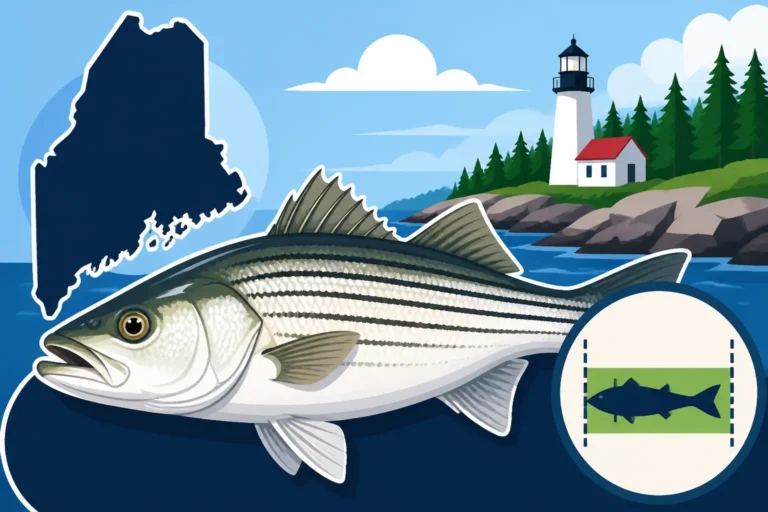
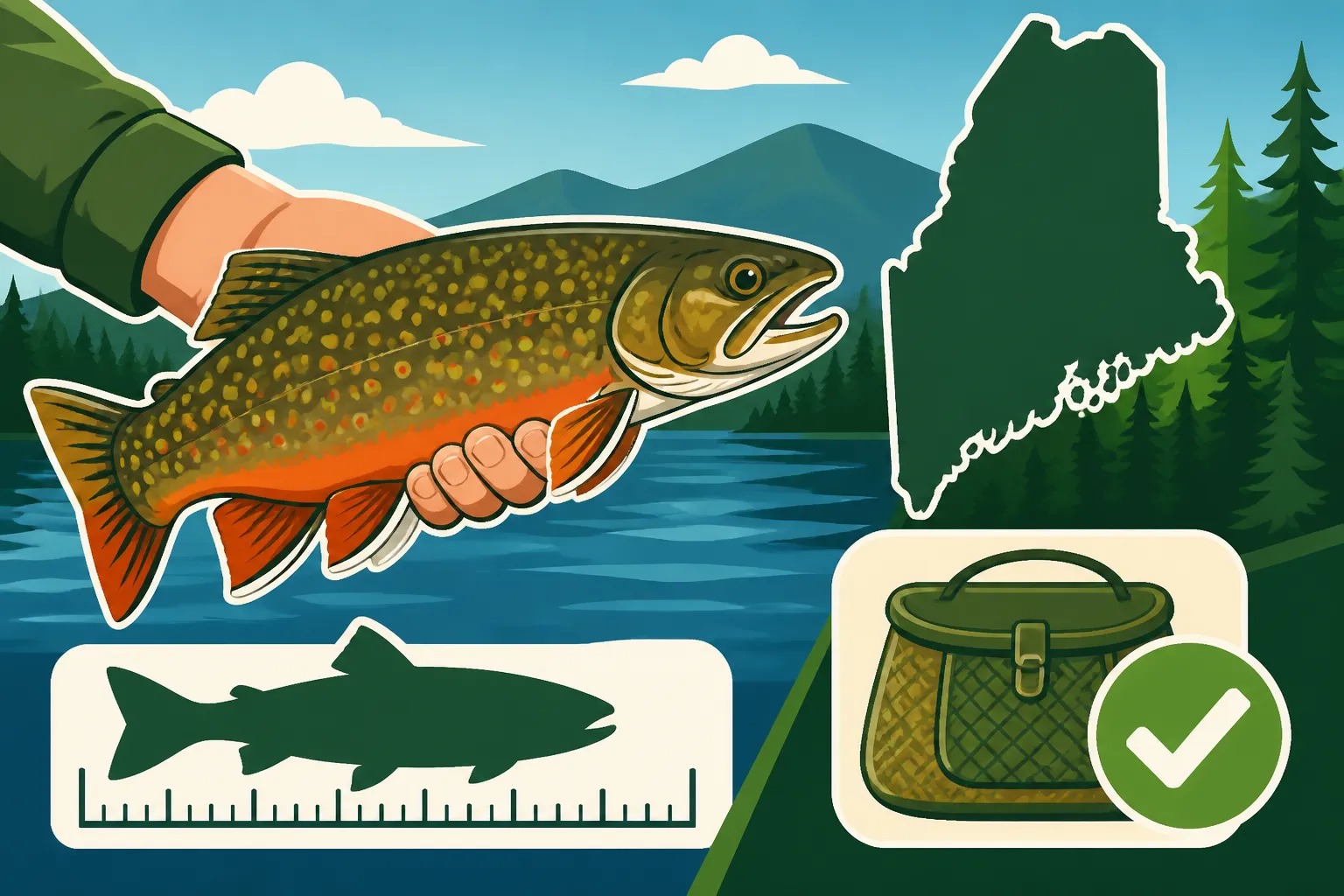
Beyond the number of fish you can keep, General Law also establishes a minimum length for brook trout. This means any brook trout you catch that doesn't meet or exceed this minimum length must be immediately released, unharmed. These length limits are put in place to protect younger fish, allowing them to grow, mature, and reproduce, which is vital for the long-term health of the population. It's a key conservation measure that ensures future generations of anglers will have brook trout to catch. Remember, measuring your fish accurately is paramount; a small difference could mean the difference between a legal catch and a violation. You can find more specific information on Minimum Length for Keeping a Brook Trout in Maine.
Navigating the North and South Zones
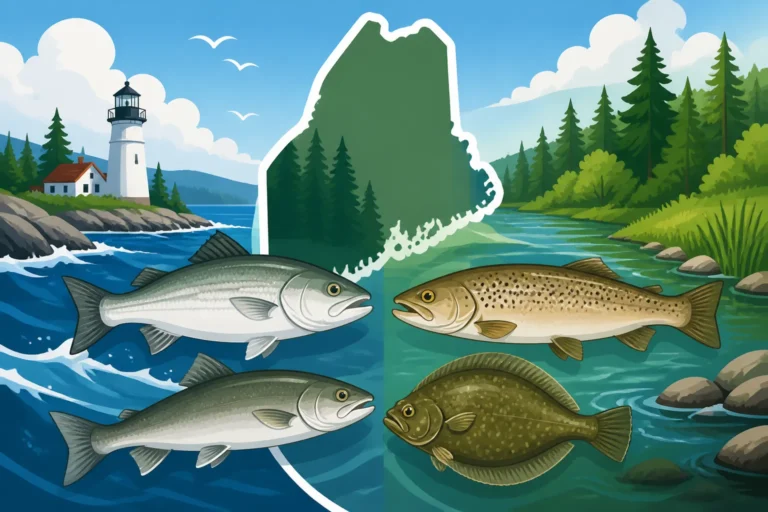
Maine is a big state, and its diverse geography means that what works for fish populations in the remote northern woods might not work for those closer to the densely populated southern coast. To manage this, Maine's Inland Fisheries and Wildlife has divided the state into two primary fishing zones: the North Zone and the South Zone. These zones often come with their own set of nuances, especially for brook trout.
The Geographic Divide and Its Impact on Fishing
The invisible line separating the North and South Zones generally runs across the state, roughly following certain roads and natural features. The North Zone typically encompasses more remote, wilderness areas with colder waters and less fishing pressure, while the South Zone includes more developed areas, larger lakes, and higher angler traffic. This distinction isn't arbitrary; it's based on ecological factors, population density, and fishing pressure. The rules, therefore, are tailored to best manage the fisheries within each region. Understanding which zone you are fishing in is absolutely non-negotiable, as ignoring it can easily lead to a violation of Maine Fishing Regulations Explained.
Brook Trout Limits in the North Zone
For anglers heading into Maine's vast North Zone, often synonymously thought of with its wild, native brook trout populations, the rules are typically designed to conserve these precious resources. While General Law might provide a baseline, many North Zone waters often have specific regulations that supersede it, aiming to protect the robust wild brook trout fisheries found there. It's common to find reduced bag limits or increased minimum length requirements in these areas, ensuring that trophy fish have a chance to grow and maintain strong breeding populations. Always double-check the Maine fishing law book for the specific body of water you intend to fish, as even within the North Zone, variations exist. For example, some remote ponds might have more restrictive rules than larger rivers. Looking at Brook Trout Daily Limit in Maine North Zone can offer more insight.
Brook Trout Limits in the South Zone
Moving down to the South Zone, anglers will encounter a different set of challenges and opportunities. While still home to excellent brook trout fishing, many waters in the South Zone experience heavier angling pressure and may rely more heavily on stocking programs. Consequently, the brook trout limits here can sometimes differ from the North Zone, though they often align with General Law unless a specific water is designated otherwise. It’s crucial not to assume the rules are the same just because you're familiar with fishing in one part of the state. Always check the regulations for the specific body of water you plan to fish in the South Zone, as local variations are common to balance recreational fishing with conservation efforts. A quick review of Brook Trout Daily Limit in Maine South Zone can help clarify this for you.
Special Regulations Waters and Their Exceptions
Just when you think you've got a handle on General Law and the North/South Zones, Maine throws in another layer of complexity: Special Regulations Waters. These are specific lakes, ponds, rivers, and streams that have rules entirely different from the default, and they are incredibly important to pay attention to.
What Makes a Water a "Special Regulation" Area?
A "Special Regulation" water is one where the Maine Department of Inland Fisheries and Wildlife (MDIFW) has implemented unique rules that depart from the General Law. These special regulations are typically enacted to address very specific conservation needs, enhance fishing quality, or manage unique fish populations. For example, a small, fragile pond with a rare strain of wild brook trout might have strict catch-and-release rules to protect its genetics, while a heavily stocked pond near a population center might have more liberal limits to encourage harvest. Understanding What Is a Maine Special Regulation Water? is key, because these waters are often some of the most productive for specific species, precisely because of their tailored management. You'll find a comprehensive list of these waters and their rules in the annual Maine fishing law book, which you can often purchase at local sporting goods stores or find digitally.
Common Variations in Bag and Length Limits
Special regulations can manifest in a variety of ways when it comes to brook trout. You might encounter:
- Catch-and-Release Only: Many remote ponds or specific river stretches are designated "catch and release only" for brook trout, meaning absolutely no fish can be kept. These areas are often managed for trophy potential or to protect delicate wild populations.
- Reduced Bag Limits: Some waters might have a lower daily bag limit than the General Law, perhaps only one or two brook trout per day, regardless of size. This conserves the population while still allowing for some harvest.
- Increased Length Minimums: A water might require brook trout to be 10, 12, or even 14 inches to be legally kept, much larger than the General Law minimum. This is often seen in waters managed for larger, older fish.
- Slot Limits: This is a bit more complex. A slot limit means you can only keep fish within a certain size range (e.g., between 8 and 12 inches). Fish smaller than the minimum must be released, and critically, fish larger than the maximum of the slot must also be released. Slot limits are powerful tools for managing the size structure of a fish population, often protecting the largest, most productive breeders.
These variations are designed with specific goals in mind, so always assume that if a water is listed as "Special Regulation," its rules are different and require careful review.
How to Research Special Regulations for Your Chosen Spot
The absolute best way to stay informed about special regulations is to always consult the official Maine fishing law book. This comprehensive guide is published annually by the MDIFW and lists every body of water with special rules. You can usually pick up a physical copy wherever you buy your Maine Fishing License Costs Guide, like at an agent location, or sometimes find them at hardware stores or general stores. Many anglers also rely on the MDIFW website, which often has an interactive map or a searchable database where you can input the name of a specific lake or river and pull up its current regulations. It's truly your best friend in avoiding any accidental missteps. Always consult it, every time you head to a new spot, because rules can change from year to year. For more assistance, check out How to Find Maine Fishing Regulations for a Specific Lake or Maine Fishing Law Book Where to Get One.
Age-Based Exemptions and Special Considerations
While the core regulations for brook trout generally apply to everyone, there are a few considerations related to age and certain classifications that anglers should be aware of. It’s not just about what you catch, but also who’s doing the catching.
Fishing License Age Requirements and Brook Trout
In Maine, not everyone needs a fishing license. Children under certain ages are typically exempt from needing a license, which is a fantastic way to introduce youngsters to the joys of angling without the extra hurdle of purchasing a permit. However, even if a child doesn't need a license, the bag and length limits for brook trout (and all other species) still apply to their catch. It’s essential for accompanying adults to ensure that any fish caught by youth anglers comply with the regulations of the water they are fishing. For parents or guardians, this means being just as vigilant, if not more so, about the rules when fishing with kids. Dive deeper into this topic by reading Do Kids Need a Fishing License in Maine?.
Youth Fishing and Special Limits
While the general bag and length limits apply to youth anglers, the spirit of encouraging fishing among young people is strong in Maine. During specific events, like Maine Free Fishing Days Guide, license requirements are temporarily waived for everyone, including adults. However, even on these special days, the bag and length limits for brook trout remain in effect. There might be some youth-specific fishing derbies or events that have special rules, but these are usually clearly communicated by the event organizers. The main takeaway is that while the barrier to entry (the license) might be removed for kids or on special days, the conservation-focused limits on how many and what size fish you can keep are almost always in place for brook trout.
Disabled Veterans and Senior Anglers
Maine offers various license options and sometimes exemptions for certain groups, such as resident seniors over a particular age, or qualifying disabled veterans. While these groups may be eligible for reduced-cost or even free fishing licenses, it’s crucial to understand that these license exemptions typically do not change the bag and length limits for brook trout. Whether you're a young child, a senior, a veteran, or a full-fee paying adult, the regulations concerning the number and size of brook trout you can keep are generally uniform for all anglers on a given body of water. Always check the most current MDIFW regulations or contact them directly if you have specific questions about how your status might affect licensing, but don't assume it alters the catch limits. Information about Disabled Veteran Fishing License Eligibility can explain more about licensing.
Responsible Angling: Beyond the Limits
Knowing the bag and length limits is vital, but being a responsible angler goes far beyond simply adhering to the letter of the law. It’s about understanding the "why" behind the rules and adopting practices that ensure the health and longevity of Maine's incredible brook trout fisheries.
Practicing Catch and Release for Healthy Populations
Even if you're well below your bag limit, practicing responsible catch and release is one of the most impactful things you can do for brook trout populations. This is especially true for larger, older fish that are often the most productive spawners. When you decide to release a fish, handle it minimally and gently, keeping it in the water as much as possible. Avoid touching its gills, and use wet hands to protect its slime coat, which is crucial for its health and disease resistance. Removing the hook quickly, perhaps with forceps or pliers, and reviving the fish until it can swim away strongly, dramatically increases its chances of survival. For detailed techniques, refer to Catch and Release Best Practices in Maine.
Understanding Brook Trout Ecology and Conservation
Maine's brook trout, particularly the wild, native strains, are a true treasure. They are an indicator species, meaning their presence and health reflect the overall health of the aquatic ecosystem. Understanding their ecology – what they eat, where they spawn, their sensitivity to water temperature and pollution – helps you appreciate why certain regulations are in place. The bag and length limits aren't just arbitrary numbers; they are carefully determined by biologists to ensure sustainable fishing pressure, protect spawning adults, and allow juvenile fish to grow. By respecting these limits and going a step further with catch and release, you become an active participant in the conservation of Brook Trout Fishing in Maine for future generations.
Reporting Violations and Protecting Maine's Fisheries
Unfortunately, not everyone adheres to the rules. If you witness someone violating fishing regulations, whether it's exceeding bag limits, keeping undersized fish, or fishing illegally, it's important to report it. Maine's Inland Fisheries and Wildlife wardens work tirelessly to protect the state's natural resources, but they can't be everywhere. Your observations can be crucial in catching poachers and ensuring that Maine's brook trout populations remain healthy and abundant. You can often find contact information for reporting violations in the annual law book or on the MDIFW website.
Essential Gear Considerations for Brook Trout Anglers
While regulations are paramount, having the right gear can significantly enhance your brook trout fishing experience and help you adhere to best practices. From the rod in your hand to the tools you carry, a thoughtful approach to gear can make all the difference.
Selecting the Right Rod and Reel
For brook trout, especially in smaller streams and ponds, a light to ultra-light spinning rod or a small fly rod is often ideal. A spinning rod in the 5-foot to 6.5-foot range, paired with a small reel spooled with 2 to 4-pound test line, provides the sensitivity needed to detect subtle bites and the finesse to cast small lures or baits. For fly anglers, a 3 or 4-weight fly rod is generally perfect for presenting delicate dry flies or small nymphs. Choosing appropriate gear not only makes the fishing more enjoyable but also reduces stress on the fish during a fight, which is important if you plan to release them. You can find many excellent options for a Best Rods for Ice Fishing or even general fishing rods for brook trout on Amazon, making it easy to get started or upgrade your setup.
Bait, Lures, and Flies for Brook Trout
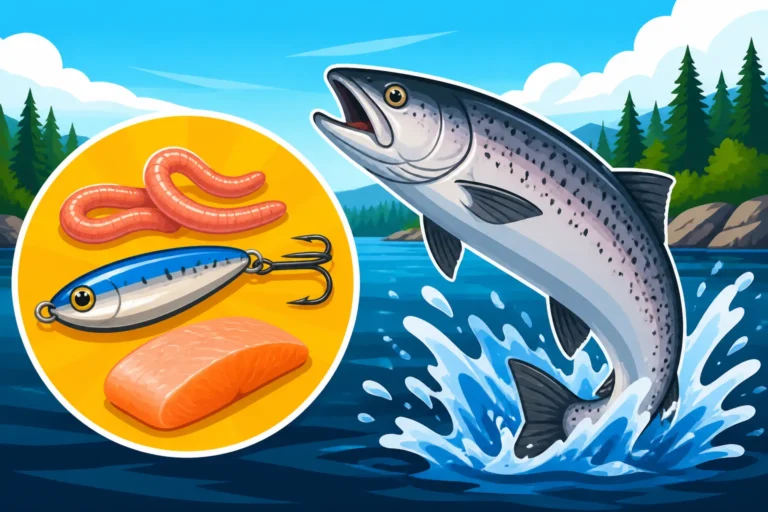
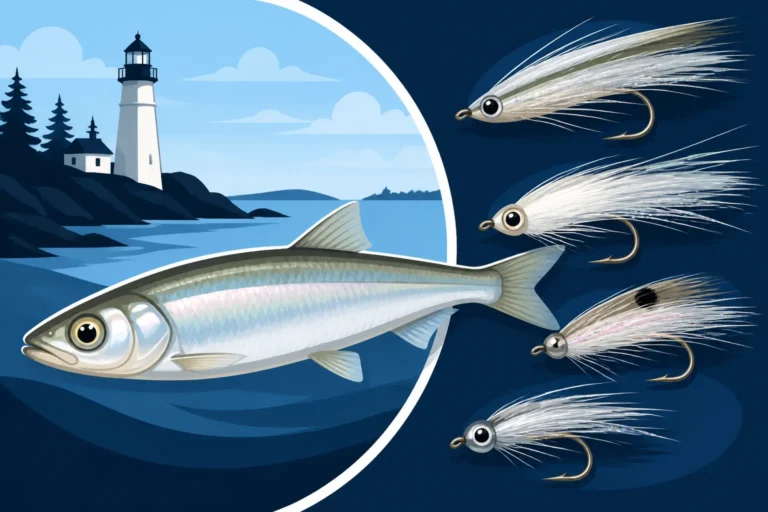
Brook trout are opportunistic feeders, and a variety of presentations can entice them. For bait fishing, worms, minnows, or even pieces of powerbait can be effective. When it comes to lures, small spinners (like Mepps Aglias or Panther Martins) and tiny spoons are perennial favorites. Fly anglers will find success with a range of patterns, from dry flies mimicking mayflies and caddisflies to nymphs and small streamer patterns that imitate minnows or leeches. Always be mindful of specific regulations for your chosen water body, as some areas may have restrictions on live bait or specific types of lures. A quick search on Amazon will reveal an overwhelming selection of Best Bait for Brook Trout and various lures. Be sure to select options appropriate for the size of brook trout you expect to encounter and the type of water you're fishing.
Carrying the Maine Fishing Law Book and Other Essentials
Beyond your rod and tackle, there are a few other essentials every responsible brook trout angler should carry. First and foremost, a copy of the current Maine fishing law book is non-negotiable. Whether it's a physical copy or a digital version on your phone, having easy access to the rules will prevent any missteps. A tape measure or ruler is also crucial for accurately measuring fish against length limits. Pliers or hemostats are invaluable for quickly and safely removing hooks, especially when practicing catch and release. Other items like a small first-aid kit, insect repellent, plenty of water, and appropriate clothing for Maine's unpredictable weather should also be in your pack. Investing in a good fishing vest or pack, easily found on Amazon, will help you keep all these essentials organized and accessible, ensuring you're prepared for whatever the day brings.
| Regulation Type | North Zone (General Law) | South Zone (General Law) | Special Regulations Waters (Examples) |
|---|---|---|---|
| Daily Bag Limit | 5 Brook Trout (or as specified by water) | 5 Brook Trout (or as specified by water) | Varies: 0 (Catch & Release), 1, 2, or 5+ |
| Minimum Length | 6 inches (or as specified by water) | 6 inches (or as specified by water) | Varies: 8 inches, 10 inches, or Slot Limits (e.g., 8-12 inches) |
| License Required | Yes (age-dependent) | Yes (age-dependent) | Yes (age-dependent) |
| Checking Rules | Always consult law book/MDIFW site | Always consult law book/MDIFW site | Mandatory consultation of specific water regulations |
Fishing for brook trout in Maine is an experience unlike any other, a chance to connect with wild nature and pursue one of the most beautiful fish in North America. By thoroughly understanding and respecting the bag and length limits, from the overarching General Law to the specific nuances of the North and South Zones and the critical details of Special Regulation Waters, you're doing your part to ensure this cherished tradition continues to thrive. Always check the current regulations, practice responsible angling, and enjoy every moment on Maine's pristine waters.
Disclaimer
This article is for general informational purposes only and does not constitute professional advice. Laws, prices and regulations vary by location and change over time. Consult a qualified professional for guidance on your specific situation.