Disabled Veteran Fishing License Eligibility
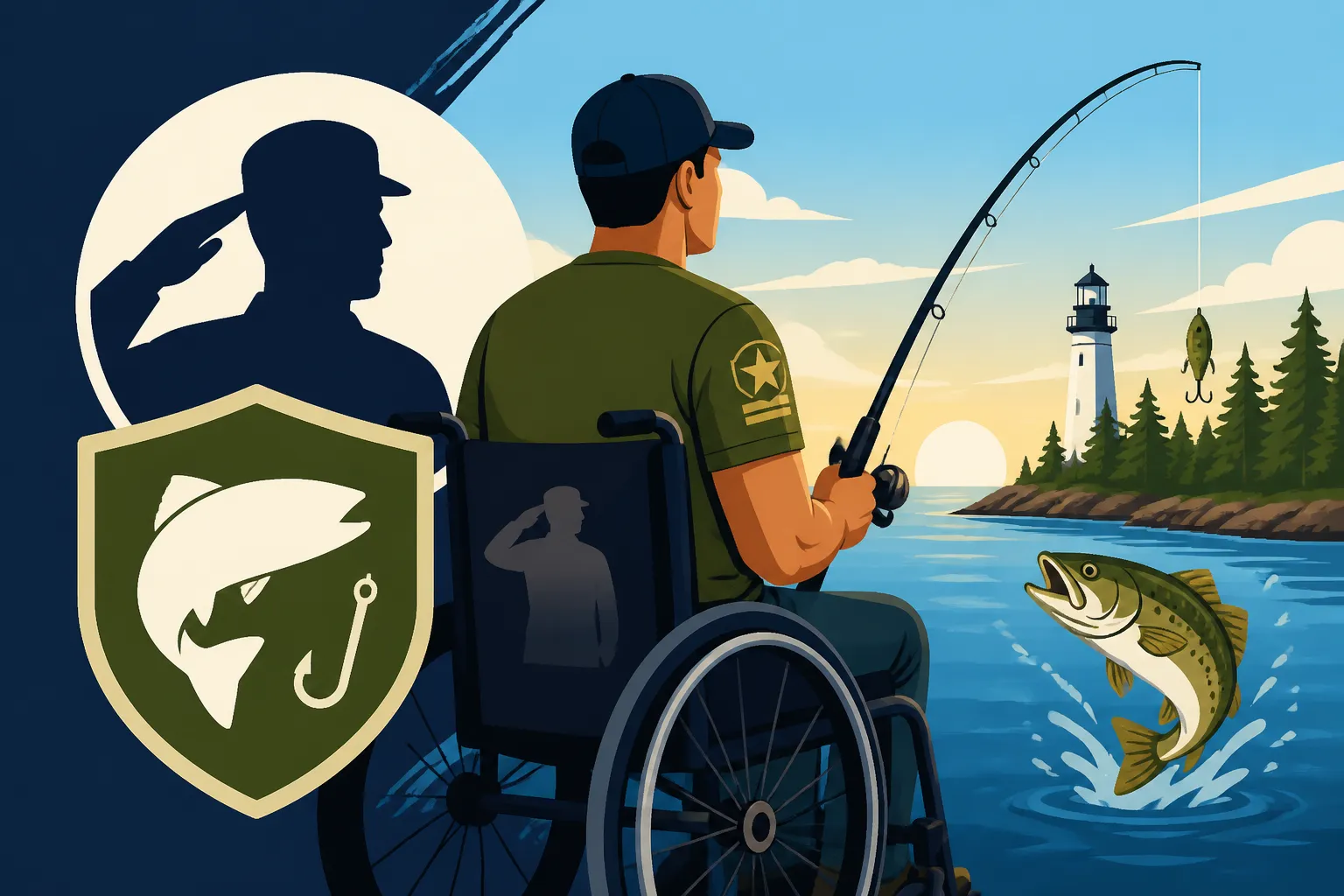
Navigating state regulations when you are a service-disabled military veteran can feel unnecessarily overwhelming, especially when all you want to do is clear your head on the water. After serving your country, coming home to cast a line in Maine’s pristine lakes and tidal rivers should be simple, restorative, and direct. This guide clears up the bureaucratic confusion surrounding Disabled Veteran Fishing License Eligibility, detailing exact qualification criteria, required documentation, application steps, and rules for enjoying Maine waterways without unnecessary costs.
Understanding Maine Disabled Veteran Fishing License Qualifications
For many military veterans living in or visiting Pine Tree State, the outdoors offers an unmatched sanctuary for physical rehabilitation, mental reset, and quiet reflection. Maine recognizes the immense sacrifices made by service members and has structured its state code to offer expansive wildlife privileges to those who bear service-connected disabilities. However, the specific terminology used by state agencies often leaves anglers unsure if their specific Disability Evaluation System rating qualifies them for a complimentary lifetime pass or if they fall under standard licensing rules.
Understanding how the state evaluates military service records is the first step toward securing your license without paying out-of-pocket fees. Maine Department of Inland Fisheries and Wildlife works closely with federal agencies to ensure that eligible personnel can transition smoothly from military discharge papers to an active fishing permit.
Service Connected Disability Standards and Requirements
The foundational benchmark for obtaining a military disability fishing exemption in Maine revolves around your official Department of Veterans Affairs disability rating percentage. Under state law, a veteran must hold a service-connected disability rating of 50 percent or higher to unlock the full slate of complimentary hunting, trapping, and fishing privileges. This percentage is determined exclusively by the VA and documented through a formal summary letter.
Many veterans ask questions regarding partial disabilities or non-service-connected health conditions. It is critical to understand that Maine statutes specifically stipulate that the impairment must be directly tied to active duty service. If your service-connected rating is below the 50 percent threshold, you will not qualify for the full complimentary lifetime pass, though you may still explore other options detailed under Maine Fishing License Exemptions.
For those who do meet or exceed the 50 percent mark, the benefits are remarkable. The state does not merely discount your annual fee; it grants a comprehensive license that covers freshwater fishing, along with secondary permits for hunting and trapping depending on your residency status. This recognition ensures that physical or financial barriers do not stand between a deserving veteran and the mental health benefits of time spent fishing on a quiet lake.
Maine Resident Veteran Qualification Requirements
To be recognized as a resident veteran under state game laws, an applicant must satisfy both military disability standards and state residency requirements. To prove residency, you must have established a permanent home in Maine for at least three consecutive months immediately prior to submitting your application. Showing a Maine driver’s license, motor vehicle registration, or voter registration card is standard practice during the review process.
Resident veterans who meet the 50 percent service-connected threshold are eligible for a complimentary, permanent lifetime license. This means once your initial application is verified and approved by state officials, you will never need to pay an annual base renewal fee again. It covers all standard open-water and ice-fishing activities across the state’s freshwater jurisdictions.
It is worth noting how this program compares to standard civilian licensing. While non-disabled residents must purchase annual permits or wait until age 70 for senior lifetime privileges, resident service-disabled veterans receive immediate, lifetime access. If you are questioning whether your specific rating qualifies you for zero-cost access, reviewing Do 100 Percent Disabled Veterans Fish Free in Maine? provides additional clarity on how total disability status is treated under current state administrative codes.
Nonresident Veteran Eligibility and Reciprocal Agreements
If you live outside of Maine but served in the United States Armed Forces, your ability to access free or discounted fishing privileges depends heavily on state-to-state reciprocity. Maine has enacted specific provisions that extend complimentary fishing licenses to nonresident veterans, provided their home state offers equivalent, reciprocal fishing benefits to Maine residents who are disabled veterans.
Currently, several New England and neighboring states hold formal reciprocity agreements with Maine. If you reside in a state like New Hampshire, Vermont, or Rhode Island that grants free privileges to disabled Maine veterans, you can apply for a nonresident complimentary license through Maine. However, if your home state does not offer a matching courtesy to Maine veterans, you will generally be required to purchase a standard out-of-state visitor permit.
Nonresident veterans should also carefully review Maine Disabled Veteran Fishing License Requirements before planning a trip north. Attempting to fish on a standard out-of-state license when you could easily qualify for a reciprocal exemption is a common mistake. Verifying reciprocity prior to setting out ensures your fishing trip remains stress-free and fully compliant with state conservation laws.
Step by Step Application Process for Veteran Fishing Privileges
Once you have determined that you satisfy the disability percentage and residency requirements, the next step is navigating the administrative process. While applying for government benefits can sometimes feel like a maze of red tape, Maine has streamlined the veteran verification process to be as straightforward as possible. Gathering the correct paperwork beforehand will prevent unnecessary back-and-forth delays with state license processors.
Whether you prefer filing paperwork electronically from your home computer or handing your documentation directly to a clerk at an official state office, knowing where to submit your file makes all the difference. Taking the time to properly submit your credentials guarantees that your lifetime license is processed smoothly before opening day arrives.
Required Documentation and VA Verification Letters
The single most important piece of paper in your application packet is your official VA Benefit Summary Letter. This document must explicitly state your overall combined service-connected disability rating percentage. A standard DD-214 discharge form is necessary to prove honorable service, but the DD-214 alone does not prove your current disability percentage.
You can easily request a fresh Benefit Summary Letter by logging into your account on the official VA web portal or contacting your local County Veterans Service Officer. When generating the letter online, ensure you select the options that display your combined disability rating and service-connected status. Do not send sensitive medical files or full health histories; state clerks only need the summary letter verifying your percentage and honorable discharge status.
In addition to military forms, residents must provide proof of Maine residency, such as a utility bill, state ID, or residential lease. Nonresidents relying on state reciprocity must include proof of current legal residency in their home state alongside their VA letter. Having these documents scanned as PDFs or clearly printed in physical copies will accelerate your application review.
Submitting Your Application Online or via Mail
Maine offers multiple submission routes to accommodate all preferences. The fastest method for most veterans is using the official Maine Department of Inland Fisheries and Wildlife online portal. Through this system, you can upload digital copies of your DD-214, VA summary letter, and state photo ID directly to the licensing division for administrative review.
If you prefer physical paperwork, you can print the official Veteran License Application from the state website, complete the personal information fields, and mail the package directly to the main office in Augusta. Mailing physical documents usually adds a week or two to processing times, so be sure to plan well ahead of your planned fishing trips.
For those who need immediate assistance or lack access to a printer, visiting a local regional IFW office or contacting a local veteran service representative is a great alternative. While typical retail agent locations may direct complex military paperwork straight to Augusta, municipal town offices can often assist in verifying documents. If you are unsure where to submit physical forms in your county, check Where to Buy a Maine Fishing License for a directory of regional licensing stations.
Renewing and Maintaining Your Lifetime Veteran License
One of the greatest features of Maine’s resident disabled veteran program is that the primary credential is a true lifetime pass. Unlike standard annual licenses that automatically expire every December 31st, a resident disabled veteran lifetime pass remains valid for the duration of your life without requiring annual repurchase fees.
However, “lifetime” status does not mean you can ignore updated state laws or specialized permit add-ons. While your core freshwater fishing access never expires, certain specialized tags—such as specific expanded archery tags or migratory bird permits if you hold a combination hunting license—must still be claimed or updated on an annual basis. You can quickly double-check your profile status online prior to each season.
For nonresidents operating under reciprocal agreements, renewal procedures can vary slightly depending on how long your home state’s verification remains valid. Keeping a laminated physical copy or a clean digital backup on your smartphone ensures you can quickly demonstrate proof of licensure if greeted by a game warden on the water.
Covered Privileges and Fishing Regulations for Qualified Veterans
Possessing a complimentary military veteran license grants extensive access to Maine’s famous freshwater fisheries, but it is equally vital to know where those privileges end. State laws differentiate clearly between inland freshwater lakes, tidal rivers, and offshore saltwater environments. Assuming that a single pass covers every drop of water in the state is a common misconception that can lead to unexpected warnings or citations.
Understanding the boundary lines between freshwater and marine environments, along with specific gear restrictions, ensures you remain on the right side of conservation laws. Maine takes great pride in protecting its fisheries, and every angler—regardless of license status—is subject to local harvest limits, tackle mandates, and seasonal closures.
Freshwater and Saltwater Fishing Access Rules
Your Maine disabled veteran fishing pass grants complete authorization to fish all inland public waters, including thousands of lakes, ponds, rivers, and remote wilderness streams. You can target native brook trout, landlocked salmon, smallmouth bass, and lake trout across all administrative fishing zones without buying supplemental freshwater permits.
However, coastal marine waters operate under distinct rules. If you plan to target striped bass, Atlantic mackerel, or flounder in tidal waters or from ocean piers, you must understand marine licensing frameworks. In Maine, marine recreational fishing is managed separately, and anglers often need to register with the state marine registry. Reviewing the Maine Saltwater Fishing Registry Guide will clarify whether your freshwater veteran license automatically covers coastal trips or if a separate zero-cost marine registration is required.
Furthermore, if you transition between inland rivers and tidal estuaries—such as fishing the lower stretches of the Kennebec or Penobscot rivers—you must pay close attention to where freshwater law stops and saltwater law begins. Fish bag limits, minimum size requirements, and gear rules often change dramatically within a few miles along coastal riverways.
Free Fishing Days and Special Exemption Nuances
Maine periodically hosts special public outdoor events designed to encourage families and visitors to experience the sport. Understanding how these events interact with military exemptions can help you plan trips with family members who might not hold their own military disability credentials.
During official designated weekends, any person—resident or nonresident—can fish inland waters without purchasing a license, provided they adhere to all standard bag limits and tackle laws. To learn more about bringing family members along who do not qualify for military exemptions, consult the guidelines found in Maine Free Fishing Weekend Rules. These events offer a stress-free way to introduce grandchildren or friends to your favorite fishing spots.
Additionally, veterans should remember that holding a complimentary license does not exempt an angler from special water-specific regulations. Catch-and-release zones, fly-fishing-only stretches, artificial-lures-only mandates, and ice-fishing line limits apply equally to all anglers. Always check the current open-water and ice-fishing law books for the specific lake or stream you plan to fish.
Fishing Gear and Equipment Preparation for Veterans
Having your legal paperwork settled is only half the battle; ensuring your tackle and gear match your physical needs is critical for a comfortable day on the water. Service-connected injuries—whether involving spinal mobility issues, joint chronic pain, or upper-limb limitations—require smart gear selection to keep casting pain-free.
Many veteran anglers rely on modern ergonomic gear to stay active. Lightweight graphite rods, automatic hook-setters for shore fishing, and electric reel-assist devices can make fishing accessible regardless of physical challenges. Browse online retailers like Amazon to find specialized adaptive fishing handles, rod holders, lightweight chest packs, and high-visibility braided lines that reduce strain during long days on the lake.
Keeping your physical license safe from moisture is another simple maintenance step. Investing in a heavy-duty waterproof lanyard or dry pouch from Amazon keeps your VA paperwork, driver’s license, and state fishing pass crisp and readable, even if you run into rain or an accidental splash while boarding your boat.
| Feature / Benefit | Resident Disabled Veteran (50%+ VA) | Nonresident Veteran (Reciprocal State) |
|---|---|---|
| Application Fee | Free / Complimentary | Free / Complimentary |
| License Duration | Lifetime | Annual / Per Reciprocity Terms |
| Freshwater Access | Included | Included |
| Hunting & Trapping Privileges | Included (Combination License) | Varies by Reciprocity Agreement |
| Marine Saltwater Coverage | Free Registry Required | Free Registry Required |
| Proof Required | VA Letter (50%+) & ME Residency | VA Letter (50%+) & Home State ID |
Regional Fishing Opportunities Across Maine Waterways
With your legal status sorted and your gear packed, choosing where to fish in Maine is an exciting prospect. From the quiet, paved access points of southern coastal ponds to the deep wilderness lakes of the North Woods, Maine features diverse aquatic habitats suited to every style of angling.
For veterans managing physical mobility constraints, selecting a destination with accessible infrastructure—such as firm boat launches, level fishing piers, and nearby parking—is essential. Fortunately, state agencies and local land trusts have invested heavily in creating universally accessible facilities across high-value fisheries.
Accessible Shore Fishing and Boat Ramp Locations
Not every fishing trip requires navigating rough wilderness trails or hauling heavy canoes down steep embankments. Maine offers numerous managed parks and public boat launches designed with paved ramps, concrete loading docks, and stable shore-casting platforms.
Locations near major population centers, such as Sebago Lake State Park or public access sites along the Belgrade Lakes chain, feature excellent infrastructure. These sites allow veteran anglers using wheelchairs, walkers, or cane supports to fish safely alongside deep water. Finding these well-maintained facilities is easy when you consult resources detailing Handicap Accessible Fishing Spots in Maine.
When planning a trip to a new lake, taking time to research dock configurations and parking proximity saves time and physical exertion. Many state-managed boat launches include designated disabled parking spaces located just feet from the water’s edge, making launching a bass boat or kayak hassle-free.
Top Lakes and Rivers for Veteran Anglers
If you are looking for classic Maine target species like landlocked salmon, native brook trout, or trophy smallmouth bass, a few key regions stand out for both fish quality and overall accessibility.
- Sebago Lake: Located in Southern Maine, Sebago is world-famous for its deep-water landlocked salmon and lake trout. It features multiple marina facilities, paved public ramps, and guided charter options.
- The Belgrade Lakes: A premier warm-water destination near Augusta, offering incredible largemouth and smallmouth bass fishing across interconnected lakes like Great Pond and Long Pond.
- Moosehead Lake: Situated in the Highlands region, Moosehead provides expansive cold-water habitat for big lake trout and brook trout, backed by full-service sporting camps equipped for veteran hosting.
- Kennebec River: Famous for its seasonal striped bass runs in tidal sections and wild trout in upper freshwater stretches, offering diverse fishing options throughout the spring and summer.
Matching your preferred fishing style with the right body of water guarantees a rewarding experience. Whether you prefer trolling deep open water with downriggers or casting topwater lures along quiet lily pads, Maine’s lakes deliver outstanding action.
Guided Trips and Community Resources for Military Anglers
You do not have to explore Maine’s vast waters alone. Dozens of charitable organizations, veteran service groups, and non-profit funds specialize in taking service-disabled veterans on fully guided fishing adventures at zero cost to the veteran.
Programs run by national organizations like Project Healing Waters Fly Fishing, along with regional Maine non-profits, connect veteran anglers with experienced Registered Maine Guides. These volunteer guides provide all necessary fly-fishing gear, boats, lodging, and safety support, allowing veterans to focus entirely on learning new skills and enjoying camaraderie with fellow service members.
Additionally, active-duty service members visiting or stationed in Maine should take time to review Active Duty Military Fishing License Rules in Maine. State law provides distinct temporary licensing considerations for active personnel on leave, ensuring active service members can also enjoy seamless access to Maine’s outdoor heritage.
Comparing Veteran License Benefits Across the Northeast
Veterans who travel throughout the northeastern United States often discover that military license laws vary significantly once you cross state borders. What is granted as a automatic lifetime privilege in Maine might require annual re-verification in a neighboring state, or might operate under entirely different disability rating thresholds.
Understanding these regional variances helps you avoid inadvertent licensing violations when planning interstate fishing road trips. Comparing Maine’s expansive military benefit structure against neighboring jurisdictions highlights why Maine remains one of the most veteran-friendly states in the nation for outdoor recreation.
Maine Privileges versus Regional State Exemption Programs
Maine stands out in the Northeast for offering a comprehensive, combined license structure for service-disabled residents. While some states offer discounts only on basic fishing passes, Maine grants qualified 50 percent service-disabled resident veterans access that extends beyond the water.
Resident veterans eligible for Maine’s program often receive a unified pass that incorporates freshwater fishing, small game hunting, big game hunting, and trapping privileges into a single credential. To understand how these crossover sports interact, review Combination Hunting and Fishing License Options. This multi-use structure eliminates the need to apply through multiple separate state bureaus.
In contrast, neighboring states may require separate applications for hunting and fishing exemptions, or may cap complimentary access strictly to veterans with a 100 percent unemployability or total disability rating. Maine’s inclusion of veterans starting at the 50 percent service-connected level makes its outdoors far more accessible to a broader population of wounded warriors.
State Reciprocity Details for Bordering Waters
For anglers fishing boundary waters—such as lakes and rivers shared between Maine and New Hampshire—licensing rules require careful attention. On shared waters where formal boundary agreements exist, holding a valid veteran license from either state usually allows you to fish from a boat across the entire body of water.
However, shore fishing always requires compliance with the specific state land you are physically standing on. If you step out of your boat onto the New Hampshire shoreline of a shared river, you must hold credentials recognized by New Hampshire law.
Before taking a boat onto border lakes, always verify whether your home state’s disabled veteran pass holds full reciprocal status with the bordering jurisdiction. Carrying paper printouts of state reciprocity agreements alongside your VA documentation guarantees clear communication if you meet game wardens from either state.
Comprehensive Comparison Table of Veteran License Features
To help organize your outdoor planning across the region, the following table summarizes how veteran military status, disability percentages, and licensing terms compare across common New England program structures.
| Program Criteria | Maine Resident Disabled Vet | Maine Nonresident Reciprocal | Standard Out-of-State Vet |
|---|---|---|---|
| Min. VA Disability Rating | 50% Service-Connected | 50% Service-Connected | N/A (Standard Nonresident) |
| Core Fishing Cost | Free / Complimentary | Free (If Home State Reciprocates) | Standard Out-of-State Fees |
| Renewal Frequency | Lifetime Pass | Annual Verification | Annual or Short-Term Purchase |
| Covered Water Types | All Inland Freshwaters | All Inland Freshwaters | All Inland Freshwaters |
| Included Extensions | Hunting/Trapping Options | Base Fishing Focus | None (Base License Only) |
| Proof of Identity Needed | ME ID + VA Rating Letter | Home State ID + VA Letter | Standard Driver’s License |
Equipped with the proper credentials, clear knowledge of state regulations, and adaptive fishing gear, service-disabled veterans can fully experience the healing, peaceful waters of Maine. Take the time to get your VA paperwork verified, assemble your tackle, and head out to enjoy the world-class fishing Pine Tree State proudly offers to those who served.
Disclaimer
This article is for general informational purposes only and does not constitute professional advice. Laws, prices and regulations vary by location and change over time. Consult a qualified professional for guidance on your specific situation.