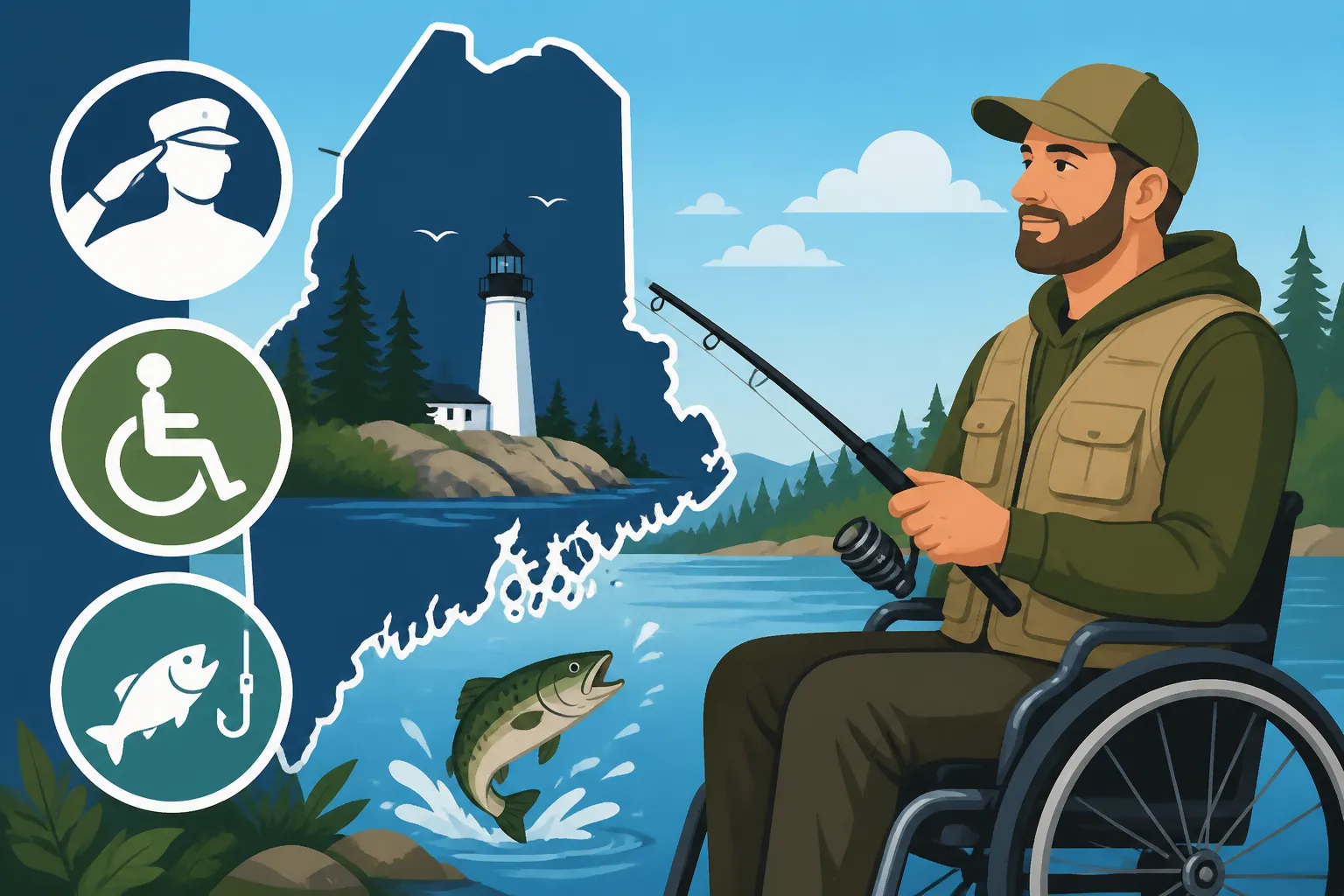
Maine Disabled Veteran Fishing License Requirements
Navigating the world of fishing licenses can sometimes feel like trying to untangle a particularly stubborn knot in your fishing line, and for our disabled veterans, it's especially important that the process is clear and respectful of their service. This guide is here to cut through the confusion, offering a comprehensive look at Maine's disabled veteran fishing license requirements, ensuring you have all the information you need to get out on the water and enjoy the peace and tranquility of Maine's lakes, rivers, and coastal waters.
Maine's Commitment to Honoring Disabled Veterans Through Fishing Privileges
Maine has a long-standing tradition of valuing its veterans, and that commitment extends to providing special considerations for those who have served and incurred disabilities as a result. These provisions aren't just bureaucratic loopholes; they are a tangible way for the state to express gratitude and facilitate access to recreational activities that can be profoundly healing and enjoyable.
Why Special Provisions Exist for Veterans
The rationale behind these special fishing license provisions for disabled veterans is multifaceted. Firstly, it’s a direct recognition of the immense sacrifices made for our country. Veterans, particularly those with service-connected disabilities, often face unique challenges upon returning to civilian life, and alleviating financial burdens for recreational pursuits is one way the state can show its appreciation.
Secondly, fishing, like many outdoor activities, offers significant therapeutic benefits. The quiet solitude of a morning on the water, the focus required to cast a line, and the connection with nature can all contribute positively to mental well-being and physical rehabilitation. For veterans managing post-traumatic stress, physical injuries, or other service-connected conditions, these opportunities are invaluable. Maine understands that getting out into the beautiful natural environment is not just a leisure activity but can be an integral part of healing and reintegration.
Differentiating Between General Veteran Benefits and Disabled Veteran Eligibility
It's crucial to understand that while Maine is generally veteran-friendly, the specific fishing license waiver is typically tied to a service-connected disability. Simply being a veteran, or having served in the military, does not automatically qualify you for a free or reduced-cost fishing license in Maine. This particular benefit is reserved for those who meet a defined threshold of service-connected disability.
If you're an active duty military member, your situation is different, and you might qualify for other considerations. You can find more specific details on the requirements by checking out our guide on Fishing License Rules for Active Military. For disabled veterans, the focus is squarely on the disability status as certified by the Department of Veterans Affairs. This distinction helps ensure that the benefit reaches those for whom it is specifically intended, recognizing the unique challenges they face.
Pinpointing the Eligibility Requirements for a Maine Disabled Veteran Fishing License
To ensure you qualify for this important benefit, it's essential to understand the precise criteria Maine sets forth. There are no shortcuts here; meeting these requirements exactly is key to a smooth application process.
Defining "Disabled Veteran" for Maine Fishing Licenses
Maine's definition of a "disabled veteran" for the purposes of a fishing license exemption is quite specific and directly linked to your service-connected disability rating from the Department of Veterans Affairs (VA). To be eligible for a free Maine fishing license, you must have a service-connected disability of 50% or more.
Let's break that down. "Service-connected" means that your disability was incurred or aggravated during your active military service. This isn't just any disability; it must be formally recognized and rated by the VA as a direct result of your time in uniform. The "50% or more" is the crucial threshold. If your disability rating is, for example, 40%, you would not qualify for this specific benefit, even though you are a disabled veteran. This percentage is typically assigned by the VA based on the severity and impact of your service-connected condition. The state of Maine uses this established federal rating as its standard, so you don't need to get a separate disability assessment from the state. You'll need an official document from the VA clearly stating this rating to prove your eligibility.
Maine Residency: A Key Factor
Beyond your disability status, your residency plays an equally important role in determining eligibility. The free disabled veteran fishing license is primarily intended for Maine residents. What constitutes a "resident" in Maine for licensing purposes is defined by state law. Generally, this means you maintain a primary domicile in Maine, pay Maine income taxes, and register your vehicles and vote in Maine. It's about demonstrating a genuine, established presence in the state.
If you are a non-resident disabled veteran, even with a 50% or greater service-connected disability, you would unfortunately not qualify for the free resident disabled veteran license. Non-residents typically need to purchase an appropriate non-resident license, such as a Maine 3-Day Nonresident Fishing License or a full-season option. While the spirit of honoring veterans remains, the state extends the free license specifically to its own disabled veteran residents. For a more detailed look at what defines residency for fishing licenses, you can refer to our guide on Maine Resident Definition for Fishing License Purposes. If you're a non-resident who owns property in Maine or spends significant time here, it's always best to check with the Maine Department of Inland Fisheries and Wildlife (MDIFW) directly to confirm your specific status, as nuances can sometimes apply, but generally, the primary domicile rule holds true.
Essential Documents to Prepare for Your Application
Gathering the correct documentation is probably the most critical step to ensure your application goes smoothly and without unnecessary delays. Don't show up empty-handed or with incomplete paperwork; it'll only lead to frustration.
Here's what you absolutely need to prepare:
- Official VA Disability Rating Letter: This is the cornerstone of your application. You'll need a current, official letter from the U.S. Department of Veterans Affairs that clearly states your service-connected disability rating is 50% or more. This document proves your eligibility based on the disability criteria. Make sure it's not an old letter and that it explicitly shows the percentage. Sometimes, veterans have multiple VA letters, so ensure you bring the one that details your current overall disability rating.
- Proof of Maine Residency: As discussed, you need to demonstrate that you are a bona fide resident of Maine. A valid Maine driver's license or state identification card is usually the easiest and most accepted form of proof. However, if your ID doesn't reflect your current residency or you've recently moved, you might also need supplemental documents. These could include:
- Recent utility bills (electric, gas, water) with your name and Maine address.
- Maine vehicle registration.
- Maine property tax bill or lease agreement.
- Voter registration card in Maine.
The goal is to provide official documents that corroborate your physical address and intent to reside in Maine.
- Proof of Identity: While often covered by your Maine driver's license or state ID, you should have a form of photo identification. This ensures that the person applying for the license is indeed the eligible veteran. A valid passport or other government-issued photo ID would also work.
It's always a good idea to bring originals of these documents, especially if applying in person, as agents may need to verify them on the spot. For online applications, you'll need clear digital copies (scans or high-quality photos) of these documents. Double-checking your documents before starting the application process will save you a lot of time and potential headaches.
Navigating the Application Process for Your Disabled Veteran License
Once you've got all your ducks in a row with your documentation, it's time to actually apply for your license. Maine offers a few convenient ways to do this, catering to different preferences and needs.
Applying Online: Convenience and Considerations
For many, the easiest way to secure a Maine disabled veteran fishing license is through the Maine Department of Inland Fisheries and Wildlife (MDIFW) online licensing portal. This method offers unparalleled convenience, allowing you to complete the process from the comfort of your home, any time of day. Our guide on How to Buy a Maine Fishing License Online can give you a broader overview of the online system.
Here’s how it generally works for disabled veterans:
- Access the MDIFW Website: Navigate to the official MDIFW licensing page. You'll usually find a clear link for purchasing licenses.
- Create or Log In to Your Account: If you've purchased a license in Maine before, you'll likely have an existing account. Otherwise, you'll need to create one, providing basic personal information.
- Select the Disabled Veteran License Option: Within the license selection menu, look for the specific "Disabled Veteran Fishing License" or a similar designation. It should indicate it's for residents with a 50% or greater service-connected disability.
- Upload Your Documentation: This is where your prepared digital copies come in. The system will prompt you to upload your VA disability rating letter and proof of Maine residency (e.g., a scan of your Maine driver's license). Ensure these files are clear and legible.
- Review and Submit: Carefully review all the information you've entered and the documents you've uploaded. Once everything looks correct, submit your application.
- Confirmation and Issuance: After submission, your application will typically undergo a verification process by MDIFW staff to confirm your eligibility. This might take a few business days. Once approved, you'll receive a confirmation, and your license will either be emailed to you for printing or become accessible through your online account.
Pros of Online Application: It’s fast, accessible 24/7, and avoids travel.
Cons: Requires a computer and scanner/good camera, and you might have to wait a few days for verification. If there are issues with your documents, communication might be slower than in-person.
In-Person Application: Local Support and Verification
If you prefer a more personal touch, or if you encounter issues with the online system, applying in person at a local license agent is an excellent option. Maine has numerous agents throughout the state, including town clerks, sporting goods stores, and general stores. You can find a list of these locations in our Where to Buy a Maine Fishing License article.
When applying in person:
- Locate a License Agent: Use the MDIFW website or our guide to find an agent near you.
- Bring All Original Documents: As emphasized earlier, bring your original VA disability rating letter, your Maine driver's license or state ID, and any other supporting residency documents. The agent will likely need to visually verify these.
- Fill Out the Application: The agent will assist you in filling out the necessary forms.
- Instant Issuance: One of the biggest advantages of in-person application is that, once your documents are verified and approved by the agent, you'll typically receive your physical fishing license on the spot. No waiting period for shipping or digital processing!
- Direct Assistance: If you have questions about your eligibility or specific documents, the agent can often provide immediate clarification or direct you to the right MDIFW contact.
This method offers the benefit of immediate gratification and direct assistance, which can be reassuring when dealing with specific eligibility requirements.
Mail-In Application Steps
While less common these days due to the ease of online and in-person options, applying by mail is still available for those who prefer it or have limited access to the other methods. This process requires a bit more foresight due to mailing times.
- Download the Application Form: You’ll need to visit the MDIFW website to download the appropriate license application form. Make sure you select the correct form that addresses special licenses or veteran benefits.
- Fill Out the Form Completely: Provide all requested personal information accurately.
- Make Copies of Your Documents: Do not send original documents through the mail. Instead, make clear, legible photocopies of your VA disability rating letter and proof of Maine residency. It's also wise to keep a set of copies for your own records.
- Mail Your Application: Send the completed form and photocopies of your documents to the address provided on the MDIFW website or the application form itself. Ensure you use reliable mail service, as you'll be sending sensitive personal information.
- Await Processing and Delivery: The MDIFW will process your application upon receipt. This can take several weeks, including verification and mailing the license back to you. Be patient, and if you haven't heard back within a reasonable timeframe, you can contact MDIFW directly for an update.
This method is generally slower, so if you're planning a fishing trip soon, it might not be the best choice.
Maximizing Your Maine Fishing Experience as a Disabled Veteran
Receiving your disabled veteran fishing license is just the beginning! Maine offers a fantastic array of fishing opportunities, and understanding how to maintain your license and leverage other benefits will only enhance your time outdoors.
Annual Renewal and Staying Compliant
Your Maine fishing license, including the disabled veteran license, generally operates on a calendar year basis. This means it's valid from January 1st through December 31st, regardless of when you purchase it during the year. It's not valid for 365 days from the purchase date. Our guide on How Long Is a Maine Fishing License Valid? delves into these details further.
To ensure uninterrupted fishing enjoyment, you'll need to renew your license annually. The good news is that if your disability status remains the same, the renewal process is usually much simpler than the initial application. Many veterans can simply renew online or in person by confirming their information, as their disability documentation may already be on file with MDIFW. However, it's always wise to have your VA disability letter handy, especially if a long time has passed since your initial application, as the state might periodically verify eligibility. Our Maine Fishing License Renewal Rules guide provides more specific information on the renewal process.
It’s also vitally important to promptly update MDIFW if there are any changes to your disability status that might affect your eligibility. Compliance ensures the integrity of the program and allows you to continue enjoying your fishing privileges without issue.
Exploring Combination Licenses and Other Opportunities
Beyond just a fishing license, Maine recognizes that many outdoor enthusiasts enjoy both fishing and hunting. For qualifying disabled veterans, there are often opportunities to obtain a combination hunting and fishing license at a waived or significantly reduced fee. This can be a huge benefit for those who partake in both sports. Exploring these options can consolidate your licensing needs and save you money. Our post on Combination Hunting and Fishing License Options provides an in-depth look at these opportunities.
Maine also hosts various special programs and events specifically geared towards disabled veterans, often providing accessible fishing opportunities, adaptive equipment, and guided trips. Organizations like Project Healing Waters Fly Fishing and local veteran groups frequently partner with MDIFW to offer these invaluable experiences. Keep an eye on MDIFW announcements and local veteran resources for these fantastic opportunities. To further enhance your experience, consider checking resources, even online platforms like Amazon, for specialized fishing books or equipment that caters to various mobility needs, making your time on the water even more comfortable and productive.
Understanding Regulations Beyond the License
While your disabled veteran fishing license covers the basic permission to fish, it's crucial to remember that it doesn't exempt you from adherence to all other Maine fishing regulations. This is a common misconception, but every angler, regardless of license status, must follow the rules.
These regulations include:
- Bag Limits: How many fish of a certain species you can keep in a day.
- Size Limits: The minimum or maximum length a fish must be to be legally harvested.
- Season Dates: When specific species or waters are open for fishing.
- Gear Restrictions: Rules about what types of bait, lures, or lines you can use (e.g., the upcoming Maine Lead Jig Fishing Ban).
- Special Regulation Waters: Many specific lakes, ponds, and rivers have unique rules that override general state laws. For instance, different rules might apply in the North Zone versus the South Zone, as explained in our Maine North Zone vs South Zone Fishing Rules guide.
It is your responsibility as an angler to know and follow these rules. The MDIFW publishes an annual fishing law book, which is available online and at license agents. Always consult the most current version of the regulations before heading out. Our comprehensive guide, Maine Fishing Regulations Explained, is an excellent resource to help you understand the nuances of the state's rules. Ignorance of the law is not an excuse, and wardens enforce regulations rigorously to protect Maine's precious fishery resources. Staying informed ensures a legal, ethical, and enjoyable fishing experience for everyone.
| Eligibility Criteria | Specific Requirement | Required Documentation |
|---|---|---|
| Service-Connected Disability | Official VA rating of 50% or more | Current Official VA Disability Rating Letter |
| Maine Residency | Primary domicile in Maine (as defined by state law) | Valid Maine Driver's License/State ID, utility bills, tax forms |
| Identification | Proof of identity | Photo ID (typically covered by Maine Driver's License/State ID) |
| Annual Renewal (after initial qualification) | Reconfirmation of eligibility (often simpler if status hasn't changed) | May require updated VA letter if requested by MDIFW |
Disclaimer
The information provided in this guide is for general informational purposes only and does not constitute legal advice. While we strive to provide accurate and up-to-date information, fishing regulations and license requirements in Maine can change. It is always the angler's responsibility to consult the official Maine Department of Inland Fisheries and Wildlife (MDIFW) website, their current fishing law book, or directly contact MDIFW for the most current and specific regulations pertaining to their individual situation.