Best Rods for Ice Fishing
Venturing out onto the frozen lakes and ponds of Maine for some ice fishing is an exhilarating experience, but one common frustration many anglers face is figuring out which rod is truly best for the job. It's not just about having a rod; it's about having the right rod that matches the conditions, your target species, and your preferred technique. This guide is dedicated to breaking down everything you need to know about choosing the best rods for ice fishing, ensuring your time on the hardwater is as productive and enjoyable as possible.
Understanding the Unique Demands of Ice Fishing Rods
Ice fishing might seem simple from the outside, but it presents a distinct set of challenges and opportunities that demand specialized gear. You're not casting long distances, nor are you battling currents in the same way open-water fishing often requires. Instead, you're focused on precision, sensitivity, and fighting fish in a confined vertical space.
Why Ice Fishing Rods Are Different
First off, let's address why your favorite open-water spinning rod probably won't cut it for serious ice fishing. The biggest difference is length. Most ice fishing rods are significantly shorter, typically ranging from 24 to 36 inches. This isn't just for convenience in a small ice shack or over a hole; it's crucial for control. Shorter rods allow for subtle jigging motions, precise bait placement directly under your hole, and better leverage when a fish decides to run directly under the ice. You're working with a much more vertical presentation, and a shorter rod minimizes line slack and maximizes your ability to feel every delicate bite.
Beyond length, the action and power of ice rods are often tailored differently. They're designed to handle fighting powerful fish in tight quarters, often relying on the rod's flex to absorb shock rather than a long, sweeping arc. You're also dealing with extreme cold, which means components need to be robust and designed to resist freezing, especially the guides. Imagine trying to use a conventional rod where the guides instantly freeze up – you'd be spending more time chipping ice than catching fish!
Key Characteristics to Consider
When you're sifting through options, whether online on platforms like Amazon or at your local tackle shop, several key characteristics of an ice fishing rod should jump out at you. These aren't just buzzwords; they fundamentally impact how the rod performs and whether it's the right fit for your style of fishing.
The first is sensitivity. Because you're often targeting fish that might bite very subtly in cold water, feeling those faint "ticks" or pressure changes is paramount. This often comes down to the rod blank material and the tip design. Secondly, durability is a huge factor. Ice fishing rods get knocked around in shacks, dragged across ice, and exposed to freezing temperatures. They need to be tough. A rod that splinters or snaps in the cold is useless. Thirdly, comfort and grip are often overlooked. You'll be holding this rod for extended periods, sometimes with gloved hands. A comfortable handle that provides good grip, even when wet or icy, makes a world of difference. Finally, balance plays into both sensitivity and comfort. A well-balanced rod feels lighter and allows you to detect bites more readily because it minimizes strain on your wrist and arm.
Types of Ice Fishing Rods and Their Applications
Just like in open water, there isn't a single "best" ice fishing rod for all situations. Different techniques and target species call for different tools. Understanding the primary types of ice fishing rods will help you make an informed decision for your next trip out on a frozen Maine lake.
Jigging Rods for Active Presentations
Jigging is arguably the most popular and active ice fishing technique. It involves vertically working a lure or bait up and down to entice fish. For this, you need a rod that gives you excellent control over your jig, transmits subtle bites, and has enough backbone to set the hook effectively. Jigging rods are typically characterized by a fast or extra-fast action, meaning the rod bends predominantly in the tip section. This allows for quick, responsive jigging motions and immediate hooksets.
When selecting a jigging rod, consider the size of the lure you'll be using and the depth you'll be fishing. For lighter jigs and smaller fish, a lighter power rod is ideal. If you're dropping heavier spoons or larger tube jigs for aggressive fish, you'll want a medium to medium-heavy power. Brands like Fenwick, St. Croix, and Berkley offer a wide range of jigging rods, often with sensitive graphite blanks. You'll find options with various handle designs, from split grips to full cork, catering to personal preference and comfort in cold conditions.
Deadstick Rods for Passive Setups
While jigging is active, deadsticking is a much more passive, sit-and-wait approach. A deadstick rod is often left stationary, either in a rod holder or propped up, with a baited hook suspended at a specific depth. It's often used in conjunction with a tip-up to cover more holes, giving you an extra line in the water (always be mindful of Maine's regulations on the number of lines you can use, as detailed in the Maine Ice Fishing Line Limits guide). The goal with a deadstick rod is to allow fish to take the bait naturally without feeling resistance.
Because of this, deadstick rods typically have a much slower action, often parabolic or moderate. This means the rod bends throughout its length, providing less resistance to a biting fish. They also tend to have very soft, sensitive tips – sometimes called "noodle tips" – that will show even the lightest tap from a finicky fish. If you're targeting shy panfish or even larger species that are just mouthing the bait, a deadstick rod can be incredibly effective. The slow action allows the fish to commit to the bait before you pick up the rod to set the hook, minimizing the chance of them dropping it. Many anglers will rig their deadsticks with live bait, such as shiners or worms, to maximize their appeal.
Ultra-Light and Panfish Rods
Maine's lakes and ponds are teeming with panfish like perch and crappie, and targeting them on ultralight gear can be a blast. These rods are specifically designed for the lightest lines, smallest jigs, and most delicate bites. An ultra-light or panfish rod typically features a very light power rating and a fast or extra-fast action, but with an incredibly sensitive, often brightly colored, tip that telegraphs even the subtlest movement.
When you're finessing tiny tungsten jigs or micro-spoons for a school of hungry perch, sensitivity is paramount. These rods are usually the shortest in your arsenal, often around 24 inches or even shorter, to maximize control over minute jigging movements. A good ultra-light rod will allow you to feel the weight of a single wax worm on your hook, let alone a fish taking it. While some might think of panfish rods as less serious, a quality one can significantly increase your catch rates for these feisty smaller species, providing fantastic sport on light tackle. Don't underestimate the thrill of fighting a plump crappie on a perfectly balanced ultralight setup!
Decoding Rod Specifications: Length, Action, and Power
Choosing an ice fishing rod isn't just about picking one that looks good. The technical specifications—length, action, and power—are critical indicators of how the rod will perform. Understanding these terms will empower you to select the ideal rod for any given situation or target species on the ice.
The Importance of Rod Length
As we touched on earlier, ice fishing rods are notably shorter than their open-water counterparts. But even within ice fishing, length matters. Rods typically range from 20 to 48 inches, with the sweet spot for most anglers falling between 24 and 36 inches. So, why the variation?
Shorter rods, say 20-26 inches, offer maximum control and sensitivity for tiny jigs and light lines. They are fantastic for sight fishing in shallow water, where you can literally watch a fish take your bait, or for delicate presentations for panfish or wary trout. The shorter length means less line stretch over the short distance from rod tip to hook, translating directly into better feel and quicker hooksets. However, their short stature offers less leverage when fighting larger, more powerful fish, and they absorb less shock.
Longer rods, from 30-48 inches, provide more reach and leverage. They're excellent for fishing in a stand-up shelter, or when you want to keep your hands further away from the cold ice surface. The added length also offers a bit more forgiveness when fighting bigger fish by distributing the load over a longer blank, helping to prevent break-offs with heavier lines. These are often preferred for targeting larger species like lake trout or northern pike, where a powerful run needs to be absorbed. They also work well for aggressive jigging styles where you might be lifting and dropping a heavier lure more dynamically.
Understanding Rod Action
Rod action refers to where the rod bends when pressure is applied. It's a fundamental characteristic that dictates how a rod performs, especially for jigging and bite detection.
- Extra-Fast Action: These rods bend almost exclusively in the very tip. They offer incredible sensitivity, allowing you to detect the slightest tap. The stiff backbone behind the tip also allows for very quick and powerful hooksets, which is crucial for quick-striking fish or when fishing deeper water where line stretch can be an issue. Ideal for precision jigging with small to medium lures.
- Fast Action: Similar to extra-fast, but the bend extends a little further down the blank. Still very sensitive and excellent for jigging, offering a good balance of feel and a strong backbone for hook setting. This is a versatile action favored by many serious ice anglers.
- Moderate Action (or Medium Action): The rod bends more towards the middle of the blank. This action offers more forgiveness and a softer feel, which can be beneficial for deadsticking or when fish are finicky. It allows fish to take the bait without feeling too much resistance, and the deeper bend helps absorb sudden runs from larger fish, reducing the chance of breaking light line.
- Slow Action: These rods bend throughout most of their length, almost forming a "C" shape under load. They are typically used for deadsticking or very subtle presentations where maximum forgiveness and minimal resistance are key. They're often referred to as "noodle rods" due to their limp feel.
For active jigging, especially if you're targeting feisty brook trout or landlocked salmon, a fast or extra-fast action rod will give you the control and sensitivity you need. If you're setting up a deadstick for lake trout (togue, as we call them in Maine) and hoping they pick up a bait without resistance, a moderate or slow action will be your friend.
Matching Rod Power to Fish Species
Rod power, sometimes called "weight," refers to the rod's lifting strength or resistance to bending. It's not about how heavy the rod feels but how much force it can exert. This is crucial for matching your rod to the size of your target fish and the lures you're using.
- Ultra-Light (UL): Designed for the smallest fish and lightest lines (1-4 lb test). Perfect for panfish like crappie, yellow perch, and small brook trout. They handle tiny jigs and baits with finesse.
- Light (L): A step up from UL, suitable for larger panfish, medium-sized brook trout, and modest landlocked salmon. Typically handles 2-6 lb test line and small to medium jigs.
- Medium-Light (ML): A versatile power for a variety of species, including larger brook trout, smaller salmon, and even smaller lake trout. Good for 4-8 lb test line and medium-sized lures.
- Medium (M): This is a workhorse power for many ice anglers. Excellent for medium to large landlocked salmon, decent lake trout, and medium-sized bass. It can handle 6-12 lb test line and a good range of lures.
- Medium-Heavy (MH): When you're after bigger, more powerful fish like substantial lake trout (togue), northern pike, or larger bass, MH is the way to go. It offers significant backbone for powerful hooksets and fighting bigger fish. Typically pairs with 8-15 lb test line.
- Heavy (H): Reserved for truly large, powerful fish that require maximum lifting power, such as trophy lake trout or large northern pike. These rods are stout and designed for heavier lines (10-20+ lb test) and larger, heavier lures.
When fishing for Brook Trout Fishing in Maine, you'll likely lean towards ultra-light or light power rods. For Landlocked Salmon Fishing in Maine, a medium-light or medium power rod is often preferred. And for the powerful tug of a togue, or Lake Trout and Togue Fishing in Maine, you'll want to step up to medium or medium-heavy. Knowing your target species and the size of the lures you intend to use will guide your power selection.
Choosing the Right Materials and Components
Beyond the specifications of length, action, and power, the actual materials and construction of an ice fishing rod play a huge role in its performance, durability, and overall feel. From the rod blank itself to the handle and guides, every component is designed with the unique demands of ice fishing in mind.
Rod Blank Materials: Graphite vs. Fiberglass
The core of any fishing rod is its blank, and for ice fishing, you'll primarily encounter two main materials: graphite and fiberglass. Each has its distinct advantages and disadvantages.
Graphite Rods:
Graphite is the go-to choice for sensitivity and lightness. These rods are often made from various moduli of graphite, with higher modulus graphite generally indicating greater sensitivity and lighter weight, but also potentially more brittle. If you want to feel every subtle "tick" or movement of your bait, a graphite rod is superior. This makes them fantastic for jigging, where active presentation and bite detection are paramount. They also tend to have faster actions, allowing for quick, precise hooksets.
However, graphite can be more prone to snapping in extreme cold, especially if roughly handled or flexed too sharply. While modern graphite composites are very robust, dropping a graphite rod on hard ice or bending it too far when a fish makes a sudden lunge can be risky. They are generally more expensive than fiberglass options. Many popular brands like St. Croix and Fenwick offer excellent graphite ice rods, which you can easily find on platforms like Amazon.
Fiberglass Rods:
Fiberglass rods are known for their incredible durability and flexibility. They are much less likely to break in cold temperatures or under sudden stress, making them a very forgiving option. Fiberglass typically offers a slower action (more moderate or parabolic bend), which is ideal for deadsticking. The slow action provides excellent shock absorption, helping to prevent light lines from snapping when a strong fish makes an unexpected run. They are also generally more affordable than graphite rods.
The main drawback of fiberglass is its weight and reduced sensitivity compared to graphite. You won't feel the subtle bites as distinctly, relying more on visual cues from the rod tip. However, for beginners, those on a budget, or anglers who prioritize robustness over ultra-sensitivity, fiberglass is a fantastic choice, especially for larger species where durability is key.
Composite Rods:
Some rods are made from a composite blend of graphite and fiberglass, aiming to combine the best of both worlds. These can offer a good balance of sensitivity, durability, and a medium price point. Always check the specific blend, as the ratio of graphite to fiberglass will dictate its characteristics.
Reel Seats and Guides: What to Look For
The hardware on an ice fishing rod might seem secondary, but it's crucial for performance and comfort in freezing conditions.
Reel Seats:
Many ice fishing rods, especially shorter ones, don't even have traditional reel seats. Instead, they might feature a simple cork or foam handle with two small rings or bands that slide over the reel foot to hold it in place. This minimalist design is often preferred because it allows your hand to stay in direct contact with the rod blank, maximizing sensitivity. For longer or heavier power rods, a conventional fixed reel seat might be present, similar to open-water rods. Look for reel seats that are robust and can securely hold your reel without freezing up.
Guides:
This is where cold weather performance really shines (or fails). Standard open-water guides can quickly ice up, especially if you're actively jigging and bringing water onto your line. Look for larger diameter guides that minimize ice buildup and allow ice to be easily cleared. Many ice rods feature stainless steel guides that are durable and resist corrosion. Some high-end rods might use ceramic inserts, but ensure they are designed for cold weather and won't shatter easily. The trend towards recoil guides (flexible, single-foot guides that bend and spring back) is also popular in ice fishing as they shed ice exceptionally well and are virtually indestructible.
Handle Materials for Comfort and Grip
Your hands will be on this rod for hours in potentially frigid temperatures, often gloved or wet. The handle material and design are vital for comfort, grip, and even a bit of insulation.
Cork: A classic choice, cork handles are lightweight, comfortable, and offer excellent grip even when wet. They also provide some insulation against the cold rod blank. Look for high-quality cork with minimal fillers for the best feel and durability.
EVA Foam: EVA foam handles are increasingly popular for ice fishing. They are extremely durable, resist water absorption, and provide superior insulation compared to cork. They offer a comfortable, non-slip grip, even with gloves. Foam handles are often found on more budget-friendly rods but are also present on many high-performance models due to their practical advantages in cold environments.
Split Grip vs. Full Grip: Some rods feature a "split grip" design, where parts of the rod blank are exposed rather than fully covered by the handle. This design reduces weight and, for some anglers, enhances sensitivity by allowing direct contact with the blank. Full grip handles, on the other hand, provide maximum comfort and surface area for holding, which can be preferred in colder conditions. Your personal preference and the type of fishing will guide this choice. For active jigging, a split grip might give you an edge in feel, while for deadsticking, a full grip might be more comfortable over time.
Selecting Rods for Specific Maine Ice Fishing Targets
Maine offers an incredible diversity of fish species under the ice, and the best rod for a feisty brook trout might not be the ideal choice for a powerful lake trout. Tailoring your rod selection to your specific quarry will significantly increase your success and enjoyment.
Rods for Brook Trout and Landlocked Salmon
Targeting brook trout and landlocked salmon through the ice is a cherished Maine tradition. These fish are often found in relatively shallow to mid-depth waters and can be quite sensitive to presentation.
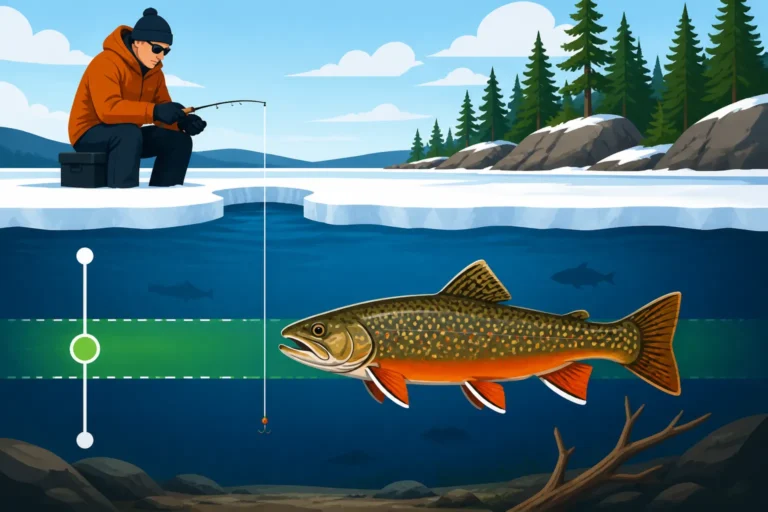
Brook Trout: For the native "brookies," especially in smaller ponds or streams accessible by ice, sensitivity is paramount. They often bite subtly, and you need to feel every tap. An ultra-light to light power rod, typically 24-28 inches in length, with a fast or extra-fast action is ideal. Graphite blanks are excellent for detecting those delicate bites. Pair this with a small spinning reel and 2-4 lb test monofilament or fluorocarbon line. Many anglers swear by the very subtle jigging of small tungsten jigs tipped with a wax worm or a single mealworm. The sensitivity of the rod allows you to work these tiny presentations effectively. You can even find specialized ice rods from brands like Shimano that are designed for this kind of finesse fishing.
Landlocked Salmon: These powerful fighters demand a bit more backbone than brook trout. A light to medium-light power rod, ranging from 28-32 inches, with a fast action is a great choice. You still want sensitivity to detect bites, but enough power to handle their strong runs and headshakes. Graphite or a graphite/fiberglass composite blank works well. Line strength usually steps up to 4-6 lb test. For chasing landlocked salmon, whether through aggressive jigging with spoons or by deadsticking a smelt or shiner, a versatile rod that can handle both approaches is beneficial. When they hit, they hit hard, so a rod with a smooth, progressive bend will help absorb those initial surges, preventing break-offs, especially when you're fishing near the Sebago Lake Landlocked Salmon Run.
Rods for Togue and Lake Trout
Ah, togue! Maine's lake trout are legendary for their size and brute strength, especially in deep, cold waters like Moosehead Lake or Sebago Lake. These fish require a rod with significant power and durability.
For togue, you're generally looking at medium to medium-heavy power rods, often in the 32-40 inch range. The action can vary from fast to moderate, depending on your preferred technique.
If you're aggressively jigging heavy spoons or tube jigs for active togue, a fast action, medium-heavy graphite rod provides the sensitivity to feel the jig and the power for a solid hookset. This setup is excellent for Jigging Techniques for Togue in deeper water.
However, for deadsticking a large sucker minnow or smelt, particularly if the togue are a bit lethargic, a moderate action fiberglass or composite rod with a sensitive tip is invaluable. This allows the fish to take the bait without immediate resistance, reducing the chance of them dropping it. These rods offer excellent shock absorption for when a large togue decides to make a powerful run.
Line choice is critical here, typically 8-15 lb test monofilament or fluorocarbon, or even braided line with a fluorocarbon leader for added strength and sensitivity. Many anglers will set up Setting Up Tip-Ups for Ice Fishing for togue, but having a dedicated rod for active jigging can make a huge difference in challenging them. The deep water tactics for How to Fish for Togue Through the Ice often involve heavier jigs and a robust rod to manage the fight.
Rods for Northern Pike and Chain Pickerel
While not native, northern pike have established themselves in some Maine waters, offering a thrilling and challenging ice fishing target. Chain pickerel, on the other hand, are widespread, aggressive, and incredibly fun to catch. Both species have sharp teeth and put up a strong fight.
Northern Pike: For big pike, you need serious gear. A medium-heavy to heavy power rod, generally 36-48 inches long, with a moderate-fast to fast action is recommended. Fiberglass or composite rods are excellent for pike due to their durability and ability to absorb powerful headshakes. You need enough backbone to handle large spoons, swimbaits, or dead bait presentations. Line strength should be 15-30 lb test braided line, always with a heavy fluorocarbon or wire leader to prevent bite-offs from their razor-sharp teeth. A heavy power rod allows you to effectively How to Jig for Lake Trout in Winter (though here, it's for pike!) using large baits, and then muscle the fish to the hole without fear of snapping your rod.
Chain Pickerel: These aggressive predators are a blast on slightly lighter gear than pike. A medium to medium-heavy power rod, 30-36 inches in length, with a fast or moderate-fast action is usually perfect. They hit hard and fight aggressively, so a rod with a good blend of sensitivity and power works well. Fiberglass or composite materials are a solid choice for their durability. Line selection of 8-15 lb test, again with a bite-proof leader, is essential. Pickerel are often found in weedier, shallower areas, and can be fooled with a variety of spoons, jigs, and live shiners. Finding the best bait for Maine ice fishing will definitely include live minnows for these toothy critters.
Essential Ice Fishing Rod Accessories and Maintenance
Having the best rods for ice fishing is only half the battle. To maximize their performance and longevity, you also need the right accessories and a solid maintenance routine. These often-overlooked details can make a significant difference in your overall ice fishing experience.
Rod Holders and Storage Solutions
You can't hold your rod every second you're out there, especially if you're managing multiple holes or just need a moment to warm up your hands. That's where quality rod holders come in.
Rod Holders: Ice fishing rod holders come in various designs, from simple wire stands that hold the rod horizontally over the hole to more elaborate ones that clamp onto a bucket or a portable shelter's frame. A good rod holder will keep your rod secure, prevent it from falling into the hole (a nightmare scenario!), and position it so you can easily see light bites on the tip. Some even have adjustable angles, allowing you to fine-tune the rod's position for optimal visibility and sensitivity. When deadsticking, a secure and stable rod holder is non-negotiable, letting you set your rig and wait confidently. You can find many affordable and effective rod holder options on Amazon, often in multi-packs.
Storage Solutions: Transporting your ice fishing rods without damaging them is crucial. Rod cases, whether soft-sided sleeves or hard-sided tubes, protect your valuable equipment from dings, scratches, and outright breaks when you're hauling gear across the ice or storing it between trips. Many ice anglers also use specialized rod bags that can hold multiple rods, keeping them organized and preventing tangles. For longer rods, a dedicated tube ensures the tip and guides are safe. Consider how you transport your rods—do they go in a sled, a truck bed, or inside your vehicle? Choose a storage solution that fits your typical transport method and offers adequate protection for the often-delicate tips of your ice rods.
Line Selection for Ice Fishing Rods
The line you spool onto your reel is just as important as the rod itself. Cold water and unique ice fishing presentations demand specific line characteristics.
- Monofilament (Mono): A traditional choice, mono is inexpensive, easy to tie knots with, and offers good stretch, which can act as a shock absorber when a fish strikes hard. It's often preferred for deadsticking where a bit of forgiveness is desired. However, mono can retain "memory" in cold temperatures, leading to coils, and its stretch reduces sensitivity. Look for specialized ice fishing monofilament, which is designed to be more supple in the cold.
- Fluorocarbon (Fluoro): Fluoro has less stretch than mono, providing increased sensitivity, and is nearly invisible underwater, making it great for wary fish. It's also more abrasion-resistant, which is a plus when fishing around ice edges. Many anglers use a fluorocarbon leader with braided mainline. Its main downsides are stiffness in extreme cold, cost, and difficulty tying knots compared to mono.
- Braided Line: Braided line offers superior strength-to-diameter ratio and virtually no stretch, providing maximum sensitivity and powerful hooksets. It's excellent for deep water fishing where detecting light bites is tough. However, braid absorbs water, which can freeze up in the guides, making it difficult to fish. If using braid, always use a short (2-4 foot) fluorocarbon or monofilament leader. Look for specialized ice fishing braids that are treated to resist water absorption. Remember to check Maine Ice Fishing Line Limits to ensure you're compliant with regulations on the number of lines.
Proper Care and Maintenance for Longevity
Your ice fishing rods endure harsh conditions. A little care goes a long way in ensuring they last season after season.
- Cleanliness: After each trip, especially if you've been in a heated shack, wipe down your rods with a damp cloth to remove any ice, slush, or fish slime. Pay close attention to the guides and reel seat to prevent corrosion.
- Drying: Ensure your rods are completely dry before storing them. Storing a wet rod, especially in a case, can lead to mold, mildew, and corrosion of guides and reel seats.
- Inspection: Regularly inspect your rod for any signs of damage. Check the tip for nicks, the guides for bends or cracks, and the reel seat for looseness. Address any issues promptly. A cracked guide can quickly fray and break your line, costing you a fish.
- Storage: Store rods in a dry, temperate environment. Avoid storing them in direct sunlight or extreme heat, which can damage the blank material. Rod cases are ideal for protecting them during the off-season. Never store rods leaning against a wall where the tips are under constant pressure, as this can lead to a permanent bend or breakage.
- Reel Maintenance: Don't forget the reel! Remove it from the rod, clean it, and lightly lubricate it according to the manufacturer's instructions. Cold weather is particularly hard on reels, so good maintenance is key.
By taking these steps, your ice fishing rods, whether they're new graphite wonders from Amazon or a trusty old fiberglass favorite, will be ready for action whenever the ice calls.
Ice Fishing Rod Comparison Table
Here's a quick reference table to help you compare different rod characteristics and their ideal applications for Maine's diverse ice fishing opportunities.
| Rod Characteristic | Description | Ideal Applications | Target Species (Examples) |
|---|---|---|---|
| Length | 20-26 inches | Sight fishing, maximum control, small shelters | Panfish, Small Brook Trout |
| 28-32 inches | Versatile, balanced control & leverage | Larger Brook Trout, Landlocked Salmon, Small Togue | |
| 36-48 inches | Stand-up shelters, more leverage, deep water | Large Togue, Northern Pike, Larger Bass | |
| Action | Extra-Fast | Maximum sensitivity, quick hooksets, active jigging | Panfish, Wary Trout, Salmon |
| Fast | Very sensitive, solid hooksets, general jigging | Trout, Salmon, Small to Medium Togue | |
| Moderate | Good forgiveness, shock absorption, deadsticking | Finicky Panfish, Larger Togue, Pike | |
| Slow | Minimal resistance, maximum forgiveness | Deadsticking for shy or large, strong fish | |
| Power | Ultra-Light (UL) | Smallest lures & lines, delicate presentations | Panfish (Perch, Crappie), Small Brook Trout |
| Light (L) | Small-medium lures, light lines, good fight | Larger Brook Trout, Smaller Salmon | |
| Medium-Light (ML) | Versatile, small to medium fish, finesse | Salmon, Medium Trout, Small Togue | |
| Medium (M) | All-around power, good for aggressive fish, mid-size lures | Larger Salmon, Medium Togue, Bass | |
| Medium-Heavy (MH) | Heavier lures, strong fish, good backbone | Large Togue, Northern Pike, Trophy Bass | |
| Heavy (H) | Largest lures, trophy fish, extreme power | Trophy Pike, Very Large Togue | |
| Blank Material | Graphite | High sensitivity, lightweight, fast action | Active jigging for most species |
| Fiberglass | High durability, flexible, moderate/slow action | Deadsticking, heavy fighting fish | |
| Composite | Balanced sensitivity & durability | Versatile, varied techniques |
Disclaimer
Please note that fishing regulations, including licensing requirements, bag limits, and fishing seasons, can change. Always consult the latest Maine Department of Inland Fisheries and Wildlife (MDIFW) regulations before heading out on the ice. This guide is for informational purposes only and does not constitute legal advice. Adherence to safety guidelines, especially regarding ice thickness and weather conditions, is paramount for a safe and enjoyable ice fishing experience.