Best Depth to Ice Fish for Brook Trout
There's nothing quite like the thrill of hauling a beautiful, vibrant brook trout through a hole in the ice, but let's be honest, figuring out where they're hiding under a sheet of frozen water can feel like a real head-scratcher. It's not as simple as dropping a line anywhere; these feisty fish have specific preferences, and understanding them is key to a successful day on a frozen Maine lake or pond. This guide is all about demystifying brook trout behavior under the ice and helping you pinpoint the best depths to present your offerings.
Understanding Brook Trout Behavior Under Ice
When the mercury drops and Maine's lakes and ponds become solid, the underwater world transforms. Brook trout, while resilient, adapt their habits to these icy conditions. They’re still looking for food, comfort, and safety, but where they find it shifts dramatically from open water seasons.
Where Brook Trout Naturally Hold in Winter
Many anglers, especially those new to ice fishing, often assume brook trout will be right under the ice or hugging the bottom like some other species. The truth is, it's a bit more nuanced. In winter, brook trout are cold-water creatures that seek out areas with stable temperatures, adequate oxygen, and, of course, a food source. This doesn't always mean the deepest part of the lake. Instead, they often relate to underwater structure – think submerged humps, rocky shoals, old stream beds, or areas where tributaries flow in.
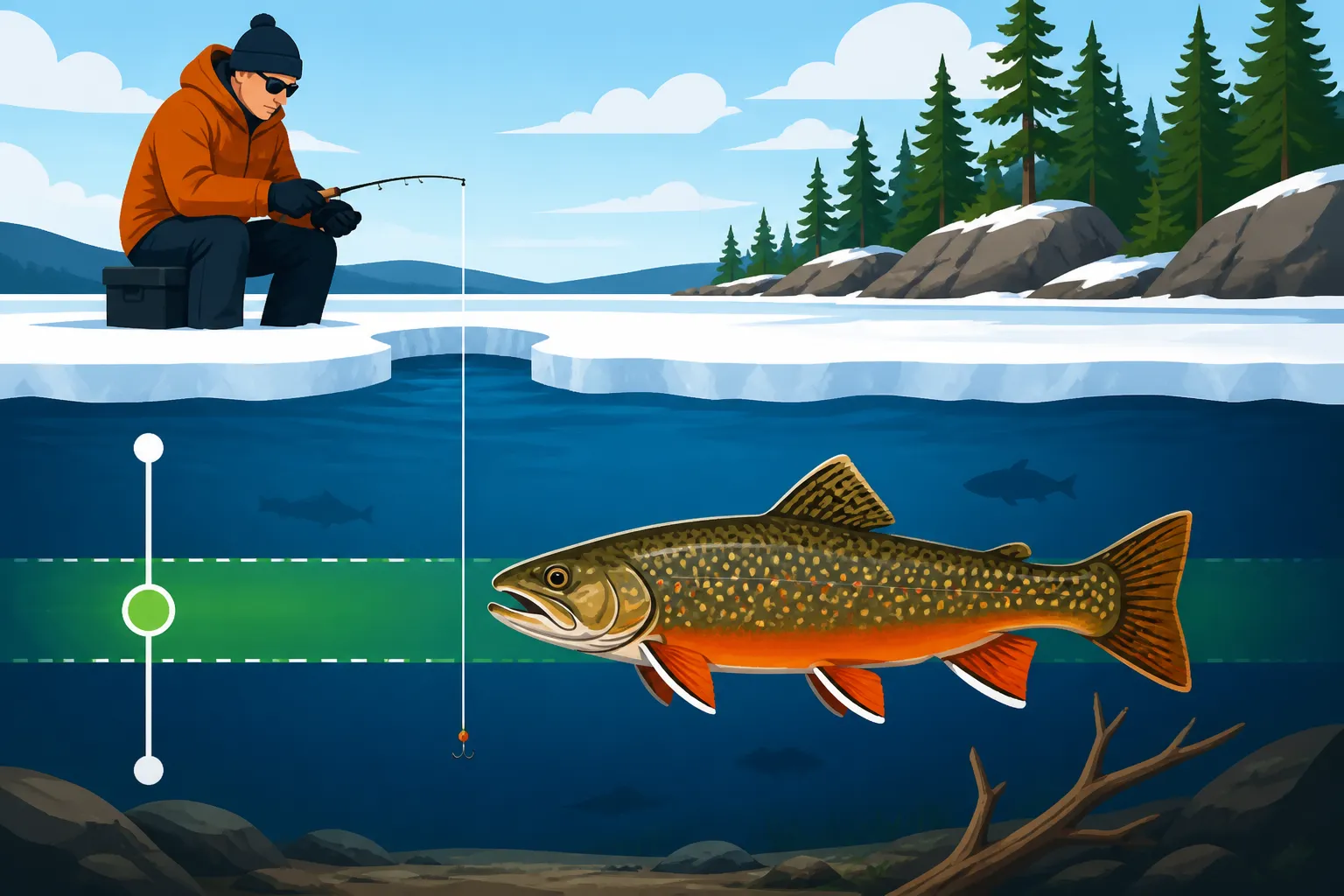
Under the ice, the water column actually stratifies in reverse compared to summer. The coldest water (around 32°F or 0°C) is right at the surface, just beneath the ice, while the densest, "warmest" water (around 39°F or 4°C) settles near the bottom. Brook trout will seek out this optimal temperature range. This means they might be suspended in the middle of the water column, often around areas where they can easily dart out to ambush baitfish or insects. They might also be found congregating around weed lines, especially early in the season or in shallower ponds where weeds persist and produce oxygen. Identifying these transition zones or 'breaks' is critical.
The Impact of Oxygen and Water Temperature
Oxygen levels are a huge factor for brook trout, especially as winter wears on. Under a thick layer of ice and snow, sunlight penetration is reduced, which in turn limits photosynthesis by aquatic plants – the main producers of oxygen. As a result, oxygen can become depleted in certain areas, particularly in very deep, stagnant zones or shallow, weedy areas where decomposition consumes oxygen.
Brook trout are sensitive to low oxygen. They will actively move to areas where oxygen is more plentiful, often near incoming feeder streams, spring-fed areas, or even slightly shallower zones where light can still penetrate, spurring a bit of plant life. Water temperature, as mentioned, is also key. While they tolerate cold water, they prefer the more stable, slightly warmer water found lower in the water column, typically above the very bottom muck but below the frigid surface layer.
Think of it like this: if you're comfortable at 70°F, you wouldn't stand in a freezer (32°F) or a sauna (100°F). Brook trout are doing the same thing, just with a much lower comfort zone. They're trying to find that sweet spot of temperature and oxygen that allows them to metabolish efficiently and stay active enough to feed.
General Depth Guidelines for Ice Fishing Brook Trout
While there's no universal magic number for the best depth, we can break it down by the different phases of winter to give you a strong starting point. Remember, Maine has varying conditions, so always check local regulations, especially for specific lakes or ponds, by consulting the Maine Fishing Regulations Explained.
Early Ice and Shallow Water Strategies
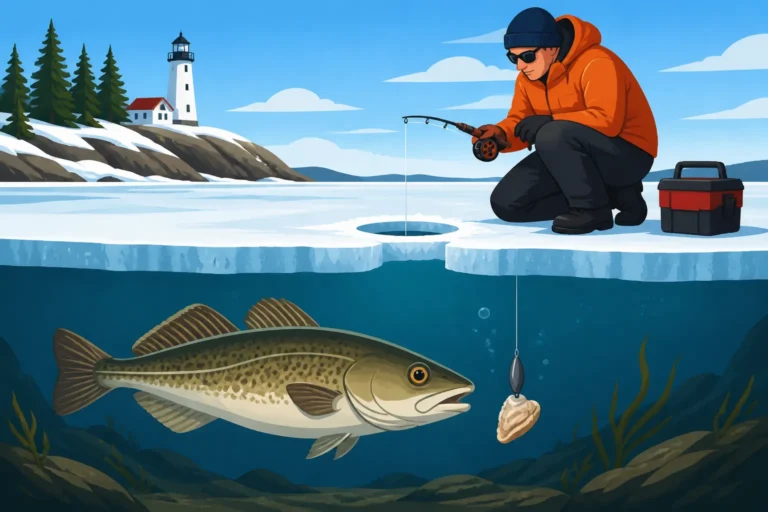
When ice first forms and is safely fishable (always refer to How Thick Should Ice Be Before Fishing on It? for safety guidelines), brook trout often remain relatively shallow. The water still holds decent oxygen, and baitfish or insect larvae might still be active in shallower bays or along gradual slopes. In these early days, targeting depths from 5 to 15 feet can be incredibly productive.
Look for areas with remnants of summer structure: weed beds that haven't fully died back, rocky points, or submerged timber. These spots provide cover and ambush points. The fish are often more active and less spooky under early ice, so a slightly shallower presentation can draw them in. Sometimes, you'll even find them cruising just a few feet under the ice, especially during low-light conditions or overcast days. This is a great time to try fishing smaller ponds or protected coves in larger lakes.
Mid-Winter Deeper Water Tactics
As winter progresses, usually from mid-January through February, ice thickens, and often a layer of snow accumulates on top. This drastically reduces light penetration and can cause oxygen levels to drop in shallower areas. Brook trout tend to move deeper, seeking more stable conditions and often following their food sources. During this time, you might find them anywhere from 15 to 35 feet deep, sometimes even deeper in very large, deep lakes.
They're not necessarily on the very bottom but often suspended. This is when a portable fish finder, like those you can find on Amazon, becomes an indispensable tool. It helps you identify where baitfish are holding and, consequently, where trout are likely to be lurking. Focus on main lake basins, sharp drop-offs, or the edges of deep underwater humps. Don't be afraid to experiment with different depths within your hole; drop your bait all the way to the bottom and then slowly reel it up in 5-foot increments, pausing at each depth for a few minutes to see if you get a bite.
Late Ice and Near-Shore Movements
As late winter approaches and spring hints at its arrival (think March and early April, before ice-out), conditions start to change again. Increasing daylight and milder temperatures begin to melt snow and ice, allowing more light and oxygen back into the water. This revitalizes shallow areas, and brook trout often respond by moving back towards the shorelines.
You might find them anywhere from 5 to 20 feet deep during late ice, especially near inflowing streams or areas with visible structure. These fish are often more active as they sense the upcoming spring spawning season or simply react to improved conditions and increased food availability. Don't overlook inlets and outlets where fresh water and nutrients are entering the lake. This can be a prime time for some aggressive bites, but always be extra cautious about ice conditions during this period, as the ice can become unpredictable quickly. For those venturing out, consider reading up on Late Ice Safety Tips Before Ice-Out.
Fine-Tuning Your Depth: Reading the Signs
Knowing general depth guidelines is a great start, but truly mastering ice fishing for brook trout means learning to read the subtle cues of the lake and your equipment.
Using Sonar and Fish Finders Effectively
A quality fish finder or sonar unit is arguably the most valuable tool for determining the best depth for brook trout. Devices like the Humminbird Ice Helix or Garmin Striker series, widely available on Amazon, can show you not only the depth but also the presence of fish, baitfish schools, and even your own jig. For a deeper dive into using these devices, check out How to Read a Fish Finder for Ice Fishing.
When you drill a hole, deploy your transducer. Watch the screen carefully. If you see baitfish suspended at, say, 15 feet, it's a good bet the brook trout will be close by, either at the same depth or slightly below, looking up for an easy meal. If you mark fish at a certain depth but aren't getting bites, try moving your bait slightly above them. Trout often feed upwards. Don't just set your depth and forget it; constantly monitor your fish finder and adjust as needed. A common tactic is to drop your bait to the bottom, then reel it up a few feet at a time, jigging at different depths until you mark a fish or get a strike.
Observing Bottom Structure and Cover
Even without a fancy fish finder, understanding the underwater landscape is crucial. Brook trout love structure. This includes:
- Drop-offs: Where shallow water abruptly plunges into deeper sections. These are highways for fish.
- Humps and Ridges: Underwater mounds or elevated lines of bottom that attract baitfish and offer trout vantage points for ambushing prey.
- Submerged Rocks and Boulders: Provide cover and habitat for insects and smaller fish.
- Weed Lines: If present, especially in early or late ice, these provide cover and oxygen.
To find these structures, you can use bathymetric maps (depth charts) of the lake or even simply drill a grid of holes and use a weighted line to sound the bottom, noting depth changes. For more general insights into where these fish like to hang out, consider reviewing resources on Where Brook Trout Live in Maine Streams to understand their habitat preferences, which often translate to lake environments as well. Once you've identified a promising structural element, target its edges or the top of the humps. Fish will often patrol these areas.
Adjusting for Weather and Barometric Pressure
Believe it or not, weather above the ice significantly influences fish behavior below. Barometric pressure changes, often associated with approaching storm fronts or clear, high-pressure systems, can affect how deep brook trout hold and how actively they feed.
- Falling Barometric Pressure (Approaching Storm): Often signals increased activity. Fish may move shallower and feed more aggressively. This is often a great time to fish.
- Stable, Moderate Pressure: Fish behavior is usually consistent, following the general depth guidelines.
- Rising/High Barometric Pressure (Clear, Cold Days): Can make fish more sluggish and reluctant to bite. They might retreat to deeper, more stable water or become very particular about presentations.
Additionally, bright, sunny days can push trout deeper or into shaded areas under snow-covered ice, as they are sensitive to light. Overcast days, conversely, might see them moving shallower and being more active throughout the day. Always keep an eye on the forecast and adjust your depths and tactics accordingly.
Baits, Lures, and Presentation at Specific Depths
Once you've zeroed in on the right depth, the next step is offering something enticing. The right bait or lure, presented correctly, can make all the difference.
Best Baits for Brook Trout at Various Depths
Live bait is often incredibly effective for brook trout, especially when they're holding at specific depths. For a comprehensive guide on bait options, check out Best Bait for Maine Ice Fishing.
- Shallow Depths (5-15 feet): Small live minnows, shiners, or even mealworms and wax worms fished under a bobber or small tip-up are excellent. The natural movement of live bait is often irresistible. Consider small jigs tipped with a grub or a piece of Berkley PowerBait.
- Mid-Depths (15-35 feet): Here, you might still use minnows, but often a slightly larger shiner or a lively smelt on a tip-up can be very productive. For jigging, small spoons or specialized ice jigs tipped with a piece of worm, a minnow head, or a salmon egg can work wonders. The scent trail can draw them in from a distance.
- Deeper Depths (35+ feet): In very deep water, larger minnows on tip-ups or heavier jigging spoons that get down quickly and displace more water are often the ticket. The goal is to get their attention in the darker, deeper environment.
Remember that presentation is key. Ensure your bait is fresh and lively. If using dead bait or cut bait, ensure it's presented naturally.
Lure Selection and Jigging Techniques
The type of lure and how you work it are just as important as the depth. For general ice fishing techniques, you might find inspiration in How to Fish for Togue Through the Ice, even if it's a different species, the principles of jigging apply.
- Jigging Spoons: Small, flashy spoons in silver, gold, or brass with a bit of color can be very effective. Tip them with a small piece of bait. A common technique is to drop the spoon to your desired depth, then lift it sharply a foot or so, letting it flutter back down. Repeat this every few seconds, pausing occasionally. Vary the retrieve speed and height of your jig.
- Jigs and Plastics: Small lead-head jigs or tungsten jigs tipped with tiny soft plastics (like a micro grub or a small tube bait) are great for a more subtle presentation, especially when fish are finicky. Work them with small, delicate twitches of the wrist. Sometimes, just holding it still, slightly above a marked fish, can provoke a strike.
- Tip-Ups: These are passive fishing devices that alert you when a fish takes the bait. They're excellent for covering multiple depths or spread across a wider area. When setting up your tip-ups, ensure your bait is suspended at the target depth. For specific rules on how many lines you can use, refer to Maine Ice Fishing Line Limits. A common setup is to use a treble hook with a split shot a foot or two above it, holding a live shiner at the desired depth.
No matter your chosen method, pay attention to what the fish are telling you. If you're marking fish but not getting bites, switch up your lure color, size, or jigging action. Sometimes, a subtle change can trigger a strike. Don't be afraid to experiment, especially if you've already ensured your equipment, like your Best Rods for Ice Fishing, is perfectly suited for the task.
Remember, patience and adaptability are your best friends on the ice. Conditions in Maine can change quickly, from early morning calm to a blustery afternoon, or from a clear day to heavy snowfall. Being ready to adjust your depth, bait, or presentation will significantly increase your chances of a successful brook trout outing.
Here's a quick overview of typical depths and tactics:
| Ice Season Phase | Typical Depth Range (feet) | Key Structure/Areas to Target | Recommended Baits/Lures | Key Tactics |
|---|---|---|---|---|
| Early Ice | 5-15 | Weed lines, rocky points, shallow bays, gradual slopes | Small minnows, wax worms, mealworms, small jigs/spoons | Active jigging, tip-ups, monitor for active cruising |
| Mid-Winter | 15-35 (or deeper in large lakes) | Main lake basins, drop-offs, edges of deep humps | Larger shiners/smelt, jigging spoons, tungsten jigs with bait | Use fish finder, experiment with suspended depths, subtle jigging |
| Late Ice | 5-20 | Inflowing streams, revitalized weed lines, shorelines, rocky areas | Live minnows, worms, brighter jigs/spoons | Focus on renewed activity, cautious movement, active jigging |
Disclaimer
Please note that fishing regulations, conditions, and fish behavior can vary. Always consult the official Maine Department of Inland Fisheries & Wildlife (MDIFW) regulations before heading out on the ice. Ice fishing carries inherent risks; always prioritize safety and check ice thickness. This guide is for informational purposes only and does not supersede official regulations or safety guidelines.