How Thick Should Ice Be Before Fishing on It?
That chilling moment when you step onto what you hope is solid ice, hear an unexpected creak, and your heart jumps into your throat – it's a fear every ice angler in Maine knows all too well. The anxiety surrounding ice safety is real, and it's absolutely crucial to conquer it with knowledge, not bravado. This guide is here to walk you through exactly how thick the ice needs to be for safe ice fishing, and all the critical factors you need to consider before venturing out onto Maine's frozen waters.
The Minimum Ice Thickness You Can Trust
Let's get right to the heart of the matter: how much ice is really enough? While there's no such thing as "100% safe ice," there are universally accepted guidelines that significantly reduce the risk. These aren't just suggestions; they're the bedrock of responsible ice fishing. Disregarding them can lead to serious, life-threatening situations, and believe me, we've seen too many close calls over the years. You're not just risking your own skin; you're risking the first responders who might have to come looking for you.
General Guidelines for Safe Ice Fishing
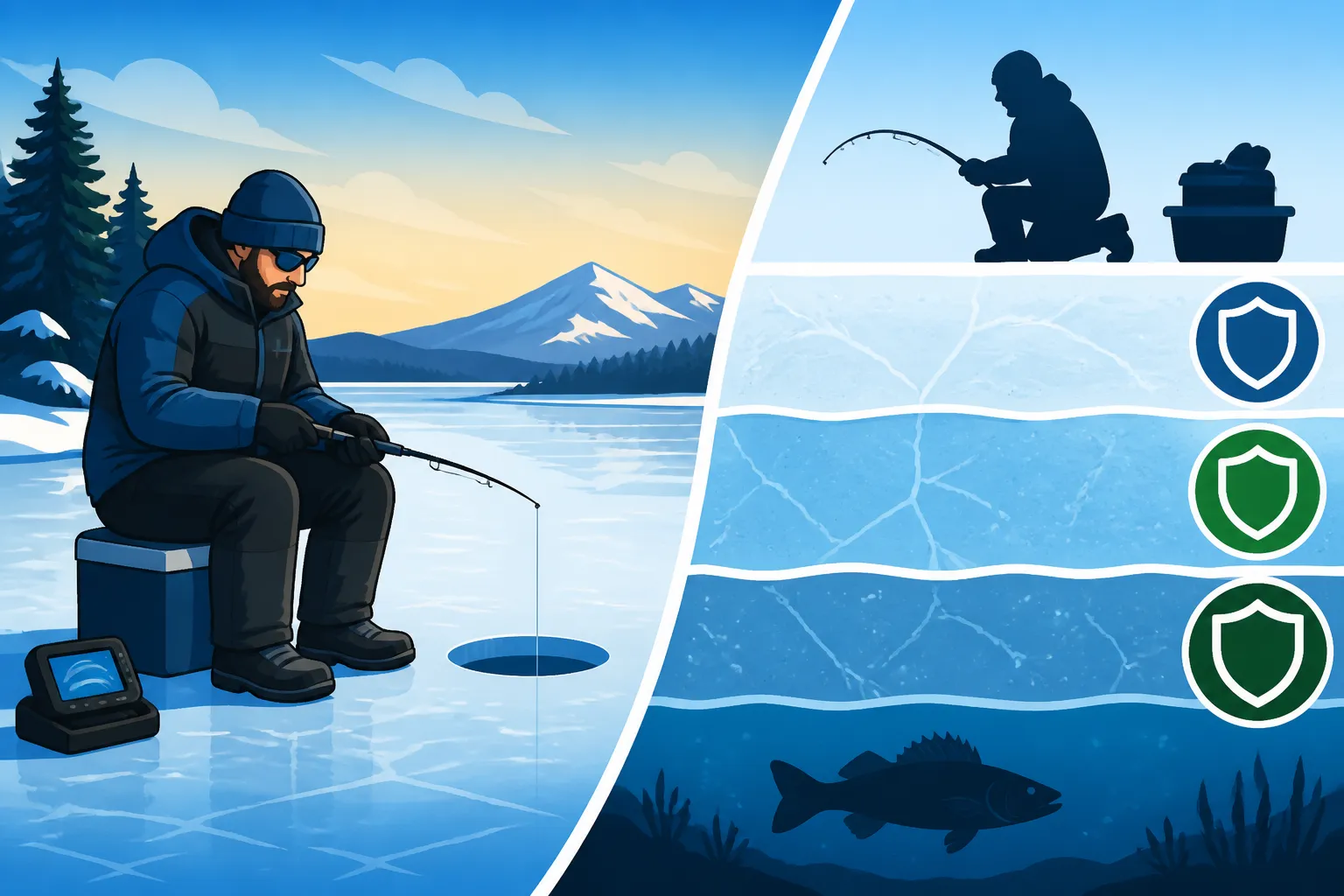
The absolute bare minimum for any foot traffic on clear, solid new ice is 4 inches. Let me repeat that: 4 inches of clear, solid ice for foot traffic. This isn't for dancing jigs or running around, but for careful, deliberate movement. Anything less, and you're really pushing your luck. This is the starting point, and from there, the required thickness only goes up depending on what you plan to do on the ice. Remember, this is for clear ice, not slushy, cloudy, or "rotten" ice, which we'll talk about later.
Here’s a quick breakdown of general ice thickness recommendations:
| Activity | Minimum Safe Ice Thickness (Clear, New Ice) | Important Notes |
|---|---|---|
| Foot Traffic / Ice Fishing | 4 inches | For walking, stationary fishing. Carry safety gear (ice picks, spud bar). |
| Snowmobiles / ATVs | 5-7 inches | Always travel in groups, maintain distance, and avoid unknown areas. |
| Light Cars / Small Trucks | 8-12 inches | Distribute weight. Check local regulations for driving on ice. Rarely recommended for fishing without extreme caution. |
| Medium Trucks | 12-15 inches | Very specific conditions. Again, check local rules and use extreme caution. |
Please note: These are general guidelines. Always consult local Maine Fishing Regulations Explained and exercise extreme caution. Conditions can change rapidly!
Now, it's crucial to understand that these numbers are for new, clear, hard ice. What does that mean? It means ice that has formed steadily from cold temperatures, without snow cover or thaw/freeze cycles. It's typically transparent or dark in appearance. Once you introduce snow, fluctuating temperatures, or water currents, those numbers become far less reliable, and you'll need even more ice for the same level of safety.
The Dangers of "White Ice" and Other Unreliable Formations
Not all ice is created equal, and this is where many folks get into trouble. You might see 6 inches of ice, but if a good portion of it is "white ice," you could still be in peril. White ice, or snow ice, forms when slush or saturated snow freezes. It's opaque, bubbly, and looks like compacted snow rather than clear ice. The problem? It's often only half as strong as clear, hard ice. So, 6 inches of white ice might only have the strength of 3 inches of clear ice – well below the safe minimum.
Then there's "rotten ice," which forms during spring thaws or extended warm spells. This ice is deteriorating, often honeycombed with air pockets, and extremely unstable. It might look thick, but its structural integrity is severely compromised. Think of it like a sugar cube – it holds its shape, but a slight pressure makes it crumble. This is especially important to consider as we get into late ice safety tips before ice-out. You absolutely need to understand When Does Maine Ice Fishing Season End? and recognize the signs of weakening ice.
Another treacherous situation is layered ice, where warmer periods cause partial thaws, followed by new freezes. This creates layers with air or water in between, making the ice weak and unpredictable. A single measurement with your ice auger might show 10 inches, but if it's made up of several weak layers, it’s far less safe than a solid 4 inches of clear, consistent ice.
Factors That Dramatically Affect Ice Safety
It would be wonderful if ice thickness was the only thing you ever had to worry about, but Mother Nature is far more complex than that. There are so many variables at play that can turn a seemingly safe sheet of ice into a potential death trap. Understanding these factors is key to making informed decisions, especially when you're exploring new waters or dealing with unpredictable Maine weather.
The Impact of Water and Weather Conditions
Water and weather are the biggest culprits when it comes to ice instability. Even if a pond had a foot of ice last week, a few days of warm temperatures and rain can drastically change things.
- Snow Cover: While a heavy blanket of snow might look insulating, it can actually be a huge problem. Snow acts as an insulator, preventing new ice from forming and thickening. Even worse, heavy snow can weigh down existing ice, causing water to seep up through cracks and create slush. This slush then freezes into that weaker "white ice" we just talked about. Always be wary of snow-covered ice, as it often hides thin spots or weaker formations beneath.
- Temperature Fluctuations: Maine's winters are notorious for their wild swings – one day it's bitter cold, the next it's above freezing. These thaw-freeze cycles are terrible for ice strength. Thawing weakens the bonds within the ice, and while it might refreeze, it rarely regains its original strength, often leading to rotten or honeycombed ice. Pay close attention to the forecast, not just for the day you're fishing, but for the entire week leading up to it.
- Moving Water: This is a huge one. Rivers, streams, inlets, outlets, and even underwater springs can create dangerously thin areas, even on larger lakes. Moving water erodes ice from underneath, making it far thinner than it appears on the surface. These spots are incredibly deceptive because the ice around them might be perfectly safe. Always avoid areas near bridges, culverts, or visible open water where a stream flows in or out of a lake. A good rule of thumb is to assume ice near any moving water is inherently unsafe.
- Sunlight: While not as dramatic as moving water, prolonged sunlight, especially in late winter, can slowly degrade ice quality. Dark objects on the ice, like rocks or fallen logs, can absorb solar radiation and create localized weak spots. This is part of why Early Ice Safety Tips for Maine Anglers and late season advice are so important – the sun plays a different role depending on the time of year.
Hidden Dangers Beneath the Surface
Sometimes, the danger isn't visible from above. What's happening under the ice can be just as, if not more, dangerous than what you see on top.
- Subsurface Currents and Springs: Many of Maine's lakes and ponds have hidden springs or currents that create areas of persistently thin ice. These can be incredibly difficult to detect without prior knowledge of the waterbody or careful, constant checking. Even if the main body of a lake has sufficient thickness, these localized spots can be paper-thin. Always talk to local anglers, bait shop owners, or Maine Inland Fisheries and Wildlife (MDIFW) wardens for specific knowledge about the water you plan to fish.
- Underwater Structure: Sunken logs, rocks, docks, and other underwater structures can absorb heat or create subtle currents that weaken ice. The ice directly over these features might be thinner than the surrounding areas. Be extra cautious when fishing over known underwater structure or near shorelines where such features are common.
- Depth of Water: While not directly affecting ice thickness, the depth of the water beneath you can impact the severity of a fall. Shallow water can be deceptive; a fall through thin ice into 2-3 feet of water can still lead to hypothermia and serious injury. Deep water, of course, presents its own set of challenges, including the difficulty of self-rescue and the added risk of drowning. Always be prepared for the worst, regardless of water depth.
- Previous Years' Ice-Out Dates: While not a perfect predictor, understanding the historical ice-out dates for a particular lake can give you a general idea of how quickly the ice forms and breaks up. For instance, knowing the typical Ice-Out Date for Moosehead Lake Most Years can help you gauge the general progression of the season, but never rely solely on historical data for current safety.
Your Essential Toolkit for Ice Safety
Knowing the dangers is one thing; being equipped to deal with them is another. No matter how confident you are in the ice, you should always carry a basic set of safety tools. These aren't just for emergencies; some are vital for actively assessing the ice before you even put your full weight on it. Think of it like this: you wouldn't drive a car without seatbelts, so don't venture onto the ice without your safety gear.
The Spud Bar and Ice Picks: Your First Line of Defense
Before you even step foot onto a frozen lake, you should be using a spud bar. This is a heavy, chisel-like tool that allows you to test the ice ahead of you. It's your eyes and ears for detecting weak spots.
- Using a Spud Bar: Take a few deliberate jabs ahead of you. If the spud bar goes through in one or two jabs, the ice is too thin. If it takes three or four forceful jabs to break through, it's likely safe for foot traffic (4+ inches of clear ice). If it doesn't break through with several heavy jabs, you're in good shape. This simple, repetitive action as you walk across the ice is paramount. Don't just check once; check constantly, especially as you move into new areas or notice changes in ice color or texture. You can find sturdy, reliable spud bars on Amazon, often with a tether so you don't lose it down a hole if you slip.
- Ice Picks (Self-Rescue Devices): These are perhaps the most crucial piece of personal safety equipment. Worn around your neck or easily accessible on your jacket, ice picks are two spiked handles connected by a cord. If you fall through, you can use them to get a grip on the ice and pull yourself out. Trying to get out of the water onto slippery ice without picks is incredibly difficult, if not impossible, due to the slick surface and the heavy, water-logged clothing. You can purchase these inexpensive, life-saving tools on Amazon or at any reputable sporting goods store in Maine.
Augers and Measuring Techniques
Once you're on the ice and have established a generally safe area with your spud bar, your ice auger becomes your most accurate measuring tool. Whether you're using a hand auger, a propane auger, or a battery-powered one, you'll be drilling holes to fish, so make those holes work double-duty for safety.
- Drilling Test Holes: Drill a test hole as soon as you step onto the ice near shore, then again every 15-20 feet as you venture further out. Don't wait until you're in your "spot" to measure. After drilling, use a tape measure, a ruler, or even a marked stick to measure the thickness of the ice at the edge of the hole. Look at the quality of the ice – is it clear and solid? Or is it layered, slushy, or milky white? This visual inspection is just as important as the numerical measurement.
- Auger Selection: Choosing the right ice auger is part of your safety toolkit. A good auger makes it easier to drill frequent test holes without exhausting yourself. For more on this, check out our guide on Choosing the Right Ice Auger.
Essential Safety Gear
Beyond the spud bar and ice picks, there's a whole host of other gear that can either prevent an accident or save your life if one occurs.
- Flotation Suit or PFD: An ice fishing suit with built-in flotation (like those from brands such as Striker Ice or Clam) is an absolute game-changer. It provides warmth and, critically, buoyancy if you go through the ice. If a full flotation suit isn't in your budget, always wear a personal flotation device (PFD) over your winter clothing. Even if you're a strong swimmer, the shock of cold water and heavy clothing can render you helpless in seconds.
- Throw Rope: Carry a throw rope (or rescue rope) in an easily accessible bag or pouch. If someone else falls through, you can throw them the rope from a safe distance, rather than approaching the unstable edge yourself. Look for one with a float on the end. Again, Amazon has a great selection of these specialized ropes.
- Change of Clothes: Pack a complete change of warm, dry clothes in a waterproof bag, stored in a sled or backpack. If you do fall in and manage to get out, getting into dry clothes immediately can be the difference between mild hypothermia and a severe medical emergency.
- First Aid Kit: A basic first aid kit is essential for any outdoor activity, including ice fishing. Include items for minor cuts, scrapes, and any personal medications.
- Whistle and Communication Device: A loud whistle can alert others if you're in distress. Always carry a fully charged cell phone in a waterproof case, but remember that cell service can be spotty in some of Maine's more remote fishing locations. Consider carrying a satellite communication device if you're venturing far off the beaten path.
- Buddy System: While not a "tool," fishing with a buddy is one of the most important safety measures. Never go ice fishing alone. If something happens, your buddy can call for help or attempt a rescue. Our article on How to Stay Warm While Ice Fishing also touches on other essential gear you should bring.
Beyond Thickness: Other Critical Safety Considerations
Even with perfectly thick, clear ice and all the right gear, complacency is your worst enemy. Ice fishing in Maine demands a constant state of awareness and adherence to a few non-negotiable safety practices. It's about respecting the environment and understanding that even the most seasoned anglers can make a mistake.
Never Go Alone: The Buddy System
This cannot be stressed enough: always go ice fishing with at least one other person. It’s the golden rule of ice safety. If you fall through, a buddy can call for help, throw you a rescue rope, or even attempt to pull you out. If you're alone, your chances of self-rescue are significantly lower, especially with the shock of cold water and heavy clothing.
- Maintain Distance: Even when fishing with friends, it's wise to spread out, especially on early or questionable ice. Don't clump together in one small area, as concentrated weight can weaken the ice beneath you.
- Inform Someone of Your Plans: Before you even leave the house, tell someone reliable exactly where you are going, your expected return time, and who you are with. If you don't check in, they know to raise the alarm. This simple step can be a lifesaver if an unforeseen event occurs, particularly in more remote areas where cell service is unreliable.
Self-Rescue and Emergency Preparedness
Knowing how to react in an emergency is almost as important as preventing one. A few moments of panic can turn a difficult situation into a catastrophic one.
- If You Fall Through: The immediate shock of the cold water will be overwhelming. Fight the urge to panic. Turn towards the direction you came from (that's where the strongest ice likely is). Use your ice picks to get a grip on the ice. Kick your feet vigorously to propel yourself up and out of the water, like a seal climbing onto a rock. Once your chest is on the ice, roll away from the hole to distribute your weight, rather than trying to stand up immediately. Crawl on your belly back to thicker, stronger ice.
- If a Buddy Falls Through: Resist the natural instinct to rush towards them. That could put you in the water too. Instead, stay low, spread your weight, and reach, throw, or extend a rescue device (like your throw rope, a branch, or even your spud bar) to them from a safe distance. Once they have a grip, pull them to safety. Our guide on Early Ice Safety Tips for Maine Anglers covers these scenarios in greater detail.
- Hypothermia Awareness: Once out of the water, hypothermia is an immediate threat. Get to shelter, remove wet clothing, and get into those dry clothes you packed in your waterproof bag. Warm drinks and high-energy snacks can help. Seek medical attention if symptoms persist or worsen. Knowing What to Wear Ice Fishing in Maine Winters can help prevent hypothermia even before an accident occurs.
Knowing When to Call It a Day
Sometimes, the safest choice is to pack up your gear and go home. Maine's ice fishing season can offer incredible opportunities, but it's never worth risking your life for a fish.
- Trust Your Gut: If something feels off – a strange creak, slush appearing where there wasn't any, or just an uneasy feeling – trust that intuition. It’s often your subconscious mind picking up on subtle warning signs.
- Changing Conditions: Weather can change rapidly in Maine. A bright, sunny morning can turn into a warm, rainy afternoon that degrades ice significantly. Keep an eye on the weather and be prepared to leave if conditions become unfavorable.
- Respect Special Regulations: Maine has specific rules for certain bodies of water, including designated "special regulation waters" that might have different ice fishing seasons or restrictions. Always check the Maine Ice Fishing Rules Guide for the specific lake or pond you plan to visit. Similarly, be mindful of rules regarding Ice Fishing Shack Removal Rules as the season progresses and ice weakens.
By combining an understanding of ice thickness, the factors that influence it, the right safety gear, and a healthy dose of caution, you can enjoy Maine's incredible ice fishing opportunities responsibly. Stay safe out there, fellow anglers!
Disclaimer
The information provided in this guide is for general informational purposes only and does not constitute professional advice. Ice conditions can vary dramatically and change rapidly. Always exercise extreme caution, use common sense, and prioritize your safety above all else. Consult local authorities and ice condition reports before venturing onto any frozen water.