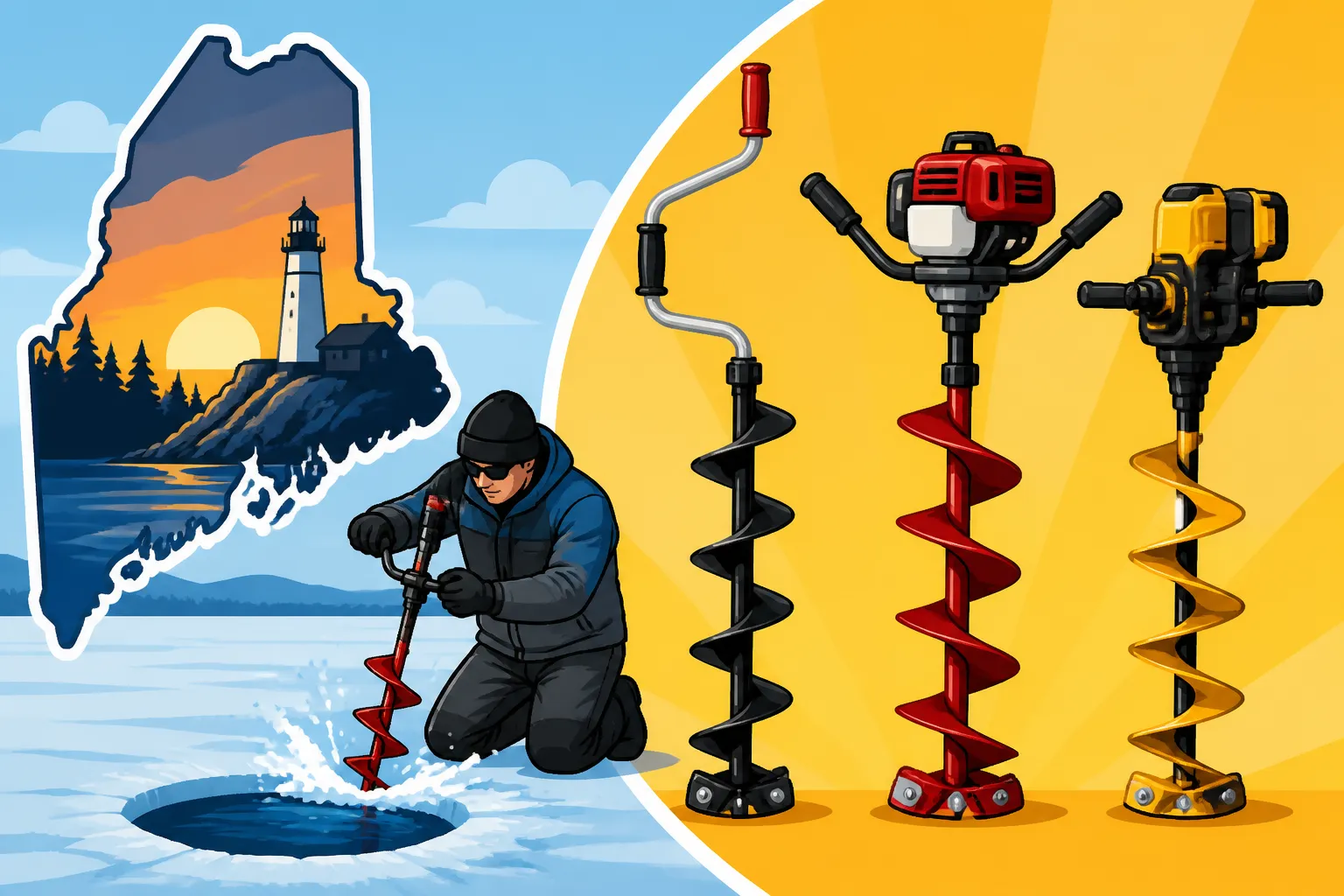
Choosing the Right Ice Auger
There's nothing quite like the crisp air and anticipation of a flag flying up on a tip-up during a Maine ice fishing trip. But that serene picture can quickly turn into a sweaty, frustrating mess if your ice auger isn't up to the task. Struggling to cut through thick ice, especially after a long winter, can frankly ruin an otherwise perfect day. This comprehensive guide is here to walk you through everything you need to know about choosing the right ice auger, ensuring smooth drilling and more time enjoying the hardwater action.
Why a Good Ice Auger Matters on Maine's Hardwater
When you're out on a frozen lake in Maine, whether it's the expansive Sebago Lake or a quiet remote pond, your ice auger is arguably the most crucial piece of equipment after your fishing rod itself. It's not just about making a hole; it's about making a hole efficiently, safely, and without completely draining your energy reserves before you even get a line in the water.
The Frustration of a Poor Auger
Imagine this: you've packed your gear, driven for hours, and finally trekked out onto the ice, bundled against the biting Maine wind. You're eager to get your lines in, perhaps for some early season brook trout. You start drilling, and instead of a satisfying bite into the ice, your auger grinds, sticks, and barely shaves off a few flakes. Each turn is a monumental effort, your arms burn, and your back aches. By the time you’ve managed one or two ragged holes, you’re winded, frustrated, and questioning why you even bothered. That’s the reality of a dull, undersized, or simply inappropriate auger for the conditions. It sucks the joy right out of the experience, leaving you more tired than exhilarated, and potentially missing out on prime bite times.
A poor auger isn't just about the physical toll, either. The grating sound of a struggling blade against ice isn't just irritating; it can signal dullness or damage that's only going to get worse. What should feel like slicing through butter becomes more like trying to cut granite with a butter knife. If you’re out with a group, waiting for someone to muscle through a few holes while everyone else freezes is no fun. It slows down the entire operation, eats into valuable fishing time, and generally puts a damper on the communal spirit of an ice fishing outing.
Efficiency and Enjoyment on the Ice
On the flip side, a good ice auger transforms the experience. When your auger is sharp, powerful, and suited to the ice conditions, drilling a hole becomes a quick, almost effortless task. You get to the spot, choose your mark, and within seconds, you’ve got a perfectly clear hole ready for your line. This efficiency isn't just a convenience; it's a game-changer. It means you spend less time wrestling with equipment and more time actually fishing. You can drill more holes, cover more ground, and actively search for fish, rather than being confined to one spot out of sheer exhaustion.
Think about it: with an efficient auger, you can easily set up multiple tip-ups, abiding by the Maine Ice Fishing Line Limits, spreading out your chances of a catch. If the fish aren't biting in one spot, you can quickly relocate, drill new holes, and adapt your strategy. This flexibility is crucial for success on Maine's diverse waters, where fish patterns can change throughout the day. A smooth-drilling auger preserves your energy, keeps your spirits high, and ultimately contributes to a more productive and enjoyable day on the ice, making those early mornings and late afternoons truly memorable.
Understanding the Different Types of Ice Augers
Choosing an ice auger isn't a one-size-fits-all decision, especially with the variety of options available today. Each type brings its own set of advantages and disadvantages, and the best choice really depends on your personal fishing style, the kind of ice you typically encounter, and how much you're willing to invest.
Manual Augers: Simple and Silent
Manual ice augers are the tried-and-true workhorses of the ice fishing world. They are essentially large hand drills with sharp blades at the bottom, operated purely by human power. Their design is wonderfully simple: you turn a crank handle, and the auger drills down. The primary advantages of a manual auger are their lightweight nature, low cost, and complete silence. There are no engines to fuss with, no batteries to charge, and no fumes to contend with. They are fantastic for anglers who prefer to walk onto the ice, cover smaller bodies of water, or simply enjoy the peace and quiet of nature without engine noise. You can often find reliable manual options from brands like Eskimo or Strikemaster on Amazon, making them easily accessible for beginners.
However, the simplicity comes with a trade-off: physical effort. Drilling through thick, hard Maine ice, especially later in the season when it can be two to three feet deep, can be a real workout. If you plan to drill more than a handful of holes, or if you're targeting areas with consistently thick ice, a manual auger might leave you fatigued. They are best suited for early season ice, thinner ice conditions, or when you only need to drill a few holes. They're also an excellent backup option to keep in your truck, just in case your primary powered auger decides to be temperamental.
Electric Augers: Clean and Convenient
Electric ice augers have revolutionized the ice fishing experience for many. Powered by rechargeable lithium-ion batteries, these augers offer an incredible balance of power, convenience, and environmental friendliness. Their greatest advantage is their quiet operation and complete lack of fumes. This means you can drill holes stealthily, minimizing the disturbance to fish, and even use them comfortably inside an ice shack without worrying about exhaust. Starting an electric auger is as simple as pressing a button, eliminating the frustrating pull-starts associated with gas engines in cold weather.
Modern electric augers, such as those from ION or StrikeMaster, feature powerful brushless motors and long-lasting batteries, capable of drilling dozens, if not scores, of holes on a single charge. However, battery life is still a consideration, especially on long days or in extremely cold conditions where batteries naturally drain faster. It's always a good idea to carry a spare battery, or at least a portable power pack, especially when fishing remote areas. While the initial cost can be higher than manual augers, the ease of use, cleanliness, and efficiency often make them a worthwhile investment for frequent anglers. They are also compliant with any Maine Ice Fishing Rules Guide that might restrict noise in certain areas, although such specific restrictions are rare.
Propane Augers: Powerful and Eco-Friendly Option
Propane ice augers offer a compelling middle ground between the raw power of gas and the cleaner operation of electric models. These augers are powered by small, readily available 1-pound propane cylinders, which are generally easy to handle and store. One of the biggest advantages is their reliable starting in cold weather; propane engines tend to fire up more consistently than gasoline engines. They also produce significantly fewer emissions than gas augers, making them a more environmentally conscious choice without sacrificing much in terms of power. You won't have to deal with mixing oil and gas, which simplifies fuel management and reduces mess.
While propane augers, like those from Jiffy, are generally quieter than gas models, they still produce some engine noise, so they aren't completely silent like electric or manual options. They are also heavier than most electric models due to the engine and the need for propane tanks. However, for anglers who need consistent power to punch many holes through thick ice, but want to avoid the fumes and maintenance of gasoline, propane augers are an excellent alternative. They offer a robust performance that can tackle the thickest ice Maine has to offer, making them suitable for targeting larger species like the lake trout or "togue" that populate lakes like Moosehead.
Gas Augers: Raw Power for Heavy Use
Gasoline-powered ice augers are the traditional choice for serious ice anglers who demand maximum power and drilling speed. These augers typically feature 2-stroke or 4-stroke engines, providing unmatched torque to chew through even the thickest, hardest ice with remarkable speed. If you’re planning to drill dozens of holes, participate in a derby, or consistently fish waters known for incredibly deep ice, a gas auger will get the job done faster than any other option. You don't have to worry about battery life running out, making them ideal for multi-day trips or remote excursions where charging isn't an option.
However, gas augers come with several considerations. They are the heaviest and noisiest of all auger types, which can be a drawback for quiet fishing experiences or when needing to carry them long distances. They also produce exhaust fumes, which means proper ventilation is crucial if used near or inside a shelter. 2-stroke models require mixing oil with gasoline, which can be messy and needs to be done accurately. Maintenance, including spark plug changes, air filter cleaning, and fuel system care, is also more involved than with other types. Despite these drawbacks, for sheer unadulterated power and reliability in the most demanding conditions, a quality gas auger from brands like Jiffy or Eskimo remains a top choice for many veteran Maine ice anglers.
Key Factors to Consider When Choosing Your Auger
Deciding on the right ice auger involves more than just picking a power source. You need to think about the conditions you'll face, your physical capabilities, and your overall budget. Each of these factors plays a significant role in finding the perfect auger for your Maine ice fishing adventures.
Ice Thickness and Drilling Speed
Maine's winters can be variable, but generally, inland lakes and ponds will develop significant ice thickness, often reaching two to three feet, and sometimes even more during a prolonged cold snap. This isn't just a number; it dictates the power and efficiency your auger will need. A manual auger might be fine for early season ice that's only 6-10 inches thick, but trying to cut through 30 inches of late-season hardwater with one will quickly exhaust you. Understanding How Thick Should Ice Be Before Fishing on It? is crucial for safety, but also for knowing what your auger needs to handle.
Your drilling speed is directly related to your desired fishing style. If you're a stationary angler who sets up a shack and drills only a few holes all day, speed might not be your absolute top priority. However, if you're a mobile angler, constantly moving and punching new holes to find fish, then a powerful gas, propane, or electric auger that can slice through ice quickly will save you immense time and energy. You don't want to spend half your day drilling when you could be actively targeting fish like the landlocked salmon on Sebago Lake or the brook trout in smaller, remote ponds.
Weight and Portability
The weight of your ice auger is a critical factor, especially if you plan on covering a lot of ground on foot. A manual auger, typically weighing under 10 pounds, is a dream to carry across snowy fields or rugged shorelines. Electric augers are also relatively light, often in the 15-25 pound range, making them quite portable. Gas and propane augers, with their engines and fuel, are considerably heavier, often tipping the scales at 25-40 pounds or more. Hauling one of these beasts through deep snow can be a serious workout before you even start fishing.
Consider how you'll transport your auger. If you use a snowmobile or ATV, weight might be less of a concern. But if you're hiking into a remote pond or pulling a sled across a large lake, every pound counts. Many augers now feature breakdown designs, allowing the powerhead and auger bit to separate, making them easier to store in a sled or car trunk. Additionally, think about ice extensions if you anticipate extremely thick ice; these add length and sometimes weight, but are essential for reaching the water.
Noise Levels and Environmental Impact
The impact of your auger on the surrounding environment and fellow anglers is an often-overlooked but important consideration. Gas and propane augers are loud, and that noise can travel far across a frozen lake. While some anglers don't mind, others cherish the quiet solitude of ice fishing. Excessive noise can also potentially spook fish, especially in shallower waters where they are more sensitive to vibrations and sound. Electric augers are by far the quietest, often producing little more than a low hum, followed by propane models which are generally quieter than gas.
Environmental impact mainly revolves around fumes. Gas augers produce significant exhaust, containing carbon monoxide and other pollutants. This is not only bad for the air quality but can also be dangerous if you're drilling inside an ice fishing shack without proper ventilation. Propane augers burn much cleaner, with minimal exhaust, and electric augers produce no fumes at all. If you're conscious about your carbon footprint or simply prefer a cleaner, healthier experience, an electric or propane model would be a more suitable choice. For anglers who enjoy targeting species like brook trout in pristine, sensitive ecosystems, minimizing disturbance is always a good practice.
Budget and Ongoing Costs
The initial purchase price of an ice auger can range widely, from under $100 for a basic manual model to over $800 for a high-end electric or gas unit. It’s crucial to consider not just the upfront cost but also the ongoing expenses.
Manual augers are the cheapest to buy and have almost no ongoing costs beyond occasional blade sharpening or replacement. Electric augers have a higher initial investment but very low running costs (electricity for charging). However, batteries can be expensive to replace if they degrade over time, and extra batteries add to the cost. Propane augers have a moderate to high initial cost, and then the ongoing expense of 1-pound propane cylinders, which add up over a season. Gas augers also have a moderate to high upfront cost, plus the ongoing expense of gasoline and 2-stroke oil (if applicable), along with more frequent maintenance parts like spark plugs and air filters.
When budgeting, consider the long-term value. A cheaper manual auger might seem appealing, but if you quickly outgrow its capabilities or find yourself exhausted after a few holes, you might end up buying a powered auger within a season or two. Investing in a quality auger from the start, whether it's a manual or powered option found on Amazon from reputable brands like Eskimo, Jiffy, or ION, can save you money and frustration in the long run.
Ice Auger Comparison Table
To help visualize the differences, here's a handy comparison of the main types of ice augers:
| Feature | Manual Auger | Electric Auger | Propane Auger | Gas Auger |
|---|---|---|---|---|
| Power Source | Human Power | Rechargeable Battery | Propane Tank | Gasoline/Oil Mix |
| Noise Level | Silent | Very Low | Moderate | High |
| Fumes | None | None | Minimal (cleaner burn) | Significant |
| Weight | Very Light | Light to Moderate | Moderate to Heavy | Heavy |
| Drilling Speed | Slow (user dependent) | Fast | Very Fast | Fastest |
| Maintenance | Low | Battery care | Low (engine) | High (engine) |
| Portability | Excellent | Excellent | Good | Moderate |
| Cost | Lowest | Moderate to High | Moderate to High | Moderate to High |
| Best For | Casual, early ice, quiet fishing, beginners | Frequent use, quiet, convenience, environmental impact | Reliable power, cold starts, fewer fumes than gas | Heavy-duty, maximum power, thick ice, many holes |
Auger Blade Types and Diameters
Once you've settled on the power source for your auger, the next crucial components to understand are the blades and their diameter. These elements directly impact how efficiently your auger cuts through ice and what kind of fish you'll be able to pull through the hole.
Blade Styles: Chipper, Shaver, and Serrated
The type of blade on your auger makes a huge difference in its performance. Generally, there are three main styles:
- Chipper Blades: These are robust, heavy-duty blades designed to chip away at the ice. They are excellent for cutting through dirty ice, refrozen slush, or re-drilling old holes. Chipper blades are very durable and less prone to damage from hitting sand or small rocks embedded in the ice. However, they are typically slower and louder than other blade types, and they tend to leave a rougher-edged hole. If you're frequently drilling through "junk" ice or re-opening holes that have partially frozen over, a chipper blade will be your workhorse.
- Shaver Blades: As the name suggests, these blades are designed to shave thin layers of ice, creating a very smooth, clean, and fast cut. They require less power to operate and are incredibly efficient in clean, clear ice. The downside is that shaver blades are more delicate and can be easily dulled or damaged by hitting anything other than clean ice. They are not ideal for re-drilling old holes with jagged edges or slush. If you prioritize speed and a clean hole, and mainly fish clear ice, shaver blades are an excellent choice.
- Serrated Blades: These are a hybrid, combining aspects of both chipper and shaver blades. Serrated blades feature saw-like teeth that aggressively bite into the ice, providing a fast and powerful cut, often smoother than a chipper but more robust than a shaver. They can handle a wider range of ice conditions than shaver blades and are generally very efficient. Many modern augers, especially electric and propane models, come equipped with serrated blades as they offer a good balance of speed, durability, and versatility.
Regardless of the blade type, maintaining sharpness is paramount. A dull blade, no matter how powerful the auger's motor, will struggle to cut effectively, turning what should be an easy task into a frustrating chore. Always carry a blade guard to protect the edges when not in use, and consider having a spare set of blades or a sharpening tool on hand. A dull blade can be particularly frustrating when you're trying to quickly set up tip-ups for species like togue, which are often found in deeper, cold waters, and every minute counts when you're trying to cover ground for Maine Togue and Lake Trout Limits.
Choosing the Right Diameter for Your Catch
The diameter of your auger bit determines the size of the hole you'll cut, and this is a critical consideration based on the type and size of fish you hope to catch.
- 6-inch Augers: These are the smallest common diameter. They are incredibly fast to drill, require the least amount of power (making them ideal for manual augers or maximizing battery life on electric models), and are perfect for targeting smaller panfish like perch or crappie. If you’re primarily going after panfish or small brook trout, a 6-inch auger is a highly efficient choice.
- 8-inch Augers: This is arguably the most versatile and popular size. An 8-inch hole is large enough to comfortably pull out most common game fish in Maine, including moderate-sized brook trout, pickerel, and even decent landlocked salmon. It still drills relatively quickly and doesn't demand excessive power from your auger. For an all-around ice fishing experience on lakes like the Belgrade Lakes, an 8-inch auger is often the sweet spot.
- 10-inch Augers: These are the big guns, designed for serious anglers targeting trophy-sized fish or larger species. If you're specifically going after hefty lake trout (togue), pike, or bigger landlocked salmon like those found in Moosehead or Sebago, a 10-inch hole provides ample room to land your prize without struggling at the hole. However, drilling a 10-inch hole requires significantly more power and effort than an 8-inch hole, which means more battery drain for electric augers or more muscle for manual ones. This size is less common for general purpose fishing due to the increased effort, but indispensable for those seeking truly large specimens. When considering regulations for fish like Landlocked Salmon Size Limit in Maine, you'll want to ensure your hole can accommodate a potential trophy.
Ultimately, your choice in diameter should balance the size of the fish you realistically expect to catch with the effort and power you're willing to exert. If you primarily target smaller species, there's no need to lug around a heavy, large-diameter auger.
Maintenance and Safety Tips for Your Ice Auger
An ice auger is an investment, and like any valuable tool, it requires proper care and safe handling to ensure it performs reliably season after season. Neglecting maintenance or safety can lead to breakdowns, injuries, and ruined fishing trips.
Pre-Season Checks and Off-Season Storage
Before the ice even begins to form in Maine, a little preparation goes a long way. For gas and propane augers, this means checking the spark plug, air filter, and fuel lines. If you stored it with fuel in the tank over the summer, it’s wise to drain and replace it with fresh fuel, possibly treated with a stabilizer. Ensure all bolts and screws are tight, and lubricate any moving parts as recommended by the manufacturer. For electric augers, fully charge your batteries and ensure they are holding a charge. Inspect the battery terminals for corrosion. It’s a good idea to run a test cut or two to ensure everything is working smoothly before you hit the hardwater for the Maine Fishing Season Calendar.
Off-season storage is just as critical. For gas augers, it’s best to drain all fuel from the tank and carburetor to prevent fuel degradation and gumming up the engine. For 2-stroke models, this also prevents oil separation. Store them upright in a dry, cool place. Electric auger batteries should be stored at a partial charge (around 50-60%) in a cool, dry place, not fully charged or completely drained, to maximize their lifespan. Always remove the auger blades and clean them thoroughly, sharpening if needed, then lightly oil them to prevent rust before storing them in their guard. Proper storage not only prolongs the life of your auger but ensures it's ready to go when that first safe ice appears.
Safe Operation on the Ice
Safety should always be your number one priority when operating an ice auger. The spinning blades are incredibly sharp and can cause severe injury if not handled with care. Always use the blade guard when carrying or transporting your auger, and only remove it just before you begin drilling. When drilling, ensure the area around you is clear of other people, gear, and especially your feet. Hold the auger firmly with both hands, maintaining a stable stance to prevent it from kicking back or getting away from you if it binds.
For gas and propane augers, always operate them in a well-ventilated area. Never run a gas or propane auger inside an enclosed ice shack without adequate ventilation, as carbon monoxide fumes can quickly become lethal. This is especially important when you are bundled up in layers as advised for What to Wear Ice Fishing in Maine Winters, as you may not notice symptoms of carbon monoxide poisoning as readily. Electric augers mitigate this fume risk, but caution is still advised. When finished drilling, re-attach the blade guard immediately. Be mindful of others on the ice, especially children, and ensure your auger is always under control. Additionally, remember to be aware of the ice conditions; for example, knowing about Early Ice Safety Tips for Maine Anglers and Late Ice Safety Tips Before Ice-Out can help you make informed decisions about where and when to drill.
Making Your Final Decision: Matching Auger to Angler
The journey to finding the perfect ice auger isn't just about understanding the technology; it's about understanding yourself as an angler and your specific needs. What might be ideal for one person could be a source of frustration for another.
Matching Auger to Your Fishing Style
Consider how you typically approach ice fishing. Are you a solo angler who enjoys the peace and quiet of a small, remote pond, perhaps targeting brook trout for Best Small Ponds for Brook Trout Near Bangor? If so, a lightweight manual auger or a quiet electric model would be a fantastic companion. The ease of transport and silent operation would enhance your experience, allowing you to move stealthily and enjoy nature. On the other hand, if you're part of a larger group, frequently hitting popular spots like Moosehead Lake Togue Fishing Spots in Maine or attending ice fishing derbies where you need to drill dozens of holes quickly, a powerful gas or propane auger might be more suitable. Its raw speed and reliability for high-volume drilling will be invaluable, letting you focus on Setting Up Tip-Ups for Ice Fishing and getting those lines down.
Your target species also plays a role. If you primarily chase smaller panfish or modest trout, a 6-inch or 8-inch auger will suffice, with less effort required. But if trophy lake trout or larger salmon are on your radar, a 10-inch auger might be a necessity to ensure you can land your catch without losing it at the hole. Don't underestimate the physical demands; if you have back issues or limited strength, opting for an electric or a lighter propane model will make your trips far more enjoyable than struggling with a heavy gas auger or a strenuous manual one. Think about how many trips you make a season, the average ice thickness, and how far you typically travel on the ice. These factors are all crucial in making an informed choice that truly matches your unique fishing style.
Long-Term Investment and Upgrade Paths
An ice auger isn't a disposable item; it's a piece of gear that, with proper care, should last you many seasons. Thinking about it as a long-term investment can help guide your decision. While a manual auger is the cheapest entry point, many anglers quickly find themselves wanting more speed and less physical effort, leading to an upgrade to a powered model within a year or two. Sometimes, spending a bit more upfront on a quality electric or propane auger can save you money and frustration in the long run by avoiding that interim purchase.
Consider the brands known for durability and performance. Eskimo, Jiffy, and ION are consistently highly rated and offer a range of reliable options, many of which are readily available on Amazon. Some manufacturers also offer modular systems, where a powerhead can be detached and used with different auger bits (e.g., an 8-inch for general fishing and a 10-inch for trophy hunting), or even adapted to drill holes for other purposes. This flexibility can make a single investment more versatile over time. As your ice fishing passion grows, your needs might evolve. Choosing an auger that either meets your long-term goals or offers an easy upgrade path (like an electric auger with interchangeable batteries) will ensure you're always prepared for the challenges and joys of Maine's hardwater. You can always refine your techniques later, like learning How to Fish for Togue Through the Ice or mastering your tackle.
Disclaimer
The information provided in this guide is for general informational purposes only and does not constitute professional advice. Ice fishing, especially in Maine, involves inherent risks. Always prioritize safety, check local ice conditions, and adhere to all Maine Department of Inland Fisheries and Wildlife regulations and warnings before venturing onto the ice. Use all equipment, including ice augers, according to manufacturer instructions and with appropriate safety measures.