Best Time to Fish for Striped Bass at Dawn
There’s nothing quite like the hopeful chill of a Maine dawn, stepping out with your gear, coffee in hand, and the promise of the sea ahead. But let’s be real, dragging yourself out of bed before the sun even thinks about it can feel like a serious commitment, especially if you’ve had too many mornings where the fish just weren't cooperating. You stand there, shivering, wondering if it was all worth it, or if you should have just hit the snooze button. This guide is all about cutting through that uncertainty, helping you understand precisely why dawn is often hailed as a prime time for striped bass, and how to maximize your chances of success during those magical, pre-sunrise hours along the Maine coast.
The Allure of Dawn for Maine Striped Bass Anglers
Maine’s coast, with its rugged beauty and abundant waters, offers some incredible opportunities for targeting striped bass. And when it comes to the "when," dawn often rises to the top of the list for many seasoned anglers. It’s not just a romantic notion; there are very real, biological, and environmental factors that make those first few hours of light a golden window for chasing stripers.
Low Light, High Opportunity
One of the primary reasons dawn is so effective for striped bass fishing boils down to visibility – or rather, the lack thereof. Striped bass are apex predators in their coastal environment, and they thrive in low-light conditions. As the sun begins its slow ascent, the world is still shrouded in a dusky glow, which gives the stripers a significant advantage over their prey, like mackerel, herring, and sand eels.
Imagine being a striped bass, lurking in the shadows of a rocky point or the murky water of an estuary. As the light is scarce, it’s harder for smaller baitfish to spot you coming. They become less wary, more vulnerable. This reduced visibility means stripers can hunt more aggressively and with greater confidence. They're not as exposed to their own predators, like seals or ospreys, allowing them to move into shallower waters or more open areas they might avoid during the bright midday sun. This is why you often see explosive topwater blow-ups right as the sun cracks the horizon; the stripers are capitalizing on that fleeting window of low light where they hold the upper fin.
Reduced Pressure and Calmer Waters
Another significant benefit of heading out at dawn is the sheer tranquility of the morning. Most recreational boaters are still asleep, enjoying their coffee or just beginning their day. This means less boat traffic on the water, which translates to a less disturbed environment for the fish. Striped bass can be surprisingly sensitive to noise and vibrations, and a flurry of boat engines, jet skis, or even kayaks can put them off the bite.
Calmer waters also play a huge role. Early mornings often present glass-like conditions, especially in protected coves, estuaries, and along sections of the Kennebec River or other tidal rivers. A calm surface allows you to spot subtle signs of baitfish or feeding activity more easily. It also makes for more natural lure presentations; your topwater plug will dance just right, and your soft plastic will glide smoothly without being buffeted by strong winds or boat wakes. For shore anglers, this means less weed fouling and easier casting into clear lanes. It’s a chance to truly connect with the environment, and often, with the fish, before the world truly wakes up.
Cooler Temperatures and Increased Fish Activity
Let’s not forget the simple comfort factor for both you and the fish. Maine summers can get warm, and while stripers are tolerant of a range of temperatures, they generally prefer cooler water. As the sun beats down throughout the day, surface waters warm up, often driving stripers into deeper, cooler pockets, or making them less inclined to feed aggressively.
Dawn offers the coolest water temperatures of the day, which often coincides with an increase in fish activity. Cooler water holds more dissolved oxygen, which invigorates the fish and gets their metabolism going, making them more active and willing to chase down a meal. This is particularly true for larger, more mature stripers that are highly sensitive to water temperature fluctuations. So, while you might be bundling up in layers to ward off the pre-dawn chill, rest assured that the conditions are likely making the stripers feel perfectly spry and ready to eat.
Tides and Their Crucial Role at Dawn
If you're going to commit to those early alarms for striped bass, you absolutely must understand the tides. In Maine, especially along the extensive coastline and within its myriad estuaries, rivers, and bays, the tide isn't just a suggestion—it's the driving force behind where and when stripers feed. Marrying the dawn bite with the right tidal movement can turn a mediocre trip into an epic one.
Incoming vs. Outgoing Tide Preferences
Generally speaking, moving water is key for striped bass. They are opportunistic feeders that use currents to their advantage, ambushing prey as it's swept along. But which way the water is moving can make a big difference.
-
Incoming Tide (Flood Tide): Many seasoned Maine striper anglers will tell you that the incoming tide, especially the first few hours of it, is gold at dawn. As the tide floods in, it pushes baitfish, crabs, and other forage into shallower areas, coves, and estuaries. This is when stripers will often move in from deeper holding areas, following the food source. They'll hug structure like jetties, rocky points, and submerged humps, waiting to ambush anything swept past. If you’re fishing from shore, focusing on cuts, channels, and points where water is funneling in can be incredibly productive. For boat anglers, keying in on current breaks or the edges of flats as they become inundated with water can be a game-changer. This push of fresh, often cooler, water can also stimulate a strong feeding response after a night of less activity.
-
Outgoing Tide (Ebb Tide): The outgoing tide can be equally, if not more, productive, depending on the specific location. As the tide recedes, it draws water and baitfish out of estuaries, rivers like the Penobscot River, and shallow flats. Stripers will position themselves at choke points, river mouths, and the edges of channels, waiting for the buffet to come to them. Think about a river mouth emptying into a bay; as the tide goes out, all the bait from upriver is being flushed towards the ocean, and guess who’s waiting? Stripers! This can be particularly effective around points or bars that create strong current rips, concentrating bait and making them easy targets for the fish. For shore-bound anglers, looking for spots where water drains out of marshes or small coves can yield excellent results as bait is flushed into deeper channels where stripers patrol.
Slack Tide Considerations
While moving water is generally preferred, understanding slack tide is also important. Slack tide is the period of minimal current movement right before the tide changes direction. This short window, typically around an hour or so, can sometimes be less productive for striped bass, as the bait isn't being moved around as actively. The fish tend to spread out more and become less focused on ambush points.
However, don't dismiss it entirely. Sometimes, stripers will use slack tide to digest or rest in deeper holes, and a well-placed jig or a live bait presented patiently can still draw a strike. If you find yourself fishing a slack tide at dawn, consider switching tactics. Instead of fast-moving lures, try a slower presentation like a soft plastic fished slowly along the bottom or a live mackerel on a weighted rig. The key is to adapt.
Checking Tide Charts for Your Dawn Attack
To truly master dawn fishing for stripers, you need to know your local tide charts. Websites like NOAA Tides & Currents or apps like Fishbrain can provide real-time tide predictions for virtually any location along the Maine coast, from Casco Bay to the furthest reaches of Downeast. Pay attention not just to high and low tide times, but also to the strength of the tide. A strong tidal swing means more current, which can often mean more aggressive feeding. Look for those mornings where dawn coincides with the beginning or middle of a strong incoming or outgoing tide for the absolute best chances. For even more specific guidance, checking Best Tide for Striped Bass Fishing in Maine would be an excellent resource.
Here’s a quick overview of how tide and light can combine:
| Condition | Typical Striper Behavior | Recommended Strategy |
|---|---|---|
| Dawn + Incoming Tide | Stripers move into shallow structure, ambush points, estuaries. | Target points, jetties, river mouths. Use topwater, shallow diving plugs, soft plastics. |
| Dawn + Outgoing Tide | Stripers position at choke points, channel edges, river exits. | Focus on current seams, channel edges, outflows. Use plugs, swimbaits, chunk bait. |
| Dawn + Slack High | May move to deeper holes, less active feeding, dispersed. | Try slower presentations, live bait, bottom jigs. Target known deeper holding areas. |
| Dawn + Slack Low | May congregate in deeper channels waiting for the incoming tide. | Target deeper channels with jigs or bait. Be ready for the incoming tide to start. |
Reading the Conditions: Beyond Just the Time of Day
While dawn and the right tide are crucial, they aren't the only factors at play. Maine's dynamic coastal environment means conditions can change rapidly. A true striper hunter pays attention to the nuances, reading the water and the weather to fine-tune their strategy.
Water Temperature: The Striper's Thermometer
Striped bass are cold-blooded, meaning their metabolism is directly affected by water temperature. While they can tolerate a wide range, ideal feeding temperatures typically fall between 55°F and 70°F (13°C to 21°C).
- Early Season (Late Spring/Early Summer): In late spring and early summer, as stripers first arrive in Maine waters, the water can still be quite chilly. Dawn’s cool air temperatures mean surface water will be at its coldest. In these scenarios, stripers might hold slightly deeper or in areas with warmer outflows (like power plant discharges, though less common in Maine for stripers) or darker, shallow mudflats that absorb heat faster. During these cooler dawns, a slower presentation with bait or a jig might outperform a fast-moving plug.
- Mid-Summer: As summer progresses and water temperatures climb, stripers will actively seek out cooler water during the brightest parts of the day. This makes dawn even more critical. The coolest water of the day, just as the sun rises, often triggers intense feeding. As the sun gets higher and the water warms, they might retreat to deeper channels, rock piles, or current-swept areas where the water is more oxygenated and cooler. Knowing where to find those cooler pockets, even just a few degrees difference, can be the key to a successful Maine Summer Fishing Guide trip.
Carrying a simple water thermometer can give you invaluable insight. Understanding what temperatures spark activity in your local spots will make your dawn trips much more productive.
Baitfish Presence: The Ultimate Indicator
Let’s be honest, stripers aren’t out there just for the fun of it; they're hungry. The presence of baitfish is arguably the single most important factor, regardless of the time of day or tide. If there’s no food, there are likely no stripers.
At dawn, with its low light, baitfish like mackerel, herring, and silversides often feel safer moving into shallower areas or congregating closer to the surface. Look for signs:
- Surface activity: Nervous water, dimples, or small splashes are tell-tale signs of baitfish.
- Birds: Gulls and terns diving or circling are often spotting baitfish from above, a clear indicator that a food chain is in action. If they’re diving aggressively, it means something is pushing the bait from below—and that something is usually stripers.
- Visual confirmation: Even in low light, you might be able to see schools of bait flickering just beneath the surface, especially if you’re fishing from a boat with a good fish finder.
If you don’t see any signs of bait, consider moving to another location. Striped bass will follow their food, so you should too! This might mean fishing areas known for a strong Maine Smelt Run Timing earlier in the season, or focusing on offshore structures later in the summer where mackerel are abundant.
Weather Factors: Cloud Cover, Wind, and Rain
While sunshine is beautiful, stripers often appreciate a bit of cloud cover, especially during those dawn hours. Overcast skies extend the low-light conditions, potentially prolonging the active feeding window. A heavily overcast dawn can be just as productive, if not more so, than a perfectly clear one.
Wind, however, is a double-edged sword:
- Light breeze: A gentle ripple on the water's surface can be beneficial, breaking up the clear reflection, making it harder for baitfish to spot predators, and providing oxygenation. It can also help carry scent.
- Strong wind: This can make fishing challenging and less productive. It makes casting difficult, creates chop that spooks fish, and can make boat control a nightmare. If it's too windy at dawn, consider finding a more protected cove or moving to the lee side of an island.
- Rain: A light, steady rain at dawn can be fantastic! It creates a disturbed surface, washes bait and nutrients into the water, and often coincides with dropping barometric pressure, which can trigger a feeding frenzy. Heavy downpours, however, can muddy the water too much, making it harder for stripers to hunt by sight.
Always check the local marine forecast before your dawn outing. Knowing what to expect regarding wind and weather will help you dress appropriately and choose the right spots and tactics.
Structure: Where Stripers Hide and Hunt
In low light, stripers are often found relating closely to structure. They use it for ambush points, protection, and to break current. At dawn, these structures become even more critical:
- Rocky shorelines and jetties: These are prime ambush points. Stripers will hug the rocks, waiting for baitfish to swim by.
- Points and shoals: Areas where current is funneled or deflected create eddies and current breaks, perfect for stripers to lie in wait.
- Estuary mouths and river bends: These are natural chokepoints where baitfish are concentrated by tidal currents.
- Submerged humps, ledges, and wrecks: If fishing from a boat, these underwater structures can hold significant numbers of stripers as they provide cover and concentrate bait.
Always approach these areas stealthily at dawn. Noise carries incredibly well over calm water, and a banging cooler or loud conversation can quickly send wary stripers packing. For excellent insight on where to explore, a dive into Maine Coastal Fishing Spots for Striped Bass is highly recommended.
Effective Strategies for Dawn Striped Bass Fishing
Now that we've covered the why and the where, let's talk about the how. Successfully targeting striped bass at dawn requires specific techniques and gear choices that capitalize on the unique conditions of those early hours.
Lure Choices: Topwater Excitement to Subsurface Success
At dawn, especially during the first hour of light, topwater action can be absolutely exhilarating.
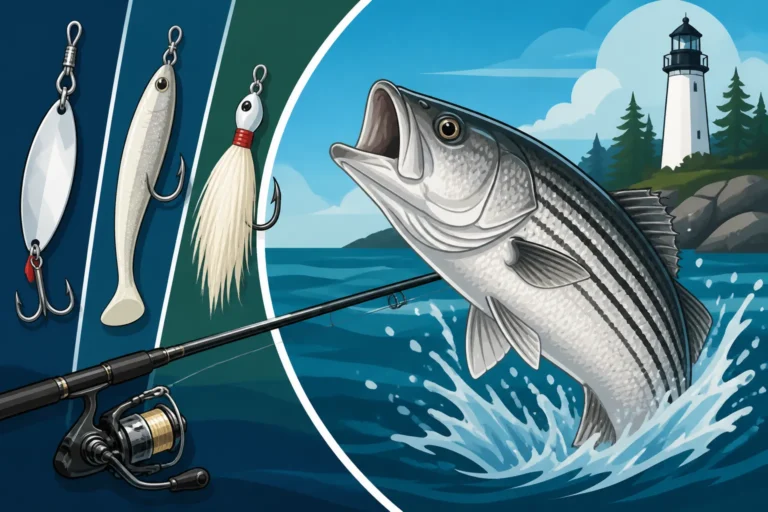
- Topwater Plugs: Walk-the-dog style lures like a Heddon Super Spook or poppers like a Cotton Cordell Pencil Popper are phenomenal for drawing explosive strikes. The low light makes stripers less wary of surface presentations, and the commotion mimics a struggling baitfish. Cast these parallel to shorelines, over submerged structure, or into areas where you see baitfish breaking. Don't be afraid to let it sit for a moment after casting before you start your retrieve; sometimes the splash itself is enough to draw attention. Many excellent options can be found on Amazon.
- Soft Plastics: As the light begins to increase or if the topwater bite isn't happening, soft plastic paddle tails rigged on a weighted swimbait hook or jig head are incredibly versatile. Brands like Z-Man or Bass Kandy Delight (BKD) make durable soft plastics that mimic baitfish. Vary your retrieve speed and depth until you find what the fish are looking for. These are excellent for probing slightly deeper water or areas with moderate current.
- Plugs and Stickbaits: Shallow-diving or suspending plugs are also highly effective. These can be cast and retrieved to cover water, imitating larger baitfish like herring or mackerel. Colors that mimic natural baitfish, like silver/blue, green/silver, or white, are almost always a good bet at dawn. For a comprehensive overview, definitely read Best Lures for Striped Bass in Maine.
Bait Choices: When Live or Chunk is King
Sometimes, especially if the fish are finicky or you’re targeting larger, more lethargic stripers, live or chunk bait can be unbeatable at dawn.
- Live Bait: Mackerel, pogies (menhaden), or eels are phenomenal choices. If you can jig up some fresh mackerel just before dawn, you’re in for a treat. Present them on a circle hook with just enough weight to keep them in the strike zone, either free-lined in current or under a bobber in shallower water. Eels, often fished after dark, can still be deadly at first light, especially for trophy fish.
- Chunk Bait: Fresh bunker (pogies) or mackerel chunks allowed to drift naturally in the current can draw in stripers from a distance. Fish these on a simple fish-finder rig with a circle hook and a weight appropriate for the current. This method is often preferred by Maine Shore Fishing Techniques enthusiasts looking to target bigger fish from stationary positions.
Casting Techniques and Stealth
In low light, precision casting can be less about pinpoint accuracy and more about covering water effectively while maintaining stealth.
- Fan Casting: If you’re not seeing active fish, fan-cast an area, making casts at different angles to cover a wider spread of water. This increases your chances of hitting a fish that might be holding in a subtle current seam or behind a rock.
- Parallel Casting: When fishing rocky shorelines or jetties, cast parallel to the structure. Stripers often patrol these edges, and a lure swimming alongside the structure for a longer period increases its appeal.
- Stealthy Approach: This cannot be stressed enough. If you’re wading or fishing from a kayak, move slowly and quietly. If you’re in a boat, use your trolling motor or anchor upwind/upcurrent from your desired spot and drift in, avoiding unnecessary engine noise. Dawn’s quiet can be shattered by a loud approach, spooking the very fish you’re trying to catch.
Safety Considerations: More Than Just the Fish
Fishing at dawn means operating in darkness or very low light, which carries inherent risks.
- Navigation: If you’re in a boat, ensure your navigation lights are working, and you have a good understanding of your fishing area’s underwater hazards. A reliable GPS and chart plotter are invaluable. For shore anglers, a headlamp (one with a red light option to preserve night vision) is a must.
- Cold Weather Gear: Even in summer, Maine dawns can be chilly, especially on the water. Dress in layers. A good waterproof and windproof outer shell, warm mid-layers, and a hat and gloves are essential. Thermal socks and waterproof boots will keep your feet warm and dry. You can find durable and affordable layering options on Amazon.
- Pace Yourself: Don’t rush. Take your time setting up your gear, getting to your spot safely, and assessing the conditions. A relaxed and methodical approach will not only be safer but also more enjoyable and often more successful. If you're ice fishing at dawn, even more stringent safety rules apply, which you can learn about in the Maine Ice Fishing Line Limits guide.
By combining the natural advantages of dawn with a solid understanding of tides, local conditions, and effective strategies, your early morning pursuits for striped bass along the Maine coast can transform from hopeful endeavors into consistently rewarding adventures. Remember, every trip teaches you something new, so get out there, observe, adapt, and enjoy the magic of a Maine fishing dawn!
Disclaimer
Please note that fishing regulations in Maine can change. Always consult the latest rules and regulations published by the Maine Department of Inland Fisheries and Wildlife (MDIFW) or the Department of Marine Resources (DMR) before heading out. This guide is for informational purposes only and does not supersede official regulations. Stay safe and fish responsibly.