How to Fish for Striped Bass From a Boat
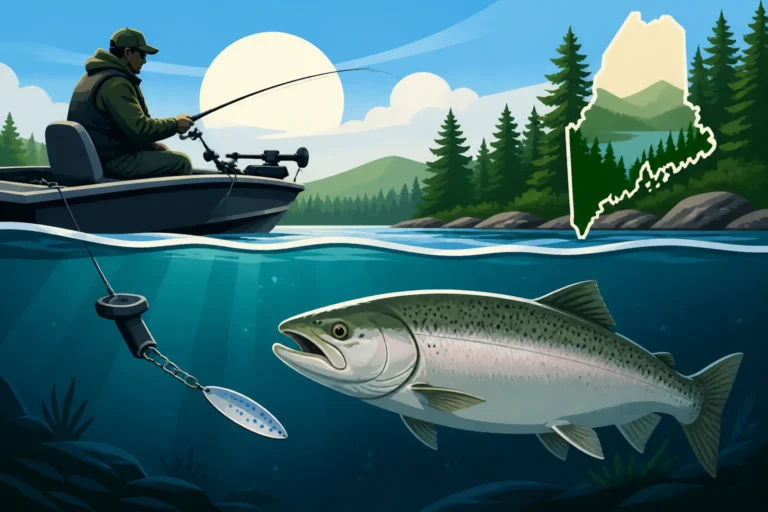
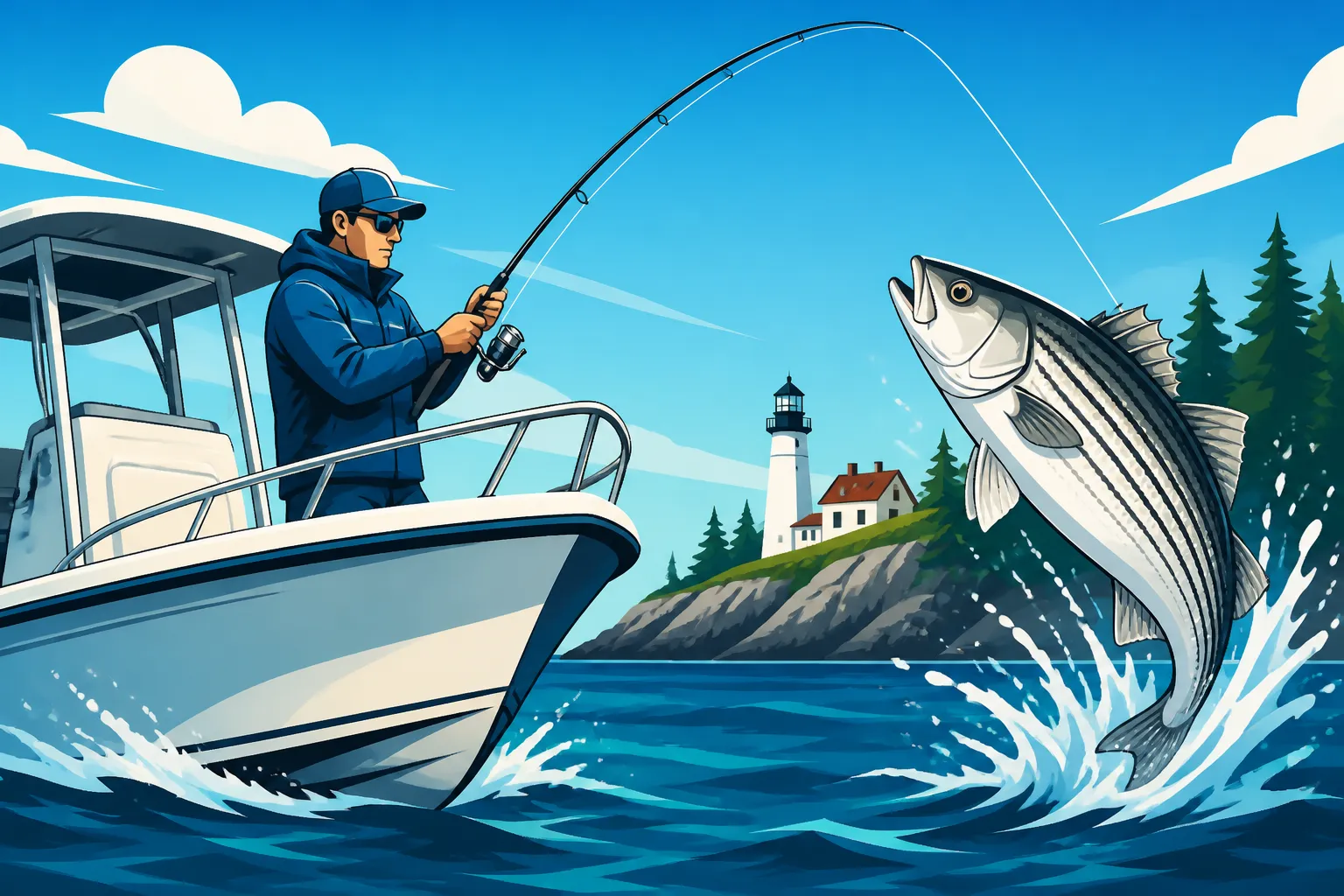
There’s nothing quite like the thrill of chasing striped bass in Maine from the deck of your own boat. While shore fishing offers its own charms, having a vessel opens up a whole new world of opportunities, allowing you to access remote rips, deep channels, and offshore structures that are simply out of reach otherwise. This guide will walk you through everything you need to know to successfully target these hard-fighting fish from your boat, ensuring you’re well-prepared for an epic day on the water.
Understanding Striped Bass Behavior from a Boat Perspective
Fishing from a boat fundamentally changes how you approach striped bass. You're no longer limited to casting distance from shore; instead, you can actively pursue fish, follow bait schools, and access a wider range of habitats. Understanding how stripers behave throughout the season is your first step to success.
Seasonal Movements and Prime Times
Striped bass are migratory fish, and their presence in Maine waters is very much tied to the calendar and water temperature. They generally arrive in late spring, usually around May, following schools of baitfish north as waters warm. This early season can be fantastic, as hungry stripers are eager to feed after their long journey. By June and July, the population swells, and they settle into summer patterns, often holding in deeper, cooler water during the heat of the day or concentrating in areas with strong current and abundant forage. As fall approaches, typically late August into September and even October, they begin their southbound migration, often feeding aggressively in what’s known as the "fall run." This can be another peak time, with large schools of fish staging up before heading out of Maine waters. Knowing when and where to find them is key, and a boat allows you to cover vast distances to locate these seasonal movements.
Reading Water and Structure from a Boat
One of the biggest advantages of fishing from a boat is the ability to interpret the water and its underlying structure in real-time. Stripers are ambush predators and will often orient themselves around structure or current breaks where they can easily intercept passing bait. From a boat, you can target specific features like rocky ledges, submerged reefs, mussel beds, and channel edges that might be invisible from shore. Strong currents, particularly around points, islands, and estuary mouths, are also magnets for stripers as they bring food directly to them. Look for "rips" – areas where opposing currents meet or where current flows over shallow structure, creating visible seams on the surface. These are prime feeding zones. Even subtle changes in water color or surface texture can indicate underwater features or bait concentrations that hold striped bass. Your boat becomes a mobile scouting platform, allowing you to quickly move and investigate promising areas.
Forage and Feeding Habits
Striped bass in Maine have a varied diet, and understanding what they're eating at any given time is crucial for choosing the right presentation. During their migration and throughout the summer, they primarily feast on various baitfish like mackerel, river herring, sand eels, and menhaden. They also won't pass up crustaceans like crabs, especially in shallower, rocky areas or estuaries. From a boat, you have the advantage of often being able to spot these baitfish schools on your electronics or visually. Look for diving birds, especially terns and gulls, as they often pinpoint schools of bait being pushed to the surface by feeding stripers. Surface boils, splashes, and nervous bait skipping across the water are clear indicators of active feeding. Matching your lure or bait to the local forage, both in size and profile, will significantly increase your success.
Essential Gear for Boat Fishing Striped Bass
Having the right gear is paramount when targeting striped bass from a boat. These fish can grow quite large and fight hard, demanding robust and reliable equipment. Unlike shore fishing where you might be limited by what you can carry, a boat allows you to bring a comprehensive arsenal.
Rods, Reels, and Line Selection
For boat fishing striped bass, you'll generally want a versatile setup that can handle various techniques and fish sizes. A medium-heavy to heavy spinning rod, typically 7 to 8 feet long, paired with a reliable 5000-8000 size spinning reel, is a fantastic all-around choice. Brands like Penn, Shimano, and Daiwa offer excellent options that stand up to saltwater abuse. For line, 30 to 50 lb braided line is highly recommended. Braid offers incredible strength-to-diameter ratio, no stretch for excellent sensitivity, and long casting capabilities. Always tie a fluorocarbon leader (30-50 lb test) to your main line. Fluorocarbon is less visible to fish and offers good abrasion resistance against rocks and sharp teeth. If you prefer conventional gear, a medium-heavy conventional rod (e.g., 6.5-7.5 feet) with a reel like a Penn Fathom or a Shimano Trinidad, spooled with similar braid and a fluorocarbon leader, is also very effective, particularly for trolling or live bait fishing. You can find a wide selection of these high-quality fishing rods and reels on Amazon, making it easy to equip yourself properly.
Lure and Bait Arsenal
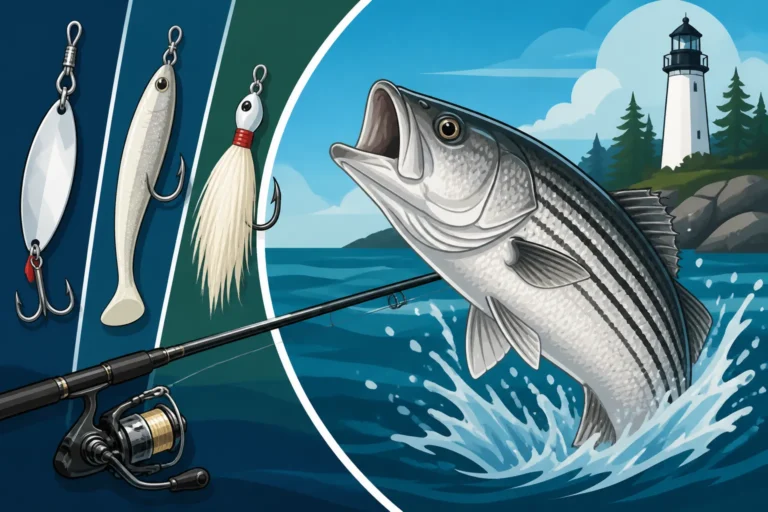
Your boat's storage capacity means you can carry a wide array of lures and baits to adapt to different conditions and feeding behaviors. For artificials, start with a good selection of topwater plugs (e.g., poppers, walk-the-dogs) for those exciting surface strikes, especially during dawn and dusk. Swimming plugs, like the classic Sebile Stick Shadd or a Bomber Long A, are excellent for imitating baitfish just under the surface or at moderate depths. Soft plastics, rigged on jig heads or as paddle tails, are incredibly versatile; they can be cast, retrieved, or jigged vertically. Bucktail jigs, often tipped with a piece of soft plastic or pork rind, are indispensable for fishing deeper water or strong currents, mimicking various baitfish or even crabs. For those who prefer live bait, live mackerel, eels, or pogies (menhaden) are often irresistible to stripers. Make sure you have the necessary tackle to rig these baits effectively. You can learn more about specific presentations in our guide to Best Rigs for Striped Bass Fishing.
Boat Electronics and Safety Equipment
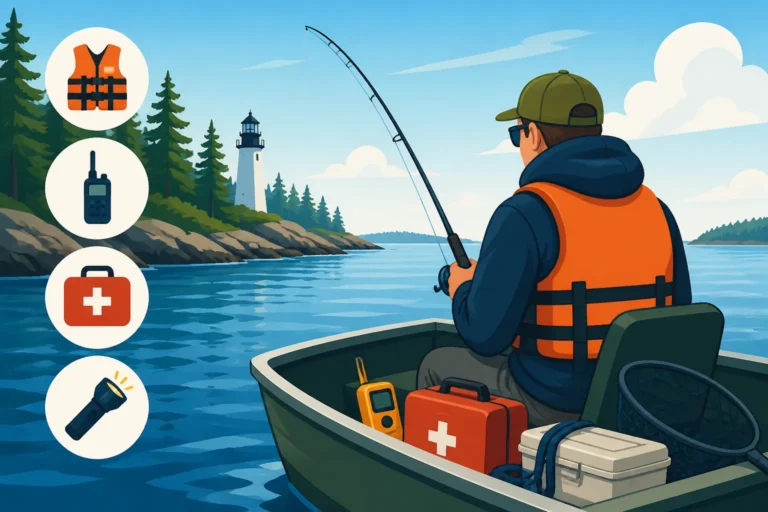
Modern boat electronics have revolutionized striped bass fishing. A quality fish finder (sonar) is invaluable for locating bait schools, marking fish, and identifying underwater structure. GPS is essential for navigation, marking productive spots, and safely returning to port, especially in fog or low light. Some anglers also use radar, particularly in busy shipping channels or foggy conditions common along the Maine coast. Beyond fishing tools, safety equipment is non-negotiable. Always carry Coast Guard-approved Personal Flotation Devices (PFDs) for everyone on board. A functioning VHF marine radio is critical for communication, especially in an emergency. Other essentials include flares, an air horn or whistle, a first-aid kit, a fire extinguisher, and a boat anchor appropriate for the bottom type and depth you'll be fishing. Don't forget a sharp knife, pliers, and a decent net or Boga grip for handling fish safely. Many of these safety items and fishing accessories, from a basic marine first aid kit to specialized fishing pliers, are readily available on Amazon.
Proven Techniques for Boat Fishing Striped Bass
The beauty of fishing for striped bass from a boat is the sheer variety of techniques you can employ. Whether you prefer the methodical pace of trolling or the active engagement of casting, your boat provides the platform.
Trolling for Stripers
Trolling is a highly effective method for covering large areas, especially when fish are scattered or difficult to locate. It allows you to present baits or lures at precise depths and speeds, mimicking cruising baitfish. One of the most classic and effective trolling methods for Maine stripers is the tube-and-worm rig. This involves trolling a weighted rubber tube, often bright red or black, with a worm (typically a sea worm or sand worm) threaded onto the hook. Spoons, especially those designed for trolling like the Tony Accetta Pet Spoon, are also very productive, particularly when mackerel are present. Umbrella rigs, which mimic a school of baitfish, can be deadly in the right conditions. When trolling, pay close attention to your speed (usually 2-4 knots), the depth of your lures, and any current. You can use lead core line, downriggers, or inline weights to get your presentation to the desired depth. Trolling along depth contours, edges of rips, or over submerged structure is often the most productive strategy. For more in-depth advice, check out our article on Trolling Tube and Worm Rigs for Striped Bass.
Casting and Jigging Techniques
When you find actively feeding fish, or when targeting specific structure, casting and jigging become your go-to methods. Your boat allows you to position yourself perfectly, often upwind or upcurrent from the action, to make precise casts. For surface activity, casting topwater plugs and working them aggressively can trigger explosive strikes. When fish are holding deeper or around structure, casting soft plastics or bucktail jigs is incredibly effective. Let them sink to the desired depth, then retrieve with a series of jerks and pauses, mimicking a wounded baitfish. Jigging vertically with heavier jigs directly beneath the boat is also a powerful tactic, especially when you've marked fish on your fish finder in deeper water or strong currents. This technique is particularly good for targeting larger, lethargic fish that might not chase a horizontally retrieved lure. Keep an eye on your boat's drift and use your motor or a trolling motor to maintain optimal position relative to the fish or structure.
Live Bait Fishing from a Boat
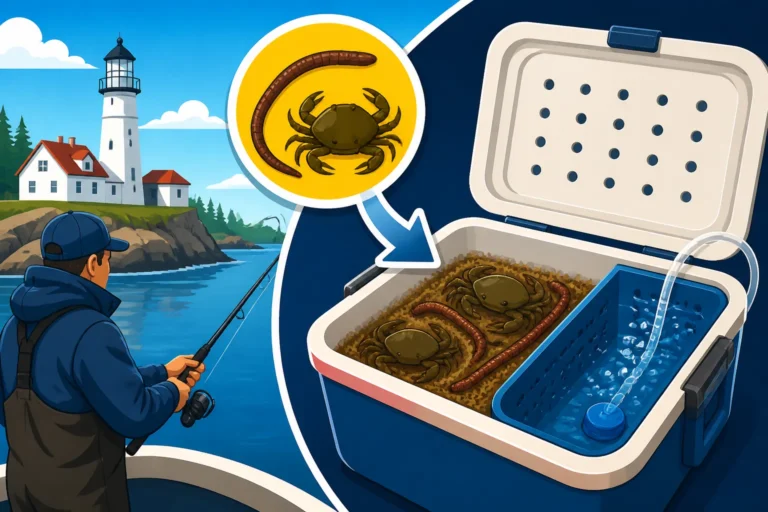
Live bait is often irresistible to wary or less active striped bass, and a boat offers the best way to present it effectively. The most common live baits in Maine are mackerel, eels, and pogies (menhaden). You can often catch mackerel yourself using sabiki rigs near structure or bait schools. Once you have your bait, there are a few primary ways to present it. Drifting live bait, either unweighted or with a small weight to get it down, allows the bait to move naturally with the current, covering a wide area. This is particularly effective in river mouths, channels, or along current seams. Alternatively, you can anchor upcurrent from a promising spot – like a submerged rock pile, bridge abutment, or deep channel – and let your live bait drift back into the strike zone. Eels are fantastic at night or in murky water, fished slowly or allowed to swim freely. Always use sharp, appropriately sized hooks (e.g., 6/0 to 9/0 circle hooks for live mackerel) to ensure a good hookset and minimize harm to the fish, especially if you plan on catch and release.
Navigating Maine's Waters for Striped Bass
Maine's diverse coastline offers incredible opportunities for striped bass fishing, but navigating its waters requires local knowledge and respect for the environment. Your boat gives you unparalleled access to these varied habitats.
Key Maine Regions and Hotspots
From south to north, Maine boasts numerous prime striped bass fishing grounds. Southern Maine, with its sandy beaches and rocky points, sees a strong early season run. As you move eastward, the expansive estuaries and bays become increasingly productive. The Kennebec River is legendary for its striper fishing, especially in the tidal stretches, where the strong currents push massive amounts of bait. Casco Bay, with its countless islands, coves, and rocky structure, offers endless opportunities for both casting and trolling. Further downeast, rivers like the Penobscot River also hold strong populations of striped bass. When exploring new areas, look for the confluence of fresh and saltwater, areas with strong tidal flow, rocky structure, and signs of baitfish. Many local tackle shops, like those found in Portland or Kennebunk, are excellent resources for up-to-date information on where the fish are biting. For general knowledge, consider exploring our guide on the Best Maine Rivers for Fishing.
Tides, Currents, and Weather Considerations
Understanding tides and currents is absolutely critical for successful striped bass fishing from a boat in Maine. Stripers are highly influenced by the movement of water, using it to their advantage for feeding and conserving energy. Generally, the incoming and outgoing tides, especially around the middle phases, tend to be the most productive. The moving water stirs up bait and creates ambush points. Slack tide can often be slower, though sometimes larger fish will hold deep. Always consult a tide chart and factor in the strength and direction of currents when planning your boat movements and fishing strategies. Weather is another major consideration. Maine's coastal weather can change rapidly. Always check the marine forecast before heading out. Strong winds can make fishing difficult and dangerous, especially in open bays or near exposed points. Fog can roll in quickly, making navigation hazardous. Always prioritize safety, and don't hesitate to reschedule if conditions are unfavorable. Our article on Reading Tides for Striped Bass Fishing provides excellent insights.
Regulations and Responsible Angling
Before you even think about dropping a line from your boat in Maine, it's crucial to be aware of and adhere to all current fishing regulations. The Maine Department of Marine Resources sets specific rules for striped bass, including season dates, minimum and maximum length limits (often referred to as a "slot limit"), and daily bag limits. These regulations are designed to protect the striper population and ensure sustainable fishing for future generations. Currently, Maine has a strict slot limit for striped bass, meaning you can only keep fish within a certain size range, and typically only one fish per angler per day. Always double-check the latest regulations before you go, as they can change. If you plan on practicing catch and release, which many anglers do, be sure to use proper techniques to ensure the fish's survival. This includes minimizing handling, using dehooking tools, and avoiding excessive fight time. More details can be found in our guides on Maine Striped Bass Season and Limits and Catch and Release Best Practices in Maine.
Here's a quick comparison of some popular boat fishing techniques for striped bass:
| Technique | Best Conditions | Target Depths | Ideal Bait/Lure | Pros | Cons |
|---|---|---|---|---|---|
| Trolling | Covering large areas, locating scattered fish, calm/moderate seas | Surface to Mid-depths | Tube-and-worm, Spoons, Swimming Plugs | Covers ground efficiently, consistent depth control | Less interactive, requires boat speed management |
| Casting/Retrieving | Active fish, visible bait, specific structure, rips | Surface to Mid-depths | Topwater, Soft Plastics, Swimming Plugs | Highly interactive, precise targeting, exciting surface strikes | Less coverage, requires accurate casting |
| Jigging | Fish marked deep, strong currents, vertical structure | Mid-depths to Bottom | Bucktail Jigs, Soft Plastics on Jig Heads | Effective for lethargic or deep-holding fish, good sensitivity | Can be physically demanding, requires precise boat positioning |
| Live Bait Drifting | Finicky fish, strong current, targeting specific areas | All depths | Live Mackerel, Eels, Pogies | Often irresistible, natural presentation, good for large fish | Requires bait acquisition/keeping, less active searching |
| Live Bait Anchored | Known hotspots, structure, bridge abutments | All depths | Live Mackerel, Eels, Pogies | Allows sustained presentation in a productive zone | Limited to small area, can be slow |
Disclaimer
Please remember that fishing regulations, conditions, and fish behavior are subject to change. Always consult the latest Maine Department of Marine Resources rules and local advisories before heading out on the water. Stay safe and enjoy your time fishing!