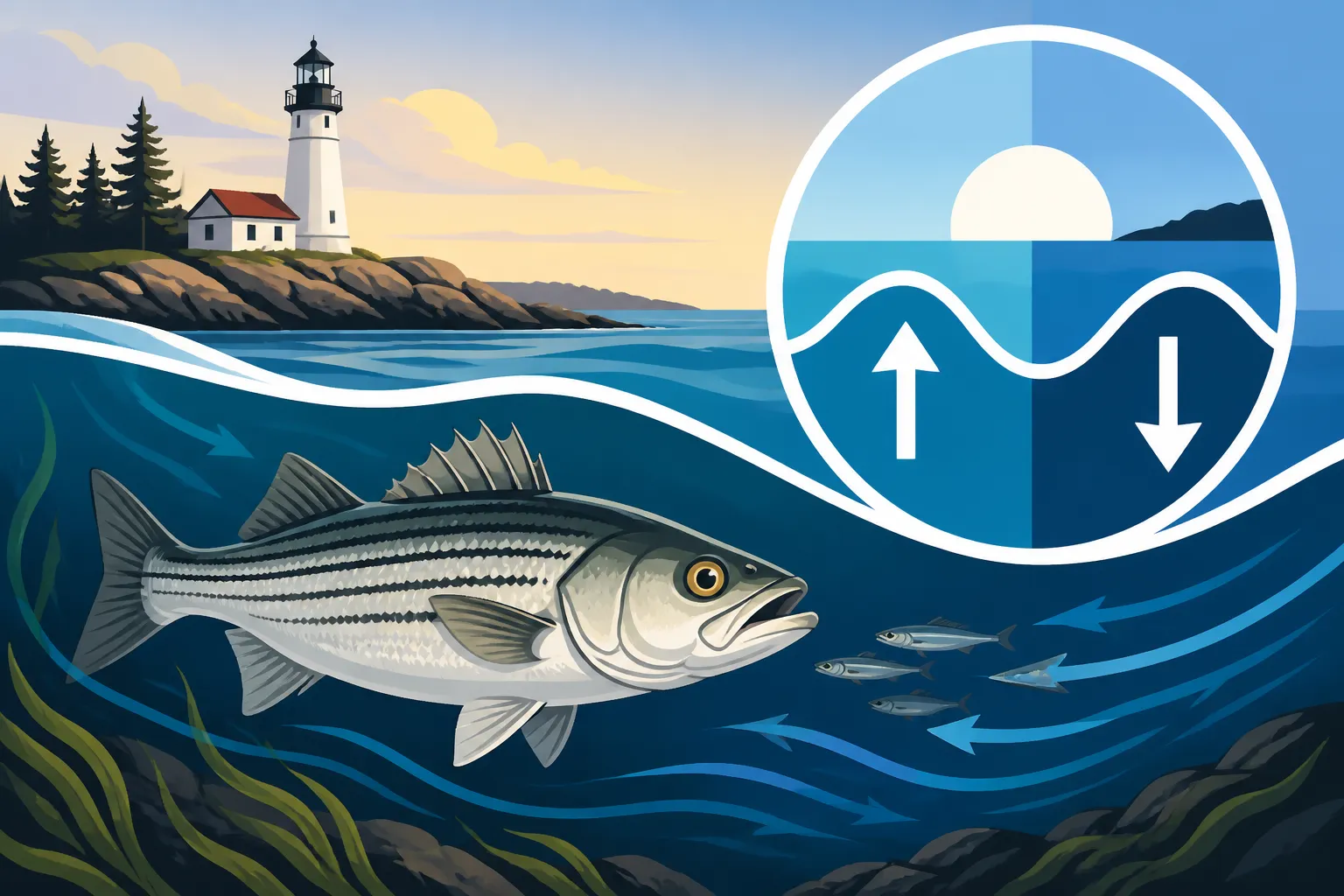
How to Read Tides for Striped Bass Fishing
Trying to hook into a feisty striped bass in Maine can be one of the most rewarding experiences, but if you've ever spent hours casting without a single bite, you know how frustrating it can be. Often, the missing piece of the puzzle isn't your bait or your technique, but a fundamental understanding of how tides dictate where these powerful fish feed. This guide is going to peel back the layers of tidal influence, helping you decode the ebb and flow so you can put more stripers on your line.
Understanding the Intricacies of Maine Tides
Maine's coastline, with its countless coves, estuaries, and rocky shorelines, presents a complex tidal environment that's a true game-changer for striped bass anglers. Unlike some areas with more predictable tidal swings, the Gulf of Maine experiences a significant semi-diurnal tide, meaning we get two high tides and two low tides each day, roughly six hours apart. Knowing the difference between these various tidal stages and how they play out in different parts of our coast is absolutely crucial.
The Mechanics of Maine's Tidal Flow
The gravitational pull of the moon and sun creates bulges of water that travel around the Earth, resulting in our tides. In Maine, these tidal swings can be quite dramatic, especially in areas like the Bay of Fundy (just northeast of us), which boasts the highest tides in the world. While Maine's specific tidal ranges aren't quite as extreme, places like the Kennebec River or Casco Bay still see significant water movement. This constant push and pull of water aren't just about water levels; they're about currents, oxygenation, and nutrient distribution, all of which influence where stripers choose to feed.
It's not just the high and low points you need to consider, but the rate of change. The water moves fastest during the middle of the incoming or outgoing tide, known as the "mid-tide" or "tidal flow." As the tide approaches its peak (high slack) or its lowest point (low slack), the water movement slows down considerably. Understanding this speed is just as important as knowing the direction. Different areas, like a narrow river mouth versus a broad, open bay, will experience these changes with varying intensity and timing.
Navigating Tidal Charts and Predictions
For any serious striped bass angler, a reliable tidal chart is your best friend. These charts, often available online, in local bait shops, or through dedicated fishing apps, provide predicted times for high and low tides, along with the heights of those tides, for specific locations along the Maine coast. It's important to remember that these are predictions, and local conditions like strong winds, significant rainfall, or even distant storms can alter actual tidal patterns. Always check a chart specific to your chosen fishing spot; the tide times in Portland might be quite different from those in Bar Harbor or the mouth of the Penobscot River.
Beyond simple high and low times, some advanced charts or apps can show you current speeds and directions, which are incredibly valuable. Many anglers will even use a tide watch, available on Amazon, to quickly reference tidal phases without pulling out their phone or chart. Familiarize yourself with how to read these charts effectively, identifying not just the peak high and low, but also the crucial periods of rapid water movement between them. This will directly inform your strategy for Maine Striped Bass Season and Limits, ensuring you're fishing at optimal times.
Tidal Influence on Striped Bass Behavior
Striped bass are opportunists, and their entire existence revolves around finding food and expending the least amount of energy possible. Tides play a monumental role in this equation, influencing everything from where they stage to feed, to how actively they bite, and even their migration patterns along the coast. Ignoring the tide is like trying to navigate a dense fog – you might get lucky, but you're probably going to miss your mark.
How Tides Activate Feeding Windows
The movement of water stirred by the tides acts like a giant conveyor belt, bringing baitfish, crustaceans, and other forage within easy reach of lurking stripers. As the current picks up, it dislodges crabs from their hiding spots, sweeps baitfish schools closer to shore, and creates turbulent areas where game fish can ambush their prey. This is why the periods of strong tidal flow are often the most productive for fishing. The increased current often means increased feeding activity.
Consider a rocky point or an oyster bed: at slack tide, there might be little movement, and baitfish feel safe. But as the tide starts to flow, baitfish are pushed around, disoriented, and concentrated by the currents, making them vulnerable targets. Stripers, being the smart predators they are, know this and position themselves accordingly. This is a critical insight for anyone looking into Striped Bass Fishing in Maine, as it underpins many successful strategies.
Strategic Positioning of Stripers in Current
Striped bass are masters of current. They'll use structures like ledges, rock piles, jetties, and even channel edges as current breaks, allowing them to conserve energy while waiting for prey to be swept past them. Think of it like standing behind a boulder in a strong river – you're out of the main current, but anything coming downstream will pass right by you. This is a common tactic for stripers, especially larger ones.
When the tide is rushing in or out, stripers will often hug these current seams and eddies. For example, on an incoming tide pushing into an estuary, stripers might be on the upstream side of a point or a bridge abutment, letting the current bring food to them. On an outgoing tide, they might shift to the downstream side, or patrol the edges of deeper channels as bait is flushed out. Learning to identify these strategic holding spots on your chosen Maine Coastal Fishing Spots for Striped Bass is paramount. It’s not just about finding water; it’s about finding moving water with current breaks.
Key Tidal Stages and Their Fishing Potential
While the idea of high and low tide is simple enough, the transitional periods are where the magic truly happens for striped bass fishing. Each stage of the tide has its own unique characteristics and opportunities, and understanding them will allow you to tailor your approach for maximum success.
The Incoming Tide: A Rising Opportunity
The incoming tide, also known as the flood tide, sees water levels steadily rising, pushing water into estuaries, coves, and over previously exposed flats and rocky areas. This phase is often excellent for striped bass, particularly as it approaches high tide.
- Early Incoming: As the water just starts to move in, it might be a bit slower, but it begins to cover structure. Smaller baitfish and crabs that were hiding in deeper pockets might start to feel the push. Stripers might move into the shallower edges or scour the immediate perimeter of structure that's just getting covered. This is a good time to target shallower flats or creek mouths.
- Mid-Incoming (Strong Flow): This is often one of the most productive times. The current is typically at its strongest, carrying food and oxygen. Stripers will be actively feeding, ambushing baitfish pushed by the current. Look for them around points, submerged rocks, and bridge pilings where currents create eddies and seams. This is when Best Rigs for Striped Bass Fishing become critical, allowing your bait or lure to stay in the strike zone.
- Late Incoming (High Slack Approach): As the tide approaches its peak, the current begins to slow down. Stripers may move further into the newly flooded areas, perhaps patrolling deeper into estuaries or over submerged weed beds. The bite might slow slightly as the water movement decreases, but fish can still be very active, especially if bait is concentrated.
The Outgoing Tide: Flushing Out the Feast
The outgoing tide, or ebb tide, is when water levels are falling, drawing water out of the estuaries and coves and back into the main channels and open ocean. This can be equally, if not more, productive than the incoming tide, depending on the location.
- Early Outgoing (High Slack to Mid-Ebb): Just after high slack, the water starts to recede. This can be a prime time as baitfish and crustaceans that moved into the shallow, flooded areas on the incoming tide are now being flushed back out. Stripers will position themselves at choke points, channel mouths, or around the edges of flats to intercept this outflowing buffet. Focus on areas where water is draining from marsh flats or small creeks.
- Mid-Outgoing (Strong Flow): Similar to mid-incoming, this is another period of strong current. Stripers will often be concentrated at the mouths of rivers, harbors, and major estuaries where significant amounts of bait are being carried out. This is a fantastic time for boat anglers to drift with the current or for shore anglers to cast into strong current lines. For shore-bound anglers, understanding How to Fish for Striped Bass From Shore effectively during this phase is key to success.
- Late Outgoing (Low Slack Approach): As the water drops to its lowest point and the current slows, stripers will retreat to deeper holes, channel edges, or the deeper parts of rocky structures. The bite can often slow during this low slack period as fish become less active, waiting for the next incoming flow to bring in new opportunities.
Slack Tide: The Brief Pause
Slack tide, whether high or low, is the period when the water is essentially still, just before it reverses direction. This is often considered the slowest fishing time for striped bass, particularly for active feeding, as the current that disorients and moves bait is absent.
However, slack tide isn't always dead. Sometimes, especially at high slack, stripers might linger in deeper pockets or around structure, and a well-placed jig or live bait might still entice a strike. For some, low slack can be a strategic time to scout new spots, observing underwater structure that becomes visible. But generally, if you're looking for consistent action and active feeding, you'll want to focus on the moving water phases. This is why many anglers plan their trips around the peaks of the tide, rather than the lulls, even considering Best Time to Fish for Striped Bass at Dawn in conjunction with tidal movements.
Here's a quick reference table for tidal fishing potential:
| Tidal Stage | Current Flow | Striped Bass Behavior | Best Fishing Tactics |
|---|---|---|---|
| Early Incoming | Slow to Moderate | Moving into shallow edges, scouting new areas. | Light tackle, stealthy approaches, targeting creek mouths and shallow flats. |
| Mid-Incoming | Strong | Actively feeding, ambushing bait at current breaks. | Casting lures or live bait into current seams, trolling, fishing structure. Excellent for How to Fish for Striped Bass From a Boat() |
| Late Incoming | Moderate to Slow | Moving into newly flooded areas, possibly less active. | Deeper presentations, probing submerged structure, live bait. |
| High Slack | Still | Often less active, resting in deeper pockets. | Slow presentations, vertical jigging, scouting. |
| Early Outgoing | Slow to Moderate | Positioning to intercept bait flushing out. | Targeting draining flats, river mouths, focusing on eddies and current shadows. |
| Mid-Outgoing | Strong | Actively feeding, ambushing bait in outflow. | Casting into rips, drifting bait, trolling channels. Prime time for many locations. |
| Late Outgoing | Moderate to Slow | Retreating to deeper water, seeking refuge. | Deep presentations, targeting channels and deeper holes, live bait. |
| Low Slack | Still | Often least active, waiting for the next cycle. | Scouting, fishing deep structure with slow presentations, planning next move. |
Practical Tips for Reading Tides on the Water
Knowing the theory is one thing, but applying it on the water is where the real skill comes in. Maine's diverse coastline means that even within a few miles, tidal dynamics can vary significantly. Learning to "read the water" in real-time is an invaluable skill for any striper angler.
Observing Current and Structure
When you arrive at a fishing spot, don't just immediately start casting. Take a few minutes to observe. Look for tell-tale signs of current:
- Rips and Eddies: Where fast-moving water meets slower water, or where current hits an obstruction, you'll see turbulent areas, boils, and slick spots. These are prime ambush points for stripers.
- Debris Movement: Watch how seaweed, foam, or floating sticks are moving. This gives you an immediate indication of the current's direction and speed.
- Baitfish Behavior: If baitfish are schooling tightly and struggling against a current, stripers are likely nearby, taking advantage of their vulnerability. If baitfish seem relaxed, the current might be too weak or too slow for active feeding.
- Visual Cues from Shore: Pay attention to how far the water is reaching up the beach or rocks, and notice if it’s consistently rising or falling. A visual marker on a rock can tell you if the tide is still coming in or has turned.
Even subtle changes in water texture can signal a current seam. These observations, combined with your tidal chart knowledge, will help you identify the most productive areas to focus your efforts. Often, a small change in casting angle or boat position can make all the difference.
Adjusting Your Approach to Tidal Stages
Once you've observed the current and understood the tidal stage, adjust your fishing strategy accordingly. This means more than just changing your location; it means adapting your presentation and choice of Best Lures for Striped Bass in Maine too.
- Strong Currents (Mid-Tide): Use heavier lures or weights to get your bait down in the water column and keep it in the strike zone. If you're using soft plastics, a heavier jig head might be necessary. Consider a boat for trolling, which allows you to cover more ground and present your lure at the right depth. For shore fishing, casting upstream and allowing your lure to drift naturally with the current can be incredibly effective. Consider durable, scent-infused soft plastics that can withstand repeated casting in strong currents, which you can find on Amazon.
- Slower Currents (Early/Late Tide): Lighter lures, smaller swimbaits, or unweighted soft plastics might be more effective. Stripers might be more inclined to chase a more subtly presented bait in less turbulent water. Fly fishing can also be highly productive during these slower phases, especially in shallower areas.
- Slack Tide: Don't be afraid to try vertical jigging with a heavy metal jig, especially if you're over a known deep hole or structure. A slow, methodical retrieve with a soft plastic can also sometimes entice a less active fish. Sometimes, a well-placed live eel or bunker at high slack can still draw a monster striper out from its hiding spot.
The most successful striper anglers are those who constantly adjust their tactics based on the live action of the tide. It's an ongoing dialogue between you, the water, and the fish.
Disclaimer
Fishing can be unpredictable, and success is never guaranteed. Always prioritize safety on the water, be aware of local regulations, and practice responsible angling, including catch and release best practices where appropriate. This guide is for informational purposes only and does not guarantee fishing success. Always check current Maine fishing regulations and licensing requirements before heading out.