Best Tide for Striped Bass Fishing in Maine
Oh, the age-old question that keeps many a Maine angler up at night: "What's the best tide for striped bass fishing?" If you've ever spent hours casting into seemingly dead water, only to hear about someone else hauling in keepers just a few miles away, you know the frustration. It's not just about being in the right spot; it's about being there at the right time. This guide is going to strip away the mystery and help you understand how Maine's tides dictate where the striped bass are, and more importantly, when they're ready to bite.
Understanding the Rhythmic Dance of Maine's Tides and Striped Bass
Maine's coastline, with its jagged rocks, sprawling estuaries, and sandy beaches, is a dynamic environment where the ocean's rhythm plays a huge role in everything, especially fishing. For striped bass, those powerful, silver-flanked warriors, the tides aren't just something that happens; they're the driving force behind their feeding patterns. If you want to consistently find these magnificent fish, you've got to learn to read the ocean's pulse.
The Why Behind Tidal Influence
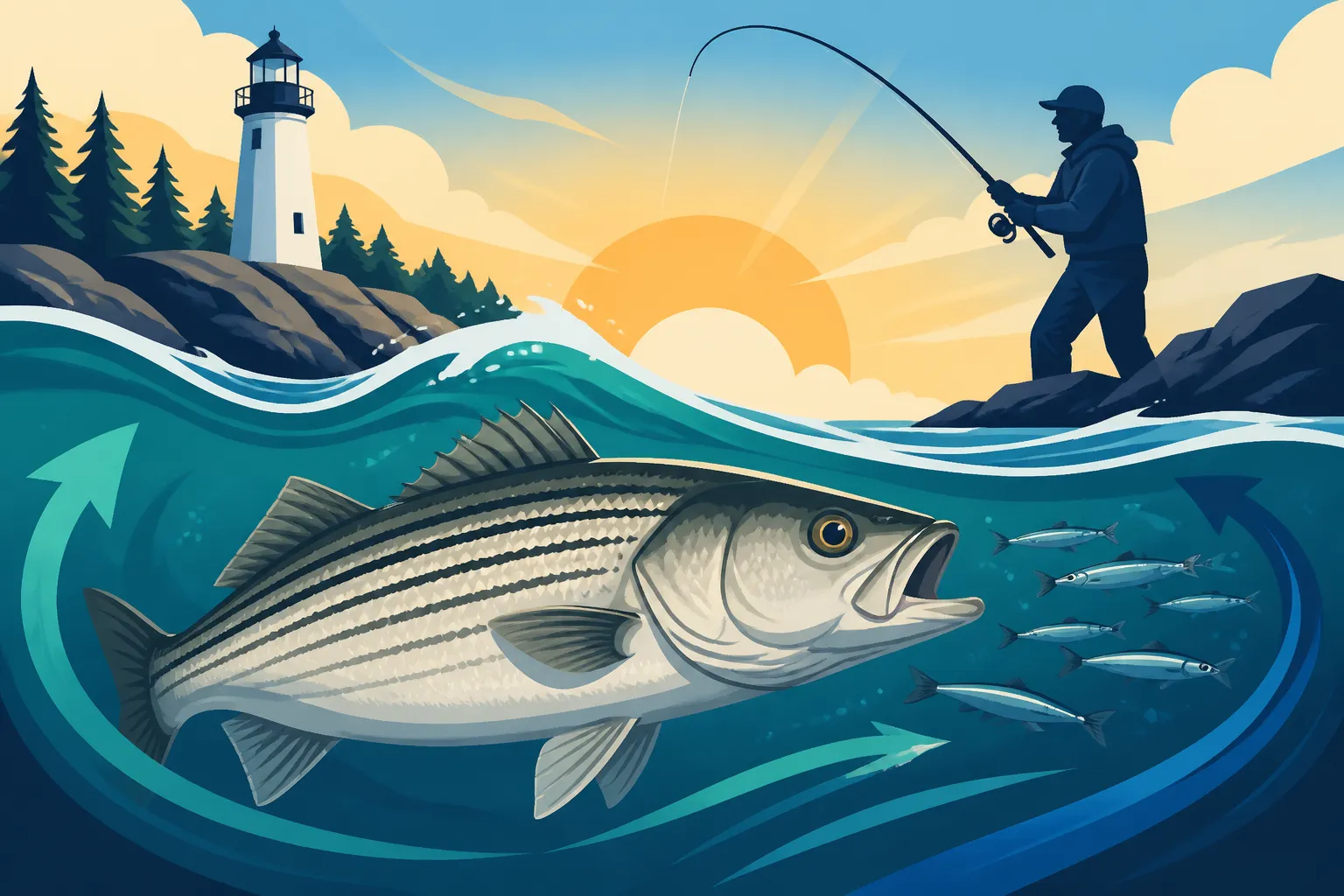
Think about it from a striped bass's perspective. These are opportunistic predators, always looking for an easy meal. The tide acts like a giant conveyor belt, pushing and pulling baitfish, crabs, and other tasty morsels around the ecosystem. When the current is strong, it disorients bait, washes food from hiding spots, and creates ideal ambush points for stripers. They don't want to expend energy chasing down every meal; they want the food to come to them.
An incoming tide might sweep schools of mackerel or herring into a bay or estuary, pushing them against structure where stripers can corner them. An outgoing tide, on the other hand, might flush smaller baitfish out of shallow marshes or rivers, concentrating them at choke points where bigger bass lie in wait. Understanding this fundamental concept is crucial to mastering Maine Striped Bass Fishing Techniques. Without that understanding, you're essentially just casting blind, hoping for a stroke of luck, and that's not a reliable long-term strategy.
Decoding the Four Stages of a Tide
Before we dive into the "best" tide, let's make sure we're all speaking the same language when it comes to tidal stages. Every tidal cycle has four main phases, and each one offers different opportunities (or challenges) for striped bass anglers.
- Low Tide: This is when the water has receded as far as it will go. Many intertidal areas are exposed, and water levels are at their minimum in harbors and rivers. Fishing can be tough during the dead low, as fish often retreat to deeper channels.
- Incoming Tide (Flood Tide): After low tide, the water starts to rise, pushing inland. This is often heralded by increasing current flow. The first half of the incoming tide typically has less current, gradually building in strength. As the tide continues to push in, it can bring cooler water and new food sources into an area.
- High Tide: This is the peak of the incoming tide, when the water has reached its highest point. Just like low tide, there's a period of "slack water" around high tide where the current slows significantly before reversing.
- Outgoing Tide (Ebb Tide): After high tide, the water begins to recede, flowing back towards the ocean. This phase often sees the strongest currents, especially as it approaches low tide. It flushes bait out of creeks, coves, and river systems.
While slack water (the period around high or low tide when the current is minimal) can sometimes produce fish if you're targeting very deep structure or fishing at night, it's generally the moving water — the incoming and outgoing tides — that gets the striped bass actively feeding.
The Sweet Spots: Best Tides for Striped Bass Fishing in Maine
Alright, let's get down to brass tacks. You're probably thinking, "Just tell me when to go!" While there's no single, universal "best" tide that works every minute of every day in every location, there are definite windows of opportunity when striped bass are most likely to be on the hunt. In Maine, where our waters can be chilly and our coastline complex, understanding these windows is paramount.
The Productive Power of Moving Water
Hands down, moving water is your best friend when chasing striped bass in Maine. Whether the tide is coming in or going out, that current is key. It's less about whether it's incoming or outgoing, and more about the flow itself. Stripers, being the smart predators they are, use the current to their advantage, conserving energy while waiting for prey to be swept past them.
- Incoming Tide Advantage: As the water floods in, it reawakens shallow flats, brings fresh bait into estuaries and washes over submerged rocks and ledges. Stripers will push into these areas, often very close to shore, to ambush baitfish that are just starting to move with the rising water. This is a fantastic time for anglers fishing from shore or kayaks, as the fish can be surprisingly shallow.
- Outgoing Tide Dominance: Many seasoned Maine striper anglers will tell you the outgoing tide, particularly as it draws towards low, is their absolute favorite. Why? Because as the water drains out of rivers, coves, and salt marshes, it acts like a giant sieve, forcing baitfish into narrower channels and choke points. Stripers will stack up at these natural funnels, gorging themselves on the concentrated bait. River mouths, bridge abutments, and the edges of channels become prime hunting grounds.
So, the golden rule here is: find the current. If the water isn't moving, the fish usually aren't actively feeding.
Timing Your Approach: The Critical 2-Hour Window
While moving water is good, specific windows within those moving tides are often great. Most experienced striped bass anglers in Maine agree that the most productive fishing often occurs during the periods of strongest current, which typically means the transition periods.
The sweet spot generally falls within:
- The last 2-3 hours of the outgoing tide: This is arguably the most productive window for many Maine locations, especially estuaries and river mouths. As the water rushes out, it flushes bait from shallow areas, concentrating it in deeper channels. Think of the mouth of the Kennebec River or the Saco River as the tide rips out – that's prime real estate for hungry bass.
- The first 2-3 hours of the incoming tide: As the water begins to push back in, it starts to cover previously exposed structure and brings new bait into an area. Stripers will often move onto these newly submerged structures, like rock piles, jetties, or ledges, to ambush prey. This is an excellent time for targeting shorelines and flats.
These roughly two-hour windows on either side of the slack low and high tides are when the current is building or subsiding most actively. This means baitfish are being moved, disoriented, and exposed, making them easy targets for stripers. You can often find tide charts online or through fishing apps that will show you exactly when these windows occur for your specific location. Don't just guess; consult the charts. They're like a roadmap to success for How to Read Tides for Striped Bass Fishing.
Tactical Tidal Fishing: Matching Your Method to the Current
Knowing when to fish is only half the battle; knowing how to fish effectively during those tidal windows is the other. Your approach needs to change based on whether the tide is coming in or going out, and what kind of structure you're targeting. This isn't a one-size-fits-all game.
Targeting Inshore Structures on the Incoming Tide
When the tide is flooding in, especially during those first few hours, striped bass often spread out and move closer to shore, exploring newly submerged areas. This is a prime time to target:
- Rocky Points and Jetties: As the water rises, baitfish will hug these structures for cover. Cast your lures parallel to the rocks or jetty, letting the incoming current sweep your offering past potential ambush points. Topwater lures can be incredibly exciting during this phase, especially at dawn or dusk, as stripers will smash baits on the surface.
- Shallow Flats and Edges of Marshes: If there's enough depth, stripers will move onto these flats with the incoming tide to hunt crabs, worms, and small baitfish. Soft plastics, especially those mimicking worms or shrimp, can be deadly here. Walk the dog topwater lures or shallow-diving plugs also work well.
- River and Estuary Mouths (early incoming): While the outgoing is often better for concentration, the early incoming tide can bring schools of bait into the lower reaches of rivers. Look for birds diving or baitfish rippling the surface.
For these scenarios, lighter tackle can sometimes be effective, especially if you're throwing smaller offerings. However, always be prepared for a strong fight; stripers are known for their power, even in shallower water. You might find a good selection of specialized lures and rods on sites like Amazon.
Capitalizing on Outgoing Tide Choke Points
The outgoing tide, particularly the latter half, is all about concentration. Fish are funneling out of larger areas into smaller, deeper channels. This is when the big boys often come out to play, as they don't need to work hard for their meals.
- River Channels and Estuary Exits: This is the absolute sweet spot. Stripers will sit in the deeper parts of the channel, or along the edges, waiting for the current to deliver a buffet of baitfish. Cast up-current and let your lure or bait drift naturally downstream, retrieving as it moves. Heavy jigs, large soft plastics, or live mackerel are excellent choices here. Consider what you might need for heavier duty rigging – a quick search on Amazon for "heavy duty fishing tackle" might yield some good options.
- Bridge Abutments and Pilings: Bridges create current breaks and eddies, perfect hiding spots for stripers. The outgoing tide will push bait past these structures, making them prime ambush points. Jigging bucktails or dropping live bait near the pilings can be very effective.
- Creek Mouths and Drainages: Smaller creeks and marsh drainages will empty into larger bodies of water. Stripers will often sit right at the mouth of these, waiting for the outgoing water to flush out crabs, shrimp, and smaller baitfish. Small swimming plugs or soft plastics on a jig head can be very productive.
During the outgoing tide, you'll often need to use heavier lures or weights to get your presentation down to where the fish are holding in the stronger current. This is not the time for ultralight gear unless you’re specifically targeting smaller fish in calmer spots.
Gear and Techniques for Different Tidal Flows
Your choice of gear and technique should adapt to the tidal conditions.
- Lures for Current: In strong current, paddle tail soft plastics on heavy jig heads, bucktail jigs, and deep-diving plugs work well because they can get down to the fish and maintain their action. For calmer incoming water or around structure, topwater plugs, shallow swimmers, and flukes can be deadly.
- Live Bait: Live mackerel, pogies (menhaden), or eels are phenomenal for striped bass, especially when drifted naturally with the current. Use appropriate weight to get them into the strike zone without hindering their natural movement.
- Rigs: For Best Rigs for Striped Bass Fishing, consider a basic Carolina rig for bait in current, or a simple jig head for soft plastics. If fishing rocky areas, a snell rig with a sinker on a dropper loop can help prevent snags.
Always keep in mind that the current will dictate your retrieve speed and lure weight. If your lure isn't getting down or is being swept away too quickly, you need to adjust your weight or switch to a heavier lure. Conversely, if there's less current, you might need to impart more action yourself.
Here's a quick summary table to help visualize the tidal sweet spots:
| Tide Stage | Striped Bass Behavior | Best Fishing Strategy | Lure/Bait Suggestions | Prime Locations |
|---|---|---|---|---|
| Early Incoming | Moving into shallow areas, exploring newly submerged structure. | Target structure with lures mimicking bait moving in. Cast parallel. | Topwater, shallow swimmers, soft plastics (flukes), live bait (mackerel). | Rocky points, jetties, shallow flats, edges of salt marshes. |
| Mid-Incoming | Actively feeding, pushing into estuaries, following bait. | Drift bait/lures with the current, target current seams. | Soft plastics, medium diving plugs, live bait. | Deeper sections of estuaries, larger bays, around structure in moving water. |
| High Slack | Less active, seeking deeper holding spots, minimal feeding. | Very slow retrieves, targeted deep jigging, nighttime can be productive. | Live eels (night), heavy jigs, slow-retrieved bait. | Deep holes, channel edges, dark structure. |
| Early Outgoing | Starting to move out of shallower areas, anticipating bait flush. | Target structure where bait might congregate before moving out. | Medium diving plugs, soft plastics, live bait. | Mouths of smaller creeks, edges of main channels. |
| Mid-Outgoing | Actively feeding, congregating at choke points. Strongest bite. | Focus on channels, river mouths, current breaks. Drift or jig heavily. | Heavy jigs (bucktails), large soft plastics, live mackerel/pogies, eels. | Main river channels, estuary exits, bridge abutments, deeper holes. |
| Low Slack | Generally least active, retreated to deepest holding water. | Often slow, similar to high slack, but fish might be very concentrated. | Live eels (night), heavy jigs. | Deepest channels, offshore structure (if applicable), very slow presentations. |
Maine's Tidal Hotspots for Striped Bass
Maine offers an incredible diversity of striped bass fishing environments, each with its own tidal characteristics. Knowing the general tidal preferences is one thing, but understanding how they apply to specific, well-known striper grounds is where you'll really gain an edge.
Estuary and River Mouth Strategies
Maine's estuaries and rivers are truly the lifeblood of our striped bass fishery. Places like the Kennebec River, Penobscot River, and Saco River are legendary for a reason. These systems are massive highways for baitfish and, consequently, for stripers.
- Kennebec River: The Kennebec River is a prime example of an outgoing tide hotspot. As the freshwater from upriver meets the saltwater, and the tide begins to drop, immense amounts of bait (especially pogies and river herring) are flushed downstream. Stripers will position themselves along the channel edges, around structure like "The Green Can" or near the mouth, waiting for this natural conveyor belt of food. The last two hours of the outgoing tide here can be absolutely electric. When the tide is incoming, bass will often move up into the lower river, even as far as Bath or further, chasing bait. Look for access points along the river to capitalize on these movements. If you're looking for more specific spots, check out Kennebec River Fishing Access Points in Maine.
- Penobscot River: Similar to the Kennebec, the Penobscot River system offers fantastic tidal fishing. The outgoing tide through the narrows and around various islands can create incredible current seams where stripers ambush bait. The incoming tide sees fish pushing up into the brackish water, often targeting smaller bait in shallower zones. Pay attention to structure like bridges and deep holes.
- Saco River: The Saco River estuary, particularly around Saco Bay and Camp Ellis, is another fantastic area. The confluence of river and ocean provides ideal conditions. Outgoing tides here are crucial, flushing bait from the extensive marsh systems. The sand bars and channels formed by the river mouth become prime ambush locations. Incoming tides will bring fish closer to the beach fronts and jetties around Camp Ellis.
In these riverine environments, heavier jig heads and larger soft plastics, along with live bait like mackerel or pogies, are often the most effective. Pay close attention to current lines and eddies, as these are where stripers will hold to conserve energy and ambush prey.
Coastal Shoreline and Bay Tactics
Beyond the major river systems, Maine's intricate coastline, from Casco Bay to the rocky shores of Down East, offers abundant opportunities for tidal striped bass fishing.
- Casco Bay: This vast bay offers a mix of rocky points, sandy beaches, and numerous islands, making it a diverse striper habitat. The incoming tide often sees stripers working the rocky shorelines and ledges around the islands and mainland, pushing bait into coves and shallow flats. As the tide turns and begins to go out, fish will retreat to the edges of channels and deeper drop-offs. Kayak anglers especially love Casco Bay because it offers so many nooks and crannies to explore with the tide. For detailed information, see Casco Bay Striped Bass Fishing in Maine.
- Rocky Points and Ledges: Throughout the Maine coast, any prominent rocky point or submerged ledge that experiences strong tidal flow can be a striped bass magnet. During an incoming tide, stripers will often stage on the down-current side of these structures, waiting for bait to be swept over. As the tide goes out, they might move to the up-current side or deeper water nearby. Topwater lures, stick baits, and soft plastics are excellent choices when casting to these areas from shore or boat.
- Beaches and Surf: Even sandy beaches can hold stripers, especially during the early incoming and late outgoing tides. Look for areas where waves are breaking over sandbars, creating troughs and rips where baitfish might be disoriented. Clams, worms, or chunks of mackerel fished on a surf rig can be very effective. Casting metal jigs or large swimming plugs into the surf can also produce results. Always be mindful of Maine Fishing Regulations Explained and Maine Fish Bag Limits Guide when you're out there.
Remember, the goal is always to find moving water and structure where baitfish are likely to be concentrated or disoriented. Maine's diverse tidal landscapes mean there's always an opportunity somewhere, you just need to match your timing and tactics to the specific ebb and flow of the ocean. Happy fishing!
Disclaimer
Fishing conditions and regulations in Maine can change frequently. Always consult the latest Maine Department of Inland Fisheries and Wildlife (MDIFW) regulations before heading out. This guide provides general information and recommendations but does not replace official state regulations or local expertise. Fishing can be dangerous; always prioritize safety on the water.