What to Wear Ice Fishing in Maine Winters
Standing out on a frozen Maine lake, rod in hand, waiting for that tell-tale tug is an experience unlike any other. But if you’re not properly dressed for the harsh reality of a Maine winter, that dream day can quickly turn into a miserable, even dangerous, ordeal of shivering discomfort. This comprehensive guide will walk you through exactly what you need to wear to stay warm, dry, and safe while ice fishing, ensuring your focus remains on the fish, not the frostbite.
The Unforgiving Reality of Maine Winter Fishing
Let's be honest, Maine winters are not for the faint of heart, and ice fishing takes that challenge to a whole new level. It's not just about cold temperatures; it's a brutal combination of factors that can sap your body heat faster than you'd think. Many newcomers, and even some seasoned anglers, underestimate just how relentlessly cold it can get when you're exposed on the ice for hours.
Beyond Just "Cold": What You're Up Against
When you step out onto a frozen lake in Maine, you're not just facing the air temperature, which can easily dip into the single digits or below zero Fahrenheit. You're confronting a trifecta of heat-robbing elements that conspire against your comfort and safety. The wind, often sweeping unimpeded across vast open ice, creates a chilling effect that makes 10 degrees feel like -20. This wind can cut right through inadequate clothing, turning a slight breeze into an icy assault.
Then there's the element of inactivity. Unlike active sports where your body generates considerable heat, ice fishing often involves long periods of sitting or standing still. Your metabolic furnace isn't roaring, meaning you rely almost entirely on your clothing to provide insulation. Couple that with direct contact with cold surfaces—the ice beneath your boots, the cold plastic of your bucket or sled, even the metal of your auger—and you've got multiple avenues for heat loss. It's a stark contrast to a quick walk outside; you're truly immersing yourself in the cold for extended durations. It's crucial to acknowledge this unique challenge before you even start thinking about what to put on. For more details on staying comfortable, check out our Maine Winter Ice Fishing Guide.
Why Standard Winter Gear Won't Cut It on the Ice
Many people assume their everyday winter jacket and snow pants, typically worn for shoveling the driveway or a quick trip to the store, will suffice for ice fishing. This is a common and often painful mistake. Regular winter clothing is usually designed for intermittent exposure or for situations where you're moving more, generating internal heat. It often lacks the specific features needed for sustained exposure in extreme cold, especially when exposed to moisture and wind.
For instance, a standard jacket might be warm enough on its own for a walk around town, but it likely isn't windproof enough to stop a gale sweeping across Moosehead Lake, nor waterproof enough to handle slushy conditions or an unexpected slip. Once your clothing gets damp, its insulating properties plummet, leaving you vulnerable to hypothermia. Furthermore, everyday gear often isn't designed with ice fishing activities in mind, such as kneeling to check a trap, or bending over to pull a fish through the hole. These movements can expose skin or ride up, creating cold spots. Specialized ice fishing apparel addresses these exact pain points, providing targeted protection against the unique rigors of the frozen landscape.
Building Your Ice Fishing Armor: The Art of Layering
Layering isn't just a suggestion for ice fishing in Maine; it's an absolute necessity. Think of your clothing as a system, each layer serving a distinct and crucial purpose. This approach allows you to regulate your body temperature effectively, adding or shedding layers as conditions change or your activity level fluctuates. Going from drilling holes with your auger to sitting motionless in your shack requires different insulation, and layering gives you that flexibility.
The Essential Base Layer: Wicking Away the Chill
Your base layer is your first line of defense, worn directly against your skin. Its primary job is not to make you warm, but to manage moisture. When you're out on the ice, even in freezing temperatures, you'll still sweat, especially during setup, drilling holes, or if you're jigging actively. If that sweat stays on your skin, it will quickly cool, making you feel much colder as your body tries to warm the damp fabric. This is a recipe for misery and potential danger.
Therefore, the material of your base layer is paramount. You want something that actively wicks moisture away from your skin and allows it to evaporate. Natural fibers like merino wool are exceptional for this; they're warm even when damp and possess natural anti-odor properties, which is a bonus on multi-day trips. Synthetic options, such as polyester or polypropylene, are also fantastic wickers, often more affordable, and dry quickly. Avoid cotton at all costs for your base layer! Cotton absorbs moisture and holds it against your skin, making you feel clammy and freezing cold very quickly. Brands available on platforms like Amazon offer a wide range of both merino and synthetic base layers, from lightweight to heavy, allowing you to choose the right weight for the expected conditions. For more on layering, check out Best Layering Tips for Cold Weather Fishing.
Mid-Layers: Trapping the Precious Warmth
Once your base layer is taking care of moisture, your mid-layers step in to provide the crucial insulation that traps your body heat. These layers are all about creating air pockets that warm up and keep the cold out. You might wear one or several mid-layers, depending on how cold it is and your personal comfort level.
Fleece is a popular and excellent choice for mid-layers. It's lightweight, breathable, and provides a lot of warmth for its bulk. A good quality fleece jacket or vest can make a huge difference. For even colder conditions, or if you're prone to feeling the cold, you might opt for a thicker fleece or even a lightweight insulated jacket, like one filled with synthetic down or natural down feathers. The key here is to choose materials that are easily compressible, so you can pack them down if you get too warm, and that don't restrict your movement. A good mid-layer allows you to maintain dexterity for handling your fishing gear. Think strategically about how many layers you'll need; it’s always better to have an extra one you can shed than to be underdressed. You can find excellent quality fleece and insulated mid-layers from various outdoor brands on Amazon, often with features like zip pockets to keep small items secure and warm.
The Imperative Outer Shell: Defending Against the Elements
Your outer layer is your shield, the final barrier between you and Maine's harsh winter environment. This isn't just about warmth; it's about protection from the unrelenting wind, biting cold, and inevitable moisture you'll encounter on the ice. Skimping here is a critical mistake that can turn a fun day into a miserable one.
Waterproof, Windproof, and Breathable: A Must-Have Trio
For ice fishing, your outer shell must excel in three key areas: it needs to be waterproof, windproof, and ideally, breathable. Waterproofing is crucial because slush, melting snow, and even a quick dunk of your hand can quickly get your outer layers wet. Once wet, insulation dramatically loses its effectiveness, and you'll get cold fast. Look for jackets and bibs with sealed seams and durable water-repellent (DWR) finishes.
Windproofing is equally vital. As we discussed, the wind chill on an open lake is brutal. A truly windproof outer layer will stop that piercing cold from penetrating your inner layers, allowing your insulation to do its job. Breathability, while often overlooked, is important to prevent overheating and internal moisture buildup from your own sweat, which defeats the purpose of your wicking base layer. Many high-quality ice fishing suits accomplish this with specialized membranes that allow vapor out but keep liquid and wind from coming in. When you're searching for gear, especially online through retailers like Amazon, pay close attention to the technical specifications regarding waterproof and windproof ratings to ensure you're getting adequate protection.
Specialty Ice Fishing Suits: Bibs and Jackets
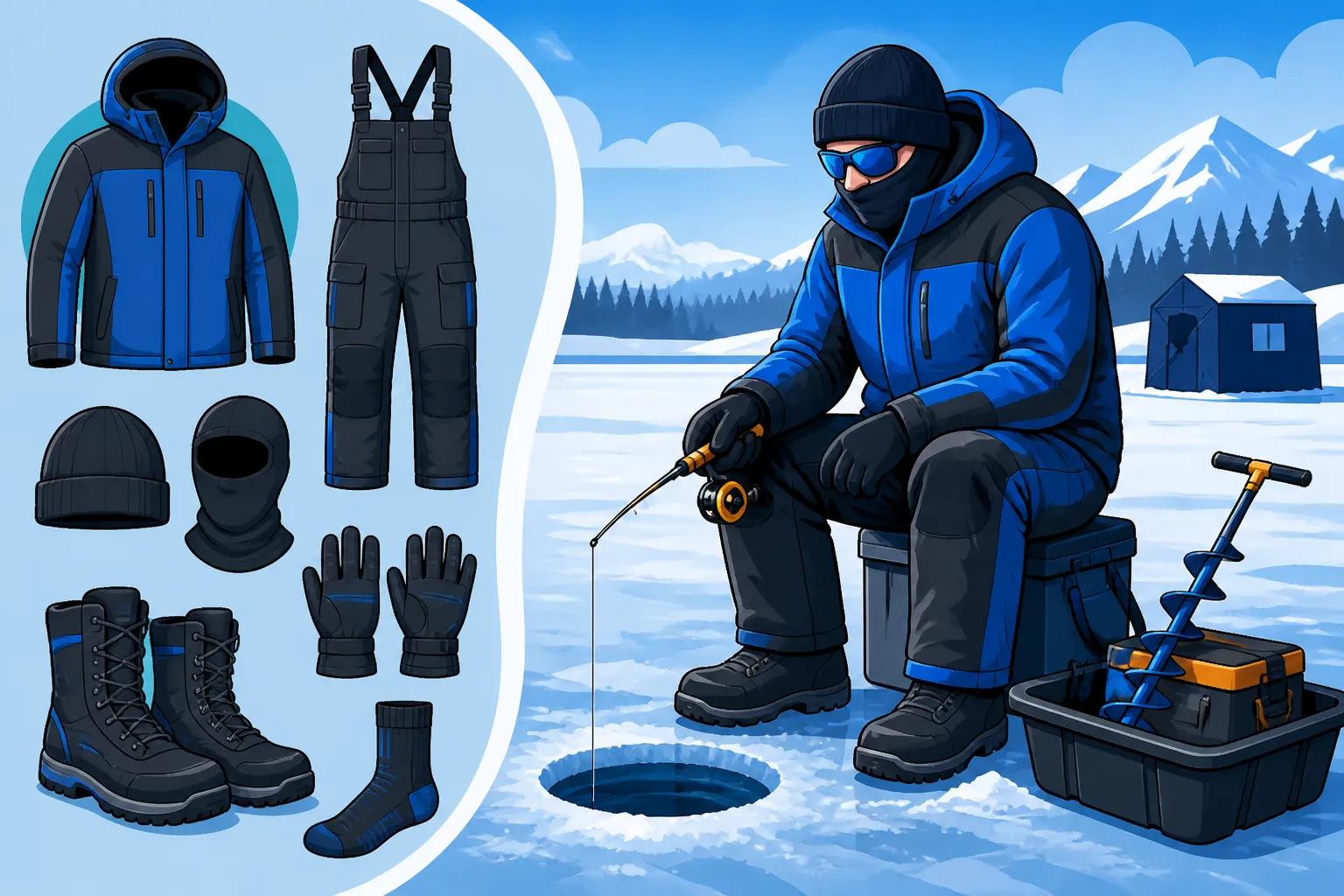
While you might be tempted to just grab your skiing jacket and snow pants, dedicated ice fishing suits—consisting of insulated bibs and a matching jacket—are truly the gold standard. These aren't just fashionable; they're engineered for the unique demands of ice fishing. Bibs, for example, provide crucial coverage for your core, preventing cold air from sneaking in between your jacket and pants when you bend, crouch, or sit. They also offer extra flotation capabilities in many modern designs, which is an invaluable safety feature should you unexpectedly break through the ice. We talk more about this in Early Ice Safety Tips for Maine Anglers.
These suits are typically heavily insulated, often with synthetic materials that retain warmth even when damp, and feature reinforced knees and seats for durability when kneeling or sitting on the ice. The jackets are usually cut longer in the back for added coverage and often have specialized pockets for gear, D-rings for attaching tools, and oversized zippers that are easy to operate with gloved hands. Some of the best suits even include reflective elements for safety in low light. Investing in a quality ice fishing suit is one of the smartest decisions an angler can make for comfort and safety in Maine's winter.
Don't Neglect the Extremities: Head, Hands, and Feet
It's an old adage but a true one: if your head, hands, and feet are cold, you will be cold, no matter how many layers your torso has. These extremities are incredibly vulnerable to heat loss and frostbite, making their proper protection absolutely non-negotiable for a safe and enjoyable day on the ice.
Protecting Your Most Vulnerable Areas
Your head is a major source of heat loss, so a warm hat is essential. A fleece-lined wool or synthetic knit hat that covers your ears is a great start. For extra protection against wind and blowing snow, consider a balaclava or a neck gaiter that can be pulled up over your face. This prevents windburn and keeps your neck warm, which contributes significantly to overall body warmth.
For your hands, layering is often the best approach here too. Start with a thin pair of moisture-wicking glove liners (again, no cotton!) to keep sweat away. Over these, wear a pair of insulated, waterproof gloves or mittens. Mittens are generally warmer than gloves because your fingers share body heat, but gloves offer more dexterity for tasks like tying knots or handling fish. Many ice anglers carry both: mittens for general warmth and a pair of fingerless gloves or thinner gloves for quick tasks. Having a backup pair is always a smart move, as hands often get wet.
Footwear and Traction: Staying Warm and Safe
Your feet will be in constant contact with the ice, making proper footwear critical. You need insulated, waterproof boots, ideally rated for extreme cold (look for ratings down to -20°F or colder). The insulation could be felt liners, synthetic insulation, or a combination. Ensure your boots are large enough to comfortably accommodate thick wool or synthetic socks without compressing your feet, as compression reduces circulation and leads to cold feet. Again, avoid cotton socks! They will get wet from sweat and make your feet colder. Pack an extra pair of dry socks; changing into them mid-day can feel like a luxurious warmth boost.
Beyond warmth, traction is key on slippery ice. Look for boots with aggressive rubber soles designed for winter conditions. Even with good soles, ice cleats or creepers are a wise investment, providing much-needed grip and preventing potentially dangerous falls, especially when pulling sleds or drilling holes. Safety is paramount when venturing out for Maine ice fishing, and good footing can prevent a serious injury. Remember, checking the How Thick Should Ice Be Before Fishing on It? article for safety tips is always a good idea before you head out.
Here's a quick reference table for your layering system:
| Layer Type | Purpose | Recommended Materials | What to Avoid | Key Features |
|---|---|---|---|---|
| Base Layer | Wicks moisture away from skin | Merino wool, Synthetic (polyester, polypropylene) | Cotton (absorbs sweat) | Snug fit, quick-drying |
| Mid-Layer | Provides insulation, traps body heat | Fleece, Down, Synthetic insulation, Wool | Bulky, non-breathable materials | Breathable, flexible, easy to add/remove |
| Outer Layer | Protects against wind, water, cold | Waterproof/windproof membrane (Gore-Tex, proprietary) | Non-waterproof, uninsulated shells | Sealed seams, reinforced areas, flotation (bibs) |
| Headwear | Prevents heat loss from head | Wool knit hat, Fleece hat, Balaclava, Neck gaiter | Loose-fitting, non-insulating materials | Covers ears, snug fit |
| Handwear | Keeps hands warm and dry, dexterity | Waterproof/insulated gloves, mittens, glove liners | Cotton gloves, non-waterproof materials | Layerable, good grip, durable, multiple pairs |
| Footwear | Insulates feet, provides traction | Insulated, waterproof boots (-20°F+), wool socks | Cotton socks, uninsulated/non-waterproof boots | Aggressive tread, roomy for socks, ice cleats |
This article is for general informational purposes only and does not constitute professional advice. Laws, prices and regulations vary by location and change over time. Consult a qualified professional for guidance on your specific situation.