Best Trolling Speed for Togue
There’s nothing quite as frustrating as spending hours on a pristine Maine lake, meticulously setting up your gear, and then watching other boats land fish while your line stays stubbornly slack. When you’re targeting a deep-water predator like togue, also known as lake trout, the subtle nuances of your technique can make all the difference, and perhaps no factor is more critical than your trolling speed. This guide will dive deep into how to dial in the perfect trolling speed for togue, ensuring your lures are dancing just right to tempt these elusive giants.
Understanding Togue Behavior and Trolling Speed
Togue, or lake trout, are fascinating creatures. They're often found in the deep, cold waters of Maine's larger lakes, preferring stable, cooler temperatures. This deep-water preference means that when you're targeting them, you're often dealing with varying light conditions, temperature thermoclines, and specific baitfish movements. Your trolling speed isn't just about moving your boat; it's about how your lure behaves in their world and how that presentation triggers a strike.
Why Speed Matters So Much for Togue
Imagine trying to entice a fish that’s perfectly content sitting in its deep, cool refuge. A lure that’s moving too fast can appear unnatural, darting wildly and making it seem like a difficult, energy-intensive chase. Togue, especially larger ones, are often opportunistic feeders but they’re not usually sprinters. They prefer an easy meal. Conversely, a lure that’s moving too slowly might lack the enticing action needed to grab their attention, simply looking like dead bait drifting aimlessly.
The sweet spot lies in presenting your lure in a way that mimics their natural prey – often smelt, cusk, or other small baitfish. These prey items don't typically move at breakneck speeds, but they do have a subtle, undulating motion. Your trolling speed directly dictates how your spoon wiggles, your stickbait swims, or your dodger flashes. It's the difference between a clumsy dance and an irresistible shimmy. If you're struggling to find the bite, a slight adjustment in speed, even by half a mile per hour, can completely change your luck. This is especially true when you’re exploring new waters or when fish are lethargic due to a cold front fishing tactics in Maine scenario.
The General Speed Range for Togue
While there's no single magic number, most experienced Maine anglers find that a trolling speed between 1.8 and 2.5 miles per hour (mph) is often the most productive for togue. This range allows spoons to flutter, stickbaits to swim with their designed action, and dodgers to impart just the right amount of flash and wobble to your trailing bait.
However, this is just a starting point. Think of it more as a baseline from which you'll make constant micro-adjustments throughout your fishing day. The key is to be observant. Are you seeing baitfish on your reading a fish finder on Maine lakes? Are other boats in the area having success at a different pace? Are the fish actively chasing or are they more inclined to inspect a slower presentation? These observations will help you fine-tune within this general window. Remember that factors like wind and current can significantly impact your true lure speed through the water, even if your boat speed remains constant.
Factors Influencing Your Ideal Trolling Speed
Finding the "best" trolling speed isn't a static calculation; it's a dynamic equation influenced by several environmental and tactical variables. A successful togue angler is always adapting.
Water Temperature and Season
Togue are cold-water fish, and their activity levels are heavily tied to water temperature.
- Early Season (Ice Out to Early Summer): As the ice recedes and surface waters begin to warm slightly, togue might still be found in relatively shallower waters before they retreat to the depths. During this time, they can be quite active, and you might find success with slightly higher speeds, perhaps in the 2.2 to 2.8 mph range. They're feeding aggressively after a long winter and willing to chase. This aligns well with general Maine spring salmon fishing techniques as salmon also become more active.
- Mid-Summer: This is when togue retreat to their deep, cool sanctuaries. They become more lethargic in the warmer surface waters and will seek out the thermocline – the layer where water temperature changes rapidly. In these conditions, a slower presentation, closer to 1.8 to 2.2 mph, often works best. The fish aren't expending much energy, so a slower, easier target is more appealing. You might even drop to 1.5 mph if fish are particularly sluggish or suspended in tight groups.
- Fall: As lake waters cool down again, especially into September and October, togue can become very active once more, sometimes moving shallower to feed before winter. They might be aggressive, making speeds of 2.0 to 2.5 mph effective again. This active period can be fantastic for targeting larger fish. For more on seasonal movements, check out our Maine fishing season dates guide.
Lure Type and Size
The design of your lure is paramount to how it performs at different speeds. You can't just slap on any lure and expect it to work across the speed spectrum.
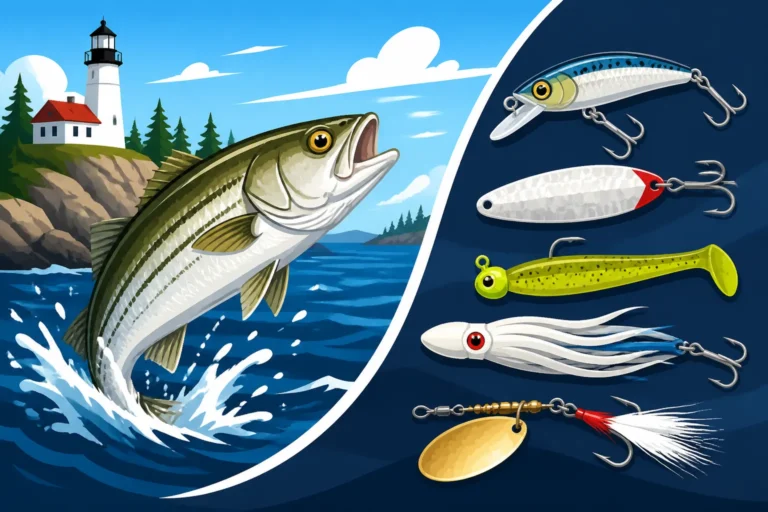
- Spoons: Classic trolling spoons like Mooselook Wobblers, Suttons, or Williams Wabler spoons are favorites for togue. These lures are designed to flutter and wobble, mimicking injured baitfish. Generally, spoons perform well in the 1.8 to 2.5 mph range. Too fast, and they'll spin or "blow out," losing their enticing action. Too slow, and they'll just drag listlessly. Larger spoons might require a slightly higher speed to get their full action, while smaller spoons can be effective at the lower end of the range.
- Stickbaits: Long, slender stickbaits such as Rapala Original Floaters, Yo-Zuri Crystal Minnows, or various Bay Rat Lures are excellent for replicating smelt. Their action is often a tight wobble or a subtle S-curve. These typically work best at a slightly faster pace than spoons, often in the 2.0 to 3.0 mph range, to achieve their designed swimming motion. They need that forward momentum to really "swim."
- Flashers/Dodgers with Trolling Flies or Baits: When you're using a dodger or flasher, its primary job is to create flash and vibration to attract fish, while the trailing bait (often a streamer fly or live smelt) provides the actual target. The dodger itself usually needs a speed between 1.0 and 2.5 mph to work effectively. Too fast, and it can spin; too slow, and it won't have enough action. The trailing bait needs to "dance" behind it, so the combined effect is what you're aiming for. This setup is particularly effective for mimicking schools of baitfish. You can find a great selection of these on reputable fishing tackle sites, or even on Amazon.
- Live Bait: If you're slow-trolling live bait like large shiners or smelt, your speed will generally be much slower, often in the 0.5 to 1.5 mph range. The goal is to keep the bait alive and swimming naturally, which doesn't require much boat speed. The natural movement of the live bait is the attraction here. This slower pace also helps when you're focusing on a specific depth or structure.
Water Clarity and Light Conditions
Clear water often means fish are more wary and might prefer a slower, more natural presentation, especially on bright, sunny days. In these conditions, a speed closer to 1.8 mph might be more effective. If the water has a slight tint or it's overcast, togue might be less shy, and you can experiment with slightly higher speeds and more aggressive lure actions. Low light conditions, like dawn and dusk, can also make togue more active and willing to chase, so an increase in speed might be warranted.
Baitfish Presence and Activity
Always keep an eye on your fish finder for schools of baitfish. If you see them actively schooling or scattering, it's a good sign that predator fish are feeding. Match your speed to what you observe. If baitfish are darting quickly, a slightly faster troll might imitate a fleeing meal. If they're moving slowly, a more languid pace could be the ticket. What do togue eat in deep Maine lakes? They key in on these baitfish, so understanding their movements is crucial.
Mastering Speed Control and Depth Presentation
Achieving the right trolling speed is only half the battle; presenting your lure at the correct depth is equally, if not more, important for targeting togue. These fish often hold tight to structure or suspend in specific temperature zones, and your lure needs to be in their strike zone.
Essential Gear for Precise Speed Control
Precise speed control isn't just about reading your speedometer; it's about understanding your boat's capabilities and using the right tools.
- GPS Speedometer: Most modern fish finders and chartplotters include a GPS speedometer. This is your most reliable tool for measuring actual speed over ground. Keep a close eye on it and note how different throttle settings affect your speed.
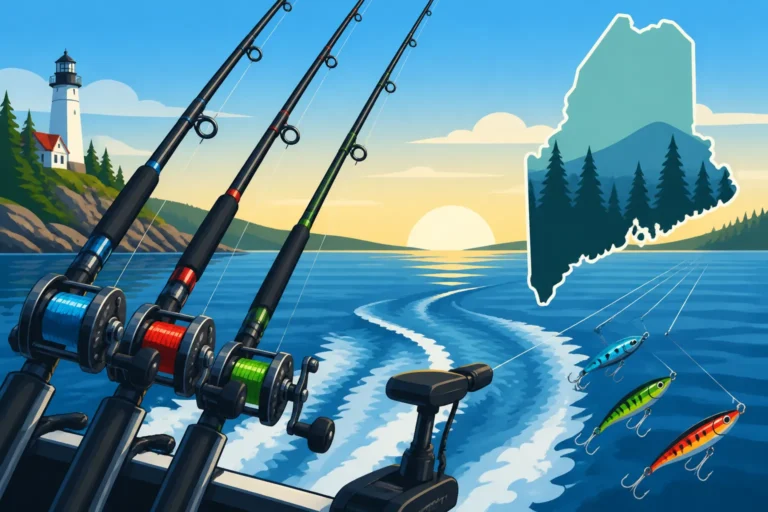
- Trolling Motor: For fine-tuning your speed, especially at the lower end of the spectrum, a bow-mount or transom-mount electric trolling motor is invaluable. It allows for subtle adjustments without constantly shifting gears on your main engine. This precision can make a huge difference in getting your lure to act just right. Brands like Minn Kota and MotorGuide offer models with precise speed settings.
- Kicker Motor: If your main engine struggles to maintain a slow, consistent troll without fouling plugs or overheating, a small auxiliary "kicker" motor is a great investment. These are specifically designed for low-speed operation and fuel efficiency.
- Line Counters: While not directly for speed, line counter reels are essential for consistently placing your lures at the right depth. If you're varying your speed, understanding how that affects your line angle and depth is critical. Many anglers use these in combination with lead core line or downriggers. You can find quality line counter reels on Amazon.
Controlling Depth at Speed
Trolling for togue often means getting your lures down deep, sometimes 40, 60, or even 100 feet. The method you choose will impact how your lure behaves at different speeds.
- Downriggers: These are the most precise tools for depth control. A heavy ball keeps your line at a consistent depth, regardless of trolling speed (within reason). You can easily adjust the depth to follow structure or the thermocline. This allows you to experiment with various speeds while knowing your lure remains in the strike zone. Our how to use a downrigger for lake trout guide offers more detailed advice.
- Lead Core Line: This specialized line changes color every 10 yards, with each color segment sinking to a predictable depth at a given speed. For togue, a common rule of thumb is that each color (30 feet of line) will take your lure down about 5-7 feet at 2 mph, but this varies based on lure size and water currents. The faster you troll, the shallower your line will run, so you need to adjust the amount of lead core accordingly. It's less precise than a downrigger but very effective for covering a wide range of depths.
- Snap Weights or Trolling Weights: These attach to your main line and help sink your lure. They offer some flexibility but can affect lure action and are less precise than downriggers or lead core. The faster you troll, the more a weight will lift, making consistent depth harder to maintain.
- Diving Planers/Disc Planers: Devices like Dipsy Divers or Pink Lady planers dive to specific depths, allowing you to use lighter lines and still get deep. Their diving action is very speed-dependent; generally, faster speeds mean deeper dives.
Putting it All Together: The Zig-Zag Pattern
When you're trying to figure out the perfect speed and depth, don't just troll in a straight line. Incorporate S-turns or zig-zags into your path. As you turn, the lures on the inside of the turn will slow down and drop slightly, while the lures on the outside will speed up and rise. Often, a fish will strike right as a lure changes speed or depth during these turns. This technique is a fantastic way to experiment with minor speed variations without constantly adjusting your throttle. It's a key part of effective trolling techniques for Maine lakes.
Troubleshooting and Adjusting Your Speed on the Fly
Even with all the right gear and knowledge, every day on the water is different. Being able to read the signs and adjust your trolling speed is what separates good anglers from great ones.
Reading Your Lure's Action
This is a skill developed over time. You need to know how your lure should look and feel at its optimal speed.
- Visual Confirmation: If you can see your lure in clear, shallow water (or use an underwater camera if you're really tech-savvy), observe its action. Is it wiggling, fluttering, or darting? Does it look natural?
- Rod Tip Vibration: For many lures, especially spoons and stickbaits, you'll feel a distinct vibration or throb in your rod tip. This indicates the lure is working properly. If the vibration becomes erratic, or stops, your lure might be fouled, spinning out (too fast), or not getting enough action (too slow).
- Feeling the Fight: When a togue hits, pay attention to the intensity of the strike. Was it a gentle peck or an aggressive smash? This can sometimes give you clues about their feeding mood, which ties back to whether a faster or slower presentation might be better.
Responding to Bites and Misses
Every interaction with a fish, or lack thereof, is a piece of data.
- Multiple Bites at a Specific Speed: If you start getting consistent bites at, say, 2.1 mph, don't be afraid to stick with that speed. You've found a productive pattern.
- Short Strikes or Misses: If fish are "nipping" at your lure or you're getting hits but not hooking up, it might mean they're not fully committing. This can sometimes be a sign to slow down slightly, giving them more time to engulf the lure. Conversely, sometimes a slight increase in speed can trigger a more aggressive, reactionary strike.
- No Bites at All: If you're not getting any action, it's time to experiment. Try increasing your speed by 0.2 mph for 15-20 minutes, then decrease it by 0.2 mph for the same duration. Keep alternating until you find a speed that triggers a response. Don't forget to also experiment with different lures and depths, but changing one variable at a time is crucial for identifying what works.
Environmental Adjustments
The lake itself is always communicating with you.
- Wind and Current: These forces can significantly alter your boat's speed over ground and, more importantly, your lure's speed through the water. If you're trolling against a strong headwind or current, your GPS speed might read lower, but your lure's action could be faster due to the water resistance. Conversely, with a tailwind or current, your boat speed might be higher, but your lure could be moving slower through the water. Always be mindful of wind direction and strength, and how it impacts your true speed.
- Changes in Light: As mentioned, togue might be more aggressive during low light. If the clouds roll in, or the sun breaks through, consider a slight speed adjustment.
- Fishing Pressure: If you're on a heavily fished lake like Sebago Lake or Moosehead Lake, and other boats are trolling faster or slower, it might be worth observing their success and trying to adapt your own approach. However, don't blindly copy; always understand why they might be having success.
Togue Specific Speed Adjustments
Remembering the unique characteristics of togue can help guide your adjustments:
- Deep Dwellers: Togue are often deep, and sometimes lethargic. A slow, consistent troll often prevails, especially for larger, older fish.
- Structure-Oriented: They often relate to underwater structure like humps, drop-offs, or submerged islands. When passing over these features, sometimes a slight pause or acceleration can trigger a strike from a fish holding tight to cover.
- Preferred Prey: If you know what the togue are primarily feeding on in a particular lake (e.g., smelt in Sebago, cusk in other deep lakes), try to mimic the swimming action of that baitfish with your lure choice and speed.
| Trolling Scenario | Recommended Speed Range (MPH) | Key Considerations |
|---|---|---|
| Early Season Aggressive | 2.2 – 2.8 | Fish active, chasing bait; spoons & stickbaits |
| Mid-Summer Deep/Lethargic | 1.5 – 2.2 | Fish in thermocline, slower presentation preferred; spoons, live bait |
| Fall Active Feeding | 2.0 – 2.5 | Cooling waters, fish moving shallower; spoons, stickbaits, flashers |
| Spoons | 1.8 – 2.5 | Optimal flutter & wobble, avoid spinning |
| Stickbaits | 2.0 – 3.0 | Needs speed for designed swimming action |
| Flashers/Dodgers | 1.0 – 2.5 | Creates flash & vibration, dictates trailing bait action |
| Live Bait (Smelt/Shiners) | 0.5 – 1.5 | Natural movement is key, keep bait alive |
| Short Strikes / Nips | Slow down 0.1-0.3 MPH | Give fish more time to commit to the lure |
| No Bites | Experiment ± 0.2 MPH | Systematically test speed variations |
| Against Wind/Current | Adjust down, check GPS & lure action | Boat speed ≠ lure speed through water |
| With Wind/Current | Adjust up, check GPS & lure action | Boat speed ≠ lure speed through water |
Ultimately, finding the best trolling speed for togue is a journey of observation, experimentation, and adaptation. Start with the recommended ranges, but always be ready to fine-tune based on the conditions, your gear, and most importantly, what the fish are telling you. Happy trolling, and tight lines on those beautiful Maine lakes!
Disclaimer
The information provided in this guide is for general informational purposes only and is not intended as legal or professional advice. Fishing regulations, conditions, and best practices can change rapidly. Always consult the most current Maine Department of Inland Fisheries and Wildlife (MDIFW) regulations before heading out. Exercise caution and good judgment when on the water.