Trolling Techniques for Maine Lakes
There’s nothing quite like the feeling of slicing through the calm surface of a vast Maine lake at dawn, a gentle hum from your outboard, and the anticipation of a rod bending over. But for many anglers, especially those new to the immense waters of places like Moosehead Lake or Sebago Lake, trolling can feel less like a peaceful pursuit and more like a baffling puzzle. You're out there, lines in the water, but are you at the right depth? The right speed? Are your lures even enticing anything? This comprehensive guide is here to unravel those mysteries, equipping you with the knowledge and techniques to become a more effective and confident troller on Maine's beautiful lakes.
The Fundamentals of Trolling in Maine's Unique Waters
Trolling isn't just about dragging a lure behind a boat; it's a nuanced art, especially on the deep, cold waters that characterize many of Maine's premier fishing lakes. Understanding why trolling works so well here, and what species you're targeting, is the crucial first step.
Why Trolling is So Effective on Maine Lakes
Maine's lakes are often incredibly deep, expansive, and offer a wide range of thermal habitats. This isn't your average farm pond where fish are easily spotted near shore. Many of our most sought-after species, like landlocked salmon and lake trout (which we affectionately call togue), are cold-water creatures that often suspend in the water column or hug deep structures. They're constantly on the move, chasing baitfish like smelt. This is where trolling shines.
Think about it: instead of casting to one spot, trolling allows you to cover vast amounts of water, presenting your lure to fish that might be scattered across a large area. It mimics the natural movement of a cruising baitfish, drawing strikes from predatory fish. This technique is particularly potent when fish are not actively feeding near the surface or obvious structure, forcing you to go out and find them. On a massive lake like Moosehead, covering water efficiently is the name of the game, and trolling is arguably the most effective method to do just that.
Key Fish Species to Target with Trolling
While you can technically troll for nearly any fish, certain species in Maine are prime candidates for this technique due to their feeding habits and preferred habitats.
- Landlocked Salmon: These acrobatic fighters are a top target for trollers. They typically cruise open water, often suspending at specific depths, chasing schools of baitfish. Trolling allows you to cover the necessary ground to intercept these fast-moving predators. You'll often find them near the surface in cooler months and deeper during the summer.
- Lake Trout (Togue): Togue are the deepwater specialists of Maine lakes. They thrive in cold, oxygen-rich water and will spend much of their lives near the bottom or suspended over deep drop-offs, especially as water temperatures rise. Trolling with downriggers or lead core line is practically a necessity to reach them consistently.
- Brook Trout: While often associated with smaller streams and ponds, larger brook trout can be found in some of Maine's colder lakes, particularly in the North Zone. They might be found shallower than salmon or togue, often near rocky points or submerged structures, especially early in the season.
- Brown Trout: Another hard-fighting species, brown trout in Maine lakes also respond well to trolling, often inhabiting similar areas to landlocked salmon, though they can be a bit more structure-oriented.
Understanding the typical behavior and preferred depths of these species at different times of the year is vital. Knowing your target helps you choose the right gear and set your spread accordingly. For specific details on what you can keep, check out our guide on Maine Landlocked Salmon Bag Limits and Maine Togue and Lake Trout Limits.
Understanding Lake Structure and Bottom Contours
Maine's lakes are far from uniform; they're complex environments with varying depths, bottom compositions, and underwater features. Successful trolling isn't just about driving around; it's about understanding these underwater maps.
Imagine a contour map of a lake: you'll see deep basins, shallow flats, submerged humps, rocky ledges, and channels. Each of these structures can hold fish at different times. Salmon might patrol along sudden drop-offs where baitfish are concentrated, while togue might hug the bottom of a deep trench or school up on a large, submerged rock pile. Using a good fish finder and detailed lake maps (either paper or digital on your GPS unit) is paramount. Don't just look for fish; look for the features that attract them. Are there old riverbeds running through the lake? Is there a deep hole near a shallow feeding flat? These transition zones are often hotspots. Learning to read these contours and understanding how fish relate to them is a skill that will dramatically improve your trolling success.
Essential Gear for Successful Maine Lake Trolling
Trolling effectively on Maine's vast and deep lakes requires a specialized arsenal of gear. Trying to get by with a standard spinning rod and light line will often leave you frustrated and empty-handed. Investing in the right tools makes all the difference in reaching those deep-dwelling lunkers and detecting subtle strikes.
Rods, Reels, and Line Selection
Choosing the right rod, reel, and line combination is critical for effective trolling. You need gear that can handle the specific demands of deepwater fishing and the powerful runs of species like salmon and togue.
For most Maine lake trolling, you'll want medium to medium-heavy action rods, typically 7 to 9 feet long. The longer rod helps spread your lines, absorbs shock from strikes, and provides better leverage when fighting a large fish. Look for rods with a parabolic bend, meaning they flex throughout the entire blank, which helps keep pressure on the fish and prevents hooks from tearing out. Reels should be robust baitcasting reels, often with a line counter, which is absolutely essential for knowing how much line you have out and replicating successful depths. Brands like Daiwa and Penn offer excellent trolling reels that can stand up to the challenge.
When it comes to line, you have a few options, each with its purpose:
- Monofilament: A good all-around choice for top-lining or shallow trolling, especially with planer boards. It offers stretch, which can be forgiving when a fish strikes hard, but its diameter means it creates more drag in the water, making it harder to get deep.
- Braided Line: Extremely strong with virtually no stretch, braided line is excellent for sensitivity and cutting through the water with less resistance, allowing lures to run deeper on their own. However, its lack of stretch means you need a softer rod or a monofilament leader to absorb the initial shock of a strike. It's often used with lead core setups or for planer boards.
- Lead Core Line: This is a core tool for deepwater trolling. It's a braided line with a lead core woven into it, causing it to sink. It's color-coded, usually every 10 yards, with each color representing roughly 5-7 feet of depth at a typical trolling speed. You'll typically spool a specific number of "colors" of lead core onto a reel, then attach a monofilament or fluorocarbon leader. This is how many anglers reach those suspended salmon and togue without downriggers. Learning to use lead core effectively takes practice but is invaluable.
- Fluorocarbon Leaders: Regardless of your main line, a fluorocarbon leader is almost always a good idea. It's nearly invisible underwater, providing a stealthy presentation, and its abrasion resistance protects your main line from sharp teeth or rocky structure.
For a general overview of necessary equipment, check out our guide on Best Rods for Maine Lake Trolling.
Choosing the Right Boat and Electronics
While you can troll from almost any boat, having the right vessel and electronics will significantly enhance your experience and success on Maine's large lakes.
A stable fishing boat, like a deep-V aluminum boat or a fiberglass walleye/bass boat, is ideal. You'll want enough space to comfortably manage multiple lines and store gear. A reliable outboard motor is a given, but a kicker motor (a smaller, auxiliary outboard) is a huge asset for trolling. It allows you to maintain precise, slow trolling speeds more efficiently than your main engine, saves fuel, and acts as a crucial backup.
But the real game-changers are your electronics:
- Fish Finder/Sonar: This is your underwater eyesight. A high-quality unit with good side-imaging and down-imaging capabilities can reveal not only fish but also subtle changes in bottom contour, submerged structure, and bait balls. Learning to interpret what you see on your screen is an ongoing process, but it's vital for finding fish. Modern units from brands like Humminbird or Garmin are incredibly powerful.
- GPS/Chartplotter: Essential for navigation, marking waypoints where you caught fish, identifying underwater structure, and following precise trolling passes. Many modern fish finders integrate GPS functionality. This allows you to track your boat's path, save productive trolling runs, and return to specific spots.
- Electric Trolling Motor (Bow-Mount): While not strictly for "trolling" in the traditional sense, a bow-mount electric motor with GPS spot-lock functionality (like a Minn Kota Terrova or Ulterra) can be incredibly useful for holding your boat precisely over structure or against wind and current while you manage your lines or even cast to marking fish.
Getting comfortable with your electronics is an investment in time, but it pays dividends. For more on interpreting your screen, read our article on Reading a Fish Finder on Maine Lakes.
The Importance of Downriggers, Lead Core, and Planer Boards
These three pieces of equipment are paramount for achieving precise depth and spreading out your lines, especially when targeting deep-holding or scattered fish.
- Downriggers: These are the ultimate tools for precise depth control. A downrigger uses a heavy lead ball (cannonball) attached to a cable, which is lowered to a specific depth. Your fishing line is then clipped into a release mechanism on the downrigger cable, allowing your lure to run at the same depth as the cannonball. When a fish strikes, the line releases from the clip, and you fight the fish directly on your rod. Downriggers allow you to present lures at exact depths, regardless of line type or boat speed, which is crucial for finicky fish or when you've identified a precise depth zone. For a deeper dive, check out How to Use a Downrigger for Lake Trout.
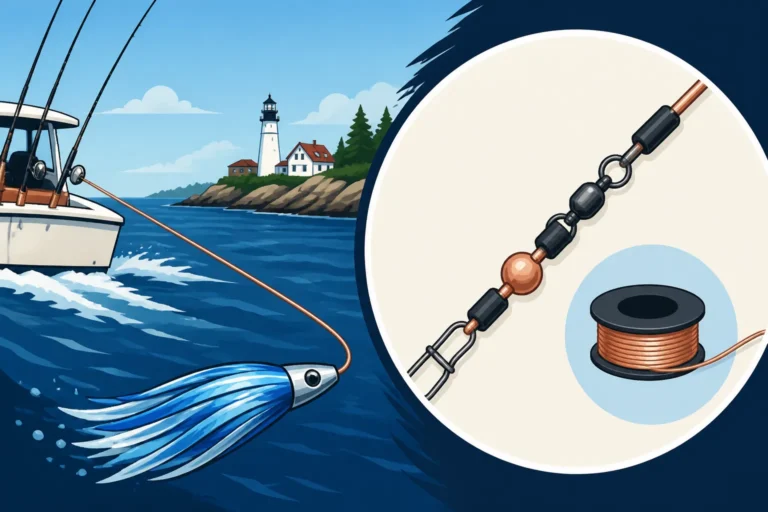
- Lead Core Line: As mentioned earlier, lead core is an indispensable alternative or complement to downriggers. It allows you to get lures down to specific depths without any additional weights or hardware. The beauty of lead core is its simplicity and ability to cover a wide range of depths simultaneously when run off multiple rods (e.g., one rod with 3 colors, another with 5 colors, etc.). It's a bit more "set-and-forget" than downriggers, perfect for covering large areas. If you're looking to rig it yourself, our guide on How to Rig a Copper Line for Trolling might offer some useful insights, as the principles are similar.
- Planer Boards: These devices are designed to carry your fishing lines out to the side of your boat, away from your prop wash and the main boat traffic. This allows you to run a wider spread of lines without tangling, covering a much broader swath of water. Planer boards come in various sizes, from small inline boards for single lines to larger mast systems that can run multiple lines. They are particularly effective for targeting fish that might be spooky of the boat, or when you want to present shallow-running lures in conjunction with deep-diving ones. Using planer boards significantly increases your chances of intercepting fish that are scattered across open water.
Dialing in Trolling Speed and Depth for Optimal Results
This is where the real finesse of trolling comes into play. The difference between a great day of fishing and a slow one often boils down to precisely matching your trolling speed and depth to the conditions and the fish you're targeting. It’s a constant dance of observation and adjustment.
Matching Speed to Species and Lure Action
Your trolling speed isn't just a number; it dictates how your lure performs in the water and how attractive it appears to a fish. Different species and different lures demand different speeds.
- Landlocked Salmon: These aggressive predators often prefer faster trolling speeds, typically ranging from 2.0 to 3.5 miles per hour. This speed makes spoons and stickbaits dart and flash erratically, mimicking a fleeing baitfish. If you're running a sewn-on smelt, a slightly slower speed might be more natural. However, the exact speed can vary based on water temperature, clarity, and the fish's mood. Sometimes, a subtle change, like slowing down to 1.8 mph or speeding up to 2.5 mph, can trigger bites.
- Lake Trout (Togue): Togue generally prefer slower speeds than salmon. A range of 1.5 to 2.5 miles per hour is often ideal, allowing their preferred lures (like dodgers and flies, or larger spoons) to have a more enticing, languid wobble. At these slower speeds, a baitfish presentation might appear more vulnerable. On a particularly cold or slow day, dropping down to 1.2 mph might be necessary to get a reaction. Our specific guide on Trolling Speed for Togue on Rangeley Lakes provides excellent insights for those targeting togue.
- Brook Trout: Similar to togue, brook trout often prefer slower presentations, typically in the 1.5 to 2.5 mph range. Small spoons, spinners, or bait imitations can be very effective.
It’s crucial to observe your lures in the water next to the boat (if possible) or at least understand their designed action. A spoon that is spinning wildly might not be as appealing as one with a subtle wobble. Experimentation is key; start with a general speed for your target species and adjust incrementally until you find what works.
Deciphering Depth: Temperature, Structure, and Fish Behavior
Figuring out the exact depth where fish are holding is arguably the most challenging and rewarding aspect of trolling. It's rarely static and depends on a multitude of factors.
- Water Temperature: This is perhaps the most critical factor for cold-water species. Salmon, togue, and trout are temperature-sensitive. They will seek out their preferred thermal zone (often referred to as the "thermocline" in summer) where oxygen levels are good and baitfish are present. In early spring, they might be near the surface as the entire lake is cold. As summer progresses, they'll descend to colder, deeper water. A thermometer or your fish finder's temperature gauge can help identify these zones.
- Structure: Fish will often relate to underwater structure. This could be a deep rock pile, a submerged point, an old river channel, or even a sudden drop-off. Your fish finder and GPS are indispensable here, helping you identify these features and position your lures nearby. Don't just look for fish in open water; look for them around structure.
- Baitfish: Where there's bait, there are usually predators. Your sonar will often show dense clouds of baitfish (often smelt). When you see these, you've found a potential hotspot. Deploy your lures at or just below the depth of the bait, as predators often ambush from below.
- Fish Behavior: Sometimes fish are actively feeding and will chase a lure. Other times, they're lethargic and require a lure presented directly in front of them. Depth can also be affected by light conditions; fish might hold deeper on bright, sunny days and shallower on overcast days.
This is where experience and a keen eye pay off. Note the depth of every strike and try to replicate it. Our detailed guide on Trolling Depths for Landlocked Salmon can give you an excellent starting point for this species.
Techniques for Precise Depth Control
Achieving and maintaining precise depth is paramount, especially when you've identified a productive zone.
- Downriggers: As discussed, downriggers offer the most precise depth control. You simply set the counter to the desired depth, and your lure will follow. This is invaluable when fish are holding in a tight band.
- Lead Core Line: While less precise than downriggers in terms of exact foot-by-foot control, lead core is excellent for getting into a general depth range. You learn that "three colors" of lead core at a certain speed puts your lure roughly at X depth. It's often paired with a fluorocarbon leader (e.g., 50-100 feet) to keep the lure away from the heavier lead line.
- Snap Weights/Clip-on Weights: These are lead weights that clip directly onto your fishing line at a measured distance from your lure. They're a simpler way to add depth without dedicated lead core or downriggers, though they can affect lure action.
- Diving Planers/Diver Discs: Devices like Dipsy Divers or Pink Lady planers are designed to dive to specific depths based on speed and line out, then trip when a fish strikes. They allow you to add depth without heavy lead, and you can adjust their dive angle.
- Thinner Diameter Lines: Using braided line or a thinner diameter monofilament can help your lures run deeper naturally due to less water resistance, assuming the lure is designed to dive.
Remember to factor in your trolling speed. A lure that runs 10 feet deep at 2 mph might only run 8 feet deep at 3 mph because of increased water pressure pushing it up. Constant monitoring of your sonar and GPS, combined with diligent note-taking, will help you refine your depth control techniques.
Lure and Bait Strategies for Maine's Trolled Waters
The right lure or bait can make or break a trolling trip. Maine's fish can be particular, and having a variety of options—and knowing when to use them—is key. This isn't just about what looks good to you; it's about what looks natural and enticing to a fish.
Classic Lures for Salmon and Trout
Maine anglers have long relied on a few tried-and-true lure types that consistently produce fish while trolling.
- Spoons: Spoons are perhaps the most iconic trolling lure for salmon and trout. Their erratic wobbling and flashing action mimic injured baitfish, making them irresistible to predators. Popular brands like Mooselook Thinfish, Sutton Spoons, and DB Smelt have been staples for generations. Color choice can be critical; silver, gold, copper, blue/silver, and chartreuse/silver are all common producers. Experiment with different sizes and weights. Smaller spoons (2-3 inches) are often great for brook trout and smaller salmon, while larger spoons (3-5 inches) can entice big landlocks and togue.
- Stickbaits/Plugs: These hard-bodied lures, like Rapalas (especially the Countdown series) or similar shallow-running models, are excellent for top-lining or running off planer boards, particularly in cooler water when fish are shallower. They often have a tight wiggling action that imitates a minnow. Deeper diving versions can also be used, though they might require more line to reach significant depths without assistance.
- Streamer Flies: While often associated with fly fishing, bucktail streamer flies are deadly effective when trolled behind a boat, especially for landlocked salmon and larger brook trout. They are often trolled with a small amount of weight or a sinking fly line section to get them down a bit. Classic patterns like the Gray Ghost, Supervisor, Black Ghost, and Nine-Three are still incredibly productive. The key is to impart a lifelike swimming action, which trolling at the right speed achieves beautifully.
- Dodgers and Flashers: These are not lures themselves but rather attractors. They create flash and vibration in the water, drawing fish towards your trailing lure or fly. Dodgers have a wide, sweeping action, while flashers have a more rapid rotation. They are often paired with a short leader (12-24 inches) to a small spoon, fly, or a bait rig. They are especially effective for togue in deep water.
For a broader look at what works in Maine, consult our guide on Best Lures for Maine Open Water Fishing.
Live Bait Trolling: Smelt and Shiners
Sometimes, nothing beats the real thing. Live bait, particularly smelt and shiners, can be incredibly effective for trolling, especially when fish are finicky or during certain times of the year.
- Sewn-On Smelt: This is a classic Maine technique, especially for landlocked salmon. A fresh or salted smelt is carefully "sewn" onto a rig with a treble hook (or two single hooks) to give it a perfectly natural, spiraling swim when trolled. The natural scent and appearance can be irresistible. There's an art to sewing on a smelt to achieve the ideal action, and many seasoned anglers swear by it. The key is to ensure it spins slowly and smoothly, without kinking the leader.
- Live Shiners/Minnows: While smelt are traditional, live shiners or other local minnows can also be trolled effectively. They are typically hooked lightly through the lips or dorsal fin and allowed to swim naturally behind the boat. The appeal here is the live action and natural scent. You'll want to use a slightly slower trolling speed to keep the bait alive and swimming naturally.
When using live bait, always be mindful of regulations regarding baitfish collection and transportation to prevent the spread of invasive species. Ensure your bait is healthy and lively for the best results. The debate between Live Bait vs Artificial Lures in Maine is a long-standing one, but both have their place in a troller's arsenal.
The Art of Staggering Lures and Colors
You're not limited to just one lure type or color. A smart troller will deploy a "spread" of different presentations to figure out what the fish want on any given day.
- Lure Staggering: Run multiple lines at different depths and distances behind the boat. For instance, you might have a downrigger with a spoon at 30 feet, a lead core rod with a streamer at 20 feet, and a top-lined stickbait off a planer board. This allows you to explore the water column and determine the preferred depth of the fish. Varying the distance behind the boat can also be effective, as fish sometimes prefer a lure far from the boat, while others might hit something closer to the prop wash.
- Color Staggering: Don't be afraid to mix up your lure colors. If you're running two spoons at the same depth, make them different colors. Start with a common combination like silver/blue and gold/orange, and see which one gets hit. Over the course of the day, certain colors might become more productive based on light conditions, water clarity, or even the fish's mood. Keep a mental (or written) log of what's working.
- Size Variation: Similar to color, vary the size of your lures. Sometimes fish want a big meal, other times they're targeting smaller bait. Having a range of spoon and plug sizes in your spread can help you zero in on the preferred offering.
The goal is to present a variety of options to the fish until you discover a pattern. Once you get a strike on a particular setup, it's often wise to replicate that setup on another rod, or at least change other lines to a similar presentation, to maximize your chances.
Reading the Water and Adjusting Your Trolling Approach
Trolling is a dynamic activity, not a static one. The best anglers are constantly observing their surroundings, interpreting their electronics, and making subtle (or sometimes drastic) adjustments to their technique. The fish rarely follow a predictable script, so you shouldn't either.
Interpreting Sonar and GPS for Fish Location
Your electronics are your eyes and memory on the water. Learning to effectively use your sonar and GPS is paramount to consistent trolling success.
- Sonar Interpretation: Don't just look for "arches." Learn to distinguish bait balls from larger individual fish, identify the thermocline (the layer where warm surface water meets cold deep water), and spot changes in bottom composition. See a dense cloud of baitfish at 25 feet? Get a lure down to that depth. Notice large arches suspended at 40 feet over a 100-foot bottom? Those are likely your target species. Pay attention to how the fish are relating to structure – are they on top of a hump, along a drop-off, or suspending in open water nearby? Different manufacturers have different ways of displaying information, so spend time in your unit's simulator or out on the water practicing.
- GPS for Waypoints and Tracks: Every time you catch a fish, mark a waypoint on your GPS. This allows you to return to that exact spot. Even more importantly, save your productive trolling "tracks." If you consistently catch fish along a particular contour line or over a certain submerged feature, you can follow that exact path again later in the day or on future trips. This removes guesswork and lets you systematically work productive areas. You can also use your GPS to maintain precise boat speed and direction, ensuring consistent lure presentation.
- Temperature Monitoring: Many modern fish finders integrate a water temperature gauge. Monitoring surface and subsurface temperatures (if your unit offers it) can give you critical clues about where cold-water species will be holding throughout the day or season.
Weather and Water Conditions: How They Impact Trolling
Mother Nature always has a say in fishing, and trolling is no exception. Conditions above and below the surface can significantly alter fish behavior.
- Light Conditions: On bright, sunny days, fish often hold deeper, seeking refuge from intense light. They might also prefer darker, more subdued lure colors. On overcast days or during low-light periods (dawn and dusk), fish might move shallower and be more willing to strike brighter, more aggressive patterns.
- Wind and Waves: A little chop on the water can actually be a good thing, breaking up the surface and making your boat less visible to wary fish. It can also impart an erratic action to your lures that triggers strikes. However, strong winds and large waves make boat control incredibly challenging, making it difficult to maintain precise speed and depth. On very windy days, it might be better to seek out more sheltered coves or points.
- Water Clarity: In clear water, fish have a better opportunity to inspect your lure, so stealth (fluorocarbon leaders, natural colors) becomes more important. In stained or murky water (less common in deep Maine lakes but can occur after heavy rains), brighter, more vibrant colors and lures that produce a lot of vibration might be more effective.
- Barometric Pressure: Sudden changes in barometric pressure, especially dropping pressure before a storm, can often make fish more active. Stable, high pressure can sometimes lead to slower fishing, making fish more lethargic and requiring a more subtle presentation.
Being aware of these conditions and how they typically affect fish behavior will help you make informed decisions about your trolling strategy.
Adjusting to Fish Behavior Throughout the Day
Fish aren't static; their moods and locations change constantly throughout the day, driven by feeding cycles, light, and temperature fluctuations.
- Morning and Evening Bites: Often, the best trolling action occurs during low-light periods at dawn and dusk. Fish are generally more active and willing to chase at these times. This is when you might find them shallower.
- Mid-Day Lulls: During the bright mid-day sun, fishing can slow down significantly. This is often when fish move to deeper, cooler water or relate tightly to structure. You'll likely need to adjust your depths and potentially slow your trolling speed or switch to more subtle presentations.
- Reacting to Strikes: Every strike is a piece of information. Did it come at a specific depth? On a certain lure color? At a particular speed? Over a distinct piece of structure? When you get a bite, try to replicate those exact conditions. If you get multiple bites on one setup, consider changing other lines to match. Conversely, if a pattern isn't working after a significant period, don't be afraid to change things up entirely—different depths, different lures, different speeds, or even a different part of the lake. The best trollers are constantly experimenting and adapting.
Flexibility and observation are your greatest assets. Keep track of what works and what doesn't, and let the fish tell you what they want.
Seasonal Trolling Tactics Across Maine
Maine offers year-round fishing opportunities, and trolling techniques must adapt dramatically with the changing seasons. The same spot and same lure that produced fish in May will likely be barren in July or October. Understanding these seasonal shifts is crucial for success. For a comprehensive overview of when to hit the water, consult our Maine Fishing Season Dates Guide.
Spring Trolling: Shallow and Aggressive
Spring is often a time of explosive action on Maine lakes, particularly for landlocked salmon and brook trout. As the ice retreats (a process we call "ice-out"), the entire lake is cold, and fish are often found surprisingly shallow, sometimes right up near the surface or along shorelines.
- Early Season Opportunities: Immediately after ice-out, the water temperature is uniform throughout the water column. Smelt, the primary forage for salmon and togue, are often found shallow as well. This means your target fish are accessible without needing to go excessively deep. Trolling with spoons, stickbaits, and streamer flies near the surface or with just a small amount of weight can be incredibly effective. Focus on areas where tributaries enter the lake, rocky points, and shallow flats where baitfish might congregate.
- Aggressive Presentations: Fish in the spring are often hungry after a long winter and more willing to chase. This is a great time to experiment with faster trolling speeds (2.5-3.5 mph) and brighter, flashier lures. The fish are less spooky in the cold water, so don't be afraid to experiment with bolder presentations. As the water warms slightly through late spring, fish might start to push a bit deeper, requiring the introduction of a little lead core or shallow-set downriggers.
- Focus on Inlet Areas: Many salmon and trout will stage near the mouths of rivers and streams that feed the lake, anticipating the smelt run or simply finding easy access to food. Trolling back and forth across these areas can be very productive.
Summer Deepwater Trolling Techniques
Summer trolling in Maine presents a unique challenge: finding and staying with fish that have retreated to the cooler, oxygen-rich depths of the lake. This is when your deepwater gear truly earns its keep.
- Targeting the Thermocline: As surface temperatures rise, a distinct thermocline forms in most deep lakes – a layer where the water temperature changes rapidly. Landlocked salmon, togue, and brook trout will often suspend just above, within, or just below this thermocline, seeking their preferred temperature range. Your fish finder is essential for identifying this layer.
- Necessity of Depth Control: This is prime time for downriggers and substantial lead core setups. Without them, you simply won't reach the fish consistently. Togue will often be found near the bottom in the deepest parts of the lake, while salmon might be suspended anywhere from 30 to 80 feet down, sometimes even deeper. Precise depth control, achieved through careful use of your electronics and depth-controlling gear, is critical.
- Slower Speeds and Subtle Lures: While salmon can still hit fast-moving spoons, you might find that slower trolling speeds (1.8-2.5 mph) are more effective in summer's warmer overall conditions, especially for togue. Lures that have a more subtle action or mimic larger baitfish are often preferred. Natural colors, or those that imitate smelt, are generally a good bet.
- Early Morning and Late Evening: While deepwater trolling is a daytime affair, the best action for salmon and even some togue might still occur during the first and last hours of light, even if they are holding deep.
Remember that Maine's water temperatures can vary significantly from one lake to another. A colder, deeper lake like Moosehead might hold fish shallower in summer than a shallower, warmer lake.
Fall Trolling: The Spawning Run Approach
As autumn leaves begin to change, Maine's lakes undergo another significant transition, triggering different behaviors in salmon and trout species. Fall fishing can be spectacular, especially for the larger, more mature fish.
- Cooling Water, Rising Fish: As surface water temperatures begin to drop and the thermocline dissipates, fish often start to move shallower again. They might be found in depths ranging from 10 to 40 feet, rather than the extreme depths of summer. This means you might be able to shed some of your heavier lead core or run downriggers at shallower settings.
- Pre-Spawn Aggression: Landlocked salmon, in particular, will become very aggressive in the fall as they prepare for their spawning run. They will migrate towards the rivers and streams where they spawn. Trolling near the mouths of these tributaries and along their adjacent lake shorelines can be incredibly productive. Look for larger, more mature fish at this time.
- Larger Lures and Flies: As fish are putting on weight for spawning and are more aggressive, don't hesitate to use slightly larger spoons, stickbaits, or even big streamer flies. Silver, blue, and chartreuse patterns often work well in the crisp fall light.
- Togue on Structure: While salmon are thinking about spawning, togue will still be cruising the deeper lake basins, but they might also be more willing to hit lures presented over deep structure as they feed aggressively before the colder depths of winter fully set in. This is a great time for dodgers and large flies or bait imitations.
Fall trolling is often a fantastic blend of spring's shallow accessibility and summer's deepwater tactics, requiring anglers to be versatile in their approach.
Advanced Trolling Tips and Troubleshooting Common Issues
Even the most experienced trollers face challenges. Sometimes the fish just aren't biting, or you run into technical difficulties. Knowing how to troubleshoot and employ advanced tactics can turn a frustrating day into a productive one.
Maximizing Your Spread: Multiple Lines and Tactics
One of the biggest advantages of trolling is the ability to present multiple lures simultaneously, covering more water and offering various options to the fish. However, managing too many lines can quickly become a tangled mess.
- Understanding Line Limits: First and foremost, be aware of Maine's regulations regarding the number of lines you can fish simultaneously. Currently, Maine Open Water Line Limits typically allow for two lines per person, with specific exceptions. Always check the current regulations.
- Strategic Deployment: With two lines per angler, a small crew can run quite a spread. You might have one line on a downrigger for precise depth, another on lead core to cover a broader depth range, and perhaps a third (if legal per person) with a planer board. Stagger your depths and distances behind the boat to avoid tangles and present a diverse menu.
- Color-Coding Rods: If you have multiple rods of similar appearance, consider color-coding them with tape or markers. This helps quickly identify which rod is which when a fish strikes, especially in the heat of the moment.
- Turns and Speed Changes: Don't just troll in a straight line. Gentle turns can cause your inside lures to slow down and sink, while outside lures speed up and rise, creating a dynamic action that can trigger strikes. Brief changes in speed can also mimic a distressed baitfish, making your lures more appealing. The slight accelerations and decelerations can often be the trigger.
Dealing with Fouled Lines and Snags
Nothing is more frustrating than reeling in a tangled mess or losing expensive gear to a snag. Proactive measures and quick reactions can minimize these issues.
- Regular Checks: Periodically check your lines, especially after a turn or if you suspect a tangle. Pulling a line in briefly to ensure your lure is running true and free of debris (like weeds) is time well spent. A fouled lure won't catch fish.
- Prop Wash and Line Angles: Ensure your lures are running outside of your prop wash to prevent tangles and to present them in undisturbed water. Pay attention to line angles; if two lines are running at similar depths but at different distances behind the boat, make sure their paths won't cross during a turn.
- Navigating Structure: When trolling near submerged structure (humps, rock piles, ledges), use your GPS and sonar to stay on course and avoid direct contact with the bottom. If you see your depth suddenly shallow, quickly reel up your deep lines to avoid snags.
- Retrieving a Snagged Lure: If you do snag, stop the boat immediately. Sometimes, reversing direction can pull the lure free. If not, slowly motor back over the snagged spot, trying to get the line vertical above the lure. Then, use a heavy-action rod to pull, attempting to bend the hook or free the lure. If all else fails, a "lure retriever" tool can sometimes save the day. It's often worth the effort to save an expensive lure.
- Leader Checks: After every fish or suspected snag, carefully inspect your leader for nicks, abrasions, or kinks. A compromised leader is a recipe for a lost trophy fish.
Best Practices for Catch and Release While Trolling
Many anglers in Maine practice catch and release, particularly for larger or wild fish, or when they've already met their bag limits. Doing so responsibly is vital for the health of our fisheries. For more information, read our guide on Catch and Release Best Practices in Maine.
- Quick Hook Sets and Fights: When a fish strikes, set the hook firmly and try to fight the fish efficiently. Prolonged fights can exhaust a fish, reducing its chances of survival. Use appropriate tackle that can handle the fish without being excessively heavy.
- Minimize Air Exposure: Keep the fish in the water as much as possible. If you must bring it aboard for a quick photo, do so quickly and carefully. Hold the fish horizontally, supporting its weight, and avoid touching its gills or eyes.
- Wet Hands: Always wet your hands before handling a fish. Dry hands can remove the fish's protective slime coat, making it more susceptible to disease.
- Dehooking Tools: Have pliers, hemostats, or a dehooking tool readily available. If the fish is deeply hooked (which is less common with trolling spoons and plugs than with bait), cut the line as close to the hook as possible. Don't try to rip it out.
- Revival: If a fish seems sluggish before release, hold it gently in the water, facing into the current, and move it back and forth to force water over its gills. Release it only when it's strong enough to swim away on its own.
Practicing these methods ensures that the magnificent fish you catch can live to fight another day, contributing to the healthy ecosystem of Maine's lakes.
Safety and Conservation on Maine's Trolled Lakes
Fishing in Maine is a privilege, and with that comes a responsibility to ensure safety for yourself and others, and to protect the incredible natural resources that make Maine fishing so special. This means understanding and following regulations, being aware of your surroundings, and practicing good stewardship.
Navigational Safety and Awareness
Maine's lakes can be vast and unpredictable. Safety should always be your top priority, especially when operating a boat and managing multiple trolling lines.
- Wear Your Life Jacket: It's simple, effective, and required by law in many situations (e.g., children under 16, or anyone on boats under 16 feet during certain months). An inflatable PFD is comfortable and unobtrusive.
- Know the Rules of the Water: Understand navigational markers, right-of-way rules, and speed limits. Be aware of other boats, especially smaller craft like canoes, kayaks, and swimmers. Give plenty of space to other anglers, especially those who are also trolling. Avoid cutting across their lines.
- Monitor Weather: Maine weather can change rapidly. Check the forecast before you go, and keep an eye on the sky and water conditions while you're out. If thunderstorms roll in or winds pick up significantly, head for shore.
- Tell Someone Your Plan: Always let a friend or family member know where you're going, when you expect to return, and who is with you. In case of an emergency, this information can be critical.
- Carry Essential Safety Gear: Beyond PFDs, have a working bilge pump, signaling devices (horn, whistle, flares), a first-aid kit, a paddle, and a fully charged cell phone (though service can be spotty in remote areas). If you're on a large lake like Moosehead, a VHF radio is a wise investment.
A little preparation goes a long way in ensuring a safe and enjoyable day on the water.
Adhering to Maine Fishing Regulations
Maine has specific and often detailed fishing regulations designed to protect fish populations and ensure sustainable angling for future generations. Ignorance of the law is never an excuse.
- Licenses: Always ensure you have a valid Maine Fishing License Guide. This is the fundamental requirement for fishing in the state. Even if you're on a guided trip, you'll generally need your own license.
- Season Dates and Bag Limits: Every lake, river, and species has specific season dates and bag limits. These can vary not only by species but also by lake, river section, and even specific zones (like the North vs. South zone in Maine). Always consult the current year's Maine Fishing Regulations Explained booklet or the Maine Department of Inland Fisheries and Wildlife (MDIFW) website. For instance, specific rules apply to Maine Landlocked Salmon Bag Limits and Maine Togue and Lake Trout Limits.
- Special Regulations: Many waters in Maine have "special regulations" that supersede the general law. These might include length limits, slot limits, daily bag limits, gear restrictions, or even catch-and-release only rules. Always check the specific regulations for the body of water you intend to fish. Our article on Maine General Fishing Law Definition Explained can help clarify some of these nuances.
- Bait Regulations: There are strict rules about what live bait can be used, where it can be obtained, and how it can be transported, primarily to prevent the spread of invasive species. Understand these before you even think about using live minnows.
Responsible anglers know and follow these rules. It protects the resource and keeps you out of trouble.
Respecting Fellow Anglers and the Environment
Part of the joy of fishing in Maine is the shared experience of being in nature. This comes with a responsibility to be courteous and environmentally conscious.
- Give Space: When trolling, maintain a respectful distance from other boats, especially those that appear to be actively fishing. Trolling a wide turn directly through another angler's spread is a major faux pas.
- Minimize Noise and Disturbance: While a boat motor is inherent to trolling, avoid excessive noise, loud music, or sudden movements that could disturb other anglers or wildlife.
- Leave No Trace: Pack out everything you pack in, and more. This includes all trash, fishing line, and any other debris. Avoid littering, especially lead weights, which are toxic to wildlife. Maine has implemented a Maine Lead Jig Fishing Ban for smaller sizes to protect loons and other birds.
- Protect Shorelines and Habitats: Be mindful of prop wash eroding shorelines, and avoid disturbing sensitive areas, especially during spawning seasons.
- Be an Advocate: If you see someone breaking the law or acting unsafely, report it to the Maine Warden Service. We all have a role to play in protecting our fisheries.
By adhering to these principles of safety, regulation, and respect, you contribute to making Maine's fishing experience enjoyable and sustainable for everyone. Tight lines!
Disclaimer
Please note that fishing regulations, laws, and conditions are subject to change. Always consult the latest official Maine Department of Inland Fisheries and Wildlife (MDIFW) regulations before heading out on the water. The information provided in this guide is for general informational purposes only and should not be considered legal advice.