How to Rig a Copper Line for Trolling
One of the trickiest parts of chasing those elusive deep-water dwellers like landlocked salmon and hefty togue in Maine's vast lakes is consistently getting your lure down to the precise depth where they're holding. It's frustrating to mark fish on your sonar at 40 feet, only to have your traditional line and weight setup stubbornly ride at 25. That's where rigging with copper line comes in, offering a fantastic solution for achieving consistent depth without the bulk of heavy lead weights, and this guide is going to walk you through everything you need to know to master it.
Why Copper Line for Trolling in Maine's Deep Waters?
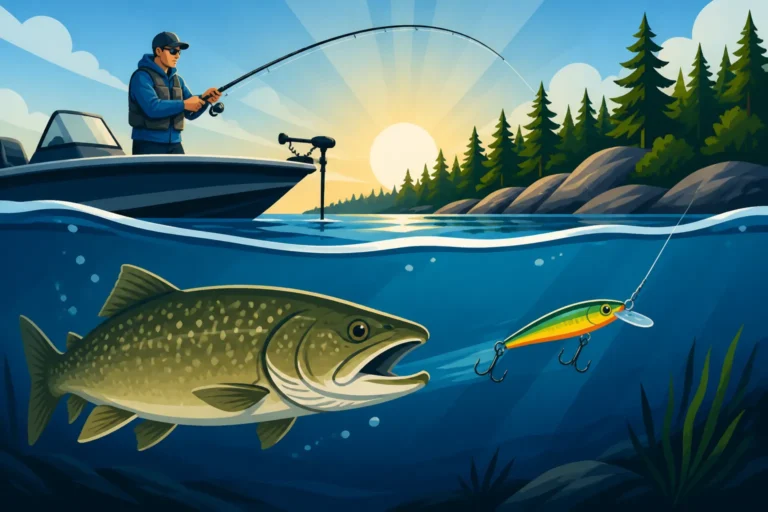
When you’re out on a sprawling lake like Sebago or Moosehead, especially during the warmer summer months, the fish you’re after — those big landlocked salmon and deep-dwelling togue (our local name for lake trout) — often retreat to the cooler, oxygen-rich depths. Getting your lure down to them reliably can feel like a constant battle, and that's precisely where copper line shines.
The Advantage of Consistent Depth and Stealth
Unlike traditional lead core line, which is great, but thicker and tends to "kite" or rise more at faster trolling speeds, copper line offers a much finer diameter for its weight. This means it cuts through the water with less resistance, allowing your lure to reach and hold those deep zones with remarkable consistency. Imagine marking a school of baitfish or a big target at 45 feet, then watching your sonar as your copper line setup glides right through that zone, presenting your offering perfectly. It's a game-changer for precise depth control.
Moreover, the thinner diameter of copper also means it's less visible in the water, adding a stealth factor that can be crucial when targeting wary fish in clear Maine waters. You're not dragging a big, noticeable weight through their habitat; instead, your lure appears to swim more naturally. This is especially important when you’re trying to entice a seasoned trophy fish that’s seen it all. For those interested in year-round tactics, understanding the Best Time of Year to Catch Landlocked Salmon in Maine and How to Fish Deep Water for Summer Trout often involves delving into these deep-water strategies.
Overcoming Common Trolling Challenges
Many anglers struggle with maintaining consistent depth while trolling. Downriggers are an excellent solution, but they require a significant investment and can be complex to set up and manage, especially for smaller boats or solo anglers. Using snap weights or dipsy divers can work, but they also add bulk, create drag, and can make reeling in a fish feel like hauling up an anchor.
Copper line offers a more streamlined approach. Its inherent weight, derived from the copper strands woven into the line, means it sinks on its own, and at a remarkably consistent rate. Typically, you can expect copper line to sink roughly 2-3 feet for every 10 pounds of breaking strength at a standard trolling speed of 2-2.5 mph. This predictable dive curve allows you to precisely calculate and target the depth you want, making it an invaluable tool for Trolling Techniques for Maine Lakes. No more guessing games or constantly adjusting weights; once you understand your setup, you'll know exactly where your lure is running.
Essential Gear for Rigging Your Copper Line
Before you even think about hitting the water, it’s crucial to have the right tools and components to rig your copper line effectively and safely. Skimping on quality here can lead to lost fish, lost lures, and a whole lot of frustration.
Choosing the Right Rod and Reel
For copper line trolling, you'll want a rod that can handle the specific demands of this heavy-duty setup. A medium-heavy to heavy power rod, typically 7 to 9 feet in length, with a moderate fast action is ideal. This combination provides the backbone to handle the weight of the copper and any decent-sized fish, while the moderate action absorbs shock and helps prevent hooks from pulling out. Look for rods designed for Great Lakes trolling or wire line applications; they often have softer tips that indicate a strike more easily and a strong butt section.
The reel is arguably the most critical component. You absolutely need a good quality level-wind reel with a line counter. Why a line counter? Because each "color" or 10-pound increment of copper line corresponds to a specific depth, and a line counter allows you to precisely deploy the desired amount of line. For instance, if you're using 45 lb test copper that dives 2 feet per 10 lbs at your chosen speed, and you want to fish at 40 feet, you'll let out 20 "colors" or 200 feet of copper (20 x 2 ft = 40 ft). Without a line counter, this becomes a chaotic guessing game. Brands like Daiwa AccuDepth, Okuma Cold Water, or similar models found on platforms like Amazon, are popular choices among seasoned Maine anglers. Ensure the reel has a large enough spool capacity to hold your backing, the desired length of copper, and your leader.
Selecting Your Copper Line, Backing, and Leader
The copper line itself is the star of the show. It comes in various breaking strengths, with the most common being 20, 30, and 45-pound test, though heavier lines are available. Remember, the heavier the line, the deeper it will dive per foot. Most anglers fishing in Maine for salmon and togue opt for 30lb or 45lb copper, as it provides a good balance of dive rate and manageability. You can find quality copper line from manufacturers like Seaguar or Blood Run Fishing.
Backing is essential. You’ll spool a good amount of braided or monofilament backing onto your reel before your copper line. Why? Copper line is expensive and generally doesn't fill a reel entirely. The backing also acts as a shock absorber and provides additional line capacity if a strong fish decides to make a long run. Most folks use 200-300 yards of 30-50 lb braided line for backing, or sometimes 20lb monofilament if they prefer a bit more stretch.
Your leader is the final, and equally critical, connection between your copper line and your lure. It should be made of fluorocarbon for its invisibility and abrasion resistance. A good starting point is 20-30 feet of 10-15 lb test fluorocarbon for salmon and trout, although some might go lighter or heavier depending on water clarity and target species. The longer leader provides a buffer between the stiffer copper line and your lure, allowing for a more natural presentation, and is less visible to the fish.
Knots, Snubbers, and Swivels
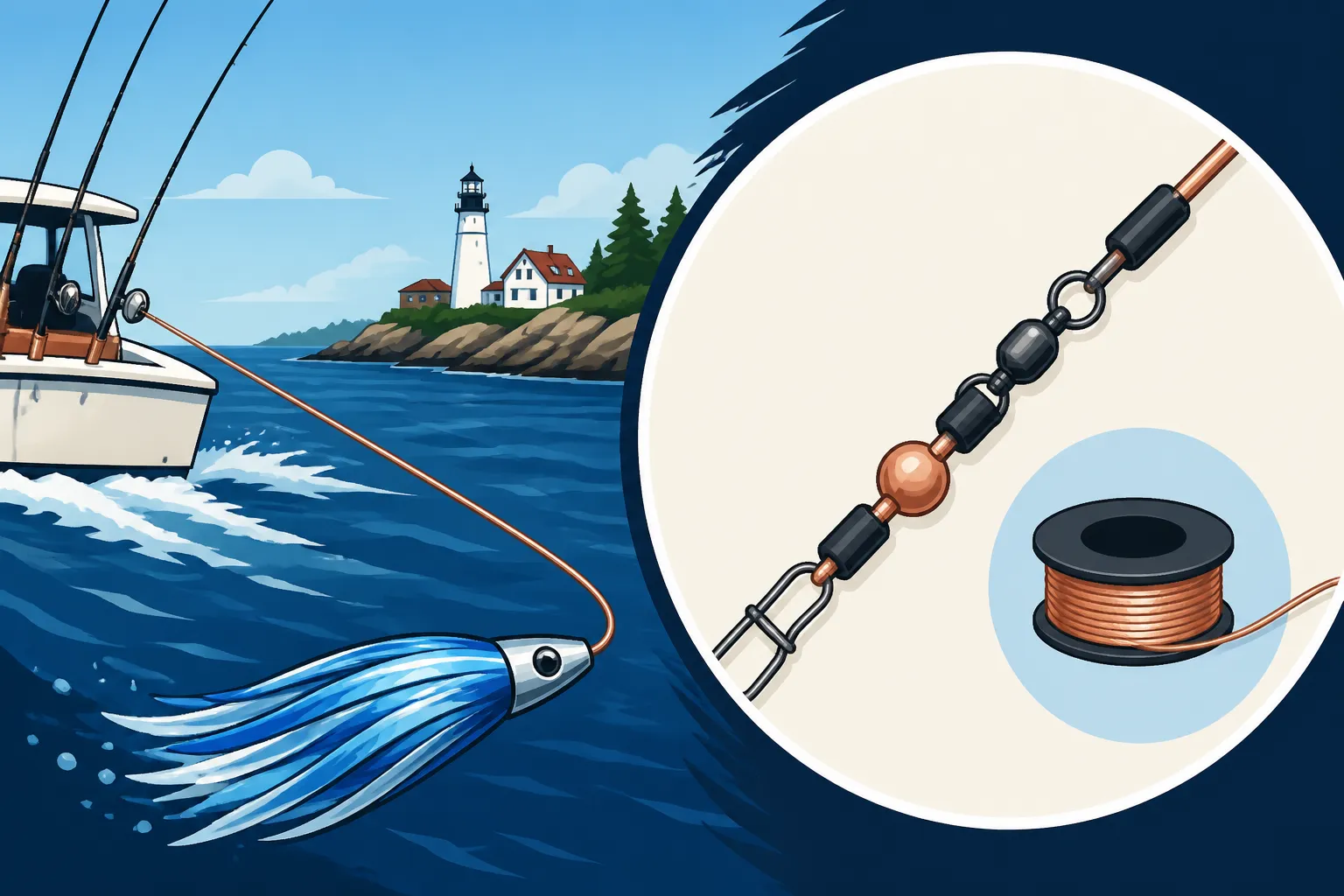
The integrity of your rigging hinges on strong, reliable connections. You’ll need to master a few key knots. The Albright knot or a double Uni knot are excellent choices for connecting your backing to your copper line, as they create a strong, low-profile connection that passes smoothly through rod guides. For connecting your copper line to your leader, a strong barrel swivel with a robust split ring is often used, sometimes with a small crimp on the copper side for added security. Then, a blood knot or improved clinch knot can be used to tie your leader to the swivel. You can also learn How to Tie a Palomar Knot for a super strong connection for your lure.
A snubber is a short piece of stretchy material, usually heavy monofilament or a specialized rubber snubber, placed between your copper line and your leader. While not strictly mandatory, many swear by snubbers for two main reasons: they absorb the shock of a strike, protecting your lighter leader and preventing tear-outs, and they can help reduce strain on your rod and reel system, especially when a powerful fish hits. These are readily available on Amazon or at your local tackle shop.
Finally, a good quality ball-bearing swivel is paramount for attaching your leader to your lure. Trolling spoons, plugs, and even flies behind copper can induce a lot of line twist, and a ball-bearing swivel will effectively mitigate this, preventing frustrating tangles and weakened line.
Step-by-Step Guide to Rigging Your Copper Line for Trolling
Alright, let's get down to the actual rigging. This isn't something you want to rush, especially if it's your first time. Take your time, lay everything out, and ensure each connection is solid.
Spooling Your Backing
First things first: you'll start by spooling your backing onto your line counter reel. Most reels have instructions on how to properly fill them.
- Tie the backing to the reel arbor: Use an arbor knot or a simple overhand knot to secure the backing directly to the spool. Make sure it's snug.
- Spool a generous amount: Aim for 200-300 yards of your chosen backing (braid or mono). This provides a good cushion, allowing you to fight a fish that makes a long run without stripping off your valuable copper. If using a line counter, reset it to zero before you begin spooling, and note the amount of backing you put on. This will help calibrate your line counter for future use.
Connecting Backing to Copper Line
This connection is crucial, as it will be buried deep in your spool but must be incredibly strong.
- Choose your knot: The Albright knot or double Uni knot are the preferred methods. The Albright creates a very slim profile, which is great for passing smoothly off the spool, while the double Uni is incredibly strong and relatively easy to tie.
- Tie it meticulously: Take your time to tie the chosen knot correctly. Moisten the line before tightening, and pull both tag ends and the main lines firmly to ensure the knot seats properly. Trim the tag ends very closely to prevent snags.
Spooling the Copper Line
Now for the main event!
- Wind on the copper: With your backing-to-copper knot secure, carefully spool the entire length of your copper line onto the reel. Keep consistent tension on the line as it goes onto the spool. You'll usually buy copper in 100-yard, 200-yard, or even 300-yard spools.
- Mind the coils: Copper line can be prone to kinking if not handled properly. Try to avoid letting it twist or form loose coils. If you're spooling from a bulk spool, have someone hold a pencil through the spool to let it rotate freely as you wind it onto your reel.
- Note your copper length: Reset your line counter again once the copper starts spooling, and note the exact length of copper line you put on. This will be vital for your depth calculations later.
Attaching the Leader and Snubber
This is the business end of your setup.
- Connect copper to swivel: Many anglers prefer to use a small, high-quality barrel swivel (rated for at least double your copper's breaking strength) connected directly to the end of the copper line. You can tie this with a knot like the improved clinch, but for extra security, some prefer to use a small crimp sleeve to create a loop in the copper, then attach the swivel to that loop. This is a very strong and reliable connection.
- Add the snubber (optional but recommended): If using a snubber, attach it to the other end of the barrel swivel. Many snubbers come with loops on both ends, making this an easy loop-to-loop connection or by tying directly to the snubber. The snubber typically runs 3-6 feet.
- Tie on your fluorocarbon leader: Attach your 20-30 foot fluorocarbon leader to the end of the snubber (if used) or directly to the barrel swivel if you skipped the snubber. An Albright knot, blood knot, or a good double Uni are all excellent choices here. Remember, the goal is a seamless, strong connection that doesn't impede lure action.
Final Lure Attachment
You’re almost ready to fish!
- Attach a ball-bearing swivel: Tie a small, high-quality ball-bearing swivel to the end of your fluorocarbon leader using an improved clinch knot or a Palomar knot. This is crucial for preventing line twist, especially with spinning lures or spoons.
- Clip on your lure: Finally, clip your chosen spoon, plug, or fly onto the snap on the ball-bearing swivel. Make sure the snap is securely closed. You're now ready to present your offering to those deep-dwelling fish! When choosing your offerings, consider what works well for Best Lures for Maine Open Water Fishing.
| Component | Recommended Type/Strength | Purpose | Connection Method (Example) |
|---|---|---|---|
| Reel | Level-wind, line counter (size 30-45) | Precise depth deployment, line capacity | N/A (spools line) |
| Rod | 7-9 ft, MH-H power, moderate fast action | Handle heavy line, absorb shock, detect strikes | N/A (holds reel) |
| Backing | 30-50 lb braid or 20 lb mono (200-300yds) | Fills spool, shock absorption, extra line capacity | Arbor knot to spool, Albright/Double Uni to copper |
| Copper Line | 30-45 lb test (100-300 yds) | Sinks to depth, consistent presentation | Albright/Double Uni to backing, crimp/knot to swivel |
| Swivel (Copper end) | Heavy-duty barrel swivel (2x line strength) | Connects copper to leader/snubber, prevents twist | Crimp or improved clinch knot to copper |
| Snubber | Heavy mono or rubber (3-6 ft) | Absorbs shock, protects leader, prevents tear-outs | Loop-to-loop or knot to barrel swivel |
| Leader | 10-15 lb fluorocarbon (20-30 ft) | Stealth, abrasion resistance, natural lure presentation | Albright/Blood knot to snubber/swivel |
| Swivel (Lure end) | Ball-bearing swivel with snap | Prevents line twist at lure, allows quick lure changes | Improved clinch/Palomar knot to leader |
| Lure | Spoon, plug, fly, bait rig | Attracts fish | Clip to ball-bearing swivel snap |
Tips for Successful Copper Line Trolling in Maine
Now that your gear is rigged up, it's time to put it to use on the water. Trolling with copper line has a bit of a learning curve, but these tips will help you get those rods bent.
Understanding Your Depth Chart and Trolling Speed
The biggest advantage of copper is its predictable sink rate, but you need to know your sink rate. While a general rule of thumb is 2-3 feet per 10 pounds of copper line at 2-2.5 mph, this can vary slightly based on your specific line, lure size, and importantly, your trolling speed.
- Test and Learn: On your first few trips, use your fish finder to confirm your lure depth. Let out a known amount of copper (e.g., 100 feet or 10 colors if you’re using multi-colored copper), and watch your sonar. Adjust your speed until you see the lure appearing at the expected depth.
- Keep a Log: Make notes on your speed, how much copper you let out, and the actual depth observed on your Reading a Fish Finder on Maine Lakes screen. This log will become invaluable over time. If you speed up, your lure will rise slightly; slow down, and it will sink deeper. Consistency is key.
- Target Species: Remember that different species might prefer different depths. Landlocked salmon often cruise higher in the water column than togue, which tend to hug the bottom or deep structure. This is where knowing the Togue Minimum Length Limit in Maine and other regulations for specific species is important.
Maneuvering and Adjusting for Bites
Trolling in a straight line isn’t always the most effective strategy. Fish are often triggered by changes in lure speed or direction.
- S-Turns: Make gentle, wide S-turns with your boat. As you turn, the lines on the inside of the turn will slow down and sink deeper, while the lines on the outside will speed up and rise. This varying action can often induce strikes from hesitant fish.
- Speed Changes: Experiment with subtle changes in your trolling speed. A slight acceleration followed by a deceleration can make your lure dart and then flutter, mimicking fleeing or injured baitfish.
- Currents and Structure: Pay close attention to current seams and underwater structure on your sonar. Fish often orient themselves around these features. When you're fishing in a large body of water, it's always helpful to consult the Maine Fishing Regulations Explained for any specific rules related to the area you're exploring.
Lure Selection and Presentation
Copper line is incredibly versatile and can be used with a wide array of lures.
- Spoons: Flutter spoons and diving spoons are exceptionally popular with copper line. Their erratic action at depth is irresistible to salmon and lake trout. Popular choices include the Little Cleo, Sutton, or Mooselook Thrasher spoons, often in silver, gold, or vibrant colors like orange and chartreuse.
- Plugs: Small stickbaits and crankbaits can also be effective. Look for lures that have a good natural swimming action without needing too much speed.
- Flies: Believe it or not, some anglers will rig tandem streamers or smelt patterns behind copper line, especially for salmon. The long fluorocarbon leader gives the flies a very natural presentation.
- Leader Length: Don't be afraid to experiment with leader length. Sometimes a longer leader (30-40 feet) can be more effective in extremely clear water, while a shorter one (15-20 feet) might be better in stained conditions or when fish are very aggressive. Remember, the goal is to make your lure look as natural as possible, untethered from the heavy copper line.
Rigging a copper line for trolling might seem like an advanced technique, but with the right gear and a little practice, it quickly becomes an indispensable tool for unlocking Maine's deep-water fishing potential. It's an effective way to consistently put your lures in the strike zone, leading to more successful and rewarding fishing trips for those prized salmon and togue.
Disclaimer
Please note that fishing regulations, including line limits and gear restrictions, can change. Always consult the latest Maine Department of Inland Fisheries and Wildlife regulations before heading out on your fishing trip. This guide is for informational purposes only and does not supersede official state regulations.