Best Streamer Patterns for Landlocked Salmon
There's nothing quite like the thrill of a landlocked salmon hitting a well-presented streamer in Maine's pristine waters. These silver bullets are notorious for being finicky, though, and it's easy to spend a whole day on the water without a single take if you're not using the right approach. This guide will cut through the guesswork, diving deep into the characteristics and specific patterns that consistently entice Maine's landlocked salmon, giving you the edge you need for a successful outing.
Understanding Landlocked Salmon Behavior and Diet
Before we even talk about specific fly patterns, it’s crucial to understand what makes a landlocked salmon tick. These fish are powerful, predatory creatures, essentially a freshwater version of their ocean-going Atlantic salmon cousins. They thrive in cold, oxygen-rich lakes and rivers, and their primary diet in Maine revolves heavily around baitfish, especially rainbow smelt. Smelt are small, silvery, and schooling fish that provide the bulk of the calories for growing salmon.
Think about it from the salmon's perspective: they're always on the lookout for an easy meal that resembles a smelt, a juvenile perch, or even a small chub. This strong preference for baitfish is precisely why streamers, which are designed to imitate these small prey items, are so incredibly effective. When you're fishing for landlocked salmon, you're not trying to mimic insects hatching off the surface (though they will occasionally take a dry fly, especially early in the season). Instead, you're trying to convince a lean, mean hunting machine that your fly is a tasty, vulnerable morsel swimming by. Understanding this predatory instinct is the first step to choosing the right streamer and presenting it correctly.
The Smelt Connection: Why It Matters
In Maine, the lifeblood of a healthy landlocked salmon population is often the rainbow smelt. These small, slender fish typically school up in large numbers, providing an abundant food source. Because of this, many of the most productive streamer patterns are specifically designed to imitate smelt. This isn't just about color; it's about profile, flash, and how the fly moves in the water.
A prime example is during the spring when smelt runs occur, drawing salmon into shallower waters or river mouths to feed. If you're out there when the smelt are actively spawning or migrating, using a pattern that accurately mimics a smelt can be absolutely deadly. Even outside of these specific runs, salmon are constantly hunting for smelt in the deeper parts of lakes or along structure. Therefore, having a diverse selection of smelt imitations in your fly box is non-negotiable for serious Maine salmon anglers. For more insights into these fascinating fish, be sure to check out our comprehensive guide on Landlocked Salmon Fishing in Maine.
Essential Streamer Characteristics for Maine Salmon
When selecting or tying a streamer for landlocked salmon, several characteristics play a vital role in its effectiveness. It's not just about picking a pretty fly; it's about understanding how these elements interact to fool a wary fish.
Size and Profile
The size of your streamer should generally match the prevalent baitfish in the waters you're fishing. In many Maine lakes, smelt typically range from 2 to 5 inches, so streamers in that 2.5 to 4-inch range are often ideal. However, sometimes smaller "peanut" patterns (1.5-2 inches) can be incredibly effective, especially in early spring or when fish are being particularly picky. Conversely, if you're targeting truly trophy-sized salmon, don't be afraid to go a bit larger, up to 5 or even 6 inches. The profile refers to the overall shape of the fly in the water. Salmon prefer slender, elongated profiles that accurately mimic smelt or other common baitfish. A bulky, clunky streamer will often be ignored. The goal is a sleek, lifelike silhouette that appears agile and natural as it moves through the water.
Color and Flash
Color is perhaps one of the most debated aspects of fly fishing, but for landlocked salmon, it's pretty straightforward: silver, white, black, blue, and green are your primary palette. Silver and white are critical for mimicking the belly and flash of most baitfish. Black is excellent for contrast against brighter skies or in low-light conditions, creating a strong silhouette. Blue and green can imitate the backs of smelt or blend in with the aquatic environment. The amount of flash is also crucial. Many streamers incorporate Mylar, Krystal Flash, or other reflective materials to imitate the subtle shimmer of scales. Too much flash can sometimes spook wary fish, especially in clear water and bright sunlight, while too little might not grab their attention in murkier conditions. It's often a balance, so having patterns with varying degrees of flash is a smart move.
Action and Movement
The way a streamer moves through the water is just as important as its appearance. Landlocked salmon are ambush predators; they react to sudden darting movements, subtle wiggles, and quick changes in direction that suggest a wounded or fleeing baitfish. Streamers tied with soft, flowing materials like marabou, rabbit strip, or saddle hackle will pulse and breathe with each strip of the line, giving them an incredibly lifelike action. Flies with stiffer wings might be better for faster retrieves or in current, offering a more darting, fleeing appearance. When casting these patterns, your retrieve technique plays a huge role in imparting the desired action. Different materials react differently, so understanding your fly's inherent movement helps you manipulate it effectively.
Top Streamer Patterns for Landlocked Salmon in Maine
Now for the exciting part! While there are countless effective streamers, a handful have consistently proven their worth on Maine's landlocked salmon waters over generations. These are the patterns you absolutely need in your fly box.
The Gray Ghost
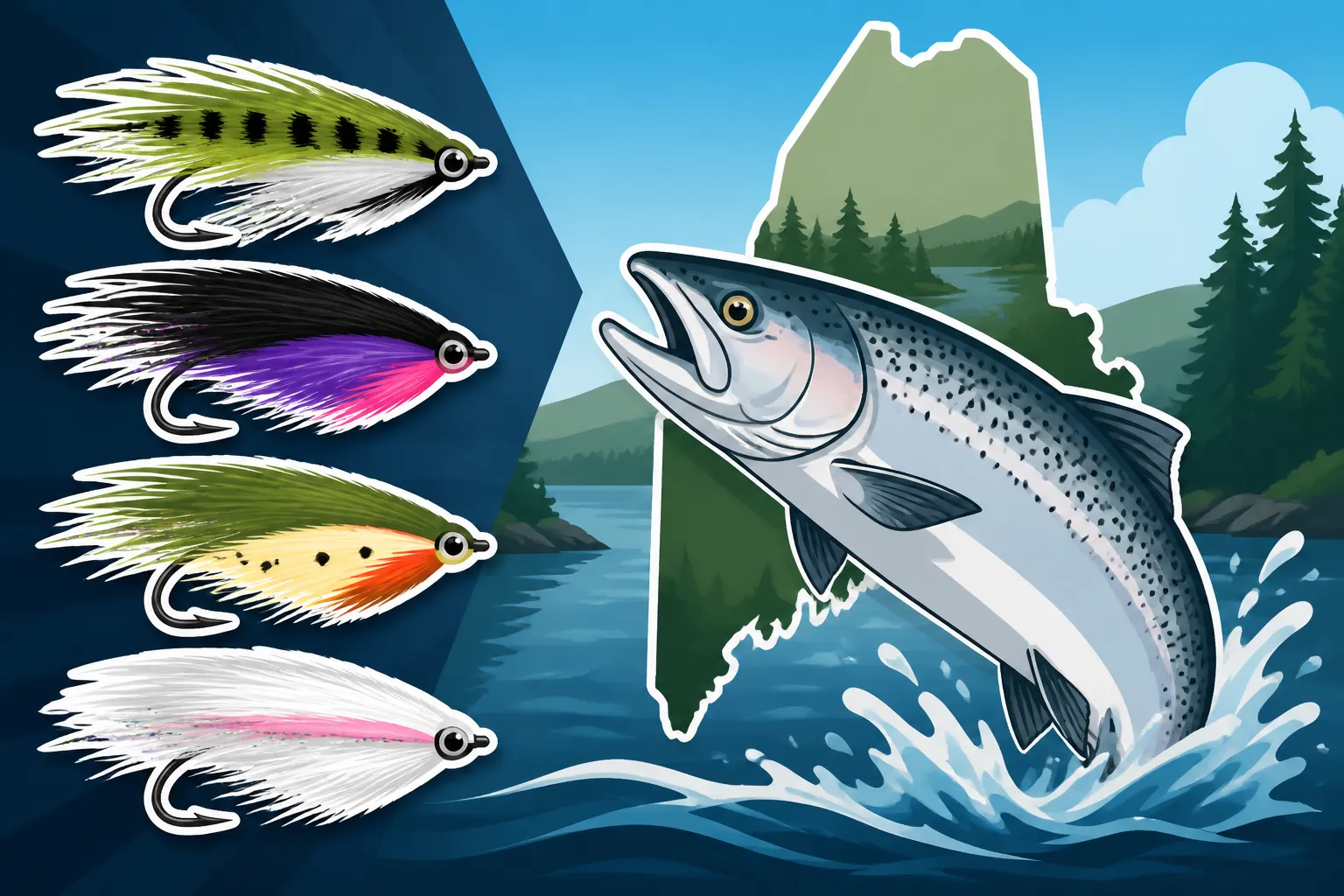
No discussion of landlocked salmon streamers is complete without the legendary Gray Ghost. Developed by Carrie Stevens in the Rangeley Lakes region of Maine in the early 20th century, this pattern is an icon for a reason. Its unique blend of grey and white feathers, accented with a subtle green and red, perfectly mimics the rainbow smelt. The long, flowing saddle hackle wings give it an incredible swimming action, breathing and undulating with every movement.
The Gray Ghost is particularly effective in clear, sunlit waters where its subtle flash and natural profile truly shine. It's a fantastic choice for trolling, but also highly productive when cast and retrieved in stillwaters or river pools. Many anglers swear by it during the spring and fall runs when salmon are actively pursuing smelt. You can find high-quality Gray Ghosts, often tied with great precision, from specialized fly shops or even larger online retailers like Amazon, if you're not into tying your own.
Smelt Imitations: Black Ghost, Supervisor, and Barnes Special
Beyond the Gray Ghost, a trio of other patterns are also fantastic smelt imitations, each with its own nuances:
- Black Ghost: This pattern, typically tied with black marabou or bucktail and a white belly, creates a stark silhouette. It’s absolutely deadly in low-light conditions, overcast days, or stained water where fish need a more pronounced profile to key in on. The marabou version, in particular, offers fantastic movement, mimicking a struggling baitfish. It’s also a go-to for many anglers during the initial ice-out period in spring.
- Supervisor: Another classic Maine pattern, the Supervisor often features a yellow or orange body with green and white wings, sometimes incorporating a bit of flash. It's thought to imitate a variety of juvenile baitfish, and its brighter colors can be very effective in attracting aggressive fish or in waters with a slight tint. It’s a versatile pattern that can work well in a range of conditions.
- Barnes Special: This pattern, often tied with a mix of white, red, and sometimes blue or green, is another highly effective smelt imitation. It tends to have a slightly fuller body than some other patterns and a distinctive head. The Barnes Special offers a good balance of natural colors and subtle flash, making it a solid choice when salmon are being a bit selective.
Flashy and General Baitfish Patterns: Nine-Three and Mickey Finn
Sometimes you need a little more pizzazz to get a salmon's attention, or a more general pattern that doesn't strictly adhere to one baitfish profile.
- Nine-Three: This pattern, often featuring a white belly, red throat, and a blue/green back with plenty of flash, is designed for maximum visibility and appeal. It's a great choice on bright days when you want to catch the light, or when trying to provoke a reaction strike from an aggressive fish. Its vibrant colors and flashy components can make it stand out in a busy water column.
- Mickey Finn: A widely known pattern, the Mickey Finn is simple yet incredibly effective. It typically features a yellow body with red and yellow bucktail wings, often ribbed with silver tinsel. While not a strict smelt imitation, its bright, contrasting colors and overall baitfish profile make it an excellent general attractor. It's a reliable choice when you're not sure what baitfish salmon are keying on, or simply want a versatile, visible pattern. You can usually find materials for tying these patterns in bulk on Amazon if you're looking to stock up.
Modern Synthetics and Sculpin Patterns
While the classics are indispensable, don't overlook modern synthetic patterns that offer new levels of flash, durability, and action. Streamers tied with Faux Bucktail, Flashabou, or various synthetic fibers can create incredibly translucent and lifelike baitfish profiles. These materials often retain water better, giving the fly a fuller profile in the water, and can be tied in a vast array of colors.
Additionally, don't forget about sculpin imitations. While smelt are crucial, salmon will also prey on sculpins, particularly in rivers or rocky lake margins. Patterns like the Muddler Minnow, especially when weighted or tied with a deer hair head, can be excellent sculpin imitations. They offer a bulkier profile and often provoke aggressive strikes when fished near the bottom or around structure.
| Streamer Pattern | Primary Baitfish Mimic | Ideal Conditions | Key Characteristics |
|---|---|---|---|
| Gray Ghost | Rainbow Smelt | Clear water, sunny days | Flowing grey/white wings, subtle green/red accents |
| Black Ghost | Rainbow Smelt | Low light, overcast, stained water | Black marabou/bucktail, white belly, strong silhouette |
| Supervisor | Juvenile Baitfish | Slightly tinted water, aggressive fish | Yellow/orange body, green/white wings, some flash |
| Barnes Special | Rainbow Smelt | Versatile, selective fish | White, red, sometimes blue/green, balanced flash/color |
| Nine-Three | Attractor/Flashy Smelt | Bright days, active fish | White belly, blue/green back, lots of flash |
| Mickey Finn | General Baitfish | All-around attractor, varied conditions | Yellow body, red/yellow bucktail, high visibility |
| Muddler Minnow | Sculpin/General Baitfish | Near bottom, rocky structure, current | Deer hair head, buggy profile, good for aggressive strikes |
Techniques for Fishing Streamers Effectively
Having the right streamer is only half the battle; knowing how to present it effectively is just as important. Landlocked salmon are opportunists, but they're also wary, so your technique can make all the difference.
Casting and Retrieval Methods
The way you retrieve your streamer will dictate its action and appeal. The most common method involves a strip-pause retrieve. Cast your streamer out, let it sink to the desired depth, then begin with a series of short, sharp strips of the fly line, pausing briefly between strips. This erratic movement mimics a struggling or fleeing baitfish. Vary the length and speed of your strips until you find what the fish prefer on a given day. Sometimes a long, slow retrieve with occasional twitches is best, while other times a rapid, continuous strip will provoke strikes. Don't be afraid to experiment!
If you're fishing in a river or current, a quartering-downstream cast followed by a swing can be incredibly effective. Let the current impart natural movement to your streamer as it sweeps across the river, occasionally adding a strip or twitch to make it look alive. When fishing in stillwaters, remember that salmon often patrol drop-offs, points, and submerged structures. Cast your streamer to these areas and work it back, paying close attention to any subtle taps or changes in line tension. For deeper insights into presentation, our guide on Trolling Techniques for Maine Lakes can also offer valuable principles that translate to streamer fishing.
Line and Leader Choices
Your choice of fly line and leader is critical for getting your streamer to the correct depth and presenting it naturally.
- Fly Line: For most streamer fishing, a sinking tip line or a full sinking line is preferred, especially in lakes where salmon hold in deeper water. A Type III or Type IV sinking tip will get your fly down quickly to depths of 5-15 feet, which is often where salmon are cruising. For even deeper presentations, a full sinking line (Type V or VI) might be necessary. In rivers or shallower sections, a floating line with a longer leader can sometimes work, especially if fish are near the surface.
- Leader: A fluorocarbon leader is almost always recommended for landlocked salmon. Fluorocarbon is less visible underwater than monofilament and has a higher abrasion resistance, which is great around rocks or when fighting a powerful fish. A leader typically ranging from 6 to 9 feet, with a breaking strength of 6 to 10 pounds, is a good starting point. You want a leader that turns over your streamer efficiently but isn't so heavy it inhibits the fly's natural action. For strong knots that won't let you down, our article on How to Tie a Palomar Knot is a must-read.
Targeting Key Locations and Conditions
Landlocked salmon are creatures of habit and temperature. Understanding where they're likely to be found at different times of the year and day is key.
- Early Spring (Ice-Out): As the ice melts, salmon will often cruise the shallow, warmer waters of shorelines, coves, and river mouths, feeding heavily on smelt that are migrating or spawning. This is a prime time for streamers.
- Summer: When lake temperatures rise, salmon retreat to deeper, cooler water, often suspending over deep drop-offs, humps, and points. You'll need sinking lines and precise depth control to reach them. Early mornings and late evenings are often the best times, as fish might move shallower to feed.
- Fall: As waters cool, salmon become more active, moving into shallower lake areas and rivers to prepare for spawning. This can be another fantastic time for aggressive streamer fishing, especially if you know their spawning routes. Our guide on Best Time of Year to Catch Landlocked Salmon in Maine offers an even more detailed breakdown.
Always pay attention to water temperature, light conditions, and any signs of baitfish activity. If you see smelt dimpling the surface or jumping, you know salmon are likely nearby. Conversely, if you're not getting hits in one spot, move on. Maine has countless productive waters, and persistence, combined with the right streamer and technique, will ultimately lead to success.
Disclaimer
Fishing conditions and regulations in Maine can change rapidly. Always consult the latest Maine Department of Inland Fisheries and Wildlife (MDIFW) regulations before heading out on the water. This guide is for informational purposes only and does not supersede official state regulations.