How to Nymph Fish for Trout
It's incredibly frustrating when you're out on the water, seeing fish rise or sensing their presence, but nothing you're casting seems to tempt them. Many anglers, myself included, have spent countless hours trying every dry fly in the box or stripping streamers with no luck, only to realize the trout are feeding on something entirely different, something you can't see on the surface. This comprehensive guide will pull back the curtain on one of the most effective, yet often intimidating, techniques for consistently catching trout in Maine's diverse waters: nymph fishing. We'll demystify the art and science of presenting subsurface insects, ensuring you spend less time guessing and more time connecting with those elusive fish.
Understanding Nymph Fishing for Trout
Nymph fishing can feel like a secret weapon once you get the hang of it, and for good reason. It taps into the primary food source for most trout, most of the time. If you've ever found yourself wondering why the fish aren't biting despite perfect conditions, the answer often lies beneath the surface.
What Exactly is Nymphing?
At its heart, nymphing is simply imitating the immature, aquatic stage of insects that live in rivers, streams, and lakes. Think of caddisflies, mayflies, stoneflies, and midges – before they sprout wings and fly away, they spend a significant portion of their lives as "nymphs" clinging to rocks, burrowing in sediment, or drifting in the current. These nymphs are a constant, reliable food source for trout, making up a huge percentage of their diet.
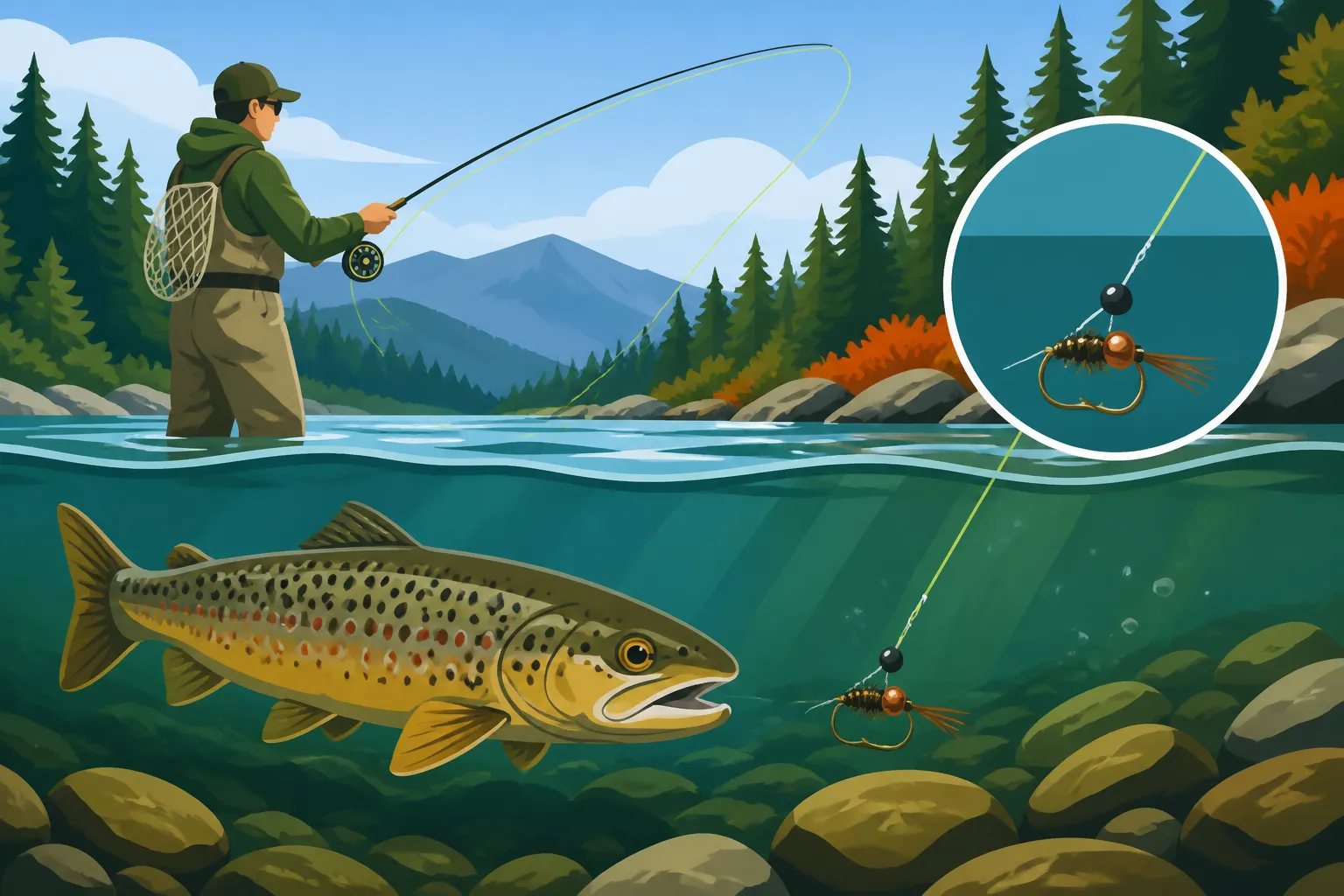
When we talk about "nymphing," we're not just referring to tying on a specific fly. It's a whole approach to presenting these imitations in a way that looks as natural as possible to a feeding trout. You're trying to replicate a drifting insect, often using a weighted fly to sink to the fish's feeding depth and a subtle indicator on your line to detect those soft, subsurface takes. It's a game of precision, patience, and understanding what's happening beneath the surface, far from the splashy excitement of a dry fly rise. It’s also important to be familiar with the various Maine Fishing Regulations Explained to ensure you're compliant with local rules, as some waters might have specific gear restrictions.
Why Nymphing is So Effective in Maine
Maine's freshwater ecosystems are teeming with aquatic insect life, from the smallest mountain brooks to the largest lakes. This abundance means that trout in Maine, whether they're wild brook trout, robust landlocked salmon, or opportunistic brown trout, are almost constantly feeding on nymphs.
Consider a typical Maine stream or river. The bedrock, gravel, and submerged vegetation provide perfect habitat for a myriad of insect species. Hatches of adult insects might be sporadic or last only a few hours a day, but nymphs are available 24/7. When a trout sees a juicy nymph drifting by, it's often an easy meal that requires minimal energy expenditure. This makes nymphing incredibly effective, especially when no visible hatch is occurring, or when fish are holding deep in cooler water.
Species like our native Brook Trout Fishing in Maine rely heavily on these subsurface snacks, especially in the clear, cold waters they prefer. Even larger fish like Landlocked Salmon Fishing in Maine, while known for chasing baitfish, won't pass up a substantial stonefly nymph if it drifts enticingly past their nose. By understanding the trout's natural diet and mimicking it effectively, you're tapping into their most fundamental feeding behavior, making nymphing a crucial skill for any serious angler in the Pine Tree State.
Essential Gear for Nymph Fishing in Maine
Having the right tools for the job can make a world of difference when you're nymph fishing. While you don't need highly specialized equipment to start, understanding how each component contributes to a successful presentation will elevate your game.
Rod, Reel, and Line Selection
Choosing the right rod, reel, and line forms the foundation of your nymphing setup. The goal is versatility and control.
- Rods: For general nymphing in Maine's varied waters, a fly rod in the 7.5 to 9-foot range with a 3-weight to 5-weight action is usually ideal. A longer rod (like a 9-footer) provides better line control, easier mending, and can help keep more line off the water, which is critical for a drag-free drift. A medium-fast action rod offers a good balance of power for casting weighted flies and sensitivity for detecting subtle takes. While a lighter rod (3wt) can be incredibly sensitive for small stream brook trout, a 5wt offers more backbone for larger rivers or windier conditions. If you're looking for guidance, you might find useful information in a guide like How to Choose a Fly Rod for Trout.
- Reels: Your reel's primary job in nymphing is to hold your line. A simple, reliable click-and-pawl or a basic disc drag reel that balances your rod is perfectly sufficient. You won't be fighting large, screaming runs that demand a high-performance drag system most of the time, so prioritize balance and durability over intricate features.
- Line: A weight-forward floating fly line is standard. The weight-forward taper helps punch through wind and turn over heavier nymph rigs. The floating nature of the line is crucial because it keeps your main line on the surface, allowing you to mend effectively and manage your drift without pulling your nymphs out of their natural path.
You can find a wide array of options on platforms like Amazon or at your local fly shop, offering everything from entry-level combos to high-performance setups. Don't feel pressured to buy the most expensive gear; a solid, mid-range setup will serve you well for years.
Leaders, Tippet, and Indicators
These smaller components are absolutely vital for proper nymph presentation and detecting strikes. They are the connection between your line and the fish.
- Leaders: A tapered leader, typically 9 to 12 feet long, is a great starting point. The taper helps transfer casting energy smoothly and allows your fly to land gently. For nymphing, many anglers opt for a fluorocarbon leader or a fluorocarbon tippet section because fluorocarbon sinks faster than monofilament and is nearly invisible underwater, reducing spooking wary trout. A 4X or 5X leader is a versatile choice.
- Tippet: This is the fine, nearly invisible line that connects your leader to your fly. For nymphing, you'll often be using 4X to 6X tippet, depending on fly size and water conditions. Again, fluorocarbon is often preferred for its sinking properties and abrasion resistance, especially when fishing around rocks or logs. Keep a spool of several sizes handy. Remember that longer tippet sections allow your nymph to sink deeper and drift more naturally.
- Indicators: These are your "eyes" on the water. A strike indicator tells you when a fish has taken your nymph, which often feels like nothing more than a slight pause or twitch. Common types include:
- Foam indicators: Easy to attach and adjust, highly visible, but can create drag. Brands like Thingamabobber are popular.
- Yarn indicators: Less intrusive, can be treated with floatant, very sensitive.
- Sighter material: Often used in Euro nymphing, these are brightly colored sections of monofilament or fluorocarbon tied into your leader, offering direct contact and subtle strike detection.
Experiment with different types to see what works best for your style and the conditions you're fishing.
Must-Have Nymph Patterns for Maine Trout
While there are countless nymph patterns, a handful have proven their effectiveness time and again in Maine's waters. Stocking your fly box with these classics will put you in a great position.
| Nymph Pattern | Primary Imitation | Common Sizes | Best for… |
|---|---|---|---|
| Pheasant Tail Nymph | Mayfly nymph | #12 – #20 | All trout species, clear water, subtle takes |
| Hare's Ear Nymph | Mayfly nymph, caddis pupa | #10 – #18 | General purpose, darker waters, prospecting |
| Prince Nymph | Stonefly nymph, larger mayfly nymph | #8 – #16 | Aggressive trout, faster currents, bigger fish |
| Caddis Larva (e.g., LaFontaine's Emergent Sparkle Pupa) | Caddisfly larva and pupa | #10 – #18 | During or leading up to caddis hatches |
| Stonefly Nymph (e.g., Pat's Rubber Legs) | Stonefly nymph | #4 – #12 | Bigger trout, colder water, fast runs |
| Copper John | Caddis larva, general attractor | #12 – #20 | Fast sinker, deep pockets, versatile attractor |
These patterns represent a range of insect types and sizes, ensuring you have options for different hatches and water conditions. Generally, having them in sizes from #12 to #20 will cover most situations, though larger stonefly patterns (#8-#12) can be killer for bigger trout, especially in waters known for them, such as the upper Kennebec or Penobscot. You'll find that having a variety of these reliable patterns, especially with different beadhead weights, is much more important than having hundreds of obscure patterns. Check out Best Flies for Brook Trout in Maine Streams for more specific recommendations.
Mastering Nymph Fishing Techniques
Once you have your gear sorted, it's time to dive into the techniques that will make your nymphing successful. It's not just about getting the fly in the water; it's about making it look alive and irresistible.
The Dead Drift: The Gold Standard
The dead drift is the bedrock of effective nymphing. It's about achieving a presentation where your fly moves at the exact same speed as the natural current, completely free of any drag or unnatural movement from your line. Imagine a natural insect dislodged from the bottom, tumbling freely downstream – that's what you're trying to replicate.
- Casting Upstream: Make your cast slightly upstream and across the current from where you anticipate the trout to be holding. This gives your fly time to sink to the appropriate depth before it reaches the fish.
- Mending the Line: As soon as your line hits the water, you'll likely need to "mend." This involves flicking your rod tip upstream or downstream to reposition your fly line on the water without moving your fly. The goal is to create a U-shaped slack in your line that allows the fly to drift naturally. In Maine's often complex river currents, mending is a continuous process throughout your drift.
- Watching the Indicator: Your strike indicator is your primary tool for detecting strikes. Any pause, twitch, sudden dive, or acceleration of the indicator could mean a fish has taken your nymph. Set the hook with a quick, upward flick of the wrist at the slightest irregularity. Many strikes are incredibly subtle, so staying focused is key.
- Reading Water: Understanding where trout hold is critical. They'll be in places where food is abundant but energy expenditure is minimal – seams where fast and slow currents meet, behind rocks or logs, in the deeper parts of runs, or at the head of a pool. These are prime dead-drift zones.
High-Sticking and Euro Nymphing Basics
While the dead drift is fundamental, more advanced techniques like high-sticking and Euro nymphing offer even greater control and precision, especially in challenging waters.
- High-Sticking: This technique involves keeping as much of your fly line off the water as possible, using a long rod and an extended arm to guide your nymphs through a short, precise drift. By minimizing line on the water, you virtually eliminate drag, allowing for extremely natural presentations in tricky currents. It's particularly effective in broken, turbulent water, pocket water, or small streams where you're making short, targeted casts to specific holding lies. You're almost always in direct contact with your fly, making strike detection immediate.
- Euro Nymphing (Contact Nymphing): This is a specialized form of high-sticking that takes direct contact to the next level. It typically involves longer, lighter rods (10-11 feet, 2-4 weight), specialized leader systems that often incorporate bright sighter material (no traditional buoyant indicator), and weighted nymphs. The angler maintains continuous tension between the rod tip and the nymphs, feeling for strikes rather than seeing an indicator move. This method is incredibly effective for covering water efficiently, achieving deep drifts quickly, and detecting the most subtle takes. It's a fantastic technique for technical tailwaters and freestone rivers where pinpoint accuracy and drag-free drifts are paramount. If you're looking to dive deeper into fly fishing techniques, consider exploring Fly Fishing Techniques for Maine Rivers.
Reading the Water for Nymphing Success
Understanding where trout lie is perhaps the most crucial skill for any angler, and it's especially true for nymphing. Trout are creatures of efficiency; they want to find food without expending too much energy, and they need shelter from predators and strong currents.
- Riffles and Runs: These are oxygen-rich areas where insects are often dislodged. Trout will hold just out of the main current, picking off passing nymphs. Focus on the edges, behind larger rocks, or in the seams.
- Seams: Where fast water meets slow water (or two different current speeds meet) is a prime feeding lane. Trout will often sit in the slower water, waiting for food to be delivered by the faster current.
- Pools: While pools might seem calm, the deeper sections often hold larger fish. Pay attention to the head of the pool (where the water enters), the tail (where it exits), and any submerged structure like logs or boulders.
- Structure: Rocks, downed trees, undercut banks, and even changes in bottom contour all provide cover and current breaks. Trout will utilize these areas as ambush points or resting spots.
- Depth: Trout will often go deeper when the water is warmer or brighter, seeking cooler temperatures and cover. Knowing how to adjust your fly's weight and your leader setup to get to that depth is key.
Learning to read the nuances of moving water takes practice, but by paying attention to current speed, depth, and structure, you'll start to anticipate where trout are likely to be holding and present your nymphs accordingly. For general guidance on seasonal timing, check out Maine Fishing Season Dates Guide.
Nymphing Strategies for Different Maine Waters
Maine offers an incredible diversity of fishing environments, from tiny brooks hidden deep in the woods to sprawling lakes and powerful rivers. Adapting your nymphing strategy to the specific type of water you're fishing will significantly increase your success.
Rivers and Streams
Maine's rivers and streams are classic nymphing territory. Whether you're targeting wild brook trout in a small, remote creek or larger landlocked salmon in a major river system, the principles of presenting a natural drift hold true.
In smaller streams, stealth is paramount. Trout in these waters are often more skittish due to less cover and clearer water. Approach carefully, keeping a low profile, and make accurate, short casts. Focus your efforts on pocket water—those small, calm spots behind rocks or logs where trout can rest out of the current and wait for food. The "high-sticking" method works exceptionally well here, allowing you to guide your fly through these tight windows without drag. For specific insights into where to find these fish, refer to Where Brook Trout Live in Maine Streams.
For larger rivers, you might employ longer casts and more aggressive mends to cover broader sections of water. Target seams, current breaks along undercut banks, and the deeper runs. Tandem nymph rigs (two nymphs tied in series) can be highly effective in rivers, allowing you to cover multiple depths or present different fly patterns simultaneously. During certain times of year, especially in the spring or fall, trout can be incredibly active. To understand the best times to fish, take a look at Best Time of Year to Fish in Maine.
Lakes and Ponds
While nymphing is often associated with moving water, it's also a highly effective technique for stillwaters like Maine's countless lakes and ponds. Here, the challenge is often finding the fish and presenting your nymph in a way that mimics their natural movement without the aid of a current.
In lakes and ponds, trout will often congregate near structures like submerged weed lines, rock piles, drop-offs, or around the mouths of feeder streams. Nymphing from a float tube, kayak, or boat allows you to access these areas.
- Indicator Nymphing: This is a common and effective method. Cast your nymph rig (often a single or tandem rig) with an indicator, letting it sit for an extended period. The slight ripple of the water or a gentle retrieve can impart just enough action to mimic a struggling insect. Adjust your indicator's depth frequently until you find where the fish are holding.
- Slow Retrieve: Instead of relying solely on the current, you might need to impart a slow, steady retrieve with small pauses to imitate a nymph swimming. This can be especially effective when fish are cruising.
- Focus on Inlets/Outlets: If the lake has an inlet or outlet stream, these areas are often hotspots, as they concentrate both food and fish.
Exploring the many bodies of water can be overwhelming, so starting with a guide like Best Fishing Lakes in Maine might give you some ideas for where to apply these stillwater nymphing techniques.
Seasonal Considerations for Nymphing
The timing of your nymphing adventures throughout the year in Maine can significantly impact your success, as trout behavior and insect activity change with the seasons.
- Spring (Ice-Out to June): This is a prime nymphing season. After ice-out, trout are hungry and actively feeding to recover from winter. Water temperatures are rising, stimulating insect activity. Larger, darker nymphs like stoneflies and larger mayfly patterns (e.g., Prince Nymph, Hare's Ear) are often very effective. Fish will be less spooky and more willing to move for a meal.
- Summer (July to August): As water temperatures rise, trout often move to deeper, cooler water or become more active during the cooler parts of the day (early morning, late evening). Smaller nymphs, especially midge patterns and tiny mayfly nymphs (e.g., small Pheasant Tails, size #18-22), become crucial. Focus on deep pools, shaded runs, or areas with good oxygenation.
- Fall (September to November): Autumn brings another surge in nymphing activity. Trout, particularly brook trout and landlocked salmon, become very aggressive as they prepare for spawning or winter. Larger, more imitative nymphs and even small streamers fished like nymphs can be deadly. Fish often congregate in runs and riffles. This is a fantastic time for both quantity and quality.
Understanding these seasonal shifts in trout behavior and insect life cycles, often referred to as "matching the hatch" (even for nymphs), will help you choose the right patterns and tactics throughout the year. For detailed seasonal breakdowns, consider reviewing a resource like Maine Fishing Season Dates Guide.
Disclaimer
Fishing regulations, license requirements, and local conditions in Maine can change. Always consult the most current Maine Department of Inland Fisheries and Wildlife (MDIFW) regulations before heading out on the water. This guide is for informational purposes only and does not supersede official state regulations.