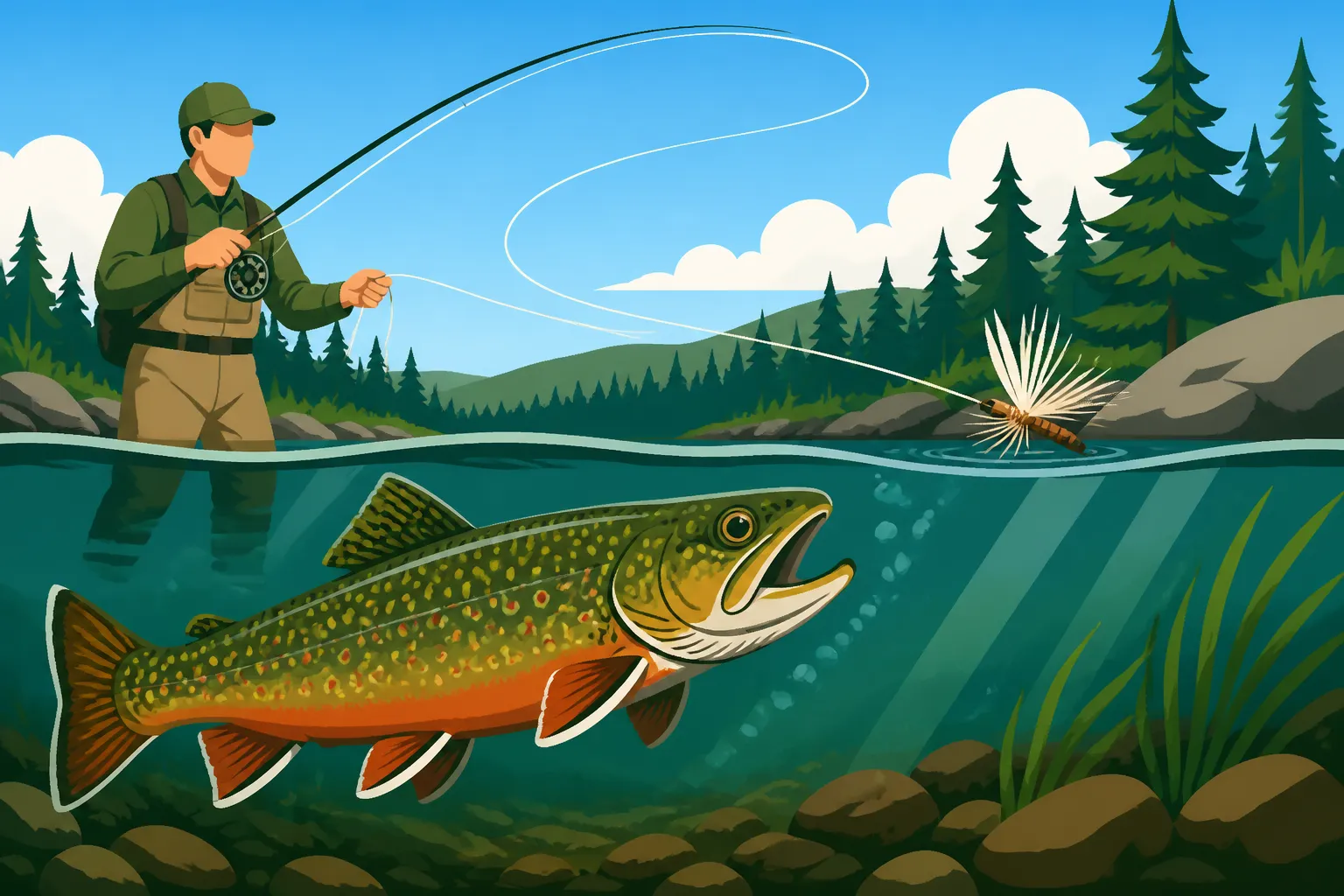
How to Fish a Dry Fly for Brook Trout
There’s something truly magical, yet sometimes utterly baffling, about dry fly fishing for brook trout in Maine. You see those beautiful, colorful fish rising to the surface, eagerly sipping insects, and you know there’s an art to fooling them with a carefully presented artificial fly. But between choosing the right fly, making a delicate cast, and achieving that elusive drag-free drift, it can feel like a daunting challenge. This guide is here to demystify the process, breaking down everything you need to know to successfully entice those vibrant brook trout on a dry fly in our beloved Maine waters.
Understanding Maine Brook Trout and Their Habitat
Before you even think about casting a line, getting inside the head of a Maine brook trout is crucial. These aren't just any fish; they're incredibly sensitive to their environment and often quite selective about what they eat, especially when it comes to surface presentations. Understanding their preferred hangouts and dinner menu will dramatically improve your dry fly success.
Where to Find Brook Trout in Maine
Maine is a brook trout paradise, but these native beauties aren't just swimming everywhere. They thrive in cold, clean, oxygen-rich water. This means you'll typically find them in places that offer precisely these conditions.
Think about those crystal-clear, freestone streams that tumble down from our mountains, often shaded by dense forest canopy. These are classic brook trout havens. Look for deep pockets behind boulders, undercut banks where they can hide from predators and strong currents, and the slower seams alongside faster water where insects tend to collect. Spring-fed creeks are another goldmine, as they maintain consistently cold temperatures even during the warmest summer months. Sometimes, these small brooks feed into larger rivers or even remote ponds, and the areas where the cold water enters are often hotspots. For those who love an adventure, remote ponds in the North Woods, often only accessible by bushwhacking or float plane, can hold some truly spectacular, wild brook trout that rarely see a fly. When planning your trip, consider checking out local resources for areas like those mentioned in our guide on Best Fishing Lakes in Maine or even specific river sections discussed in Fly Fishing Techniques for Maine Rivers.
What Brook Trout Eat on the Surface
Brook trout, like many trout species, are opportunistic feeders, but they have a keen eye for what’s happening on the surface. When specific insects are hatching, they can become incredibly focused, or "locked in," on that particular food source.
Mayflies are often the first thing that comes to mind for dry fly anglers. Species like Hendrickson, Sulphur, and Blue-Winged Olive mayflies hatch throughout the spring, summer, and fall, providing abundant surface action. Caddisflies are another significant food source, especially in faster, riffly water. Their erratic flight and fluttering on the water surface often trigger aggressive strikes. Stoneflies, particularly the larger varieties, can bring bigger trout to the surface, especially during their brief, explosive hatches. But don't forget the terrestrials! Ants, beetles, grasshoppers, and crickets accidentally falling into the water can be a brook trout's unexpected protein boost, especially on windy days or near grassy banks. Having a variety of these imitations, readily available from your local fly shop or online on platforms like Amazon, is key. Understanding these insect life cycles can really give you an edge, which is why we've put together specific advice on Best Flies for Brook Trout in Maine Streams.
Prime Seasons and Conditions for Dry Fly Success
While you can technically catch brook trout on dry flies throughout the open water season, certain times of the year and specific conditions are far more productive.
Spring, particularly late May and June, is a fantastic time for dry fly fishing. As water temperatures begin to warm slightly, insect activity picks up dramatically. Mayfly hatches become more frequent, and brook trout are actively feeding after the leaner winter months. Check out our Maine Spring Fishing Guide for more insights. Early summer, especially the cooler mornings and evenings of July, can also be excellent, but as the dog days of August arrive, warmer water pushes brook trout deeper, making dry fly opportunities scarcer unless you're fishing high-elevation streams or spring creeks. Fall, from September through October, offers a resurgence of dry fly action. Water temperatures cool, fish become more active, and hatches of smaller mayflies and terrestrial activity can provide exciting fishing. The vibrant fall foliage only adds to the experience. Overcast days with light rain or a gentle breeze often trigger more insect activity and can provide excellent fishing windows, as the fish feel less exposed to predators from above. Always keep an eye on our Maine Fishing Season Dates Guide to ensure you're fishing within legal periods.
Essential Gear for Maine Dry Fly Angling
Getting set up with the right equipment for dry fly fishing for brook trout in Maine doesn't have to be overwhelming. You don't need a massive arsenal, but having the correct tools will make a world of difference in your enjoyment and success.
Fly Rod, Reel, and Line Selection
The finesse required for dry fly presentations means your rod, reel, and line need to be matched appropriately.
For most Maine brook trout scenarios, a lightweight fly rod is your best friend. A 3-weight or 4-weight rod, typically between 7 and 8.5 feet in length, offers the perfect balance of delicate presentation and enough backbone to handle a feisty brook trout. A medium-fast action rod is generally ideal, allowing for accurate casts without being too stiff to absorb the fight of smaller fish. While a 5-weight can also work, especially if you anticipate larger fish or more challenging windy conditions, the lighter weights truly shine for small stream and delicate dry fly work. Your reel doesn't need to be an expensive, high-tech piece of gear; for trout, it primarily serves as a line holder. A simple, click-and-pawl or disc-drag reel that balances well with your rod is perfectly adequate. As for line, a weight-forward (WF) floating line matched to your rod's weight is essential. This line is designed to cast easily and float high on the water, making it perfect for dry flies and delicate presentations. You can find quality fly fishing setups, including combos that match rods, reels, and lines, on Amazon or at specialty fly shops like Kittery Trading Post.
Leaders, Tippet, and Essential Accessories
The connection between your fly line and your fly is critical for a natural presentation, and having the right accessories makes the whole experience smoother.
A tapered leader, typically 7.5 to 9 feet long, is crucial for turning over your fly delicately. This leader gradually tapers from a thicker butt section that connects to your fly line down to a thin tippet section. For brook trout, a 4X, 5X, or even 6X tippet is usually appropriate, depending on the size of your fly and the clarity of the water. The "X" rating refers to the diameter of the line; higher numbers mean thinner tippet. Thinner tippet allows for a more natural drift and is less visible to wary fish. You'll attach a separate length of tippet (usually 18-24 inches) to the end of your tapered leader, allowing you to change flies without shortening your main leader too quickly. As for material, monofilament is generally preferred for dry fly fishing due to its buoyancy. Essential accessories include a good pair of nippers or small scissors for cutting line, a set of forceps for hook removal (especially for smaller hooks), and dry fly floatant. Floatant is a paste, gel, or liquid that you apply to your dry fly to keep it floating high on the surface, mimicking a living insect. Don't forget a landing net with a rubber or knotless mesh bag to protect the fish; this is a key part of Catch and Release Best Practices in Maine.
Choosing the Right Dry Flies for Maine
Selecting the right dry fly is half the battle. You want to "match the hatch" when possible, meaning you choose a fly that closely imitates the insects currently active on the water.
For general searching patterns or when no specific hatch is occurring, reliable staples like the Parachute Adams, Elk Hair Caddis, and Royal Wulff are excellent choices. The Parachute Adams is incredibly versatile, imitating various mayfly species throughout the season. The Elk Hair Caddis is perfect for those fluttering caddis imitations, especially in riffles. When specific hatches are on, observe the size, shape, and color of the natural insects and try to find a close match in your fly box. For smaller mayflies, patterns like Blue-Winged Olives (BWO) or Quill Gordons in sizes 16-20 can be deadly. If you see larger stoneflies or grasshoppers in late summer, don't hesitate to tie on a stimulator, Hopper pattern, or a large terrestrial like a Chernobyl Ant in sizes 8-12. And always carry some ant and beetle patterns (sizes 14-18), as these terrestrials are often present even when aquatic insects aren't hatching. Keeping a well-stocked fly box with a range of sizes and colors of these essential patterns, easily purchasable from Amazon or your local fly shop, will ensure you're ready for whatever Maine's waters throw at you.
Here’s a quick overview of some essential dry flies for Maine brook trout:
| Dry Fly Pattern | Primary Imitation | Best Seasons | Key Characteristics |
|---|---|---|---|
| Parachute Adams | Various Mayflies | Spring, Summer, Fall | Versatile, visible, delicate imitation |
| Elk Hair Caddis | Caddisflies | Spring, Summer, Fall | Floats well, good in riffles, often triggers strikes |
| Royal Wulff | General Attractor | Spring, Summer, Fall | High floating, good for larger trout, highly visible |
| Stimulator | Stoneflies, Hoppers | Summer, Fall | Large, buoyant, excellent for aggressive takes |
| Ant Patterns | Terrestrial Ants | Summer, Fall | Small, effective on flat water, overlooked food |
| Grasshopper/Hopper | Terrestrial Hoppers | Late Summer, Fall | Great for banksides, attracts larger fish |
| Blue-Winged Olive (BWO) | Small Mayflies (Baetis) | Spring, Fall | Crucial for specific hatches, sizes 18-22 |
Mastering Dry Fly Casting and Presentation
You've got the right gear and the perfect fly, but it all comes down to how you present it to the fish. A beautiful cast with a natural, drag-free drift is the key to fooling even the wariest Maine brook trout.
Basic Casting Techniques for Beginners
While casting can seem intimidating, a few fundamental techniques will get you started on the right path to delicate dry fly presentations.
The overhead cast is your bread and butter. It involves smoothly accelerating the rod backward (the backcast) and then forward (the forward cast), allowing the line to unroll in front of you. The key is to avoid overpowering the cast; let the rod do the work. Think of it more as painting a stroke than whipping a whip. For dry flies, precision and gentleness are paramount. You want your fly to land softly, like a natural insect falling onto the water, not with a splash that spooks every fish in the vicinity. Practice in your yard to get a feel for the rhythm and timing. Another incredibly useful cast, especially on brushy Maine streams where overhead casting space is limited, is the roll cast. This cast allows you to pick your line up off the water and send it forward without a backcast, making it indispensable in tight quarters. Remember, casting isn't just about distance; it's about accuracy and control. Start by focusing on casting just 20-30 feet accurately and gently, and you'll be well on your way. If you're looking to refine your casting, a guide from our Hiring a Maine Fishing Guide post could provide invaluable one-on-one instruction.
Reading the Water and Approaching a Lie
Knowing where to cast is just as important as knowing how to cast. Brook trout hold in specific areas where they can find food, shelter, and favorable currents.
When you approach a stream or river, take a moment to "read the water." Look for the different features: riffles (fast, turbulent water), pools (deeper, slower sections), runs (smooth, consistent flows), and seams (where fast and slow water meet). Brook trout will often hold at the edges of fast currents, in the slower water of a seam, waiting for insects to drift by. Deep pockets behind large boulders or logs provide excellent cover and current breaks. Undercut banks are prime holding spots. When you've identified a promising "lie" – a spot where a fish is likely to be – approach it stealthily. Brook trout are incredibly wary. Avoid heavy footsteps on the bank, sudden movements, or casting a shadow over the water. Wherever possible, approach from downstream and cast upstream, so your fly drifts down to the fish before your line or body becomes visible. This upstream approach also helps with achieving a drag-free drift, which is crucial for dry fly success. Our detailed Maine Fishing Regulations Explained can offer insights into specific area restrictions or nuances for different water bodies.
Achieving a Drag-Free Drift
This is perhaps the most critical aspect of dry fly fishing, and often the most challenging to master. A natural insect doesn't speed up, slow down, or create a V-wake on the water; it drifts at the exact speed of the current. To fool a brook trout, your dry fly must do the same.
"Drag" occurs when your fly line and leader are pulled at a different speed than your fly by conflicting currents, causing the fly to skate unnaturally. To combat this, you'll need to learn to "mend" your line. Mending involves repositioning your fly line on the water without moving your fly. If your line is starting to pull faster than your fly, you throw an upstream mend, putting a curve of slack line above your fly. If it's pulling slower, you might throw a downstream mend. The goal is to create enough slack and proper line positioning so your fly drifts as if it were unattached to anything, mimicking a natural insect. Casting directly upstream and allowing the fly to drift straight back to you in a single current lane is the simplest way to achieve this. On more complex waters, you might need to throw "reach casts" (where you extend your rod arm to one side during the cast to lay out a curved line) or "parachute casts" to achieve immediate slack. The beauty of a perfect, drag-free drift is that it often results in an aggressive, confident take from a brook trout, making all that effort worthwhile!
Hooking, Fighting, and Releasing Maine Brook Trout
The moment a brook trout sips your dry fly is exhilarating. Knowing how to react, fight the fish effectively, and release it safely completes the dry fly experience.
Setting the Hook and Playing the Fish
When a brook trout rises and takes your dry fly, your instinct might be to yank the rod back hard. However, with the delicate tippets used for dry flies, a hard yank can easily break your line or pull the hook clean out of the fish's mouth.
Instead of a forceful jerk, aim for a gentle, upward "strip set" or a slight lift of the rod. Many anglers call it "lifting into the fish." You want to lift just enough to tighten the line and embed the hook without snapping your tippet. Watch your fly intently; if it disappears or you see a swirl, that's your cue. Once you've set the hook, keep constant tension on the line. Brook trout, especially larger ones, can put up a surprisingly strong fight for their size, with powerful runs and head shakes. Use the flex of your rod to absorb the shock of their movements. Try to guide the fish away from snags like submerged logs or thick weeds. Avoid horsing the fish in, but also don't let it run too far into strong current, which can exhaust it. Keep the fight as short as possible to minimize stress on the fish.
Ethical Catch and Release Practices
Maine is committed to conserving its native brook trout populations, and practicing ethical catch and release is vital, especially when fishing with dry flies in warmer months.
Once you've brought the fish close, aim to land it quickly and gently. Use a rubber or knotless mesh net, if possible, as it is much kinder to the fish's protective slime coat and fins than knotted nylon nets. Keep the fish in the water as much as possible. Wet your hands thoroughly before touching the fish to avoid removing its slime layer, which protects it from disease. If the hook is easily accessible, remove it with forceps or pliers while the fish is still submerged. If the fish has swallowed the hook deeply, it's often best to simply cut the leader as close to the hook as possible. Barbless hooks are highly recommended, as they make hook removal much easier and cause less damage to the fish. If the fish seems lethargic, hold it gently in the current, facing upstream, until it regains its strength and can swim away on its own. Never squeeze a fish or hold it by the gills. These practices are detailed further in our comprehensive guide on Catch and Release Best Practices in Maine.
When to Switch Tactics
Sometimes, despite your best efforts, the brook trout just aren't looking up. This is a common frustration, and knowing when to pivot can save your fishing day.
If you've been casting dry flies for a while with no success, and you're not seeing any surface activity or insect hatches, it might be time to switch tactics. Often, brook trout are feeding subsurface, even if they're holding in the same lies. This is when nymphs or small streamers come into play. A weighted nymph fished under a strike indicator or drifted naturally along the bottom can often pick up fish that are ignoring your dry fly. Similarly, a small streamer or wet fly stripped through a run can often trigger an aggressive predatory strike. Sometimes, even just changing the size or color of your dry fly can make a difference. If you were using a large hopper and nothing is rising, try a tiny ant pattern. Being adaptable is a hallmark of a successful angler. Consider exploring other methods discussed in our Maine Open Water Fishing Techniques Guide if the dry fly bite is slow. Always remember that fish behavior can change rapidly with weather, light, and water conditions.
Disclaimer
Please note that fishing regulations, seasons, and licensing requirements in Maine can change. Always consult the most current regulations published by the Maine Department of Inland Fisheries and Wildlife (MDIFW) before heading out on the water. This guide is for informational purposes only and does not supersede official regulations.