Togue Minimum Length Limit in Maine
It can be incredibly frustrating to hit the beautiful waters of Maine, ready for a day of fishing, only to feel a knot in your stomach because you’re unsure if the fish you just landed is legal to keep. Figuring out the exact length limits for specific species, especially for a feisty togue, can feel like navigating a maze. This guide is here to untangle that confusion, walking you through Maine’s togue minimum length limits, how to find them, and why they're so important for keeping our fisheries healthy.
Understanding Maine’s General Law for Togue Length
When you first dive into Maine's fishing regulations, you'll inevitably encounter the "General Law." This is essentially the default set of rules that apply to most waters unless a specific body of water has its own, more tailored regulations. Think of it as the baseline for what's expected across the vast majority of Maine's lakes and ponds. For many anglers, especially those just starting out or visiting a new water body, the General Law is the first place to look.
The Standard Togue Minimum Length
Under Maine's General Law, if you're lucky enough to hook into a lake trout – which we affectionately call "togue" here in Maine – there's a specific size you need to be aware of. The minimum length limit for togue in waters governed by General Law is 18 inches. This means if your togue measures less than 18 inches from the tip of its nose to the tip of its tail, it needs to be released immediately and unharmed. This 18-inch minimum is designed to protect younger fish, allowing them to grow to a mature size and contribute to the population before they can be harvested.
It's a straightforward rule on paper, but in practice, you'll quickly realize that Maine's diverse waters often have their own unique stories and, consequently, their own unique sets of rules. It’s never a bad idea to brush up on the comprehensive Maine Fishing Regulations Explained to get a full picture of what to expect across different species and water bodies.
What “General Law” Actually Means
The term "General Law" signifies that these regulations apply to any inland water that isn't explicitly listed with special regulations. Maine has literally thousands of lakes, ponds, rivers, and streams, and it would be impossible to create individual rules for every single one. So, the General Law acts as a catch-all. If you're fishing a small, unnamed pond in the middle of nowhere, or a larger lake not explicitly detailed in the law book, the General Law is what you'll abide by.
However, and this is crucial, many of Maine's most popular and heavily fished lakes and ponds do have special regulations. This is why always checking the specific water body you plan to fish is paramount. Relying solely on the General Law can lead to unintended violations, which can really put a damper on your fishing trip. The state's Department of Inland Fisheries and Wildlife (MDIFW) puts a lot of effort into setting these rules, and understanding why they're in place, often to ensure healthy fish populations, makes you a more responsible angler.
Navigating Special Regulations for Togue Length Limits
Here's where things can get a little tricky, and frankly, a bit overwhelming for some. Maine is renowned for its diverse fisheries, and to protect specific populations, certain water bodies operate under "special regulations" that supersede the General Law. This is particularly true for highly sought-after species like togue, landlocked salmon, and brook trout in some of our most iconic lakes.
The REAL Challenge: When Rules Change by Lake
You might find that on one lake, the 18-inch minimum length for togue applies, but just a few miles down the road, on a different lake, the rule is entirely different. For instance, some lakes might have a slot limit, where you can only keep fish between two specific lengths (e.g., 18 to 23 inches), meaning you have to release anything smaller or larger. Other waters might have no length limit at all for togue, encouraging anglers to harvest them to manage baitfish populations or reduce competition for other species. Still others might have a larger minimum length, perhaps 20 or even 23 inches, to promote trophy fishing opportunities.
Take, for example, a legendary lake like Moosehead Lake. While I'm providing general scenarios, it's a perfect example of a water body with specific regulations designed to manage its unique fishery. Moosehead Lake, like other large, deep lakes, is home to a robust togue population. Its rules are often tailored to ensure the long-term health and growth potential of these fish. Similarly, a lake like Sebago Lake might have different rules for its lake trout, distinct from those on say, the Rangeley Lakes. This variability exists because each lake is a unique ecosystem, and biologists carefully craft regulations based on fish growth rates, population density, available forage, and angler harvest pressure.
You can often find detailed information about Maine Togue and Lake Trout Limits that break down the nuances for various popular fishing spots. This level of detail is critical for any serious angler in Maine.
How to Find Specific Water Body Regulations
This is arguably the most important part of responsible angling in Maine. You absolutely must check the current regulations for the specific lake, pond, or river you plan to fish before you even cast your first line. Relying on old knowledge or assumptions is a recipe for a citation.
Here’s how you can do it:
- The Maine Open Water & Ice Fishing Laws Book: This is the angler's bible in Maine. The MDIFW publishes this comprehensive guide annually. It lists every water body with special regulations, detailing length limits, bag limits, season dates, and specific gear restrictions. You can pick up a physical copy at any local sporting goods store, bait shop, or even some convenience stores. When planning your trip, consider grabbing a copy of the official Maine Open Water & Ice Fishing Laws from a local tackle shop or even on Amazon.
- MDIFW Website: The Maine Department of Inland Fisheries and Wildlife website is an invaluable resource. They have a searchable database where you can look up specific water bodies and view their current regulations digitally. It's always a good idea to cross-reference with the physical law book if you have any doubts. The official website is often the most up-to-date source for any mid-season changes. I highly recommend spending some time learning How to Find Maine Fishing Regulations for a Specific Lake before heading out.
- Local Bait Shops and Guides: Don't underestimate the wisdom of local bait shop owners and Registered Maine Guides. They often have real-time knowledge of regulations and any recent changes. They’re usually more than happy to help clarify rules, especially for the waters in their immediate area.
To give you a better idea of how these regulations can vary, here’s a simplified table comparing the General Law to a couple of hypothetical special regulation lakes for togue. Remember, these are examples and not current, official regulations for these specific lakes, which can change yearly. Always consult the official MDIFW law book or website!
| Water Body | Minimum Length Limit (Togue) | Daily Bag Limit (Togue) | Special Notes |
|---|---|---|---|
| General Law | 18 inches | 2 fish | Applies unless otherwise specified. |
| Hypothetical Lake A | 20 inches | 1 fish | Only 1 fish over 20" may be kept. |
| Hypothetical Lake B | None | 5 fish | Harvest encouraged; no minimum length. |
| Hypothetical Lake C | 18-23 inch slot limit | 1 fish | Release all fish under 18" and over 23". |
This table clearly illustrates why relying on "General Law" alone can be risky. You'd be releasing perfectly legal fish on Hypothetical Lake B or keeping illegal fish on Hypothetical Lake C!
Why Togue Length Limits Matter for Healthy Fisheries
It might seem like a lot of hoops to jump through, all these different length limits and regulations, but trust me, they're not arbitrary. These rules are put in place by biologists and wildlife managers for very good reasons, primarily to ensure the long-term health and sustainability of Maine's incredible fisheries. When we adhere to these limits, we're actively participating in conservation efforts that benefit everyone, from seasoned ice anglers to newcomers hoping to catch their first big one.
Conservation and Population Management
The most critical reason for length limits is conservation. Fish, including togue, need to reach a certain size and age to reproduce successfully. By setting a minimum length limit, regulations aim to protect juvenile fish, allowing them to mature and spawn at least once, if not multiple times, before they're eligible for harvest. This ensures that there are always enough breeding fish in the population to create the next generation. Without these protections, overfishing of smaller, immature fish could lead to a decline in the population over time.
Additionally, length limits can be used to manage the size structure of a fish population. For instance, a slot limit (where you keep fish within a specific size range, releasing both smaller and larger ones) might be implemented to:
- Protect trophy-sized fish: Releasing the largest fish ensures they can continue to grow and provide genetic material for larger offspring, and also gives other anglers a chance to catch that "fish of a lifetime."
- Reduce competition: Sometimes, lakes have an overabundance of smaller, stunted fish. In these cases, regulations might remove the minimum length limit entirely or even encourage harvesting a certain number of smaller fish to reduce competition for food, allowing the remaining fish to grow larger.
These nuanced approaches help maintain a balanced ecosystem, which is vital for all the species that call these waters home. Learning about Maine Fish Bag Limits Guide often goes hand-in-hand with understanding length restrictions.
Promoting Better Fishing for Everyone
Ultimately, smart regulations lead to better fishing experiences for everyone. Imagine if there were no limits – within a few seasons, popular fishing spots could be depleted, and the chances of catching a decent-sized fish would plummet. Length limits, along with Maine Fishing Season Dates Guide and other rules, help distribute the harvest over time and across different size classes, leading to more consistent fishing quality.
When you release an undersized togue, you're not just following the law; you're investing in the future of the fishery. That fish might be small today, but with time and protection, it could become the trophy catch for another angler (or even for you!) down the road. It fosters a culture of stewardship among anglers, where we all play a role in protecting what we love. Ignoring these regulations, such as keeping an undersized fish, can lead to serious consequences, including fines and potential loss of fishing privileges, which is detailed in rules around Fishing Without a License in Maine and similar violations. No one wants that kind of day on the water.
Practical Tips for Measuring and Releasing Togue
So, you've landed a beautiful togue, and now it's time to check its length against the regulations for that specific body of water. How do you do this accurately and, more importantly, in a way that minimizes stress on the fish if it needs to be released? It’s all about having the right tools and knowing the proper technique.
Accurate Measurement Techniques
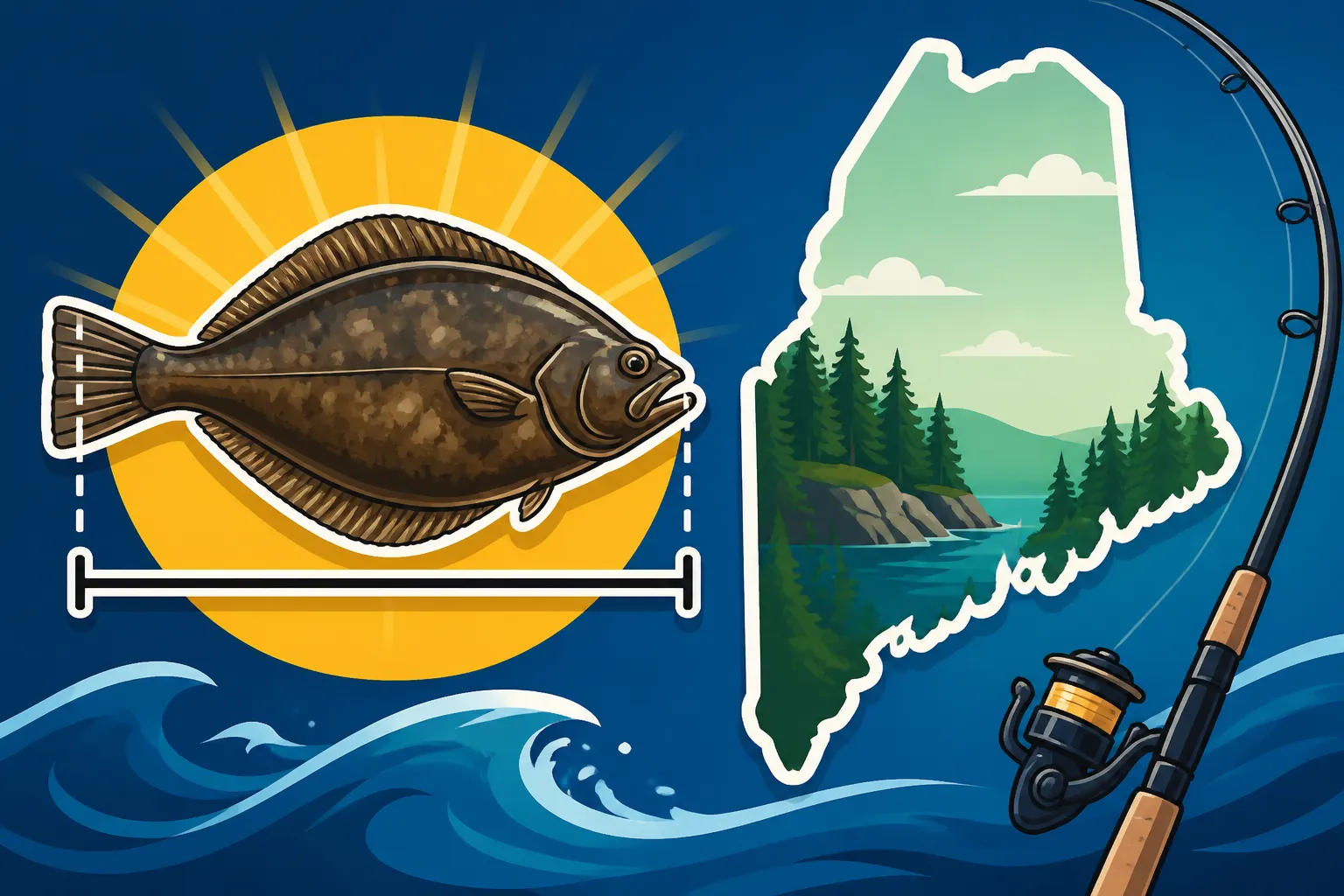
Getting an accurate measurement is key. The standard for measuring fish length in Maine (and most places) is from the tip of the jaw or snout to the end of the tail, with the tail compressed.
- Use a Reliable Measuring Device: A good, waterproof measuring tape or a rigid measuring board, readily available on Amazon, can make all the difference. Avoid using flimsy rulers that can stretch or bend, or trying to eyeball it. A dedicated fish measuring board often has a head stop and clear markings, making the process quick and accurate.
- Lay the Fish Gently: If possible, lay the fish on a wet measuring board or a damp surface. Avoid placing it directly on hot, dry surfaces or abrasive boat carpets, as this can remove its protective slime coat.
- Compress the Tail: Gently squeeze the tail lobes together to get the maximum length. The measurement is taken to the absolute end of the compressed tail.
- Minimize Out-of-Water Time: The faster you measure, the better for the fish. Have your measuring device ready before you even net the fish.
Remember, if there’s any doubt, err on the side of caution and release the fish. It’s always better to let a potential keeper go than to accidentally keep an undersized fish and face a penalty.
Best Practices for Healthy Release
Many togue you catch, especially in waters with minimum length limits, will need to be released. Ensuring they swim away strong and healthy is paramount.
- Use a Knotless Rubber Net: If you're using a net, opt for a knotless rubber or rubber-coated mesh net. These types of nets are much gentler on a fish’s fins and slime coat than traditional nylon nets, preventing injuries. You can find quality options on Amazon.
- Handle with Wet Hands: Always wet your hands before touching a fish. Dry hands can strip away the fish’s protective slime coat, leaving it vulnerable to infections.
- Support the Fish: When holding a togue for measurement or hook removal, support its body horizontally. Avoid holding it vertically by the jaw or tail only, as this can damage its internal organs or spine. If it's a larger fish, use two hands, one supporting the belly.
- Quick Hook Removal: Have needle-nose pliers or a de-hooking tool readily accessible. If the hook is deeply embedded, it might be better to cut the line as close to the hook as possible rather than tearing tissue trying to remove it. Barbless hooks can make release much easier and less traumatic for the fish.
- Revive if Necessary: If the fish seems sluggish after being released, gently hold it upright in the water, facing into a mild current, or slowly move it back and forth to force water over its gills. Release it only when it's strong enough to swim away on its own.
By following these tips, you're not just measuring a fish; you're actively contributing to the health and vitality of Maine's incredible togue fishery. A well-released fish is a fish that can be caught again, or, more importantly, go on to spawn and contribute to future generations. These practices are part of a larger commitment to Catch and Release Best Practices in Maine that every angler should strive to uphold.
Disclaimer
The information provided in this guide is intended for general informational purposes only and is not a substitute for the official Maine Department of Inland Fisheries and Wildlife (MDIFW) fishing regulations. Regulations can change annually and even mid-season. Always consult the most current official MDIFW Open Water & Ice Fishing Laws book or their official website before fishing to ensure compliance. Failure to do so may result in fines or penalties.