Best Fishing Knot for Tying On Lures
There's nothing quite like the crushing disappointment of reeling in your line only to find it snapped clean, your favorite lure — the one that was just about to catch that trophy fish — gone forever. We've all been there. Whether it's a subtle bite turning into a violent tug or a frustrating snag, a weak knot is often the silent culprit behind a lost fish, a lost lure, and a lost moment on the water. This guide is all about helping you master the best fishing knots for tying on lures, ensuring your connection to the fish is as strong as your determination.
Why Your Fishing Knot is the Most Critical Link in Your Setup
You invest in a good rod, a smooth reel, and the perfect lures – maybe you even ordered a few highly-rated, local favorites from Amazon. But all that top-tier gear means absolutely nothing if the knot connecting your line to your lure fails. It’s the Achilles' heel of an otherwise perfect setup, and in the pristine waters of Maine, where a feisty landlocked salmon or a hard-fighting striped bass could be on the other end, you simply can't afford a weak link.
Think about it: you cast out into the chilly waters of Moosehead Lake, meticulously working a spoon for togue. You feel that solid thump. The rod bends, the drag screams, and your heart pounds. But then, a sudden slack, and the line comes back limp. Your knot gave way. Not only have you lost a potential personal best, but that expensive spoon is now at the bottom of the lake. The frustration isn't just about the money; it's about the missed experience, the lost battle. A solid knot isn't just about security; it’s about confidence. It allows you to set the hook hard, fight the fish aggressively, and land it knowing you did everything right from start to finish. Without that confidence, every hard strike can fill you with dread, rather than excitement.
Furthermore, Maine's diverse fishing scenarios demand different strengths and knot types. Are you delicate fly fishing for brook trout in a small stream, where presentation is key and leaders are often thin? Or are you chasing big stripers along the coast, where powerful runs and abrasive structures are common? The right knot, properly tied, maximizes your line's strength, sometimes retaining upwards of 95-100% of its breaking strain. A poorly tied knot, on the other hand, can reduce your line's strength by 50% or more, making even a modest fish feel like a monster that you simply can't tame. Understanding the nuances of knot tying helps you adapt to different species and situations, ensuring you're always prepared for what Maine's waters throw at you.
Essential Knots for Tying Lures: Your Go-To Arsenal
When it comes to tying lures, anglers often get overwhelmed by the sheer number of knots out there. My advice? Don't try to learn them all. Instead, master a few incredibly reliable, versatile knots that cover most of your bases. Here are the true workhorses that every angler fishing in Maine should have in their repertoire, whether you're using monofilament, fluorocarbon, or braided line.
The Palomar Knot: Simplicity Meets Strength
The Palomar knot is often lauded as one of the strongest and easiest knots to tie, making it an absolute favorite for many anglers, myself included. It consistently tests at very high breaking strengths, often retaining close to 100% of your line's original strength. Its simplicity means less time fumbling with cold fingers and more time fishing, which is a huge bonus when you're out on a chilly spring morning targeting Maine Spring Salmon Fishing Techniques
Why it's great for lures:
- High Strength: Excellent for tying on lures and hooks of all sizes.
- Versatile: Works exceptionally well with monofilament, fluorocarbon, and especially braided lines. If you're using super lines, this is a top contender.
- Easy to Learn: Even beginners can tie a reliable Palomar knot with a little practice.
- Self-Adjusting: It cinches down nicely, creating a secure connection without slipping.
When to consider alternatives:
While incredibly strong, the Palomar knot creates a double line through the eye of the hook or lure. For very small lure eyes or tiny hooks, this double line might not fit easily. In such cases, another knot might be a better choice.
The Improved Clinch Knot: A Timeless Classic
The Improved Clinch knot is probably one of the first knots many of us learned, and for good reason. It's incredibly versatile and reliable when tied correctly. It's a fantastic all-around knot that handles a wide range of lure types and fish species, from trout to bass. If you're getting started and wondering Best Fishing Knots Every Maine Angler Should Know
Why it's great for lures:
- Proven Reliability: It's been a staple for generations of anglers because it works.
- Good Strength: When tied properly and moistened, it offers excellent strength, typically in the 85-90% range.
- Widely Applicable: Great for monofilament and fluorocarbon lines, suitable for most lure sizes and hooks.
- Compact: It forms a neat, relatively small knot that doesn't interfere with lure action.
When to consider alternatives:
While reliable, the Improved Clinch can sometimes slip if not tied perfectly, especially with very slick, thin braided lines. For braid, the Palomar or a Uni Knot might be a more secure option. Also, with heavier lines (say, 30lb test or more), it can be a bit bulkier than other knots.
The Uni Knot (or Grinner Knot): The Versatile All-Rounder
The Uni knot, also known as the Grinner knot in some regions, is another fantastic option for tying lures, hooks, and even for connecting lines (like your main line to a leader). Its versatility is truly impressive, and it's a favorite among many experienced anglers for its strength and adaptability.
Why it's great for lures:
- High Strength: Similar to the Improved Clinch, it offers excellent strength retention when tied correctly, often in the 90% range.
- Excellent for All Line Types: Performs well with mono, fluoro, and particularly well with braided lines where the Palomar might be too bulky for small eyes.
- Multi-Purpose: Beyond lures, it's also a go-to for connecting lines of similar diameter, making it a powerful knot to have in your arsenal.
- Adjustable Loop: You can deliberately tie it as a loop knot for lures that benefit from more freedom of movement, like certain jigs or crankbaits.
When to consider alternatives:
The Uni knot can be a bit more complex to learn initially than the Palomar, requiring a few more steps. However, once you master it, it becomes second nature. For very specific loop knot applications where maximum freedom is desired, a Non-Slip Mono Loop might offer a slightly better action.
Non-Slip Mono Loop Knot: For Enhanced Lure Action
Sometimes, you want your lure to have the most natural, unhindered movement possible in the water. This is especially true for topwater plugs, certain swimbaits, or jigs where a rigid knot can dampen the lure's intended action. The Non-Slip Mono Loop knot creates a small, strong loop at the end of your line, allowing the lure to swing freely and dart more realistically. This can be a game-changer when fish are finicky, or you're trying to coax a strike from a cautious bass or pickerel in Maine's warmer lakes.
Why it's great for lures:
- Maximum Lure Action: Allows your lures to move more freely, mimicking natural prey behavior.
- Strong: Despite being a loop knot, it's very strong and reliable when tied correctly.
- Excellent for Reaction Baits: Ideal for crankbaits, jerkbaits, jigs, and topwater lures.
- Stealthy Presentation: The small loop doesn't draw unwanted attention.
When to consider alternatives:
This knot is more specific to lures that benefit from a free-swinging action. For situations where you need a direct, rigid connection or are using live bait, one of the other knots might be more appropriate. It can also be a bit trickier to tie accurately on the first few attempts.
Tying Your Knots: Step-by-Step Mastery
Okay, let's get down to brass tacks. Knowing which knot to use is only half the battle; knowing how to tie it perfectly is the other. Practice, practice, practice! Grab some spare line and a hook or swivel, maybe even a knot-tying tool from Amazon to help you get the hang of it, and follow these steps.
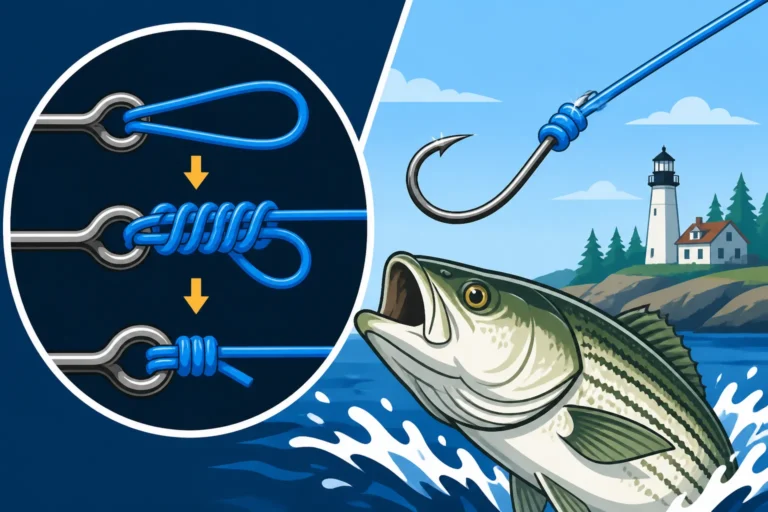
Tying the Palomar Knot
This knot is a fantastic choice for virtually all line types and a wide range of lures. It's surprisingly simple, but incredibly strong.
- Double the Line: Take about 6-8 inches of your fishing line and double it over, creating a loop. Pass this doubled-over end through the eye of your lure or hook.
- Overhand Knot: With the doubled line, tie a simple overhand knot. Don't pull it tight yet! Make sure the lure hangs freely from the loop.
- Pass Over Lure: Open up the loop you created and pass it over the entire lure. This is a crucial step that ensures the knot cinches down correctly around the lure's eye.
- Moisten and Cinch: Hold the standing line and the tag end. Moisten the knot with a little saliva (this helps it cinch down smoothly and prevents friction heat that can weaken the line). Slowly pull both the standing line and the tag end, guiding the knot down to the eye of the lure.
- Trim Tag: Once fully cinched and tight against the eye, trim the tag end very close to the knot, leaving about 1/8 to 1/4 inch of tag. This prevents slippage and keeps the knot neat.
Tying the Improved Clinch Knot
A classic for a reason, this knot is a workhorse for mono and fluorocarbon lines.
- Pass Through Eye: Pass the end of your line through the eye of the lure. Leave about 6-8 inches of tag end.
- Twist the Line: Wrap the tag end around the standing line 5-7 times. More turns for lighter line, fewer for heavier line.
- Back Through First Loop: Pass the tag end back through the first loop you created right next to the lure's eye.
- Back Through Second Loop: Now, pass the tag end through the larger loop that just formed. This is the "improved" part, adding extra security.
- Moisten and Cinch: Hold the standing line and the tag end. Moisten the knot. Slowly pull the standing line while guiding the knot down, ensuring the coils tighten neatly against each other. Give a final tug on the standing line and the lure itself to seat the knot firmly.
- Trim Tag: Trim the tag end close, leaving a small stub.
Tying the Uni Knot
This knot is a bit more involved than the Palomar, but its versatility makes it worth mastering.
- Pass Through Eye: Pass the end of your line through the eye of the lure. Leave about 6-8 inches of tag end, then double it back, running parallel to the standing line.
- Form a Loop: Bring the tag end back over itself and the standing line, forming a loop.
- Wrap Through Loop: Now, wrap the tag end around both the standing line and its own part inside the loop about 5-8 times (again, more for lighter line, fewer for heavier).
- Partially Cinch: Pull the tag end to partially tighten the coils, forming a barrel shape.
- Slide to Eye & Fully Cinch: Moisten the line. Pull the standing line to slide the entire knot down to the eye of the lure. Once it's snugly against the eye, give a firm pull on the standing line and the lure to fully cinch the knot.
- Trim Tag: Trim the tag end close.
Tying the Non-Slip Mono Loop Knot
This knot is excellent for giving your lures more life and action in the water.
- Overhand Knot: Tie a simple overhand knot in your main line, about 6-8 inches from the end. Do not pull it tight.
- Pass Through Lure Eye: Pass the tag end of your main line through the eye of your lure.
- Pass Through Overhand Knot: Now, thread the tag end through the center of that initial overhand knot you just tied.
- Wrap Around Standing Line: Bring the tag end back and wrap it around the standing line 3-5 times.
- Back Through Overhand Knot Again: Pass the tag end back through the original overhand knot, entering from the opposite side you exited previously.
- Moisten and Cinch: Moisten the knot. Hold the standing line and the tag end, and slowly pull them to tighten the wraps around the standing line. Then, pull on the main line to slide the entire knot down towards the lure, leaving a small loop (the desired size) between the lure and the knot. Cinch it down firmly.
- Trim Tag: Trim the tag end close.
Optimizing Your Knots for Maine's Diverse Fisheries
Tying the perfect knot isn't a one-and-done deal. There are habits and considerations that will improve your success rate across Maine's varied fishing landscape, whether you're chasing Brook Trout Daily Limit in Maine South Zone or targeting big fish in the Best Fishing Lakes in Maine.
Match the Knot to the Line and Lure
Different fishing lines behave differently. Braided lines are incredibly strong but can be slick, requiring knots that grip well. Monofilament is more forgiving but has stretch. Fluorocarbon is nearly invisible but can be stiffer.
- Braided Line: The Palomar and Uni knots excel with braid. Their design allows the braid to grip itself securely, reducing slippage that can plague other knots. When fishing for Maine Striped Bass Fishing Techniques with heavy braid, a strong Palomar is practically bulletproof.
- Monofilament & Fluorocarbon: The Improved Clinch, Uni, and Palomar are all excellent choices. For clear water and wary fish, where you might be using a fluorocarbon leader, knowing how to tie these knots quickly and cleanly is crucial. Consider how specific lure actions might be impacted by the knot, too. For instance, a small spoon for early spring salmon might benefit from the direct connection of an Improved Clinch, while a diving crankbait for bass could benefit from the freedom of a Non-Slip Mono Loop.
The Importance of Moisture and Slow Cinching
This is a step many beginners overlook, and it's absolutely vital. When you pull a knot tight, friction is generated. If the line is dry, this friction can create heat that actually "burns" and weakens the line, especially monofilament and fluorocarbon.
- Always Moisten: Before you cinch any knot down, apply a little saliva or water to it. This acts as a lubricant, allowing the coils to slide smoothly into place and preventing heat damage.
- Cinch Slowly and Evenly: Don't just yank the knot tight. Apply steady, increasing pressure, ensuring each turn and coil of the knot tightens uniformly. This helps the knot seat properly and distributes the stress evenly across the line, maintaining maximum strength.
Regular Knot Checks and Re-Ties
Even the best knots can suffer from wear and tear. Over time, casting, retrieving, bumping against structure, and fighting fish can weaken your knot.
- Inspect Frequently: Make it a habit to check your knot every hour or so, and definitely after landing a good fish or snagging your lure. Look for fraying, nicks, or discoloration in the line near the knot.
- Don't Be Afraid to Re-Tie: If you see any sign of weakness or doubt the integrity of your knot, cut off your lure and re-tie it. Losing a few inches of line is a small price to pay compared to losing a prized fish or an expensive lure you found on Amazon. This is especially true when you're fishing waters with sharp rocks or submerged timber.
- End of the Day Re-Tie: A good practice is to re-tie your main fishing knot at the end of each fishing day, ensuring you start fresh and strong on your next outing. This is a small habit that pays huge dividends in confidence and landed fish.
Practice Makes Perfect
Tying knots on a boat or icy shoreline in Maine with cold, wet hands can be a challenge. The more you practice at home, the easier and faster it will become in real-world conditions.
- At Home Practice: Use a piece of string or a heavier fishing line to practice. Watch videos online, or pick up a dedicated knot-tying practice kit (you can find plenty on Amazon). The muscle memory you build will be invaluable.
- Blindfold Practice: Try tying your favorite knot with your eyes closed or in low light. If you can do that, you'll be well-prepared for tying a knot in the dim light of dawn or dusk, or when a sudden bite demands a quick re-tie.
Following these practices will not only improve your knot-tying skills but also significantly boost your confidence on the water. A well-tied knot is a testament to an angler's preparedness and respect for the fish and the sport.
Knot Comparison Table: Quick Reference
To help you decide which knot is right for your situation, here's a quick comparison of the knots we've discussed:
| Knot Type | Strength Retention (Approx.) | Ease of Tying | Best For Line Types | Best For Lure Action | Notes |
|---|---|---|---|---|---|
| Palomar Knot | 95-100% | Easy | Braid, Mono, Fluorocarbon | Direct | Excellent all-rounder, very high strength. Double line through eye. |
| Improved Clinch Knot | 85-90% | Moderate | Mono, Fluorocarbon | Direct | Classic, reliable for many situations. Can slip with slick braid. |
| Uni Knot | 90-95% | Moderate | Braid, Mono, Fluorocarbon | Direct / Loop | Highly versatile, good for joining lines too. |
| Non-Slip Mono Loop Knot | 90-95% | Moderate | Mono, Fluorocarbon (can adapt for braid) | Enhanced (Loop) | Maximizes lure movement, great for reaction baits. |
Final Thoughts on Knots and Your Maine Fishing Adventure
As a veteran angler and someone who's spent countless hours exploring the amazing fishing opportunities here in Maine, I can tell you that confidence in your gear is paramount. And there's no piece of gear more fundamental, yet often overlooked, than the integrity of your fishing knot. Mastering a few strong, reliable knots will not only save you money on lost lures but, more importantly, it will prevent that gut-wrenchwrenching feeling of losing the fish of a lifetime.
Whether you're exploring the serene depths of Sebago Lake Fishing Guide for landlocked salmon, battling smallmouth bass in the Belgrade Lakes Bass Fishing in Maine, or heading out for Maine Deep Sea Fishing Charters off the coast, a strong knot is your ultimate connection to the underwater world. So, take the time to practice, use quality line, and always moisten those knots before cinching. Your future self, and your cooler full of fish, will thank you.
Remember, the fish aren't going to tie the knot for you! Get out there, hone your skills, and enjoy the incredible fishing Maine has to offer. And if you ever need a refresher on the local rules, be sure to check out the Maine Fishing Regulations Explained. Happy fishing, everyone!
Disclaimer
This article is for general informational purposes only and does not constitute professional advice. Laws, prices and regulations vary by location and change over time. Consult a qualified professional for guidance on your specific situation.