How to Match the Hatch on Maine Rivers
There's nothing quite as frustrating as standing on a beautiful Maine river, watching fish rise all around you, yet your meticulously tied fly goes completely ignored. You cast, you drift, you try different patterns, but the fish just aren't interested. This common dilemma often boils down to one critical skill in fly fishing: the ability to "match the hatch." This guide is designed to transform you from a frustrated observer into a successful angler by teaching you how to understand, identify, and precisely imitate what Maine's wild fish are truly feeding on.
Understanding "The Hatch" and Why It Matters So Much in Maine
Before we dive into the nitty-gritty, let's demystify what "the hatch" actually means. It's a term often thrown around in fly fishing circles, and for good reason—it’s the cornerstone of success on many rivers, especially here in Maine.
What Exactly is a Hatch Anyway?
At its core, a hatch is the biological process where aquatic insects—like mayflies, caddisflies, and stoneflies—emerge from their underwater larval or nymphal stages, transition to winged adults, and take flight. This emergence is a vulnerable and highly visible period for these insects, turning them into an irresistible buffet for trout, salmon, and other fish.
Think of it like this: most of these insects spend the majority of their lives clinging to rocks, burrowed in the streambed, or drifting along in the current as nymphs or larvae. When the conditions are just right—the water temperature, light levels, and time of year align—they begin their journey to the surface. Some crawl out onto rocks and vegetation, others swim upwards, and many literally "hatch" through the surface film, shedding their nymphal shucks to become winged adults.
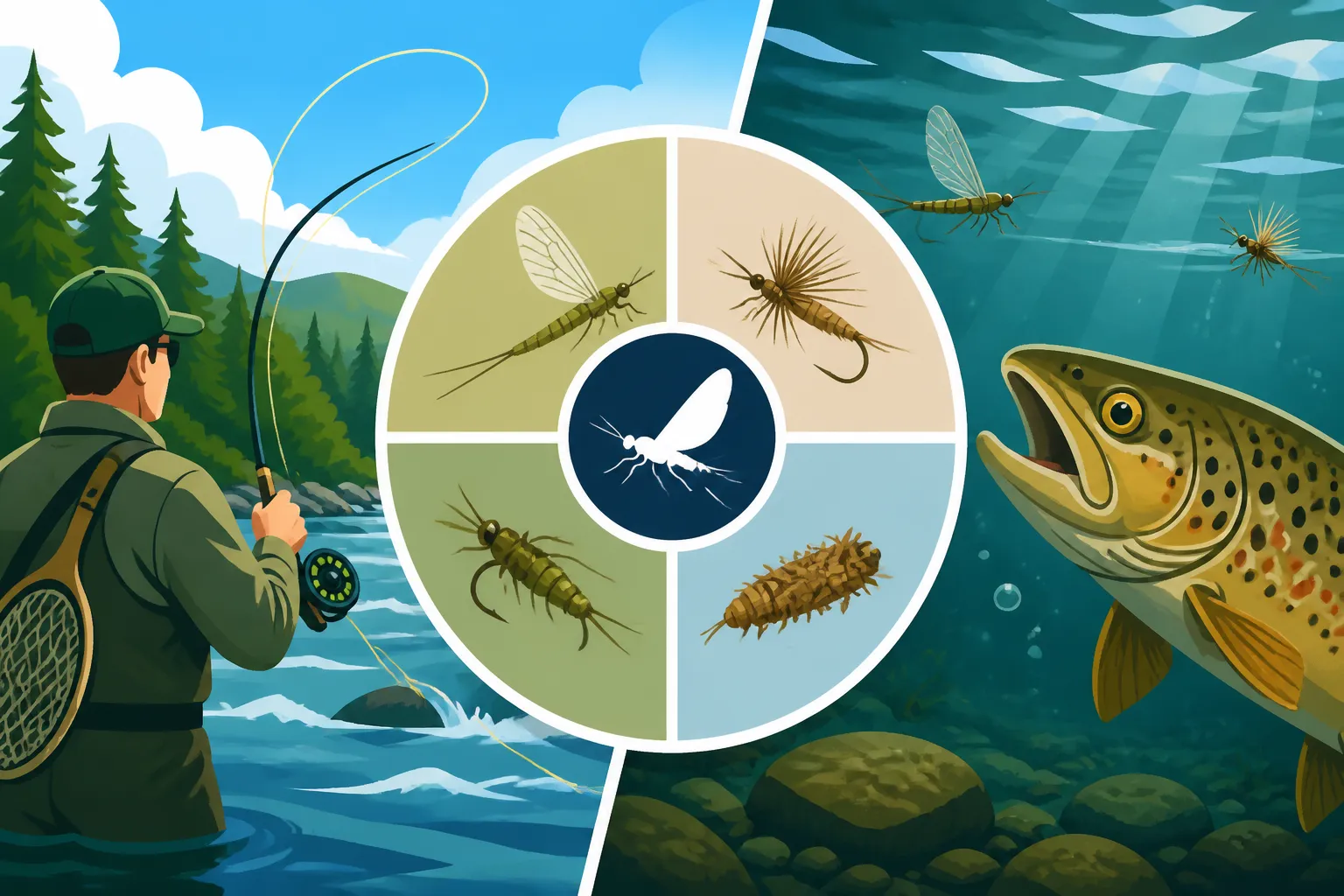
This process isn't instantaneous. It involves several distinct stages: the nymph or larva, the emerger (as they transition to the surface), the dun (the sub-adult winged stage, often drifting on the surface), and finally, the spinner (the sexually mature adult that returns to the water to mate and lay eggs, often dying on the water's surface in a "spent wing" position). Each of these stages presents a different meal opportunity for a fish, and understanding which stage they're focused on is paramount. A fish that's exclusively feeding on emerging insects just below the surface won't touch a fully winged dry fly floating high above it.
Why Maine Rivers Present Unique Challenges and Opportunities
Maine's rivers are a magnificent tapestry of freestone streams, powerful tailwaters, and countless small, wild brooks. This diversity means that while the general principles of matching the hatch apply, the specific insects and their timing can vary wildly from one waterway to the next.
Our rivers are often home to robust populations of wild brook trout, landlocked salmon, and brown trout. These fish, unlike their hatchery-raised counterparts, are incredibly discerning. They've evolved to become highly efficient feeders, often "keying in" on a specific food source when it's abundant. This means they develop a sort of tunnel vision, ignoring anything that doesn't perfectly mimic what they're already gorging on. It’s not just about throwing any old fly; those wild fish have seen it all!
The good news is that when you do successfully "crack the code" and present the right imitation at the right time and in the right way, the rewards are often spectacular. Maine's wild fish offer some of the most thrilling and rewarding fly fishing experiences imaginable. However, their choosiness also means that a generic approach often leads to frustration. This is where truly understanding the hatch becomes your superpower. For more generalized advice on Maine Open Water Fishing Techniques Guide, you can find a wealth of information.
Identifying the Insects on the Water: Becoming a River Detective
Successfully matching the hatch starts long before you even tie on a fly. It begins with keen observation and a little bit of detective work. The river itself, and the fish in it, will tell you everything you need to know if you're willing to listen and look closely.
Observation is Your First and Best Tool
When you arrive at a promising stretch of a Maine river, don't just immediately start casting. Take a moment, step back, and simply observe. This initial scouting period can save you hours of futile casting.
What to look for:
- Rising Fish: Are fish rising? If so, how are they rising? A subtle "sip" or a gentle bulge just below the surface often indicates fish are feeding on nymphs or emergers struggling in the surface film. A more aggressive "splash" or head-and-tail rise usually means they're taking fully winged dry flies. Sometimes you'll even see a distinct "gulp" where a fish completely breaks the surface, which might mean they're targeting something large or simply being opportunistic. Pay attention to where they're rising too – in the slack water, along current seams, or in faster riffles.
- Surface Activity: Are there actual insects on the water? Look for tiny mayfly duns with upright wings, caddisflies skating across the surface, or the spent wings of spinners. Don't forget to look in eddies and foam lines where insects often collect.
- Streamside Vegetation: Many insects, especially stoneflies and some caddis, crawl out onto rocks and grasses to emerge. Check under leaves, on bridge abutments, or along the banks for shed shucks or newly emerged adults.
- In the Air: Sometimes the hatch is obvious in the air before it's on the water. Swarms of caddisflies dancing over the river or mayflies fluttering upwards are a dead giveaway.
Carrying a small, fine-mesh net or even just using your hand to gently scoop water can help you collect specimens for closer examination. A small magnifying glass, readily available on Amazon, can be incredibly helpful for discerning the fine details of tiny insects.
Collecting and Examining Actual Specimens
While observing from a distance is a great start, nothing beats getting up close and personal with the actual insects the fish are eating.
How to collect:
- On the Surface: If you see insects floating by, carefully scoop one up. A small, clear plastic container or a specific "bug box" is perfect for this. Even a wet hand can work in a pinch.
- Under Rocks: In shallower, riffled sections, gently lift a few rocks and quickly examine the underside for nymphs and larvae. This is especially useful if fish are clearly feeding subsurface and no adult insects are visible.
- Streamside: Look for insects that have landed on your waders, fishing vest, or on nearby leaves and branches.
Once you have an insect, examine it carefully. What's its overall size? This is probably the most critical factor. What's its shape or profile? Is it slender, plump, long and skinny? What are the dominant colors of its body, wings, and legs? Remember that colors can appear different when wet or in various light conditions, so try to see it from the fish's perspective—from below, against the sky. A good field guide for aquatic insects of the Northeast, often found on Amazon, can be an invaluable resource here for deeper identification. When choosing your flies, you'll want to remember what you've observed. Often, a specific Best Flies for Brook Trout in Maine Streams will be a perfect match.
Consulting Hatch Charts and Local Knowledge
While on-the-water observation is king, general hatch charts can give you a good starting point for what to expect to see at certain times of the year in Maine. These charts usually list the common insect species and their typical emergence windows. However, remember that these are just guides; actual hatch times can vary significantly based on specific water temperatures, snowmelt, and weather patterns in any given year.
A truly invaluable resource is local knowledge. Stop by a fly shop near the river you plan to fish. Places like Kittery Trading Post or L.L.Bean often have staff who are avid local anglers and can give you real-time reports on what's hatching, what patterns are working, and what the water conditions are like. They might even share a secret or two! Local fishing guides are another excellent source of information. You can often learn a lot just by striking up a conversation. Consider researching Fly Selection for Brook Trout to further refine your choices.
Imitating the Hatch: Choosing the Right Fly
Once you've done your detective work and identified the target insect and its life stage, the next step is to choose the fly that best imitates it. This is where your fly box becomes your arsenal, and understanding the nuances of your patterns is crucial.
Size, Shape, and Color: The Golden Triangle
These three elements form the foundation of effective fly selection when matching the hatch. Get any one of them wrong, and your chances of success plummet.
- Size: This is often the most important factor. Fish have tiny brains, but they are incredibly good at discerning size. If they are feeding on a size 18 Trico, they will almost certainly ignore your size 14 Cahill. Always err on the side of smaller if you're unsure, especially for wary trout. Match the hook size of your fly as closely as possible to the length and bulk of the natural insect you observed. For example, tiny midges might require a size 24 hook, while a large stonefly nymph could be a size 8.
- Shape (Profile): Beyond just size, the overall silhouette and shape of your fly against the sky or under the water matters immensely. Does the natural insect have upright wings like a mayfly dun, or swept-back wings like a caddisfly? Is its body slender or stout? Does it have prominent legs or a long tail? Different fly patterns are designed to mimic these distinct profiles. For instance, an Adams Dry Fly has a very different profile than an Elk Hair Caddis, and fish notice these subtle differences.
- Color: While often debated as less important than size and shape, color certainly plays a role, especially in clear water or bright conditions. Match the body color, wing color, and leg color as closely as possible to the natural insect. Remember that colors can look different in direct sunlight versus shade, or when wet versus dry. A brown mayfly might appear almost black when wet, or a light gray when backlit. Many anglers carry a wide range of shades for common patterns. A comprehensive fly tying kit, like those readily available on Amazon, can help you craft specific colors if you're into that level of detail.
Matching the Life Stage: Nymphs, Emergers, Dries, and Spinners
Remember those different life stages? Your fly choice needs to reflect which stage the fish are actively feeding on.
- Nymphs/Larvae: If fish are feeding primarily below the surface, or you see no adult insects but plenty of activity, it's time for nymphs. These patterns imitate the underwater stage of the insect. Fish often take them when they're drifting passively near the bottom or actively swimming upwards. Techniques like dead-drifting with an indicator or high-stick nymphing are effective. Learn more about effective subsurface strategies in our guide on How to Nymph Fish for Trout.
- Emergers: This stage is often the most productive and most overlooked. Fish frequently key in on insects as they struggle to break through the surface film. Emerger patterns are designed to be fished partially submerged, often with just the wing or a bit of the body poking through the surface. They represent a vulnerable, easy meal.
- Dry Flies (Duns): Ah, the classic dry fly. When you see insects floating on the surface with upright wings and fish are rising confidently, it's time for a dun imitation. These flies float high on the water and require a delicate, drag-free presentation. There's nothing quite like watching a fish sip your dry fly off the surface. For those who love the sight of a trout rising, our article on How to Fish a Dry Fly for Brook Trout offers excellent insights.
- Spinners: After mating, many adult insects (especially mayflies) fall back onto the water in a spent, winged position to die and lay eggs. These "spinner falls" can trigger intense feeding frenzies, particularly in the evenings. Spinner patterns lie flat on the water and imitate these exhausted, easily accessible meals.
Presentation and Drift: Bringing Your Imitation to Life
Even the perfect fly won't catch fish if it's not presented correctly. A drag-free drift is perhaps the single most important aspect of effective fly fishing, especially when matching a hatch.
- Drag-Free Drift: When a natural insect floats down a river, it moves at the speed of the current, without any unnatural tugging or acceleration. "Drag" occurs when your fly line and leader are pulled by different current speeds, causing your fly to skate unnaturally across the surface or accelerate ahead of the current. This immediately puts wary fish off. You must strive to make your fly drift as naturally as possible.
- Mending Line: This is the art of throwing extra slack upstream or downstream during your drift to counteract conflicting currents and maintain a natural presentation. It takes practice but is absolutely essential.
- Casting Upstream/Up-and-Across: Positioning yourself to cast upstream or slightly up-and-across the current allows your fly to drift naturally back towards you, giving you more time for a drag-free presentation and reducing the chance of your line spooking fish.
- Subtle Twitches: While most dry flies and nymphs require a dead drift, some insects (like caddisflies) will skitter or twitch on the surface. Occasionally, a very subtle twitch of your caddis imitation can trigger a strike.
- Stealth: Always approach the water cautiously. Wary Maine fish can be easily spooked by heavy footsteps, loud noises, or seeing your silhouette against the skyline. Often, a stealthy approach and well-executed Casting Techniques for Beginners can make all the difference.
Key Maine Hatches and When to Expect Them
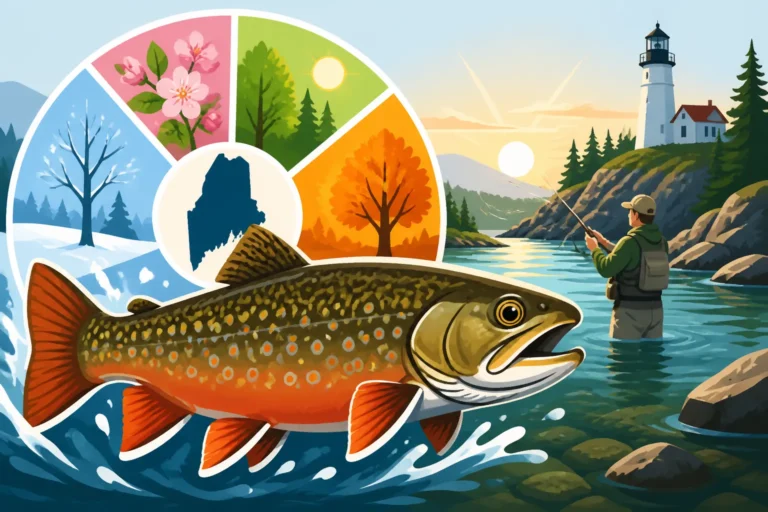
Maine's fishing seasons offer a diverse array of hatches, each with its own rhythm and opportunities. Knowing what to generally expect can help you prepare your fly box and plan your trips. The Best Time of Year to Fish in Maine often aligns with these major hatches.
Spring Hatches: Early Season Opportunities
As the ice recedes and water temperatures slowly climb in late April and May, the rivers begin to awaken. This is a time of renewed activity for both insects and fish, which are often hungry after a long winter.
- Early Stoneflies (e.g., Winter Stoneflies, Early Black Stoneflies): These are often the first significant insects to emerge as waters approach the high 30s and low 40s Fahrenheit. Nymph patterns fished deep can be incredibly effective, and you might see adults crawling on snow banks or streamside rocks.
- Midges: These tiny, mosquito-like insects are present year-round but can become prolific in early spring. Their tiny size (often size 20-28) makes them challenging to imitate, but when fish are keyed in on them, nothing else works. Nymphs, emergers, and tiny dry flies are all crucial.
- Caddisflies (e.g., Early Black Caddis, Spotted Sedge): As water warms into the 40s and 50s, various caddis species emerge. Unlike mayflies, caddis often skate or hop across the surface, making their imitations exciting to fish. Larval patterns (pupae) and dry caddis patterns are essential.
- Hendricksons (Ephemerella subvaria): This is arguably one of the most important early season mayfly hatches in many Maine rivers, typically occurring when water temperatures hit the low to mid-50s (usually mid-May to early June). Duns are a beautiful reddish-brown with upright wings, and fish often become quite selective on them. Nymphs, emergers, duns, and spinners are all patterns you'll want. Our Maine Spring Fishing Guide provides more in-depth spring strategies.
Summer Hatches: From Sulfurs to Terrestrials
Summer in Maine sees a vibrant array of insect life, but also introduces warmer water and sometimes trickier conditions as fish become more educated.
- Sulphurs (Ephemerella dorothea): These small, yellowish-bodied mayflies are a staple of summer evenings, often hatching in late afternoon into dusk. They can bring selective fish to the surface, and matching their small size (size 16-20) and pale yellow color is key.
- Tricos: These are the "smallest of the small" mayflies, often size 22-28. They typically hatch in the early morning hours, often leading to massive spinner falls on flat, slow-moving water. The fish can become incredibly particular, requiring tiny, perfect imitations.
- Isonychia (Slate Drakes): Larger, reddish-brown mayflies (size 10-14) that are known for their fast-swimming nymphs. Duns often hatch quickly and fly off, but the nymphs are a consistent food source.
- Terrestrials (Ants, Beetles, Grasshoppers): As the summer progresses, especially during July and August, insects that live on land (terrestrials) become incredibly important, especially on windy days that blow them into the water. Big foam hoppers, ant patterns, and beetle imitations can be incredibly effective, especially in meadow sections or when aquatic hatches are sparse. Sometimes, a general dry fly pattern will do the trick, but having a specialized terrestrial in your fly box can be a game-changer. Carrying a selection of these patterns in a reliable fly box, like those found on Amazon, is always a good idea. Make sure you also have a good assortment of leader and tippet for various situations.
Fall Hatches: Last Hurrah Before Winter
As autumn arrives and leaves begin to turn, Maine's rivers often experience a resurgence of insect activity and aggressive feeding by fish preparing for winter. Our Maine Fall Fishing Guide is a great resource for this productive season.
- Blue-Winged Olives (Baetis spp.): These small, olive-bodied mayflies (BWO) are prominent in both spring and fall when temperatures cool. They can hatch on cloudy, drizzly days when other insects are inactive, making them a crucial pattern to have. Size 18-22 imitations are common.
- Fall Caddis (e.g., October Caddis): As their name suggests, these larger, orange-bodied caddisflies (size 8-12) can provide some exciting surface action in September and October. Their large size makes them a tempting meal for hungry fish.
- Stoneflies: Some larger stonefly species will also emerge in the fall, particularly in colder, oxygenated waters. Their nymphs remain a primary food source throughout the autumn.
Dealing with No Hatch: When Matching the Hatch Isn't an Option
Let's be realistic: not every day on a Maine river is going to present a textbook hatch. Sometimes, you'll arrive at the river, and despite your best efforts at observation, you won't see a single insect or a rising fish. Does that mean you pack up and go home? Absolutely not! These are the days when you need to switch gears and employ different strategies.
The Prospecting Approach
When there's no obvious hatch, you're essentially "prospecting" for fish – trying to entice a strike by covering water and presenting a fly that generally looks like a good meal.
- Attractor Patterns: These are flies that don't imitate a specific insect but rather suggest a general food source or simply "attract" a fish's attention. Think of patterns like a Royal Wulff, Stimulator, or something flashy. They are often larger and more visible, designed to trigger a reactionary strike from a fish that might not be actively feeding but is simply opportunistic.
- Streamers: Don't forget streamers! These flies imitate baitfish, leeches, or other larger prey. Stripping a Woolly Bugger, Clouser Minnow, or Mickey Finn through likely holding water can be incredibly effective, especially for larger trout and landlocked salmon. This is a very different approach from delicate dry fly fishing and can often save a slow day.
- Covering Water: When prospecting, focus on methodically fishing different types of water – riffles, runs, pools, eddies, and undercut banks. You're not waiting for fish to show themselves; you're actively searching for them.
The Subsurface Game
Just because there are no insects on the surface doesn't mean fish aren't feeding. In fact, most of a trout's or salmon's diet comes from subsurface sources.
- Nymphing Without a Hatch: Even if you don't see any nymphs emerging, fish are still eating them. Fish a weighted nymph (or tandem nymph rig) near the bottom of likely pools and runs. Use a strike indicator to detect subtle takes. Focus on areas where food naturally drifts, such as current seams, transitions from fast to slow water, and around structure like submerged logs or rocks. Patterns like a Prince Nymph, Hare's Ear, or Pheasant Tail Nymph are universal producers. If you're tying your own, you might find specific tungsten beads for adding weight, like those found on Amazon, to be very helpful.
- Deep Water: During bright sunny days or when water temperatures are higher, fish often retreat to deeper, cooler water. Target the deepest parts of pools or runs with heavy nymph rigs or even small streamers.
Adjusting to Conditions
Fishing in Maine means being prepared for rapidly changing weather and water conditions. What worked yesterday might not work today.
- Weather: A sudden cold front can shut down hatches and make fish lethargic. Conversely, a warm, cloudy day after a cold spell can spark intense activity. Be ready to adjust your approach based on the forecast. Our guide on Fishing Before a Cold Front can help you anticipate these changes.
- Water Levels: High, turbid water from rain or snowmelt can make visual observation difficult and push fish into slower, more protected areas. Low, clear water can make fish warier and require more delicate presentations and longer leaders.
- Wind: Wind can be a blessing or a curse. It can blow terrestrials onto the water and mask your casting, but it can also make casting difficult and create surface chop that makes it hard to see your fly or detect subtle takes. Our insights into How Wind Affects Lake Fishing also apply to larger, wider river sections.
The key takeaway for days without an obvious hatch is versatility. Don't get stuck on one technique or fly. Be willing to experiment, change your flies frequently, adjust your depth, and move to different sections of the river until you find what the fish are responding to. That adaptability is what makes a truly skilled angler.
| Season | Typical Hatches | Insect Type | Fly Patterns to Consider |
|---|---|---|---|
| Spring | Winter Stoneflies, Early Black Caddis, Midges, Hendricksons | Stonefly, Caddisfly, Midge, Mayfly | Black Stonefly Nymph, Early Black Caddis (Dry & Larva), Zebra Midge, Griffith's Gnat, Hendrickson (Nymph, Emerger, Dry, Spinner) |
| Summer | Sulphurs, Tricos, Isonychia, Green Drakes, Terrestrials | Mayfly, Terrestrial, Caddisfly | Sulphur (Nymph, Emerger, Dry), Trico (Dry, Spinner), Isonychia (Nymph, Dry), Hopper, Ant, Beetle, Elk Hair Caddis |
| Fall | Blue-Winged Olives (BWO), Fall Caddis, White Flies | Mayfly, Caddisfly | BWO (Nymph, Emerger, Dry, Spinner), October Caddis (Dry & Larva), White Miller (Dry) |
Disclaimer
Fishing regulations and conditions in Maine can change frequently. Always consult the latest Maine Department of Inland Fisheries and Wildlife (MDIFW) regulations before heading out on the water. This guide is for informational purposes only and does not constitute legal advice. Adhere to all local, state, and federal laws.