Casting Techniques for Beginners
Oh, the humble cast! It looks so effortless when you see a seasoned angler out on a quiet Maine lake, their line sailing gracefully across the water, landing a tiny fly or lure exactly where they want it. But for us beginners, or even those just getting back into it after a long hiatus, casting can feel like trying to juggle slippery fish while reciting poetry. It's frustrating when your line lands in a tangled mess at your feet, or worse, gets hung up in the tall pines behind you, instead of reaching that promising ripple just out of reach. Trust me, we’ve all been there. This comprehensive guide is here to demystify the art of casting, breaking down the essential techniques you need to confidently and accurately present your bait or lure in Maine’s beautiful waters, turning those casting woes into triumphant splashes.
Why Proper Casting Matters for Maine Anglers
You might think, "It's just throwing a line, right?" But proper casting is the fundamental skill that unlocks so much more of the fishing experience, especially here in Maine where waters can be vast and fish can be finicky. It's not just about getting your line wet; it's about precision, control, and ultimately, success.
The Frustration of Poor Casting
Let’s be honest, nothing saps the joy out of a fishing trip faster than wrestling with a snarled line or consistently missing your target. Imagine you're on a pristine Maine lake, maybe even one of the legendary Rangeley Lakes, and you spot a tell-tale rise from a brook trout near a submerged log. You know exactly where you need your lure to land, but cast after cast, it falls short, lands with a noisy splash that spooks the fish, or worse, ends up in a bird’s nest of tangled mono. That sinking feeling? We've all been there. It’s not just about losing fishing time; it's about feeling ineffective and frustrated. Poor casting limits your ability to reach prime fishing spots, reduces your chances of a bite, and can even damage your gear. It’s the gatekeeper to truly enjoying the sport.
How Good Casting Boosts Your Success
On the flip side, mastering a few core casting techniques dramatically opens up your fishing possibilities. When you can consistently cast accurately, you can place your lure right beside that submerged log where the big one is hiding, or sneak a fly under an overhanging branch where trout are sipping insects. Distance is also key, especially on larger bodies of water like Sebago Lake, allowing you to cover more ground and reach fish holding further out. Beyond accuracy and distance, good casting reduces tangles, prolongs the life of your line, and makes the entire process more enjoyable and efficient. It's about feeling confident that when you see a promising spot, you have the skill to present your offering perfectly, making every cast count. Learning good habits now will pay dividends whether you're chasing landlocked salmon, smallmouth bass, or anything in between.
Essential Gear for the Beginner Caster
Before you even think about throwing a line, having the right gear is paramount. For beginners, the choice often comes down to spinning or baitcasting setups. While both can catch fish, they require slightly different approaches to casting and present different learning curves. Understanding these differences will help you choose the best setup to start your Maine fishing adventures.
Spinning Reel Setups: Your Best Starting Point
For most beginners, a spinning reel and rod combination is the absolute best place to start. Why? Because they are incredibly forgiving and much easier to learn to cast with compared to their baitcasting counterparts. Spinning reels are designed to let the line peel off the spool freely, minimizing backlashes (those dreaded bird’s nests) that plague new baitcasting anglers.
A typical spinning setup involves an open-faced reel mounted under the rod, with a bail arm that you manually flip open before each cast. When you cast, the weight of your lure pulls the line smoothly off the stationary spool. This design makes it much simpler to achieve decent distance and accuracy right from the get-go. You’ll find that a good quality, moderately priced spinning combo from brands like Penn or Daiwa on platforms like Amazon offers excellent value and performance for learning. Look for a medium-light or medium action rod, typically 6 to 7 feet long, paired with a reel in the 2000-3000 size range. This versatility will serve you well for many types of freshwater fishing in Maine, from chasing brook trout in smaller ponds to targeting bass in larger lakes. For more general advice, consider checking out our Maine Open Water Fishing Techniques Guide.
Baitcasting Setups: The Next Level in Control
Baitcasting reels are often seen as the mark of a more experienced angler, and for good reason. They offer superior control, accuracy, and power once mastered, but they come with a steeper learning curve. Unlike spinning reels, the spool on a baitcasting reel rotates as the line goes out, which means you have to use your thumb to control its speed to prevent overruns that cause severe backlashes.
A baitcasting setup features the reel mounted on top of the rod, with a trigger grip for comfortable handling. These reels excel at throwing heavier lures with pinpoint accuracy and are fantastic for targeting larger fish like bass or pike in dense cover. The ability to precisely feather the line with your thumb gives you unparalleled control over the trajectory and landing of your lure. However, if you're just starting out, be prepared for some frustration and tangled lines initially. It’s definitely not the "pick up and go" experience of a spinning reel. My advice? Get comfortable with spinning first. Once you've got a solid understanding of casting mechanics, then you can delve into the nuances of baitcasting. For a deeper dive into the pros and cons, our guide on Spinning Reel vs Baitcasting Reel for Beginners is an excellent resource.
| Feature | Spinning Reel | Baitcasting Reel |
|---|---|---|
| Learning Curve | Easy, very forgiving | Moderate to difficult, requires practice |
| Backlashes | Rare, easy to untangle | Common for beginners, can be severe |
| Line Type | Versatile (mono, fluoro, braid) | Best with heavier mono or braid |
| Lure Weight | Best for light to medium lures | Best for medium to heavy lures |
| Accuracy | Good once learned | Excellent, pinpoint accuracy once mastered |
| Distance | Good, especially with lighter lines | Excellent, especially with heavier lures |
| Control | Moderate | High, especially for precise lure placement |
| Typical Use | Panfish, trout, bass, general freshwater/light saltwater | Bass, pike, muskie, heavy cover, power fishing |
Mastering the Overhead Spin Cast
The overhead spin cast is the bread and butter of freshwater fishing for beginners. It’s the most fundamental and widely used technique, offering a great balance of distance and accuracy. Once you nail this, you’ll be ready for most situations you’ll encounter on Maine's lakes and rivers.
The Basic Mechanics: Setup and Grip
Getting the setup and grip right is crucial for a smooth and effective overhead cast. It might sound overly detailed, but these small adjustments make a huge difference in your consistency and confidence.
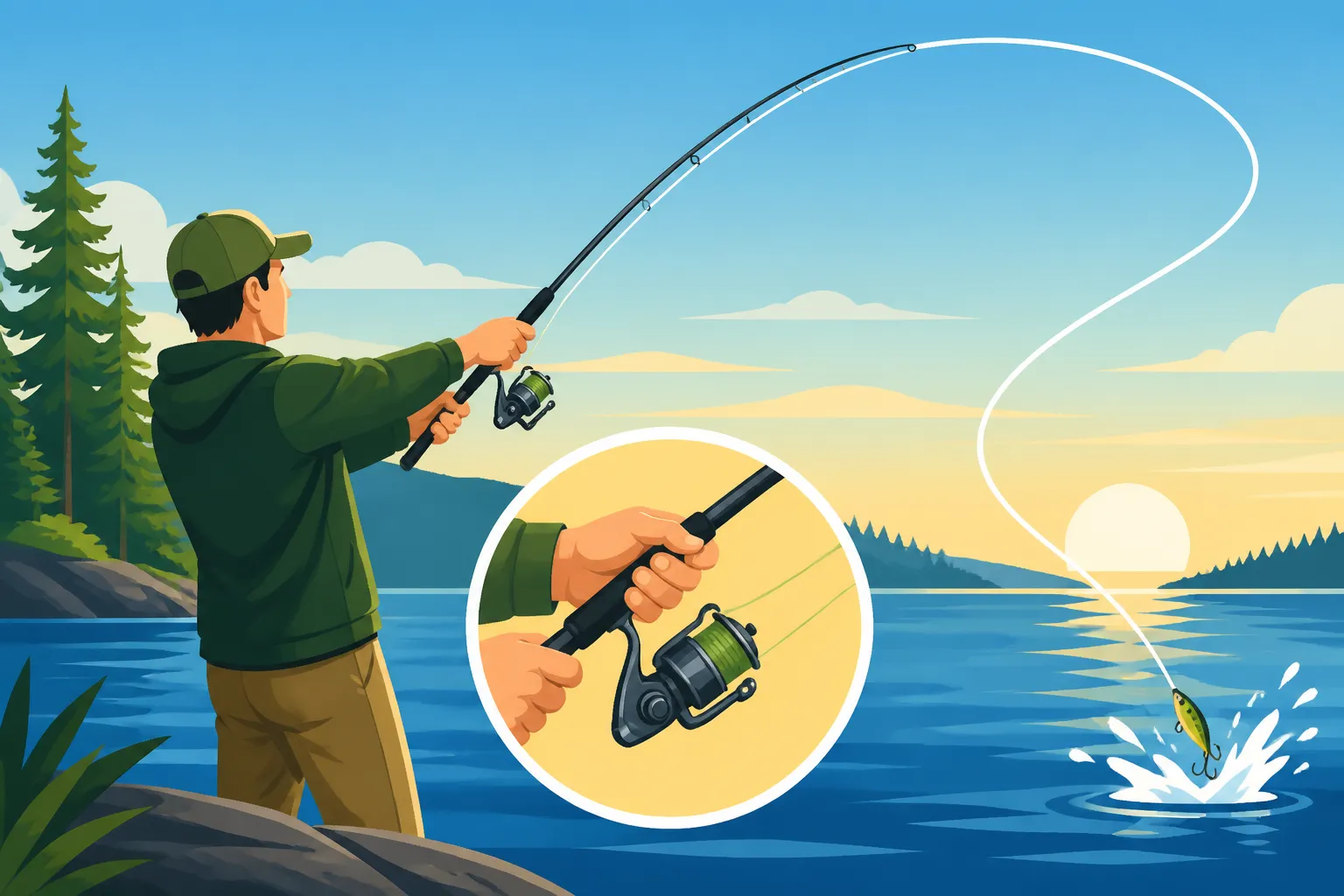
First, let's talk about holding the rod. If you're right-handed, you'll likely hold the rod with your right hand, positioning the reel stem between your middle and ring fingers. Your index finger is the star of the show here – it'll be responsible for controlling the line. For the cast itself, make sure you have enough line hanging from the rod tip, typically about 6 to 12 inches. Too much, and it's hard to control; too little, and you lose momentum. Next, grasp the line with your index finger against the rod, holding it firmly. This is what will stop the line from flying off the spool too early. With your free hand, flip open the bail arm on the spinning reel. Now, the line is held only by your index finger. This setup puts you in prime position for launching your lure. When you're practicing, especially on a lawn, use a casting plug or an old lure with the hooks removed for safety. You can find these easily on Amazon, and it’s a wise investment to prevent accidents before you're out on the water.
The Casting Motion: Load, Release, and Follow-Through
Once you’ve got the grip and setup down, the actual casting motion is a fluid sequence of loading the rod, releasing the line, and following through. Think of it less as throwing and more as an extension of the rod doing the work.
Start by bringing the rod up and slightly behind you, stopping around the 10 o’clock position (if the tip of the rod pointed straight up were 12 o'clock). As the rod comes back, you’ll feel the weight of the lure "load" the rod tip – it’s like bending a spring. This is the crucial moment where the rod stores energy. Without pausing, smoothly and quickly bring the rod forward, snapping it to about the 2 o’clock position. As you reach that forward point, you release your index finger from the line. The stored energy in the rod will launch your lure forward. The timing of this release is everything: too early, and your lure flies high; too late, and it’s a short, weak cast. As the lure sails, follow through with your rod tip, pointing it toward where you want the lure to land. This helps guide the line and maximizes distance. Once the lure hits the water, immediately flip the bail arm back over and begin retrieving your lure. This overhead cast is your go-to for most general Maine Open Water Fishing Techniques Guide. Remember to practice, practice, practice! Find an open field or a large patch of grass and just get the feel for it. Consistency is key, and it only comes with repetition.
Introduction to Baitcasting: Stepping Up Your Game
Once you're consistently hitting your targets with a spinning rod, you might feel the itch to try something new, something that offers a bit more precision and power. That's where baitcasting comes in. It's a different beast entirely, but incredibly rewarding once you get the hang of it.
Why Baitcasting Can Be Tricky (and Worth It)
The biggest hurdle with baitcasting, and what often deters beginners, is the infamous "bird's nest" or backlash. This happens when the spool on your baitcasting reel spins faster than the line is peeling off, creating a snarled mess of line that can take ages to untangle. It’s infuriating, and every baitcaster has experienced it, often more than once. The reason it’s so tricky is that the spool rotates freely, propelled by the force of your cast. If your lure suddenly slows down (hitting a tree branch, landing in the water), but the spool keeps spinning due to inertia, chaos ensues.
However, the payoff for overcoming this challenge is significant. Baitcasting reels offer superior power, making them ideal for heavier lines and lures. They excel at casting into windy conditions where a spinning reel might struggle. More importantly, they provide unparalleled accuracy. The direct control you have over the spool with your thumb allows for incredibly precise lure placement, often referred to as "feathering" the line. This precision is invaluable when you're trying to drop a jig into a small pocket of water in heavy cover or casting alongside a dock on a busy lake. The sensitivity you get through the direct connection to the spool also allows you to feel subtle bites and changes in lure action much more effectively. So, while the initial frustration is real, the enhanced control and capability make it a worthwhile pursuit for the dedicated angler.
Basic Baitcasting Thumb Control and Casting Motion
The secret to successful baitcasting lies almost entirely in mastering thumb control. Without it, you’re just inviting backlashes.
To start, grip the rod with the reel on top. Place your thumb firmly on the spool. This is your brake. Before casting, press the "free spool" button, typically on the side of the reel. Your thumb is now the only thing preventing the line from flying off. For a beginner, it's wise to engage your reel's centrifugal or magnetic brake system (most modern baitcasters have them) to a higher setting to prevent backlashes while learning. As you get more comfortable, you can gradually reduce these settings.
The casting motion itself is similar to an overhead spin cast, but often more compact. Bring the rod back to about 10 or 11 o'clock. As you sweep the rod forward, press the free spool button and lift your thumb slightly off the spool at the peak of the forward motion, allowing the lure to fly. Crucially, keep your thumb hovering over the spool. As the lure approaches its target and starts to slow down, gently apply pressure with your thumb to slow the spool, preventing it from overrunning and causing a backlash. As the lure hits the water, stop the spool entirely with your thumb. This precise feathering and stopping of the spool is what gives baitcasting its legendary accuracy and control. It takes practice, sometimes a lot of it, but with patience and a commitment to thumb control, you'll be placing your Best Lures for Maine Open Water Fishing exactly where you want them in no time.
Beyond the Basics: Other Useful Casting Methods
While the overhead spin cast will serve you well for most situations, and baitcasting offers advanced precision, there are other casting techniques that can come in incredibly handy, especially when you encounter challenging fishing environments in Maine. Learning a few more tricks will make you a much more versatile angler.
Underhand and Sidearm Casts for Tricky Spots
Sometimes, an overhead cast just isn't feasible. Picture yourself shore fishing along a riverbank in Maine, with dense trees and brush directly behind you, or maybe you're out on a kayak trying to cast into a tight cove. This is where underhand and sidearm casts become invaluable.
An underhand cast is performed by swinging the rod and lure forward from a low position, almost like an underhand softball pitch. It keeps the lure much closer to the water and rod tip, preventing it from snagging on overhead obstacles. While it typically sacrifices some distance, it excels at stealth and precision in tight quarters. You'd load the rod with a short swing from a low position, releasing the line as the rod comes forward, aiming for a soft landing. This is particularly useful for presenting a fly or a light lure quietly near cover, especially when you're trying to avoid spooking wary fish.
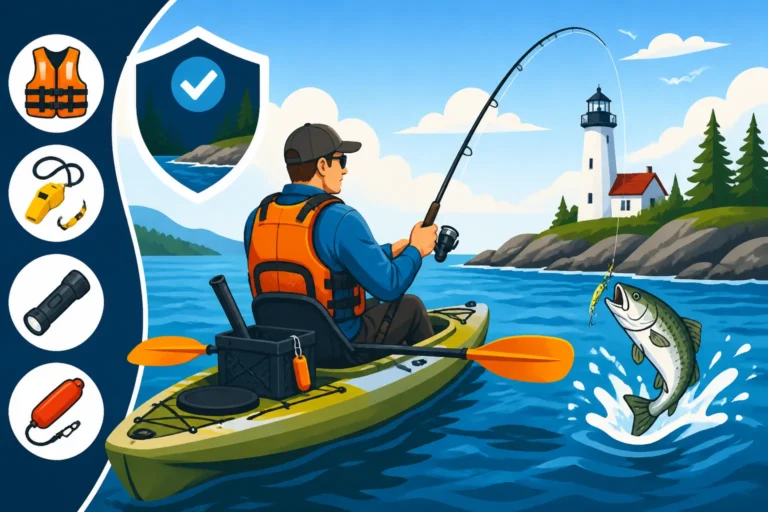
A sidearm cast is executed by swinging the rod horizontally or at an angle across your body, rather than vertically over your head. This keeps the trajectory of your lure low, which is perfect for casting under overhanging branches, docks, or other obstructions. It also allows for a wider, more sweeping presentation, which can sometimes be more natural-looking to fish. To perform a sidearm cast, bring your rod back to the side of your body, rather than directly behind you, load it, and then sweep it forward, releasing the line as it comes across. The key is to maintain a smooth, even motion. Both of these techniques require a good feel for the rod’s loading and release, and they are excellent additions to your repertoire once you've mastered the basic overhead cast. These skills are often essential for effective Shore Fishing Tips for Beginners and for those who enjoy How to Fish From a Kayak Safely.
Roll Casting for Fly Anglers
For those venturing into the world of fly fishing, the roll cast is an absolute must-have. Unlike conventional spinning or baitcasting, fly fishing involves casting the line itself, not the weight of a lure. The roll cast is a specialized technique that allows you to cast a fly line forward without needing any backcast space, which is perfect for tight spots with trees or brush behind you.
To execute a roll cast, you start with most of your fly line lying on the water in front of you. You then gently lift your rod tip, pulling the line towards you until it forms a "D-loop" shape behind and to the side of your rod. With a smooth, forward flick of the wrist and forearm, you drive the rod tip forward. This motion "rolls" the D-loop out across the water, carrying the fly forward to its target. The key is to avoid breaking the surface tension with your line too aggressively and to let the rod do the work. The beauty of the roll cast is its simplicity and effectiveness in situations where a traditional overhead fly cast (which requires ample backcast room) isn't possible. It’s an elegant solution for presenting flies in confined streams or along overgrown riverbanks, allowing you to target fish that would otherwise be inaccessible.
Common Casting Mistakes and How to Fix Them
Learning to cast is a journey, not a destination. You're going to make mistakes, and that's perfectly normal! Every angler, no matter how seasoned, has had their share of tangled lines and missed targets. The important thing is to recognize these common errors and understand how to correct them.
The Dreaded Bird’s Nest (Backlash)
Ah, the bird's nest. If you're using a baitcasting reel, this is practically a rite of passage. Even with spinning reels, you can get wind knots or tangles, though they are usually less severe. A bird's nest on a baitcaster happens when the spool spins faster than the lure is pulling line off, resulting in a chaotic eruption of line that looks like a bird decided to build a home in your reel. On a spinning reel, wind knots often form when loose coils of line come off the spool during the cast.
The Fix:
For baitcasting, the primary culprit is often inadequate thumb control. You’re either not putting enough pressure on the spool as the lure slows down, or you’re lifting your thumb too early in the cast. The solution is practice, practice, practice. Start with higher brake settings on your reel, which will make it less prone to backlashing. Cast with heavier lures, as they pull line more consistently. Focus intently on feathering the spool with your thumb as the lure flies, applying pressure just before it lands. For spinning reels, wind knots are often caused by overfilling the spool or using line that has too much memory. Make sure your spool isn't packed too tight, and consider using a line conditioner to reduce memory. Also, avoid snapping the rod too hard; a smoother motion often helps. Regularly inspect your line for twists and use a good Best Line Weight for Trout Fishing for your specific setup.
Lack of Distance or Accuracy
It’s frustrating when your lure consistently falls short of your target or drifts wildly off course. This often boils down to a few key technique issues that are easily corrected with awareness and practice.
The Fix:
- Poor Rod Load: If your casts are short, you might not be properly "loading" the rod. Remember, the rod is like a spring. When you bring it back for the cast, you need to feel the weight of the lure bend the rod tip. If you're just flailing your arm without allowing the rod to load, you're losing out on stored energy. Focus on a smooth, controlled backswing that allows the rod to flex, then a powerful but fluid forward snap.
- Incorrect Release Point: For accuracy, the timing of your line release is everything. If you release too early (rod tip too high), your lure will fly high and short. Too late (rod tip too low), and it'll plummet at your feet. For an overhead cast, aim to release when your rod tip is roughly at the 2 o'clock position in front of you. Visualize where you want the lure to land and aim your rod tip there during the follow-through.
- Using Your Arm, Not Your Body: Many beginners cast purely with their arm. While your arm does the motion, the power comes from a slight rotation of your torso and shoulders. Engage your core, use a little body rotation, and let the entire upper body contribute to the cast for more power and less fatigue.
- Line Choice: Make sure you're using the appropriate Best Line Weight for Trout Fishing or other species you're targeting. Using line that's too heavy for your rod and lure can severely limit casting distance.
Snags and Hang-Ups Behind You
The dreaded sound of your line snapping against a tree branch or getting hopelessly tangled in the bushes behind you is a universal experience for new anglers. This happens when you don't have enough clear space for your backcast, or your backcast arc is too wide.
The Fix:
- Check Your Surroundings: This might seem obvious, but before every cast, take a quick glance behind you! Look up, look down, look all around. Make sure there’s nothing your lure or line can snag on during its backward arc. If you're fishing in a new Best Fishing Spots for Beginners Near Portland, take a moment to survey the area.
- Narrow Your Backcast: For an overhead cast, try to keep your rod tip tracking in a relatively straight line, or a narrow arc, directly behind you. Avoid wide, looping backcasts, which dramatically increase the chance of catching foliage. Think of a precise pendulum swing rather than a big circle.
- Utilize Alternative Casts: This is where the underhand and sidearm casts come into play. If your overhead space is completely blocked, switch to one of these techniques. They are specifically designed for situations where a full backcast is impossible. Don't be afraid to experiment with different angles to find one that works for your immediate environment.
By understanding these common mistakes and actively working to correct them, you'll find your casting improves dramatically. Remember, every tangled line is a learning opportunity! Persistence and patience are your best tools here, just as they are when practicing How to Tie a Palomar Knot or any other new skill.
Disclaimer
The information provided in this guide is for general informational purposes only and should not be considered legal advice. Fishing regulations in Maine can change, and it is the angler's responsibility to consult the latest rules and regulations from the Maine Department of Inland Fisheries and Wildlife (MDIFW) before heading out. Always prioritize safety on the water and adhere to all local, state, and federal laws. Remember to always practice Catch and Release Best Practices in Maine to ensure the health of our fisheries.