Togue Size and Bag Limits in Maine
Navigating fishing regulations can sometimes feel like trying to untangle a stubborn fishing knot, especially when you're excited to hit the water. It's not always straightforward, and understanding the nuances of size and bag limits for specific species like Togue in Maine can make the difference between a successful, legal outing and a frustrating encounter with the rules. This guide is here to cut through the confusion, helping you confidently understand and adhere to the Togue size and bag limits across the diverse waters of the Pine Tree State, ensuring your fishing adventures are both rewarding and responsible.
Understanding Maine's Togue Regulations: Why They Exist
Before we dive into the nitty-gritty of numbers, it's really helpful to understand why these regulations are in place. It's not just about making rules for the sake of it; there's a deep, scientific reason behind every size limit and every bag limit that directly impacts the health and future of Maine's incredible Togue populations. These fish, also known as lake trout in many other places, are a vital part of our coldwater ecosystems, and protecting them is a shared responsibility.
The Importance of Conservation and Sustainable Fishing
Maine's Togue populations are a precious resource, offering incredible fishing opportunities for anglers who love to target these deep-dwelling, hard-fighting fish. However, without careful management, any popular fish species can be overfished, leading to declines that take decades to recover – if they recover at all. Conservation efforts, like establishing specific size and bag limits, are designed to prevent this by ensuring enough fish survive to reproduce and maintain healthy populations year after year. It’s about striking a delicate balance: allowing anglers to enjoy their sport while safeguarding the future of the fishery. Think of it as leaving enough for the next generation of anglers, and for the Togue themselves.
This approach isn't just about the fish; it's about the entire ecosystem. Togue often sit at the top of the food chain in their lake environments, preying on smaller fish like smelt. If Togue populations dwindle, it can throw the whole system out of whack, leading to imbalances in prey species or even affecting water quality in the long run. So, when you follow these regulations, you're not just being a good angler; you're actively contributing to the ecological well-being of Maine's pristine lakes and ponds. Every fish you measure and every limit you respect plays a part in this larger conservation story.
How Biologists Determine Togue Limits
You might wonder how these specific numbers—a certain length, a certain number of fish—are actually decided. It’s not arbitrary; it's the result of extensive research and monitoring by Maine's fisheries biologists. These dedicated folks spend countless hours studying fish populations, looking at factors like growth rates, age at maturity, reproductive success, and mortality rates in different lakes. They use data from trap netting, electrofishing surveys, and angler reports to get a comprehensive picture of Togue health. For instance, knowing that Togue in a particular lake might not reach reproductive maturity until a certain size helps them set a minimum length limit that allows most fish to spawn at least once before they can be legally kept.
They also consider the unique characteristics of each body of water. A deep, cold lake with an abundant forage base might be able to sustain a different level of harvest than a shallower, less productive pond. This is why you see variations in regulations across the state, which we'll delve into more later. The goal is always to maximize the long-term health and productivity of the fishery, ensuring that the Togue you target today are part of a thriving population that will continue to provide exciting fishing for years to come. It’s a complex science, but it’s all aimed at keeping Maine’s fishing heritage strong and vibrant. If you're interested in how these broad rules apply to other species, check out Maine Fish Bag Limits Guide.
General Law Togue Size and Bag Limits in Maine
When you're fishing in Maine, it's crucial to understand the "General Law" regulations. These are the default rules that apply to most waters unless a specific body of water has its own "Special Regulations." For many lakes and ponds, these general rules will be your guide, but it's always, always your responsibility to double-check the specific regulations for the water you're fishing. Trust me, it saves a lot of headaches later on. Knowing the general framework is the first step in becoming a truly informed Maine angler.
Statewide General Law Limits Explained
Under Maine's General Law, the regulations for Togue (Lake Trout) are quite specific, and they're designed to protect the breeding stock while allowing for recreational harvest. Generally, the rule states that you can keep up to two (2) Togue per day. This means that regardless of how many you catch throughout the day, once you've retained two, any subsequent Togue must be immediately and carefully released. Furthermore, there's a minimum length requirement of 18 inches. So, not only are you limited to two fish, but each of those fish must be at least 18 inches long from the tip of its nose to the end of its tail. Any Togue shorter than 18 inches, even if it's one of the first two you catch, must be released unharmed.
These general law provisions are designed to ensure that Togue have a chance to grow to a mature size, often allowing them to spawn at least once, if not multiple times, before they become eligible for harvest. The 18-inch minimum length helps protect the younger, faster-growing fish, while the two-fish bag limit prevents overharvesting of the larger, reproductive adults. It's a system built on sound biological principles. Remember, these are the starting point for your understanding; always confirm with the latest regulations for your chosen fishing spot. For more comprehensive information on regulations, consult Maine Fishing Regulations Explained.
What "Daily Bag Limit" Truly Means
The term "daily bag limit" might seem straightforward, but it's important to be crystal clear on its meaning to avoid any misunderstandings. For Togue in Maine, a daily bag limit of two fish means exactly that: you are allowed to possess no more than two Togue from that particular body of water at any given time within a single calendar day. It doesn't mean you can catch two in the morning, go home, drop them off, and then go out and catch another two in the afternoon. Once you've harvested your two Togue for the day, your Togue fishing for that water body is effectively done for the day, even if you continue to fish for other species.
This limit applies to each individual angler, not to a boat or a group as a whole, unless specified otherwise (which is rare for Togue). So, if you're out with a friend, each of you can keep up to two legal-sized Togue. It's also important to note that these limits are specific to the body of water you're fishing. If you fish one lake in the morning, keep two Togue, and then decide to try a different lake in the afternoon, the limits for the second lake would apply separately, assuming the regulations are different and you haven't exceeded any overall state possession limits that might apply to transportation. However, it's often easiest to just stick to the two-fish limit across all waters for the day to avoid confusion, especially if you're traveling. Understanding How Many Togue Can You Keep Per Day in Maine? is critical for compliance.
Understanding Minimum Length Requirements
The minimum length requirement is another cornerstone of sustainable Togue management. For most waters under General Law, that 18-inch minimum isn't just a suggestion; it's a hard and fast rule. It means any Togue you catch that measures even a hair under 18 inches must be immediately released back into the water, with as little harm as possible. This rule is particularly important for species like Togue, which can take several years to reach maturity and contribute to the spawning population. Keeping undersized fish depletes the future breeding stock, potentially leading to fewer and smaller fish in the long run.
To comply with this, always carry a reliable measuring device with you. A flexible tape measure or a rigid bump board works great. You can find excellent, waterproof measuring tapes on sites like Amazon that are perfect for boat or bank fishing. When you catch a Togue, lay it flat, measure it quickly and accurately from the tip of its snout to the end of its tail, pinching the tail gently to get the maximum length. If it doesn't meet the 18-inch mark, get it back in the water as fast as you can. Learning the minimum length is key, so make sure to review Togue Minimum Length Limit in Maine before you go.
Navigating Special Regulations Waters for Togue
While General Law provides a solid baseline for Togue fishing in Maine, it's incredibly important to realize that many of the state's most popular and productive Togue fisheries operate under "Special Regulations." These are specific rules that supersede the general law for particular lakes, ponds, or even stretches of rivers. Ignoring these special rules, even accidentally, can lead to fines and a ruined fishing trip. The key to successful and legal fishing in Maine is always, always knowing the specific rules for the exact body of water you intend to fish.
Why Some Lakes Have Different Togue Rules
So, why the variation? It all comes back to biology and management goals. Maine is a vast state with an incredibly diverse array of water bodies, each with its own unique characteristics. A lake like Moosehead, with its immense size and deep, cold waters, can sustain Togue populations differently than a smaller, shallower pond in southern Maine. Fisheries biologists tailor regulations to fit these unique situations. They might adjust size limits to promote trophy growth, increase bag limits in waters where Togue are overpopulated or competing with other species, or even implement slot limits to protect specific size classes of fish.
For example, a lake that has a particularly robust population of Togue that are growing quickly might have a slightly higher bag limit. Conversely, a lake where Togue populations are struggling or where the goal is to produce truly massive fish might have a more restrictive limit, perhaps allowing only one fish per day, or even instituting a "slot limit" where you can only keep fish between two specific lengths, releasing anything smaller or larger. These customized rules are a testament to Maine's commitment to managing its fisheries with precision and care, ensuring each water body can offer the best possible fishing experience while remaining sustainable.
How to Find Special Regulations for Your Fishing Spot
This is arguably the most critical piece of information for any angler in Maine: how to find the specific regulations for the water you plan to fish. The absolute best source for this information is the Maine Department of Inland Fisheries and Wildlife (MDIFW) open water fishing regulations booklet. This comprehensive guide is updated annually and is your bible for all things fishing rules. You can usually pick up a physical copy wherever fishing licenses are sold, like at bait shops, sporting goods stores, or town offices. Many anglers also rely on the digital version, which is readily available on the MDIFW website, often as a downloadable PDF or through an interactive search tool.
When you're looking up regulations, don't just search for "Togue limits." You need to look up the specific lake or pond by name. The booklet is typically organized alphabetically by water body. Once you find your chosen spot, carefully read all the regulations listed for it. Pay close attention to sections on Togue, as they will override the General Law if different. It's a good habit to check these regulations every season, as rules can sometimes change. Trust me, spending a few minutes with the rulebook or the MDIFW website before you head out is time very well spent. For details on general season dates, you can also look up Maine Fishing Season Dates Guide.
Real-World Scenarios: Applying Special Limits
Let's walk through a couple of hypothetical situations to illustrate how special regulations work in practice.
Scenario 1: Moosehead Lake
Imagine you're planning a trip to Moosehead Lake Fishing Guide, one of Maine's premier Togue fisheries. You've heard it has special rules. You check the MDIFW regulations and find that for Moosehead Lake, the Togue limit might be 1 fish per day, and it might also have a specific slot limit, perhaps saying you can only keep one Togue between 18 and 23 inches, with anything under 18 or over 23 inches needing to be released. In this case, if you catch a 17-inch Togue, you release it. If you catch a 20-inch Togue, you can keep it as your one fish for the day. If you then catch a 24-inch Togue, you would also have to release it because it's outside the protected slot. The general law of two Togue, 18 inches minimum, is completely overridden here.
Scenario 2: A Smaller, Remote Pond
Now, consider a much smaller, remote pond, let's call it "Coldwater Pond," that biologists are managing for population control due to an overabundance of small Togue. When you check the regulations, you might find that for Coldwater Pond, the daily bag limit is 5 Togue, with no minimum length limit. This means you could theoretically keep five Togue of any size from this particular pond. This type of regulation is often put in place to help thin out a crowded population, allowing the remaining fish to grow larger. As you can see, these special rules can be vastly different from the general law, reinforcing why always checking is non-negotiable. Knowing about these variations is key, especially if you're trying to understand Maine Togue and Lake Trout Limits in full.
| Water Body | Daily Bag Limit (Togue) | Minimum Length (Togue) | Additional Rules |
|---|---|---|---|
| General Law | 2 | 18 inches | Applies to most waters unless otherwise specified. |
| Moosehead Lake | 1 | 18-23 inch slot | Release all Togue under 18" or over 23". |
| Coldwater Pond | 5 | No minimum | Example: Used for population control in specific waters. |
| Other Waters | Varies significantly | Varies significantly | Always check specific MDIFW regulations for your chosen spot! |
Practical Tips for Adhering to Togue Regulations
Knowing the rules is one thing; putting them into practice on the water is another. Sometimes, the excitement of a bite or the challenge of a fight can make you forget a detail or two. That's why having the right gear and adopting good habits are essential for making sure you always adhere to Togue size and bag limits in Maine. Being prepared means you can focus on the fishing, not on scrambling to figure out what to do.
Essential Gear for Measuring and Handling Togue
To properly follow Togue regulations, a few pieces of gear are absolutely essential for every angler. First and foremost, you need an accurate measuring device. A flexible, waterproof tape measure is a classic, but a rigid bump board is often even better, especially for quickly measuring fish in a boat. Many dedicated anglers have a "Fish Ruler" that adheres to the side of their boat or kayak, making quick measurements a breeze. You can easily find these kinds of reliable measuring tools on Amazon, often with clear markings that are easy to read even in less-than-ideal conditions.
Beyond measuring, proper handling gear is crucial, particularly if you're practicing catch and release for undersized or oversized fish. A good pair of fish lip grippers can help you control the fish without touching its delicate body, especially with larger, feistier Togue. A large, soft, knotless landing net is also invaluable. It allows you to safely bring the fish into the boat or onto shore, keeping it calm and minimizing stress. Using these tools helps ensure that if a fish needs to be released, it swims away strong and healthy, ready to fight another day.
Best Practices for Catch and Release (When to Release Oversized or Undersized Fish)
Catch and release isn't just a philosophy; it's a set of techniques aimed at minimizing harm to fish that aren't being kept. When you're fishing for Togue, you'll often encounter fish that are either too small or, in the case of slot limits, too large to legally keep. Releasing these fish properly is just as important as knowing the regulations themselves.
Here are some best practices:
- Minimize Air Exposure: Togue, being coldwater fish, are particularly sensitive to air. Keep them in the water as much as possible while unhooking and measuring. If you must lift them out, do it quickly, and only for a few seconds.
- Handle With Care: Avoid squeezing the fish, especially around its belly and gills. Wet your hands before touching the fish to protect its slime coat, which is vital for disease resistance.
- Use the Right Tools: Pliers or hemostats are essential for quickly removing hooks, especially if the fish has swallowed the hook deeply. If a hook is deeply embedded and cannot be removed without causing significant damage, it's often best to cut the line as close to the hook as possible; hooks will often rust out over time.
- Revive If Necessary: If a Togue seems sluggish after the fight or being out of water, gently hold it upright in the water, facing into a mild current if possible, until it regains its strength and can swim away on its own. Never just toss a tired fish back into the water. For more on this, check out Catch and Release Best Practices in Maine.
Avoiding Common Mistakes and Penalties
Even experienced anglers can sometimes make mistakes, but being aware of common pitfalls can help you avoid them. One of the biggest mistakes is assuming the rules are the same everywhere. As we've discussed, Maine's regulations are highly localized, so always verify the specific rules for your chosen body of water. Relying on outdated information, or simply what a buddy thinks the rules are, is a recipe for trouble.
Another common oversight is miscounting. When you're having a great day, it's easy to lose track. If your bag limit is two Togue, make sure you're keeping a mental tally or even a physical one. Accidentally keeping a third fish can still result in a penalty. Finally, misidentification can also lead to issues. Be sure you can confidently tell the difference between a Togue and other salmonids in Maine, which we'll cover next. Penalties for violating fishing regulations can range from significant fines to the loss of your fishing license, so it's always worth the extra effort to be absolutely certain you're compliant. Nobody wants their Maine fishing adventure to end with a warden's citation!
Togue Identification: Ensuring You've Got the Right Fish
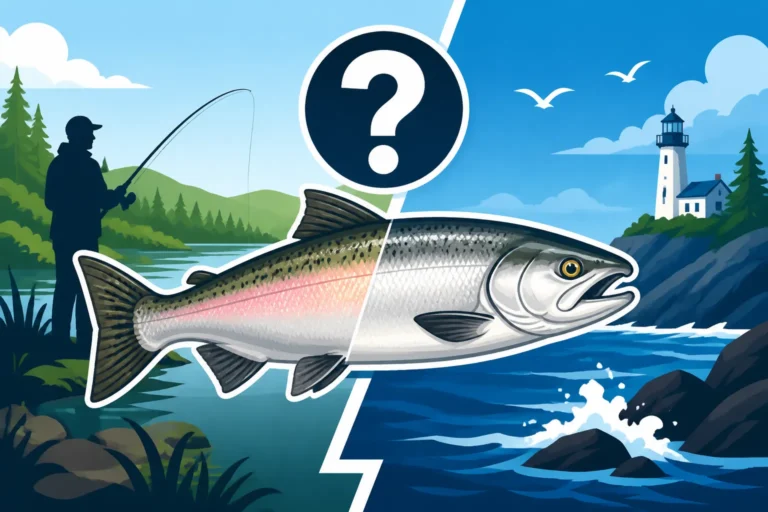
One of the nuances of fishing in Maine is that we have several species of salmonids that can look quite similar, especially to an untrained eye. Before you start measuring and counting, you need to be confident that the fish on the end of your line is, in fact, a Togue. Misidentifying your catch can lead to inadvertent violations of size and bag limits for different species, each of which has its own specific rules.
Togue vs. Brook Trout vs. Landlocked Salmon: Key Differences
While all three are beautiful coldwater game fish, Togue (Lake Trout), Brook Trout, and Landlocked Salmon have distinct characteristics that, once you know them, make identification much easier.
-
Togue (Lake Trout): The largest of the three, Togue typically have a pale, often silvery-gray to olive-green body with numerous light spots that are smaller than the pupil of the eye. Their tail is deeply forked, much more so than a brook trout or even most landlocked salmon. This deeply forked tail is a primary identifier. They also have pale lower fins and mouth, often with a white leading edge on the pectoral, pelvic, and anal fins. Maine anglers often colloquially refer to them as "Togue," so familiarizing yourself with What Does Togue Mean in Maine? can be helpful. And yes, Is a Togue the Same Fish as a Lake Trout? The answer is yes!
-
Brook Trout: Maine's state fish, Brook Trout are typically much smaller than Togue or Landlocked Salmon, though trophy specimens exist. They have a dark, often mottled back with distinctive worm-like markings (vermiculations) on their head and back. Their sides boast red spots, often with blue halos, and their lower fins have striking white leading edges, often followed by black and then red/orange. Their tail is typically square or only slightly forked. They are arguably the most colorful of the three, especially during spawning season.
-
Landlocked Salmon: These fish have a sleek, silvery body, often darker on the back and lighter on the belly. They have distinct black spots, usually X-shaped, on their sides and backs. Their tail is moderately forked, more so than a brook trout, but not as deeply as a Togue. Their mouths are typically darker than a Togue's, and they lack the bright red spots of a brook trout. They are known for their acrobatic fights when hooked. If you're wondering about their origin, consider Is a Landlocked Salmon a Real Salmon?.
| Feature | Togue (Lake Trout) | Brook Trout | Landlocked Salmon |
|---|---|---|---|
| Tail Shape | Deeply forked | Square to slightly forked | Moderately forked |
| Body Color/Pattern | Pale, silvery-gray to olive; small, light spots | Dark, mottled back; red spots with blue halos | Silvery; distinct black X-shaped spots |
| Markings | Spots smaller than eye pupil, no worm-like marks | Worm-like vermiculations on back; red/blue spots | Black X-shaped spots; no red/blue spots |
| Lower Fins | Pale, often white leading edge on pectorals | Bright white leading edge, then black and red/orange | Typically dusky or dark, no pronounced white edge |
| Size (typical adult) | Largest of the three, often 18"+ | Small to medium, rarely over 18" | Medium to large, often 16-24" |
Visual Cues and Habitat Clues for Togue
Beyond the specific physical markings, paying attention to where and how you catch a fish can also provide valuable clues to its identity. Togue are predominantly deepwater, coldwater dwellers. You'll typically find them in the deeper sections of large, clear, cold lakes, often suspending over depths or near underwater structures like humps and drop-offs. If you're trolling or jigging deep in the middle of a big lake and hook a large, silvery fish with a deeply forked tail and small spots, chances are good it's a Togue.
Brook Trout, while also coldwater fish, often prefer shallower areas, stream inlets, spring-fed pockets, and smaller ponds. They are very much "structure-oriented," hiding near logs, rocks, or undercut banks. If you're casting small spinners or flies in a stream or near a rocky shoreline and catch a brightly colored fish with a square tail, it's likely a Brookie. Landlocked Salmon are often found cruising open waters, especially near the surface during cooler periods, or deeper during summer. They are powerful swimmers and are often caught trolling. Learning the common habitats for each species can help you mentally prepare for what you might catch, making on-the-spot identification much easier. When discussing "Togue" in Maine, you might even hear locals explain Why Do Mainers Call Lake Trout Togue?.
The Future of Togue Fishing in Maine: Ongoing Management
Maine's Togue fisheries are a legacy, passed down through generations of anglers who cherish these magnificent fish and the wild places they inhabit. Ensuring this legacy continues for future generations isn't a passive endeavor; it requires ongoing, active management. The health of our Togue populations depends on a dynamic interplay between biological research, responsive regulations, and the cooperative spirit of the angling community.
Role of Maine Inland Fisheries and Wildlife (MDIFW)
The Maine Department of Inland Fisheries and Wildlife (MDIFW) plays the absolutely critical role in managing and protecting the state's Togue populations. They are the scientists, wardens, and educators dedicated to maintaining the ecological balance and recreational opportunities our waters provide. Their work involves continuous monitoring of Togue numbers, growth rates, and overall health in various lakes through extensive field surveys. This data is then meticulously analyzed to understand trends, identify potential threats, and inform management decisions.
MDIFW biologists are constantly evaluating the effectiveness of existing regulations. If they observe a decline in Togue size or numbers in a particular lake, they might propose more restrictive limits. Conversely, if a population is thriving and could support more harvest, they might adjust limits to allow for greater angler opportunity. They also conduct stocking programs in certain waters to supplement natural reproduction or introduce Togue where populations are desired. Furthermore, their wardens are on the water, ensuring compliance with regulations, which is a vital part of protecting the resource for everyone. The MDIFW also conducts important research into Best Time of Year to Catch Togue in Maine which helps guide anglers to more successful trips.
How Anglers Can Contribute to Togue Conservation
As anglers, we're not just consumers of the resource; we're also its stewards. Our actions on and off the water have a direct impact on the future of Togue fishing in Maine. One of the most important contributions is simply adhering strictly to all fishing regulations. This means knowing the size and bag limits for Togue in your chosen water body and following them without exception. Carrying a valid fishing license, which helps fund MDIFW's conservation efforts, is also paramount. You can find comprehensive details about obtaining your license in Maine Fishing License Guide.
Beyond compliance, practicing responsible catch-and-release techniques for fish you don't intend to keep is vital. Using appropriate gear, minimizing air exposure, and ensuring fish are revived before release all contribute to higher survival rates. Anglers can also help by reporting any observed violations or unusual fish kills to the MDIFW wardens. Participating in angler surveys, even informal ones, by sharing information about your catches (number, size, location) can provide valuable data to biologists. Finally, being an advocate for coldwater conservation, supporting initiatives that protect water quality and Togue habitat, ensures that these magnificent fish will continue to thrive in Maine's pristine waters for generations to come. Your passion for fishing can truly make a difference.
Disclaimer
This article is for general informational purposes only and does not constitute professional advice. Laws, prices and regulations vary by location and change over time. Consult a qualified professional for guidance on your specific situation.