How to Identify a Brook Trout
Have you ever been out on a beautiful Maine stream, rod in hand, and caught a fish that just made you scratch your head? It happens to the best of us! With so many gorgeous species swimming in our waters, telling them apart can sometimes feel like a real puzzle. This comprehensive guide is here to help you confidently identify one of Maine's most cherished fish: the elusive and stunning brook trout, so you can always know exactly what you've landed.
The Brook Trout's Distinctive Appearance: A First Look
When you first pull a brook trout from the water, its beauty is often what strikes you first. These fish are genuinely masterpieces of nature, but their appearance can vary quite a bit depending on where they live, what they eat, and even the time of year. Knowing their general look is the first step to becoming a brook trout identification expert.
Overall Body Shape and Coloration
Brook trout, or "brookies" as many Mainers affectionately call them, typically have a streamlined, torpedo-like body, built for navigating fast-moving currents and darting through cover. They aren't as chunky as some other trout species you might encounter. Their backs often display a rich, dark green, olive, or even brownish hue, providing excellent camouflage in the shadows of overhanging trees or rocky riverbeds. This darker coloration gradually fades into lighter flanks, which can range from a pale green to an almost golden yellow. Their bellies are usually a creamy white, often tinged with orange or red, especially during the vibrant fall spawning season.
It’s important to remember that a brook trout’s exact coloration isn’t always a definitive identifier on its own. The environment plays a huge role. A brook trout pulled from a dark, tannin-stained bog stream might appear much darker and more muted than one caught in a clear, sun-drenched mountain pond. Likewise, their diet can affect their vibrancy; fish feasting on a rich insect supply might be more colorful than those in leaner waters.
During the spawning season, which typically happens in the fall, male brook trout undergo a spectacular transformation. Their bellies and lower fins can turn an incredibly intense, fiery orange or red, often edged with black and white. It’s a sight to behold and one of the most striking changes in the fish world. Even outside of spawning, a healthy brook trout will boast a rich, mottled pattern that is quite unique.
The Iconic Worm-Like Markings (Vermiculations)
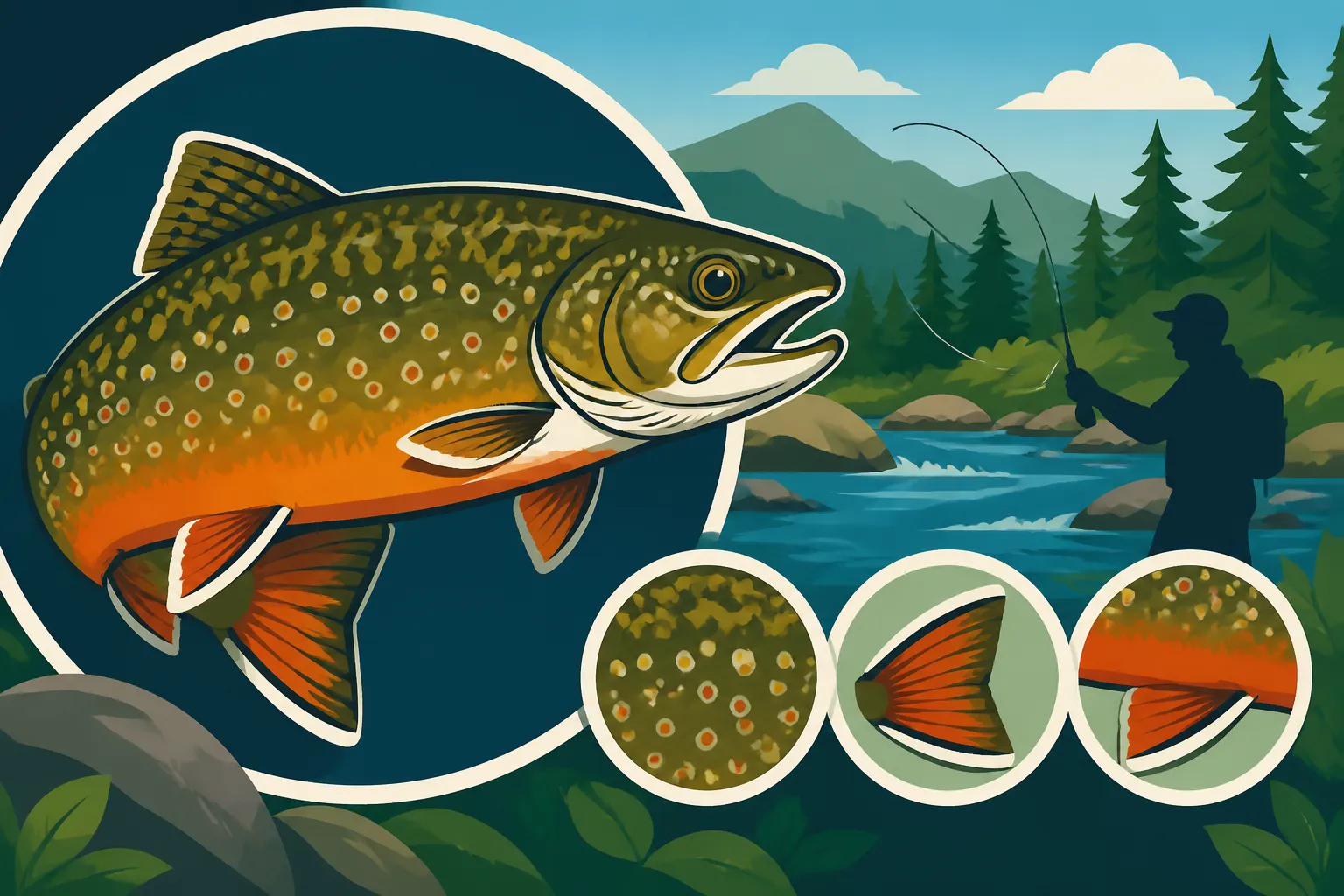
One of the most reliable and immediate clues that you’ve got a brook trout on your line is the presence of their distinctive vermiculations. These are intricate, worm-like patterns of lighter coloration (usually pale green or yellow) that sprawl across the darker background of their back, dorsal fin, and sometimes the top of their head. Imagine the intricate patterns left by a snail on a windowpane, but on a fish!
These vermiculations are truly unique to the brook trout among Maine’s salmonid species. Other trout might have spots, but none possess this labyrinthine network of interconnected lines. They help the brook trout blend seamlessly with the dappled sunlight and shadows of rocky bottoms or submerged logs, making them incredibly difficult for predators (and anglers!) to spot from above.
While the intensity and clarity of these vermiculations can vary slightly from fish to fish, they are almost always present and form a crucial part of the brook trout's camouflage. If you catch a fish with this distinct "worm-track" pattern on its back, you're almost certainly holding a brook trout. It's a key feature that even novice anglers can learn to spot quickly.
Spotting the Signature Red and Blue Halos
Beyond the vermiculations, the brook trout boasts another signature marking that makes it stand out: bright red spots, often surrounded by a pale blue halo, or areola. These spots are typically scattered along the flanks of the fish, from behind the gill plate all the way to the tail. They are perhaps the most beautiful and easily recognizable feature of a healthy brook trout.
These spots are not just plain red dots like you might see on a brown trout; the blue halo is the critical differentiator. It creates a jewel-like effect, adding to the brook trout's already stunning appearance. The number and size of these spots can vary, but their presence, especially with those iridescent blue rings, is a strong indicator of a brook trout.
These signature markings are what give the brook trout its vibrant, almost painterly quality. They stand in stark contrast to the often more subdued spotting of other trout species. If you see these red-on-blue spots, coupled with the vermiculations on the back, you can be very confident in your identification.
Key Physical Features for Identification
While general appearance gives you a good starting point, a closer look at specific anatomical features will seal the deal when identifying a brook trout. These details are consistent across different environments and age classes, making them highly reliable for accurate identification.
Fin Characteristics
The fins of a brook trout offer some of the most definitive identification markers, especially for distinguishing them from other trout and salmon. Pay close attention to the lower fins: the pectoral, pelvic, and anal fins. Each of these fins will typically have a stark, bright white leading edge, immediately followed by a narrow black stripe, and then the main body of the fin. This "white leading edge, black stripe" pattern is almost like a neon sign for brook trout and is incredibly rare to find on other species in Maine.
Additionally, observe the adipose fin, which is the small, fleshy fin located between the dorsal fin and the tail. Like all salmonids (the family that includes trout and salmon), brook trout possess an adipose fin. While its presence confirms it's a salmonid, its size and shape aren't as distinctive as the coloration on the lower fins. The caudal (tail) fin of a brook trout is typically square or only very slightly forked. As they age, or if they are particularly large, the tail can appear even more square. This contrasts with the deeply forked tail often seen on lake trout, which we'll discuss shortly.
These fin characteristics, especially the white-black-white pattern on the lower fins, are often the quickest and most reliable way to confirm you have a brook trout. It's a feature that really pops, even in dim light or murkier water, and it's something that experienced anglers look for immediately.
Mouth and Jaw Structure
The mouth of a brook trout is another useful identification feature. They have a relatively large mouth compared to their head size, with the jaw typically extending back to at least the middle of the eye, and often slightly past it, especially in larger specimens. This larger gape allows them to consume a variety of prey, from insects to small baitfish. Inside their mouths, you'll find small, sharp teeth, indicative of their predatory nature. They aren't fearsome rows of teeth, but they're definitely there to grasp prey.
In male brook trout, particularly during the spawning season in the fall, you might notice a more pronounced hook at the tip of the lower jaw, known as a "kype." This is a secondary sexual characteristic that develops as males prepare to compete for mates and defend redds (spawning beds). While impressive, a kype is not exclusive to brook trout males, as other salmonids can also develop them. However, it’s a good sign you have a mature male if you see it.
The overall shape of the head and mouth can also give you a subtle clue. Brook trout often have a somewhat blunt snout, and their head smoothly transitions into their body, without any dramatic bulges or depressions. This sleek design helps them glide through water efficiently and ambush unsuspecting prey.
Scales and Skin Texture
Brook trout possess relatively small scales, which can make their skin feel quite smooth to the touch, almost slippery. In fact, compared to many other freshwater fish, their scales are so minute that they can sometimes be difficult to discern without close inspection. This characteristic is part of why their vibrant colors and patterns appear so crisp and unbroken on their bodies.
Their skin is also covered in a protective mucus layer. This slime coat is vital for their health, acting as a barrier against parasites and diseases, and aiding in osmoregulation (balancing salts and water in their body). It's why anglers are often encouraged to handle brook trout as little as possible, and with wet hands, if practicing catch and release. Removing too much of this protective layer can leave the fish vulnerable once returned to the water.
When you're handling a brook trout, especially a wild one from a pristine Maine stream, you'll notice this delicate texture. It's a testament to their sensitive nature and their preference for clean, cold water. While scale size isn't as distinct an identifier as the vermiculations or fin patterns, it's another piece of the puzzle that differentiates them from some other species that might have larger, more prominent scales.
Common Look-Alikes and How to Tell Them Apart
Maine is home to a wonderful diversity of fish, and sometimes, a few species can be mistaken for brook trout. Knowing the key differences will not only help you identify your catch correctly but also ensure you're following specific regulations for each species.
Brook Trout vs. Brown Trout
Brown trout are another popular species in Maine, often found in similar habitats, which can lead to confusion. While both are "trout," they have distinct differences. Brown trout tend to have a more silvery or golden-brown coloration overall, often with fewer spots than a brook trout. Their spots are typically dark (black or brown) and can also be red or orange, but here's the crucial distinction: brown trout spots lack the blue halo that is characteristic of brook trout. Instead, their red/orange spots are usually surrounded by a lighter, yellowish ring, and sometimes their spots are X- or star-shaped.
Furthermore, brown trout do not have the intricate vermiculations on their backs and dorsal fins. Instead, their backs are usually covered in more uniform dark spots. Perhaps the easiest distinguishing feature to remember is the fins: brown trout lack the vivid white leading edge backed by a black stripe on their lower fins. Their tail fin is also usually more square or only very slightly forked, similar to a brook trout, but without the color accents. If you're struggling, remember: Brown Trout vs Brook Trout Differences can give you even more pointers.
Brook Trout vs. Rainbow Trout
Rainbow trout, another introduced species in many Maine waters, are also commonly mistaken for brook trout. Rainbows get their name from the iridescent, pinkish-red lateral stripe that runs along their sides, especially prominent in larger, mature fish. This vibrant band is a dead giveaway that you're looking at a rainbow, not a brook trout. Their bodies are typically silver with a greenish-blue back, and they are covered in numerous small, uniform black spots on their back, sides, and caudal fin.
Unlike brook trout, rainbow trout have no vermiculations on their backs and dorsal fins, and their spots are typically all black or very dark, lacking any red or blue halos. Their fins, including the lower ones, will not have the distinctive white leading edge followed by black that you see on a brook trout. The caudal fin of a rainbow trout is usually square and heavily spotted. Rainbows are often found in larger rivers and lakes, particularly those that are stocked, though some wild populations do exist.
Brook Trout vs. Lake Trout (Togue)
Lake trout, often called "togue" by Mainers, are a native char like the brook trout, but they live in much different environments and look quite distinct. Togue are generally much larger fish, adapted to the deep, cold waters of large lakes. Their overall coloration is typically darker, ranging from gray to olive-brown, with lighter, irregular, worm-like spots or blotches on their sides and back. These spots are usually pale or yellowish and never have the red color or blue halos seen on a brook trout.
The most obvious physical difference is the tail fin. Lake trout have a distinctly and deeply forked tail, a feature that allows them to swim powerfully through open water. In contrast, the brook trout's tail is square or only slightly forked. Togue also lack the bright white leading edges on their lower fins. Their mouth is typically larger and more imposing than a brook trout's, reflecting their preference for larger prey fish. If you're fishing a deep Maine lake and catch a large, dark fish with pale spots and a deeply forked tail, you’ve likely got a togue. For more details, check out How to Identify a Togue vs Lake Trout.
Habitat and Behavior Clues for Identification
Beyond physical characteristics, knowing where brook trout prefer to live and how they behave can offer strong contextual clues for identification, sometimes even before you get them close enough to examine closely. These environmental factors are deeply intertwined with their biology and survival.
Preferred Aquatic Environments
Brook trout are creatures of specific preferences, primarily thriving in cold, clean, and highly oxygenated water. In Maine, this means you'll typically find them in the upper reaches of streams and rivers, especially those fed by springs, which keep the water temperature consistently cool even in summer. They are also prevalent in cold, clear ponds, particularly spring-fed kettle ponds that retain deep, cool water throughout the year. Think of those small, secluded ponds nestled in the woods, often with beaver flows or natural springs bubbling in. For a deeper dive into where these beauties live, take a look at Where Brook Trout Live in Maine Streams.
These fish are incredibly sensitive to water quality and temperature. They shy away from warm, murky, or polluted waters. You'll often find them lurking near structures that provide cover and shade: fallen logs, undercut banks, large boulders, and areas with dense aquatic vegetation. These spots offer refuge from predators and strong currents, as well as ambush points for prey. Finding a fish with brook trout characteristics in such a pristine, cold-water environment significantly increases the likelihood that it is, indeed, a brook trout.
The presence of other species can also be a clue. While brook trout can coexist with other cold-water species, finding a vibrant population of brookies often indicates a healthy, unimpacted ecosystem, as they are often the first fish to disappear when conditions deteriorate. Their presence is a good indicator of overall ecological health.
Diet and Feeding Habits
Brook trout are opportunistic feeders, meaning they'll eat just about anything that fits in their mouth and looks appealing, from tiny insects to small baitfish. Their diet is diverse and varies with the season and the specific habitat. In streams and rivers, they are voracious consumers of aquatic insects like caddisflies, mayflies, and stoneflies in their nymph and adult stages. They'll also readily feast on terrestrial insects that fall into the water, such as grasshoppers, beetles, and ants. If you're fly fishing, "matching the hatch" is often key to success with brookies.
In ponds and larger water bodies, their diet expands to include small baitfish like minnows and, importantly, smelt, especially where smelt populations are healthy. They also consume leeches, small crustaceans, and even tiny frogs. Their feeding habits often involve ambushing prey from cover or actively hunting in riffles and pools. Understanding What Do Brook Trout Eat in Maine Streams? can help you understand not only their behavior but also how to identify them by the type of water they are in.
Their active feeding habits mean you'll often see them rise to the surface for insects, or you'll feel distinct tugs as they snap up nymphs subsurface. Their diet directly influences their growth rate and overall health, which in turn can slightly affect their coloration and robustness. A well-fed brook trout from a rich ecosystem will often display more vibrant colors and be more robust than one from a struggling, less productive area.
Spawning Behavior and Appearance Changes
One of the most dramatic behavioral and appearance changes in brook trout occurs during their spawning season. Brook trout are unique among our common trout species in Maine because they are fall spawners, typically laying their eggs in October and November. This is when their colors become incredibly intense, especially for the males. As mentioned before, males develop that brilliant orange-red belly and lower fins, and their flanks can glow with deep greens, reds, and purples.
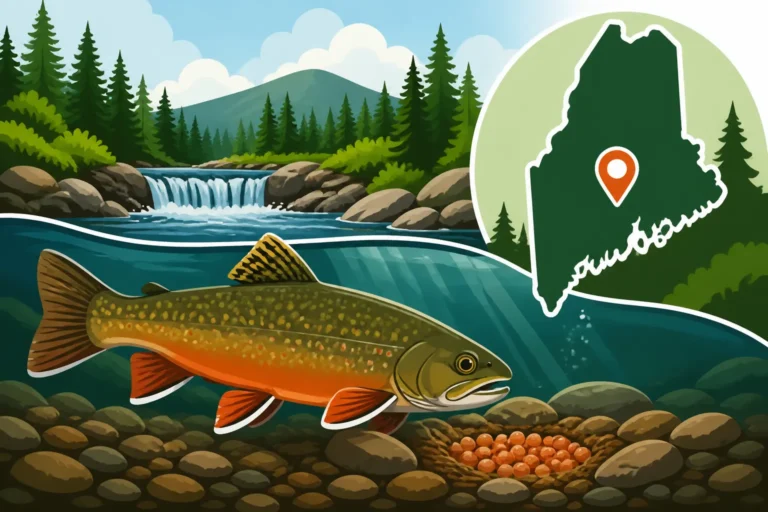
During this time, both males and females will seek out shallow, gravelly areas in streams or spring-fed shallows in lakes and ponds, often called "redds." The females will use their tails to fan out depressions in the gravel where they deposit their eggs, which are then fertilized by the males. Observing this behavior, or even finding fish with this heightened coloration during the fall, is a very strong indicator that you're dealing with brook trout.
The males, in particular, will become quite aggressive and territorial, defending their spawning sites from rivals. This behavior, combined with their incredible coloration, makes them a sight to behold and unmistakable in the autumn. Females, while not quite as flashy, will appear noticeably plump with eggs, showcasing a full, rounded abdomen. This seasonal transformation is not only a biological imperative but also one of nature's most beautiful displays.
Why Accurate Identification Matters
Beyond the sheer joy of knowing what you've caught, accurately identifying a brook trout (or any fish species) is fundamentally important for several critical reasons, ranging from legal compliance to the long-term health of Maine's precious fisheries. It's not just about bragging rights; it's about being a responsible angler.
Adhering to Maine's Regulations
Maine's Department of Inland Fisheries and Wildlife (MDIFW) has specific regulations in place for different fish species, and these often vary significantly. For brook trout, there are specific Maine Fish Bag Limits Guide, size limits, and even season dates that might differ from those for brown trout, rainbow trout, or lake trout. These regulations are designed to manage fish populations sustainably, ensuring healthy numbers for future generations of anglers.
Fishing without knowing the species you've caught can lead to accidental violations. Imagine you catch a fish thinking it's a small brown trout, when in fact it's an oversized brook trout from a "special regulation" water that has a catch-and-release-only rule for larger brookies. Unintentionally keeping it could result in fines or other penalties. The rules for Brook Trout Size and Bag Limits in Maine can be quite specific, sometimes differentiating between north and south zones, or even individual bodies of water. For example, the Brook Trout Daily Limit in Maine South Zone might be different than other areas, and there's often a Minimum Length for Keeping a Brook Trout in Maine. Being able to correctly identify your catch on the spot is your first line of defense against legal trouble and a sign of respect for the rules.
Conservation and Respect for the Fishery
Accurate identification is a cornerstone of conservation. Brook trout are Maine's state fish and its only truly native stream-dwelling salmonid. Many of the wild populations of brook trout in Maine are incredibly valuable, representing some of the last remaining strongholds for this species in the eastern United States. Knowing if you've caught a native, wild brook trout versus a stocked one (which can sometimes be differentiated by fin clips or general appearance, though not always easily) can influence your decision on whether to keep or release it. Read more about Stocked vs Wild Brook Trout in Maine to understand their differences.
Practicing proper catch-and-release techniques is vital for the survival of any fish, but especially delicate species like brook trout. If you can confidently identify a fish quickly, you can minimize its time out of the water, reduce handling stress, and ensure a higher chance of survival upon release. This respect for the fish and the fishery contributes to healthy populations, allowing these beautiful creatures to spawn and thrive.
Furthermore, accurate reporting of your catches, whether through voluntary angler surveys or just in conversation, provides invaluable data to fisheries biologists. This data helps them understand population trends, assess the effectiveness of stocking programs, and make informed decisions about future regulations. Your ability to distinguish between species makes you a better steward of Maine's natural resources. If you're looking to learn more about specific species, a good field guide, perhaps one you might find on Amazon, can be an indispensable tool to carry with you.
Brook Trout Identification At a Glance
To help consolidate all these details, here's a quick comparison table of key features for brook trout and their common look-alikes. This can be a handy reference to quickly review when you're out on the water.
| Feature | Brook Trout | Brown Trout | Rainbow Trout | Lake Trout (Togue) |
|---|---|---|---|---|
| Back/Dorsal Fin | Dark green/olive with light worm-like markings (vermiculations) | Yellowish-brown with scattered dark spots | Silvery-green with numerous black spots | Dark gray/olive with pale, irregular spots |
| Sides | Lighter; red spots with blue halos | Yellowish-brown; dark & red/orange spots (no blue halos) | Silvery; distinct pink/red lateral stripe (iridescent) | Lighter than back; pale, irregular spots |
| Belly | White, often with orange/red flush (esp. spawning) | Cream to yellowish | White to silvery | White to gray |
| Lower Fins | White leading edge, then black stripe, then fin body | No distinct white/black edge | No distinct white/black edge | No distinct white/black edge |
| Caudal (Tail) Fin | Square or very slightly forked | Square or very slightly forked | Square, often heavily spotted | Deeply forked |
| Mouth/Jaw | Extends to or slightly beyond eye | Extends well beyond eye | Extends to or slightly beyond eye | Large, extends well beyond eye |
| Preferred Habitat | Cold, clear streams/ponds, spring-fed waters | Moderate-sized rivers, larger ponds | Larger rivers, stocked lakes, cool streams | Deep, cold, oxygenated lakes |
Remember that practice makes perfect. The more brook trout you encounter, the easier it will become to identify them by sight. Don't be afraid to take a moment, observe your catch carefully, and refer to resources like this guide or a portable field guide you might have picked up from Amazon. Enjoy your time on the water, and tight lines!
Disclaimer
This article is for general informational purposes only and does not constitute professional advice. Laws, prices and regulations vary by location and change over time. Consult a qualified professional for guidance on your specific situation.