How to Identify a Togue vs Lake Trout
It’s a tale as old as time for anglers, especially those venturing into Maine's vast and beautiful waters: you pull up a magnificent fish, and the immediate question echoes, "Is that a togue or a lake trout?" The truth is, the two names are often used interchangeably, leading to widespread confusion, local debates, and even some folks scratching their heads about what they really caught. This guide is here to untangle that knot of nomenclature and give you the definitive lowdown on how to tell the difference, making sure you’re confident in your catch identification every time.
What Exactly is a "Togue" Anyway?
If you’re not from Maine, or haven't spent much time talking to local anglers, the term "togue" might sound a bit exotic, or even like a different species altogether. But here in the Pine Tree State, it's as common as pine trees themselves.
The Local Lexicon: Maine's Unique Term
Around these parts, when someone talks about a "togue," they're almost certainly referring to what the rest of the scientific world, and many other states, call a lake trout. It's a regional endearment, a local name passed down through generations of ice shanty conversations and lakeside storytelling. Imagine overhearing a couple of old-timers at the general store near Moosehead Lake discussing their day's catch; they'll say they "hooked a nice togue," not a lake trout. It’s part of the charming local dialect, much like "wicked" means very, or "ayuh" means yes. For us, it’s just the name for that big, deep-water char. This local usage can sometimes make it tricky for visitors, as they might expect to see a distinctly different fish, only to realize it's the same species they're familiar with elsewhere. What Does Togue Mean in Maine? delves deeper into this fascinating local linguistic quirk.
Historical Context of the Name
The origins of the term "togue" aren't entirely clear, but it's believed to have indigenous roots, likely from an Abenaki word, or perhaps a corruption of one. Many local fish names in New England have such origins, reflecting the deep connection early inhabitants had with the land and its resources. Over time, as European settlers arrived and fishing traditions evolved, "togue" stuck as the common vernacular for Salvelinus namaycush in Maine. It became part of the identity of fishing in our state, a nod to the long history of anglers pursuing these deep-dwelling fish. It's a testament to the enduring fishing culture here, where traditions, including language, are deeply cherished.
Are They Different Species? The Big Reveal
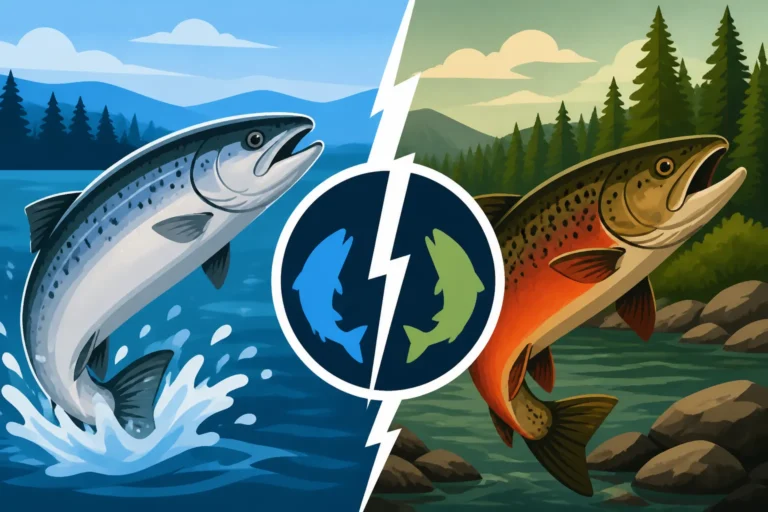
Here's the straightforward answer to the burning question: no, they are not different species. A togue is a lake trout. They are one and the same, biologically speaking. The confusion simply stems from the regional naming convention. So, when you catch a "togue" in Sebago Lake, you've caught a lake trout. When you read about "togue" limits in the Maine fishing regulations, they're talking about lake trout. It's truly just a matter of semantics and local tradition. Knowing this can relieve a lot of the initial mystery and allow you to focus on the actual characteristics that define this magnificent fish, regardless of what you choose to call it. It's like calling a soda "pop" or "coke" – same drink, different regional term. Why Do Mainers Call Lake Trout Togue? explores this cultural phenomenon more.
Understanding the Lake Trout: The Scientific Perspective
While we love our local "togue" identity, it's equally important to understand the broader scientific context of the lake trout. This helps us appreciate its place in the wider natural world and understand why it's such a prized catch.
Taxonomy and Global Distribution
Scientifically, the lake trout is known as Salvelinus namaycush. It belongs to the salmon family (Salmonidae) and, more specifically, to the char genus (Salvelinus), which also includes brook trout, Dolly Varden, and Arctic char. This means that while it's called a "trout," it's technically a char, a group of fish often distinguished by their light spots on a darker body, as opposed to trout which typically have dark spots on a lighter body. Lake trout are native to northern North America, found extensively across Canada and Alaska, and in many of the northern states of the contiguous United States, including Maine. They are truly a cold-water species, thriving in deep, oxygen-rich lakes. Their wide distribution speaks to their adaptability within specific ecological niches, and their presence is often an indicator of healthy, cold lake ecosystems.
Physical Traits of the Broader Lake Trout Species
Across its range, the lake trout generally exhibits a fairly consistent set of physical characteristics. They have a long, slender body that is typically dark green, gray, or brownish on the back, fading to lighter sides and a white belly. Their most distinctive feature is the presence of numerous light spots (often white or yellowish) on a darker background, extending all the way to their caudal (tail) fin and dorsal fin. The tail fin is noticeably deeply forked, which is a crucial identifier. They have a large mouth with teeth on both jaws, and their overall build is robust, designed for life as an apex predator in deep water. These traits are what anglers across the continent recognize, and they hold true for the fish we call "togue" here in Maine.
How Maine's Lake Trout Fit In
Our Maine "togue" are classic examples of Salvelinus namaycush. They possess all the identifying features described above, and they thrive in our state's deep, cold lakes like Moosehead Lake, Sebago Lake, and Rangeley Lakes. While individual fish might vary slightly in coloration based on diet, water clarity, and depth, they all share the fundamental characteristics of the species. Maine’s particular strains of lake trout are renowned for their fighting ability and, in some waters, their impressive size. The consistent presence of these specific traits is why, despite the local name, fisheries biologists and visiting anglers can confidently identify them as lake trout. For those keen on specifics, our Maine Fish Species Identification Guide offers a comprehensive look at various fish found in our waters.
Key Physical Characteristics to Look For
Since "togue" and "lake trout" are the same fish, the identification process is about knowing the distinguishing features of Salvelinus namaycush itself. Let's dive into the specifics that will help you confidently identify your catch.
Body Shape and Coloration Clues
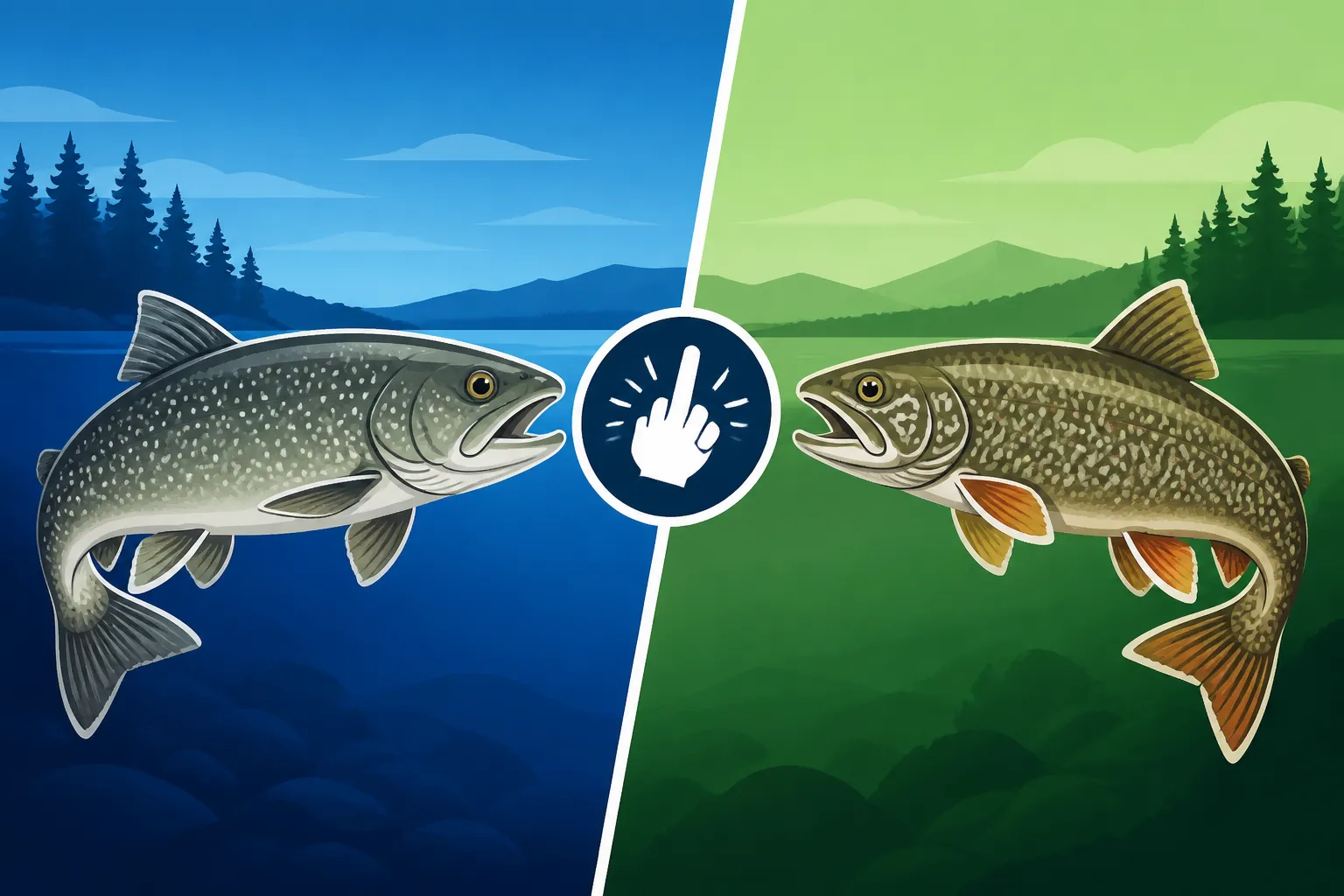
Lake trout have a torpedo-shaped body, typical of a predatory fish, but perhaps a bit more robust than some stream-dwelling trout. Their body is generally dark, ranging from a deep olive green to gray or even a brownish hue on the back, which provides excellent camouflage in deep, dark waters. As you move down the sides, the color lightens considerably, eventually reaching a pale white or off-white belly. The key here is the distribution of spots: they are light-colored (cream, yellow, or white) and are scattered widely across the back, sides, and even onto the fins. Unlike many true trout, which might have spots that are darker than their body color, lake trout (and char in general) sport lighter spots.
Consider a scenario: you're out on the chilly waters of Rangeley Lake, and your line goes taut. After a thrilling battle, you net a sizable fish. The first thing you notice is its sleek, dark back and sides adorned with numerous pale spots, almost like speckles of starlight against a twilight sky. This distinct spotting pattern, especially extending to the fins, is a dead giveaway. If the spots were dark, like black or red, on a lighter body, you'd be looking at a different species of trout.
Fin Differences: Caudal Fin and Pectoral Fins
The caudal fin, or tail fin, is perhaps the single most important and easiest identifier for a lake trout. It is deeply forked. Think of it like a swallow's tail, with two distinct, pointed lobes. This is a very pronounced feature and distinguishes it from other char and trout species in Maine, such as brook trout, which have a much squarer or only slightly emarginate (indented) tail.
The pectoral fins (the pair behind the gills) and pelvic fins (the pair on the underside, near the middle of the body) of a lake trout are usually relatively small compared to its body size, fitting its deep-water, pelagic lifestyle where bursts of speed are more important than fine maneuvering in current. While these fins might not have bright coloration like some brook trout, their overall proportion and lack of distinct banding can also be subtle clues.
For example, imagine two fish side-by-side in your cooler. One has a broad, almost square tail, possibly with a faint white leading edge on its lower fins – that's likely a brook trout. The other, however, proudly displays a deeply V-shaped tail, almost like two separate blades. That second fish is undoubtedly your "togue" or lake trout.
Mouth and Head Morphology
Lake trout possess a large head and a prominent mouth, armed with sharp teeth on both the upper and lower jaws, as well as on the roof of the mouth. This dentition is perfectly suited for its predatory diet, which often includes smaller fish. When you gently open the mouth of a lake trout, you’ll see these teeth, indicating its place high up in the aquatic food chain. Their snout can be somewhat pointed, and the eyes are typically well-developed, aiding in hunting in dimmer, deeper waters.
Comparing this to a brook trout, for instance, a brook trout’s mouth is generally smaller, though still predatory, and their head proportional to their body might appear a bit more rounded. The sheer size and toothiness of a lake trout’s mouth are usually quite apparent. When examining your catch, take a moment to look inside the mouth – those robust teeth are a clear sign of a formidable predator.
Spot Patterns and Distribution
We touched on this earlier, but it bears repeating with more detail because it’s so crucial. Lake trout are covered in numerous, irregularly shaped, light-colored spots that are typically white, cream, or yellowish. These spots are not confined to just the back and sides; they extend distinctly onto the dorsal fin (the main fin on the back) and the caudal fin (tail). This pattern is key to differentiating them from species like brown trout, which have dark spots with light halos, or brook trout, which have red spots with blue halos (known as "halos") on a darker background, often with wavy, worm-like markings on their back (vermiculations) that lake trout lack.
Think of it this way: if you can trace spots all the way to the very edges of the tail and dorsal fin, you’ve got a lake trout. This is a consistent and reliable characteristic across all sizes of these fish. A good close-up photo or careful observation can confirm this detail. You can find detailed illustrations of these patterns in many fishing guidebooks or online resources, often available on platforms like Amazon.
Here's a quick comparison table to help visualize the key differences:
| Feature | Lake Trout (Togue) | Brook Trout | Brown Trout |
|---|---|---|---|
| Tail Fin Shape | Deeply forked (V-shaped) | Square or slightly emarginate | Square or slightly emarginate |
| Spot Color | Light (white, cream, yellowish) | Light (red with blue halos, or cream/yellow) | Dark (black, brown, often with red/orange spots) |
| Spot Distribution | All over body, dorsal fin, and caudal fin | Back and sides, but rarely on caudal fin | Back and sides, usually not on fins (except adipose) |
| Back Pattern | Spots, no worm-like markings | Wavy "vermiculations" (worm-like markings) | Few if any vermiculations |
| Lower Fin Edges | No distinct white leading edge | Prominent white leading edge (pectoral, pelvic, anal) | No distinct white leading edge |
| Body Color | Dark green/gray/brown on back, lighter sides | Dark green/brown on back, sometimes vibrant colors | Brown/gold/silver, often with yellowish belly |
| Mouth Size | Large, extends beyond eye (in larger specimens) | Extends to back of eye | Large, extends beyond eye |
This table should be a handy reference next time you're on the water!
Habitat and Behavior Differences
Understanding where these fish live and how they behave can also offer clues to their identity and help you target them more effectively. The environment plays a huge role in the life of a Salvelinus namaycush.
Preferred Water Temperatures and Depths
Lake trout are quintessential cold-water fish. They absolutely need cold, well-oxygenated water to thrive. This means that during the warmer months, you'll almost exclusively find them in the deepest, coolest parts of large lakes, often 40-100 feet down or even more. Their ideal water temperature range is quite narrow, usually between 40-55°F (4-13°C). As surface waters warm up in the summer, they retreat to these thermal refugia.
In contrast, other trout species like brook trout prefer cooler, but often shallower, stream or pond environments. Brown trout can tolerate slightly warmer temperatures than brook trout, making them more adaptable to various lake and river conditions. The fact that you're fishing in 80 feet of water in August, and you hook a fish, significantly increases the odds it's a "togue." What Depth Do Togue Hold at in Summer? offers specific insights into their summer habits.
During spring and fall turnover, when lake waters mix and temperatures are more uniform throughout the water column, lake trout might move into shallower areas, making them more accessible to different fishing methods. In winter, under the ice, they can be found throughout the water column, but still often favor deeper structures.
Diet and Foraging Habits
As mentioned, lake trout are apex predators in their ecosystems. Their diet primarily consists of smaller baitfish such as smelt, cusk, whitefish, and sculpins. They are opportunistic hunters, and will also eat insects, crustaceans, and even smaller mammals or amphibians if available. Their large mouths and sharp teeth are perfectly adapted for ambushing and consuming these prey items whole. This piscivorous (fish-eating) diet contributes to their impressive size and fighting strength.
Because they often feed on schools of baitfish, they tend to roam widely within the deep basins of lakes, following their food source. This makes them a challenging but rewarding target for anglers who use methods like trolling or jigging over deep structure. If you’re seeing evidence of large baitfish schools on your sonar, you’re likely in prime "togue" territory. You can find specialized lures and tackle designed for targeting these deep-water predators on platforms like Amazon. Best Bait for Togue can help you choose the right offerings.
Spawning Behaviors
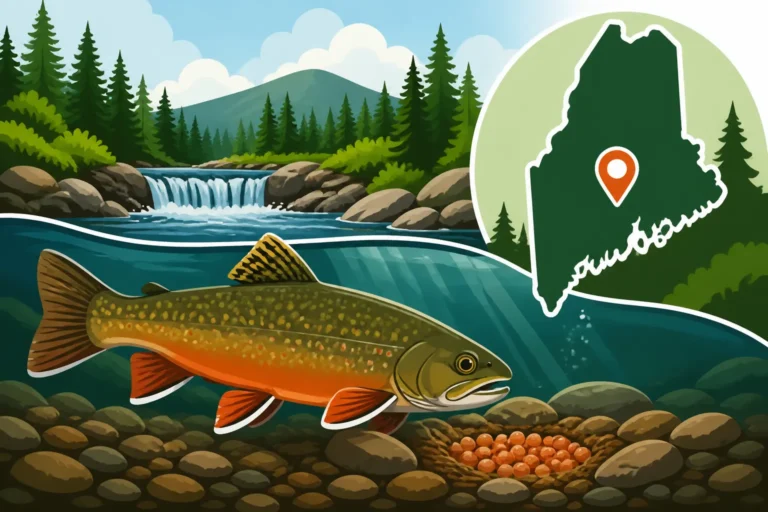
Lake trout exhibit unique spawning behaviors compared to some other salmonids. They are fall spawners, typically laying their eggs in October or November, often over rocky shoals or reefs in relatively shallow water (usually less than 20 feet deep). They don't build elaborate redds (nests) like many trout or salmon; instead, the eggs are broadcast over clean, rocky substrates where they fall into crevices for protection. There's no significant parental care after the eggs are laid.
This contrasts sharply with brook trout, for example, which also spawn in the fall but often seek out gravelly stream beds or spring-fed areas in lakes where they actively dig redds. The specific locations and methods of reproduction are crucial for fisheries management and protection, ensuring that critical spawning habitats are conserved. Knowing these behaviors can sometimes hint at where to find them at different times of the year, especially if you're exploring shallow areas in late autumn.
Fishing Considerations and Regulations
Maine’s dedication to managing its fisheries means there are specific rules in place for "togue" (lake trout) that anglers need to be aware of. Misidentification isn't just a matter of pride; it can lead to legal issues.
Maine's Management of Togue/Lake Trout
The Maine Department of Inland Fisheries and Wildlife (MDIFW) meticulously manages lake trout populations to ensure their sustainability and provide quality angling opportunities. This involves stocking programs in some waters, habitat protection, and, critically, specific regulations regarding catch limits and sizes. Because lake trout are slow-growing and long-lived, they are particularly vulnerable to overfishing, making these regulations vital.
MDIFW identifies these fish as "lake trout" in all official documents, though they are well aware of the local "togue" moniker. The regulations are designed to protect the breeding stock and allow fish to reach maturity. These management efforts vary by waterbody, reflecting the unique characteristics of each lake's lake trout population. Therefore, always check the current Maine fishing law book for the specific lake you plan to fish. Maine Fishing Regulations Explained provides a great overview of these rules.
Daily Bag Limits and Size Restrictions
Bag limits and minimum length requirements for lake trout in Maine are subject to change and can vary significantly from one water body to another, or even between fishing zones within the state. For instance, a large, deep lake might have different rules than a smaller, more accessible pond. These regulations are designed to either protect smaller, growing fish or to encourage the harvest of abundant populations to manage density.
It is absolutely imperative to consult the most current Maine Open Water & Ice Fishing Regulations book or the MDIFW website before heading out. Don't rely on old information or hearsay. What might be legal on Moosehead Lake could be different on Sebago Lake. For example, some lakes may have a general law allowing two lake trout per day, while others might have a special regulation limiting you to one, or even imposing a slot limit where you can only keep fish within a certain size range, or perhaps only one over a certain size. Always be sure to measure your catch accurately, and if in doubt, practice catch-and-release to stay within the law. Togue Size and Bag Limits in Maine and What Is the Daily Limit for Togue in Maine? offer more specific information.
Tactics for Catching "Togue"
Because lake trout prefer deep, cold water and have a piscivorous diet, the most effective methods for catching them generally involve getting your bait or lure down to their depth and mimicking their prey.
- Trolling: This is arguably the most popular and effective method for lake trout in open water. Using downriggers, lead core line, or heavy weights, anglers troll spoons, stickbaits, or live bait (like smelt) at depths where togue are holding. Different trolling speeds and lure actions are key. Trolling Techniques for Maine Lakes covers this in detail.
- Jigging: In both open water and through the ice, jigging can be incredibly effective. Heavy spoons, lead-head jigs with soft plastics, or even live bait on a jig can entice strikes when presented directly to fish marked on a sonar. Jigging Techniques for Togue and How to Jig for Lake Trout in Winter offer excellent advice.
- Ice Fishing: Lake trout are a prime target for ice anglers. Using tip-ups with large shiners or smelts, or jigging actively with lures, can yield impressive results. Often, you'll find them cruising along drop-offs or over deep structure.
- Location: Look for deep basins, submerged humps, rocky points, and areas where baitfish are schooling. A good fish finder is an invaluable tool for locating both fish and structure.
Whatever your chosen method, having the right gear is crucial. A stout rod and reel capable of handling heavy line and potentially large, strong fish is a must. You can find a vast selection of appropriate rods, reels, and terminal tackle on Amazon to suit your preferred method.
Why Accurate Identification Matters
Beyond satisfying curiosity, correctly identifying your catch has several practical and ethical implications for every responsible angler.
Conservation Efforts and Data Collection
Every fish you catch, keep, or even observe, contributes to the larger picture of fisheries management. When anglers accurately report their catches, or when fisheries biologists collect data, correct identification is paramount. If someone misidentifies a brook trout as a lake trout, or vice versa, it can skew population estimates, impact stocking decisions, and misrepresent the health of a specific fishery. MDIFW relies on good data to make informed decisions about bag limits, seasons, and habitat protection. Correct identification by anglers supports these efforts, ensuring that these incredible fish populations remain healthy for future generations.
Consider the ongoing challenge of managing invasive species; misidentifying a native fish for an invasive one, or failing to identify an invasive species accurately, can have dire consequences for an ecosystem. While "togue" are native to Maine, understanding their specific needs and population dynamics is critical, and that starts with accurate identification.
Angler Compliance and Avoiding Penalties
As mentioned, bag limits and size restrictions vary by species and by waterbody. If you misidentify a fish and keep one that is technically out of season, undersized, oversized (if a slot limit applies), or beyond the daily limit for that specific species, you could face fines and penalties. Maine's wardens are diligent, and ignorance of the law is generally not considered a valid excuse.
Imagine you're fishing a pond that has a strict "catch-and-release only" rule for brook trout but allows two lake trout. If you mistakenly identify a large brook trout as a lake trout and keep it, you're breaking the law. Conversely, if you're in a lake with a one-fish limit on lake trout but a five-fish limit on brook trout, accidentally calling a brook trout a togue could mean you unnecessarily release fish you're legally allowed to keep. It's a simple example, but it underscores the importance of knowing exactly what you've pulled from the water. Always err on the side of caution and consult the regulation book. Fishing Without a License in Maine touches on the broader legal implications of non-compliance.
Personal Satisfaction and Storytelling
Let's be honest: a big part of fishing is the story. The thrill of the catch, the battle, and the memory of that magnificent fish are what we carry home, even if the fish itself goes back into the water. Knowing exactly what you caught adds immense personal satisfaction and authenticity to your stories. Instead of saying, "I caught a big trout… I think it was a lake trout, or maybe a togue, or something," you can proudly declare, "I landed a beautiful 10-pound togue on Moosehead!" That certainty makes the experience richer and your tales more vivid.
It also enhances your understanding of the fishery. Knowing that you've mastered the art of targeting a specific species, understanding its habits and habitats, deepens your connection to the sport and the natural world. So, take the time to learn these identification tips. It will pay dividends in both your success on the water and the richness of your fishing adventures. After all, the joy of fishing isn't just in the catch, but in the knowledge and respect we gain for the fish we pursue.
Disclaimer
This article is for general informational purposes only and does not constitute professional advice. Laws, prices and regulations vary by location and change over time. Consult a qualified professional for guidance on your specific situation.