What Depth Do Togue Hold at in Summer?
One of the biggest head-scratchers for any angler hitting Maine's magnificent lakes in the summer is figuring out where the togue, also known as lake trout, have decided to set up shop. It's frustrating to be out on a vast expanse of water, knowing these magnificent fish are down there somewhere, but not knowing where "down there" actually is. You spend hours trolling, casting, and maybe even jigging, only to come up empty-handed because you're simply not presenting your offering in their strike zone. This guide is all about peeling back the layers of summer lake behavior to reveal the preferred depths of togue, helping you cut through the guesswork and put more fish in your boat (or on your line for a healthy release!).
Understanding Togue Behavior in Maine's Summer Waters
Summer in Maine is absolutely gorgeous, a time when the lakes sparkle under the sun and the call of the loon echoes across the water. For us anglers, though, it presents a unique challenge, especially when targeting cold-water species like togue. These fish aren't just chilling out; they're actively seeking specific conditions that dictate their depth. It's less about their mood and more about their biological needs. If you understand these fundamental drivers, you’re already a huge step ahead of most folks out there blindly fishing.
The Critical Role of Water Temperature
Imagine trying to relax on a hot summer day without air conditioning, or bundling up in a heavy coat when it's 80 degrees out. That's essentially what togue experience if they're in the wrong water temperature. Togue are cold-water fish, meaning they thrive and are most active in specific temperature ranges. As the surface waters warm up dramatically during the summer months, they are forced to retreat to cooler, deeper parts of the lake. This isn't just about comfort; it's about survival. Their metabolism, oxygen intake, and overall well-being are directly linked to water temperature.
During peak summer, once the surface temperature climbs above, say, 60-65 degrees Fahrenheit, you can bet your best spoon that the togue are moving. They'll actively seek out water that's often in the mid-40s to low-50s (around 45-55°F). This sweet spot provides them with the ideal conditions for hunting and maintaining their bodily functions without stress. You won't find them basking in warm shallow coves, no matter how tempting the bait presentation might seem there. This temperature sensitivity is perhaps the single most important factor in determining What Depth Do Togue Hold at in Summer?.
Oxygen Levels and Forage Fish
Temperature isn't the only player in this deepwater game. Oxygen levels are just as critical, and they often go hand-in-hand with temperature. Cold water holds more dissolved oxygen than warm water. This is why you'll often find togue in deep, cold pockets of a lake where there's still plenty of oxygen to support them. If a deep area becomes depleted of oxygen due to decomposition or other factors, even if the temperature is ideal, the togue will move on. They might still be deep, but perhaps shifting horizontally to a different basin or structure that maintains better oxygenation.
Furthermore, these deepwater sanctuaries aren't just for breathing; they're also dining rooms. Togue are predators, and their primary forage fish, such as smelt, often exhibit similar cold-water preferences. When the smelt move deep to find their preferred temperatures and oxygen, the togue follow. It’s a classic predator-prey relationship. If you can locate schools of baitfish on your electronics, you're often just a stone's throw away from the togue that are shadowing them, waiting for an easy meal. This means understanding the behavior of baitfish is almost as important as understanding the togue themselves when trying to figure out Where Togue Live in Deep Maine Lakes.
Togue's Thermocline Sweet Spot
The thermocline is a phenomenon you absolutely need to understand if you're serious about summer togue fishing. It's a layer of water within a lake where the temperature changes rapidly with depth. Above the thermocline, the water is warmer (the epilimnion), and below it, the water is much colder (the hypolimnion). The thermocline forms because warm water is less dense and sits on top of colder, denser water. This distinct boundary is often the key to finding togue.
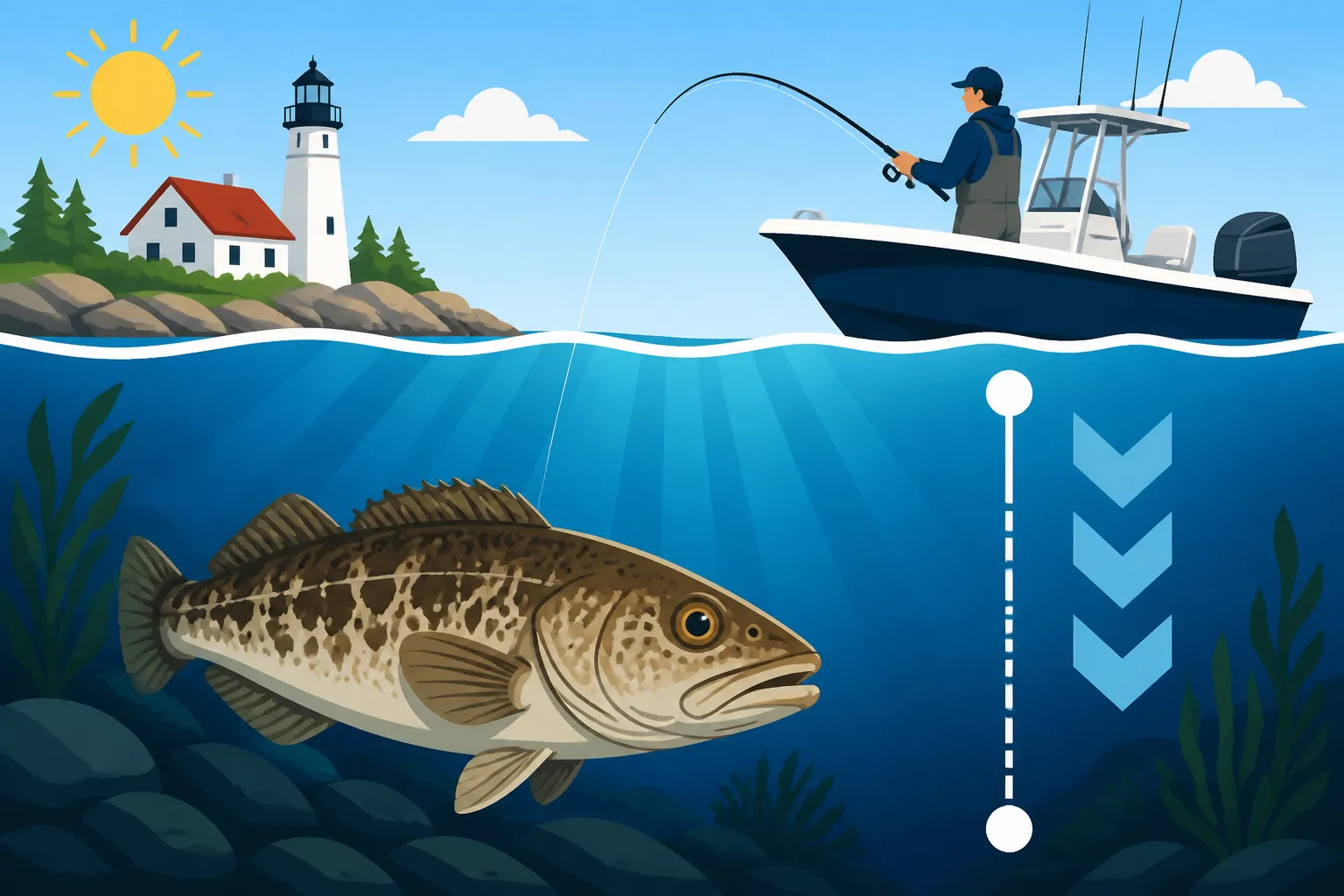
Togue will typically suspend in or just below the thermocline. This is their comfort zone. It provides that ideal temperature range (45-55°F) and usually has abundant oxygen, along with concentrations of baitfish that are also seeking these stable conditions. The depth of the thermocline can vary from lake to lake and even change slightly throughout the summer, but it's a consistent feature in most deep Maine lakes. On a typical summer day in a large Maine lake, this thermocline might be found anywhere from 20 feet down to 60 feet or even deeper, depending on the lake's specific characteristics and how long the warm weather has persisted. Learning to identify the thermocline on your fish finder is like finding a giant flashing arrow pointing to where the togue are likely to be.
Pinpointing Those Deep Summer Haunts
Knowing that togue are seeking specific temperature and oxygen levels in the thermocline is one thing; actually finding that elusive layer and the fish within it is another challenge entirely. This isn't about guesswork or old wives' tales; it's about leveraging technology and understanding the natural contours of the lake bottom. You need to be methodical and use the tools at your disposal to eliminate unproductive water and focus on where the fish are truly holding.
Using Sonar and Fish Finders Effectively
Your fish finder isn't just for showing you the bottom; it's your most valuable ally in the quest for deep summer togue. Modern sonar units are incredibly sophisticated and can reveal a treasure trove of information. The first step is to learn how to identify the thermocline on your screen. It often appears as a distinct, hazy band or a sudden change in water density, sometimes showing up as a faint line or cloudiness, usually with baitfish concentrated around it. Some advanced units will even display water temperature at various depths, which is incredibly helpful.
Once you’ve identified the thermocline, you can then start looking for the actual fish arches or marks within that layer. Togue often suspend, meaning they aren't necessarily glued to the bottom. They might be anywhere from 5 to 20 feet above the lakebed, or even higher, suspended right in that thermocline layer. Pay close attention to any marks that are isolated or appear as larger, distinct arches—these are likely your target fish. Also, keep an eye out for dense schools of baitfish, as togue will often be lurking nearby. Remember, a good quality fish finder, like many models you can find on Amazon, is an investment that pays dividends when chasing deepwater togue. Understanding How to Read a Fish Finder on Maine Lakes is a skill worth developing.
Decoding Lake Topography and Structure
While sonar is fantastic, don't underestimate the power of knowing your lake's topography. Togue, even in the deep, don't just hang out randomly. They relate to structure. Think about deep points, underwater humps, drop-offs, submerged islands, or deep-water saddles between basins. These structural elements provide ambush points, cover, and pathways for both predator and prey. A deep-water hump that rises from 100 feet to 60 feet, for instance, could be an absolute magnet for togue, especially if its peak sits right in the thermocline.
Study your lake maps (charts are even better if available for your specific body of water). Look for areas where the depth changes abruptly or where deep water meets significant underwater features. While you might be fishing in 80-100 feet of water, the togue could be holding at 50-60 feet over a specific point or along the edge of a deep channel. Pay attention to how the depth contours behave. For example, if you see a series of tight contour lines on a map, it indicates a steep drop-off, which is often a productive area. Long, gradual slopes might also hold fish, especially if they lead to significant deepwater structure.
Seasonal Movements and Deepwater Sanctuaries
The "depth" of togue isn't static throughout the entire summer. It's a dynamic process that shifts as the season progresses and water temperatures fluctuate. Early summer, after ice-out and before the water warms extensively, togue might still be found shallower, sometimes as shallow as 15-30 feet, especially if there’s still cold water near the surface. But as July and August arrive, and surface temperatures soar, their retreat to deeper water becomes more pronounced.
By mid-to-late summer, when Maine experiences its hottest days, you might find togue holding consistently in depths ranging from 60 to 100 feet, or even deeper in very large lakes, especially during the brightest parts of the day. They will often utilize the deepest basins or "holes" in a lake as their primary sanctuaries. These deepwater zones offer the most stable cold temperatures and best oxygen. However, even in these deep areas, they'll still orient themselves to structure within that depth range, such as subtle humps, ledges, or channels. Understanding this progressive movement is key to adapting your fishing strategy throughout the Maine Fishing Season Dates Guide.
Effective Strategies for Targeting Deep Summer Togue
Once you've zeroed in on the general depths and structures where togue are holding in the summer, the next step is to present your lures effectively. Fishing for deepwater togue isn't like casting for bass in a shallow cove; it requires specialized techniques and often specific gear to get your offering down to where the fish are, and keep it there. Persistence and precision are your best friends here.
Trolling Techniques for Subsurface Success
Trolling is arguably the most popular and effective method for catching summer togue in Maine. It allows you to cover vast amounts of water at the precise depth the fish are holding. This is where specialized gear like downriggers, lead core line, or even simple snap weights come into play. Downriggers are fantastic because they allow you to set your lure at an exact depth, regardless of boat speed or line out, presenting your offering perfectly in the thermocline. Lead core line is another great option, sinking at a predictable rate per color (usually 10 feet per color at a given speed), letting you count out colors to hit your desired depth. Many anglers find a good selection of lead core line on Amazon.
When trolling, focus on maintaining a slow, consistent speed, often between 1.5 to 2.5 miles per hour. This speed gives your lures the right action and gives the togue enough time to react. Lures like large spoons (e.g., Mooselook Wobblers, Sutton Spoons), or stickbaits that imitate smelt, are incredibly effective. Vary your lure choice until you find what the fish are responding to on a given day. Don't be afraid to experiment with colors and sizes. Remember to keep an eye on your fish finder to ensure your lures are indeed running at the same depth as the fish marks you're seeing. For a deeper dive, check out Trolling Techniques for Maine Lakes.
Jigging the Depths for Reaction Bites
While trolling covers water, jigging offers a more vertical, direct presentation, often triggering reaction strikes from finicky fish. This technique is particularly effective when you've located schools of togue or baitfish concentrated around a specific piece of deep structure, like a humped island or a steep break. Using your fish finder, position your boat directly over the fish you're seeing and drop your jig down. Heavy jigs, often in the 1/2 oz to 2 oz range or even heavier, are necessary to get down quickly and stay vertical in deep water, especially if there’s current or wind.
Popular deepwater jigging lures for togue include heavy spoons, blade baits, or even specialized soft plastics rigged on weighted jig heads. The retrieve can vary, but typically involves sharp lifts and drops, mimicking a wounded baitfish, followed by pauses. Often, the strike will come on the fall, so a sensitive rod is key to detecting those subtle bites. You might even tip your jig with a piece of bait, like a small shiner or a strip of sucker meat, to add scent and appeal. This can be a very active and rewarding way to fish, especially if you enjoy the hands-on feel of detecting bites. For more specific advice, look into Jigging Techniques for Togue.
Gear Essentials for Deepwater Angling
To successfully tackle deepwater togue, having the right gear is non-negotiable. Your standard bass rod and reel simply won't cut it. You need robust equipment designed to handle heavy weights, long lengths of line, and the powerful fight of a deepwater togue.
Here’s a quick rundown of essential gear:
| Item | Description | Why It's Essential |
|---|---|---|
| Heavy Rods | Medium-heavy to heavy power, fast action rods, usually 7 to 8.5 feet in length for trolling. Stiffer rods for jigging. | Needed to handle heavy weights (downrigger balls, lead core), manage long lines, and provide leverage against large, deep-diving fish. |
| Sturdy Reels | Baitcasting or conventional reels with high line capacity and a smooth, strong drag system. Gear ratios suitable for retrieving long lines or fighting big fish from the depths. | Must hold hundreds of yards of line (braid, mono, lead core) and withstand the strain of pulling fish up from significant depths. |
| Strong Line | Braided line (30-50 lb test) for main line (especially with downriggers), or lead core line for controlled depth. A fluorocarbon or monofilament leader (10-20 lb test) is crucial for abrasion resistance and stealth. | Braided line offers sensitivity and strength; lead core gets lures to depth. Leaders prevent break-offs and reduce visibility in clear lake waters. |
| Downriggers | Mechanical or electric systems that use a heavy ball to carry your fishing line (with a release clip) down to a precise, measured depth. | Allows precise depth control for trolling, keeping your lure in the strike zone regardless of boat speed or other factors. |
| Electronics | High-quality fish finder/sonar with GPS mapping capabilities. | Crucial for identifying thermocline, marking baitfish schools, locating individual togue, and navigating lake structure. Essential for effective deepwater fishing. You can find excellent options on Amazon. |
| Deepwater Lures | Heavy spoons (e.g., copper, silver, brass), stickbaits designed for deep diving, and robust jigs (blade baits, heavy bucktails, vertical jigs). | Designed to get to and perform well at deep levels, mimicking the primary forage species of togue. |
Equipping yourself with the right tools makes all the difference. You wouldn't try to chop down a tree with a butter knife, and you shouldn't try to catch deep summer togue with inadequate gear. It reduces frustration and significantly increases your chances of success. It also ensures that when you do hook into a big togue, you have the confidence that your equipment can handle the fight and bring that magnificent fish to the boat.
Catching togue in Maine during the summer months is an incredibly rewarding experience, offering some of the most exciting fishing the state has to offer. While it requires a bit more technical know-how and specialized gear than some other types of fishing, the thrill of hooking into one of these powerful, deepwater predators is truly unforgettable. By focusing on temperature, oxygen, forage, and using your electronics effectively, you'll be well on your way to cracking the code of their summer whereabouts. Remember, patience and persistence are key, but with these strategies in your arsenal, you'll spend less time searching and more time reeling in those beautiful lake trout. Happy fishing!
Disclaimer
This article is for general informational purposes only and does not constitute professional advice. Laws, prices and regulations vary by location and change over time. Consult a qualified professional for guidance on your specific situation.