Where Is the Best Water Temperature for Smallmouth Bass?
It can be incredibly frustrating to hit your favorite Maine lake or river, cast for hours, and come up empty-handed, especially when you know smallmouth bass are abundant there. Often, the missing piece of the puzzle isn't your lure choice or casting technique, but rather understanding how the water temperature influences these feisty fighters. This guide is here to unravel the mystery of smallmouth bass thermal preferences, helping you pinpoint their sweet spots in Maine's diverse waters, so you can spend less time guessing and more time reeling in those bronze beauties.
The Ideal Temperature Range for Maine Smallmouth Bass
Smallmouth bass are incredibly sensitive to water temperature. It's not just about comfort for them; it dictates their metabolism, their activity levels, and ultimately, where and when they're most likely to feed. Knowing these ranges is like having an insider tip directly from the fish themselves.
Understanding Smallmouth Thermal Comfort Zones
Think of water temperature as the smallmouth bass's personal thermostat. When the water is too cold, their bodies slow down, much like we do on a chilly winter day. Their digestion becomes sluggish, they move less, and their need to feed diminishes. Conversely, if the water gets too warm, they can become stressed, seeking cooler, more oxygenated areas, and again, their aggressive feeding habits can wane. Maine's waters, especially the larger lakes and rivers, offer a wide range of thermal conditions throughout the year, so understanding this comfort zone is paramount. It's why a spot that was hot in June might be dead in August, even if the structure hasn't changed.
The "Sweet Spot" for Active Feeding
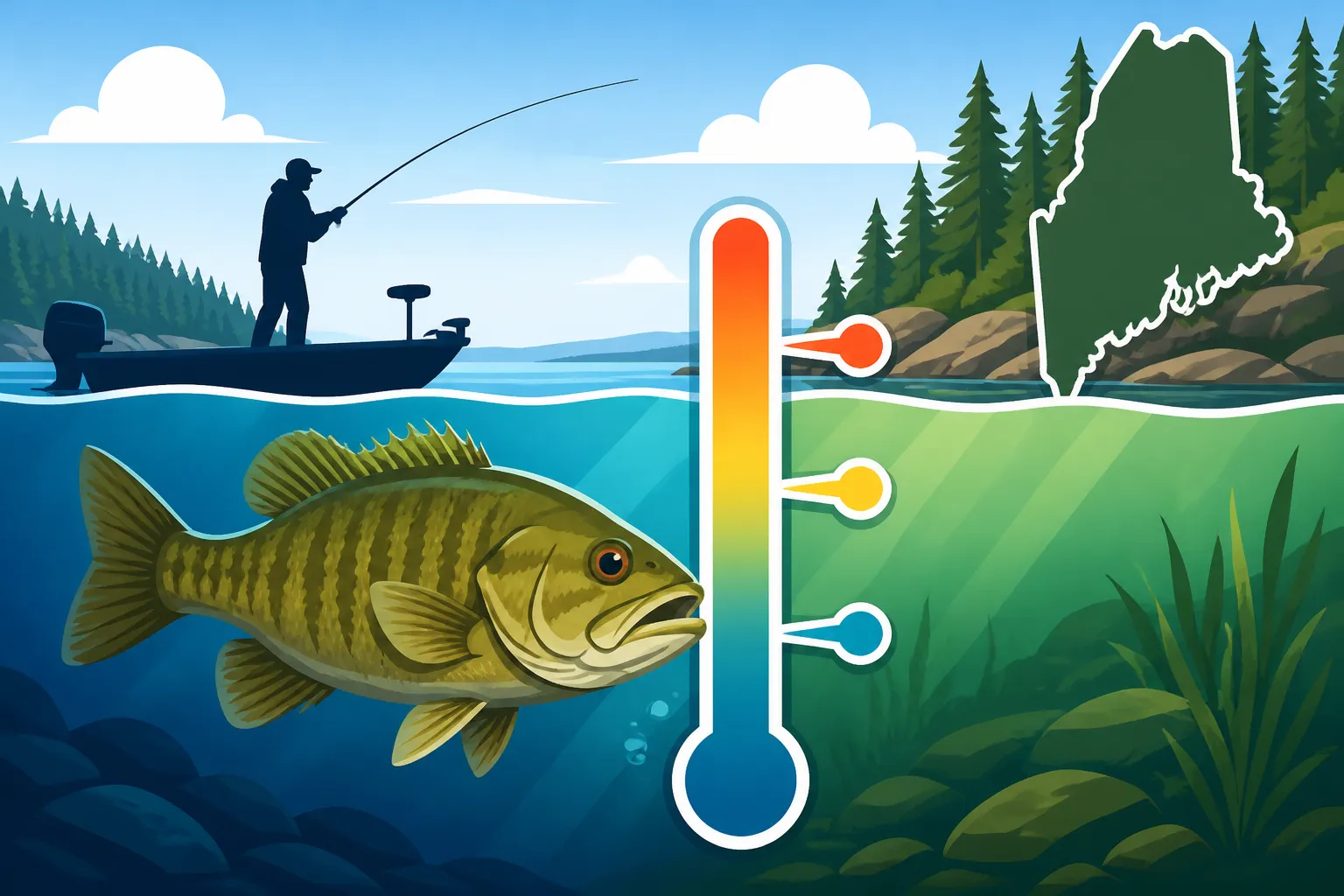
The magic really happens for smallmouth when water temperatures fall within their optimal feeding zone. Generally speaking, smallmouth bass are most active and aggressive when water temperatures range from about 60°F to 70°F (15°C to 21°C). Within this band, their metabolism is buzzing, they're digesting food efficiently, and they're feeling feisty, ready to chase down baitfish or strike at a well-presented lure. This is the temperature range where you'll often find them cruising shallower flats, actively hunting, and providing some of the most exciting battles. While they'll still eat outside this range, their enthusiasm and consistent willingness to strike often peak here.
Seasonal Shifts and Temperature Targets
Maine's seasons dramatically dictate water temperatures, which in turn means your target zones for smallmouth will shift throughout the year.
- Spring (Pre-Spawn/Spawn): As ice melts and spring arrives, Maine's waters are cold, typically in the 30s and 40s. Smallmouth will start to become active when temperatures nudge into the low to mid-50s, moving into shallower areas that warm up faster. They're still a bit sluggish but are looking for easy meals. The actual spawn often occurs when temperatures are in the mid-60s, a period where males are aggressively guarding nests. After the spawn, they are often recuperating and can be a bit finicky.
- Summer (Post-Spawn/Peak Activity): Once the water consistently reaches the high 60s and low 70s, it's prime time. This is when smallmouth are at their most energetic. As surface temperatures climb higher into the mid-70s and beyond, they'll seek deeper water, cooler thermoclines, or areas with current and shade to stay comfortable. This is a key time to focus on structure near deeper water, like humps, ledges, and drop-offs. For more on summer tactics, you might find our guide on How to Fish for Smallmouth Bass in Summer Heat helpful.
- Fall (Pre-Winter Feeding Frenzy): As autumn air cools the water back down into the 60s and then 50s, smallmouth sense winter approaching. They embark on a massive feeding spree, bulking up for the colder months. This can be one of the best times of year to catch large, aggressive smallmouth. They'll often school up and actively hunt baitfish, making them easier to locate. As temperatures dip into the low 50s and 40s, they'll gradually move to deeper wintering grounds.
How Water Temperature Influences Smallmouth Behavior
Beyond just general activity, specific temperature bands trigger distinct behaviors in smallmouth bass, from spawning rituals to seeking refuge from the heat. Understanding these nuances can help you predict their movements and adjust your tactics accordingly.
Cold Water Lethargy and Spring Spawning
When Maine's lakes and rivers are still chilly in early spring, often in the 40s, smallmouth bass are lethargic. They'll hug bottom, conserve energy, and won't chase a lure far. However, as certain shallow areas or dark-bottomed coves begin to absorb sunlight and warm up into the low 50s, these fish will move in. They're looking for those first easy meals of spring, often near protected bays or rocky shorelines. This is the pre-spawn period. As the water continues to climb into the mid-60s, smallmouth will begin their spawning rituals. Males aggressively clear nests on gravelly bottoms, often in 2-15 feet of water, and protect the eggs and fry. During this time, they are still catchable, but many anglers practice catch and release to allow for successful reproduction. You can learn more about How to Fish for Smallmouth Bass in Spring to dial in your early season approach.
Summer Heat and Deep Water Retreats
Maine summers can bring some seriously warm days, and while the surface waters might feel great for a swim, they can be too warm for smallmouth bass. Once surface temperatures consistently climb into the mid-70s and beyond, smallmouth will actively seek cooler water. This often means retreating to deeper sections of the lake or river, where a distinct thermocline (a layer of rapid temperature change) exists. They might hold on deep rock piles, ledges, submerged humps, or suspend over deeper channels. In rivers, they'll find refuge in deep pools or areas with cooler current flow. This behavior is crucial to understand if you're fishing during the dog days of summer. They're still feeding, but you have to go to them. Using a good fish finder to locate these deep structures and the thermocline can be a game-changer.
Fall Cooling and Feeding Frenzies
As summer slowly gives way to autumn, air temperatures drop, and the surface waters of Maine's bodies of water begin to cool. When the water cools back into the high 60s and then through the 50s, it's like a signal for smallmouth bass to put on the feedbag. They know winter is coming, and they need to pack on calories. This is when they often school up, especially in larger lakes like Sebago Lake Smallmouth Bass Fishing in Maine or Moosehead Lake Fishing Guide, and aggressively pursue baitfish. You'll often find them roaming open water, chasing schools of alewives or smelt, or positioning themselves on points and humps where bait is funneled. This period offers some of the most exciting fishing, with fish often smashing lures with incredible force.
Practical Tips for Measuring Water Temperature on Maine Lakes and Rivers
You can't effectively "match the hatch" of temperature preferences if you don't know the temperature! Thankfully, there are several straightforward ways to get this crucial data.
Essential Gear for Temperature Tracking
Knowing the water temperature is easier than you might think. You don't need a high-tech lab, just a few simple tools.
- Simple Thermometer: A basic fishing thermometer, often attached to a retractable line or tied to your anchor, is incredibly effective. You can drop it to various depths and get accurate readings. These are inexpensive and readily available at most tackle shops or online retailers like Amazon. Having a couple on hand, one for surface reads and another for deeper soundings, can be very useful.
- Electronic Fish Finders/Sonar: Modern fish finders are a fantastic investment for serious anglers. Most quality units, especially those with GPS and advanced sonar capabilities, come equipped with built-in water temperature sensors. These typically read the surface temperature, but some more advanced models, particularly those with side-imaging or down-imaging, can give you clues about thermoclines or even provide temperature readings at specific depths if you have the right transducer. This real-time feedback is invaluable for quickly locating those ideal temperature zones.
- Temperature Gauges on Electric Motors: Some newer trolling motors, particularly those designed for freshwater use, also incorporate temperature sensors, displaying the reading directly on the motor's head or a linked display. This is a convenient, hands-free way to monitor surface temperatures as you move.
Where to Take Temperature Readings
It's not enough to just know the surface temperature. Smallmouth bass will move vertically in the water column to find their comfort zone, so understanding temperature at different depths is key.
- Surface Reads: Always start with a surface temperature reading. This gives you a baseline. If the surface is too hot (mid-70s or above), you know the fish are likely deeper. If it's in the sweet spot (60-70°F), they could be shallower and more active.
- Varying Depths: This is where a simple thermometer on a line comes in handy. Drop it down 5 feet, 10 feet, 20 feet, or even deeper. Take readings at various increments, especially when you suspect a thermocline. You'll often find a distinct temperature break where the warmer surface water meets the cooler, deeper water. Smallmouth frequently suspend right above, in, or just below this thermocline.
- Structure and Cover: Don't forget to take readings around different types of structure. A shallow, dark rock flat will often warm faster than a deep, shady channel. Areas with current, like river bends or bottlenecks, can also have different temperatures than stagnant backwaters. Even a dense weed bed can create localized cooler pockets, especially during the peak summer heat.
Using Temperature to Locate Fish
Once you have your temperature data, it's time to put on your detective hat.
- Identify the Optimal Zone: Based on the season and the fish's metabolic needs, determine the temperature range you're looking for.
- Scan for That Temperature: Use your fish finder to observe temperatures in different areas and depths. If you're seeing consistent 65°F at 15 feet over a rock pile, you're probably in a good spot.
- Look for Associated Structure: Once you find the right temperature, then look for the structure that smallmouth bass love: rocky points, ledges, humps, submerged timber, or even deep weed lines. The combination of ideal temperature and good cover is a winning formula.
- Consider Forage: Smallmouth are always where their food is. If you find the right temperature and structure, but there's no baitfish showing on your sonar, you might want to keep moving. Often, large schools of baitfish will congregate in these ideal thermal zones, attracting the bass. Understanding Reading Lake Structure for Maine Bass goes hand-in-hand with temperature.
Strategies for Fishing Different Temperature Zones
Knowing the temperature is just the first step. The real art is adjusting your fishing techniques to match what the smallmouth are doing in that specific thermal zone.
Targeting Smallmouth in Cold Maine Waters
When Maine's waters are cold (sub-55°F), smallmouth are conserving energy. They won't chase a fast-moving lure very far. This means you need to slow way down and offer easy meals.
- Lure Choices: Jigs with soft plastics, Ned rigs, blade baits, and suspending jerkbaits are excellent choices. Consider colors that stand out in cold, often clearer, water like white, chartreuse, or natural baitfish patterns. For a suspending jerkbait, cast it out, twitch it a few times, and then pause for a long count – sometimes 10-20 seconds – letting the bait just hang there, mimicking a vulnerable baitfish.
- Slower Presentations: Think slow-rolling, dragging, or barely hopping your lures along the bottom. The idea is to keep the bait in the strike zone for as long as possible. Fan-cast an area thoroughly, because a lethargic bass might only strike if the lure is practically presented right on its nose.
- Depth Focus: Concentrate on areas that receive sunlight, like north-facing banks or dark-bottomed coves, which will warm up a few degrees faster. Also, target deeper structures adjacent to these warming flats, as fish will transition between the two.
Tactics for the Optimal Temperature Range
When the water hits that 60-70°F sweet spot, it's time to speed things up! Smallmouth bass are active, aggressive, and willing to chase. This is when you can really have some fun.
- Fast-Paced, Aggressive Presentations: This is prime time for reaction baits. Crankbaits, spinnerbaits, chatterbaits, and topwater lures can all be incredibly effective. Smallmouth will often hit these with explosive strikes. Don't be afraid to experiment with retrieve speeds until you find what triggers them.
- Covering Water: Because fish are active, they're often roaming. Use baits that allow you to cover a lot of water quickly to find active schools. Cast to prominent points, break lines, submerged humps, and rocky banks.
- Variety is Key: While they're aggressive, they can still be particular. Have a variety of lures ready. If a crankbait isn't working, switch to a soft plastic swimbait or a jig. Sometimes, it's the subtle difference that makes all the difference. Topwater Lures for Maine Bass Fishing can be particularly exciting in this temperature range.
Adjusting for Warm Water Conditions
Once water temperatures climb above the ideal range (70°F+), smallmouth seek relief. Your tactics need to adapt to their deeper hideouts.
- Deeper Presentations: Forget the shallow stuff for the most part. Focus on deep rock piles, ledges, drop-offs, and areas with cooler spring feeds or significant current. Jigs, drop-shots, deep-diving crankbaits, and Carolina rigs are your best friends here.
- Morning and Evening Bites: Even in warm water, smallmouth will often move shallower to feed during the cooler parts of the day – dawn and dusk. This can be your best chance for a shallow water bite with topwater or shallow crankbaits before they retreat to the depths again.
- Slow Down… Again: While they might be active feeders, they're also under some thermal stress. A slower, more deliberate retrieve can still be effective, especially with finesse presentations like a drop-shot or a slow-dragged jig. The key is presenting it accurately to their deep holding areas.
- Look for Shade and Oxygen: In rivers, target shaded banks, eddies, and areas with faster currents that provide more oxygen. On lakes, look for the shade lines created by overhanging trees or docks, especially those near deeper water.
Here’s a quick overview of how smallmouth activity changes with temperature:
| Water Temperature Range | Smallmouth Activity Level | Typical Behavior / Location | Recommended Techniques |
|---|---|---|---|
| Below 40°F (4°C) | Very Low, Inactive | Deepest wintering holes | Not actively feeding, very tough |
| 40-50°F (4-10°C) | Low, Lethargic | Deeper staging, slow movement to warming flats | Slow jigs, blade baits, suspending jerkbaits |
| 50-59°F (10-15°C) | Moderate, Pre-Spawn | Moving to shallow spawning flats, seeking warmest water | Jigs, tubes, slow crankbaits, swimbaits |
| 60-70°F (15-21°C) | High, Peak Activity | Cruising shallow to mid-depth structure, actively hunting | Crankbaits, spinnerbaits, topwater, jigs, soft plastics |
| 70-75°F (21-24°C) | Moderate to High, Post-Spawn/Summer | Deeper breaks, thermocline, shade, current | Deep crankbaits, drop-shots, Carolina rigs, jigs |
| Above 75°F (24°C) | Low to Moderate, Stressed | Very deep, low light, heavy current, highly selective | Finesse baits, early/late bites, focus on oxygenated areas |
By understanding and utilizing water temperature, you'll gain a significant advantage in locating and catching smallmouth bass across Maine. Don't just cast blindly; read the water, feel the season, and let the thermometer guide your way to more productive fishing trips. Remember to check Maine Fishing Regulations Explained for any specific rules for the water you're fishing. And if you're looking for where to find these bronze beauties, consider checking out our Best Fishing Lakes in Maine guide.
Disclaimer
This article is for general informational purposes only and does not constitute professional advice. Laws, prices and regulations vary by location and change over time. Consult a qualified professional for guidance on your specific situation.