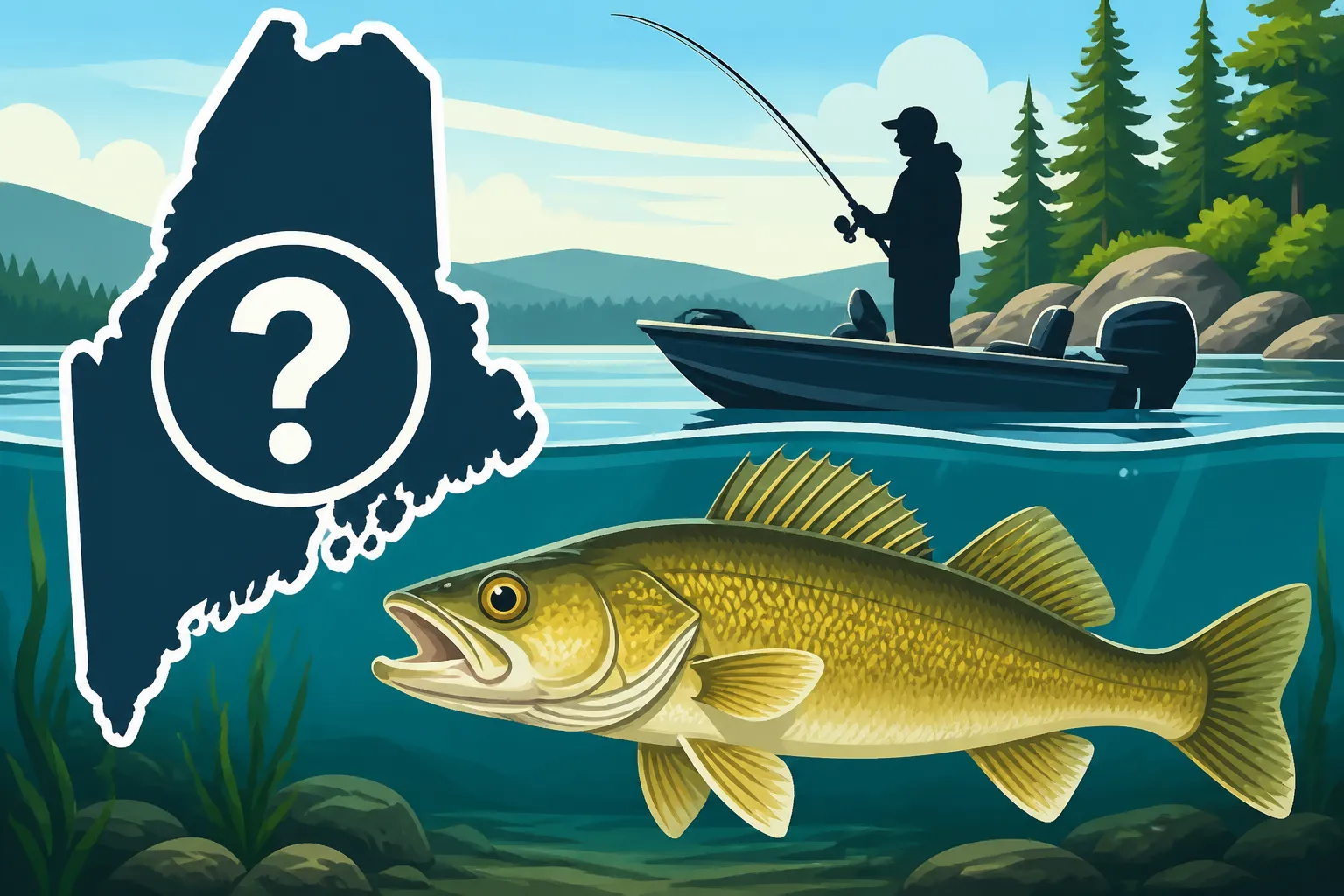
Are There Walleye in Maine Lakes?
It's a common question that pops up in bait shops and around campfires across Maine: "Are there walleye in these lakes?" Many anglers, especially those from states where walleye are a prized catch, arrive in the Pine Tree State hoping to find their favorite toothy critters. This guide will dive deep into whether walleye truly inhabit Maine's waters, clear up any confusion, and introduce you to the fantastic angling opportunities that do exist here.
The Short Answer: Are Walleye Present in Maine?
Let's get straight to it: no, walleye are not native to Maine, and there are no known established populations in our lakes and rivers. While it's understandable to wonder, especially if you've heard rumors or seen a fish that looked a bit like a walleye, the Maine Department of Inland Fisheries and Wildlife (MDIFW) has a very clear stance on non-native species, especially those that could pose a threat to our delicate native fisheries.
The truth is, Maine's aquatic ecosystems are incredibly unique and are primarily managed for species like brook trout, landlocked salmon, and smallmouth bass. Introducing a predatory species like the walleye, even accidentally, could have unforeseen and potentially devastating consequences for these established populations. That's why the state takes such a firm stance on preventing their introduction.
Why the Confusion About Walleye in Maine?
It's easy to see why confusion might arise. Many anglers come from regions where walleye are abundant, and some of Maine's native or introduced fish can bear a superficial resemblance. The iconic "glassy eye" of a walleye, which gives them their name, is a distinguishing feature, but other fish have eyes that reflect light similarly in certain conditions. Stories can also travel fast, sometimes morphing into tales of a hidden walleye fishery, leading to understandable excitement and questions among the fishing community.
Imagine you're out on a peaceful Maine lake, reeling in a decent-sized fish. The light hits its eye just right, and for a moment, it gleams. If you've spent years catching walleye in other states, that fleeting glimpse might just trigger the thought, "Could it be?" It's a natural leap to make, fueled by a bit of hope and the magic of fishing. But usually, what you've likely hooked is one of Maine's other fantastic, albeit different, game fish.
What Maine Lakes Are Commonly Mistaken for Walleye Waters?
No specific Maine lakes are "known" for walleye, because, well, they aren't here. However, lakes that hold healthy populations of fish often mistaken for walleye – like yellow perch or chain pickerel – might be the source of these rumors. For instance, some of the larger, deeper lakes that offer diverse habitats for cool-water species could theoretically support walleye if they were introduced.
Take a lake like Sebago Lake, known for its landlocked salmon and smallmouth bass, or even the vast Moosehead Lake with its impressive togue (lake trout) and brook trout. These bodies of water have the depth, forage, and general structure that might seem hospitable. However, the existing species fill those ecological niches, and state management aims to preserve that balance. Anglers often frequent these larger lakes, increasing the chances of misidentifying a common species for something more exotic.
Understanding Maine's Native and Introduced Fish Populations
Maine's fisheries are a treasure, carefully managed by the MDIFW. The department works tirelessly to maintain ecological balance, protect native species, and provide diverse angling opportunities. This careful management is why species like walleye, which are not native and could outcompete or prey on established fish, are actively kept out.
Think of Maine's waterways as a complex, natural garden. Each plant and animal has its place, evolved over millennia to thrive in that specific environment. Introducing a new, aggressive species can be like planting a weed that chokes out the delicate native wildflowers. The balance is so finely tuned that even a seemingly minor change can have significant ripple effects throughout the ecosystem.
Maine's Focus: Salmonids and Bass
When you talk about game fish in Maine, the conversation often centers around our incredible salmonid populations: landlocked salmon, brook trout, and lake trout (togue). These cold-water species thrive in Maine's pristine lakes and clear, oxygen-rich rivers. They are iconic to the state's fishing heritage and a huge draw for anglers from all over. Landlocked Salmon Fishing in Maine, Brook Trout Fishing in Maine, and Lake Trout and Togue Fishing in Maine are deeply ingrained in our angling culture.
Beyond salmonids, Maine also boasts fantastic bass fishing, particularly for smallmouth bass, which are widely distributed across the state. While not native, smallmouth bass have been present for a very long time and have established stable, exciting fisheries in many lakes and rivers. Smallmouth Bass Fishing in Maine provides thrilling action throughout the warmer months. The MDIFW prioritizes managing these existing populations to ensure their health and sustainability, making careful decisions about which species are allowed to flourish.
The Role of Ecology and Habitat
Maine's ecology, characterized by its deep, cold lakes, rocky shorelines, and diverse forage bases, is perfectly suited for its current inhabitants. Walleye, while adaptable, typically prefer large, turbid (cloudy) lakes and rivers with gravel or rocky bottoms where they can cruise and feed. While some Maine waters might share a few of these characteristics, they often lack the full suite of conditions walleye thrive in, especially when compared to their native ranges further west.
Furthermore, walleye are prolific spawners, and their fry can be quite hardy. If introduced, they could potentially outcompete juvenile salmon and trout for food, or even prey on them. Our waters are already home to effective predators and forage fish, and adding another competitor could throw everything off. It's a delicate balance of water temperature, oxygen levels, forage availability, and predator-prey dynamics that has been finely tuned over hundreds of years.
Preventing Invasive Species
Preventing the introduction and spread of invasive species is a top priority for the MDIFW. An invasive species is any non-native plant, animal, or microorganism that causes — or is likely to cause — economic or environmental harm, or harm to human health. Walleye, if introduced, could certainly fit this description, potentially disrupting food webs and competing with native species for resources. Invasive Fish Species in Maine Lakes is a serious concern for biologists and anglers alike.
Strict regulations are in place to prevent the illegal transfer of live fish from one body of water to another, or from out-of-state into Maine. Anglers are routinely reminded to "clean, drain, and dry" their boats and gear to prevent the transport of unwanted aquatic hitchhikers. This vigilance is crucial because once an invasive species becomes established, it's incredibly difficult, if not impossible, to eradicate. These efforts are not about being restrictive; they're about protecting the integrity and health of Maine's unique aquatic environments for future generations.
What Anglers are Actually Catching (Common Walleye Look-Alikes)
So, if it's not a walleye, what is that fish that made you do a double-take? Maine is home to several species that, to the untrained eye or in certain lighting conditions, might be confused with a walleye. Understanding these look-alikes is key to appreciating Maine's unique fishing opportunities and avoiding disappointment. Many excellent resources, including books and guides found on platforms like Amazon, can help you identify fish more accurately.
Let's take a closer look at the usual suspects that might fool an angler hoping for a walleye. Knowing their distinguishing features can help you correctly identify your catch and deepen your appreciation for Maine's diverse aquatic life.
Yellow Perch: The Most Common Imposter
The yellow perch is by far the most common fish in Maine that gets mistaken for a walleye. They belong to the same family (Percidae) as walleye, so they share some physical traits, including a similar body shape and the characteristic "glassy" eye sheen. Yellow perch are abundant in many Maine lakes and ponds, growing to a respectable size, and are excellent table fare, making them a popular target, especially during ice fishing season.
However, there are clear differences. Yellow perch typically have distinct vertical bars along their sides, ranging from 6 to 8 bars, and their dorsal fins are usually a yellowish-orange color. Walleye, in contrast, have a much more elongated body, a prominent white tip on the lower lobe of their tail fin, and lack the distinct dark bars of the perch. Their overall coloration is also generally more mottled and olive-brown compared to the perch's brighter yellow and green. If you're Yellow Perch Fishing in Maine, you'll quickly learn to spot these differences. You can find specialized ultralight rods and small jigs perfect for perch on sites like Amazon.
Here's a quick comparison to help you tell them apart:
| Feature | Walleye (Not in Maine) | Yellow Perch (Common in Maine) |
|---|---|---|
| Body Shape | Elongated, slender | Deeper-bodied, more compressed |
| Coloration | Olive/gold, mottled with dark blotches | Bright yellow/green with dark vertical bars (6-8) |
| Eyes | Large, opaque, "glassy" | Relatively large, often golden/greenish, less opaque |
| Dorsal Fins | Two separate, spiny front, soft-rayed rear; front dorsal has dark blotch | Two separate, spiny front, soft-rayed rear; front dorsal often yellowish/orange |
| Tail Fin | White tip on lower lobe | No white tip |
| Size | Can grow much larger (20+ inches common) | Typically smaller (8-14 inches common) |
Chain Pickerel: Another Case of Mistaken Identity
While not as common a mix-up as yellow perch, the chain pickerel can sometimes be confused for a walleye due to its predatory nature, elongated body, and often somewhat dull, camouflaged coloration. Pickerel are found in many of Maine's warmer, weedy lakes and ponds. They are aggressive biters and offer a lot of fun on light tackle, making them a popular target, especially for new anglers.
Chain pickerel, however, are members of the pike family (Esocidae) and have a very distinct "chain-like" pattern on their sides. Their snout is long and duckbill-shaped, and their mouths are filled with razor-sharp teeth. Walleye, while having teeth, do not possess the same elongated, flat snout, and their teeth are more uniform. Pickerel also have a single dorsal fin located far back on their body, close to the tail, whereas walleye have two distinct dorsal fins. If you’re looking to get into Chain Pickerel Fishing in Maine, you'll quickly appreciate their unique looks and fierce fight. Gear for these sharp-toothed fish, like steel leaders, is readily available on Amazon.
Smelt: Smaller, But Still Confused Sometimes
For the truly uninitiated or in poor light, even smelt might cause a moment of confusion, though they are much smaller. Smelt are a crucial forage fish in many of Maine's coldwater lakes and are targeted by ice anglers. They have a slender, silvery body and a distinct cucumber-like smell. They also have an adipose fin, a small fleshy fin between the dorsal and tail, which walleye lack. Given their size difference and distinct features, the confusion is rare but can happen if one is hoping for a specific catch.
Exploring Other Exciting Fishing Opportunities in Maine
Even without walleye, Maine offers a truly exceptional fishing experience. Our diverse waters, from vast inland lakes to rushing rivers and tidal estuaries, provide habitats for a wide array of coveted game fish. Instead of focusing on what's not here, let's celebrate the incredible angling adventures that are waiting for you around every bend. A good Maine Fish Species Identification Guide is an invaluable tool to have on hand.
Whether you're after the acrobatic leaps of a landlocked salmon, the feisty fight of a smallmouth bass, or the deep-water challenge of a togue, Maine has something for everyone. And for those cold winter days, our Maine Ice Fishing Techniques Guide can open up a whole new world of fun.
Targeting Maine's Prized Landlocked Salmon and Trout
Maine is world-renowned for its landlocked salmon and various trout species, especially brook trout and lake trout (togue). These fish thrive in our pristine, cold, oxygen-rich waters and offer some of the most exciting and challenging fishing anywhere.
Imagine heading out onto a crystal-clear lake at dawn, the mist rising off the water, and the anticipation building with every cast. Trolling for landlocked salmon on a vast expanse like the Rangeley Lakes or Sebago Lake is an experience unlike any other. These powerful fish make incredible runs and acrobatic jumps, testing your skill and your tackle. Similarly, fly fishing for native brook trout in one of Maine's countless remote streams or ponds offers a tranquil and rewarding experience, often surrounded by breathtaking wilderness. Anglers often spend hours meticulously selecting flies or lures, which can often be found on platforms like Amazon, to tempt these wary fish. For an unforgettable adventure, consider exploring some of the Best Fishing Lakes in Maine to pursue these magnificent fish.
The Thrill of Bass Fishing in Maine
While not always given the same spotlight as our salmonids, Maine offers phenomenal bass fishing, particularly for smallmouth bass. These bronze beauties are feisty, readily hit a variety of lures, and provide consistent action throughout the warmer months. Many lakes and rivers throughout the state, especially in the central and southern regions, hold abundant populations of healthy smallmouth bass.
Whether you're casting topwater lures at sunrise, flipping jigs into rocky structures, or working soft plastics along drop-offs, Smallmouth Bass Fishing in Maine provides an exhilarating experience. They are known for their strong fights and aerial displays, making every catch a memorable one. Largemouth bass are also present in many of Maine's warmer, weedier ponds, offering a different but equally exciting challenge.
Ice Fishing for Abundant Panfish
When winter descends and Maine's lakes freeze solid, a whole new world of fishing opens up: ice fishing. While serious anglers often target salmon, togue, and bass through the ice, it's also a prime time to catch abundant panfish like yellow perch and white perch. These species bite readily in cold water and are perfect for a fun day out on the ice, especially for families or beginners.
Ice fishing for perch can be incredibly productive, often yielding dozens of fish in a single outing. They're delicious, and the action can be fast and furious, keeping everyone engaged and warm. Setting up tip-ups for larger predatory fish or jigging with small lures for panfish are popular techniques. It's a fantastic way to enjoy Maine's winter landscape and still get your fishing fix. You can find essential ice fishing gear, from augers to tip-ups and specialized baits, readily available on Amazon.
Disclaimer
This article is for general informational purposes only and does not constitute professional advice. Laws, prices and regulations vary by location and change over time. Consult a qualified professional for guidance on your specific situation.