Where Do Landlocked Salmon Spawn?
As passionate anglers, we often focus on the thrill of the catch – the tug on the line, the fight, and the eventual landing of a beautiful landlocked salmon. But have you ever stopped to truly think about where these magnificent fish come from? It's a question many of us ponder, especially when we're out on the water. Understanding where landlocked salmon spawn isn't just a biological curiosity; it’s fundamental to appreciating their life cycle, respecting their habitats, and ensuring these populations thrive for generations to come. This guide will take you on a deep dive into the hidden world of landlocked salmon spawning in Maine.
The Journey Back Home: Understanding Landlocked Salmon Spawning
Imagine spending most of your life in the deep, cold waters of a vast Maine lake, only to be overcome by an innate, powerful urge to return to the very streams where you were born. That’s the reality for landlocked salmon when the time comes to spawn. This isn't just a casual swim; it's an arduous, instinct-driven migration that defines their survival.
The Urge to Spawn: What Triggers the Migration
For landlocked salmon, the call to spawn is a symphony of environmental cues. As autumn days shorten and the water temperatures in their lake homes begin to drop steadily, an internal clock starts ticking. This shift in daylight, combined with the cooling waters, signals that it's time to begin their journey. They leave the relative safety and abundance of the main lake and start navigating towards specific tributary rivers and streams that flow into it. These are often the same waterways where they, as tiny alevin, first wriggled free from the gravel years ago. It’s an incredible feat of natural navigation, often against strong currents, driven by an instinct so profound it's almost beyond our comprehension. This journey is a testament to their resilience and the intricate balance of Maine's aquatic ecosystems.
Ideal Spawning Habitat: The Perfect Redds
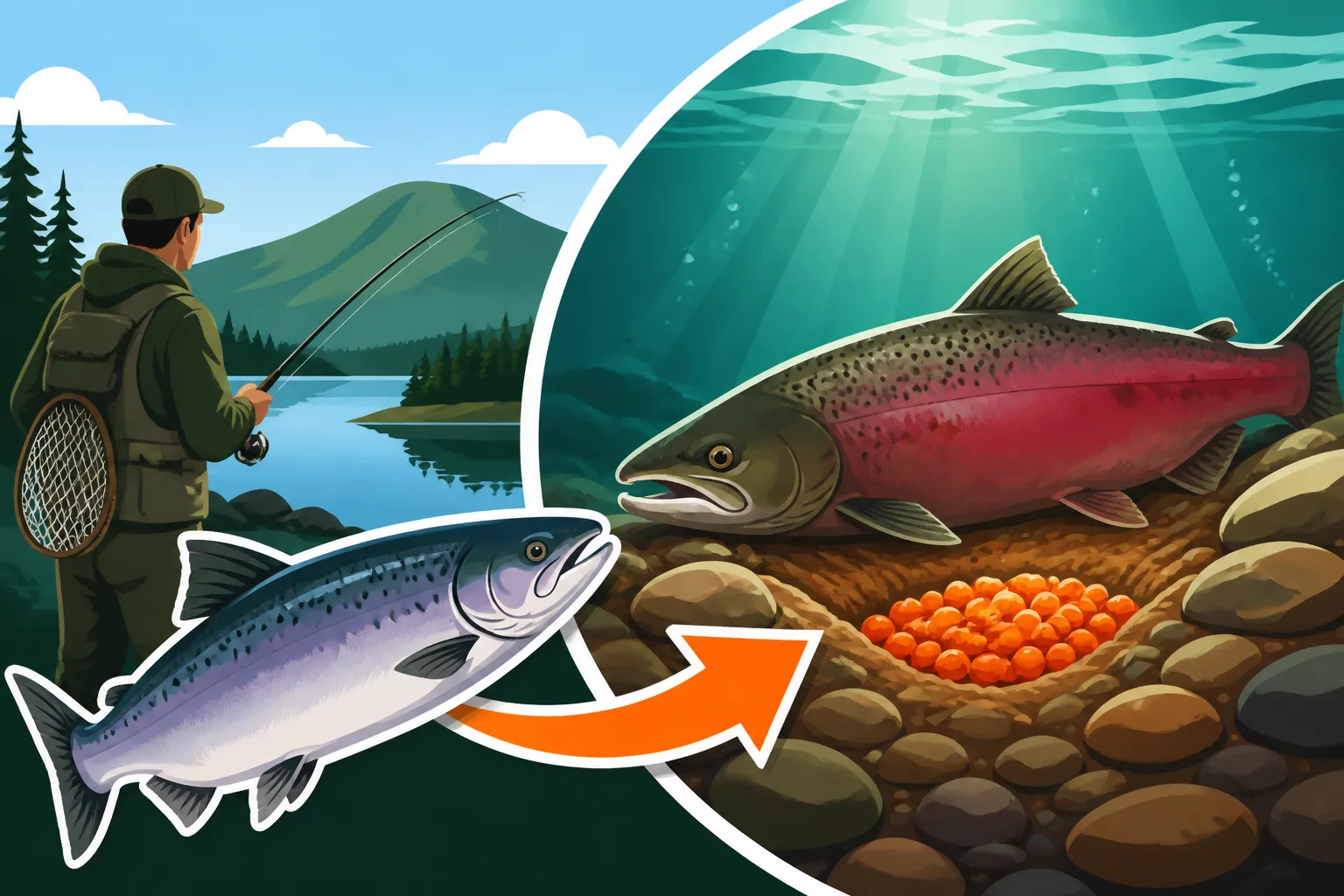
Once they reach these chosen tributaries, landlocked salmon aren't just looking for any old spot to lay eggs. They are incredibly particular about their spawning grounds, seeking out what are known as "redds." A redd is essentially a meticulously constructed nest dug into the riverbed. The ideal location for a redd is typically in areas with a moderate current, where the water is well-oxygenated and flows consistently over a bed of clean, loose gravel. The gravel itself is crucial; it needs to be just the right size – not too fine to suffocate the eggs, and not too large to make digging impossible. The female salmon will use her tail to scour out a depression, dislodging silt and smaller particles, creating a clean, oxygen-rich environment where her eggs can develop safely. This meticulous selection and construction process ensures the eggs have the best possible chance of survival, protected from predators and nourished by the flowing water.
Timing is Everything: When Landlocked Salmon Spawn in Maine
The timing of the spawn is another critical factor, and it generally occurs in the late fall to early winter here in Maine. Depending on the specific body of water and the weather patterns of any given year, you can usually expect to see this activity starting around late October and extending through November, sometimes even into early December. This window is crucial because it allows the eggs to incubate over the winter months, protected by a blanket of ice and snow, and emerge as fry in the spring when food sources become more abundant. The cold water temperatures also play a vital role in the slow, healthy development of the eggs. Anglers interested in Best Time of Year to Catch Landlocked Salmon in Maine will know that this spawning period means a different approach to fishing, often avoiding these sensitive areas entirely. You can find more details on general seasonal patterns in our Maine Fishing Season Dates Guide.
The Spawning Process: A Closer Look at Reproduction
Watching landlocked salmon spawn is a truly remarkable experience, a dance of nature that unfolds with precision and purpose. It’s a delicate process where both male and female salmon play crucial roles, ensuring the continuation of their species.
Courtship and Redd Building: The Female's Role
The spawning ritual begins with the female. Once she identifies that perfect patch of gravel, she initiates the redd-building process. With powerful flicks of her tail, she creates a depression in the stream bed, dislodging gravel and sending it downstream. This is often an observable activity, as you might see plumes of disturbed sediment in the water. As she works, male salmon, often more than one, will vie for her attention. These males, typically darker in color and sometimes with a slightly hooked jaw (kype), will position themselves nearby, displaying their dominance and readiness to fertilize her eggs. It’s an intense period of competition and dedication, all centered around the female's tireless work to prepare the nursery for her offspring.
Fertilization and Protection: The Male's Contribution and Covering the Eggs
When the female is satisfied with her redd, she will drop a portion of her eggs into the freshly cleaned depression. At precisely the same moment, the chosen male (or males) will release milt, a milky fluid containing sperm, directly over the eggs. The swift current helps to mix the milt with the eggs, ensuring fertilization. Immediately after, the female moves slightly upstream and begins digging again, sending gravel tumbling downstream to cover the newly fertilized eggs. This process protects the eggs from predators, such as other fish or birds, and anchors them securely in the streambed. She will repeat this entire sequence – digging, laying eggs, and covering – several times until all her eggs are deposited, often creating a series of overlapping pockets within the redd. It’s a remarkable feat of instinct, a deep drive to protect the next generation. For a general overview of all regulations, check out our Maine Fishing Regulations Explained.
The Fry's First Days: Hatching and Emergence
After the eggs are laid and covered, a long, cold incubation period begins. Over the winter months, typically 60 to 120 days depending on water temperature, the eggs slowly develop. Eventually, tiny salmon "alevins" hatch, still carrying a large yolk sac attached to their bellies. This yolk sac provides vital nourishment, allowing them to remain hidden within the gravel, slowly absorbing its contents. They are incredibly vulnerable during this stage, relying on the clean, oxygenated water flowing through the gravel. Once the yolk sac is fully absorbed, usually in early spring, the little salmon, now called "fry," will emerge from the gravel and begin their active lives in the stream, seeking out insects and small crustaceans for food. This is the beginning of their journey, which for some, will eventually lead them back to these same waters to spawn. To learn more about their journey, our Landlocked Salmon Life Cycle article delves deeper into this.
Challenges and Conservation: Protecting Spawning Grounds
Even with their powerful instincts and meticulous preparation, landlocked salmon face numerous challenges in their spawning efforts. Human activities, both historical and ongoing, can significantly impact their ability to reproduce successfully. This is why conservation efforts are so vital to the health of Maine's landlocked salmon populations.
Threats to Spawning Success: Habitat Degradation and Blockages
One of the biggest threats to landlocked salmon spawning is habitat degradation. Erosion from logging, agriculture, or development can send excess sediment into streams, covering vital gravel beds and suffocating incubating eggs. Pollution from runoff can also harm developing embryos and emerging fry. Beyond pollution and siltation, physical blockages like outdated culverts or small dams can prevent salmon from reaching their ancestral spawning grounds altogether. These barriers fragment habitats, isolating populations and hindering their natural migratory patterns. It’s a constant battle to balance human needs with the critical requirements of these sensitive fish.
The Role of Maine Fisheries Management: Stocking and Habitat Restoration
Thankfully, the Maine Department of Inland Fisheries and Wildlife (MDIFW) works tirelessly to support and enhance landlocked salmon populations. This often involves a multi-pronged approach. Stocking programs introduce hatchery-raised salmon into lakes and ponds to supplement natural reproduction, especially in waters where natural spawning is limited or has been impacted by environmental changes. You can sometimes find information on species identification in our How to Identify a Landlocked Salmon guide. Just as crucial are habitat restoration projects, which focus on improving stream conditions. This might include stabilizing stream banks to reduce erosion, removing outdated culverts that block fish passage, or enhancing gravel beds to create more suitable spawning habitat. These efforts require significant resources and collaboration, but they are essential for the long-term health of Maine's cherished landlocked salmon.
Angler's Responsibility: Respecting Spawning Areas
As anglers, we have a profound responsibility to be good stewards of Maine's fisheries. This includes respecting the sensitive nature of spawning areas. Fishing directly on or around visible redds can disturb spawning salmon, damage eggs, or even inadvertently kill fish that are vital for future generations. It's best practice to avoid fishing in tributaries known for salmon spawning during the late fall and early winter. If you're wading, always be mindful of where you step, as redds can be difficult to spot and a single careless step can crush hundreds of developing eggs. Education is key, and understanding Maine Fishing Laws for Beginners can help. Many experienced anglers purchase resources like detailed fishing maps or guidebooks – sometimes found on platforms like Amazon – to help them identify potential spawning areas or areas under special regulations. If you suspect illegal activity or significant habitat disturbance, knowing the Maine Fish and Wildlife Warden Contact Information is crucial for reporting concerns.
Where to Find Spawning Areas (and Why You Shouldn't Disturb Them)
Knowing where landlocked salmon spawn is fascinating, but it comes with a critical caveat: these areas are highly sensitive and should be approached with extreme caution, if at all. The goal is to observe, understand, and protect, not to disturb.
Recognizing Spawning Waters: Look for the Tell-Tale Signs
Identifying potential spawning waters isn't always easy, but there are some common indicators. Look for clear, relatively shallow sections of tributary streams or rivers with a noticeable current. The bottom should consist primarily of small to medium-sized gravel, not deep muck or large boulders. In these areas, especially during the late fall, you might spot "redds" – oval-shaped depressions in the gravel, often slightly lighter in color than the surrounding stream bed due to the female's cleaning efforts. You may also see salmon, particularly the darker-colored males, actively holding in these areas or moving through them. Sometimes, guides will wear polarized sunglasses – a great investment you can find on Amazon – to better spot these subtle signs.
Notable Spawning Tributaries in Maine
Maine is blessed with many lakes that hold thriving landlocked salmon populations, and consequently, numerous tributaries that serve as critical spawning grounds. For instance, in the vast waters of Moosehead Lake, various rivers and streams feed into it that are essential. Similarly, the Rangeley Lakes region has specific inlets where salmon congregate for their reproductive cycle; our Rangeley Lakes Landlocked Salmon Fishing in Maine guide touches on these general areas. Sebago Lake, famous for its trophy salmon, also has important tributaries where the Sebago Lake Landlocked Salmon Run occurs each fall. While specific locations are often protected knowledge among local biologists and wardens to prevent undue pressure, the general pattern is that larger, colder lakes with good gravel-bottomed inflowing streams will likely have significant landlocked salmon spawning activity.
Resources for Identifying Sensitive Areas
The best way to understand and respect spawning areas is to consult official sources. The Maine Department of Inland Fisheries and Wildlife (MDIFW) publishes detailed fishing regulations that often list "special regulation waters" or seasonal closures for specific streams, sometimes explicitly to protect spawning fish. These regulations are your go-to guide for understanding permissible fishing activities. Online, the MDIFW website provides maps and resources. Additionally, purchasing a good topographical map of a specific lake system, perhaps from Amazon, can help you identify potential tributaries. Lastly, a local Registered Maine Guide is an invaluable resource. They possess intimate knowledge of specific waters, can interpret regulations, and are committed to sustainable fishing practices. They can teach you about Maine Fishing License Guide requirements, and so much more. Always err on the side of caution: if you suspect an area is being used for spawning, observe from a distance and avoid disturbing the fish or their redds.
Protecting the Future of Maine's Landlocked Salmon
Our shared passion for Maine fishing means we all have a role to play in protecting these incredible fish. Understanding where landlocked salmon spawn isn't just about knowing a biological fact; it’s about recognizing the fragility of their life cycle and the importance of healthy habitats. By being mindful anglers, supporting conservation efforts, and respecting the critical spawning period, we can help ensure that the thrill of hooking a Maine landlocked salmon remains a cherished experience for generations to come.
Table: Key Characteristics of Landlocked Salmon Spawning Habitat
| Characteristic | Description | Why it's Important |
|---|---|---|
| Water Temperature | Cooling water, typically 40-50°F (4-10°C) | Triggers spawning, optimal for egg development and survival |
| Location | Upstream sections of clear, cold tributary rivers and streams flowing into main lakes | Ancestral grounds, offers clean water, oxygen, and protection |
| Stream Bed Material | Clean, loose gravel, pea-sized to golf ball-sized | Essential for redd construction, provides space for eggs and fry, allows water flow |
| Water Flow/Current | Moderate, consistent current over gravel beds | Oxygenates eggs, removes waste, prevents silt accumulation, aids in fertilization |
| Water Depth | Typically shallower runs, 1-3 feet deep, but varies | Allows for redd digging, offers temperature stability during incubation |
| Cover/Protection | Often near submerged logs, rocks, or undercut banks for adult salmon seeking refuge between spawning acts | Provides security for spawning adults from predators, allows for resting |
Disclaimer
This article is for general informational purposes only and does not constitute professional advice. Laws, prices and regulations vary by location and change over time. Consult a qualified professional for guidance on your specific situation.