Reading Water Temperature for Maine Trout
There's nothing quite as frustrating as heading out to your favorite Maine fishing spot, brimming with anticipation, only to have the fish seem completely absent or utterly uninterested in anything you're throwing their way. Often, the culprit isn't your skill or your gear, but a factor many anglers overlook: water temperature. This comprehensive guide will dive deep into how water temperature dictates the behavior, location, and feeding patterns of Maine's beloved trout species, helping you unlock more successful fishing trips.
The Critical Role of Water Temperature in Trout Behavior
If you've ever felt sluggish on a hot summer day or revitalized by a cool breeze, you understand, on a basic level, how temperature affects living creatures. For trout, temperature isn't just a comfort factor; it's a fundamental control knob for their very existence. Being cold-blooded, their body temperature mirrors the water around them, directly impacting their metabolism, oxygen intake, and ultimately, their survival. Ignoring this vital parameter means you're often fishing blind.
Why Temperature is a Game Changer for Trout
Think of water temperature as the primary director of a trout's day-to-day life. It dictates everything from how active they are to where they choose to hang out in a lake or river. When the water is too cold, their metabolism slows down, making them lethargic and less inclined to chase after food. They might even enter a state of semi-dormancy, conserving energy until conditions improve. Conversely, when the water gets too warm, they become stressed. Their oxygen needs increase dramatically, but warmer water holds less dissolved oxygen, creating a dangerous double-whammy that can quickly become fatal. This stress response also makes them shut down feeding, prioritizing survival over a meal.
The implications for anglers are huge. If you're fishing in water that's too cold or too warm, you're trying to tempt a fish that either isn't hungry or is too stressed to even consider eating. Understanding these physiological responses is the first step toward becoming a more effective trout angler in Maine.
Understanding Trout Metabolism and Oxygen Needs
Trout, particularly native species like the brook trout, thrive in cold, oxygen-rich water. This isn't just a preference; it's a biological necessity. Their metabolism operates optimally within a specific, relatively narrow temperature band. When water temperatures rise, their metabolic rate increases, meaning they burn through energy faster and require more oxygen to sustain themselves. The problem is, as water temperature increases, its ability to hold dissolved oxygen decreases. Imagine trying to run a marathon in thin air – that's what warm water feels like to a trout.
This metabolic stress explains why trout in warm conditions will seek out cold water refuges, such as spring holes, deep pockets, or the cooler currents below dams. It also explains why they become incredibly particular about feeding, often only biting during the coolest parts of the day or when a sudden burst of oxygen-rich water (like during a rain shower) briefly invigorates them. For anglers, this means knowing not just the temperature, but also thinking about how oxygen availability might be playing a role.
The "Goldilocks Zone" for Maine Trout
Every trout species has its preferred temperature range, a "Goldilocks Zone" where conditions are just right – not too hot, not too cold. For many of Maine's prized trout and salmon species, this zone is on the cooler side. Within this optimal range, fish are most active, aggressively feeding, and generally in prime condition. Outside this range, you'll find them stressed, sluggish, or actively avoiding the area.
Understanding this zone for the specific species you're targeting is paramount. It allows you to anticipate where fish might be holding and when they might be most willing to bite. For instance, if you're targeting brook trout in a small stream in July, and the surface temperature is hovering near 70°F, you know you're likely going to have a tough day unless you can find a spring-fed section or deep, shaded pools where the water stays significantly cooler. Conversely, in early spring, finding slightly warmer water (even just a few degrees) can mean the difference between an empty creel and a productive outing.
Ideal Temperature Ranges for Maine's Popular Trout Species
Maine is blessed with a variety of cold-water fish, and while we often lump them all under the "trout" umbrella, each species has its own thermal preferences. Knowing these subtle differences can make you a much more strategic angler, allowing you to tailor your approach to the specific fish and conditions you encounter.
Brook Trout: Cold Water Specialists
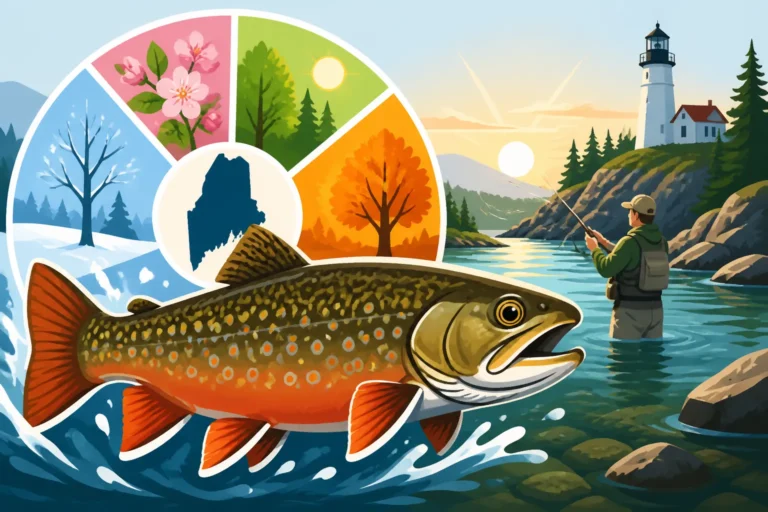
Our native brook trout, Maine's state fish, are absolute purists when it comes to cold water. They thrive in clean, clear, well-oxygenated water, typically found in spring-fed ponds, headwater streams, and the cooler depths of larger lakes. Their optimal feeding and activity range is quite narrow, usually between 50-65°F (10-18°C). Once water temperatures push above 68°F (20°C), brook trout begin to experience significant stress.
In the height of summer, when surface temperatures in many ponds and streams can soar, brook trout will seek refuge in thermal sanctuaries. This might mean congregating near cold springs entering a pond, deep in shaded pools of a stream, or clinging to the bottom in the deepest parts of a lake where cooler water persists. Fishing for brook trout in Maine often means understanding how to locate these hidden cold-water pockets, especially during the warmer months. Our guide on Where Brook Trout Live in Maine Streams offers more specific insights.
Brown Trout: A Bit More Flexible
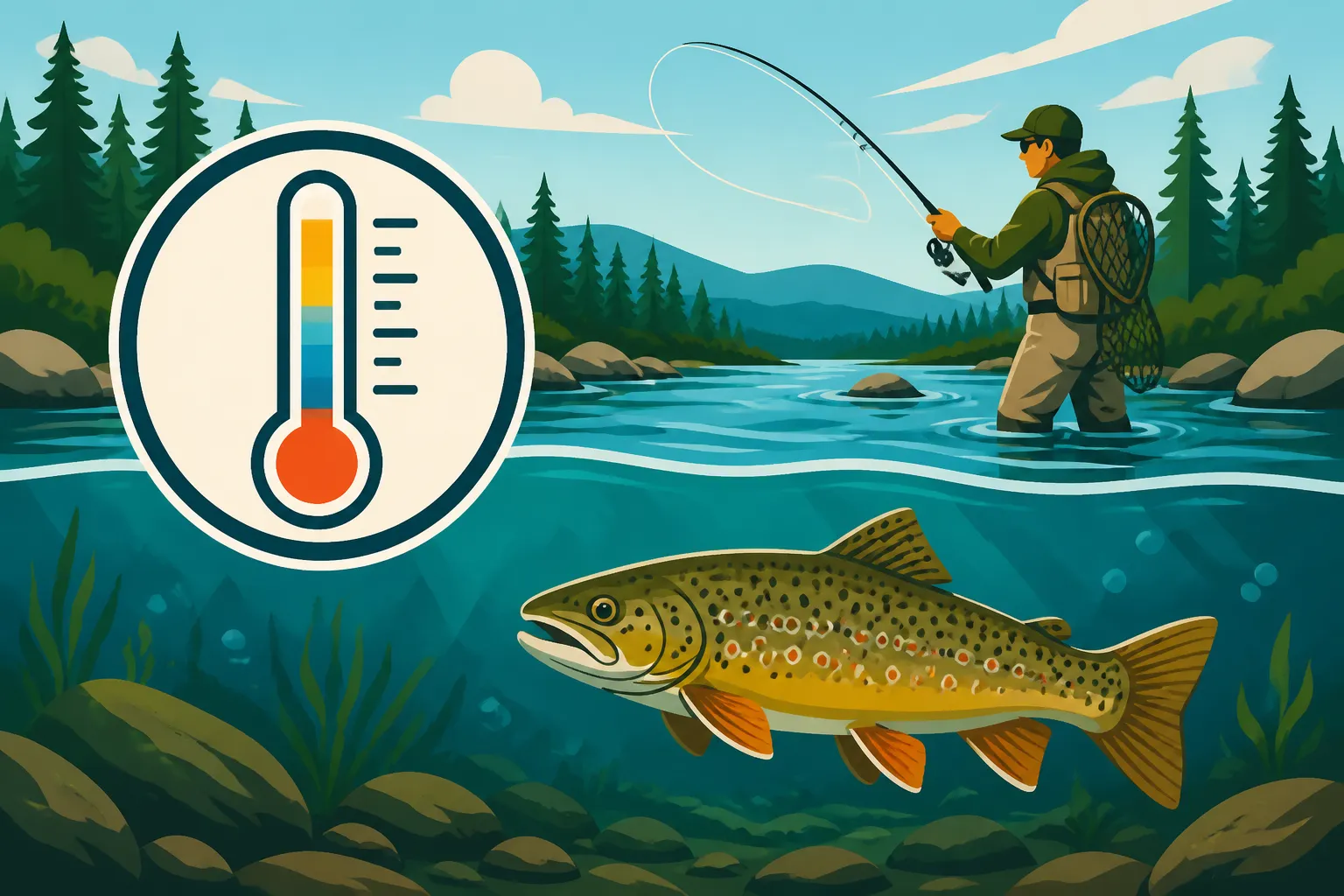
While still a cold-water species, brown trout are generally more tolerant of warmer water temperatures than brook trout. This adaptability is one reason they've been successfully introduced into many waters across the globe. Their preferred temperature range for optimal activity is roughly 55-68°F (13-20°C). They can tolerate temperatures up to about 75°F (24°C) for short periods, though their activity and feeding will be severely curtailed at the higher end of that spectrum.
This flexibility means brown trout can often be found in larger rivers and lakes that might warm up more than pristine brook trout habitat. However, even brown trout will seek out cooler water during sustained heatwaves. They might move to deeper sections of a river, find structure that provides shade, or retreat to the cool zones of lakes. Their slightly broader tolerance allows for a longer active fishing season in some waters compared to their brook trout cousins.
Landlocked Salmon: Deep Water Dwellers
Landlocked salmon, though technically not a "trout" in the strictest sense, are often managed and behave similarly to large trout in Maine's deep, cold lakes. These powerful fish are highly dependent on cold, well-oxygenated water, similar to lake trout (togue). Their preferred temperature range is typically between 45-60°F (7-15°C). Above 65°F (18°C), they become very stressed and will seek the deepest, coolest parts of a lake.
In spring, after ice-out, landlocked salmon will often be found near the surface as the entire water column is cold. This is an exciting time for anglers, as they can be caught trolling shallow or casting from shore. As summer progresses and surface waters warm, these fish retreat to the thermocline – a distinct layer in the lake where cold, oxygenated water remains. Locating this thermocline is crucial for successful summer landlocked salmon fishing. Our guide on How Deep Should You Troll for Salmon in Summer? delves into this topic specifically.
Here's a quick comparison of ideal temperature ranges for these species:
| Species | Optimal Temperature Range (Fahrenheit) | Optimal Temperature Range (Celsius) | Stress Threshold (Approx. Fahrenheit) | Primary Habitat |
|---|---|---|---|---|
| Brook Trout | 50-65°F | 10-18°C | 68°F | Cold, clear streams, spring-fed ponds, deep lakes |
| Brown Trout | 55-68°F | 13-20°C | 75°F | Larger rivers, lakes, more tolerant of warmer water |
| Landlocked Salmon | 45-60°F | 7-15°C | 65°F | Deep, cold, well-oxygenated lakes |
How Water Temperature Influences Trout Location and Feeding
Knowing the ideal temperature is one thing, but translating that knowledge into finding fish and getting them to bite is the real challenge. Water temperature isn't uniform throughout a body of water; it varies dramatically by depth, current, and even localized inputs. Understanding these variations is key to predicting where trout will be and how actively they'll feed.
Thermoclines: Finding the Sweet Spot
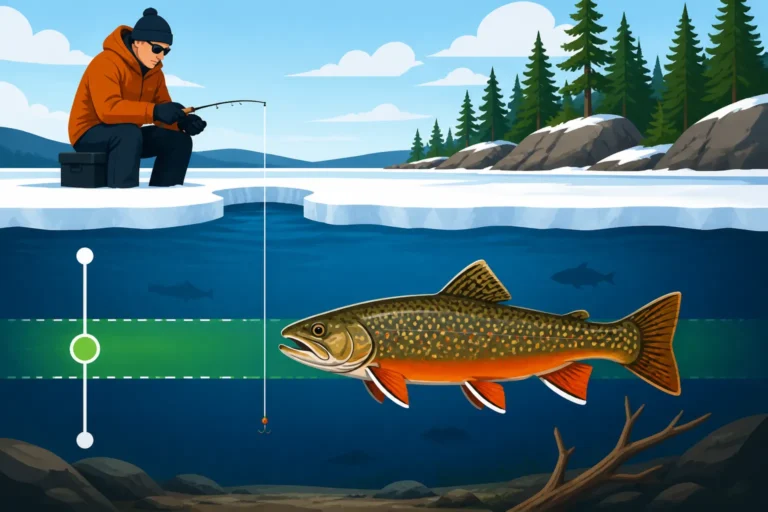
In larger, deeper lakes, a phenomenon called a "thermocline" is incredibly important. As surface waters warm in summer, they become less dense than the colder water below. This creates distinct layers: a warm surface layer (epilimnion), a transition zone with a rapid temperature drop (the thermocline), and a cold, deep bottom layer (hypolimnion). The thermocline often represents the sweet spot for cold-water species like landlocked salmon and togue. It's where they can find both the cool temperatures they need and sufficient dissolved oxygen.
Fish will often "stack up" or cruise along this thermocline, as it offers the best of both worlds. For an angler, identifying the depth of the thermocline is critical, especially when trolling or jigging. A quality fish finder can often help you locate this thermal layer, appearing as a distinct band on your screen where the temperature changes rapidly. Failing to fish at the right depth, even by a few feet, can mean being above or below the active feeding zone of these temperature-sensitive fish.
Temperature and Oxygen in Rivers and Streams
Rivers and streams present a different set of challenges and opportunities when it comes to temperature. Unlike lakes, rivers are constantly flowing, which generally helps keep the water oxygenated. However, temperature can still vary significantly. Shaded stretches, deep pools, and the confluence of cold tributaries or spring inputs can create localized cold-water refuges.
During hot summer days, trout in streams will gravitate towards these cooler areas. They might hold in the deepest, darkest pools, tuck under undercut banks, or position themselves directly in the flow of a cold spring. Conversely, after a cold rain in early spring, a river might be too cold overall, but a stretch of sun-warmed shallows or the mouth of a warmer tributary could concentrate fish looking for a slight increase in temperature to become more active. Observing the stream environment and looking for these subtle temperature breaks is crucial for success.
The Impact of Surface Temperature Swings
Sudden changes in surface water temperature can have a dramatic effect on trout behavior. A scorching hot, sunny spell will quickly warm up shallow areas, pushing fish to deeper, cooler water. Conversely, a sudden cold front or a prolonged period of rain can drop surface temperatures, sometimes sending fish into a brief state of shock or, more often, triggering them to feed aggressively if the conditions align with their optimal range.
Consider early spring fishing. After ice-out, if a warm, sunny week causes surface water temperatures to climb a few degrees, trout might become incredibly active in shallow bays or sun-drenched flats. However, a sudden drop in air temperature overnight could cool those same shallow areas, sending the fish back to deeper water for comfort. Being aware of these short-term weather patterns and how they might affect the water temperature helps you adjust your tactics, whether that means changing your retrieve speed, lure choice, or even the depth you're targeting.
Tools and Techniques for Measuring Water Temperature
You can't effectively "read" water temperature without the right tools. Guessing is a recipe for frustration. Modern fishing gear offers several ways to get precise temperature readings, allowing you to fine-tune your approach and increase your chances of success.
Thermometers: Essential Gear for Every Angler
The most basic and perhaps most crucial tool for reading water temperature is a good thermometer. There are several types suitable for anglers:
- Handheld Water Thermometers: These are simple, inexpensive, and effective. You simply dip them into the water at various depths and locations to get a reading. Many are designed with a weighted lead to sink quickly and a lanyard for easy retrieval. Brands like O'Hagin, although not fishing-specific, make durable, accurate options, and you can find many great fishing-specific ones on retailers like Amazon.
- Probe Thermometers: Some come with a long probe, allowing you to reach into slightly deeper water or check specific spots without getting your hands wet.
- Trolling Thermometers: These specialized thermometers are designed to be deployed on a line and can give you real-time temperature readings at specific depths while trolling. This is invaluable for pinpointing the thermocline or finding temperature breaks in large lakes.
Always check temperatures at different depths and locations. A surface reading might be 60°F, but just 10 feet down, it could be a comfortable 50°F, precisely where the trout are holding. Taking multiple readings helps you build a three-dimensional picture of the thermal landscape.
Fish Finders and Sonar: Advanced Temperature Readings
Modern fish finders and sonar units offer far more than just locating fish and structure; many include sophisticated temperature sensors. These sensors, typically integrated into the transducer, can display surface water temperature directly on your screen. While a surface reading isn't enough on its own, it's a critical starting point.
More advanced units, especially those with down-imaging or side-imaging capabilities, can sometimes even hint at the presence of a thermocline by showing subtle changes in water density or plankton layers that often accumulate at these boundaries. When paired with a dedicated probe or trolling thermometer, your fish finder becomes an even more powerful tool for understanding the underwater environment. Learning to interpret these readings, along with other data like depth and structure, is part of mastering Reading a Fish Finder on Maine Lakes. For serious anglers, investing in a high-quality unit from brands like Humminbird or Garmin available on platforms like Amazon can dramatically improve your ability to find fish.
Reading Environmental Cues Without Instruments
While instruments provide precision, experienced anglers also learn to read the subtle environmental cues that indicate water temperature changes. These aren't as accurate, but they can guide your initial approach.
- Snowmelt or Cold Tributaries: Look for areas where snowmelt runoff or smaller, colder streams enter a larger river or lake. These inputs create distinct temperature breaks that can attract trout, especially in warmer conditions. You might even see a slight discoloration in the water where the two merge.
- Spring Holes: In some lakes, natural springs bubble up from the bottom, creating localized pockets of significantly colder water. While hard to spot from the surface, these are prime targets for deep-dwelling trout in summer. Sometimes, a "flat spot" on a wavy surface can indicate an underwater spring.
- Shade and Structure: Heavily shaded areas, deep undercut banks, dense weed beds, or large boulders provide thermal refuge by blocking direct sunlight and preventing rapid warming. Trout will often congregate in these spots.
- Wind and Current: Wind blowing across the surface can cool shallow waters, especially at night or on cooler days. Strong currents in rivers can also keep water temperatures more consistent by mixing the water, but they can also bring in warmer or colder water from upstream sources.
Learning to combine these visual cues with precise temperature readings will give you the most complete understanding of where the fish are hiding.
Seasonal Strategies for Adjusting to Water Temperature Changes
Maine's fishing seasons are defined by dramatic shifts in temperature, from the freezing grip of winter to the warmth of summer. Each season demands a different approach to account for how water temperature affects trout and salmon. Adapting your tactics seasonally is fundamental to consistent success.
Spring Thaw: Targeting Early Season Trout
The spring thaw is a magical time in Maine, as ice-out signals the start of open water fishing for many. In early spring, the entire water column is often quite cold, typically in the 30s and 40s Fahrenheit. Trout and salmon, having been relatively sluggish under the ice, will begin to move and feed more actively as water temperatures slowly climb into their lower optimal ranges.
- Shallow Water Focus: Initially, look for fish in shallow, sun-warmed bays, coves, and flats. These areas absorb solar radiation fastest, and even a few degrees warmer can attract baitfish and the trout that prey on them. Target depths of 2-10 feet, especially on sunny days.
- Slow Presentations: While fish are becoming more active, their metabolism is still relatively slow. Use slower retrieves for lures and baits. Live bait, like shiners or worms, can be particularly effective as they offer an easy meal.
- River Mouths and Inflows: Rivers and streams carrying snowmelt might be too cold at first, but river mouths where warmer lake water pushes in can be productive. Conversely, areas where slightly warmer runoff enters a still-cold lake can create attractive thermal breaks. The Maine Spring Fishing Guide offers more spring-specific tactics.
Summer Heat: Going Deep or Seeking Coldwater Refuges
Summer fishing for trout in Maine can be challenging, but highly rewarding if you know where to look. As surface temperatures climb, trout and salmon in lakes are driven deep, seeking the sanctuary of the thermocline and the cooler, oxygenated water below. In rivers and streams, they'll concentrate in thermal refuges.
- Deep Water Trolling and Jigging: For landlocked salmon and togue in lakes, focus on trolling with downriggers, lead core line, or copper line to get your lures down to the thermocline. Pay close attention to your fish finder for temperature readouts and signs of fish activity at specific depths. Jigging deep with spoons or soft plastics can also be effective.
- Target Thermal Refuges in Streams: In rivers and streams, forget the wide-open stretches. Instead, concentrate your efforts on the coolest spots: deep pools, shaded runs, areas below waterfalls or rapids (which oxygenate the water), and especially around cold spring inputs. Fishing early in the morning or late in the evening when air and water temperatures are at their lowest can also yield better results.
- Best Practices for Catch and Release: When water temperatures are high, fish are already stressed. Minimize handling, use barbless hooks, and release fish quickly to maximize their chances of survival. Carrying a release tool is a smart move.
Fall Turnover: Renewed Activity
Fall is often considered by many to be the best fishing season in Maine. As air temperatures drop, surface waters cool, eventually matching the temperature of the deeper water. This "fall turnover" mixes the water column, refreshing oxygen levels throughout the lake and eliminating the thermocline.
- Widespread Distribution: With consistent temperatures and oxygen levels from top to bottom, trout and salmon can be found throughout the water column and often move into shallower areas to feed more aggressively. They are stocking up for the lean winter months and preparing for spawning.
- Active Feeding: This is a prime time for active feeding. Lure presentations can often be faster and more aggressive. Trolling with spoons, stickbaits, and even large streamers can be highly effective. Fly fishing can be exceptional as well.
- Spawning Runs: Fall also marks the spawning runs for brook trout and landlocked salmon in many rivers and streams. Check local regulations, as many areas have special catch-and-release rules or closures during these sensitive periods. The Maine Fall Fishing Guide details more fall opportunities.
Winter Ice: Under the Frozen Surface
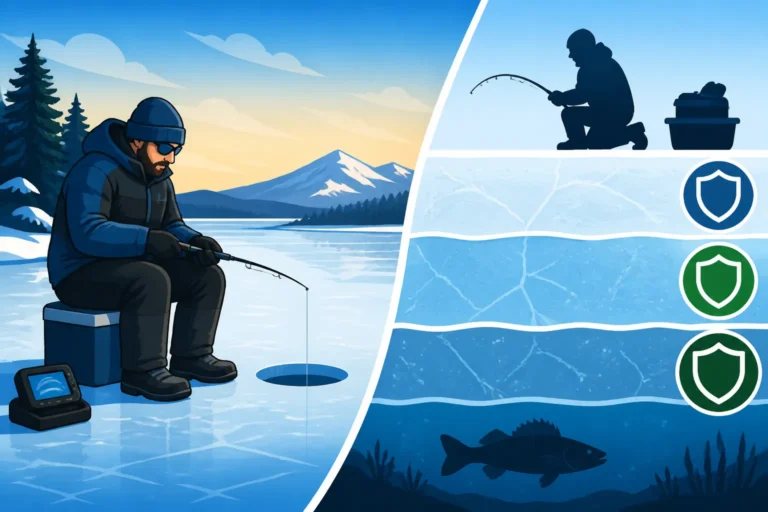
Ice fishing in Maine is a cherished tradition, and even under a blanket of ice, water temperature still plays a role, albeit a less dynamic one. While the water beneath the ice might be consistently cold, subtle differences can still influence fish. Our Maine Ice Fishing Techniques Guide explores this further.
- Stable but Stratified: Once ice forms, the water column stabilizes. Water reaches its maximum density at 39°F (4°C), so the coldest water (just below freezing) is usually right under the ice, while slightly warmer (relative to the surface) water might be found deeper.
- Oxygen Pockets: While overall oxygen levels are generally good in winter, localized low-oxygen areas can occur, especially in shallow, heavily vegetated ponds. Fish will avoid these areas.
- Depth is Key: Even in winter, different trout species will prefer different depths. Togue and salmon might still be found deeper, while brook trout often cruise shallower flats or near structure under the ice, especially during dawn and dusk. Understanding What Depth Do Togue Hold at in Summer? can provide clues for winter depths too.
By understanding the subtle, yet powerful, influence of water temperature throughout the year, you can transform your Maine fishing experiences from hit-or-miss adventures into consistently productive outings.
Disclaimer
The information provided in this guide is for general informational purposes only and does not constitute legal or professional advice. Fishing regulations, season dates, and specific water body rules in Maine are subject to change. Always consult the latest official Maine Department of Inland Fisheries and Wildlife (MDIFW) regulations before heading out on your fishing trip. Ensure you have the proper licenses and adhere to all local, state, and federal laws. Stay safe on the water and ice.