How Long Do Landlocked Salmon Live?
It's a common question that crosses many an angler's mind as they reel in a beautiful landlocked salmon from the pristine waters of Maine: "How long has this fish been swimming around here?" There's a natural curiosity about the life journey of these magnificent creatures, and understanding their lifespan helps us appreciate the intricate ecosystem they call home. This guide will dive deep into the typical lifespan of Maine's landlocked salmon, exploring the various factors that influence their longevity, from their earliest days as a tiny egg to their mature years in our sprawling lakes.
The Landlocked Salmon's Lifespan in Maine's Waters
When you think about the life of a fish, especially one as revered as the landlocked salmon in Maine, you might imagine them living for many years, growing to an impressive size. And while some certainly do, their journey is fraught with challenges, and their lifespan is a testament to their resilience in the wild. Understanding how long these fish typically live helps us appreciate each catch and the careful management of their populations.
Typical Lifespan Range
For most landlocked salmon in Maine, a typical lifespan falls somewhere in the range of 4 to 7 years. However, it's not uncommon to find older individuals, with some pushing 8 or even 9 years in exceptional conditions. These older, larger fish are the real trophies, the ones that have managed to navigate all the dangers and challenges of their aquatic world. When you hook into a particularly feisty salmon that feels like it’s been around the block a few times, chances are, it really has been. The specific lake, the availability of food, and the overall health of the environment play huge roles in whether a salmon reaches the lower or upper end of this spectrum.
Imagine reeling in a powerful, deep-bodied salmon from a lake like Sebago; that fish could easily be 6 or 7 years old, having survived multiple seasons, grown through countless encounters, and contributed to the next generation of its species. The longer a fish lives, the more opportunities it has to grow, making those older fish truly memorable for anglers.
Factors Affecting Longevity
A salmon's life isn't just a simple march from birth to death; it's a complex interplay of environmental factors, food sources, predators, and even human interaction. Each of these elements can significantly influence how long a landlocked salmon will thrive in Maine's waters.
One of the most critical factors is water quality and habitat. Landlocked salmon need cold, clear, well-oxygenated water to survive and thrive. Lakes and rivers with stable temperatures, especially during the warmer summer months, provide the ideal conditions. If water temperatures rise too high, or oxygen levels drop due to pollution or stagnation, it puts immense stress on the fish, shortening their lives. Healthy gravel beds in tributary streams are also vital for successful spawning and the survival of eggs and young fish.
Food availability is another massive determinant. Landlocked salmon are predators, and their primary forage fish in many Maine lakes are smelts and other small baitfish. If the smelt population is robust, salmon have plenty to eat, allowing them to grow faster and healthier, which generally contributes to a longer life. Conversely, a scarcity of food can lead to slower growth, weaker fish, and increased vulnerability. A healthy diet supports strong immune systems and energy reserves for spawning.
Of course, predation is a constant threat. While adult landlocked salmon are apex predators in many of their environments, they are still prey for larger birds like ospreys and eagles, and even other fish when they are younger. For the smaller parr and smolts in rivers, bigger trout, bass, and even other salmon can be a danger. Nature's balance dictates that only the strongest and luckiest will survive to old age.
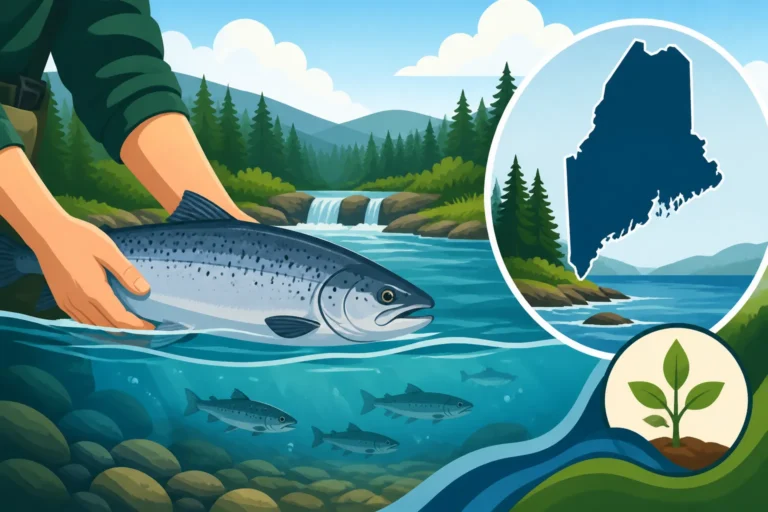
Finally, angling pressure and the subsequent handling of fish, even during catch-and-release, can impact a salmon's longevity. While anglers are generally careful, any stress, injury, or prolonged time out of water can weaken a fish, making it more susceptible to disease or predation. That's why understanding Catch and Release Best Practices in Maine is so important. Using proper techniques, like keeping the fish in the water as much as possible, using barbless hooks, and minimizing handling, can greatly improve a released salmon's chances of survival and thus, a longer life. Many anglers even carry specific tools they've found on platforms like Amazon to make hook removal quicker and less traumatic for the fish.
Growth Stages and Milestones of Maine's Landlocked Salmon
The life cycle of a landlocked salmon is a fascinating journey, beginning in the gravel beds of a cold, flowing stream and culminating, for most, in the expansive waters of a deep Maine lake. Each stage presents its own challenges and milestones, shaping the fish and influencing its ultimate lifespan.
From Egg to Fry to Parr
The life of a landlocked salmon begins in the fall, when adult salmon migrate from the lakes into tributary streams to spawn. The female deposits her eggs in a redd, a gravel nest she excavates, and the male fertilizes them. These eggs then lie dormant through the winter, protected by the gravel, slowly developing. Come spring, typically around April or May, the eggs hatch into "alevins" – tiny fish still carrying their yolk sac, which provides initial nourishment.
Once the yolk sac is absorbed, these tiny fish become "fry." They're incredibly vulnerable at this stage, trying to find food and shelter in the stream. As they grow, they develop into "parr." Parr are characterized by distinctive vertical bars, or "parr marks," along their sides, which provide camouflage in the dappled sunlight of the stream bottom. They'll spend anywhere from one to three years, sometimes even four, in these nursery streams, feeding on insects and growing, all while constantly dodging predators. The quality of these nursery streams – the food available, the water flow, the cover – is absolutely critical for their survival and healthy development, setting the stage for their entire life.
The Smolt Transformation and Lake Migration
This is perhaps one of the most remarkable transformations in the landlocked salmon's life: "smoltification." After spending a few years in the stream as parr, usually in spring when they are between 4 to 8 inches long, the fish undergo a physiological change that prepares them for life in the lake. Their parr marks fade, and their bodies become silvery, streamlined, and ready for saltier (or, in this case, deeper, colder) water. This change is crucial, as it allows them to adapt from living in a flowing, relatively shallow stream to the vast, open waters of a lake.
Once smoltification is complete, the young salmon, now called "smolts," begin their migration downstream, heading for the deep, cold waters of their destined lake. This migration is typically a mass movement, offering some safety in numbers, but it's still a hazardous journey. They must navigate rapids, avoid predators, and find the main lake where they will spend the majority of their adult lives. The timing and success of this migration are essential; delays or issues can greatly reduce their chances of survival and reaching maturity. For more on their origins, you might find information on Where Landlocked Salmon Live in Maine Lakes helpful.
Adult Life in the Lake and Spawning Cycles
Upon reaching the lake, the smolts are now ready to truly grow. They become powerful, efficient predators, primarily feeding on baitfish like smelt. This is where they put on serious weight and length, developing the athletic, sleek bodies that anglers recognize and admire. The rate of growth can vary significantly depending on the lake's productivity and the abundance of forage. A salmon in a rich, prey-filled environment will grow much faster than one in a leaner lake.
As they mature, usually around 3 to 5 years of age, adult landlocked salmon will begin their own spawning migrations back to the tributary streams where they were born. This annual or biennial journey is incredibly energy-intensive, and not all fish survive it. Spawning is a physically demanding process that takes a toll on their bodies, and older, larger salmon may not spawn every year, or may only survive a few spawning cycles before succumbing to exhaustion, predation, or old age. The energy expended during the spawning run means they are often leaner and less vibrant immediately after. Understanding Where Do Landlocked Salmon Spawn? provides context for this crucial part of their life cycle. Their ability to recover from these strenuous events directly impacts how many more years they have left to swim and feed in the lake.
The Impact of Environment and Management on Salmon Ages
The longevity of Maine's landlocked salmon isn't just a matter of individual hardiness; it's deeply tied to the health of their aquatic environment and the thoughtful management efforts put in place by wildlife agencies. These external factors can significantly influence how many years a salmon gets to call a Maine lake home.
How Lake Conditions Influence Longevity
Imagine a salmon living in a shallow, warm lake versus one in a deep, cold, pristine expanse. The difference in lifespan can be dramatic. Landlocked salmon are cold-water fish; they need deep, well-oxygenated water, especially during the summer months when surface waters warm up. Lakes like Moosehead Lake or Sebago Lake, with their significant depths and ample cold-water refuges, provide ideal conditions for salmon to survive and grow. Moosehead Lake Fishing Guide and Sebago Lake Fishing Guide explore these environments further.
If a lake experiences prolonged periods of high water temperatures, or if there's significant nutrient runoff leading to algal blooms and reduced oxygen levels (a process called eutrophication), these conditions can stress salmon populations immensely. Chronic stress makes fish more susceptible to disease and can shorten their lives. A cold snap, on the other hand, can rejuvenate a tired salmon and extend its healthy fishing life. Environmental changes, whether natural variations or human-induced impacts, directly translate into fluctuations in salmon health and, consequently, their lifespan. When anglers consider the best time to fish, they often think about temperature and oxygen levels, which are critical to the fish's well-being and activity.
The Role of Stocking and Wild Populations
Maine has a long history of actively managing its landlocked salmon populations, which includes extensive stocking programs. Stocked salmon often have a different life trajectory than their wild counterparts. While stocking helps maintain robust populations, especially in waters where natural reproduction is limited, wild fish tend to exhibit certain traits that can contribute to different lifespans.
Wild salmon, born and raised in natural streams, have often survived a more rigorous early life. They've had to contend with natural predators and competition from a young age, developing instincts and resilience that hatchery-raised fish might not possess to the same degree. This "survival of the fittest" can mean that wild salmon, if they make it past the initial vulnerable stages, may be inherently hardier and potentially live longer, though often with slower initial growth.
Stocked fish, on the other hand, benefit from a protected start in life, with regular feeding and minimal predation. They often grow faster in their initial years. However, when introduced to the wild, they may face a steeper learning curve to find food and avoid predators. Maine's stocking strategies are carefully designed to balance these factors, aiming to produce healthy fish that can thrive and contribute to the fishery. The Department of Inland Fisheries and Wildlife puts a lot of thought into how they stock, and understanding Stocked vs Wild Landlocked Salmon in Maine provides more detail on these distinctions.
Conservation Efforts and Lifespan
Maine's Department of Inland Fisheries and Wildlife (MDIFW) implements a variety of conservation measures directly aimed at protecting and sustaining landlocked salmon populations, which in turn can influence their lifespan. These measures include strict regulations on catch limits, size limits, and even specific seasonal closures.
For example, implementing a slot limit (where only fish within a certain size range can be kept) or a low daily bag limit is often designed to protect larger, older spawning fish. By allowing these prime breeders to survive and continue their reproductive cycles, the state ensures the genetic health and viability of future generations. Landlocked Salmon Size and Bag Limits in Maine details these important rules. These regulations acknowledge that older, larger salmon are vital for a healthy ecosystem, not just as trophies for anglers. They are critical for passing on strong genetics.
Furthermore, efforts to improve and protect spawning habitat in tributary streams, combat invasive species, and educate anglers on proper catch-and-release techniques (perhaps even encouraging the use of items like a specialized fish gripper found on Amazon for minimal contact) all contribute to a healthier environment where salmon have a better chance of reaching their full potential lifespan. These proactive steps are crucial for the long-term enjoyment of Maine's incredible landlocked salmon fishery.
Landlocked Salmon Lifespan Factors
Here’s a quick overview of some key factors that play into how long a landlocked salmon lives in Maine:
| Factor | Impact on Lifespan | Description |
|---|---|---|
| Water Quality | High Quality = Longer Life | Cold, clear, oxygen-rich water with minimal pollution is crucial. |
| Food Availability | Abundant Forage = Longer Life | Plenty of smelt and other baitfish lead to better growth and health. |
| Predation | High Pressure = Shorter Life | Constant threat from birds, other fish, and sometimes humans. |
| Angling Pressure | Poor Handling = Shorter Life; Good Handling = Longer Life | Careful catch-and-release practices can reduce stress and injury, enhancing survival post-release. |
| Genetics | Strong Genes = Potentially Longer Life | Inherited traits influence disease resistance, growth rate, and overall hardiness. |
| Spawning Frequency | Frequent Spawning = Shorter Life | Each spawning event is physically taxing, reducing energy reserves and overall longevity. |
| Habitat Quality | Excellent Habitat = Longer Life | Healthy spawning streams and deep, cold lake environments are vital for all life stages. |
| Disease/Parasites | Presence = Shorter Life | Natural occurrences that can weaken fish and contribute to premature death. |
In the end, how long a landlocked salmon lives in Maine is a story written by a combination of its genes, the environment it inhabits, the food it finds, and even the choices we, as anglers, make when we interact with these magnificent fish. Every silvery flash in the water, every leap from the surface, represents a creature that has navigated a complex world to get to that moment. Appreciating their journey helps us cherish our time on the water and understand the deeper connections within Maine's wild places.
Disclaimer
This article is for general informational purposes only and does not constitute professional advice. Laws, prices and regulations vary by location and change over time. Consult a qualified professional for guidance on your specific situation.