How Long Do Brook Trout Live?
It’s a question many of us anglers ponder as we watch a beautiful brook trout finning in a clear Maine stream, or even as we bring one to hand: just how long do these incredible fish get to grace our waters? It feels like some fish have been around forever, while others seem to grow so quickly. Understanding the lifespan of the brook trout is key to appreciating their resilience, the delicate balance of their ecosystems, and how our actions on the water can truly make a difference. This guide will dive deep into the typical lifespan of a Maine brook trout, exploring the many factors that influence their longevity and how we, as responsible anglers, can help them thrive for generations to come.
The Typical Lifespan of a Maine Brook Trout
When we talk about brook trout, especially here in Maine, it's easy to picture them as timeless residents of our cold, clear waters. But like all living creatures, they have a finite existence, and their lifespan can actually vary quite a bit depending on a host of factors. For most wild brook trout in Maine, their lives are often measured in a few short years, typically ranging from 2 to 5 years. This might seem brief, especially for such a prized sportfish, but within that time, they live incredibly active lives, growing, spawning, and contributing to the health of their aquatic homes. However, it's not uncommon for some to push past this average, particularly in more protected or abundant waters.
Wild vs. Stocked Brook Trout Longevity
One of the most significant distinctions in lifespan comes down to whether a brook trout is wild or stocked. It's a truth many anglers recognize: there's a different tenacity to a wild fish.
Wild Brook Trout: These are the resilient natives, born and bred in the stream or pond where you find them. Their entire existence is a testament to survival. They’ve dodged predators from day one, navigated natural challenges like droughts and harsh winters, and learned to forage for themselves. Because of this natural selection, wild brook trout often develop a hardiness that can sometimes lead to a slightly longer, albeit often harder, life compared to their stocked counterparts, if their habitat is pristine. A wild fish that makes it past its first year has already proven its mettle. In ideal, undisturbed conditions, wild brook trout can certainly live beyond the typical 2-5 years, with some documented cases of individuals reaching 6 or even 7 years in exceptional environments, particularly in remote, less-fished ponds where food is plentiful and competition is low. They are the epitome of Brook Trout Native Range in Maine.
Stocked Brook Trout: These fish, often raised in hatcheries, are introduced into waters to supplement populations or provide fishing opportunities. While robust when released, they haven't had to develop the same survival instincts as wild fish. They're accustomed to being fed and protected. Consequently, their post-stocking survival rates can be lower, and their overall lifespan in the wild is often shorter. Many stocked trout are caught quickly after release, which is part of their purpose, of course. Those that do survive often face a steeper learning curve in finding natural food and evading predators. This isn't to say stocked trout don't thrive; some certainly adapt and contribute to the fishery, but generally, they don't reach the same advanced ages as their wild cousins in similar conditions. You can read more about this in Stocked vs Wild Brook Trout in Maine.
Age-Related Growth and Maturity
The growth rate of a brook trout is closely tied to its age and the conditions it lives in. During their first year, brook trout grow quite rapidly, transforming from tiny fry to fingerlings, and then to young-of-the-year fish. By their second year, they've often reached sexual maturity and are ready to spawn. This is a critical period, as reproduction takes a significant toll on their energy reserves, especially for males.
In their third and fourth years, if they survive, brook trout continue to grow, albeit at a slower pace. These are often the fish that become the "trophies" of a particular water body, showcasing the beautiful colors and robust size that make brook trout so iconic. The largest, oldest fish tend to be found in waters with stable food sources, minimal predation, and consistent cold-water refuge. Their growth, like their lifespan, is a dynamic process, a constant negotiation with their environment. The venerable "grandpa" brook trout in a remote pond has truly seen it all.
Key Factors Influencing Brook Trout Lifespan
The life of a brook trout is a constant struggle against the elements and other creatures in their ecosystem. While genetics play a role, it's the environment around them that truly dictates their chances of living a long, healthy life. Understanding these factors is crucial for anyone who wants to ensure the future of Brook Trout Fishing in Maine.
Habitat Quality and Environmental Stressors
For a brook trout, habitat is everything. They are a cold-water species, which means they absolutely depend on clean, well-oxygenated, and consistently cold water to survive and thrive. Think of pristine Maine streams cascading over rocks, shaded by dense forest canopies – that’s prime brook trout real estate.
Water Temperature: This is perhaps the single most critical factor. Brook trout prefer water temperatures typically below 68°F (20°C). As water temperatures rise, their metabolism increases, requiring more oxygen and food, and simultaneously, the water holds less dissolved oxygen. If temperatures climb too high, especially above 70°F (21°C) for extended periods, it becomes incredibly stressful and can be lethal. This is why climate change and warmer summers are such a serious concern for brook trout populations. The availability of cold-water refugia, like deep pools, spring-fed tributaries, or areas with dense shade, becomes vital during warmer months.
Oxygen Levels: Healthy, cold, moving water naturally has high levels of dissolved oxygen. Pollution, excessive aquatic vegetation, or stagnant conditions can deplete oxygen, leading to stress, reduced feeding, and ultimately, death for brook trout.
Pollution and Sedimentation: Runoff from development, agriculture, or forestry can introduce harmful pollutants (like pesticides or heavy metals) or excessive sediment into streams. Sediment smothers the rocky bottoms where trout lay their eggs and where aquatic insects, their primary food source, live. This directly impacts their ability to reproduce and find food, shortening lifespans. Keeping our waterways clean is not just good for humans, it's essential for trout.
Stream Flow and Water Levels: Droughts can significantly reduce stream flow, concentrating fish in smaller, warmer pools and making them more vulnerable to predators and stress. Conversely, severe floods can scour stream beds, destroying habitat and washing away eggs and young fish.
Food Availability and Competition
A brook trout needs to eat to grow and survive, and what's on the menu (and how much of it there is) directly impacts its vitality and lifespan.
Abundant Food Sources: A stream or pond teeming with aquatic insects (caddisflies, mayflies, stoneflies), smaller baitfish, and even terrestrial insects that fall into the water provides a steady diet. When food is plentiful, trout grow faster, are more robust, and are better able to withstand environmental stressors or evade predators. They have the energy reserves to survive harsh winters and the rigors of spawning.
Scarcity and Competition: If food is scarce, trout will grow slower, be less healthy, and are more susceptible to disease. Competition for food also plays a huge role. Native species like white suckers or fallfish can compete for insect larvae. More critically, the introduction of non-native species like smallmouth bass or chain pickerel can decimate brook trout populations, not only by competing for food but also by preying directly on them. Invasive species can drastically alter an ecosystem's food web, leading to shorter lives for brook trout who can't adapt.
Predation and Fishing Pressure
The world of a brook trout is full of danger, and escaping predators is a full-time job.
Natural Predators: From the moment they hatch, brook trout are targets. Larger fish (even other, bigger trout), ospreys, kingfishers, mergansers, otters, mink, and even raccoons all view a brook trout as a tasty meal. The stream structure, like undercut banks, fallen trees, and deep pools, provides crucial cover for them to hide. Without adequate cover, their chances of survival plummet.
Fishing Pressure: As anglers, we are also a form of predation, albeit one we can control. High fishing pressure, especially in easily accessible waters, means more fish are removed from the population. While regulations like Maine Fish Bag Limits Guide and Brook Trout Size and Bag Limits in Maine are designed to manage this, even catch-and-release fishing can have an impact. A fish that is improperly handled, played to exhaustion, or released into warm water after a long fight may not survive, even if it swims away. This is why understanding Maine Fishing Regulations Explained is so vital.
Consider this table outlining some key factors:
| Factor | Positive Impact on Lifespan | Negative Impact on Lifespan |
|---|---|---|
| Water Temp | Consistently cold (50-65°F), plentiful cold springs | Elevated temperatures (>70°F), lack of cold refugia |
| Oxygen Levels | High dissolved oxygen, turbulent, flowing water | Low oxygen from pollution, stagnation, high temps |
| Food Availability | Abundant aquatic insects, small baitfish, healthy food web | Scarcity due to habitat degradation, competition |
| Habitat Cover | Undercut banks, log jams, deep pools, riparian shade | Lack of cover, clear-cut stream banks, sedimentation |
| Predation | Balanced ecosystem, good hiding spots | High predator numbers, open water, invasive species |
| Fishing Pressure | Low to moderate, strict catch-and-release, proper handling | High pressure, poor handling, harvest of large fish |
How Anglers Can Support Brook Trout Longevity
It’s easy to feel a little helpless when you think about the big picture of brook trout survival. Environmental changes, invasive species – these challenges can seem insurmountable. But here in Maine, we're a community of passionate anglers, and our individual actions truly add up. We can make a difference, not just for ourselves, but for the future of these magnificent fish.
Practicing Responsible Catch and Release
Let's face it, many of us enjoy catching fish, but we also cherish the idea of future generations enjoying the same sport. That's where responsible catch and release comes in. It's not just about letting a fish go; it's about giving it the best possible chance of survival.
Minimize Fight Time: The longer a fish fights, the more exhausted it becomes, accumulating lactic acid in its muscles, which can be lethal even after release. Use appropriately sized tackle that allows you to bring the fish in relatively quickly without overpowering it to the point of causing physical damage. A medium-light rod for most Maine brook trout is usually perfect.
Keep Them Wet: This is the golden rule! A brook trout’s slime coat is its first line of defense against disease and parasites. Handling a fish with dry hands, or letting it flop around on rocks or dry ground, strips away that protective layer. Try to unhook the fish while it's still in the water, or at least keep it submerged as much as possible. If you must lift it for a quick photo, do so gently and only for a second or two. You can find more detailed instructions in How to Handle Fish Without Hurting Them.
Use Barbless Hooks: Barbless hooks, or hooks with pinched barbs, make unhooking a fish incredibly fast and easy, minimizing damage to its mouth. You can pinch down barbs on existing hooks with a pair of pliers. It’s a small change that makes a huge difference. You can find hooks like this from brands available on Amazon that make it easy.
Proper Unhooking Tools: Carry a pair of long-nosed pliers or hemostats. These tools allow you to quickly and safely remove hooks, especially those that are deeply swallowed, without needing to put your fingers into the fish’s gills or mouth, which can cause injury.
Revival: If a fish seems sluggish after unhooking, gently hold it upright in the water, facing upstream, allowing water to flow over its gills. Don’t push it back and forth, as this can damage the gills. Wait until it kicks its tail vigorously and tries to swim away on its own before releasing it. This dedication to healthy release practices is outlined in Catch and Release Best Practices in Maine.
Protecting and Restoring Brook Trout Habitat
Beyond our personal angling practices, there's a larger role we can play in safeguarding brook trout populations: advocating for and participating in habitat protection and restoration.
Riparian Zone Protection: The land along the banks of a stream or lake is called the riparian zone. Healthy riparian zones, filled with native trees and vegetation, provide shade (keeping water cool), stabilize banks (preventing erosion and sedimentation), and filter runoff. Supporting efforts to plant trees along stream banks or prevent development too close to waterways is incredibly important.
Erosion Control: Sedimentation from eroded banks or disturbed land is a silent killer for trout eggs and aquatic insects. Promoting best management practices in forestry, agriculture, and construction near waterways can prevent harmful runoff.
Removal of Barriers: Old, poorly designed culverts (pipes under roads) can block fish passage, fragmenting populations and preventing trout from accessing critical spawning or cold-water refuge areas. Supporting projects that replace these with fish-friendly designs, like open-bottom culverts or bridges, helps reconnect vital habitats.
Advocacy and Education: Get involved with local conservation groups. Stay informed about issues affecting Maine's waterways. Share your knowledge with other anglers and the wider community. The more people understand the needs of brook trout, the greater the collective impact on their conservation.
Understanding and Following Regulations
Maine has a comprehensive set of fishing regulations designed to protect our fisheries and ensure sustainable angling opportunities. These rules are not arbitrary; they are based on scientific data and aim to manage populations for long-term health. Knowing and following them is paramount.
Know the Rules for Your Waterway: Maine's fishing regulations can vary significantly from one body of water to another. A pond might have a different daily bag limit or size restriction for brook trout than a stream just a few miles away. Always consult the most current Maine Fishing Regulations Explained booklet or website before you head out. Don't rely on what someone told you last year or what the rules are in another state. Many waters have specific rules beyond the Maine General Fishing Law Definition Explained.
Bag Limits and Size Restrictions: These rules are in place to allow enough fish to survive and reproduce. Respecting the daily bag limits and size restrictions ensures that younger fish have a chance to grow and spawn, and that a healthy number of older, larger fish remain in the population. If a water has a "catch and release only" regulation, it means all fish must be returned to the water immediately and carefully.
Season Dates: Understanding when particular seasons open and close for different species is crucial. For brook trout, some waters might be open year-round, while others might have specific open water or ice fishing seasons. Always check the Maine Fishing Season Calendar to avoid fishing out of season.
Here’s a simplified look at how some regulations typically work for brook trout, but remember, always check the current specific regulations for the water body you plan to fish, as they vary widely!
| Regulation Type | General Principle (always verify specific water) | Impact on Lifespan & Population |
|---|---|---|
| Daily Bag Limit | Varies (e.g., 2-5 fish per day) | Prevents overharvest, ensures breeding stock remains |
| Minimum Length | Varies (e.g., 6-8 inches) | Allows fish to reach maturity and spawn at least once |
| Max Length/Slot | Less common for brook trout, but may apply | Protects large, older breeding fish |
| Catch & Release | All fish must be immediately released | Maximizes number of fish, often for trophy waters |
| Gear Restrictions | Fly-fishing only, single hook artificial lures | Reduces mortality, minimizes damage to fish |
| Season Dates | Specific open/closed periods | Protects fish during vulnerable times (e.g., spawning) |
Beyond the Average: Record Lifespans and Unique Cases
While we've discussed the typical 2-5 year lifespan for most Maine brook trout, the natural world is full of exceptions. Sometimes, a fish just hits the genetic lottery, finds an absolutely perfect home, or develops a knack for survival that sets it apart. These instances give us a glimpse into the maximum potential of brook trout longevity.
Factors Leading to Exceptional Lifespans
What makes a brook trout live significantly longer than its peers? It's usually a combination of very specific, often rare, conditions:
Pristine, Stable Habitats: The most crucial element is an environment that provides everything a brook trout needs with minimal stress. This means consistently cold, crystal-clear water with high dissolved oxygen, abundant and diverse food sources, and ample cover from predators. Think of remote, spring-fed ponds in the deepest reaches of the North Woods, or isolated stretches of river largely untouched by human activity. These undisturbed areas provide a sanctuary where a trout can truly thrive without constant threats.
Low Predation and Fishing Pressure: In these ideal habitats, natural predation might be in balance, and human fishing pressure is extremely low. If very few anglers visit, or if those who do practice impeccable catch-and-release, the chances of a fish being removed from the population are significantly reduced. It allows the older, larger fish to continue to grow and pass on their strong genetics.
Genetic Resilience: Just like humans, some fish are simply more genetically robust. They might be more disease-resistant, grow slightly faster, or have a stronger instinct for survival. When these genes combine with a perfect environment, you get those rare, exceptionally old and often very large brook trout that capture anglers' imaginations. Stories of massive brook trout caught (and hopefully released!) in certain "trophy" waters often involve fish that are on the upper end of the age spectrum.
The "Salter" Brook Trout Phenomenon
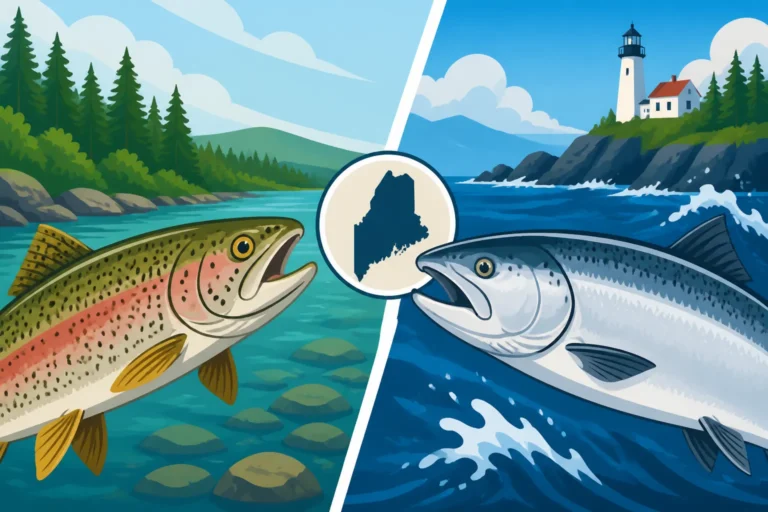
Maine is one of the special places where you can encounter a unique type of brook trout known as a "salter" or sea-run brook trout. These are the same species as their freshwater cousins, but they have adapted to migrate from freshwater streams out into the saltwater estuaries and coastal areas to feed, often returning to freshwater to spawn. This fascinating life history raises questions about how their extended journeys and different diets might affect their longevity.
Coastal Journeys: Salter brook trout typically spend their juvenile years in freshwater streams before venturing into the brackish or saltwater environments. They feed heavily in the nutrient-rich coastal waters, often growing larger and faster than trout that remain solely in freshwater. This access to a richer food source could theoretically contribute to faster growth and more robust health.
Increased Risks: However, migrating to saltwater also comes with significant risks. They face different predators (like larger marine fish or birds), navigate changes in salinity and temperature, and must endure the physical demands of migration. They are also exposed to different fishing pressures in coastal areas.
Lifespan Implications: While salters can achieve impressive size due to their feeding migrations, their overall lifespan isn't necessarily longer than that of a well-protected wild freshwater brook trout. The added energy expenditure and risks associated with their migratory lifestyle can balance out the benefits of richer feeding grounds. Some studies suggest their lifespan might be comparable to freshwater counterparts, or even slightly shorter due to the heightened risks. What is clear is that their life cycle is a testament to the adaptability of the species and is a truly special experience for those who encounter them. You can delve more into this unique behavior by reading What Is a Salter Brook Trout?.
Ultimately, whether a brook trout lives for two years or seven years, each one plays a vital role in Maine's incredible aquatic ecosystems. Our understanding and respect for their journey can help ensure that the magic of brook trout fishing continues for generations to come.
Disclaimer
This article is for general informational purposes only and does not constitute professional advice. Laws, prices and regulations vary by location and change over time. Consult a qualified professional for guidance on your specific situation.