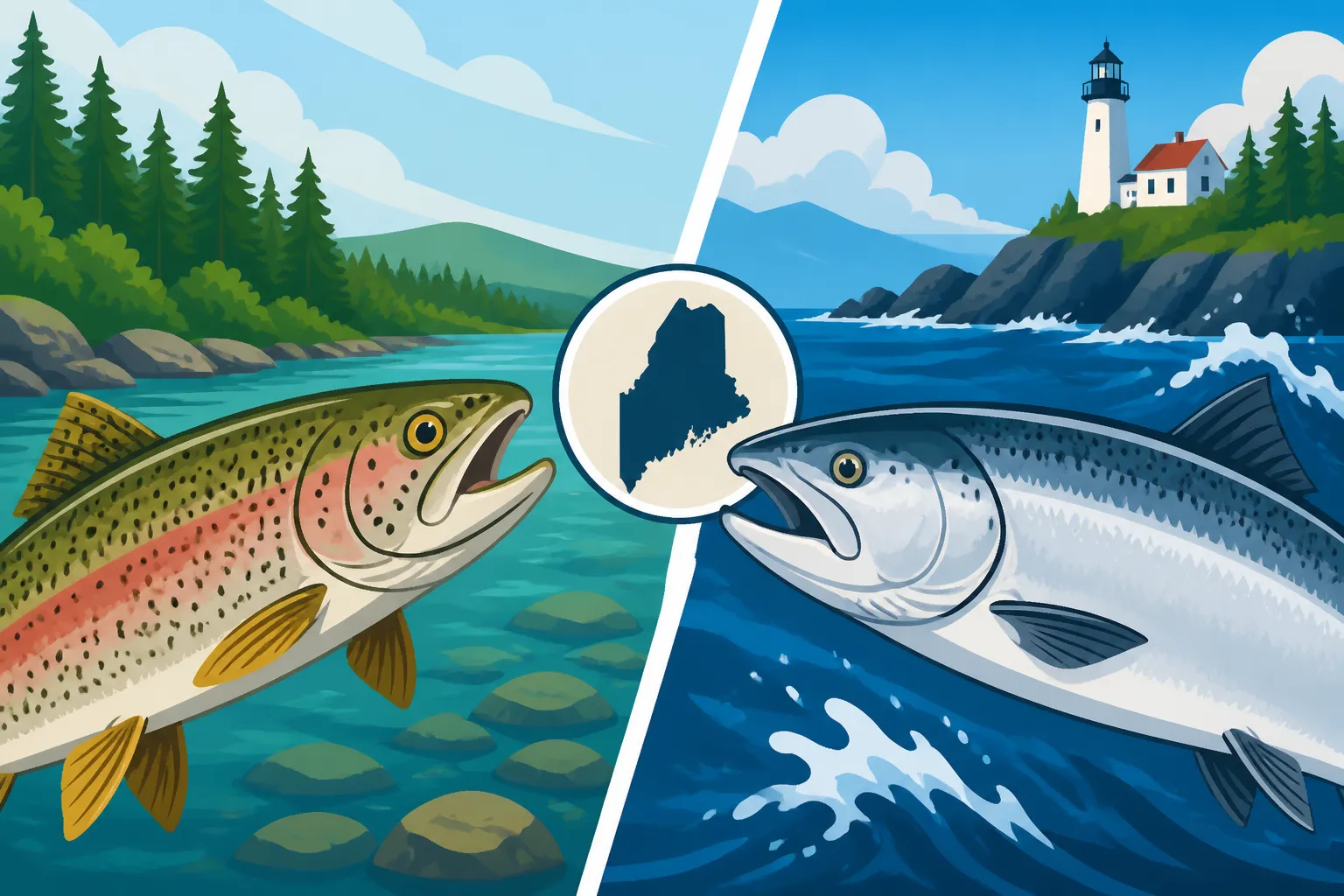
What Is the Difference Between Trout and Salmon?
It’s a question that trips up countless anglers, whether you’re a seasoned veteran of Maine’s lakes and rivers or just starting out with a rod and reel in hand: what exactly is the difference between a trout and a salmon? You’re staring at a beautiful fish, admiring its spots and wondering if you should measure it against the brook trout limit or the salmon slot. This guide is here to clear up that common confusion, helping you identify your catch with confidence and understand the unique characteristics of these beloved Maine fish.
The Family Tree: Understanding Salmonids
Before we dive into the nitty-gritty of distinguishing between a trout and a salmon, it’s helpful to understand their shared ancestry. Both trout and salmon belong to the same scientific family, Salmonidae. This family also includes chars, which adds another layer of delightful confusion to the mix, especially here in Maine where we have our famous "togue." Think of them all as close cousins, sharing a common lineage but having evolved distinct characteristics over millennia.
Trout, Salmon, and Chars: Close Cousins
Within the Salmonidae family, there are several genera, and the ones most relevant to Maine anglers are Salmo (true salmon and brown trout), Oncorhynchus (Pacific salmon and rainbow trout, though rainbow trout are not native to Maine), and Salvelinus (chars, which include brook trout and lake trout/togue). This means that while we often categorize them simply as "trout" or "salmon," the biological reality is a bit more nuanced.
For instance, our native Brook Trout Native Range in Maine is actually a char, not a "true" trout in the Salmo genus, even though we call it a trout! And the Landlocked Salmon, while definitively a salmon, spends its entire life in freshwater, mimicking the behavior of many trout species. This shared family tree means they often have similar body shapes, fin structures, and even diets, which is precisely why telling them apart can feel like a puzzle. It's a common frustration, and one that even experienced anglers sometimes grapple with, especially when encountering an exceptionally colored or unusually large specimen.
Maine's Key Players: A Quick Overview
When you're fishing in Maine, the most common species you'll encounter that fall into this "trout or salmon" debate are:
- Landlocked Salmon: The iconic game fish of many large Maine lakes, known for its silver flash and acrobatic fights. These are pure salmon, genetically identical to Atlantic Salmon, but without the sea-run migratory habit.
- Brook Trout: Maine's official state fish and a true gem, found in countless cold, clear streams and ponds. They are incredibly beautiful with their distinctive markings. Biologically, they are chars.
- Brown Trout: An introduced species, these fish are robust and can tolerate warmer waters than brook trout. They are true trout within the Salmo genus.
- Lake Trout (Togue): Our deep-water dwellers, often called "togue" by Mainers. These are also chars, built for cold, oxygen-rich depths.
Understanding these key players and their place in the Salmonidae family is the first step in appreciating their individual traits and how they differ. It's not just about identification; it's about respecting the specific ecological role each one plays in Maine's diverse aquatic environments.
Key Differences: Telling Them Apart in Maine Waters
Now for the fun part: learning to spot the specific characteristics that can help you confidently identify your catch. While there can be variations, especially with age, diet, and water conditions, there are several reliable indicators. Remember, sometimes you need to look at a combination of factors, not just one.
Physical Characteristics: Spotting the Visual Cues
This is often where anglers start, looking for the tell-tale signs etched onto the fish itself. Pay close attention to colors, spots, and fin shapes.
Spots and Markings
This is perhaps the most reliable initial differentiator.
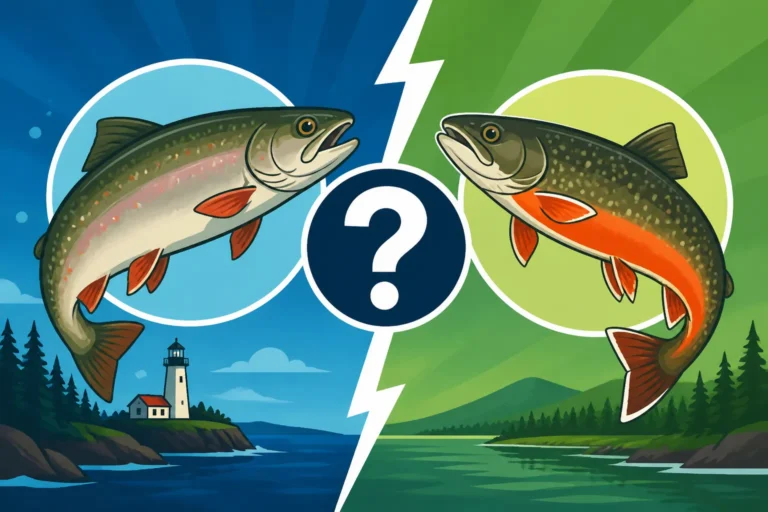
- Brook Trout: These beauties are famous for their unique markings. Look for light spots (often yellow or reddish with blue halos) on a dark body. It's like a reverse polka dot pattern compared to many other trout and salmon. Their backs are usually a dark, mottled green, often with "worm-like" squiggly lines called vermiculation. Their lower fins (pectoral, pelvic, anal) often have a distinctive white leading edge, followed by a black stripe, and then orange or red coloration. It's truly stunning. You can delve deeper into How to Identify a Brook Trout to really hone your eye.
- Landlocked Salmon: Generally, landlocked salmon have dark spots on a lighter, often silvery body. These spots are usually concentrated on the upper half of their body and back, often X-shaped or irregular. They tend to be sleeker, with a more pronounced fork in their tail. Their overall color is often iridescent silver, especially when caught fresh from cold water, but can darken significantly during spawning. If you're wondering How to Identify a Landlocked Salmon, start with those spots and their overall streamlined profile.
- Brown Trout: Similar to salmon, brown trout typically have dark spots on a lighter body, but their spots are often larger, fewer, and may extend below the lateral line. Many brown trout also have red or orange spots, sometimes with light halos around them. Their coloration can vary wildly from golden brown to silvery, depending on their habitat.
- Lake Trout (Togue): As chars, togue also exhibit light spots on a darker body, much like brook trout. However, their spots are generally lighter, more numerous, and often extend onto their dorsal fin and tail. Their overall color can range from gray to olive green or even brownish. Unlike brook trout, they lack the vibrant red or orange lower fins with the distinct white leading edge. Learning How to Identify a Togue vs Lake Trout is key, especially since they are often confused with other trout.
Tail Shape
The tail fin (caudal fin) can also offer a clue.
- Landlocked Salmon: These fish typically have a distinctly forked tail, a common trait among active, open-water predators. The deeper the fork, the more likely you're looking at a salmon.
- Brook Trout & Brown Trout: While brook trout can have a slightly forked tail, it's generally much less pronounced than a salmon's. Brown trout usually have a square or slightly emarginate (notched) tail.
- Lake Trout (Togue): Togue usually have a moderately to deeply forked tail, reflecting their active predatory nature in deep lake environments.
Mouth and Jaw Structure
Look closely at the mouth.
- Landlocked Salmon: Often have a more pointed snout and a mouth that extends to or just past the rear of the eye.
- Trout (Brook and Brown): Their mouths tend to be a bit smaller, often not extending much beyond the middle of the eye.
- Lake Trout (Togue): Togue can have a large mouth, with the jaw extending well past the eye, particularly in larger specimens, hinting at their predatory diet of baitfish.
Habitat and Behavior: Where and How They Live
Knowing where a fish should be can be a huge clue. Different species have different preferences for water temperature, oxygen levels, and food sources.
Water Preference and Location
- Brook Trout: These are cold-water specialists. You'll find them in pristine, oxygen-rich streams, small ponds, and the shallow, cool edges of larger lakes. They are highly sensitive to warm water and pollution. If you're in a tiny, bubbling stream way up in the mountains, chances are it's a brook trout. Explore Where Brook Trout Live in Maine Streams to understand their ideal homes.
- Landlocked Salmon: Prefer larger, deeper, and colder lakes, such as Moosehead, Sebago, and the Rangeley Lakes. They need ample cold, oxygenated water throughout the year and are often found suspended in the water column, chasing baitfish like smelt. Where Landlocked Salmon Live in Maine Lakes will give you a good sense of their preferred habitats.
- Brown Trout: More tolerant of warmer water and a wider range of habitats than brook trout. They can be found in rivers and lakes, often thriving where brook trout might struggle. They're known for being a bit more resilient.
- Lake Trout (Togue): As their name suggests, these are residents of deep, cold lakes. They'll spend their summers in the deepest, coolest parts of the lake, often near the bottom, only coming shallower during cooler seasons or to spawn.
Diet
While there's overlap, what they primarily eat can also differ.
- Brook Trout: Primarily insectivores in streams, feasting on nymphs, larvae, and adult insects. In ponds, they'll also eat small baitfish, leeches, and crustaceans.
- Landlocked Salmon: Predominantly piscivorous (fish-eating), with smelt being a crucial part of their diet in many Maine lakes. They are active hunters of baitfish.
- Brown Trout: A diverse diet including insects, crustaceans, and a significant portion of other fish as they grow larger, making them quite opportunistic predators.
- Lake Trout (Togue): Apex predators of the deep, feeding almost exclusively on other fish, particularly smelt, cusk, and other smaller forage fish. This is why you often find them associated with Maine Togue and Lake Trout Limits in deep, cold bodies of water.
Life Cycle and Migration: The Saltwater Connection (or Lack Thereof)
Perhaps the most fundamental biological difference between "salmon" and "trout" is their migratory pattern, particularly their relationship with saltwater.
Anadromous vs. Landlocked Species
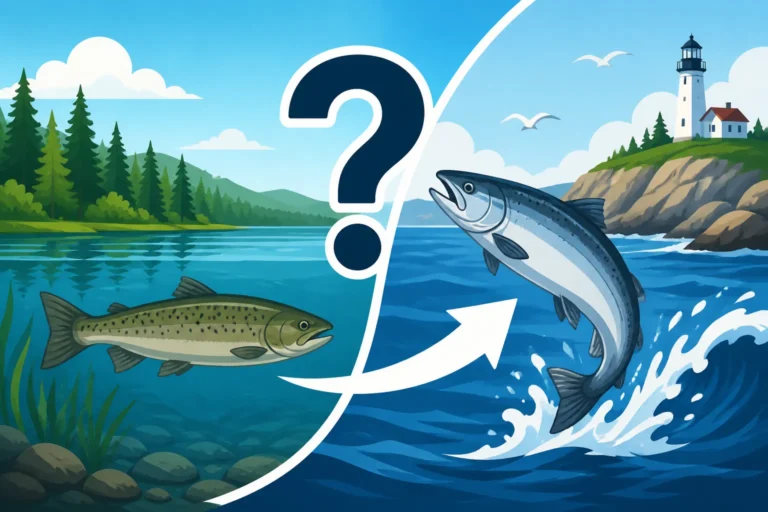
- Anadromous Salmon: The classic definition of a "salmon" is a fish that hatches in freshwater, migrates to the ocean to grow, and then returns to freshwater to spawn. Our native Atlantic Salmon are a prime example, though their populations are now largely protected, and fishing for them is extremely restricted, primarily catch and release in very specific waters.
- Landlocked Salmon: This is where the confusion often arises. Maine's Landlocked Salmon are genetically identical to Atlantic Salmon but have adapted to complete their entire life cycle in freshwater lakes. They don't migrate to the ocean. They are truly "landlocked," making them behave much like a large, predatory trout in their freshwater environment. Understanding the Landlocked Salmon Life Cycle helps explain this unique adaptation.
- Trout: Most trout species, like our common brook trout and brown trout, typically spend their entire lives in freshwater. However, some brook trout in coastal rivers are "salters" – they venture into brackish or even saltwater for short periods to feed and grow larger, returning to freshwater to spawn. These sea-run brook trout, while not true anadromous fish like Atlantic salmon, blur the lines a bit, proving nature loves its exceptions!
- Lake Trout (Togue): These chars are exclusively freshwater inhabitants, perfectly adapted to the deep, cold lakes they call home.
Here’s a quick comparison table to help you summarize the key differences for common Maine species:
| Feature | Brook Trout (Char) | Landlocked Salmon (Salmon) | Brown Trout (Trout) | Lake Trout/Togue (Char) |
|---|---|---|---|---|
| Spotting | Light spots on dark body, vermiculations, red/blue halos. White leading edge on lower fins. | Dark X-shaped spots on silvery body, mostly above lateral line. | Dark spots on lighter body, often with red/orange spots/halos. | Light spots on dark body, extending onto fins. No red/blue halos or white fin edges. |
| Tail Shape | Slightly forked to square | Deeply forked | Square to slightly emarginate | Moderately to deeply forked |
| Primary Habitat | Cold, clear streams, small ponds, shallow lake margins. | Large, deep, cold lakes, open water. | Rivers, lakes (more tolerant of warmer water than brook trout). | Deep, cold lakes. |
| Migration | Freshwater (some "salters" enter brackish water). | Entirely freshwater (landlocked). | Entirely freshwater. | Entirely freshwater. |
| Diet | Insects, small crustaceans, baitfish. | Smelt and other baitfish. | Insects, crustaceans, other fish. | Other fish (smelt, cusk). |
| Size (Typical) | Small to medium (up to ~20 inches) | Medium to large (15-30+ inches) | Medium to large (15-25+ inches) | Large (20-40+ inches) |
Fishing Implications: Why It Matters to Anglers
Knowing the difference between these species isn't just about showing off your biology knowledge; it has real, practical implications for your fishing experience, from what you're allowed to keep to how you approach your day on the water.
Regulations and Bag Limits: The Legal Side of Identification
This is perhaps the most critical reason to learn your fish. Maine has very specific regulations for different species, and misidentification can lead to violations.
- Varying Limits: The daily bag limits and minimum length requirements can vary significantly between brook trout, landlocked salmon, and lake trout. For example, Brook Trout Daily Bag Limits might be 5 fish with a 6-inch minimum length in some waters, while Maine Landlocked Salmon Bag Limits could be 2 fish with a 14-inch minimum, often with a slot limit. Maine Togue and Lake Trout Limits also have their own specific rules. Imagine the frustration of catching a beautiful fish, thinking it's a salmon, only to find out it was a trout and you've kept too many or it's undersized for that species!
- Special Regulations: Many lakes and rivers in Maine have special regulations that override general law. These often target specific species to enhance fishing or protect populations. For instance, some trophy brook trout waters might be catch-and-release only, while a nearby lake might allow harvest of salmon. Always consult the Maine Open Water & Ice Fishing Laws rulebook or the online guide before you head out. It saves a lot of headaches later.
- Season Dates: While many species share similar open seasons, specific waters or species might have unique closure periods. Being able to correctly identify your target helps you stay compliant and avoid unintentionally fishing out of season for a particular species.
Targeting Strategies: Adapting Your Approach
Beyond regulations, understanding what you’re fishing for will dictate your entire approach, from the gear you choose to the spots you cast.
Lures and Bait
Different species have different feeding habits and preferences.
- Brook Trout: In streams, small spinners, dry flies, nymphs, and worms are often highly effective. They respond well to presentations that mimic aquatic insects. If you're fly fishing, matching the hatch can be incredibly rewarding. For pond fishing, small spoons or traditional bait like worms can work wonders. Many excellent options for these types of lures can be found on Amazon, making it easy to stock your tackle box.
- Landlocked Salmon: These powerful fish often chase baitfish. Trolling with smelt-imitating lures, streamer flies, or live bait is a popular and productive method. Spoons, stickbaits, and even some jigs can be deadly when they are actively feeding. For ideas, check out Best Bait for Landlocked Salmon or common trolling patterns for big lakes.
- Brown Trout: Very opportunistic, they will hit a wide variety of lures and baits. Spinners, crankbaits, jerkbaits, and various live baits like shiners or worms are all fair game. They are also popular targets for fly anglers, who use nymphs, streamers, and dry flies.
- Lake Trout (Togue): Since they live deep and feed on other fish, heavier jigs, large spoons, and bait (like shiners or cut bait) fished near the bottom or suspended in the water column are ideal. Downriggers are often employed when trolling for togue in summer depths. Learn more about effective choices in Best Bait for Togue.
Techniques and Presentation
Your method of fishing will also change depending on your target.
- Trolling vs. Still Fishing vs. Fly Casting: While you might troll for salmon and togue in large lakes, you'll likely be casting small spinners or fly fishing delicate dry flies for brook trout in a mountain stream. Trolling Techniques for Maine Lakes are vastly different from Fly Fishing Techniques for Maine Rivers.
- Depth and Structure: Knowing the preferred habitat of each species dictates where you should focus your efforts. Salmon and togue often require covering vast expanses of deep water, while brook trout are found in specific runs, pools, and undercut banks of streams, or shallower lake areas. A good fish finder, readily available on Amazon, can be invaluable for pinpointing those deeper structures.
- Seasonality: The best time to target each species can vary. For example, early spring and fall are often prime for salmon and trout as they become more active in cooler surface waters, while togue can be caught year-round, requiring different tactics in summer's heat.
Beyond the Basics: Understanding Char and Hybrids
The world of Salmonidae is rich with diversity, and Maine’s waters offer a few more interesting twists that further blur the lines between what we call a "trout" and what we call a "salmon."
Togue: Maine's Unique Lake Trout (a Char)
It's a common point of confusion: Is a togue a trout or a salmon? In Maine, we fondly call our lake trout "togue," and as we mentioned earlier, they are technically members of the char genus (Salvelinus), making them closer cousins to brook trout than to brown trout or landlocked salmon.
Think of it this way: all chars are considered trout, but not all trout are chars. The key visual differentiator for chars often comes back to the spots: they typically have light spots on a darker body. This is a crucial distinction from "true" trout in the Salmo genus (like brown trout) or Oncorhynchus (like rainbow trout), which generally have dark spots on a lighter body. The fact that Mainers have a special name for them, "togue," speaks to their unique place in our fishing culture and ecosystem. Understanding Is a Togue the Same Fish as a Lake Trout? will help clarify this relationship.
Brown Trout: An Introduced Species
While brook trout are native to Maine, brown trout are not. They were introduced from Europe and have since established healthy populations in many of our lakes and rivers, particularly in waters that might be a bit too warm for brook trout to thrive. Brown trout are true members of the Salmo genus, making them "true" trout in the same lineage as Atlantic Salmon.
Distinguishing them from brook trout is important, especially for regulation purposes. Beyond the spot patterns we discussed earlier (dark spots, sometimes red or orange, often with halos), brown trout generally lack the vibrant white leading edges on their lower fins that are so characteristic of brook trout. Their overall body shape tends to be more robust, and their tails are often less forked than a salmon's. If you want a deep dive into the specific differences, check out Brown Trout vs Brook Trout Differences. They're a fantastic sport fish, known for their powerful runs and willingness to hit a wide variety of lures and flies.
Conclusion
Learning to distinguish between the various trout and salmon species in Maine is a journey that enriches every fishing trip. It’s about more than just identifying your catch; it’s about understanding the intricate ecosystem, appreciating the unique beauty of each fish, and respecting the regulations that help conserve these precious resources. From the dazzling spots of a brook trout to the sleek, silvery flash of a landlocked salmon, each species presents its own challenges and rewards. So, next time you're on the water, take a moment to really look at your catch. Observe its markings, feel its tail, and consider its habitat. With practice and a little knowledge, you'll soon be able to tell your salmon from your trout and your char, making every catch a more informed and satisfying experience in the great state of Maine.
Disclaimer
This article is for general informational purposes only and does not constitute professional advice. Laws, prices and regulations vary by location and change over time. Consult a qualified professional for guidance on your specific situation.