Choosing Between a Guide and a Charter in Maine
One of the biggest head-scratchers for any angler planning a trip to Maine – whether you're a seasoned pro or just dipping your toes into the fishing world – is figuring out whether you should hire a fishing guide or book a fishing charter. It’s a common dilemma, and the right choice truly depends on your specific goals, the experience you're seeking, and even your group size. This guide will help you unpack the nuances of each option so you can confidently plan your perfect Maine fishing adventure.
Understanding the Maine Fishing Landscape
Maine's diverse geography offers an incredible array of fishing opportunities, from vast inland lakes and winding rivers to its rugged coastline and the expansive Atlantic Ocean. This variety is precisely why the choice between a guide and a charter isn't always straightforward. Both options aim to put you on fish, but they cater to very different experiences and fishing environments.
What's Unique About Maine Fishing?
Maine is often lauded for its pristine waters and abundant fish populations, boasting everything from trophy landlocked salmon and brook trout in its freshwater systems to hard-fighting striped bass and groundfish off its coast. The state's commitment to conservation means many waters are managed carefully, often with specific regulations tailored to sustain healthy fisheries. This means that local knowledge, whether from a guide or a charter captain, becomes incredibly valuable. They know the seasonal patterns, the specific haunts where fish hide, and perhaps most importantly, how to navigate the ever-changing weather and water conditions that are so characteristic of our beautiful state. The sheer variety of species and habitats means you could spend a lifetime exploring and still find new challenges and rewards.
When a Guide Might Be Your First Thought
You probably start thinking about a guide when your vision for a fishing trip leans towards a more intimate, focused, and often less crowded experience. Guides excel at navigating the specific intricacies of smaller bodies of water like rivers, streams, and remote ponds, or even targeting particular species in larger lakes. If you're dreaming of a quiet morning stalking brook trout with a fly rod, learning the subtle art of jigging for togue on a deep lake, or navigating challenging rapids for smallmouth bass, a guide is usually the immediate answer. They offer a deep dive into a particular type of fishing, often involving specific techniques or knowledge of a very localized area.
When a Charter Becomes Appealing
On the flip side, charters typically come to mind when your fishing aspirations involve bigger boats, broader horizons, and usually saltwater. If you're picturing yourself out on the open ocean, battling a powerful striped bass, or perhaps heading further offshore for cod, haddock, or even tuna, then a charter is almost certainly what you're looking for. Charters provide the vessel, the specialized gear for deep-sea or coastal saltwater angling, and a crew experienced in navigating marine environments. It’s a different kind of adventure, often with a more social atmosphere, where the focus is on the vastness of the ocean and the thrill of what might be lurking beneath its waves.
The World of Maine Fishing Guides
Hiring a Maine fishing guide is often about tapping into localized expertise and getting a highly personalized experience. These individuals are often lifelong residents, intimately familiar with their chosen waters, and passionate about teaching and sharing their knowledge. A guide is more than just someone who drives a boat; they are an educator, a coach, and a steward of Maine's natural resources.
What Exactly Does a Maine Fishing Guide Offer?
A Registered Maine Guide is a certified professional who possesses extensive knowledge of the outdoors, first aid, and survival skills, ensuring a safe and productive trip. Unlike a charter, which often has a more set itinerary, a guide typically tailors the day specifically to your preferences, skill level, and the current fishing conditions. They know the secret coves, the precise depths, and the subtle cues that indicate where fish are holding. This isn't just about catching fish; it's about learning the "how" and "why." Many guides are experts in specific techniques, such as fly fishing, trolling, or ice fishing, and they often provide high-quality gear, flies, and bait perfectly suited for the local conditions. They might even prepare a traditional shore lunch, adding another layer of authenticity to your wilderness experience. For those looking to go beyond just fishing, a guide can also introduce you to the ecology and history of the area, making the trip an immersive educational experience. You can learn more about How to Become a Registered Maine Guide if you're curious about their certification process.
Types of Guided Trips Freshwater vs. Ice vs. Fly Fishing
Maine guides specialize in a remarkable range of experiences. For freshwater enthusiasts, you could book a guide to explore the vastness of Moosehead Lake or Sebago Lake for landlocked salmon and togue, where they'll use their fish finders and trolling techniques to put you on fish. For river rats, a fly fishing guide might take you to lesser-known stretches of the Kennebec or Androscoggin rivers, teaching you to read the water and present flies to wary brook trout. Maine Fly Fishing Guides are invaluable for beginners and experienced anglers alike, sharing insights on entomology and casting techniques.
When winter blankets Maine in snow and ice, dedicated Maine Ice Fishing Guides emerge, leading trips onto frozen lakes. They'll provide heated shelters, augers, tip-ups, and portable sonar units, making the often-intimidating world of ice fishing accessible and comfortable, even for families. They understand the intricacies of ice safety and know precisely where to drill holes for species like perch, pickerel, and the highly sought-after lake trout. Each type of trip requires specialized knowledge and equipment, and guides are masters of their craft in these specific domains.
The Personalized Experience and Expertise
The hallmark of a guided trip is its personalization. If you're a beginner, a guide will patiently teach you casting techniques, knot tying, and fish identification. If you're an experienced angler, they'll challenge you to refine your skills or explore new waters and methods. This one-on-one or small-group attention is something you simply won't get on a larger charter boat. A guide can adapt the pace and focus of the day based on your energy levels and interests, ensuring you get the most out of your time on the water.
They bring an encyclopedic knowledge of local waters, current conditions, and fish behavior. For example, a guide familiar with the Rangeley Lakes region will know the specific depths where landlocked salmon are holding in summer or the best feeder streams for fall brook trout. This level of granular expertise is what often leads to truly memorable catches and a deeper appreciation for the angling sport. Many anglers consult platforms like FishingBooker to compare guides and find one whose specialization aligns perfectly with their desired experience.
The World of Maine Fishing Charters
When your fishing dreams involve bigger boats, the salty air, and the vastness of the ocean, a fishing charter steps in as your ideal partner. These operations are built to handle the challenges and opportunities of coastal and offshore waters, providing a different kind of angling adventure.
What Exactly Does a Maine Fishing Charter Offer?
A Maine fishing charter provides a boat, a licensed captain, and often a mate, all dedicated to taking you out into the saltwater for a day of angling. The vessels are typically larger and more robust than a guide's boat, equipped with specialized navigation, safety gear, and powerful engines to cover significant distances. Charters are built for efficiency and capacity, designed to handle groups of various sizes, from small families to larger parties of friends or corporate outings. They come fully stocked with heavy-duty rods, reels, tackle, and bait appropriate for the target species, whether it's trolling for striped bass along the coast or jigging for groundfish offshore.
The experience is usually less about instruction and more about the thrill of the catch and the camaraderie of a group fishing together. While the captain and crew are certainly knowledgeable about fish behavior and location, their primary role is to get you to the fishing grounds safely and ensure everyone has a chance to hook up. They’ll help you bait lines, reel in fish, and manage the general flow of the trip, making it an accessible and enjoyable outing for all experience levels. Many charter services even offer to clean and fillet your catch at the end of the day, making dinner prep a breeze!
Types of Charter Trips Coastal vs. Deep Sea
Maine offers two primary types of saltwater charter experiences. Coastal charters stick closer to shore, often within sight of land, targeting species like striped bass, mackerel, and bluefish. Maine Striped Bass Charters are incredibly popular during the warmer months, taking anglers to the estuaries, rocky shorelines, and tidal rivers where these powerful fish feed. This type of trip is often a great choice for families or those prone to seasickness, as the waters tend to be calmer.
For the more adventurous, deep sea fishing charters venture further offshore into the Atlantic. These trips often target groundfish like cod and haddock, which require fishing in deeper waters. Some specialized charters even pursue pelagic species such as tuna, sharks, or mahi-mahi when conditions and seasons permit. Maine Deep Sea Fishing Charters require more robust vessels and a captain with extensive knowledge of offshore currents, structures, and weather patterns. These trips typically involve longer run times to the fishing grounds and can be physically more demanding, but the potential for larger, more exotic catches is a huge draw.
Crew Support and Boat Amenities
One of the significant advantages of a fishing charter is the dedicated crew support. Beyond the captain, many charters have a first mate who is there to assist anglers, whether it’s untangling lines, rebaiting hooks, or helping to gaff a large fish. This allows you to focus purely on the fishing experience without worrying about the logistics of running the boat or managing your gear. They’re also keen observers, constantly watching for signs of fish, such as bait schools or diving birds, to maximize your chances of success.
The boats themselves are usually well-equipped for comfort and safety. You can expect things like marine heads (restrooms), shaded areas, seating, and sometimes even a cabin for shelter from the elements. Many also feature advanced electronics, including powerful sonar and GPS systems, which are essential for navigating open waters and locating fish schools. Safety equipment, like life jackets, is always readily available and often required to be worn, especially by children. It’s a complete package designed to make your time on the ocean as comfortable and productive as possible. Before you go, it's always a good idea to check What to Bring on a Maine Fishing Charter to ensure you're fully prepared.
Key Differences to Consider When Choosing
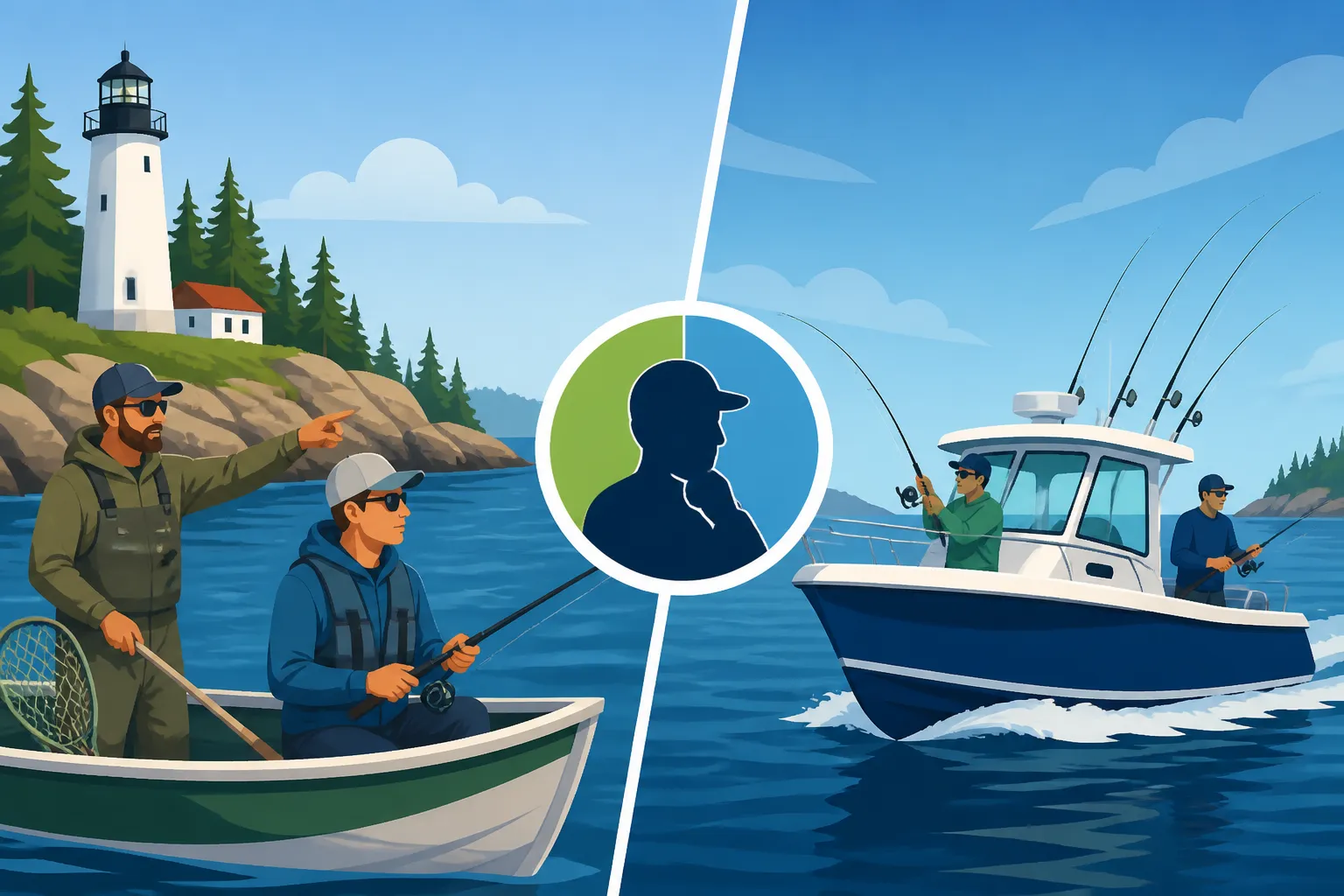
The choice between a guide and a charter truly boils down to understanding their fundamental differences and matching them to your personal fishing philosophy and trip objectives. It's not about one being inherently better than the other, but rather which experience aligns best with what you're hoping to get out of your time on Maine's waters.
Location and Target Species
This is perhaps the most significant differentiating factor.
- Guides typically operate in freshwater environments: lakes, ponds, rivers, and streams. They specialize in species like landlocked salmon, brook trout, togue (lake trout), smallmouth bass, and sometimes largemouth bass. If you're dreaming of wading a crystal-clear stream with a fly rod or quietly trolling a serene lake, a guide is your go-to. Their smaller, more agile boats or even wading boots allow access to remote or confined areas that larger vessels simply cannot reach. Want to chase Landlocked Salmon Fishing in Maine or go Brook Trout Fishing in Maine? A guide is likely your best bet.
- Charters primarily operate in saltwater: coastal bays, estuaries, and the open ocean. Their target species include striped bass, cod, haddock, pollock, mackerel, and occasionally tuna or sharks. If the thrill of deep-sea fishing or battling a powerful saltwater species from a large boat is what you seek, a charter is the clear choice. They have the robust vessels and specialized gear necessary to handle the marine environment and its inhabitants.
Group Size and Personalization Level
The number of people in your fishing party and how much individual attention you desire will heavily influence your decision.
- Guides excel with smaller groups, typically 1-3 anglers, though some might accommodate 4 depending on the boat and fishing style. This allows for a highly personalized, one-on-one experience. The guide can focus on teaching specific techniques, offering tailored advice, and adjusting the trip to suit individual skill levels and interests. It's an intimate, educational, and often hands-on learning environment. If you want to spend the day truly learning from an expert, this is the way to go.
- Charters are designed to accommodate larger groups, often 4-6 anglers, and sometimes even more on party boats. While the captain and crew are certainly attentive, the experience is inherently less individualized. The focus is on putting the group on fish, and the instruction might be more general. It’s a fantastic option for families, groups of friends, or corporate outings where the social aspect and collective fishing experience are paramount. Everyone gets to participate, and there's a collective excitement when a fish is hooked.
Cost and What's Included
Understanding the cost structure and what you get for your money is crucial for budgeting your trip. It's important to remember that prices for both can vary widely based on duration (half-day vs. full-day), location, species targeted, and the guide/charter's experience level.
- Guides generally charge on a per-trip basis, often with a fixed rate for 1-2 people, and an additional fee for extra anglers up to their maximum capacity. The price typically includes the guide's expertise, boat (if applicable), all necessary fishing gear (rods, reels, tackle), bait or flies, and often drinks and snacks. Some guides might offer a shore lunch. You'll still need your own Maine Fishing License Guide.
- Charters are also typically priced on a per-trip basis for the entire boat, regardless of how many people are in your party (up to their stated maximum capacity). This cost usually covers the boat, captain and crew, all fishing gear, bait, and fuel. Unlike guides, it's less common for food and beverages to be included, so you'll often need to bring your own. Passengers on a Maine charter typically do not need their own individual fishing license, as the vessel operates under a blanket license, but it's always wise to confirm this with your specific charter when booking. Always confirm specific inclusions when you're looking to book a Maine fishing charter.
Here's a quick comparison table to summarize these key differences:
| Feature | Fishing Guide | Fishing Charter |
|---|---|---|
| Primary Location | Freshwater (lakes, rivers, ponds, streams) | Saltwater (coastal bays, estuaries, open ocean) |
| Target Species | Salmon, Trout, Togue, Smallmouth Bass | Striped Bass, Cod, Haddock, Mackerel, Tuna |
| Vessel Type | Smaller boats (drift boats, bass boats), kayaks, wading | Larger, more robust vessels (center consoles, cabin boats) |
| Group Size | Small (1-3, sometimes 4 anglers) | Larger (4-6+, sometimes more on party boats) |
| Experience Focus | Personalized instruction, skill development, learning | Catching fish, group experience, adventure |
| Cost Structure | Per trip (often tiered for 1-2 anglers + add-ons) | Per trip (for the entire boat up to max capacity) |
| Inclusions | Guide, gear, bait/flies, some drinks/snacks, personal license required | Captain/crew, boat, gear, bait, license often covered by charter |
| Atmosphere | Intimate, educational, focused, quiet | Social, exciting, fast-paced, adventurous |
Deciding What's Right for Your Maine Adventure
Choosing between a guide and a charter isn't a simple "either/or" question. It's about aligning the type of experience each offers with your personal goals, budget, and the kind of memories you want to make on your Maine fishing trip.
When to Lean Towards a Fishing Guide
A fishing guide is likely your best choice if:
- You're seeking a highly educational experience: If you want to learn specific techniques, understand fish behavior, or improve your casting, a guide provides invaluable one-on-one instruction. This is especially true for fly fishing where the nuances can be significant. Many people book a guide not just to catch fish, but to walk away with new skills.
- You desire an intimate, quiet, and personalized trip: For solo anglers, couples, or a small family (1-3 people), a guided trip offers a much more focused and tailored adventure. You can dictate the pace, choose the species, and explore remote, serene locations that larger boats can't access.
- Your interest lies in freshwater fishing: Whether it's the challenge of Rangeley Lakes Landlocked Salmon Fishing in Maine, the serenity of Moosehead Lake Brook Trout Fishing, or the thrill of Sebago Lake Smallmouth Bass Fishing in Maine, a guide is the expert for Maine's inland waters. They know the subtle changes in water levels, the best hatches, and where to find the elusive trophy fish.
- You want to experience specific techniques: If you're passionate about fly fishing, ice fishing, or specific trolling methods for particular species, a specialized guide is indispensable. They have the knowledge, the gear, and the patience to help you master these disciplines.
- You're a beginner or introducing kids to fishing: Guides are excellent teachers, ensuring that first-time anglers have a positive and successful experience without feeling overwhelmed. They can make the learning process fun and engaging.
- You appreciate local lore and natural history: Many guides are passionate storytellers and naturalists, enriching your trip with tales of the region, insights into local wildlife, and ecological information.
When considering a guide, remember to look into Booking a Maine Fishing Guide in Advance, as the best ones often fill up quickly, especially during peak seasons.
When to Lean Towards a Fishing Charter
A fishing charter will probably be the better fit if:
- You're planning a trip with a larger group: For parties of four or more, a charter often makes more sense financially and logistically. Everyone can fish together on a single vessel, making it a great option for celebrations, family reunions, or corporate team-building.
- Your primary goal is saltwater fishing: If you dream of battling striped bass along the rocky coast, hauling in cod from offshore depths, or even chasing bluefin tuna, a charter is essential. They have the robust boats and specialized equipment required for the ocean environment. For targeted adventures, look for Maine Striped Bass Charters or Maine Deep Sea Fishing Charters.
- You prefer a less hands-on approach to boat operation and gear management: With a captain and often a mate, you can relax and focus purely on the fishing. The crew handles navigation, baiting, knot tying, and fish handling, freeing you up to enjoy the experience.
- You're looking for an exciting, social atmosphere: Charters tend to have a more upbeat, communal vibe. There’s often a shared thrill as everyone waits for a bite, and the excitement is palpable when a big fish is brought aboard.
- You want to cover a lot of water quickly: Charter boats are typically faster and larger, allowing them to travel further and access a wider range of fishing grounds, especially in the open ocean.
- You're less concerned with learning specific skills and more focused on the adventure and catching fish: While you'll certainly learn from observation, the primary goal of most charter trips is the action of fishing itself, rather than intensive instruction.
Hybrid Approaches and Special Considerations
Sometimes, the best solution isn't one or the other, but a blend. For instance, you could spend a few days exploring freshwater with a guide and then dedicate another day to a coastal charter. Or, if you're comfortable with boat handling and have your own gear, you might consider self-guiding for a portion of your trip, using resources like Maine Fishing Regulations Explained and Maine Fishing Season Dates Guide to plan your outings.
Another special consideration is the seasonal aspect. While freshwater guides operate across three seasons (spring, summer, fall, plus ice fishing in winter), many saltwater charters are highly dependent on the warmer months when coastal species like striped bass are abundant. Understanding the Best Time of Year to Fish in Maine for your desired species will also help narrow down your options.
Finally, always remember to verify that your chosen guide is a Registered Maine Guide or that your charter captain is properly licensed by the U.S. Coast Guard, ensuring they meet professional standards for safety and expertise.
Practical Tips for Booking Your Maine Fishing Experience
Once you've weighed the pros and cons and have a clearer idea of whether a guide or a charter is right for you, it's time to start the booking process. This step can feel daunting with so many options out there, but a little research and preparation will go a long way in ensuring a fantastic trip.
Researching and Vetting Guides and Charters
The first step is thorough research. Start by thinking about your desired location and target species. For example, if you're set on Moosehead Lake Fishing Guide or a Sebago Lake Fishing Guide, you'll want to search specifically for guides operating in those areas. Read reviews, look at their websites, and check out their social media. Pay attention to feedback regarding communication, professionalism, safety practices, and, of course, their ability to put clients on fish.
Platforms like FishingBooker can be incredibly useful here. They aggregate listings for both guides and charters, allowing you to filter by location, species, trip type, and read verified customer reviews. This can save you a ton of time sifting through individual websites and provide a reliable snapshot of what other anglers have experienced. You can see availability, compare prices, and often book directly through the platform.
Word-of-mouth is also huge in Maine's fishing community. Ask friends, family, or local tackle shops for recommendations. A personal endorsement often carries a lot of weight. Look for guides who have been operating for many years; longevity often speaks to consistent customer satisfaction and deep local knowledge.
Questions to Ask Before Booking
Once you've narrowed down your options, reach out to your top choices with a list of questions. Don't be shy – a good guide or charter captain will appreciate your preparedness and be happy to answer.
Here are some essential questions:
- What's included in the price? (e.g., all gear, bait, fuel, snacks, drinks, fish cleaning, license coverage). This helps avoid any surprises.
- What's your typical itinerary for this type of trip? (e.g., duration, meeting point, target areas).
- What species do you typically target, and what are the best chances of catching them during my chosen dates? Be realistic about expectations; fishing success is never guaranteed.
- What's your cancellation policy, especially for weather? Maine weather can be unpredictable, so knowing your options is important.
- Do you cater to my skill level (beginner, intermediate, advanced)?
- What kind of boat do you use, and what safety equipment do you carry? Especially important for offshore charters.
- Are you a Registered Maine Guide (for guides) or USCG licensed (for charters)? Don't be afraid to ask for their license number.
- What should I bring on the trip? (e.g., appropriate clothing, sunscreen, food, camera). Often guides and charters have a recommended What to Bring on a Maine Fishing Charter list.
- Do you practice catch and release, or can I keep my legal limit? Understand their philosophy and adhere to Maine Fish Bag Limits Guide and Maine Fishing Regulations Explained.
Using Platforms Like FishingBooker
Booking platforms like FishingBooker can streamline your planning process significantly. Not only do they offer a wide array of choices, but they often provide clear breakdowns of pricing, availability, and what's included. This transparency helps you compare different options side-by-side without having to call each provider individually.
Moreover, these platforms usually feature a secure booking and payment system, giving you peace of mind. Many also allow you to communicate directly with the guide or captain before booking, so you can ask those important questions and ensure a good fit. Remember to look at the photos of their boats, their gear, and past catches to get a feel for their operation. It's an efficient way to find the perfect match for your Maine fishing adventure, whether you're seeking a quiet day on a trout stream or a thrilling ride offshore.
No matter which path you choose, a fishing guide or a charter will provide an unforgettable experience in the beautiful waters of Maine. Do your homework, ask the right questions, and get ready for some incredible fishing!
Disclaimer
This article is for general informational purposes only and does not constitute professional advice. Laws, prices and regulations vary by location and change over time. Consult a qualified professional for guidance on your specific situation.