Best Weather Conditions for Bass Fishing
We've all been there: you wake up with that burning desire to hit your favorite bass spot, only to look out the window and see… well, not exactly ideal conditions. Fishing for bass in Maine can be incredibly rewarding, but it often feels like you're battling more than just the fish – you're battling Mother Nature herself. This guide is all about demystifying the relationship between weather and bass behavior, helping you understand the best weather conditions for bass fishing so you can plan your next trip with confidence, no matter what the forecast throws your way.
It’s easy to get frustrated when the fish aren’t biting, especially when you’ve put in the time and effort. But often, it's not about you or your technique alone; it's about the ever-changing atmospheric conditions and how they influence our finned friends. Bass are incredibly sensitive to their environment, and subtle shifts in weather can trigger dramatic changes in their feeding habits and locations. By learning to read these signs, you'll be well on your way to more successful outings on Maine's beautiful lakes and ponds.
The Science Behind the Strike: How Weather Impacts Bass
Understanding how bass react to different weather patterns isn't just about luck; it's about knowing the biology and instinct that drive these incredible fish. Bass, both smallmouth and largemouth, are cold-blooded creatures, which means their body temperature is regulated by their surroundings. This fundamental fact dictates much of their behavior, from where they hold in the water column to when and what they choose to eat. Beyond temperature, other atmospheric elements play a crucial role, creating a complex puzzle that, once solved, can significantly improve your catch rates.
Barometric Pressure: The Unseen Force
Think of barometric pressure as the "weight" of the air pressing down on the water. Fish, with their sensitive swim bladders, can feel these changes acutely. When the pressure is high and stable, meaning clear, sunny skies often follow, bass tend to feel more comfortable and active. This isn't always a feeding frenzy, but they're often more willing to chase bait. However, rapidly rising pressure can sometimes shut them down for a short period as they adjust.
Conversely, a falling barometric pressure, usually signaling an approaching storm front, often triggers a strong feeding response. Bass sense the impending change and instinctively gorge themselves before conditions turn rough. This pre-front bite is what many anglers dream of, as fish become aggressive and less selective. Once the storm hits and the pressure drops significantly, fishing can become tough. They might retreat to deeper water or denser cover, seeking refuge and waiting for stability to return. Pay attention to forecasts that mention pressure trends; it’s a powerful predictor of activity.
Water Temperature: The Key Driver
Water temperature is arguably the most critical factor influencing bass behavior. It affects everything from their metabolism and digestion to their spawning cycles and preferred locations. Bass thrive in specific temperature ranges, and any deviation from these comfort zones will prompt them to seek out more favorable conditions. For instance, in the spring, as water temperatures rise into the 50s and 60s Fahrenheit, bass move into shallower areas to spawn. Our guide on Maine Spring Fishing Guide dives deeper into this seasonal behavior.
In summer, when surface temperatures can climb into the 70s or even 80s, bass will often seek cooler, deeper waters, or find shade under docks, lily pads, or overhanging trees. Knowing how to fish deep water for summer trout can translate to bass if you understand their thermal zones. Conversely, in the cooler months of fall, as water temperatures begin to drop, bass will feed heavily to prepare for winter, often becoming quite aggressive. In winter, they become lethargic and congregate in deep, stable areas, feeding sparingly. Understanding these temperature preferences is key to locating fish throughout the year.
Wind, Clouds, and Light: Surface-Level Signals
While barometric pressure and water temperature work beneath the surface, wind, clouds, and light are visible indicators that drastically impact how bass behave and where they hold.
- Wind: A gentle ripple on the water's surface can be your best friend. It breaks up the water, scatters light, and makes it harder for bass to see you or your line. This disturbance also oxygenates the water and pushes baitfish, concentrating them along windy points and shorelines. Bass will often patrol these areas, ambushing unsuspecting prey. However, extremely high winds can make boat control difficult, stir up excessive sediment, and make fishing unproductive or even dangerous. Learning how wind affects lake fishing can be a game-changer.
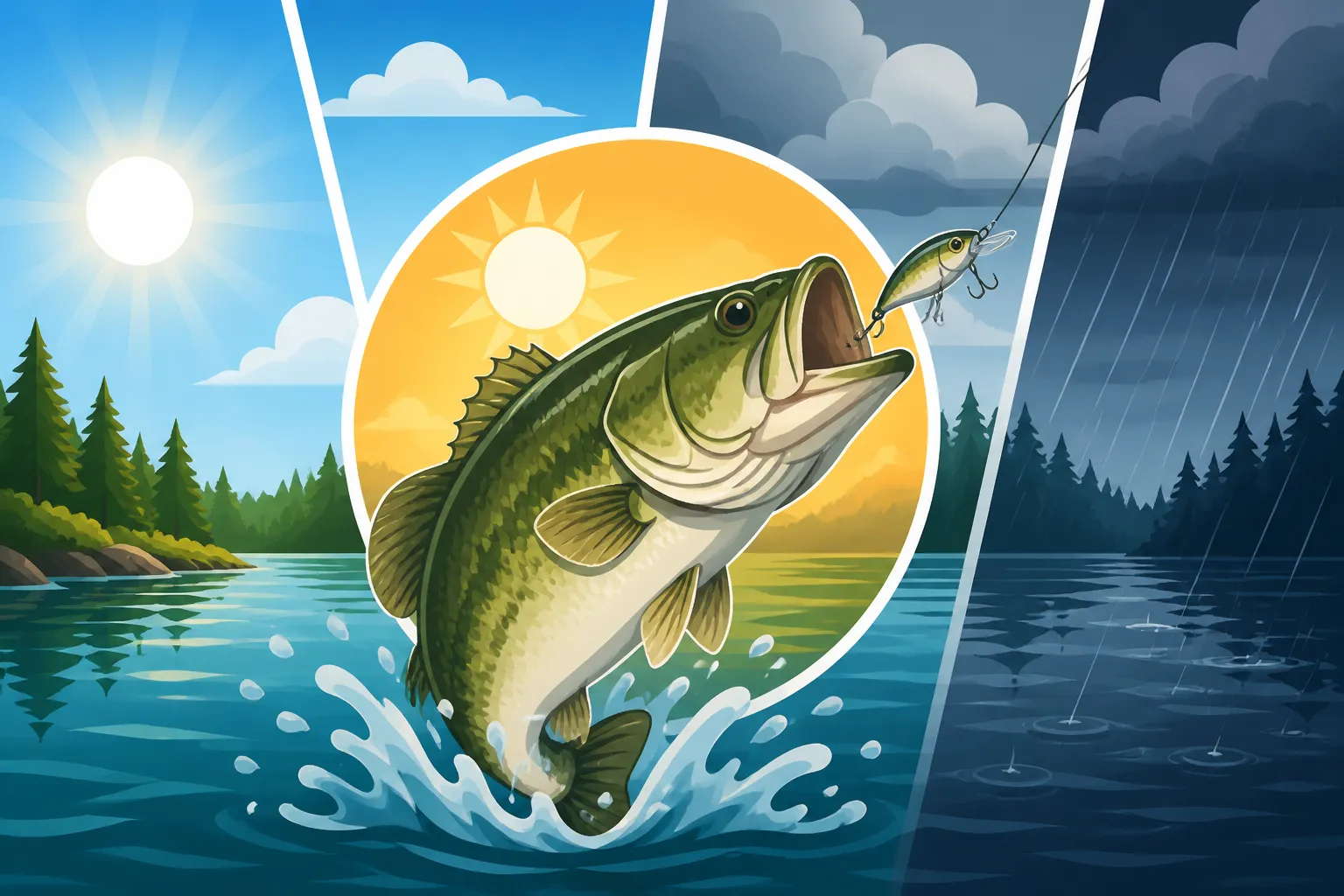
- Clouds: Overcast days are generally fantastic for bass fishing. The diffused light makes bass feel less exposed, encouraging them to move into shallower water and feed throughout the day. Bright, sunny skies, especially when combined with high pressure, tend to push bass deeper or into heavy cover, making them more hesitant to strike.
- Light: The amount of light penetration into the water directly affects visibility for both the fish and the angler. On bright days, bass often gravitate towards shaded areas, creating ambush points where they can hide from predators and prey alike. Early morning and late evening, when light levels are low, are often prime feeding times because bass feel more secure.
Prime Time: Identifying Ideal Bass Fishing Weather
So, what does that "perfect" bass fishing day look and feel like? While bass can be caught in almost any weather, some conditions consistently stack the odds in your favor. It's about finding that sweet spot where the fish are comfortable, active, and willing to chase your offerings. Recognizing these prime conditions will help you maximize your time on the water and make those early morning alarms or long drives truly worth it.
Stable, Overcast Days: Nature's Bass Magnet
If you could pick one set of conditions for bass fishing, many seasoned anglers would choose a stable, overcast day with a light breeze. The "stable" part is key – this means no significant barometric pressure drops or sudden temperature changes. The consistent cloud cover diffuses sunlight, reducing glare on the water and making bass feel less vulnerable to aerial predators. They tend to roam more freely, moving out from heavy cover and cruising shallower flats and points.
On these days, bass are often less finicky, making them more responsive to a wider range of lures and presentations. You might find success with topwater lures early in the morning, followed by spinnerbaits or crankbaits as the day progresses. The light chop on the water from a gentle breeze only adds to the appeal, further breaking up visual lines and helping to conceal your presence. This kind of day is where you can really hone your techniques and experiment with different approaches to see what the fish are keying in on.
Light Rain and Drizzle: The Surface Stir
Don't let a little sprinkle deter you! Light rain or a steady drizzle can be absolutely fantastic for bass fishing, especially if it's accompanied by stable temperatures and an approaching low-pressure system. The rain breaks up the surface tension of the water, making it harder for bass to distinguish your lure from natural prey. It also washes insects and small organisms into the water, creating a natural feeding frenzy that bass are quick to capitalize on.
When it's raining lightly, bass often become more aggressive and will readily strike topwater baits, spinnerbaits, or shallow-running crankbaits. The reduced light also helps bass feel more secure in shallower water. However, it's important to differentiate light rain from heavy downpours. Heavy rain can quickly muddy the water, drop temperatures too rapidly, and cause fish to scatter or become inactive. Always prioritize safety and seek shelter if lightning is a concern. But a gentle rain? That's your cue to grab your gear!
Post-Frontal Conditions: When the Dust Settles
While the pre-frontal bite is often talked about, the period just after a storm front has passed can also offer excellent bass fishing, provided the weather stabilizes quickly. This often means clear skies, but also stable, high barometric pressure. The fish, having gorged themselves before the storm, might be a bit sluggish immediately after, but as conditions normalize, they often resume feeding. This is usually when you'll experience what many refer to as "cold front fishing tactics in Maine."
The key here is stability. If the temperature doesn't drop drastically and the skies clear gradually, bass will become active again. They might be holding a bit deeper or tighter to cover than during the pre-frontal feast, so adjusting your presentation to slower, more subtle techniques can be very effective. Jigging soft plastics or slowly retrieving a Texas-rigged worm near structure can often coax a strike from these post-frontal bass. It’s a time for patience and precision, but the rewards can be substantial.
Navigating Nasty Weather: Adapting Your Approach
Not every fishing day is going to be perfect, and let's be honest, in Maine, you learn to adapt! Bass fishing in less-than-ideal conditions can still be incredibly productive, but it requires a shift in strategy, technique, and sometimes, a little more persistence. The goal isn't to fight the weather, but to understand how bass react to it and adjust your approach accordingly.
Bluebird Skies and High Pressure: The Finicky Bite
Ah, the dreaded bluebird sky day. You know the one: clear as a bell, not a cloud in sight, and a steady, often rising, high-pressure system. While beautiful for a picnic, these days can make bass fishing notoriously tough. The intense sunlight penetrates deep into the water, making bass feel exposed. They'll often retreat to the deepest, darkest cover they can find – thick weeds, submerged timber, shaded docks, or the deepest drop-offs.
On these days, bass tend to be far more finicky and less willing to chase. This is when a slow, methodical approach pays off. Think finesse fishing: small worms, shaky heads, or drop shots presented precisely to cover. Focus on areas with plenty of shade or deep water structure. You might need to scale down your line size and use more natural bait colors. And remember, patience is paramount; you might only get a few bites, but they'll be hard-earned. Sometimes, investing in a good pair of polarized sunglasses, available on Amazon, can help you spot these deeper structures or subtle movements. Our guide on Reading Lake Structure for Maine Bass provides excellent insights for these conditions.
Heavy Storms and Extreme Winds: Safety and Strategy
When heavy rain, thunderstorms, or extreme winds roll in, your first priority is always safety. Lightning on the water is no joke, and high winds can make controlling a boat incredibly dangerous. Get off the water immediately if a severe weather warning is issued.
If you find yourself fishing just before a heavy storm, that pre-frontal bite can be epic. Bass, sensing the pressure drop, will often feed aggressively. Use fast-moving baits like spinnerbaits, lipless crankbaits, or even topwater if the wind isn't too strong. However, once the storm hits, the bite usually shuts down. After the storm, if the water has become very muddy, focus on finding areas where clearer water might be entering the lake, like feeder creeks or protected coves. Bass will often move to these clearer, more stable zones. For safety gear, check out the reliable options for fishing life vests and emergency kits on Amazon.
Dealing with Extreme Heat or Cold: Finding Comfort Zones
Maine summers can get surprisingly hot, and winters, well, they're classic Maine winters. Both extremes present unique challenges for bass fishing.
- Extreme Heat: In scorching summer heat, bass will seek cooler water. This means deeper sections of the lake, shaded areas, or places with active springs or inflowing cold water. Early morning and late evening become prime times as the water cools slightly, and bass move shallower to feed. During the heat of the day, vertical jigging, deep crankbaits, or slow-rolling worms along ledges and humps can be effective. Consider our tips on How to Fish for Smallmouth Bass in Summer Heat for more detailed strategies.
- Extreme Cold: As temperatures plummet in late fall and early winter, bass metabolism slows down drastically. They'll congregate in the deepest, most stable parts of the lake, often near large schools of baitfish. Your presentations need to be agonizingly slow. Suspending jerkbaits with long pauses, blade baits jigged vertically, or very slow retrieves of jigs and soft plastics are your best bet. Remember, even in the cold, bass still need to eat, but they conserve energy. For ice fishing, our Maine Ice Fishing Techniques Guide is an essential read.
Beyond the Forecast: Other Influences on Bass Behavior
While weather is a huge piece of the puzzle, it's not the only factor dictating a bass's mood or location. Experienced anglers know that combining weather knowledge with an understanding of other environmental and seasonal cues can truly unlock consistent success. The more pieces of the puzzle you can connect, the better your chances of a memorable day on the water.
Seasonal Patterns: More Than Just the Daily Temp
Maine's distinct seasons profoundly impact bass behavior, overriding some daily weather fluctuations. Bass go through predictable cycles: pre-spawn, spawn, post-spawn, summer patterns, fall feeding frenzies, and winter dormancy. A warm, sunny day in March will elicit a very different response from bass than a warm, sunny day in July.
- Spring: As ice-out occurs and water warms, bass move shallower. They are focused on feeding up for the spawn. This is a fantastic time for aggressive lures.
- Summer: Post-spawn, bass transition to their summer patterns, often seeking deeper, cooler water or dense cover during the day. Early morning and late evening are crucial.
- Fall: As water temperatures drop, bass embark on a major feeding binge, bulking up for winter. They can be found in shallower waters, aggressively chasing baitfish. Understanding Maine Fall Fishing Guide can really boost your success.
- Winter: During ice fishing season, bass are lethargic, holding in deep water, feeding sporadically. Our article on Maine Ice Fishing Rules Guide is essential reading if you plan to venture out.
Understanding these overarching seasonal trends helps you narrow down potential locations and appropriate techniques, regardless of minor daily weather shifts.
Water Clarity and Depth: Reading the Environment
The clarity and depth of the water you're fishing are constant factors that interact with weather conditions.
- Water Clarity: In clear water, bass rely heavily on sight, making them warier of unnatural presentations. Bright, sunny days can make clear water fishing even tougher, pushing fish deeper or into denser cover. Here, natural colors and subtle presentations are key. In stained or murky water, bass often rely more on their lateral line (sensing vibrations) and scent. Noisy lures, bright colors, and scents can be more effective. After heavy rains, knowing how to fish muddy water after a storm can save your day.
- Water Depth: The depth of the body of water you're fishing directly influences where bass can retreat to find their comfort zone. On a shallow pond, bass might have fewer options to escape intense sunlight or extreme temperatures, often burrowing into thick weeds. On a deep lake like Sebago or Moosehead, they have the luxury of moving to specific thermal layers or deep structures. The article on Maine Bass Fishing Limits by Zone might also influence where you choose to fish based on specific regulations, which can differ by zone and thus water depth/location.
Forage and Habitat: Where the Food Is, the Bass Follow
Ultimately, bass are predators, and their movements are heavily dictated by the availability and location of their prey. Baitfish, crayfish, frogs, and insects all have their own preferred habitats and reactions to weather. When weather changes, baitfish might move, and the bass will follow.
For example, a strong wind might push schools of baitfish against a particular shoreline. Bass will quickly move in to capitalize on this concentrated food source. Similarly, after a heavy rain, worms and insects are washed into the water, attracting baitfish to inflow areas, which in turn attracts bass. Observing signs of baitfish activity – whether it's dimpling on the surface, birds diving, or marks on your fish finder – can give you invaluable clues about where the bass are, regardless of the precise weather conditions. Using the Best Lures for Smallmouth Bass in Maine or Best Lures for Largemouth Bass in Maine that mimic local forage can be highly effective.
| Weather Condition | Bass Behavior | Recommended Approach |
|---|---|---|
| Stable Overcast Days | Active, roam freely, less wary | Versatile: topwater, spinnerbaits, crankbaits, jigs |
| Light Rain/Drizzle | Aggressive, surface-oriented, feed actively | Topwater, shallow crankbaits, spinnerbaits, jigs |
| Falling Barometric Pressure | Strong feeding response (pre-front) | Fast-moving reaction baits: crankbaits, spinnerbaits, jerkbaits |
| Stable High Pressure (Bluebird Skies) | Finicky, deep, tight to cover, sluggish | Finesse: drop shots, shaky heads, small worms, slow retrieves |
| Heavy Rain/Thunderstorms | Pre-front bite, then shut down/scatter after | Pre-front: aggressive baits; Post-front: jigs, creature baits, seek clearer water |
| Extreme Heat (Summer) | Seek deep, cool water or dense shade | Deep jigs, Texas rigs, deep crankbaits, early/late fishing |
| Extreme Cold (Winter) | Lethargic, deep, feed sparingly | Very slow retrieves, suspending baits, vertical jigging |
| Windy (Moderate) | Concentrate on wind-blown banks, ambush points | Spinnerbaits, crankbaits, jigs, topwater (if chop allows) |
Ultimately, becoming a better bass angler in Maine involves becoming a keen observer of your environment. While the forecast gives you a starting point, the real magic happens when you combine that knowledge with what you see, feel, and intuit on the water. Every cast is an experiment, and every outing is a lesson. So, next time you're planning a trip to a Maine lake or pond, don't just check the temperature – look at the whole picture, and you'll be well on your way to more memorable bass fishing adventures.
Disclaimer
This article is for general informational purposes only and does not constitute professional advice. Laws, prices and regulations vary by location and change over time. Consult a qualified professional for guidance on your specific situation.