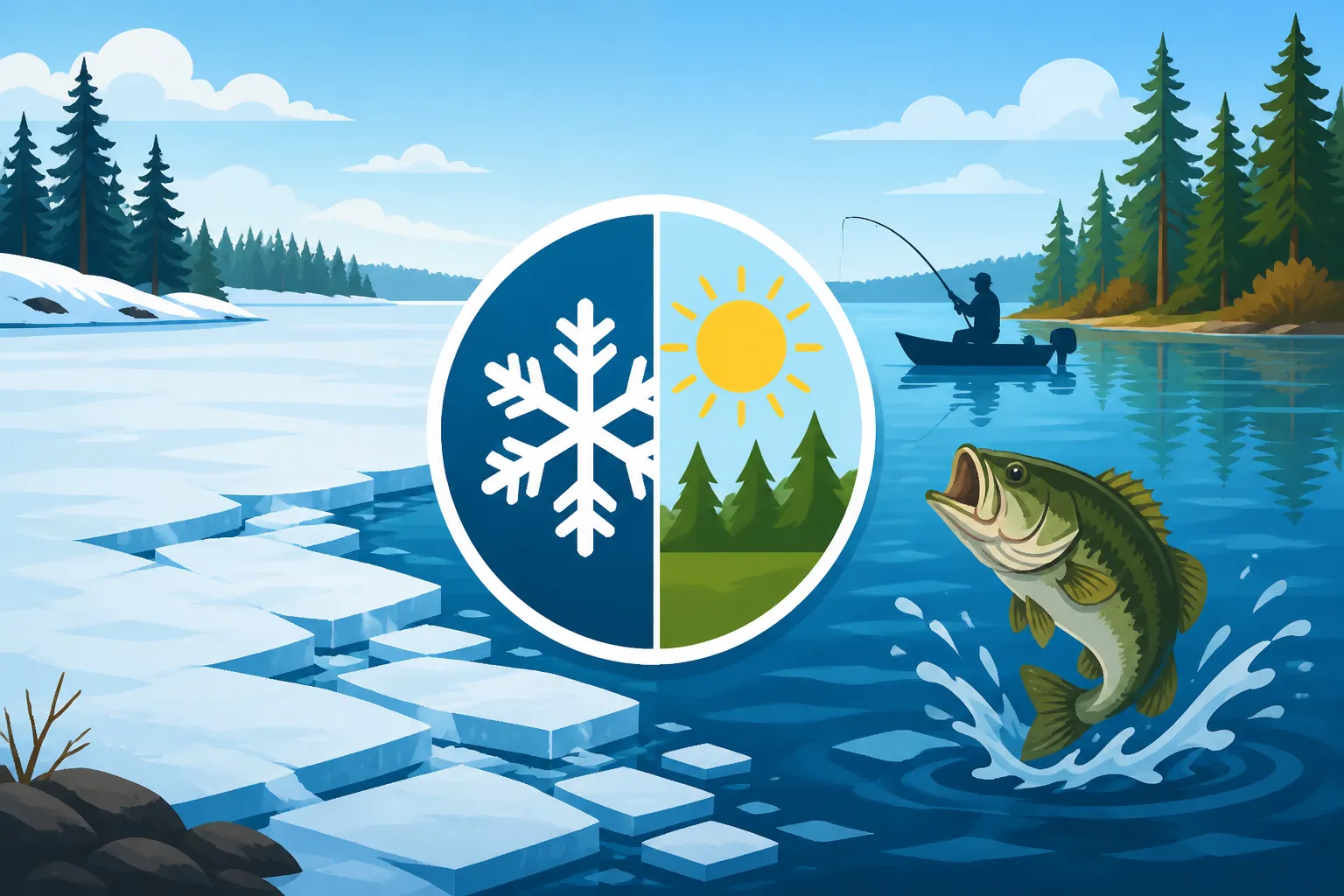
When Is Ice-Out Usually on Maine Lakes?
That feeling of anticipation, watching the calendar, peering out at a still-frozen lake, waiting for that glorious moment when the ice finally breaks up and winter officially gives way to the open water season – it's a rite of passage for every angler in Maine. The waiting can be excruciating, especially when the weather is teasing us with warm days, only to drop back into a deep freeze. This comprehensive guide will walk you through everything you need to know about when ice-out typically occurs on Maine lakes, what influences it, and how to track it, so you can be ready for that first cast.
The Annual Waiting Game: What "Ice-Out" Really Means
For many of us who live and breathe Maine fishing, the term "ice-out" isn't just a casual observation; it's an official marker, a signal that a new chapter of angling adventures is beginning. But what does it truly signify? It's not just a patch of open water near the shore or a few cracks appearing. For a body of water to be officially declared "ice-out," it generally means that the lake is entirely free of ice, navigable from one end to the other by a small boat. This definition is crucial because while ice might recede from the edges early on, large, stubborn floes can persist for days or even weeks in the main basins, especially on bigger lakes.
The moment of ice-out is highly variable, a beautiful dance between Mother Nature's moods and the unique characteristics of each lake. One year, you might be out on the water in early April, while the next, you're still waiting impatiently well into May. This yearly uncertainty is part of the challenge and charm of fishing in Maine, but it can certainly test an angler's patience, especially when your gear is prepped and ready to go. The factors at play are numerous and complex, making it a fascinating natural phenomenon to observe and predict.
Predicting Ice-Out: Factors and Historical Trends
Trying to pinpoint an exact ice-out date is like trying to catch a fish with your bare hands – nearly impossible and often frustrating. However, understanding the key factors that influence when the ice decides to finally release its grip can give you a much better educated guess and help you plan your early season trips. It's a combination of weather, the lake's physical characteristics, and its geographical location within our diverse state.
Weather Patterns and Their Impact
The most immediate and obvious driver of ice-out is the weather. We all know those early spring days where the sun feels warm on your face, and you just know the ice is melting fast.
- Warm Air Temperatures: Sustained periods of above-freezing temperatures are, of course, critical. It's not just a single warm day; it's several days or even weeks where the air temperature consistently stays warm, slowly eroding the ice from above. However, a few warm days followed by a cold snap can quickly halt the melting process, making the wait even longer.
- Sunlight Intensity: As the sun climbs higher in the sky and the days grow longer, the intensity of solar radiation increases significantly. This powerful sunlight penetrates the ice, especially if it's clear or "black ice," and helps melt it from within. It can also heat up the water along the shorelines, causing the ice to detach.
- Wind Action: This is often the unsung hero of ice-out. Strong, persistent winds create waves and currents that physically break up the ice sheets, pushing them against shorelines, and grinding them down. Wind can turn a lake covered in thin ice into open water remarkably fast, even if air temperatures aren't exceptionally high. Many a time, I've seen a strong gusty day accelerate ice-out by several days or more, especially on larger, more exposed lakes.
- Rainfall: While less dramatic than wind, warm rain can also contribute to ice melt by adding warmer water to the lake surface and accelerating the ice's degradation. However, a significant amount of cold rain on thick ice won't do much.
- Snow Cover: Interestingly, a heavy snowpack on top of the ice can actually delay ice-out. Snow acts as an insulator, protecting the ice from the sun's warmth and slowing down the melting process. It's a double-edged sword: a lot of snow means great winter recreation, but it can push back those coveted early spring fishing days.
Lake Characteristics
Beyond the weather, each lake in Maine has its own unique personality that dictates its ice-out timing.
- Size and Depth: This is a huge factor. Smaller, shallower ponds and lakes tend to lose their ice much earlier than large, deep bodies of water. Think about it: a small pond warms up and melts faster because there's less volume of water to heat and less ice to break up. A giant like Moosehead Lake, with its vast expanse and deep basins, holds onto its ice for much longer. It has more thermal mass to overcome, and the ice sheet is often more extensive and thicker.
- Elevation: Lakes at higher elevations, especially in the northern and western mountains, typically experience later ice-out dates. Colder air temperatures and often more persistent snow cover at these altitudes mean a delayed spring overall.
- Inflow and Outflow: Lakes with significant river inflows and outflows can sometimes see earlier ice-out, as the moving water can help break up ice near the entry and exit points. This current can also bring slightly warmer water into the lake.
- Shading and Exposure: Lakes that are heavily shaded by tall trees or surrounded by high terrain might hold onto ice longer in certain areas, even as open water appears elsewhere. Conversely, a wide-open lake exposed to consistent wind and sun will tend to break up faster.
Regional Differences Across Maine
Maine is a big state, and our diverse geography means a wide range of ice-out experiences. You can generally divide the state into a few broad regions for ice-out predictions.
- Southern Maine Lakes: Lakes in southern Maine, like Sebago Lake, typically see the earliest ice-out dates. These lakes benefit from milder coastal influences and are often at lower elevations. It's not uncommon for ice-out on Sebago to occur in early to mid-April, though some years it can stretch into the end of April. Anglers here are often the first to experience the thrill of Maine Spring Fishing Guide.
- Central Maine Lakes: Lakes in the central part of the state, such as those in the Belgrade Lakes region, usually fall somewhere in the middle. Ice-out here might be late April to early May, depending on the year and the specific lake's size and depth.
- Northern and Western Maine Lakes: This is where the ice truly holds on. Iconic lakes like Moosehead Lake and those in the Rangeley Lakes Fishing Guide and Moosehead Lake Fishing Guide regions are known for their late ice-out. It's not uncommon for these larger, higher-elevation lakes to stay iced over well into May, sometimes even the first week of June in exceptionally cold years. Patience is a virtue here, but the rewards for Landlocked Salmon Fishing in Maine and Lake Trout and Togue Fishing in Maine after ice-out are legendary.
To give you a general idea, here's a table showing approximate average ice-out dates for some well-known Maine lakes. Remember, these are averages and can vary significantly each year!
| Lake Name | Region | Average Ice-Out Date | Typical Range |
|---|---|---|---|
| Sebago Lake | Southern Maine | April 15 | April 1 – April 25 |
| China Lake | Central Maine | April 20 | April 10 – May 5 |
| Messalonskee Lake | Central Maine | April 22 | April 12 – May 7 |
| Moosehead Lake | Northern Maine | May 8 | April 25 – May 20 |
| Rangeley Lake | Western Maine | May 10 | April 28 – May 25 |
| Chesuncook Lake | Northern Maine | May 15 | May 1 – June 1 |
Note: These dates are approximations based on historical data and natural averages. Actual dates can differ greatly year to year based on specific weather conditions.
Tracking Ice-Out: Resources and Local Wisdom
The good news is that you don't have to just stare out your window and guess. There are several ways to keep tabs on the progress of ice-out across Maine, from official monitoring to the invaluable insights of local anglers.
Official Monitoring and Data
The Maine Department of Inland Fisheries and Wildlife (MDIFW) often tracks ice-out on major lakes, especially those critical for fishing management. You can sometimes find updates on their website or social media channels. Local conservation groups and lake associations also frequently monitor and report ice conditions, as it’s important for various activities beyond fishing. For instance, the Sebago Lake Ice-Out contest, often sponsored by local businesses, is a fun tradition that also provides a reliable official ice-out date for one of Maine's most popular lakes. Checking these official sources can give you the most accurate and up-to-date information.
Online Resources and Community Forums
In this digital age, staying informed about ice-out is easier than ever.
- MDIFW Website and Social Media: Keep an eye on the official MDIFW website, particularly the "News & Events" or "Fishing Reports" sections, as they sometimes post updates on ice conditions, especially for popular fishing destinations. Their Facebook page is also a good place to find informal updates and discussions.
- Online Fishing Forums and Groups: There are numerous Maine fishing forums and social media groups where passionate anglers share real-time observations. These communities are invaluable. Someone fishing a smaller pond might post a photo showing open water, while another might report on the persistent ice on a larger lake. It’s a great way to tap into collective knowledge. Sometimes, you can even find discussions about specific gear for early season fishing, like waterproof layers or specialized lures, and these conversations might even link to products available on Amazon.
- Webcams: A few major lakes, especially those associated with resorts or towns, have public webcams. While not all of them are perfectly positioned for ice observation, a quick check can often confirm if the lake is still locked up or starting to break free. It’s not uncommon for dedicated anglers to refresh these pages obsessively as spring approaches!
Local Anglers and Guides as Key Informants
Perhaps the best resource for predicting and confirming ice-out is tapping into local knowledge.
- Bait Shops and Sporting Goods Stores: These places are the pulse of the local fishing community. The folks working there hear everything and usually have the most up-to-date, ground-level information. Pop in, buy some early-season tackle, and strike up a conversation. They'll often tell you exactly what's happening on the lakes nearby, and might even mention specific reports from Maine Fishing Charters Guide or local residents. They might also point you towards essentials you'll need for early spring fishing, whether it's a new pair of waders or a specific type of lure that can also be found online at Amazon.
- Registered Maine Guides: If you're serious about being on the water the moment it's safe, consider connecting with a Hiring a Maine Fishing Guide. Guides live and breathe this stuff, and they're constantly monitoring conditions, often making scouting trips. They'll know exactly which parts of a lake are opening up, which species are becoming active, and when it’s truly safe to venture out. Many guides specialize in early season Brook Trout Fishing in Maine or going after hungry landlocked salmon right after ice-out.
- Local Residents: The people who live year-round on or near Maine's lakes are often the most accurate source of information. They see the day-to-day changes, the subtle shifts in ice color, and the initial open water patches. They are the eyes and ears of the lake.
The Impact of Ice-Out on Fishing Seasons
The moment ice-out occurs, it's like a starting gun for a whole new array of fishing opportunities. The entire aquatic ecosystem begins to shift, and with it, the behavior of our beloved fish species.
Early Spring Opportunities and Safety
As soon as the ice clears, especially on those smaller, earlier-opening lakes, the fishing can be absolutely phenomenal. Many cold-water species, like brook trout and landlocked salmon, become incredibly active. They've been under the ice all winter, and as the water begins to warm just a few degrees, they move into shallower areas to feed. This is a prime time for Maine Spring Salmon Fishing Techniques and targeting aggressive trout that are hungry after a long winter.
However, eagerness must always be tempered with caution. The period immediately following ice-out, especially on larger lakes where ice floes might still be present, can be treacherous.
- Unstable Ice: Even if a lake is declared "ice-out," residual chunks of ice can still be floating. These can be dangerous for smaller boats, potentially damaging hulls or propellers.
- Cold Water Shock: The water temperature right after ice-out is still incredibly cold, often in the low 40s or even upper 30s. Accidental immersion in water this cold can lead to hypothermia in minutes. Always wear a life jacket, even if you’re a strong swimmer, and fish with a buddy. Have a plan for self-rescue or emergency contact. Checking the water temperature before heading out is always a smart move.
- Changing Conditions: Early spring weather can be notoriously fickle. A beautiful, sunny morning can quickly turn into a windy, cold, and rainy afternoon. Be prepared for all conditions with appropriate clothing and gear.
Preparing for Open Water Success
Once ice-out has safely passed, it’s time to transition fully into open water fishing. This involves more than just swapping out your ice auger for a spinning rod.
- Gear Inspection: Winter storage can be tough on gear. Take the time to inspect all your rods, reels, lines, and tackle. Replace any old or frayed line, check rod guides for cracks, and ensure your reels are smooth and lubricated. This is a great time to ensure your tackle box is stocked with the right lures for early season success – think bright spoons, small stickbaits, and even some shiners for bait. Amazon is a good resource for ordering new line or restocking your lure selection.
- Boat Maintenance: If you're planning to use a boat, now's the time for crucial maintenance. Check your engine, battery, lights, and safety equipment. Ensure you have all necessary items like throwable flotation devices, a horn, and navigation lights. Remember to verify your Maine Boat Registration Rules for Anglers.
- Understanding Regulations: While ice-out signals the end of ice fishing, general fishing regulations for open water are still in full effect. Double-check the Maine Fishing Regulations Explained for your chosen water body, as specific lakes or rivers might have special rules regarding bag limits, length limits, and even tackle restrictions. For instance, knowing the Maine Open Water Line Limits is crucial. The MDIFW provides a yearly law book that details all these regulations, and it's essential reading before you hit the water.
- Targeting Species: Different fish become active at different rates after ice-out. Landlocked salmon and brook trout are often the first to feed aggressively near the surface or in tributary mouths. Smallmouth bass might still be a bit sluggish in deeper water but will move shallow as the water warms. Knowing Best Time of Year to Catch Landlocked Salmon in Maine and Best Month for Brook Trout Fishing in Maine will help you strategize your early excursions.
Ultimately, ice-out is more than just a date; it's the gateway to spring and summer fishing in Maine. It’s a time of renewed hope and excitement for anglers, a testament to the cycles of nature, and a reminder to always be prepared and safe as we embrace the beauty of Maine's waters.
Disclaimer
The information provided in this guide is for general informational purposes only and is subject to change. Always consult the official Maine Department of Inland Fisheries and Wildlife (MDIFW) regulations and local authorities for the most current and accurate rules and safety guidelines before engaging in any fishing activities. Fishing responsibly and safely is paramount.