Notable Smallmouth Bass Catches in Maine
Picture this: you're out on a calm Maine lake, the sun barely hitting the water, and suddenly, your line goes taut with a force you haven't felt before. That's the dream of every angler targeting smallmouth bass in the Pine Tree State. This guide isn't just about sharing fishing tales; it's a deep dive into the legendary smallmouth catches that have graced Maine's waters, providing insights into where these giants lurk and how you might just land your own.
Chasing a true trophy smallmouth bass in Maine is an experience unlike any other. These feisty, hard-fighting fish are a joy to pursue, but the giants among them can feel almost mythical. Many anglers spend years, even decades, hoping to hook into a smallmouth that truly stands out from the crowd. The anticipation, the strategic planning, and the sheer adrenaline of a battle with a heavyweight bronzeback are what keep us coming back, season after season. It's not just about the size; it's about the challenge, the mystery, and the bragging rights that come with a truly remarkable catch.
Understanding Maine's Trophy Smallmouth Bass Potential
Maine might be more famous for its cold-water species like brook trout and landlocked salmon, but don't sleep on our smallmouth bass fisheries. The state's diverse aquatic environments, from vast deep lakes to smaller, rock-filled ponds, offer incredible opportunities for anglers. What makes a smallmouth a "notable" catch really depends on your personal benchmark, but for many, it's pushing past that 4 or 5-pound mark, with anything over 6 pounds truly entering legendary territory. These fish are incredible predators, growing strong and healthy in Maine's varied waters.
Why Maine Produces Big Smallmouth
Maine's geography and climate play a significant role in fostering robust smallmouth bass populations, including some real lunkers. Many of our larger lakes are deep, clear, and possess abundant rocky structure – the ideal environment for smallmouth to thrive. Think about the countless underwater ledges, boulder fields, and offshore humps that provide both ambush points and protection. These features are perfectly suited for smallmouth, allowing them to patrol and ambush prey effectively.
Beyond structure, the forage base in many Maine lakes is exceptional. Crayfish are a primary food source, but smallmouth also gorge themselves on various baitfish, including golden shiners, and importantly, smelt. Smelt, in particular, are packed with protein and fat, allowing bass to grow rapidly and reach impressive sizes. Lakes with thriving smelt populations often boast larger average sizes for their game fish, and smallmouth are no exception. The slightly colder water temperatures in Maine also contribute to slower growth but potentially longer lifespans, giving these fish more time to pack on the pounds over many seasons.
General Trends in Trophy Catches
While big smallmouth bass can turn up almost anywhere they're established, certain regions and times of year tend to produce more consistently. Southern and central Maine lakes are often highlighted for their exceptional smallmouth fisheries. Lakes such as Sebago Lake, the Belgrade Lakes chain, and even some of the larger ponds in Cumberland and Kennebec counties have a reputation for producing big bass. These waters generally have longer growing seasons and ample food sources.
When it comes to timing, early summer and the fall feeding frenzies are often considered prime. In late spring and early summer, post-spawn smallmouth are incredibly hungry and actively feeding to regain energy. They can be found shallower and are often more aggressive. As summer progresses, they'll retreat to deeper, cooler waters, often around thermoclines or deep structure. Come fall, as water temperatures drop, these fish undertake another feeding binge to prepare for winter, making them highly catchable. Understanding the subtle nuances of Maine Bass Fishing Techniques by Season can significantly improve your chances during these periods. Don't forget to check specific regulations for different zones; for instance, the Maine Bass Limit in the South Zone can differ from other areas, so always be in the know.
Documenting Remarkable Smallmouth Bass Catches
Every state has its fishing legends, and Maine is no different. The stories of massive smallmouth bass caught in our waters are whispered around campfires and shared with reverence among local anglers. These aren't just fish; they're moments etched into the history of Maine fishing, inspiring countless others to cast their lines with renewed hope.
Maine's State Record Smallmouth Bass
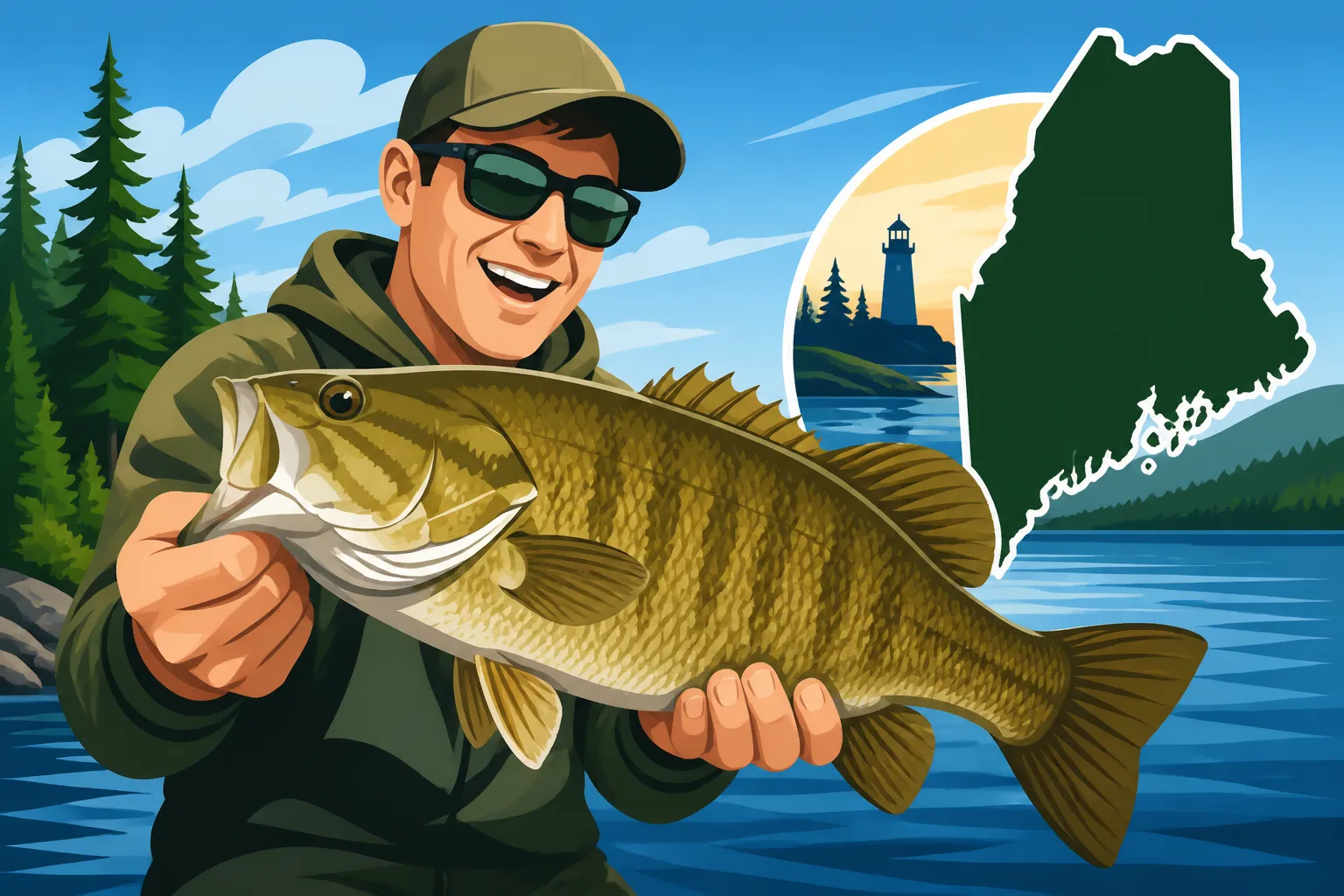
When it comes to the ultimate benchmark, Maine's state record for smallmouth bass is truly impressive. The current record stands at a colossal 8 pounds, 0 ounces, caught by Eric St. Pierre on September 22, 2011, from Thompson Lake. This fish measured a remarkable 22.5 inches in length. Thompson Lake, located in Otisfield, Casco, and Oxford, has long been known for its excellent smallmouth fishery, but this particular catch put it firmly on the map for trophy potential.
An 8-pound smallmouth is an absolute beast, a testament to the lake's rich ecosystem and the dedication of the angler. This kind of catch doesn't just happen; it often involves meticulous planning, patience, and a bit of luck. It's the kind of fish that anglers dream about their entire lives, proving that Maine really does hold giants. For those curious about the upper echelons of smallmouth size, understanding How Heavy Can a Trophy Smallmouth Bass Get in Maine? provides context for just how rare and special a fish of this magnitude truly is.
Other Significant Catches and Stories
While the state record is a singular achievement, Maine's waters have given up many other incredibly large smallmouth bass that, though not record-breakers, are still significant catches. You'll hear tales of 6 and 7-pound smallmouth from various lakes across the state, often becoming local legends in their own right.
-
Sebago Lake: This massive lake, just outside Portland, is a true smallmouth factory, particularly in its rocky southern sections. Anglers regularly report 4-5 pound fish, and 6-pounders are certainly not unheard of. The lake's clear waters and abundant forage, including smelt, allow smallmouth to grow to impressive dimensions. You can learn more about specific tactics in Sebago Lake Smallmouth Bass Fishing in Maine. Many local guides, which you can often find listed on platforms like FishingBooker, have stories of clients landing bass well over the 5-pound mark here.
-
Belgrade Lakes Chain: This interconnected series of lakes, including Great Pond, Long Pond, and Messalonskee Lake, are renowned for their incredible smallmouth fishing. Great Pond, in particular, has a history of producing giants. Anglers frequently pull out bass in the 4-6 pound range, especially during the spring and fall. The sheer amount of structure, combined with healthy populations of baitfish and crayfish, makes this a prime destination for trophy hunters. Explore more about this chain in Belgrade Lakes Bass Fishing in Maine.
-
Moosehead Lake: While perhaps better known for its togue and landlocked salmon, Moosehead Lake also holds a surprisingly healthy population of smallmouth bass, especially in its shallower, rockier coves and tributaries. These fish might not get quite as large as those further south, but 3-4 pound smallmouth are common, and the occasional 5-pounder will certainly make your day.
These stories aren't just anecdotes; they provide a roadmap for aspiring trophy hunters. They tell us which lakes have the potential, and what conditions might lead to a truly memorable catch. Sometimes, the biggest fish are caught by accident, but more often, they are the result of diligent effort and a deep understanding of the fishery.
Strategies for Targeting Maine's Monster Smallmouth
Landing a truly notable smallmouth bass requires a combination of knowledge, patience, and the right approach. These are not typically the fish you'll catch on a whim while targeting panfish. They are seasoned predators, often larger because they are smarter and more cautious.
Prime Locations and Habitats
Big smallmouth bass are creatures of habit and structure. They gravitate towards areas that offer cover, ambush points, and proximity to their food sources. When you're out on the water, don't just cast aimlessly. Focus on these key habitat types:
- Deep Rocky Points and Ledges: These are classic smallmouth haunts. Bass will stage on the edges of these structures, darting out to intercept baitfish or crayfish. Look for points that extend far out into deeper water, especially those with sharp drop-offs.
- Offshore Humps and Reefs: Submerged islands or rock piles are magnets for baitfish and, consequently, smallmouth. These areas require good electronics to locate but can be incredibly productive, especially during the summer when bass are deep. Learning to use sonar effectively is crucial for Reading Lake Structure for Maine Bass.
- Submerged Timber and Brush Piles: While not as common in deeper, rocky smallmouth lakes as in largemouth waters, any submerged wood structure can hold a big bass, particularly if it's adjacent to a depth change.
- Transition Zones: Areas where different types of bottom meet (e.g., rock to sand, gravel to mud) can be highly productive. These transitions often indicate subtle changes in depth or current, attracting forage and predators alike.
Lakes like Sebago, Thompson, the Belgrade Lakes, and even portions of Messalonskee and Long Lake, are consistently listed among the Best Fishing Lakes in Maine for smallmouth. Researching bathymetric maps and understanding the layout of these lakes will give you a significant advantage.
Effective Techniques and Baits
Trophy smallmouth often prefer larger meals, so don't be afraid to size up your baits. Here are some techniques and lure types that consistently produce big bass:
- Deep-Water Jigging: When bass are holding deep, vertical jigging with tube jigs (like a 3.5-4 inch Strike King Coffee Tube) or hair jigs can be deadly. Drop them directly to the bottom and work them with short, sharp hops.
- Drop-Shotting: This finesse technique is perfect for targeting suspended fish or those tight to structure. A small plastic bait (like a Yamamoto Senko or a small worm) is rigged above a weight, allowing it to flutter enticingly in place. It's excellent for coaxing bites from wary bass.
- Carolina Rig: This rig is fantastic for covering open, deep water and presenting a soft plastic bait (creatures, lizards, worms) just off the bottom. The weight stirs up sediment, attracting curious bass.
- Football Jigs: Paired with a bulky plastic trailer, football jigs are designed to crawl over rocky bottoms without snagging, mimicking crayfish – a favorite meal for big smallmouth. Look for jigs in the 3/8 to 1/2 ounce range.
- Large Crankbaits and Swimbaits: During aggressive feeding periods, big smallmouth will chase down larger offerings. Deep-diving crankbaits that reach the depth where fish are holding, or realistic swimbaits, can trigger violent strikes. Consider the Best Lures for Smallmouth Bass in Maine based on the season and water clarity.
Matching the hatch is always important. If you know the lake has a strong smelt population, using lures that imitate smelt can be incredibly effective. Pay attention to water temperature; Reading Water Temperature for Maine Trout is a skill that translates well to bass fishing, as these fish are also highly sensitive to thermal changes.
Timing Your Trophy Hunt
The timing of your fishing trip can dramatically impact your chances of connecting with a trophy smallmouth. These fish, like all cold-blooded creatures, are heavily influenced by water temperature and their biological cycles.
- Pre-Spawn (Late Spring): As water temperatures climb into the 50s Fahrenheit, smallmouth move shallower, becoming very active feeders as they prepare to spawn. They are often concentrated and aggressive, making this a prime time to target them with a variety of baits.
- Post-Spawn (Early Summer): After the rigors of spawning, smallmouth are hungry and somewhat recuperating. They'll often stay relatively shallow for a period, gorging themselves before the heat of summer pushes them deeper. This can be another fantastic window for big fish.
- Fall Feeding Frenzy: As autumn approaches and water temperatures cool, smallmouth embark on a serious feeding binge. They know winter is coming, and they need to pack on calories. They can often be found actively chasing baitfish in shallower to mid-depth ranges, making this an excellent time for aggressive presentations. This is often regarded as the Best Season to Catch Smallmouth Bass in Maine.
To maximize your chances, consider booking a guided trip with a local expert through services like FishingBooker. These guides spend countless hours on the water and understand the subtle shifts in fish behavior and location throughout the season, significantly increasing your odds of a notable catch.
Here's a quick look at some key details for notable smallmouth bass:
| Category | Maine State Record (Smallmouth Bass) | Typical Trophy Size (Maine) | Prime Fishing Seasons | Best Baits/Techniques |
|---|---|---|---|---|
| Weight | 8 lbs, 0 oz | 5-7 lbs | Spring, Fall | Jigs, Drop-Shots, Crankbaits |
| Length | 22.5 inches | 19-21 inches | Early Summer, Late Fall | Swimbaits, Carolina Rigs |
| Location | Thompson Lake | Sebago, Belgrade Lakes, Thompson | Pre-spawn, Post-spawn | Tube Jigs, Football Jigs |
| Date | September 22, 2011 | Varies |
Responsible Angling for Future Giants
The pursuit of trophy fish is exciting, but it comes with a vital responsibility: ensuring these incredible resources are sustained for future generations. Every angler plays a role in conservation, especially when dealing with larger, older fish that are crucial for healthy populations.
Catch and Release Best Practices
A notable smallmouth bass has likely survived many seasons and contributed significantly to the gene pool. If you're not planning to keep a fish for its meat, practicing proper catch and release is paramount. The goal is to get the fish back into the water quickly and in the best possible condition, ready to fight another day.
- Minimize Fight Time: While a long battle is exhilarating, it can exhaust a fish, especially in warmer water. Use appropriately sized tackle to land the fish efficiently.
- Handle with Care: Always wet your hands before touching a fish to protect its slime coat, which is vital for disease resistance. If possible, avoid removing the fish from the water entirely. If you must lift it for a quick photo, support its body horizontally, never hold it vertically by the jaw without supporting its weight. This helps prevent internal organ damage. Learn more about How to Handle Fish Without Hurting Them.
- Quick Release: Have your camera ready, snap a quick photo, and get the fish back in the water as swiftly as possible.
- Revival: If a fish seems sluggish, gently hold it upright in the water, facing into any current, until it regains its strength and swims away on its own. Never just toss it back. These Catch and Release Best Practices in Maine are essential for the health of our fisheries.
Respecting Regulations and Conservation
Understanding and adhering to Maine's fishing regulations is not just a legal requirement; it's a critical part of conservation. Regulations on size limits, bag limits, and fishing seasons are designed by fisheries biologists to protect fish populations and ensure their long-term health. For smallmouth bass, particularly, special regulations might apply to specific lakes or zones.
Always consult the latest Maine Fishing Regulations Explained and the Maine Fish Bag Limits Guide before heading out. These regulations are in place for a reason – to safeguard these magnificent fish so that future generations of anglers can also experience the thrill of a notable smallmouth bass catch. By doing our part, we contribute to a thriving fishery that continues to produce those dream-worthy bronzebacks we all love to chase.
Disclaimer
Please note that fishing conditions, regulations, and fish populations can change. Always check the latest Maine Department of Inland Fisheries and Wildlife (MDIFW) regulations before planning your trip. The information provided here is for general guidance and educational purposes only.